

We may earn a commission when you buy through links on this page, at no extra cost to you. Learn more.
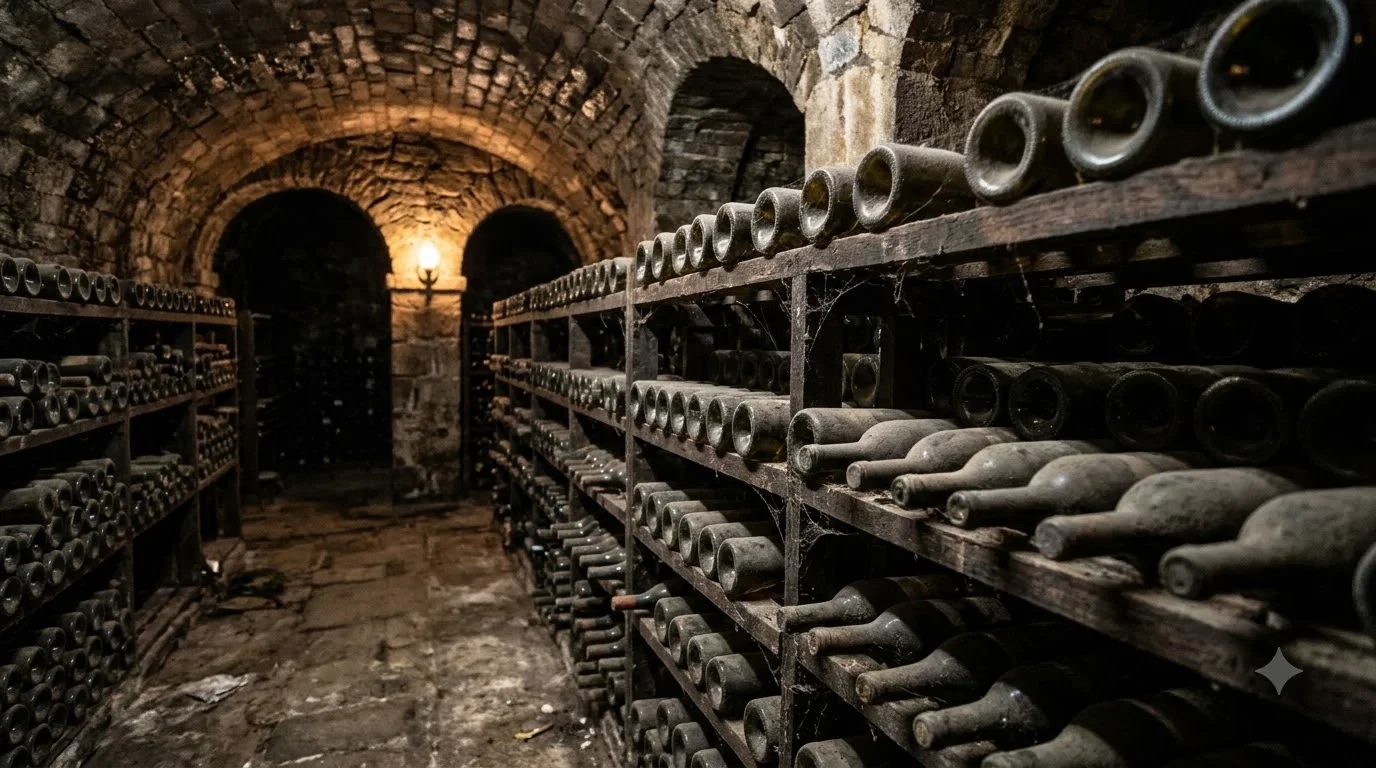
How to build a wine cellar comes down to choosing a stable space, insulating it well, and holding the temperature steady. A wine cellar is a storage room for bottles, and the main goal is to keep conditions calm enough that the wine can age slowly. A basement corner can work well with the right insulation and climate control, while a closet or spare room can be converted with a little planning.
Building a cellar does not require a special house or a large budget. It does require some attention to temperature, location, and the way bottles are stored. This guide walks through the main decisions, from choosing a space to deciding between a passive and an active setup, so you can plan a cellar that fits your collection.
Choose the right space first
Location matters more than equipment. A cellar needs a place where the temperature changes slowly and does not swing from day to night or from season to season. Basements are a popular choice because the surrounding earth moderates the air. Interior rooms on the north side of a house, away from heaters and sunny windows, are also good candidates. Avoid kitchens, laundry rooms, and attics, which get warm and move air around too much.
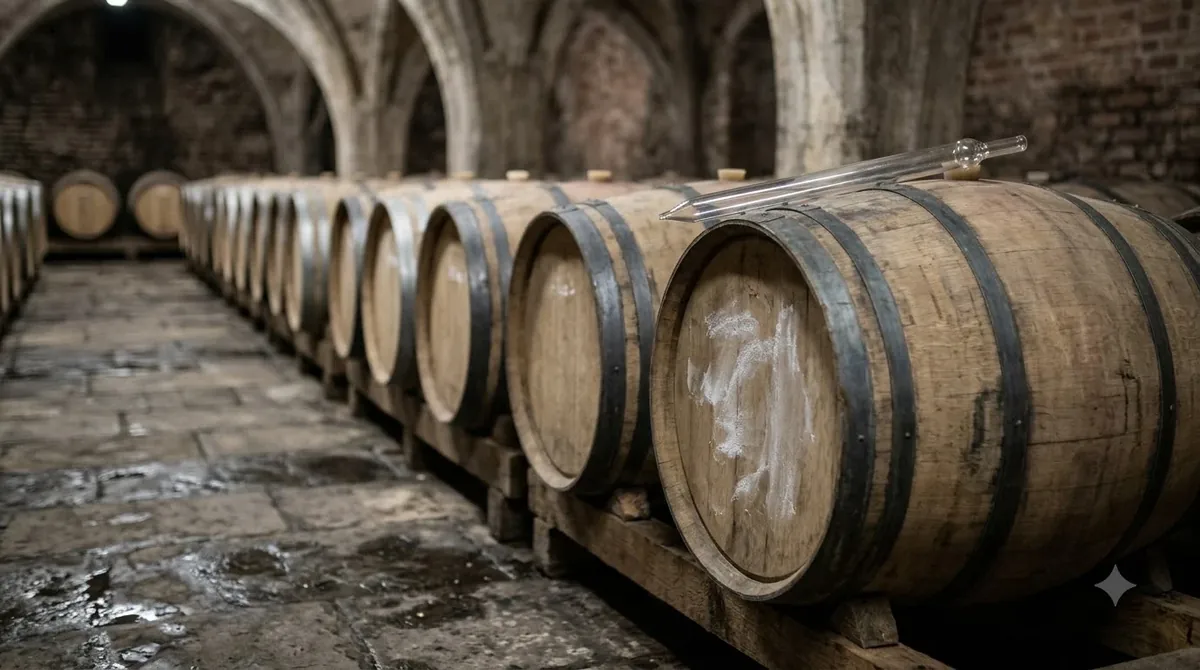
The Wikipedia entry on wine cellars makes a useful distinction between two types. Passive cellars rely on their setting to stay cool, and the article notes that they must be located in naturally cool and damp areas, such as a temperate-climate basement. Active cellars use climate control and are highly insulated, so they can hold their conditions even in a warm house.
Set the temperature and keep it steady
Temperature is the most important number to get right. The same reference states that wine can be stored satisfactorily between 7 and 18 °C (45 to 64 °F) as long as changes are gradual. It calls 13 °C (55 °F) ideal for both short-term storage and long-term aging, and it notes that wines age normally between 10 and 14 °C (50 to 57 °F). For most home cellars, aiming for a target near the middle of that range gives you room for small swings.
Stability matters as much as the exact figure. A cellar that drifts from cold to warm every few days stresses the wine more than one that holds a slightly warmer temperature consistently. This is why an active cooling unit with a good thermostat is often worth the cost in a warm climate, even when the space itself is well chosen.
| Factor | Target for a home cellar | Why it matters |
|---|---|---|
| Temperature range | 7 to 18 °C (45 to 64 °F), changing gradually | Wine stores safely within this range |
| Ideal temperature | About 13 °C (55 °F) | Suits both short-term storage and long-term aging |
| Aging zone | 10 to 14 °C (50 to 57 °F) | Wine ages normally in this band |
| Humidity | Moderate, with no fixed figure in the reference | Very dry air can dry out natural corks |
Manage humidity without overthinking it
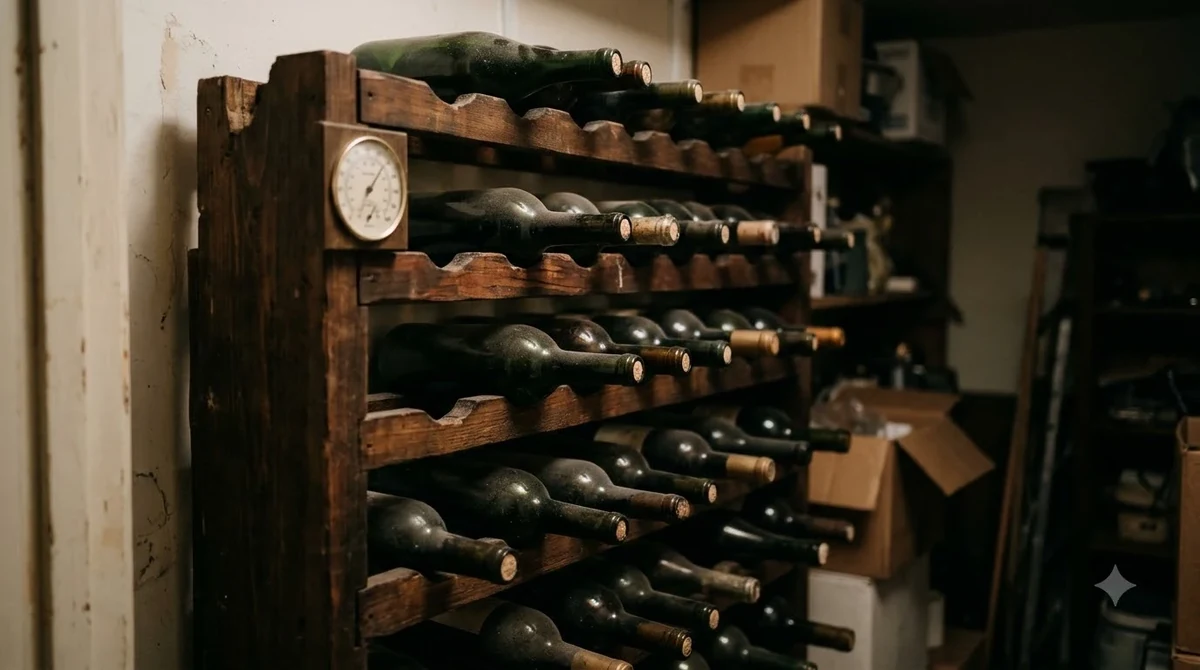
Humidity is less straightforward. The Wikipedia article gives no specific range, and it notes that experts debate how much it matters. It does warn that low humidity can dry out organic corks, which can let air into the bottle over time. A simple approach is to avoid rooms that feel bone-dry, and to use a gravel floor that can be lightly dampened when the air is very dry. A small hygrometer placed near the racks will show whether the space is drifting too far in either direction.
Ventilation is also a factor. A cellar should not feel stuffy or smell of mold, because a damp, closed space can cause problems on labels and cardboard. A gentle airflow from a small fan or an exhaust system keeps the air fresh without making it cold or dry.
Racking, lighting, and protecting the bottles
Once the climate is set, the racks and lights shape how the cellar works day to day. Racking should hold bottles on their sides so the corks stay moist, and it should leave room to read labels without pulling bottles out. Wood, metal, and modular racking systems all work, and the choice often comes down to budget and look. Sturdy shelves matter more than decoration, since a heavy collection can be surprisingly dense. Check the load rating of any shelf before filling it, and leave a little space between rows so air can circulate around the bottles and the labels stay easy to read. Bottles stored in a tight, airless block tend to be harder to rotate and to inventory, which makes a cellar less useful over time.
Light is another factor. The same reference lists darkness among the conditions a good cellar provides, so lighting should be soft and used only when needed. Warm, low-heat LED fixtures are a practical choice because they add little warmth to the room. Keep lights off most of the time, and avoid direct sunlight on bottles at all costs.
Vibration deserves a mention too. The article lists vibration among the external influences that can spoil wine, so it is wise to place racks away from washing machines, furnaces, and heavy foot traffic. A solid wall and a stable floor help more than any special design.
Planning the space and the budget
Start by estimating how many bottles you plan to store, then decide how much you want to age and how much you want to keep for quick access. A small cellar can be a simple wall rack in a closet with a cooling unit. A larger one needs insulated walls, a vapor barrier, a proper door, and an electrical plan that can handle the cooling equipment. For a first project, focus on the space and the temperature first, then add racks as your collection grows.
If you are still deciding on the right racking, the guide on how to build a wine rack covers the simpler, do-it-yourself side of storage. A cellar and a rack solve similar problems at different scales, and many people start with a rack and expand into a dedicated room later.
Frequently Asked Questions
What temperature should a home wine cellar be?
The Wikipedia reference cites 13 °C (55 °F) as ideal for both short-term storage and long-term aging. A range of 7 to 18 °C (45 to 64 °F) is acceptable if changes are gradual, and 10 to 14 °C (50 to 57 °F) is the band where wine ages normally.
Can you build a wine cellar in a basement?
Yes. A basement is often a good choice because the surrounding earth keeps the temperature more stable. Check for moisture and insulate the walls so the space stays cool without swinging through seasonal changes.
Do I need a cooling unit for a wine cellar?
It depends on the climate and the space. A passive cellar in a naturally cool, damp area may not need one, while an active cellar in a warm house usually does. A good thermostat matters more than the size of the unit.
How humid should a wine cellar be?
The reference does not give a fixed figure, and experts debate how much humidity matters. Aim for moderate conditions, avoid bone-dry air that can dry out corks, and watch for mold that signals the space is too damp.
Plan the space first, then set a steady temperature, then add racks and light. A cellar built around stable conditions will serve a growing collection far better than one built around the latest equipment. For more background on the basics, the wine basics section is a useful next stop.
More in Wine Basics
 Which Rose Is Best for Your Taste, Budget, and Food PairingsUpdated Nov 21, 2026
 Is Cheap Wine Bad? How to Find Bottles Worth DrinkingUpdated Nov 21, 2026
 What To Write On A Wine Gift Tag: Thoughtful Messages For Every OccasionUpdated Nov 21, 2026
 Which Wine Is Best For Weight Loss? Compare Lower-Calorie ChoicesUpdated Nov 21, 2026
 What Is The Best Wine For Mimosas? Choose Bubbly That Balances Orange JuiceUpdated Nov 20, 2026
 Which Prosecco Is Best for Your Taste and OccasionUpdated Nov 20, 2026