

We may earn a commission when you buy through links on this page, at no extra cost to you. Learn more.
Veuve Clicquot wine is Champagne, the sparkling wine from the Champagne region of France, made by the Veuve Clicquot Ponsardin house in Reims. The house was founded in 1772, and its best-known bottling, the Yellow Label, is a blend of pinot noir, pinot meunier, and chardonnay. The house is owned by LVMH, and its wines are made to a single consistent house style each year.
This guide explains what the name covers, how the house got its start, what is in the bottle, and how to serve and pair Veuve Clicquot Champagne. It is written for shoppers who see the yellow label on the shelf and want to know what they are buying.
A Short History of the House
According to the Wikipedia article on the house, the business began in 1772 when Philippe Clicquot, a textile merchant, banker, and vineyard owner, set up the wine trade. His son François expanded the business, and after François died in 1805, his widow, Barbe-Nicole Ponsardin, known as Madame Clicquot, took over. She launched the “Veuve Clicquot-Ponsardin” name in 1810.
The article credits Madame Clicquot with several firsts, including the first known vintage Champagne in 1810, the riddling table in 1816, and the first known blended rosé Champagne in 1818. During the Napoleonic blockades she shipped Champagne to Russia in 1814, and sales there grew strongly. The house’s yellow label was introduced in 1876.
What Is in the Bottle
The Yellow Label is the house’s signature bottling. According to the Wikipedia article, it is a blend of 50 to 60 crus, made from pinot noir at about 50 percent, pinot meunier at about 20 percent, and chardonnay at about 30 percent. It is aged for 36 months, which gives it a rounder, toastier character than a young sparkling wine.
The house also makes other cuvées. La Grande Dame was launched in 1972 and is made from Grand Cru vineyards. The Rich style was released in 2015 as a sweeter option, and the Extra Brut Extra Old is a non-vintage, ultra-dry wine released in 2017.
| Bottling | What to expect |
|---|---|
| Yellow Label | Blend of pinot noir, meunier, and chardonnay, aged 36 months |
| La Grande Dame | Prestige cuvée from Grand Cru vineyards, launched 1972 |
| Rich | Sweeter style, released 2015 |
| Extra Brut Extra Old | Ultra-dry, non-vintage style, released 2017 |
The Vineyards Behind the Wines
The house owns vineyards around Bouzy, Verzy, Verzenay, Le Mesnil, and Saint-Thierry, according to the article. Its vineyards are described as mostly Grand Cru and Premier Cru, and plantings are split between chardonnay, pinot noir, and meunier. The chalk cellars beneath the Saint Nicaise hill in Reims are described as a UNESCO World Heritage Site.
Grape variety matters for flavor. Chardonnay brings lemon, yellow apple, and brioche-like notes when it is aged, and it gives Champagne its lift and freshness. Pinot noir adds structure and red-fruit character, which is why many house blends feel fuller than a plain white sparkling wine.
How to Serve Veuve Clicquot
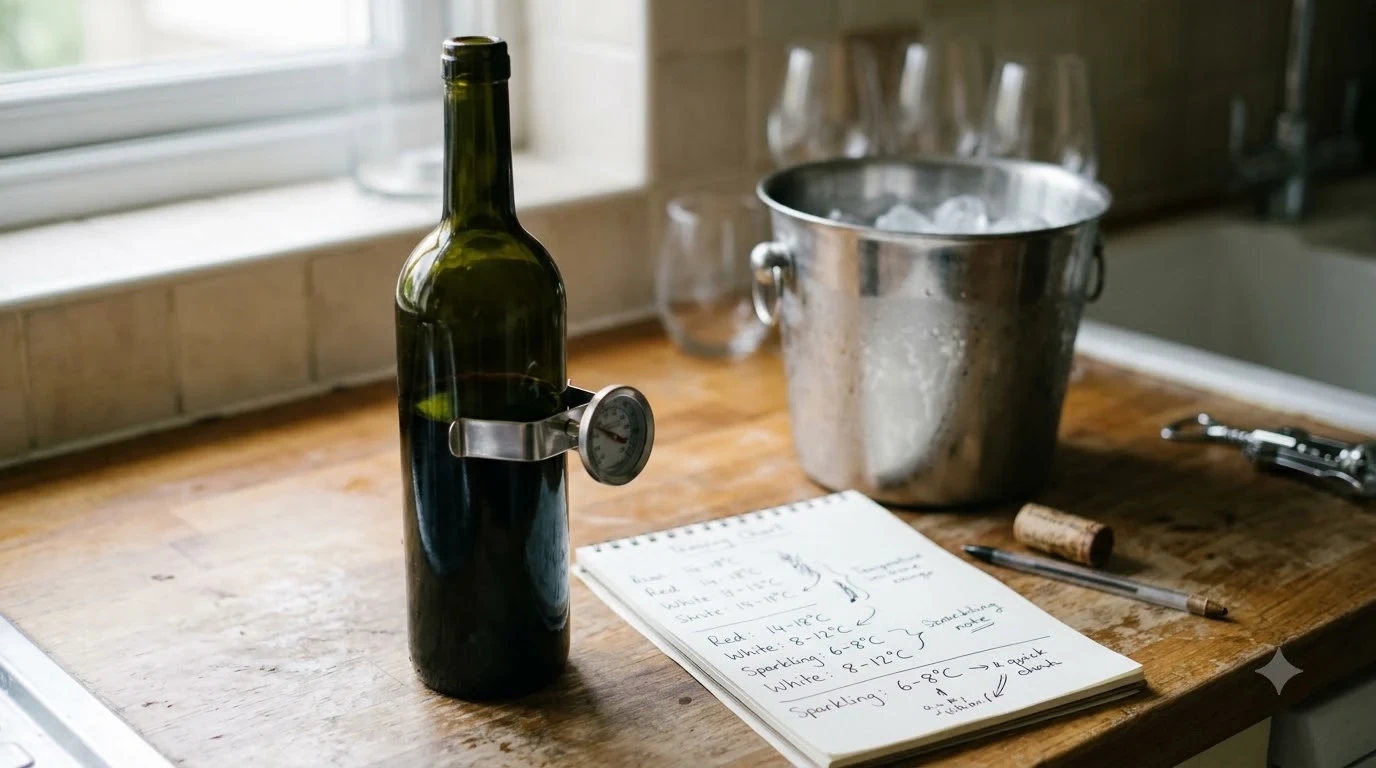
Champagne is best served well chilled, but not ice-cold, so the aromas can open up. Pour it into a tulip-shaped glass or a standard flute, and fill the glass only partway to keep the bubbles lively. Open the bottle gently and pour slowly to limit foam.
Because the Yellow Label has a richer, toasted profile than a light sparkling wine, it pairs well with roast chicken, creamy pasta, fried foods, and soft cheeses. Lighter bottlings such as the Extra Brut suit oysters and sharp appetizers. Rich, sweeter styles go best with fruit desserts.
Tip: Champagne tastes different when it is poured warm. If the bottle has been sitting at room temperature, a short time in the fridge brings it back to a pleasant serving temperature.
Buying and Storing Champagne at Home
Buying a house Champagne like Veuve Clicquot is mostly about matching the bottle to the occasion. The Yellow Label works as an everyday celebration wine, while a prestige bottling such as La Grande Dame suits a special dinner. Read the bottle name before you buy, because the house uses different labels for dry, sweeter, and prestige styles.
Storage is simple but matters. Keep unopened bottles in a cool, dark place, lying on their side so the cork stays moist. Avoid storing them near heat or in a place with large temperature swings, since both can age the wine faster than intended.
Once a bottle is open, a Champagne loses its bubbles over time. Reseal it with a proper stopper and keep it chilled, and drink it within a day or two for the best fizz. Some drinkers keep leftover Champagne for cooking, but the bubbles and freshness fade quickly once the bottle is open.
When you are planning a larger event, count on a bottle for every two or three guests if Champagne is the main drink, and plan a non-alcoholic option as well. Pair the Yellow Label with appetizers, such as cheese puffs or smoked salmon, and keep the bottle cool between pours.
If you want to compare sparkling and still wines from other producers, the wine brands guide is a good starting point, since it groups labels by style and origin.
Champagne is also a useful wine for a range of settings beyond a toast. A dry, well-structured sparkling wine can stand up to a long dinner, and a lighter bottling suits a lunch or a casual afternoon. Matching the style to the food and the crowd usually matters more than the bottle’s reputation.
The house has a long record in the trade, and its history gives the brand a distinctive story. The founder’s widow is remembered as a business leader in a period when few women ran commercial houses, and that history is part of why the name stands out on the shelf.
Label reading is worth a minute before you buy. The bottle name tells you the style, the vintage line tells you whether the wine comes from a single harvest, and the back label gives the producer’s own description of the blend. Taking that minute helps match the bottle to the meal or the toast.
Frequently Asked Questions
Is Veuve Clicquot the same as Champagne?
Veuve Clicquot is a Champagne house, so its bottles are Champagne by definition. The wine comes from the Champagne region of France, and only sparkling wine from that region can carry the Champagne name.
What grapes are in Veuve Clicquot Yellow Label?
According to the Wikipedia article, the Yellow Label blends pinot noir at about 50 percent, pinot meunier at about 20 percent, and chardonnay at about 30 percent, drawn from 50 to 60 crus.
Is Veuve Clicquot sweet or dry?
The Yellow Label is a brut style, which is dry. The house also makes a sweeter Rich style and an ultra-dry Extra Brut Extra Old, so check the bottle name before you pour.
Who was Madame Clicquot?
She was Barbe-Nicole Ponsardin, the widow who took over the business after her husband, François Clicquot, died in 1805. The Wikipedia article credits her with the first known vintage Champagne and the riddling table, and says she launched the Veuve Clicquot name in 1810.
To compare sparkling and still wines from other producers, browse the wine brands guide, which groups labels by style and origin. For a non-sparkling red for comparison, see the Antinori red wine guide.
For background on the chardonnay grape used in many house blends, read the Wine Folly Chardonnay guide, which covers flavor, oak, malolactic fermentation, and where the grape is grown.
More in Wine Brands
 Underwood Wine Price: Compare Bottles, Cans, and Pack SizesUpdated Nov 21, 2026
 Zenato Wine Price: Compare Styles and Choose the Right BottleUpdated Nov 21, 2026
 Zuccardi Wine Price: Compare Bottles and Find the Right RangeUpdated Nov 21, 2026
 Yellow Tail Moscato Review: Taste, Sweetness and Serving TipsUpdated Nov 21, 2026
 Wolf Blass Yellow Label Review: Choose Your Best StyleUpdated Nov 21, 2026
 Wolffer Estate Rose Review: Choose the Right Bottle for Your TableUpdated Nov 21, 2026