

We may earn a commission when you buy through links on this page, at no extra cost to you. Learn more.
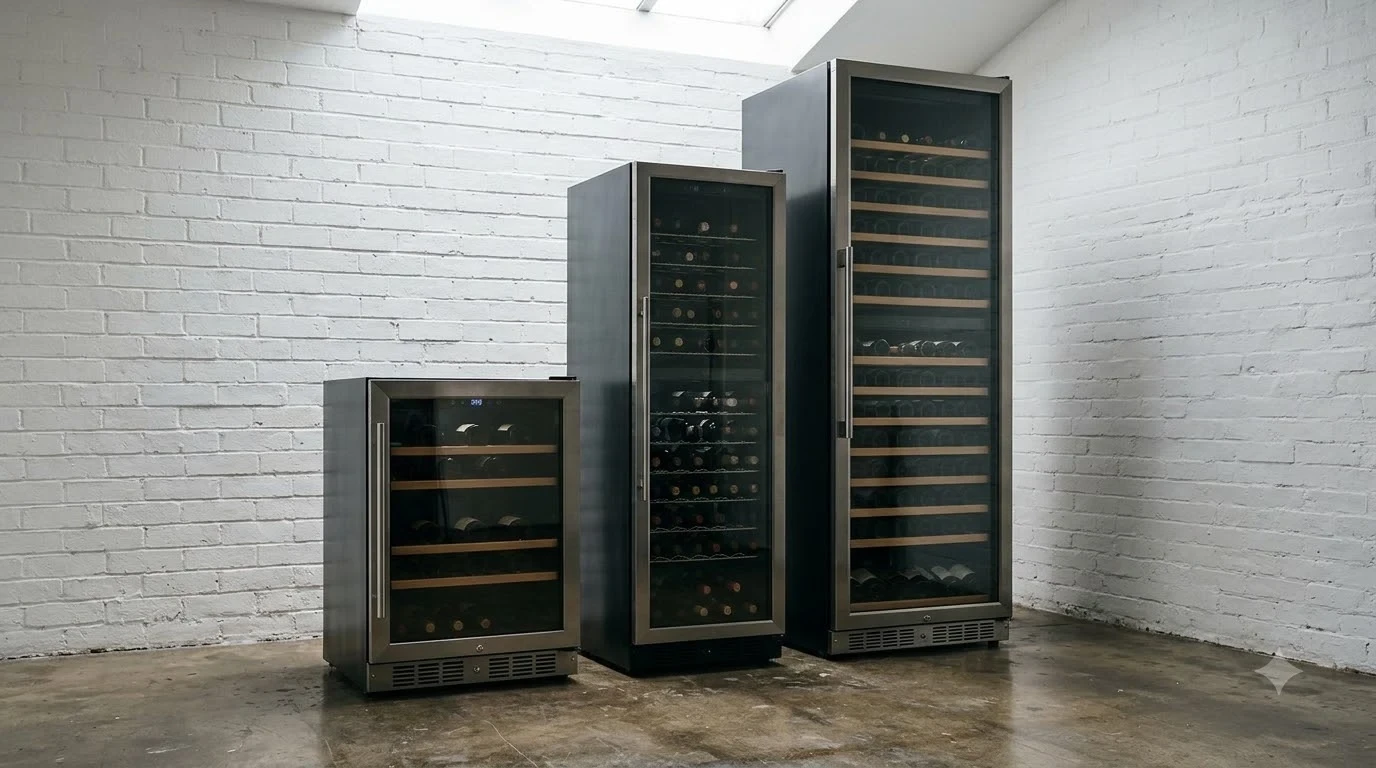
The best slim built in wine cooler is a front-venting 15-inch compressor unit that slides flush into a standard base-cabinet cutout while holding 20 to 30 bottles at steady cellar temperatures. Single-zone models maximize capacity and temperature stability for collectors storing reds and whites together, while dual-zone units keep whites at crisp serving temps and reds ready to pour. If you entertain frequently or need smooth kitchen integration, narrow wine-and-beverage hybrids and panel-ready designs handle mixed cans or custom cabinetry without sacrificing counter footprint.
Replacing an outdated trash compactor or filling an awkward 15-inch gap at the end of a kitchen island used to mean settling for a narrow pull-out spice rack. Modern undercounter refrigeration turns that sliver of floor space into dedicated wine storage, provided you pick a cabinet engineered for enclosed heat exhaust and realistic bottle dimensions.
Quick Comparison
Narrow built-in wine refrigerators fall into five functional designs based on temperature control, shelving layout, and door integration.
| Cooler Type | Typical Width | Bottle Capacity | Temp Zones | Key Advantage |
|---|---|---|---|---|
| Single-Zone Compressor | 15 inches | 26 to 34 bottles | 1 (41°F–68°F) | Maximum bottle count and uniform aging conditions |
| Dual-Zone Undercounter | 15 inches | 24 to 28 bottles | 2 (41°F–54°F / 54°F–68°F) | Simultaneous serving temps for whites and reds |
| Panel-Ready Smooth | 15 inches | 24 to 30 bottles | 1 or 2 | Accepts custom cabinet overlay and zero-clearance hinges |
| Wine and Beverage Hybrid | 15 inches | 12 to 18 bottles + cans | 1 or 2 | Tempered glass shelves hold tall cans alongside wine racks |
| Ultra-Narrow 12-Inch | 12 inches | 18 to 20 bottles | 1 (41°F–65°F) | Fits tight wet bars and galley islands under 15 inches |
Best for Maximum Capacity and Long-Term Aging
A 15-inch single-zone compressor cooler eliminates internal divider walls, squeezing up to 34 standard Bordeaux bottles into a footprint barely wider than a toaster oven.
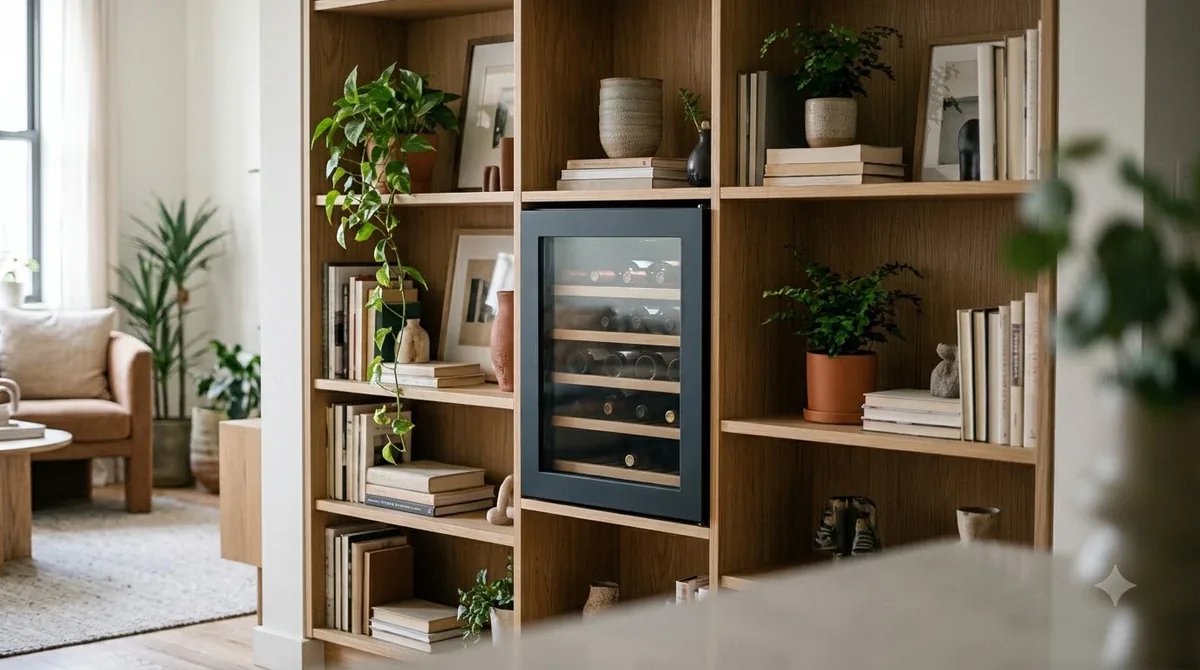
Why it stands out: Without a thick thermal partition splitting the cabinet in half, every vertical inch goes toward gliding beechwood or coated-wire racks. According to sommelier advice published by VinePair, red and white wines age comfortably in the same single-zone environment when held at a steady 55°F, making a single-compartment layout the smartest play for collectors prioritizing bottle count and consistent humidity. High-efficiency inverter compressors paired with activated charcoal filters keep air circulating cleanly while damping the micro-vibrations that can disturb sediment over multi-year storage.
Keep in mind and best for: Storing everything at 55°F means crisp Sauvignon Blanc or Champagne will need 20 minutes in an ice bucket before serving, while full-bodied Cabernet benefits from 15 minutes on the counter to warm slightly. Choose this style if you buy wine by the case, store age-worthy bottles, or want the quietest, least mechanically complex built in wine fridge for a compact kitchen cutout.
Best for Ready-to-Serve Reds and Whites
A 15-inch dual-zone undercounter unit separates the cabinet into two independently controlled climate chambers so sparkling whites and structured reds stay at exact serving temperatures.
Why it stands out: Independent evaporators and digital thermostats let you dial the upper compartment between 41°F and 54°F for Pinot Grigio, rosé, and sparkling wine while holding the lower compartment between 54°F and 68°F for Pinot Noir or Bordeaux blends. Top-tier narrow cabinets also feature double- or triple-pane UV-resistant glass doors and soft white or amber LED lighting so you can read labels without opening the door and dumping cold air.
Keep in mind and best for: The insulated horizontal divider eats up roughly two racks of storage, dropping real-world capacity to around 24 to 28 bottles, and manufacturer spec sheets note that the upper zone typically needs to be set at least 4 degrees cooler than the lower zone for efficient thermal separation. If you want a dual zone built in wine cooler that lets you uncork a chilled white and a cellar-temp red on the same evening without planning ahead, this configuration pays off immediately.
Best for Custom Kitchens and Flush Cabinetry
A 15-inch panel-ready wine cooler accepts a custom wood overlay and matching cabinet hardware so the appliance disappears completely into surrounding millwork.
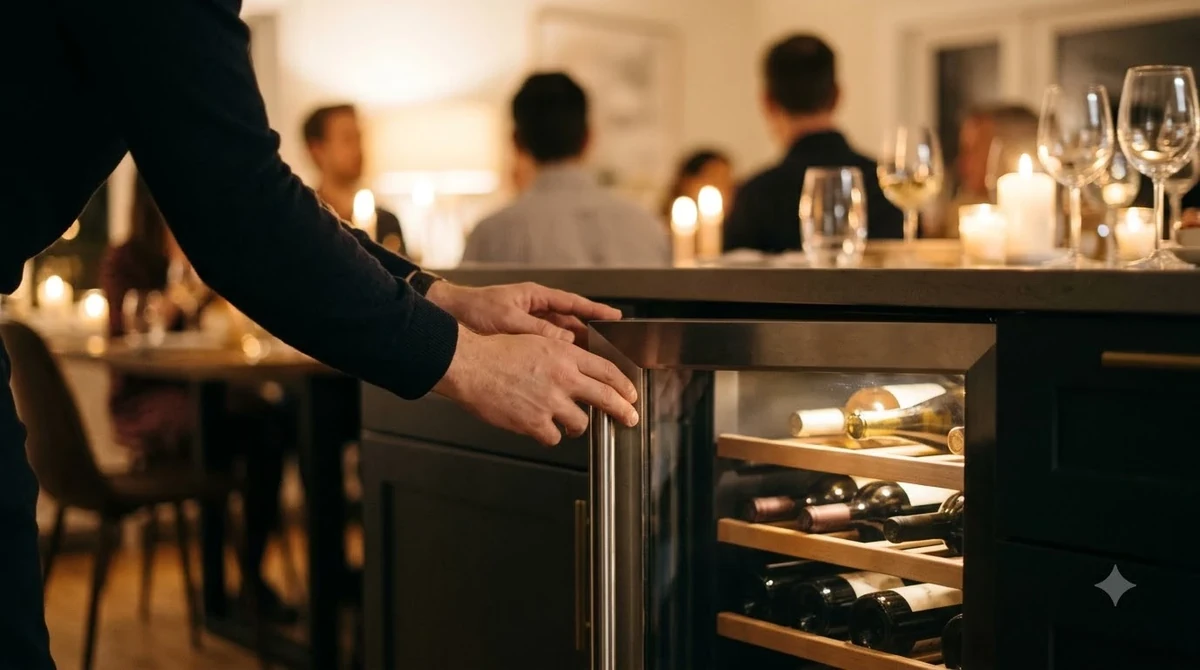
Why it stands out: Unlike standard stainless-steel doors that protrude slightly to allow the hinge to pivot, panel-ready models use articulating zero-clearance hinges that swing open cleanly inside a tight cabinetry recess without binding against neighboring drawers. Reviewers at Wine Enthusiast’s appliance buying team emphasize that cabinets are unforgiving—if the back of a cutout narrows by even a quarter-inch, an ordinary unit will jam or overheat. Panel-ready built-ins are engineered with exact recessed toe-kicks and front grille vents that align flush with standard 24-inch-deep base cabinets.
Keep in mind and best for: You will need a cabinetmaker or contractor to mill and mount the custom trim panel, and the glass window frame remains visible inside the wood border. This category is best for full kitchen remodels, butler’s pantries, and open-concept living spaces where uninterrupted cabinetry lines matter more than showing off brushed steel.
Best for Entertaining and Mixed Beverages
A 15-inch wine and beverage center pairs upper wine racks with adjustable tempered-glass shelves below to chill canned cocktails, sparkling water, and craft beer alongside wine bottles.
Why it stands out: Standard scalloped wine shelves waste vertical space when you try to balance aluminum cans or upright mixers on them. Hybrid narrow units solve that problem by combining two or three wooden wine cradles at the top with flat, spill-proof glass shelves at the bottom, often achieving temperatures down to 36°F or 38°F for frost-cold sodas and lagers. Many models also include a bottom cradle or wire basket deep enough to hold wider Champagne bottles or an already-opened bottle sealed with a stopper.
Keep in mind and best for: Because cans take up half the interior volume, wine storage drops to roughly 12 to 18 bottles, and single-zone hybrids force you to compromise between 40°F beer temps and 55°F red wine temps. Pick this layout for basement rec rooms, wet bars, or households where only one person drinks wine while everyone else reaches for sparkling water or cans.
Best for Ultra-Tight Cutouts Under 15 Inches
A 12-inch built-in wine refrigerator squeezes front-venting compressor cooling into an 11.8-inch-wide chassis designed for spaces where a standard 15-inch cabinet simply will not fit.
Why it stands out: Older urban apartments, narrow peninsula ends, and compact home bars frequently leave a 12- to 13-inch opening after standard appliances are installed. Ultra-slim built-ins stack bottles two-deep on narrow wire or wood-trimmed shelves, delivering genuine compressor cooling and digital temperature memory in a footprint barely wider than a sheet pan. Front louver exhausts ensure heat dissipates out the bottom kickplate rather than building up behind the cabinetry.
Keep in mind and best for: Narrower shelves leave almost zero wiggle room for wide-shouldered Burgundy, Pinot Noir, or Turley-style Zinfandel bottles; forcing oversized glass inside can scratch labels or prevent the door gasket from sealing. Compare all narrow dimensions by type before ordering, and choose a 12-inch model when exact cutout constraints rule out a 15-inch unit.
How to Choose
Getting a built-in cooler to fit and run quietly for a decade comes down to verifying four physical specs before you order:
- Front-venting exhaust only: Freestanding mini fridges vent heat through their rear coils or side walls and will burn out their compressors if enclosed in cabinetry. Confirm the unit has a slatted front grille at the base and zero required side clearance.
- Real-world bottle sizing: Manufacturers calculate capacity using slim 750 mL Bordeaux bottles. If your collection leans heavily toward Pinot Noir, Chardonnay, Rhône blends, or Champagne, expect actual capacity to drop by 20 to 30 percent unless the unit features removable shelves or wider spacing.
- Cutout height and depth: Standard American countertops sit 34.5 inches above the finished floor, and most built-in coolers measure 33.5 to 34.25 inches tall with adjustable leveling legs. Check depth carefully so the door handle does not collide with perpendicular drawers or dishwasher doors.
- Noise and vibration ratings: Because narrow units live in kitchens and living areas, look for variable-speed inverter compressors rated around 39 to 42 decibels—roughly the volume of a quiet library whisper—and full-extension ball-bearing glides so racks do not rattle when pulled out.
Tip: Measure your cabinet opening at the front, middle, and back for width, height, and depth, then buy based on the smallest number you record—older cabinetry is rarely square, and a tight rear wall will keep a built-in unit from sliding flush.
Frequently Asked Questions
What is the standard width for a slim built in wine cooler?
The industry standard width for a slim built in wine cooler is 15 inches (specifically 14.75 to 14.9 inches wide to slide cleanly into a 15-inch cabinet opening). Ultra-narrow models measuring 11.8 inches wide are also available for tight 12-inch bar cutouts, though they hold fewer bottles and struggle with wide-bodied Burgundy glass.
Can you put a freestanding slim wine cooler under a counter?
No, unless the manufacturer explicitly rates the appliance for zero-clearance built-in installation with front venting. Freestanding coolers exhaust hot air through their back and side panels; trapping that heat inside enclosed cabinetry causes the compressor to run nonstop, spike internal temperatures, and fail prematurely.
How many bottles actually fit in a 15-inch wine fridge?
Most 15-inch built-in coolers are rated for 24 to 34 standard 750 mL Bordeaux bottles. In everyday use with a mix of wider Pinot Noir, Chardonnay, and sparkling wine bottles, plan on fitting roughly 18 to 24 bottles comfortably without scraping labels or jamming shelves.
Should I get a single-zone or dual-zone slim wine cooler?
Choose a single-zone model if you want maximum bottle capacity and plan to age wines together at a steady 55°F. Pick a dual-zone cooler if you drink both crisp whites and cellar-temperature reds regularly and want every bottle ready to pour straight from the rack without chilling or warming first—and if you open a bottle and do not finish it, check how long wine lasts after opening so you know when to recork and store it upright.
Selecting the right narrow wine refrigerator starts with measuring your exact cabinet cutout and deciding whether maximum bottle capacity or dual-temperature serving convenience matters more in your kitchen. Match your bottle shapes and venting requirements to the layouts above, and that 15-inch sliver of undercounter space will keep every vintage ready to pour.
More in Wine Fridges by Type
 Best White Wine Fridge for Reliable Chilling and StorageUpdated Nov 20, 2026
 Best Smart Wine Fridge for Steady Temperatures and Remote ChecksUpdated Nov 18, 2026
 Best Black Under Counter Wine Fridge Options for Kitchens and IslandsUpdated Nov 18, 2026
 Best Black Slim Wine Fridge for Narrow Gaps and Dark KitchensUpdated Nov 18, 2026
 Best Built In Dual Zone Wine Fridge Options by Kitchen LayoutUpdated Nov 18, 2026
 Best Quiet Dual Zone Wine Cooler Options for Peaceful HomesUpdated Nov 18, 2026