

We may earn a commission when you buy through links on this page, at no extra cost to you. Learn more.
The best wine fridge with wood shelves depends on how you store and serve your collection, with dual-zone undercounter compressor units offering the strongest balance of vibration dampening and serving versatility for most kitchens. Hardwoods like beechwood, sapele, and mahogany absorb compressor micro-vibrations while preventing label tearing when you slide bottles out. Compact countertop coolers suit small spaces, while tall single-zone cabinets serve collectors aging bottles over several years.
Swapping wire racks for solid timber transforms a standard beverage cooler into true cellar-grade storage. Beyond visual warmth behind tinted glass, wood cushions glass bottles against mechanical hum and avoids scratching delicate foil capsules. According to storage specialists at Wine Enthusiast and EuroCave, pairing hardwood racking with steady compressor cooling protects both everyday drinkers and age-worthy vintages from premature oxidation.
Quick Comparison
Each wine cooler configuration pairs wooden shelving with distinct installation footprints, temperature zones, and bottle capacities to match specific household routines.
| Wine Fridge Type | Typical Capacity | Temperature Setup | Installation Style | Primary Advantage |
|---|---|---|---|---|
| Dual-Zone Undercounter | 30 to 55 bottles | Two independent zones | Built-in front-venting or freestanding | Stores reds and whites at serving temperatures |
| Tall Single-Zone Cellar | 80 to 200+ bottles | One uniform zone | Freestanding or built-in column | Steady long-term aging with high shelf density |
| Slim Countertop Cooler | 12 to 28 bottles | Single zone | Freestanding on counters or floors | Fits tight apartments without cabinetry changes |
| Label-Forward Display Cabinet | 90 to 160 bottles | Single or dual zone | Freestanding or built-in | Horizontal cradle racking shows every label clearly |
| Dual-Door Wine and Beverage Center | 30 bottles plus cans | Split left/right zones | Built-in undercounter or freestanding | Separates wood wine racks from canned drinks |
Best for Built-In Kitchens and Mixed Collections: Dual-Zone Undercounter Fridges
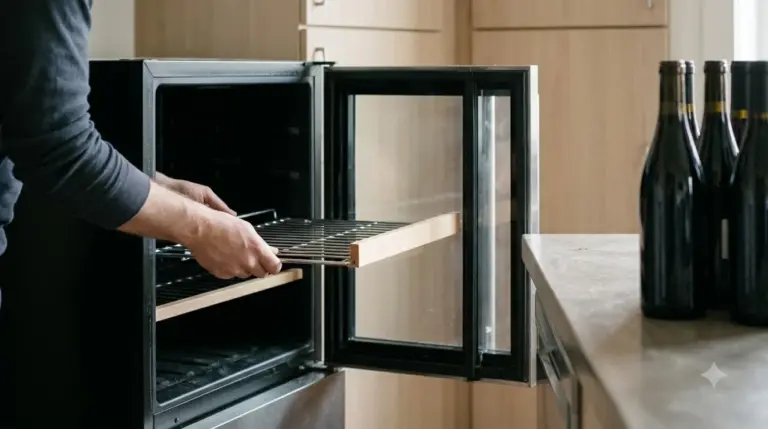
A 24-inch front-venting dual-zone wine refrigerator fits flush beneath standard kitchen counters while keeping reds and whites ready to pour in separate compartments. Sliding beechwood slats cradle standard Bordeaux bottles and pull smoothly forward on roller tracks so you never have to dig into the back row.
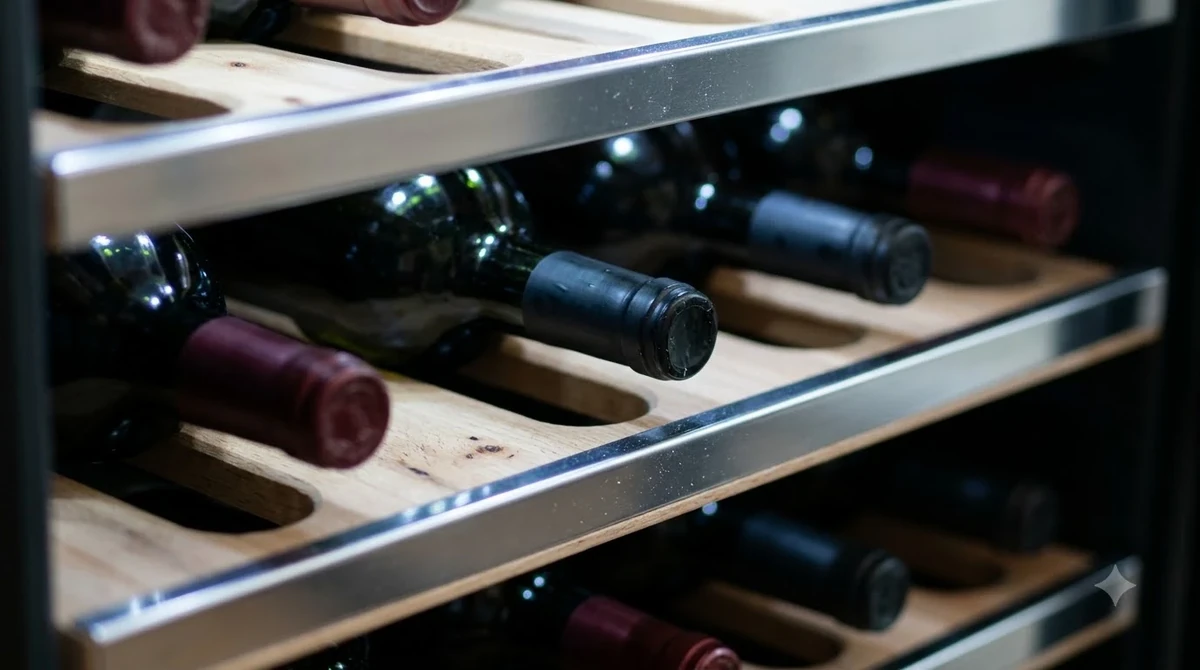
Why it stands out: Front-exhaust ventilation eliminates the side and rear clearance gaps required by freestanding appliances, creating a custom cabinetry look in islands or wet bars. Independent upper and lower thermostats let you hold crisp whites around 45°F while keeping full-bodied reds near 60°F, and the dense hardwood slats isolate each chamber from compressor vibration.
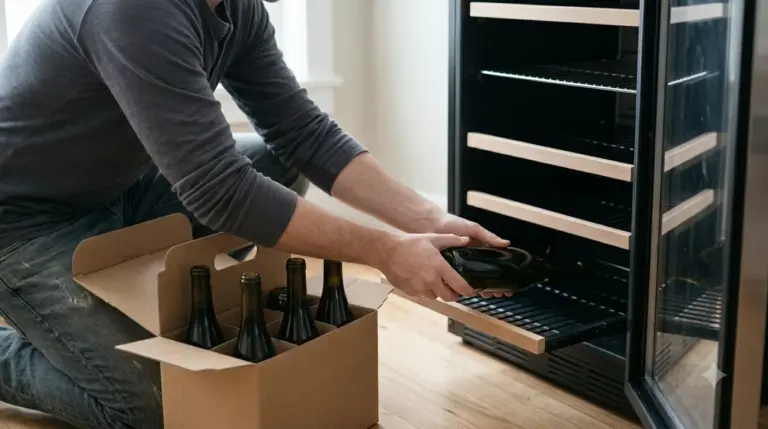
Keep in mind: Dividing a compact undercounter cabinet into two thermal zones consumes interior height for the insulated divider, reducing total bottle count compared to single-zone units of identical dimensions. Wide Pinot Noir, Champagne, or Burgundy bottles also require removing one shelf to prevent label scraping. Best for: Homeowners remodeling a kitchen or entertaining regularly with varied red and white selections.
Best for Long-Term Aging: Tall Single-Zone Wine Cabinets
Full-height single-zone wine cabinets prioritize uniform temperature stability across dozens of reinforced hardwood shelves designed for multi-year cellaring. Rather than splitting cooling power between serving temperatures, these tall units hold an entire collection at a steady 55°F cellar climate.
Why it stands out: According to Wine Enthusiast, inverter compressors paired with thick beechwood or mahogany shelving minimize micro-vibrations that can otherwise disturb sediment in aging reds. Many large-format cabinets also incorporate UV-shielded triple-pane glass or solid insulated doors alongside charcoal filtration and passive moisture systems, similar to a dedicated wine fridge with humidity control, to keep natural corks supple over decade-long storage.
Keep in mind: Tall cabinets demand dedicated floor space and several inches of top and rear ventilation unless engineered specifically for column integration. If you prefer drinking crisp Sauvignon Blanc straight from storage, bottles pulled from a 55°F aging cabinet will still need 20 minutes in an ice bucket before serving. Best for: Serious collectors cellaring Bordeaux, Napa Cabernet, or age-worthy vintages.
Best for Apartments and Small Spaces: Compact Freestanding Wood-Shelf Coolers
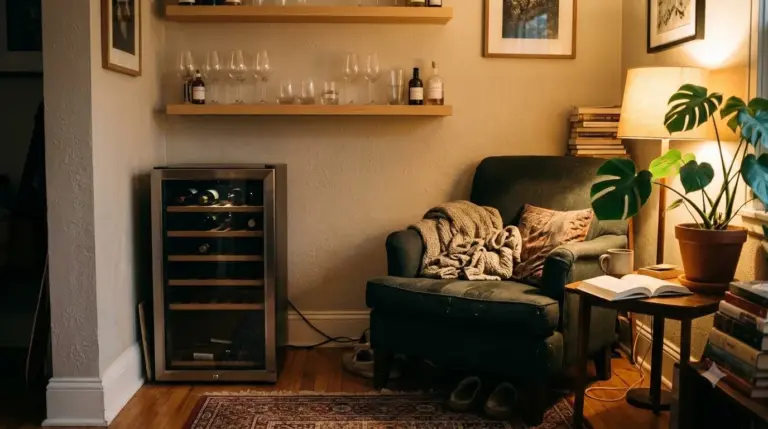
Compact freestanding coolers holding 12 to 28 bottles bring genuine wood shelving to studio apartments, dining room sideboards, and home offices without requiring cabinetry modifications. These narrow-footprint appliances plug into any standard grounded outlet and sit neatly beside a bar cart or credenza.
Why it stands out: Entry-level small coolers frequently rely on thin chrome wire racks that bow under heavy glass and snag paper labels, so stepping up to scalloped beechwood shelves immediately improves bottle stability and presentation. Quiet vibration-damped compressors or solid-state cooling modules keep operating noise low enough for open-concept living rooms.
Keep in mind: Because freestanding units vent heat through their back and side panels, you must leave two to three inches of open air around the cabinet to prevent compressor strain. Advertised bottle counts also assume slim 750 mL Bordeaux cylinders, meaning wider Rhone or sparkling bottles will reduce real-world capacity by 15 to 25 percent. Best for: Renters, casual drinkers, and small households keeping a curated two-to-three-week rotation on hand.
Best for Showcasing Labels: Label-Forward Display Wine Fridges
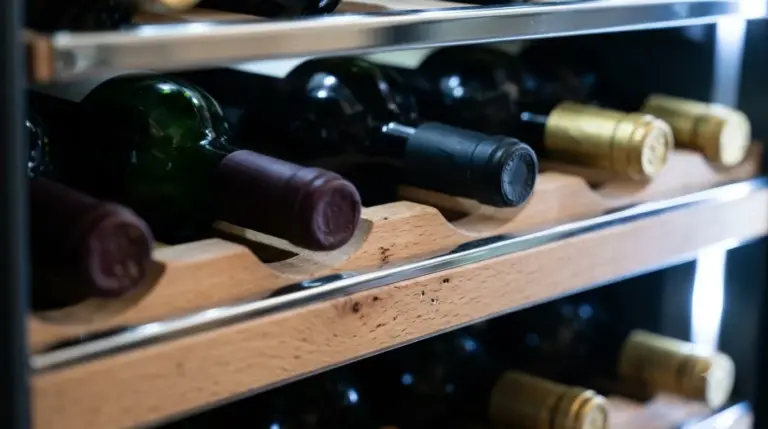
Label-forward wine refrigerators orient bottles horizontally parallel to the glass door rather than neck-out, letting you read every vintage and producer at a glance without pulling racks open. Wide wooden cradles support the body and neck of each bottle under soft interior LED illumination.
Why it stands out: Standard neck-first shelving forces you to slide out heavy trays or memorize bottle positions whenever guests ask what is chilled. Label-forward wood racking turns the fridge into a visual centerpiece while reducing door-open time, which helps the cooling system maintain tight thermal consistency. Generous vertical spacing between these horizontal wooden tiers also accommodates thicker Pinot Noir and Champagne bottles with far less friction.
Keep in mind: Orienting bottles sideways sacrifices roughly 15 to 20 percent of maximum storage density compared to double-deep neck-out stacking in a cabinet of the same width. These specialized wooden cradles are also harder to reconfigure if you ever want to bulk-stack cases. Best for: Design-focused kitchens, dining rooms, and hosts who love browsing labels visually.
Best for Entertaining: Side-by-Side Wine and Beverage Centers
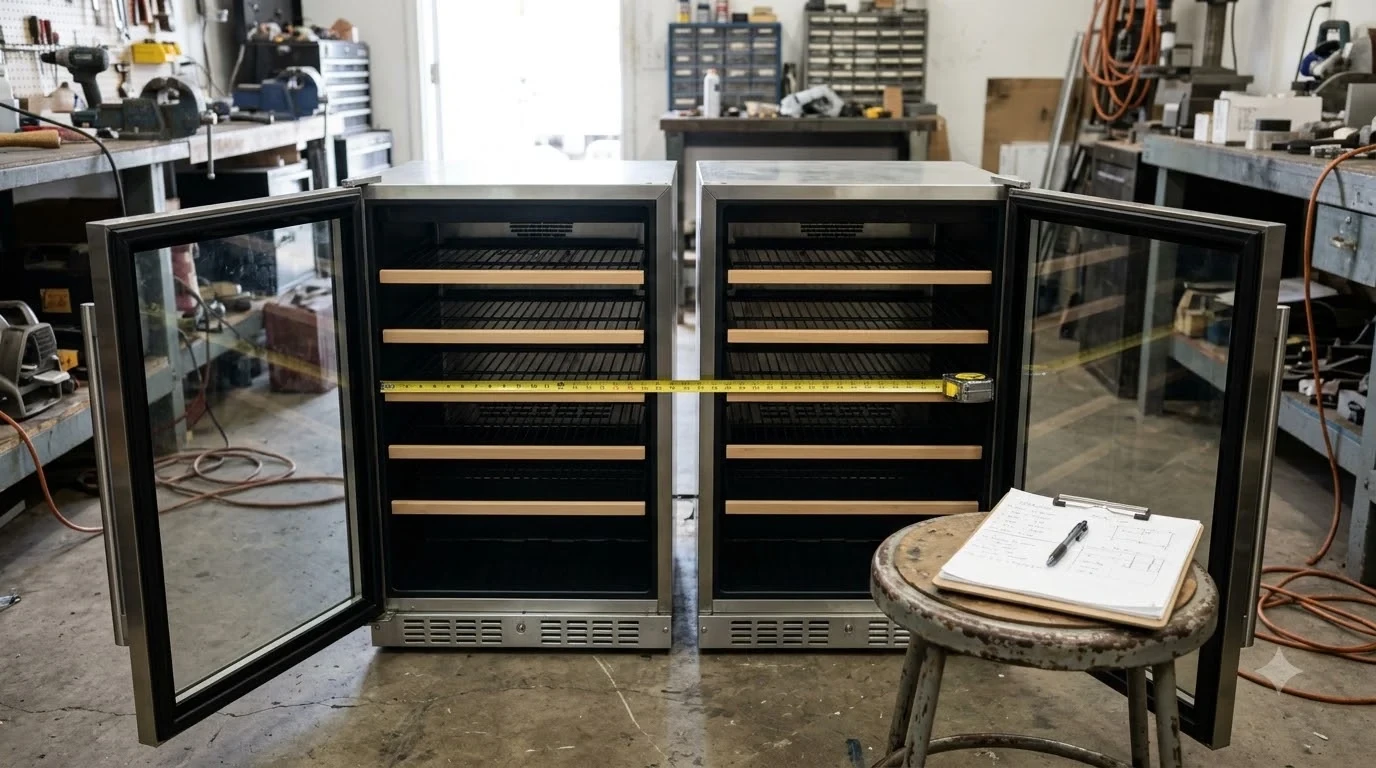
French-door wine and beverage centers split the cabinet vertically, dedicating one side to sliding wood wine shelves and the other to tempered glass or metal racks for sparkling water, craft beer, and mixers. This hybrid layout keeps household drinks organized without crowding fragile wine bottles.
Why it stands out: Mixing aluminum cans onto wooden wine slats wastes vertical space and exposes wood fibers to condensation from cold sodas. A dual-door design isolates your wine collection behind its own thermostat and hardwood racking while chilling beverages down to 37°F on the adjacent side, pairing effortlessly with a dedicated wine fridge with ice maker setup in a home bar. When planning party quantities, checking how many glasses in a bottle of wine helps you balance the wine side against canned refreshments.
Keep in mind: Most side-by-side units measure 24 to 30 inches wide, meaning each individual compartment is relatively narrow and holds around 18 to 33 wine bottles rather than a massive cellar inventory. Opening only one French door at a time, however, preserves cold air far better than swinging open a single wide glass door. Best for: Busy family kitchens, patio bars, and frequent entertainers.
How to Choose
Evaluating wood species, shelf hardware, and cooling mechanics ensures the cabinet you buy protects your bottles for years rather than warping or rattling. Review our complete breakdown of Specs & Features alongside these core buying checkpoints:
- Wood species and finish: Unfinished or lightly sealed beechwood is the industry standard because its tight, uniform grain resists warping in humid interiors without imparting resin odors. Higher-end cabinets often upgrade to sapele or mahogany, which offer superior moisture resistance and richer reddish-brown tones.
- Telescoping ball-bearing glides vs. static notches: Entry-level wood shelves rest in molded plastic cabinet grooves and require you to lift the front lip slightly to pull them out. Full-extension steel ball-bearing glides let you slide heavy, fully loaded racks smoothly forward without tipping bottles.
- Shelf spacing and bottle compatibility: Standard capacity ratings rely on narrow 750 mL Bordeaux bottles. Look for at least 3.5 to 4 inches of vertical clearance between wooden slats—or removable shelves—if you frequently buy wider Burgundy, Alsace, or sparkling cuvées.
- Compressor mounting and noise rating: Wood dampens vibration naturally, but it cannot compensate for an uninsulated motor. According to EuroCave, pairing wooden racking with rubber-mounted inverter compressors keeps operating noise near 35 to 40 decibels—quiet enough for open-plan living spaces.
- UV-protected glass and interior LEDs: Choose double- or triple-pane tinted glass that blocks ultraviolet rays, paired with low-heat LED lighting so showcase illumination never warms the top wooden shelf.
Tip: Before ordering, measure the widest bottles in your regular rotation and plan on storing 15 to 20 percent fewer bottles than the manufacturer’s maximum rating unless every shelf is adjustable or removable.
Frequently Asked Questions
Why are wood shelves better than wire racks in a wine fridge?
Hardwood shelves absorb micro-vibrations from the cooling compressor far better than rigid metal wire, helping wine mature undisturbed. Smoothly sanded wood slats also cradle bottles securely without denting foil capsules or tearing paper labels when you slide racks in and out.
What type of wood is best for wine refrigerator shelves?
Beechwood is the most widely used timber because it combines a dense, uniform grain with strong weight capacity and natural resistance to warping. Luxury cabinets often use sapele or mahogany, which provide even greater water resistance and durability under frequent sliding.
Can wooden wine fridge shelves warp or grow mold from humidity?
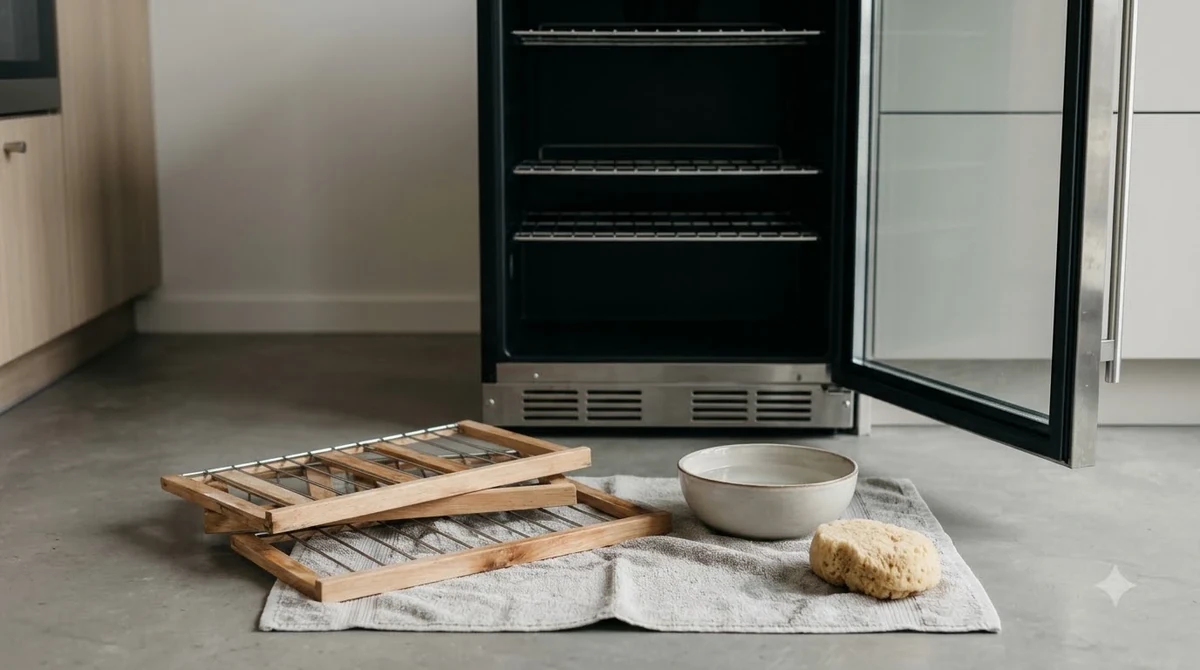
Quality wine fridges use kiln-dried hardwoods like beech or sapele that tolerate the 50 to 70 percent relative humidity typical inside wine cabinets without swelling. Wiping away condensation spills promptly and avoiding harsh chemical cleaners keeps the wood clean and odor-free.
Do wood shelves reduce how many bottles a wine fridge holds?
Thick wooden slats take up slightly more vertical height than thin wire grids, which can trim maximum capacity by a few bottles in compact cabinets. However, sliding wood shelves make back-row bottles far easier to reach, improving usable storage in everyday practice.
Choosing the right wood-shelved wine refrigerator comes down to matching your installation footprint and drinking habits with the right shelving hardware. Whether you need a flush dual-zone undercounter unit for weeknight dinners or a tall single-zone cabinet for cellaring, sturdy hardwood racks keep every bottle protected, quiet, and effortless to reach.
More in Wine Fridge Features
 Best Wine Fridge Bar Cabinet Setups for a Better Home BarUpdated Nov 20, 2026
 Wine Fridge for Champagne Bottles: Sizes and Storage GuideUpdated Nov 18, 2026
 Best Wine Fridge for Champagne Bottles: Shelf and Bottle FitUpdated Nov 18, 2026
 Best Wine Fridge with Display Shelf: Glass Doors and Open RacksUpdated Nov 18, 2026
 Best Wine Fridge With Drawers for Easy Access to Every BottleUpdated Nov 18, 2026
 Best Wine Fridge With Freezer: Combo Styles for Kitchens and BasementsUpdated Nov 18, 2026