

We may earn a commission when you buy through links on this page, at no extra cost to you. Learn more.
The best wine fridge tv stand depends on your room temperature, noise tolerance, and whether you store wine short-term or for aging, with front-venting compressor media consoles offering the most reliable cooling inside enclosed cabinetry. Whisper-quiet thermoelectric units work well for low-noise apartments and short-term chilling, while dual-zone beverage consoles suit hosts who serve reds, whites, and canned drinks side by side. Compact single-door credenzas fit tight floor plans, whereas wide sideboard-style media centers support large televisions and expansive collections.
Combining a media console with refrigerated wine storage saves floor space and keeps bottles within easy reach during movie nights or casual gatherings. Because living rooms involve television audio, warm ambient air, and tight cabinet clearances, choosing the right cooling architecture and cabinet build matters far more than surface styling alone.
Quick Comparison
Each media console category balances cooling power, acoustic output, ventilation layout, and television weight capacity differently depending on how you use your living room.
| Media Console Type | Cooling System | Ventilation Design | Ideal Screen Size | Best Use Case |
|---|---|---|---|---|
| Thermoelectric Media Console | Solid-state Peltier module | Rear or side clearance | Up to 65 inches | Quiet apartments and short-term storage |
| Front-Venting Compressor Console | Vibration-damped compressor | Front kickplate exhaust | 55 to 85 inches | Long-term aging and warm living rooms |
| Dual-Zone Wine and Beverage Stand | Dual-evaporator compressor | Front or open-back vent | 65 to 85 inches | Entertaining with mixed drinks |
| Compact Single-Door Credenza | Thermoelectric or small compressor | Rear clearance or front vent | 43 to 55 inches | Small rooms and starter collections |
| Wide Sideboard Media Center | Heavy-duty dual-zone compressor | Front grille exhaust | 75 to 98 inches | Large screens and big bottle counts |
Best for Whisper-Quiet Movie Nights: Thermoelectric Media Consoles
Thermoelectric wine fridge media stands use solid-state heat pumps rather than mechanical compressors, eliminating compressor hum and micro-vibrations right beneath your television.
Why it stands out: Because thermoelectric modules rely on electrical current passing through a Peltier ceramic plate with only a small internal circulation fan, they operate nearly silently during quiet dialogue scenes. Reviewers at Wine Enthusiast note that units rated below 40 decibels are ideal for quiet living spaces where background hum becomes distracting. Without a heavy compressor cycling on and off, these consoles also prevent subtle mechanical vibrations from disturbing bottle sediment over weeks of storage.
Keep in mind and best for: Solid-state cooling can typically lower interior temperatures by about 20 degrees Fahrenheit below the surrounding room, which makes these units sensitive to warm living rooms or direct afternoon sun. According to Wine Folly, thermoelectric coolers excel for short-term holding rather than multi-year cellaring because ambient heat swings cause wider internal temperature shifts. Choose this style if your living room stays climate-controlled year-round, you leave at least four inches of breathing room behind the cabinet for rear heat dissipation, and acoustic silence during movies outranks multi-year aging capability.
Best for Serious Collectors and Warm Living Rooms: Front-Venting Compressor Consoles
Front-venting compressor wine fridge TV stands pair true vapor-compression refrigeration with a slotted base grille, allowing the cabinet to sit flush against a wall while maintaining steady cellar conditions.
Why it stands out: Unlike rear-venting cabinets that trap hot exhaust air against drywall and overwork the motor, a front-venting built-in chassis draws cool air in and expels warm air forward through a lower kickplate. Compressor cooling easily holds the benchmark 55-degree Fahrenheit cellar range even during summer afternoons when living room temperatures climb into the upper seventies. Quality models also incorporate rubber-mounted compressors, UV-tinted double-pane glass doors, and activated carbon filters to shield corks from light, heat, and household odors.
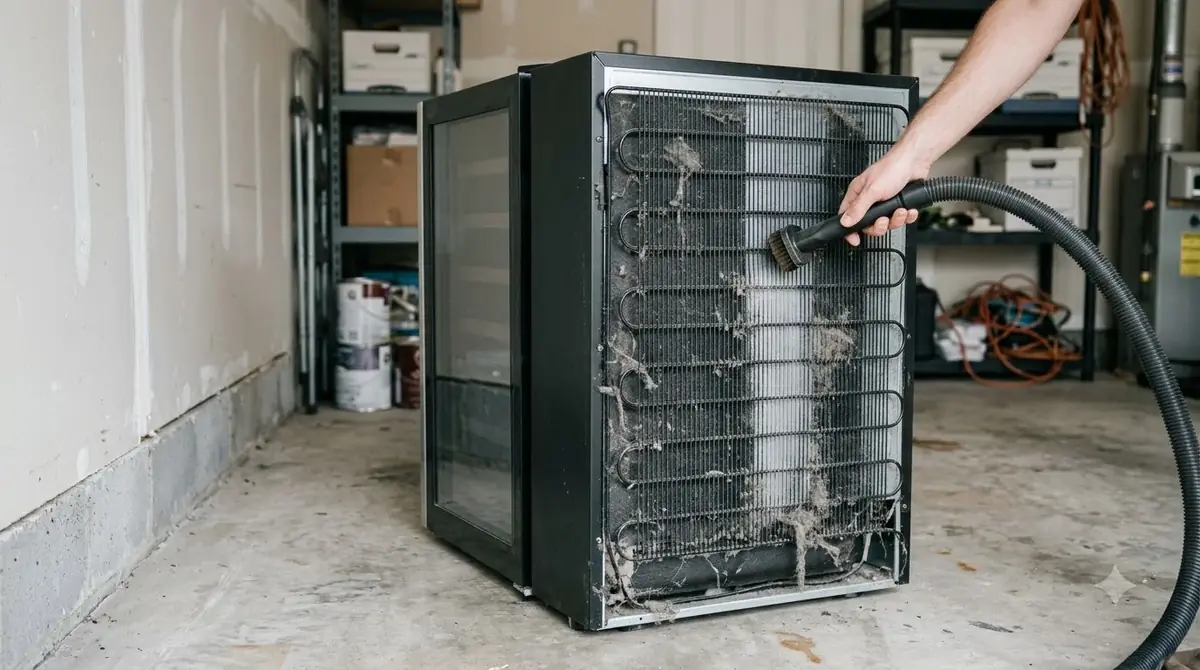
Keep in mind and best for: Compressor cabinets produce a low mechanical murmur when the cooling cycle engages, though modern variable-speed motors keep sound levels gentle enough for normal television viewing. You will need to wipe dust off the front intake grille every few months so airflow stays unobstructed. This category is best for collectors who keep age-worthy bottles in the living room, households in warmer climates, or anyone placing a media console tight against a wall or inside a recessed alcove.
Best for Entertaining and Mixed Drinks: Dual-Zone Wine and Beverage TV Stands
Dual-zone wine and beverage media consoles split the lower cabinet into independently controlled compartments, chilling red wine at cellar warmth on one side while keeping sparkling water, craft beer, and white wine crisp on the other.
Why it stands out: Standard single-zone wine coolers rarely drop low enough for canned sodas or pilsners without freezing delicate whites, whereas dual-zone beverage designs pair a 41-to-64-degree wine section with a 34-to-45-degree beverage side. Separate thermostats, glass doors, and adjustable wire or wood-trimmed racks let hosts organize upright cans alongside horizontal Bordeaux and Burgundy bottles. If you already compare setups like a dedicated wine and beer fridge, integrating that split storage under your screen eliminates extra kitchen trips during game days or watch parties.
Keep in mind and best for: Two independent temperature zones require a center thermal divider and extra evaporator hardware, which slightly reduces total bottle capacity compared to an open single-zone interior of the same width. Check that the beverage side includes flat, tip-resistant shelving so tall cans and mixer bottles do not slide when you close the door. This design suits frequent hosts, households with mixed drink preferences, and open-concept family rooms built around casual entertaining.
Best for Small Apartments and Tight Living Spaces: Compact Single-Door Media Credenzas
Compact single-door wine fridge TV stands typically span 36 to 48 inches wide, tucking a 15-to-24-bottle cooler beside closed media shelving without overwhelming a studio or narrow den.
Why it stands out: Apartments and secondary dens rarely have room for a sprawling 70-inch credenza, yet still need stable storage for a case or two of everyday bottles plus a streaming box or soundbar. By pairing a narrow under-counter wine cooler with a single side cabinet or open shelf column, these compact stands concentrate structural weight directly over reinforced corner legs. Many models also feature reversible door hinges so you can swing the glass door away from nearby coffee tables or sectional sofas.
Keep in mind and best for: Narrower footprints cap maximum television screen size at roughly 55 inches and leave limited internal space for oversized Champagne or Pinot Noir bottles unless shelves are removable. Make sure the cord pass-through cutouts in the open shelf bay sit clear of the cooler exhaust path so electronics do not trap extra warmth. Pick this style for apartments, condo living rooms, or bedrooms where floor space is tight and your collection stays around one to two cases.
Best for Large Screens and Open-Concept Rooms: Wide Sideboard-Style Media Centers
Wide sideboard-style wine fridge TV stands stretch 65 to 84 inches across, anchoring oversized flat-screen televisions while housing 40 to 100 bottles across twin refrigerated cabinets.
Why it stands out: Large living rooms need visual proportion beneath 75-inch or 85-inch screens, and narrow stands look top-heavy under wide displays. Sideboard-inspired media consoles distribute heavy glass-and-liquid loads across six or more solid wood or steel legs, preventing top-panel sag over years of use. Much like a dining-room wine fridge sideboard, these wider units often flank dual wine coolers with central drawers for remotes, corkscrews, coasters, and game controllers, keeping clutter out of sight.
Keep in mind and best for: A fully loaded 60-bottle dual-cooler console plus a large television can easily exceed 350 pounds, so verify the manufacturer load rating and check floor leveling before filling the racks. Dual-cooler layouts also require two standard outlets or a properly rated surge protector positioned safely away from rear exhaust vents. This layout is best for spacious family rooms, large-screen home theaters, and hosts who want serious bottle capacity alongside closed media storage.
How to Choose
Start by matching the console width and load rating to your television. Your stand should extend at least two to four inches past both sides of the TV base for visual balance and tip safety, and its top deck must comfortably support the screen weight plus soundbars or decor. Next, inspect ventilation requirements: front-venting models push warm air out beneath the door and can sit flush against a wall, whereas rear-venting units need three to five inches of open rear clearance and ventilated back panels.
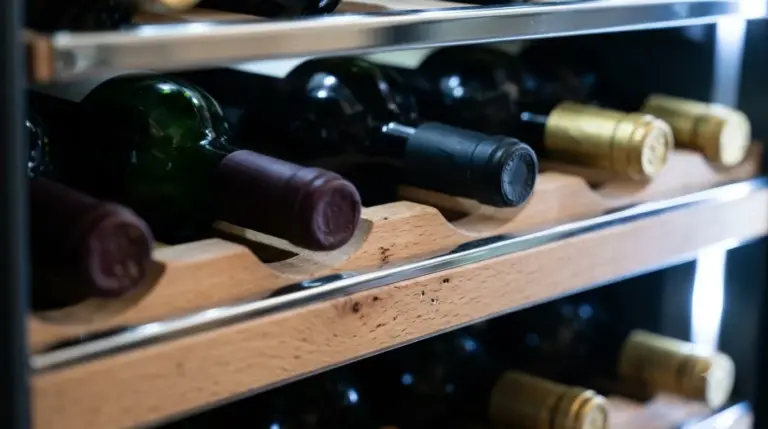
Evaluate internal shelving and door construction before committing to a bottle count. Advertised capacities assume slim 750-milliliter Bordeaux bottles, so wider Burgundy, Riesling, or sparkling bottles will reduce real-world capacity unless you can slide out or adjust individual beechwood or wire racks. Look closely at essential Specs & Features such as dual-pane UV-blocking glass, digital touch thermostats with memory recovery after power outages, and soft interior LED lighting that generates zero heat. Finally, estimate your household consumption pace—keeping track of how many glasses in a bottle of wine helps you size the cooler for weekly entertaining versus multi-year bottle rest.
Tip: Level the console with a carpenter’s bubble level on both axes before loading any bottles; an unlevel frame twists the door gasket, letting warm room air leak in and forcing the cooling system to run continuously.
Frequently Asked Questions
Can you safely put a heavy TV on top of a wine fridge console?
Yes, provided the wine cooler sits inside a reinforced furniture frame rather than supporting the television directly on its sheet-metal housing. Always verify the manufacturer’s top-panel weight limit and ensure the TV stand feet rest squarely over structural side walls or center support dividers.
Will a wine fridge TV stand vibrate enough to damage my wine?
Thermoelectric consoles produce virtually zero vibration because they have no compressor, making them completely gentle on sediment. Modern compressor consoles built for living spaces use rubber shock absorbers and vibration-damped mounts that keep movement minimal for everyday drinking and medium-term storage.
How much clearance does a wine fridge media console need behind it?
Front-venting built-in units only require about one to two inches at the back to accommodate power plugs and prevent cord pinching. Rear-venting freestanding models need three to five inches of open space behind the cabinet plus unobstructed side airflow so trapped exhaust heat does not burn out the cooling system.
Is a single-zone or dual-zone wine fridge TV stand better for living rooms?
A single-zone console works best if you mostly drink one style of wine or plan to store everything at a universal 55-degree cellar temperature. Choose a dual-zone model if you regularly serve crisp white wines, sparkling bottles, or canned beverages alongside reds without chilling them in your kitchen refrigerator first.
Pairing your television console with dedicated wine storage turns an ordinary media wall into a functional hospitality hub without sacrificing floor space. By prioritizing front-venting airflow, low decibel ratings, and sturdy cabinet load support, you can protect your bottles from heat and vibration while keeping every pour within arm’s reach of the sofa.
More in Wine Fridge Features
 Best Wine Fridge Bar Cabinet Setups for a Better Home BarUpdated Nov 20, 2026
 Wine Fridge for Champagne Bottles: Sizes and Storage GuideUpdated Nov 18, 2026
 Best Wine Fridge for Champagne Bottles: Shelf and Bottle FitUpdated Nov 18, 2026
 Best Wine Fridge with Display Shelf: Glass Doors and Open RacksUpdated Nov 18, 2026
 Best Wine Fridge With Drawers for Easy Access to Every BottleUpdated Nov 18, 2026
 Best Wine Fridge With Freezer: Combo Styles for Kitchens and BasementsUpdated Nov 18, 2026