

We may earn a commission when you buy through links on this page, at no extra cost to you. Learn more.
The best cube wine rack stacks modular cubes, so it holds any bottle shape, grows with your collection, and fits a small or large space without a fixed layout. Cube racks are built from individual compartments that sit one on top of another or side by side. Each cube holds a single bottle, and the arrangement can be changed as the collection grows. That flexibility is the main reason buyers choose the format over a fixed rack. The right choice depends on the room, the material you prefer, and how many bottles you expect to keep.
Wine racks come in many forms, from wall-mounted displays to large floor units. The cube style sits in the middle of the range: it stores more bottles than a single wall unit, and it keeps the layout flexible when the collection changes. Cube racks also suit bottles of different shapes, because each compartment is sized for the bottle it holds rather than forcing every bottle into a single slot. This guide covers the factors that matter most when choosing a cube rack, from materials to sizing and placement.
Quick Comparison of Cube Rack Materials and Setups
Cube racks differ mainly by material and by how the cubes are joined. The table below compares the common options by look, durability, and fit for different rooms. The ratings are general comparisons rather than measurements, and they are meant to help you narrow the list before reading the sections that follow.
| Option | Look | Durability | Best setting |
|---|---|---|---|
| Wood cubes, unfinished or sealed | Warm and natural | Good with care | Living rooms, dining areas |
| Stainless steel cubes | Clean and modern | High, resists staining | Kitchens, bars |
| Painted metal cubes | Flexible colors | Good | Decorative spaces |
| Plastic cubes | Lightweight and varied | Moderate | Rentals, light use |
| Modular stacking system | Customizable | Depends on joins | Growing collections |
Best for Small Kitchens and Apartments
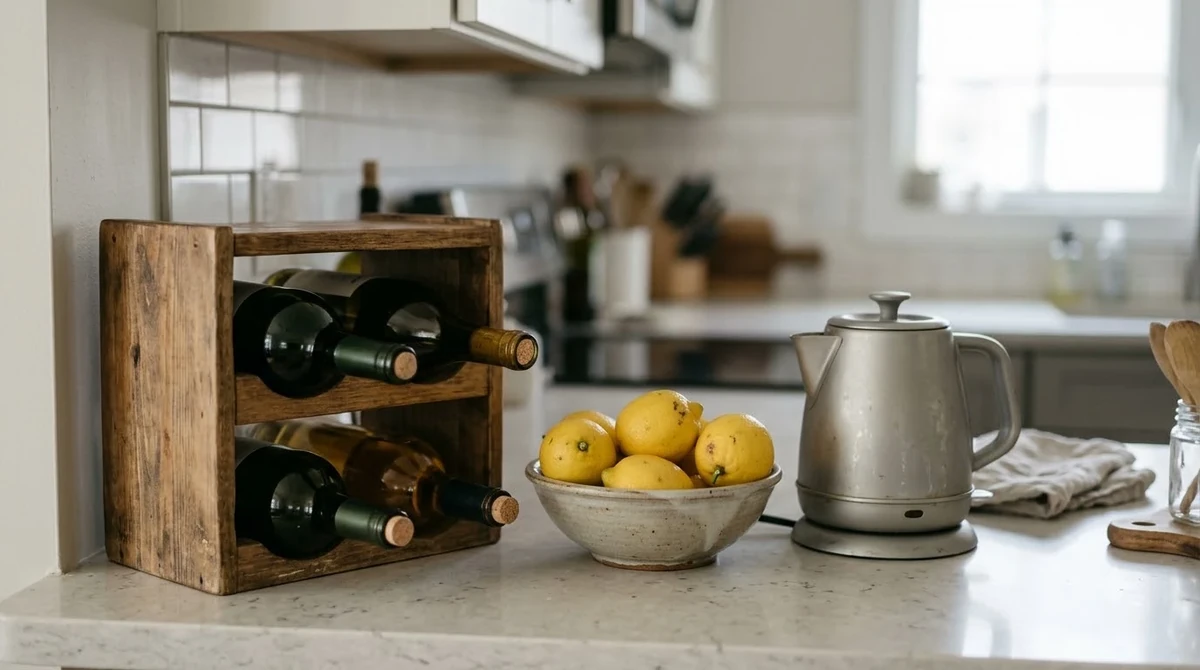
A compact cube rack is a sensible choice for a small kitchen or an apartment, where floor space is limited and every shelf has a purpose. Stacked cubes take up a footprint that can be adjusted to the wall, and a small arrangement can hold a dozen bottles without crowding the counter. This setup suits people who drink wine several times a week and want their bottles within reach.
Cubes stand out because they keep the bottles off the counter while still making them easy to grab. A stacked arrangement can be shaped to a corner or an alcove, and a stainless steel or sealed wood finish is easy to wipe clean in a kitchen. Each bottle sits in its own compartment, so a bottle can be removed without moving the rest.
The limit is space for larger purchases. A small cube rack can run out of room quickly once a few cases arrive, so think about the next purchase before buying. Also check the cube depth against the longest bottle you own, since a neck that sticks out too far can make the stack look untidy.
Best for Growing Collections
A modular cube rack suits a collection that is expected to grow. Units can be added on the sides or above the existing stack, which means the rack expands with your purchases rather than being replaced. This is useful for buyers who start with a handful of bottles and later add a case or two each season.
The advantage of modular design is that the layout can be changed without starting over. Cubes can be rearranged to group bottles by style, region, or drinking date, and a new cube can be added where space allows. Because each compartment stores one bottle, the rack keeps the collection organized as it grows.
Check the joining method before buying. Some systems lock the cubes together firmly, while others rest on each other and need a flat, level surface. A growing rack also needs a stable base, since a tall stack that leans can be unsafe with heavy bottles. A wide, level wall or floor helps the stack stay steady as it expands.

Best for Living Rooms and Display
A cube rack can double as a display in a living room or a den. The open cubes frame each bottle, and the arrangement can be made to look like a piece of furniture rather than storage. This setup suits people who want their wine visible and who enjoy showing off labels as part of the room’s décor.
Display cubes work well because they are visually balanced. Each cube draws a neat outline around a bottle, and a symmetrical stack looks intentional in a living space. Wood finishes are often chosen for this purpose, since the warm tone pairs well with other furniture and lighting.
Display racks need care. Bottles on show are exposed to light and temperature changes, and they are easy to bump when guests pass by. Keep the rack away from direct sunlight and heat sources, and avoid placing it near a radiator or a window that gets strong afternoon sun.
Best for Mixed Bottle Shapes and Large Formats
Cube racks suit a mix of bottle shapes and sizes, because each compartment holds one bottle regardless of its form. A wide cube can take a large-format bottle, while a narrower cube fits a standard Bordeaux or Burgundy shape. This makes the format useful for collectors who buy a variety of bottles rather than one style.
The strength of this approach is flexibility. A cube can be sized to fit a particular bottle, and a mixed rack avoids the awkward gaps that a fixed rack can leave when unusual bottles are stored in it. For a collector with sparkling wines, sweet wines, and still reds, the modular layout keeps each bottle secure.
Large cubes take more room and are heavier when filled. Check the weight rating before loading the rack, and avoid stacking the heaviest bottles at the top, where they can shift the balance. Lay out the bottles before placing them, so the heavier ones sit near the bottom.
Best for Kitchens and Bars with Heavy Use
A stainless steel cube rack is a good fit for a kitchen or a home bar where spills and frequent handling are common. Steel resists corrosion and staining, and its clean finish suits a modern kitchen or a bar cart in the corner of a room. Because it is easy to wipe down, the rack keeps its appearance over years of use.
Stainless steel stands out for durability. It handles humidity and splashes well, and its surface can be cleaned quickly after a dinner. A metal rack also tends to be sturdy, which helps when bottles are pulled out often and returned to the same spot.
The trade-off is warmth. Steel can look cool and industrial, so it may not suit every room. Its surface can also show fingerprints, and it is less forgiving of a hard bump than solid wood. Choose a finish that matches the room, and keep a soft cloth nearby for quick cleaning.
How to Choose a Cube Wine Rack
Start with the space and the collection. A rack should fit the wall or floor where it will stand, and its capacity should match how many bottles you expect to store. Once the space is measured, choose the material and the joining method that suit the room and the way you use the rack.
- Material: wood looks warm, steel suits kitchens, and plastic keeps the cost down for light use.
- Cube depth: check the cube size against the longest bottle you own.
- Expandability: modular systems grow with the collection, while fixed racks stay the same size.
- Stability: a level, sturdy base keeps a tall stack steady, especially with heavy bottles.
- Placement: keep the rack away from heat, direct sunlight, and busy traffic.
Wood choice deserves a closer look. Cedar is popular because of its scent, but that aroma can be a drawback for wine storage. The Wine rack article on Wikipedia notes that cedar’s aroma can penetrate the wine through the cork, so a sealed or unscented wood is often the better choice for storing bottles. If you want to compare other styles, the wine rack guide covers more formats, and the wall mounted wine rack guide shows the alternative for tight spaces.
Tip: Fill the rack from the bottom up, placing the heaviest bottles nearest the base. Check the stack once a season for any cube that has loosened or shifted.
Frequently Asked Questions
Are cube wine racks good for storing bottles long term?
A cube rack can hold bottles securely, but long-term storage also depends on temperature, light, and humidity. Keep the rack away from heat and direct sunlight, and check the bottles periodically for any changes in the cork or label.
What material is best for a cube wine rack?
Wood gives a warm look, stainless steel handles kitchens and spills well, and plastic is a light, lower-cost option. Choose a material that suits the room and avoid strongly scented woods for bottles that will be stored for a while.
How many bottles fit in a cube rack?
Capacity depends on the number of cubes and their depth. Each cube holds one bottle, so count the cubes in the layout you plan to use. The how many bottles in a case of wine guide helps plan how many cubes a typical purchase needs.
Can a cube rack hold bottles of different sizes?
Yes. Each cube is sized to hold one bottle, so a rack can mix standard and large-format bottles. Check the cube dimensions against the tallest and widest bottles before arranging the stack.
Once the rack is in place, the rest of the storage plan falls into shape. The Racks & Storage section lists the main rack types by style and size, which makes it easy to compare a cube rack with other options for the same room.
More in Racks & Storage
 Best Wine Barrel Racks for Distinctive Bottle StorageUpdated Nov 20, 2026
 Best Wine Storage Tower: Sizing, Protection and Room LayoutUpdated Nov 18, 2026
 Best Pyramid Wine Rack: Materials, Sizes and Where It FitsUpdated Nov 18, 2026
 Best Kitchen Cabinet Wine Rack Insert for Built-In Bottle StorageUpdated Nov 18, 2026
 Best 16 Bottle Wine Rack Options for Kitchens, Bars and CellarsUpdated Nov 18, 2026
 Best 48 Bottle Wine Rack Options for Cellars, Kitchens, and Tight SpacesUpdated Nov 18, 2026