

We may earn a commission when you buy through links on this page, at no extra cost to you. Learn more.
The best decanter with aerator depends on the job you want it to do: a pour-through aerator built into the spout suits daily wine, a wide-base decanter with a separate aerating insert suits dinner tables, and a simple glass decanter works for older bottles where you want to leave sediment behind. Look at the spout design, the capacity, and how easy the aerator is to clean, because those three features decide how often you will actually use it.
A decanter with aerator combines two jobs in one vessel. Decanting separates clear wine from sediment and lets it meet air before serving, while an aerator adds air as the wine pours. Many products on the market promise faster softening of young wine, so the useful question is which design fits how you drink. The sections below group the options by use and explain what to check in each one.
Quick Comparison of Decanter and Aerator Styles
Most decanter-with-aerator designs fall into four groups. They differ in how the air gets into the wine, how much they hold, and how much work they need to clean. The table lists the main tradeoffs so you can narrow the list before reading the details.
| Style | How air is added | Capacity | Cleaning | Best for |
|---|---|---|---|---|
| Pour-through aerator spout | Wine passes through a spout with vents as it pours | Usually one bottle or less | Easy, rinse after use | Quick everyday pours |
| Wide-base decanter with aerating insert | Wine spreads over a broad surface and passes an insert | Around one bottle | Moderate, the insert needs care | Dinner service |
| Classic glass decanter with stopper | Wine is poured and left to stand in a wide vessel | Around one bottle | Easy with a brush and rinse | Older wines and sediment |
| Countertop display decanter | Wine is poured into a wide vessel with a built-in mesh or grid | Varies by model | Moderate | Tables that show the bottle |
Best for Everyday Pour-Through Aerators
A pour-through aerator is the simplest way to add air to a glass of wine at home. The wine runs through a vented spout as you pour, so each glass gets a little oxygen without a long wait. This style suits weeknight dinners, where you want a better glass from the bottle you already opened and do not want another vessel to wash.
Why it stands out: it adds air at the moment of pouring, which means you do not have to plan ahead. The vessel stays small, and most spouts rinse clean in seconds.
Keep in mind: a pour-through spout does not hold a full bottle at once, so it gives less room for a long standing period. It also does not separate sediment, so it is a poor fit for an older bottle with deposits on the bottom.
Best for: single-glass pours and anyone who drinks wine on most weeknights.
Best for Built-In Aerating Inserts at the Table
A wide-base decanter with a removable aerating insert suits a dinner table where the wine is poured in advance and shared. The broad base gives the wine more surface area, which is the main reason decanters have long been used for aeration. A separate insert adds more contact with air as the wine passes through it, so the wine opens a little faster than in a plain vessel.
Why it stands out: a wide body looks good on a table and lets you pour a full bottle in one step. Many inserts sit in the neck, so the wine meets air in the same vessel you serve from.
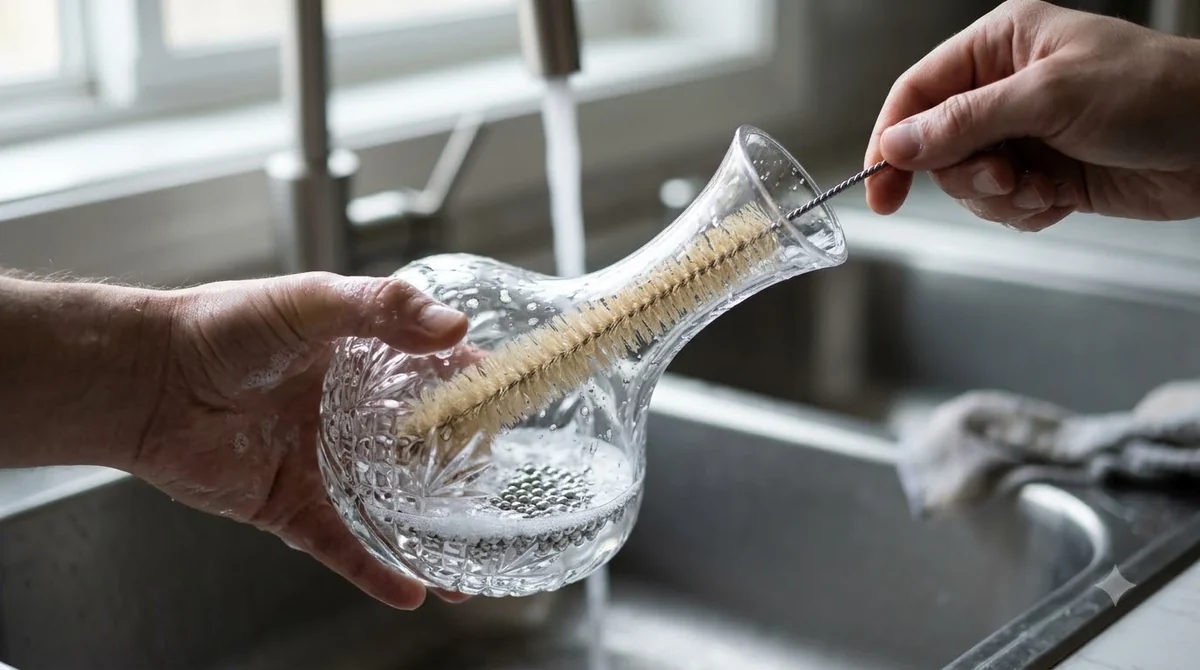
Keep in mind: the insert is the part that needs attention. Narrow openings can trap residue, so plan to rinse it right after use and let it dry fully before you put it away.
Best for: hosts who open a bottle an hour or so before guests arrive.
Best for Older Bottles and Sediment
A classic glass decanter with a stopper is the right pick when the wine has sediment. Decanting pours clear liquid off the deposit that stays in the bottle, so the decanter’s job is to hold the clear wine while the rest stays behind. A decanter with a wide body and a narrow neck makes it easier to see the line where sediment begins.
Why it stands out: a plain glass vessel lets you see the wine clearly while you pour. The stopper keeps the wine from picking up dust while it stands.
Keep in mind: this style does not add air quickly. The classic method, pouring a bottle 15 to 20 minutes before serving, is the approach that the VinePair decanting guide favors over hyper-decanting gadgets. Expect to wait a short time if you use this method for a younger wine.
Best for: older red bottles that have been lying down for years, where sediment is likely.
Best for Countertop Display
A countertop decanter with a built-in mesh or grid is designed to be seen as much as used. The wine passes over the grid as it is poured, which spreads it across a larger surface, and the vessel can sit on a bar cart or kitchen counter without looking like equipment. It suits homes where the decanter is part of the room.
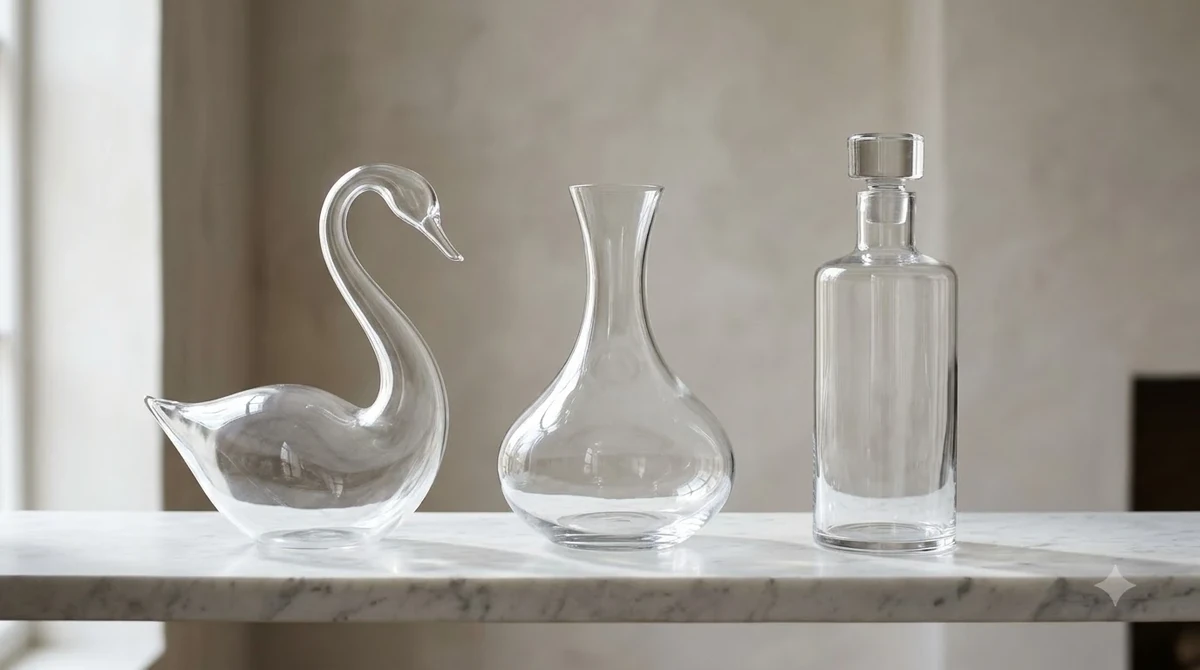
Why it stands out: the design doubles as décor, and the grid helps spread the wine as it enters the vessel. Clear glass makes the color easy to judge.
Keep in mind: grids are harder to clean than a smooth body. Use a long brush and a mild, unscented soap, and dry the grid completely before storing it.
Best for: home bars and entertaining spaces where the decanter stays out.
Best for Small Kitchens and Tight Storage
A compact decanter with aerator takes up little cupboard space and suits apartments and small kitchens. A slim body and a short neck mean it fits on a shelf beside glassware, and a lightweight build makes it easy to lift with one hand. The tradeoff is capacity, since a smaller vessel holds less than a full bottle.
Why it stands out: a small footprint is easy to store, and a single-serving decanter can be filled from a bottle and rinsed after one meal.
Keep in mind: a compact vessel may hold only part of a bottle, so you may need to pour in two stages. Check the stated capacity before buying, and compare it with the bottles you open most often.
Best for: one or two people who open a bottle at a time and have limited storage.
How to Choose a Decanter With Aerator
Start with how you drink and what the wine needs. Use the list below to match a design to your routine, then check the practical details before you buy.
- Daily pours: a pour-through aerator is the simplest choice and rinses clean quickly.
- Dinner service: a wide-base decanter with an insert gives room for a full bottle and looks good on the table.
- Older bottles: a classic glass decanter with a stopper helps separate clear wine from sediment.
- Cleaning: avoid narrow openings and tight joints that trap residue, and confirm that every removable part fits your sink or dishwasher rules.
- Capacity: match the vessel to the bottles you open most often, rather than the largest one you might ever need.
Tip: rinse the decanter with warm water right after use, before wine dries on the glass. Dried residue is harder to remove than a fresh rinse.
Frequently Asked Questions
Does a decanter with aerator really improve the wine?
Air exposure can soften some harsh qualities in young, tannic red wines, and a wide surface helps the wine open. The effect varies by wine, and it is smaller for delicate bottles, so taste before and after to judge the change. A decanter is also useful for separating sediment in older bottles, which an aerator alone does not do.
How long should I decant wine before serving?
The VinePair decanting guide suggests pouring the wine into a decanter 15 to 20 minutes before serving. Older and more delicate wines may need less time, and young tannic wines may benefit from a little longer. Taste a small amount to judge how the wine has opened.
Can I use a regular glass decanter as an aerator?
Yes. Any clean, wide vessel works for aeration, and a plain glass decanter offers a large surface for air to reach the wine. A dedicated aerator adds air more quickly as the wine pours, but a standard decanter does the job if you give it time.
Are decanter aerators hard to clean?
It depends on the design. Pour-through spouts rinse in seconds, while inserts with narrow openings and grids need a long brush. Rinse right after use and dry all parts fully before storing them to prevent residue and odor.
Match the decanter to the way you drink, and you will use it more often. If you are looking for a decanter built for a specific wine style, read the guide to the wine decanter with aerator, which covers those options in more depth. For a sense of how many servings a bottle gives when you plan a table, see how many glasses in a bottle of wine. You can also browse the Accessories Library for other serving gear, such as a wine tumbler with lid for outdoor pours.
More in Wine Accessories
 Coravin Vs Vacu Vin: Choose the Right Wine Saver for Your BottlesUpdated Nov 21, 2026
 Zwilling Wine Stopper Review: Preserve Open Bottles LongerUpdated Nov 21, 2026
 Wine Enthusiast Wine Preserver Review: Features, Benefits and LimitationsUpdated Nov 21, 2026
 Wine Enthusiast Wine Stopper: An Easier Way to Reseal Open BottlesUpdated Nov 21, 2026
 Vintorio Wine Opener: Two-Step Cork RemovalUpdated Nov 21, 2026
 Zwilling Wine Aerator Review: Aerate, Pour, and Seal With One ToolUpdated Nov 21, 2026