


We may earn a commission when you buy through links on this page, at no extra cost to you. Learn more.
The best dual zone under counter wine fridge keeps two temperature bands in one narrow cabinet. Look for a unit that holds red wine a little warmer than white, fits your cabinet opening with room for airflow, and opens without blocking your work space. The right choice depends on how many bottles you keep, how often you open the door, and whether the cabinet is built in or freestanding under a counter.
A dual zone unit is useful because red and white wines are usually served at different temperatures. The Wikipedia overview of wine cellars describes a stable storage range of about 7 to 18 °C (45 to 64 °F), with roughly 13 °C (55 °F) considered ideal, and it stresses that changes should happen gradually. A dual zone fridge gives you two of those bands in one cabinet instead of one compromise temperature for everything. This guide compares five buying angles for under-counter dual zone units, then ends with a checklist for measuring and choosing.
Quick Comparison of Under-Counter Dual Zone Styles
The table below compares the main decision points for this category: how the two zones are arranged, how the unit fits a counter run, how often the door gets opened, and how much bottle storage each style tends to offer.
| Buying angle | Best for | Zone layout | Fit in the counter run | Bottle storage |
|---|---|---|---|---|
| Separated reds and whites | Mixed collections | Two distinct bands | Standard under-counter width | Moderate |
| Tight gaps | Narrow cabinet openings | Compact, often two smaller zones | Narrow cabinet | Modest |
| Built-in runs | Kitchen cabinet lines | Two bands, flush front | Matches cabinet fronts | Moderate to large |
| Frequent entertaining | Hosts who open often | Two bands with a quick-access upper zone | Clear space in front | Moderate |
| Long-term aging | Bottles kept for years | Stable lower zone for reds | Standard under-counter width | Moderate to large |
The main trade-off is between fit and capacity. A narrow unit saves room in a tight kitchen but holds fewer bottles, while a full-width built-in offers more storage and a more finished look. Decide on the cabinet opening first, then choose the zone arrangement that suits your bottles.
Best for Reds and Whites Kept Apart
A dual zone unit is most useful when you keep both red and white wine on hand and want each at its own temperature. One zone can sit in the warmer band that suits most reds, while the other stays cooler for whites and sparkling wine.
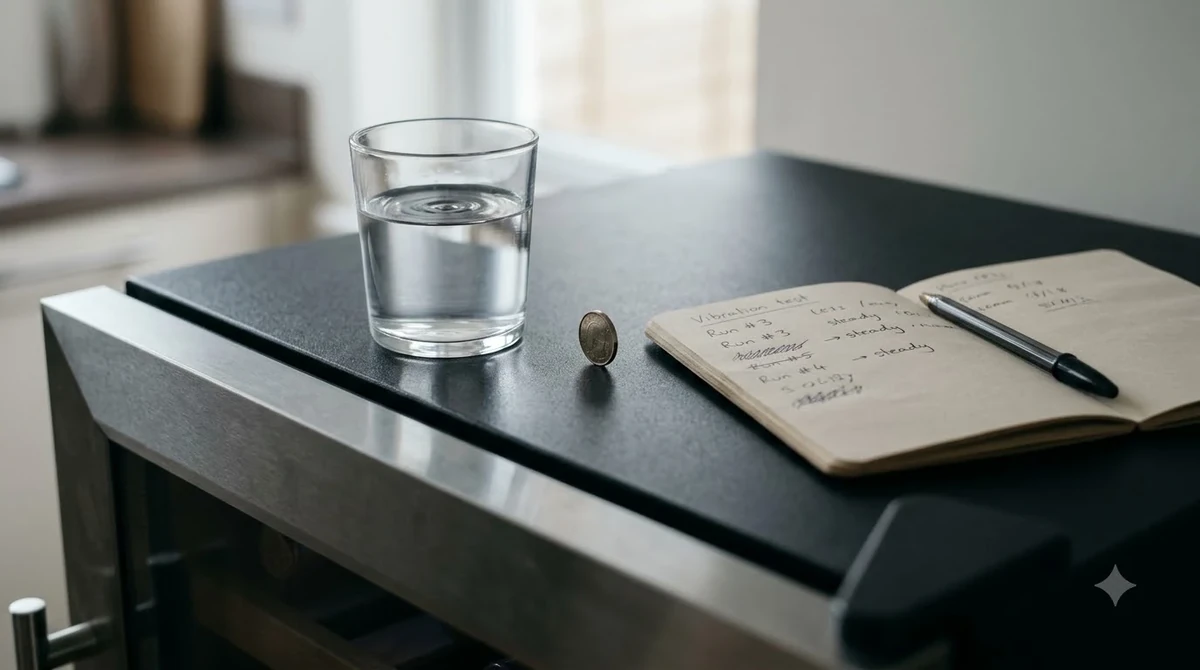
Why it stands out. Separate zones prevent the constant compromise of storing everything at a single setting. Because each zone is its own band, you can serve a red at a gentler temperature and a white straight from the cabinet without a long wait.
Keep in mind. Check that the two zones really are independent. Some units share one compressor and a single control, which limits how far apart the bands can be set. Read the temperature range listed for each zone before you buy.
Best for. Households that drink both colors every week and want one cabinet that handles both. Wine stored in a stable range keeps its character longer, which is the main reason to separate the zones in the first place.
Best for Tight Under-Counter Gaps
A narrow dual zone unit suits a kitchen where the gap between cabinets is smaller than a standard appliance. It fits the space that would otherwise sit empty, and it still gives two temperature bands for a modest collection.
Why it stands out. A compact cabinet can slide into a gap that a full-width model cannot use. Smaller units also tend to be easier to place next to a dishwasher or range without crowding the counter.
Keep in mind. Narrow units hold fewer bottles, so a growing collection may outgrow them quickly. Measure the opening at the top, middle, and bottom, because cabinet edges are not always square, and leave the ventilation clearance the manufacturer specifies.
Best for. Small apartments, galley kitchens, and anyone who wants wine storage without giving up a full counter run.
Best for Built-In Kitchen Runs
A built-in dual zone unit sits flush with the cabinet line and takes a cabinet-style front. It looks like part of the kitchen rather than a separate appliance, and it suits people who plan their kitchen layout from the start.
Why it stands out. A flush front keeps the counter line clean and makes the unit easy to match with cabinet doors. Built-in models often offer more bottle room than narrow freestanding units, which makes the storage feel like a planned feature.
Keep in mind. Built-in units need the right ventilation, usually a front vent or a gap at the top or back, so check the install guide before you order cabinet panels. A flush install can trap heat if the spacing is wrong, which shortens the life of the compressor and makes temperature control harder.
Best for kitchen renovations and homes where the cabinet layout is already decided. Anyone with a built-in plan should compare the storage options for under counter wine cooler designs before building the cabinet opening.
Best for Frequent Entertaining
A dual zone unit that is opened often needs easy access and a layout that keeps the most-used bottles near the door. It suits hosts who pull a bottle several times during an evening.
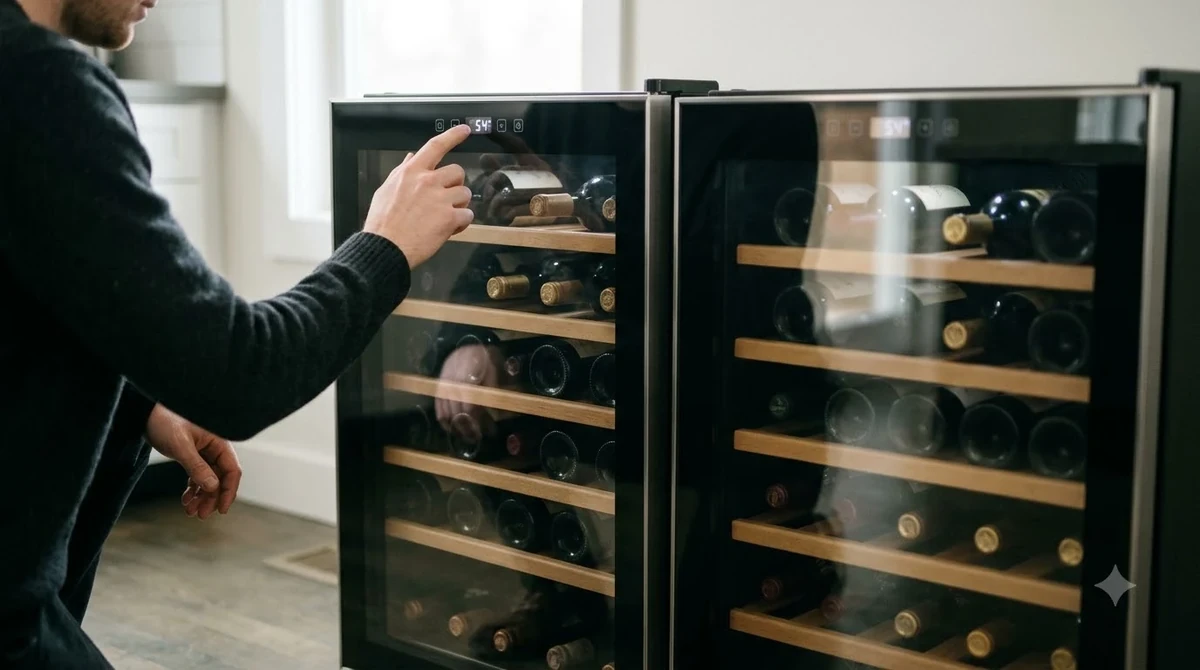
Why it stands out. Some layouts place a quick-access zone near the top or front so guests and hosts can reach the bottle without disturbing the rest of the stock. This reduces how long the door stays open during a party, which helps the cabinet hold a steady temperature.
Keep in mind. Every door opening lets cold air escape and warm air in, and the Wikipedia overview emphasizes that big temperature swings are the real concern for wine. Keep the unit stocked with the bottles you need for the evening and avoid repeated long browsing with the door open.
Best for people who host often and want easy access to wine during a gathering without a separate beverage fridge.
Best for Long-Term Aging Collections
A dual zone unit can also store wine for years if the lower zone holds a steady temperature and the bottles are kept away from light and vibration. This suits collectors who buy bottles to age rather than to drink soon.
Why it stands out. A stable lower zone is the closest a cabinet gets to a real cellar. The Wikipedia overview notes that wine ages normally at cooler temperatures and that lower temperatures slow maturation, so a steady zone gives you control over the pace of aging.
Keep in mind. A cabinet cannot match the humidity or the thermal mass of a real cellar, and the overview notes that light, heat, and vibration can all spoil wine. Keep bottles in the dark, away from the motor and compressor, and place the unit on a level, firm floor.
Best for collectors who want a small aging space in the kitchen. If you are unsure how long a bottle will keep once opened, read how long does wine last after opening before you plan your stock.
How to Choose an Under-Counter Dual Zone Wine Fridge
Use these checks before you buy. They apply to every buying angle in this guide.
- Cabinet opening: measure the width, height, and depth at several points, and include the clearance the unit needs for airflow.
- Zone range: confirm the temperature range for each zone, not only the overall setting.
- Bottle count: match the capacity to the bottles you buy most, including magnums if you keep them.
- Door and access: check how the door swings and whether it blocks a nearby drawer or counter.
- Ventilation: follow the install guide for front, top, or back venting, especially for built-in installs.
- Noise and vibration: place the unit away from sleeping areas and on a firm floor.
Wine keeps best when its temperature stays steady. A dual zone unit helps only if the zones hold their settings, so treat the temperature range as the most important spec on the list.
Frequently Asked Questions
What is the advantage of a dual zone under counter wine fridge?
It lets you keep red and white wines at different temperatures in one cabinet. Because wine is usually served in different temperature ranges, two zones let each bottle sit in its preferred band instead of a single setting that suits only some bottles.
Can a dual zone wine fridge replace a real cellar?
It can store wine well for everyday use and for a few years of aging, but it does not match a real cellar in humidity or thermal mass. Wine cellars are generally cool and steady, and a cabinet works best when it holds a stable temperature and keeps bottles away from light.
What temperature should each zone hold?
A common target for a stable storage range is around 13 °C (55 °F), with cooler and warmer bands used for different wine styles. Check the range each zone can hold, because a wide swing matters more than the exact number.
Does a wine fridge need a lot of clearance?
Most under-counter units need airflow to release heat from the compressor. Follow the install guide for the required gap or vent, since a unit packed tightly into a cabinet can run warm and struggle to hold its temperature.
An under-counter dual zone wine fridge works best when the cabinet opening, the zone range, and the bottle count all match. Once you have measured the space, compare the wider dual zone wine fridge options and the By type list before you choose a model.
More in Wine Fridges by Type
 Best White Wine Fridge for Reliable Chilling and StorageUpdated Nov 20, 2026
 Best Smart Wine Fridge for Steady Temperatures and Remote ChecksUpdated Nov 18, 2026
 Best Black Under Counter Wine Fridge Options for Kitchens and IslandsUpdated Nov 18, 2026
 Best Black Slim Wine Fridge for Narrow Gaps and Dark KitchensUpdated Nov 18, 2026
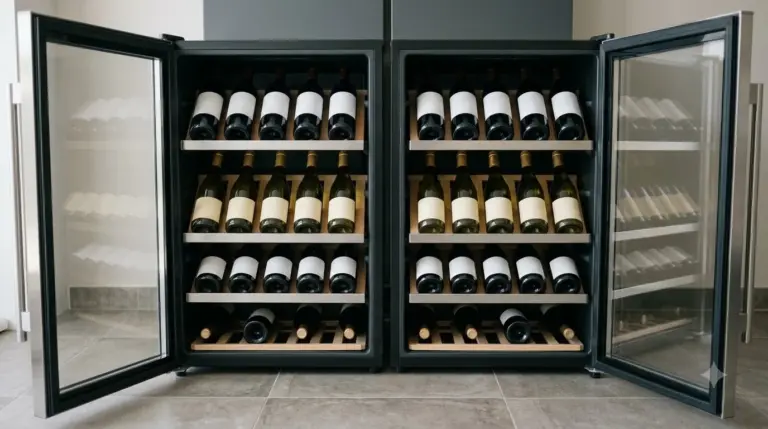 Best Built In Dual Zone Wine Fridge Options by Kitchen LayoutUpdated Nov 18, 2026
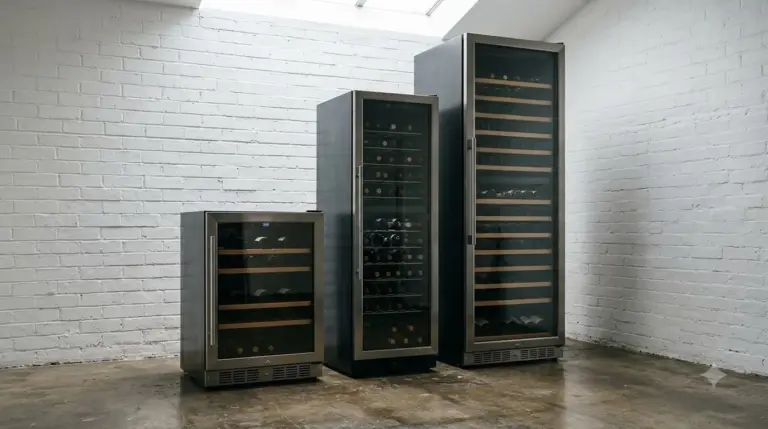 Best Slim Built in Wine Cooler: 5 Space-Saving Styles for Tight KitchensUpdated Nov 18, 2026