

We may earn a commission when you buy through links on this page, at no extra cost to you. Learn more.
The best wine fridge temperature range for general storage runs from about 45 to 64 degrees Fahrenheit, with roughly 55 degrees as a steady target, and serving temperatures differ by style. Reds sit warmer than whites, sparkling wine sits coldest, and a unit with two zones lets you hold each style closer to its own range. Stability matters as much as the number on the dial, because frequent swings are harder on wine than a setting that is a few degrees off.
Many people buy a wine fridge with one question in mind: what temperature keeps the bottles in good condition? The answer depends on whether the wine is for long-term aging, everyday drinking, or serving at the table. The sections below separate storage temperatures from serving temperatures, then show how a dual-zone unit can cover more than one style without compromise.
Quick Comparison of Temperature Bands
The table lists the temperature bands that come up most often for storage and for serving. Storage figures and serving figures answer different questions, so they are kept in separate rows.
| Use case | Temperature band | What it suits |
|---|---|---|
| General storage, wide tolerance | About 45 to 64 degrees Fahrenheit | Most bottles kept for weeks or months |
| Ideal storage target | About 55 degrees Fahrenheit | Aging reds and whites over longer periods |
| Light and medium reds, served | About 55 to 60 degrees Fahrenheit | Pinot-style and other lighter reds |
| Bold reds, served | About 60 to 68 degrees Fahrenheit | Full-bodied reds with more tannin |
| Whites and rosé, served | About 49 to 55 degrees Fahrenheit | Most full-bodied whites and rosé |
| Light whites, served | About 38 to 45 degrees Fahrenheit | Crisp, light-bodied whites |
| Sparkling wine, served | About 38 to 45 degrees Fahrenheit | Everyday sparkling and Champagne |
Read the table as two layers. The storage band tells you where a fridge should hold steady, and the serving bands tell you how far to move a bottle before you pour. A fridge does not need to be set to the serving temperature of every bottle, because a short rest in the right range is usually enough.
Best for Long-Term Storage of Aging Reds
Bottles meant to age for years need a stable, cool environment more than a precise serving setting. A setting near 55 degrees Fahrenheit is the practical target for that purpose.
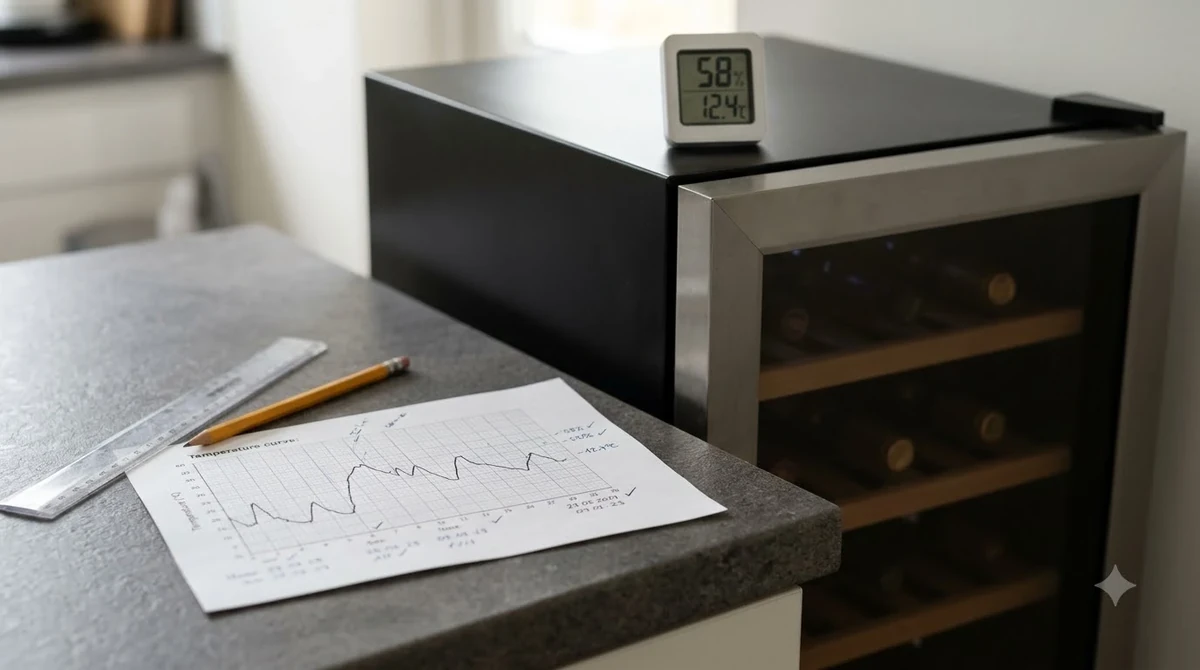
Why it stands out: A steady setting near 55 degrees Fahrenheit is the reference point most storage guidance returns to. An encyclopedia entry on wine cellars describes 13 degrees Celsius, or 55 degrees Fahrenheit, as ideal for both short-term storage and long-term aging, and notes that wines age normally between 10 and 14 degrees Celsius. The wine cellar overview also explains why stability counts so much.
Keep in mind: Swings of 14 degrees Fahrenheit or more are described as harmful, because they cause the wine to breathe through the cork. A unit that holds a narrow band matters more than one with a finer dial. Check the rated stability before buying, not only the lowest setting.
Best for: collectors who keep bottles for many months and want a dependable setting that does not need frequent adjustment.
Best for Everyday Reds and Lighter Styles
Most red wine is served a little below room temperature rather than at it. A cooler setting in the fridge brings the bottle close to the right serving range before it is opened.
Why it stands out: Light and medium reds do best around 55 to 60 degrees Fahrenheit, while bold reds sit higher, around 60 to 68 degrees. A fridge set in the middle of that range gives a good result for both, though bold reds may need a few minutes out of the unit before pouring.
Keep in mind: A single zone set for reds can run warmer than some whites need, so check the setting range before using it for a mixed collection. If you drink mostly lighter reds, a setting near the middle of the range works well with little tuning.
Best for: households that drink red most evenings and want a simple setting they rarely change.
Best for Whites and Rosé
White wine is served colder than red, and rosé follows the same pattern as full-bodied whites. A unit set for these styles should hold a cool band without dipping too low.
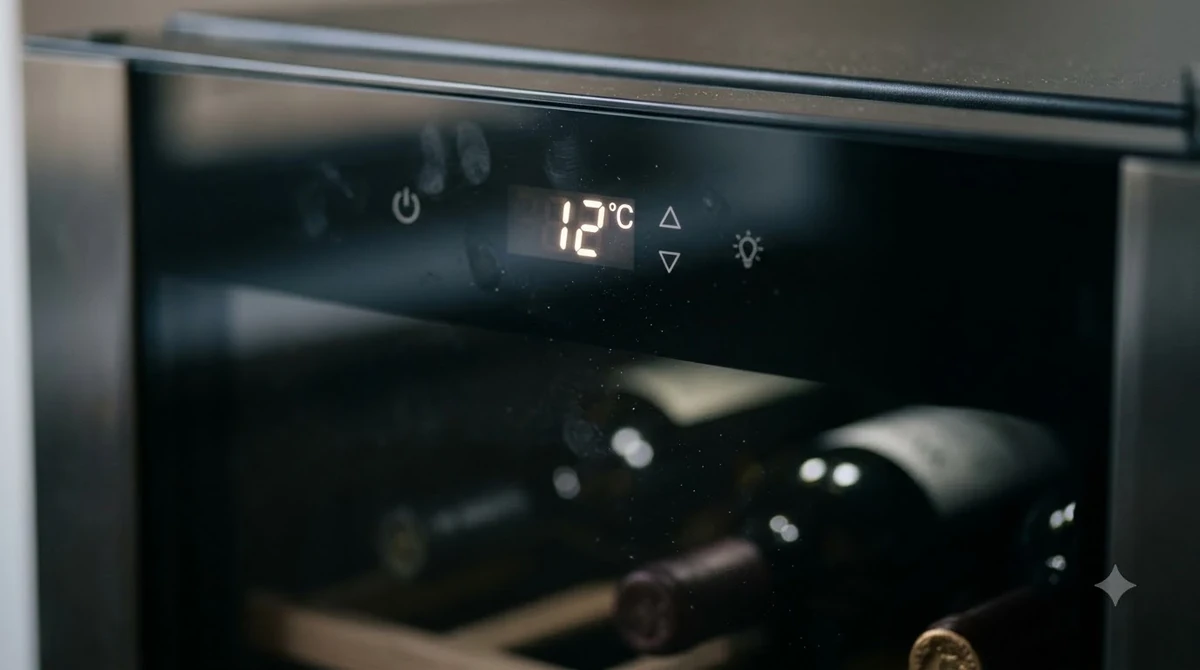
Why it stands out: Wine Folly’s serving temperature guide places most whites between about 49 and 55 degrees Fahrenheit, and rosé in a similar range. Light-bodied whites are cooler still, around 38 to 45 degrees. A setting in the middle of the white band suits most bottles on the shelf.
Keep in mind: A white set too cold can mute aromas, so a bottle of full-bodied white may need a short rest before serving. Lighter whites hold their crispness better at the cooler end of the band.
Best for: people who keep a rotation of whites and rosé for warm-weather meals and shared dinners.
Best for Sparkling Wine
Sparkling wine is the coldest style most people keep at home, and it benefits from a setting that stays cool between openings. Opening a bottle that has been in a warmer spot can cause it to foam more than expected.
Why it stands out: The usual serving range for sparkling wine is about 38 to 45 degrees Fahrenheit, which is cooler than most whites. Keeping sparkling bottles in their own cool zone means they are ready to pour without a long wait.
Keep in mind: Some older, high-quality sparkling wines are served slightly warmer to bring out their aromas. Read the producer’s advice on the label or the winery’s site before deciding how cold to keep a specific bottle.
Best for: celebrations, brunch service, and households that keep sparkling wine on hand for guests.
Best for Mixed Collections with Two Zones
A dual-zone unit lets reds and whites sit at their own settings in one cabinet. This is the simplest way to cover more than one style without moving bottles between shelves.
Why it stands out: Two zones let a warmer red zone and a cooler white zone run side by side. Bottles can stay in place for weeks, so the fridge works as a quiet storage system rather than a set of separate boxes.
Keep in mind: Each zone costs more to run and takes up more of the cabinet. Check that the zone sizes match the mix you keep, and that the door seals hold the temperature when the fridge is opened often.
Best for: serious home collections and anyone who regularly serves two styles at the same meal. For a related sizing question, see our guide on how many glasses are in a bottle of wine when planning a party.
How to Check a Fridge Temperature Range
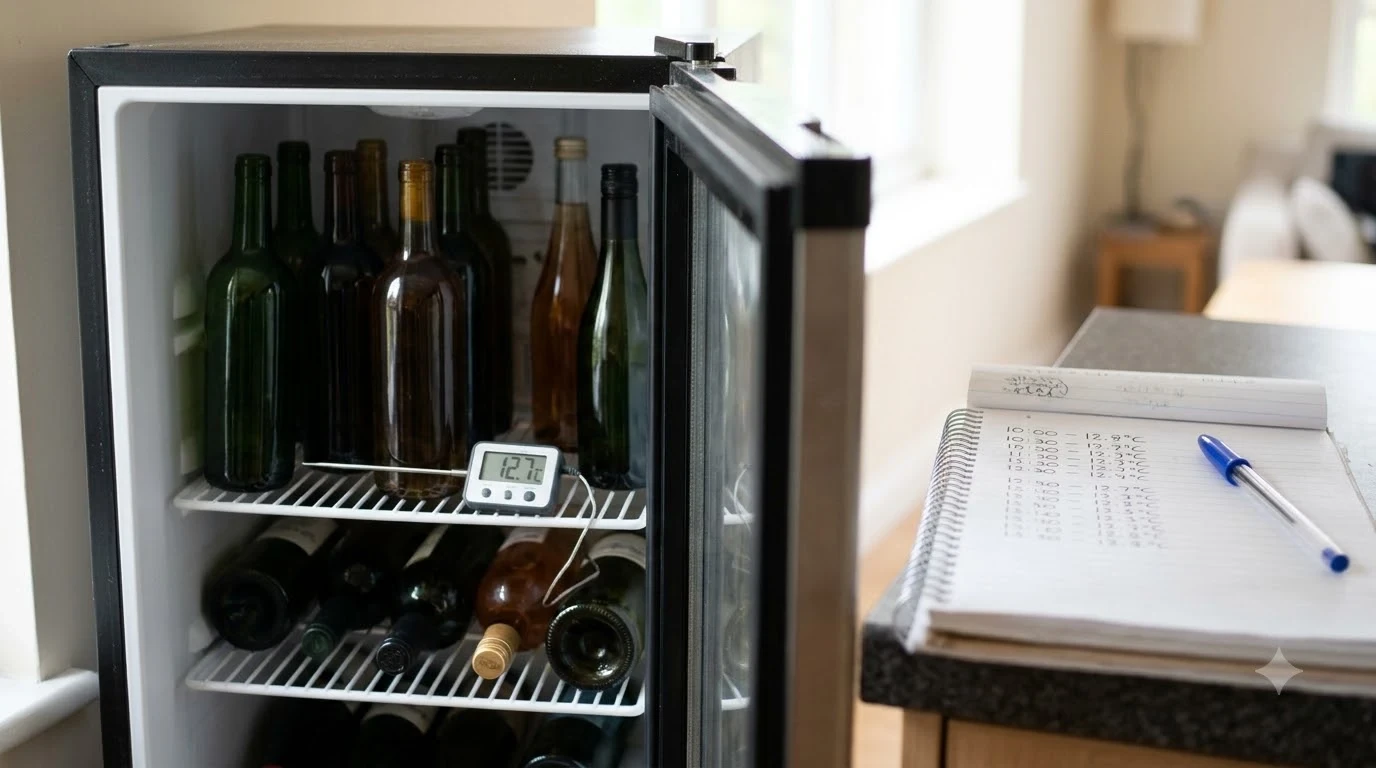
Settings on a dial are only a guide. The real test is whether the fridge holds its band over days, not minutes. A simple thermometer placed inside the cabinet tells you more than the label does.
- Storage band: look for a steady setting near 55 degrees Fahrenheit for bottles kept for a long time.
- Serving bands: use the ranges above to move a bottle to the right temperature before pouring.
- Stability: prefer a unit that holds a narrow band over one with a wide, fine-grained dial.
- Zones: choose two zones if you serve reds and whites at the same meal.
- Placement: keep the unit away from heat sources and direct sunlight, which push the inside temperature up.
Tip: Place a thermometer on a middle shelf for a week before you trust the setting. Note any day when the reading moves more than a few degrees, and check the door seal and the spot where the unit sits.
Sizing and feature details are covered in our Specs and Features section, and a wider look at storage options is in our guide to wine and beer fridges.
Frequently Asked Questions
What is the best temperature for storing wine in a fridge?
A setting near 55 degrees Fahrenheit is the common target for storage, since encyclopedic sources describe it as ideal for both short-term storage and aging. Most storage guidance accepts a wider band of roughly 45 to 64 degrees Fahrenheit, as long as the temperature stays steady.
Is one zone enough for both red and white wine?
One zone can work if you drink a single style most of the time or accept a compromise. Reds are served warmer than whites, so a single setting usually suits one style better. Two zones let each bottle sit closer to its own serving range.
What serving temperature should red wine be?
Wine Folly gives about 62 to 68 degrees Fahrenheit for general reds and about 55 to 60 degrees for light- and medium-bodied reds. Letting a bold red sit for a few minutes out of the fridge can bring it into range.
Does a sudden temperature change harm wine?
Repeated or large swings are the bigger concern, because they can push wine through the cork and speed aging. A small change over a day is less of a problem than frequent large moves, so a fridge that holds steady is more important than one with a precise dial.
Set the storage band first, then use the serving ranges to plan each pour. A steady fridge and a simple thermometer will tell you more about your collection than any single number on the dial.
More in Wine Fridge Features
 Best Wine Fridge Bar Cabinet Setups for a Better Home BarUpdated Nov 20, 2026
 Wine Fridge for Champagne Bottles: Sizes and Storage GuideUpdated Nov 18, 2026
 Best Wine Fridge for Champagne Bottles: Shelf and Bottle FitUpdated Nov 18, 2026
 Best Wine Fridge with Display Shelf: Glass Doors and Open RacksUpdated Nov 18, 2026
 Best Wine Fridge With Drawers for Easy Access to Every BottleUpdated Nov 18, 2026
 Best Wine Fridge With Freezer: Combo Styles for Kitchens and BasementsUpdated Nov 18, 2026