

We may earn a commission when you buy through links on this page, at no extra cost to you. Learn more.
The best 12 inch wine fridge is a narrow unit that fits a tight gap, keeps a steady temperature, and holds the number of bottles you actually rotate. A 12-inch width is useful when cabinets, a wall or a narrow nook leave little room, but it also means fewer bottles than a wider unit. Single-zone models keep things simple, while dual-zone options suit people who keep red and white at different serving temperatures. Measure the opening first, then check the depth, the ventilation requirement and the front or rear vent before you choose.
Narrow wine fridges solve a common problem. Kitchens and bars often have a single gap between cabinets or beside a fridge, and a 12-inch unit can fill it without changing the layout. The trade-off is capacity and sometimes a shallower interior. This roundup groups 12-inch wine fridges by the spaces they suit best and explains the points to weigh before you buy.
Quick Comparison
Twelve-inch fridges come in a few forms. Built-in units slide into cabinetry, freestanding models fit a gap with room to breathe, and some are designed to sit under a counter. The table compares the main types by placement and what you give up in return.
| Fridge type | Typical placement | Best for | Main trade-off |
|---|---|---|---|
| Built-in narrow unit | Within cabinetry or a tight run | A clean, integrated look | Needs a planned opening and ventilation space |
| Freestanding narrow unit | Beside a fridge, in a corner, or in a nook | Flexible placement | Takes up floor space and may need side clearance |
| Under-counter 12-inch | Under a counter or bar top | Keeping the wine within reach | Shallower interior and fewer shelves |
| Single-zone narrow | Any narrow gap with an outlet | One serving temperature | Red and white share the same setting |
| Dual-zone narrow | Kitchens or bars that serve two styles | Separate temperatures for red and white | Smaller compartments and more to manage |
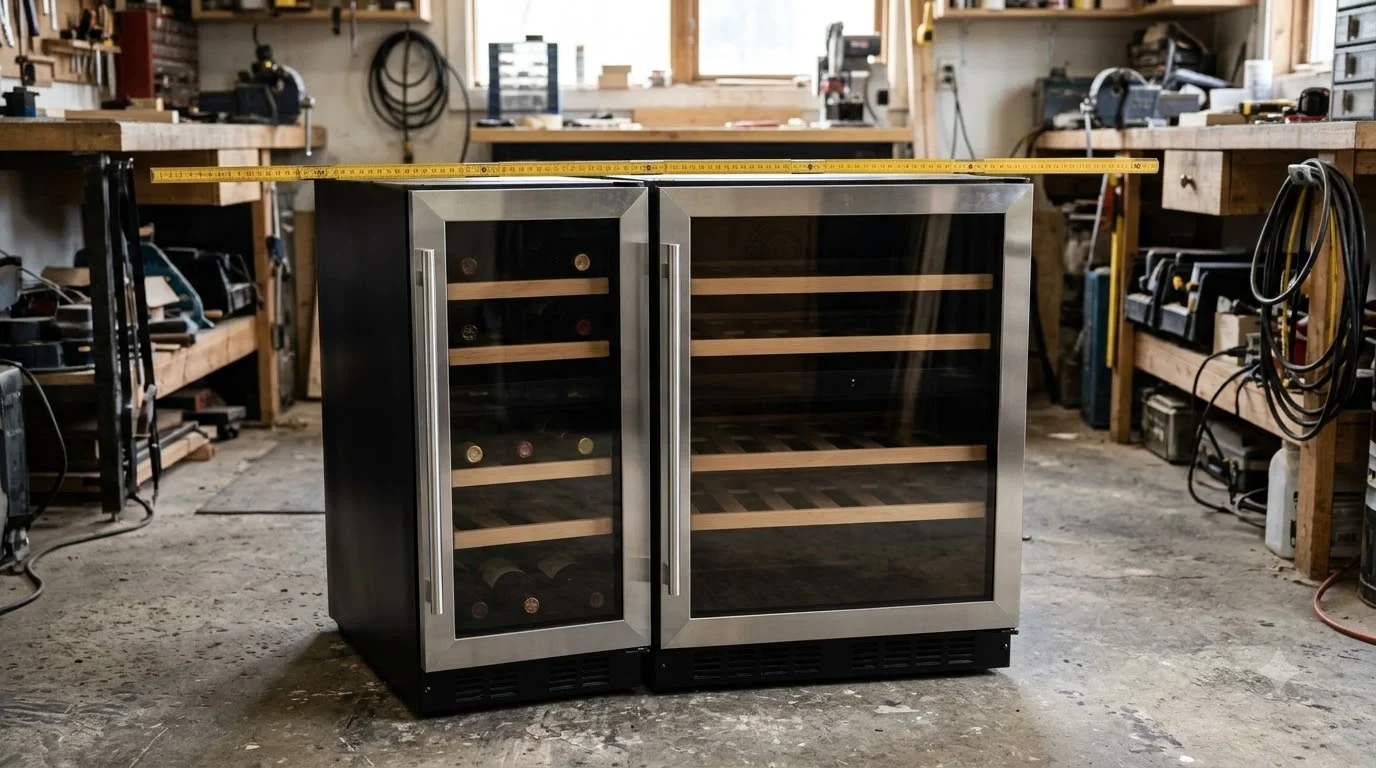
Before you buy, measure the opening at the top, middle and bottom, because cabinets are often out of square. Then check the unit’s depth, since a deep fridge may stick out past the counter.
Best for Tight Gaps Beside Cabinets
A narrow gap next to a cabinet or a fridge is the most common home for a 12-inch unit. The goal is a fit that looks intentional and leaves room for the door to open fully.

Why it stands out: A 12-inch unit uses space that would otherwise sit empty, and it can be placed close to the kitchen work area. Many models have a front or side vent that makes a snug fit workable.
Keep in mind: Check the ventilation rule for the model. A unit squeezed into a tight space without airflow may run warm and work less efficiently, so leave the clearance the maker specifies.
Best for: Kitchens where every centimeter counts and the gap is hard to fill with other storage.
Best for Small Apartments and Studios
In a small apartment, a narrow wine fridge can share a wall with a kitchenette or sit in a corner without blocking the path. It gives you a dedicated place for wine that does not compete with cooking space.
Why it stands out: A freestanding narrow unit moves easily when you rearrange the room, and it does not need a cabinet opening. It is a good option for renters who cannot make changes to cabinetry.
Keep in mind: Narrow units hold fewer bottles, so a small apartment may need a rotation habit rather than a large stock. Keep the most-used wines in front.
Best for: Renters, students and anyone who keeps a few bottles on hand for weeknight dinners.
Best for Under-Counter Wine Corners
An under-counter unit places wine at arm’s reach, which suits a bar area, a coffee station or a kitchen prep counter. It keeps bottles off the countertop and near the glasses.
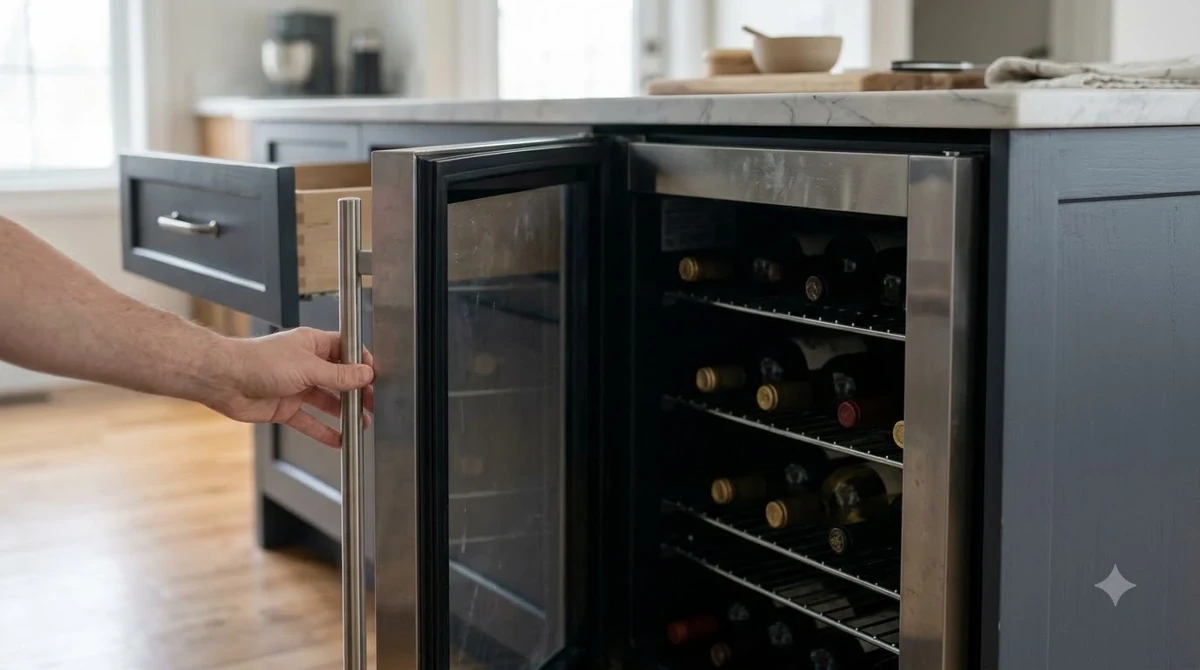
Why it stands out: Under-counter placement keeps the wine easy to reach during a dinner or a gathering. A 12-inch model fits under a standard counter where a wider unit would not.
Keep in mind: Under-counter units often have a shallower interior and fewer shelves. Check that the top shelf and the door can hold the bottle shapes you buy.
Best for: Hosts who want wine next to the glasses and a counter with a clean look.
Best for a Small Rotation of Favorite Bottles
If you do not keep a large cellar, a narrow fridge is enough to hold the bottles you open in a typical week. The idea is to store what you drink next, not to build a collection.
Why it stands out: A small unit keeps the wine organized and easy to scan. When you run low, the fridge makes it obvious what needs replacing.
Keep in mind: A small rotation works best if you buy in smaller batches. Larger purchases will need a larger unit or a different storage plan.
Best for: Light drinkers and anyone who wants a neat, manageable collection.
Best for Entryways, Hallways and Home Offices
Narrow spaces are not limited to the kitchen. A 12-inch fridge can sit in a hallway nook, a den or a home office, where it doubles as a small display for bottles.
Why it stands out: A glass-door unit in a visible spot can be a welcome feature for guests. Placing it away from the kitchen keeps cooking heat and steam away from the wine.
Keep in mind: Avoid direct sun, heaters and drafty doors. According to the Wikipedia overview of wine cellar conditions, temperature swings can make wine age faster, so a steady room is better than a convenient but unstable one.
Best for: Households that want wine on display in a living area.
Think about how the fridge will be opened, too. A unit beside a busy counter gets opened several times an evening, so a door that swings without blocking a drawer or an appliance saves daily frustration. A pull-out shelf or a shallow tray makes it easier to reach bottles at the back, and labeling the shelves by style keeps the rotation tidy when guests help themselves.
How to Choose
A narrow fridge is a precise purchase, so start with the measurements and then compare how the unit will be used every day.
- Opening: Measure width, height and depth at several points, and allow for the door swing and vent space.
- Zones: Choose dual zone if you keep red and white at different temperatures. Choose single zone for simpler use.
- Placement: Built-in units look neat, while freestanding units are easier to move later.
- Temperature: Look for a stable range. The Wikipedia overview of wine cellar conditions notes that wine is commonly stored around 10 to 14 °C (50 to 57 °F) for normal aging, with a wider range acceptable when changes are gradual.
- Noise: A compressor can hum. If the unit sits in a bedroom or office, check reviews for noise before you buy.
For wider or taller options, the 15 inch wine fridge guide covers larger units, and the 18 inch wine fridge guide suits bigger openings. To compare sizes across the full range, browse the by width section.
Frequently Asked Questions
How many bottles does a 12 inch wine fridge hold?
Capacity varies by model and by interior design, and narrow units usually hold fewer bottles than wider ones. Check the rated capacity and measure your own bottles against the shelves, since larger sparkling bottles take more room.
Can a 12 inch wine fridge be built in?
Many models are designed for built-in installation, with a front vent or a specific clearance. Confirm the cutout dimensions and ventilation rules with the maker before you order, because the wrong fit can reduce airflow.
Is a single zone or dual zone better for a narrow fridge?
A single zone is simpler and suits people who drink mostly one style. A dual-zone unit is better if you serve red and white at different temperatures, though its smaller compartments hold fewer bottles.
Where should I put a 12 inch wine fridge?
Place it on a level floor away from direct sun, heaters and drafty doors. Leave the vent clearance the maker specifies, and avoid spots where the room temperature swings widely, since wine ages faster when temperatures change often.
A 12-inch wine fridge is a practical answer to a narrow space. Measure carefully, choose the zone setup that matches how you serve wine, and keep the most-used bottles within easy reach. Once the fit is right, the unit can hold a steady rotation without taking over the room.
More in By Width
 Best 10 Inch Wine Fridge Types for Tight Spaces and CountertopsUpdated Nov 18, 2026
 Best 6 Inch Wine Cooler Options for Tight Kitchen GapsUpdated Nov 18, 2026
 Best 36 Inch Wine Fridge for Kitchen Runs, Home Bars and Tight CornersUpdated Nov 18, 2026
 The Best 20 Inch Wine Fridge for Under-Counter Kitchens and BarsUpdated Nov 18, 2026
 Best 30 Inch Wine Fridge for Kitchens, Bars and Dining RoomsUpdated Nov 18, 2026
 Best 18 Inch Wine Fridge for Kitchens, Bars and Tight SpacesUpdated Nov 18, 2026