

We may earn a commission when you buy through links on this page, at no extra cost to you. Learn more.
The best basement wine rack is a metal or sealed wood frame that stands off the floor, drains well, and sits in a cool, dry corner away from the walls and any water source. Basements are usually cooler than upper floors, but they are often damp too, and moisture is the main threat to a rack and its labels. A freestanding floor rack suits a collection on a concrete slab, while a wall-mounted or modular system works better in a finished room with drier air.
A basement can be an ideal place for wine because it stays cool, but the same space brings humidity, a risk of water, and uneven floors. Racks that work in a kitchen can rust, warp, or grow mold in a basement within a season. This guide compares the main styles, explains the conditions to plan for, and shows what to check before buying a rack for a below-ground room.
Quick Comparison of Basement Rack Styles
Basement racks generally fall into four groups: freestanding metal floor racks, sealed wood frames, wall-mounted shelving, and modular cubes that can be stacked or spaced. The table compares them on the points that matter most in a below-ground room.
| Rack style | Best for | Damp tolerance | Floor contact | Main drawback |
|---|---|---|---|---|
| Freestanding metal rack | Large collections on a concrete slab | Good when coated or galvanized | Stands off the floor on feet | Can rust if the coating is scratched |
| Sealed wood frame | Dry, finished basement rooms | Fair, needs a sealed finish | Stands off the floor on feet | Warps if left in damp air |
| Wall-mounted shelving | Finished rooms with a dry wall | Good, away from the floor | No floor contact | Needs solid anchors into masonry or studs |
| Modular cubes | Flexible storage that grows over time | Fair, depends on the material | Stands off the floor on feet | Can wobble when stacked high |
What a Basement Does to a Wine Rack
A basement is a floor level that sits largely or completely below ground. According to the basement article on Wikipedia, these spaces are usually cooler than upper floors because warm air rises, but cooler underground air also raises humidity. The same source notes that below-ground spaces are rarely as dry as those above ground, so they often need air movement and dehumidification.
Water is the bigger risk. The Wikipedia article says that it is virtually impossible to make a concrete wall waterproof over the long run, so drainage is the key. A rack placed against a damp wall or on a floor that gets wet can soak up moisture from below, so the planning starts with keeping the rack off the floor and away from any wall that holds water.
Best for Finished, Dry Basement Rooms
A finished basement with a working dehumidifier and good air movement can hold a sealed wood or metal rack without much stress on the materials. Choose a design with clear feet and a level frame, and keep it on a wall that stays dry through the year. A room used for storage, a family room, or a bar suits this kind of rack.
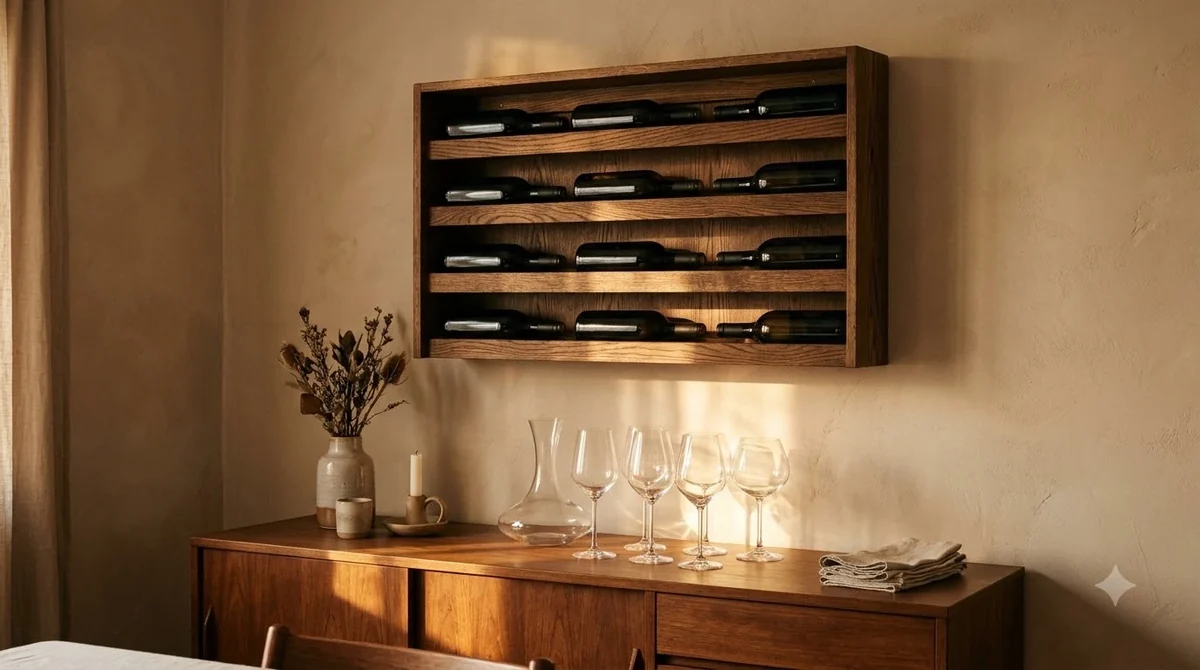
Why it stands out: It fits a finished room and matches the furniture upstairs more easily than a utility rack.
Keep in mind: Finished rooms still need airflow. Check the wall and floor for damp patches before placing bottles, and move the rack if condensation appears.
Best for: Finished basements with a dehumidifier and reliable ventilation.
Best for Damp or Unfinished Basements
An unfinished basement needs a rack that tolerates moisture. Galvanized or coated metal is the usual choice, because it resists rust better than bare steel and does not warp in damp air. Keep the rack raised on its feet and set a few inches away from any wall so air can move around the frame.
Wine is best kept at stable temperatures. The Wikipedia article on wine cellars describes a range of about 7 to 18 degrees Celsius as satisfactory for storage when changes are gradual, with 13 degrees Celsius as the ideal point. An unfinished basement may be cooler than that in winter and warmer in summer, so check the temperature across seasons before deciding how many bottles to keep there.
Why it stands out: A coated metal frame tolerates damp air better than most wood and needs little upkeep.
Keep in mind: Scratches in the coating can start rust, so inspect the frame each season and touch up any exposed metal.
Best for: Unfinished basements with a concrete floor and some moisture in the air.
Best for Cool Corners Away From Water
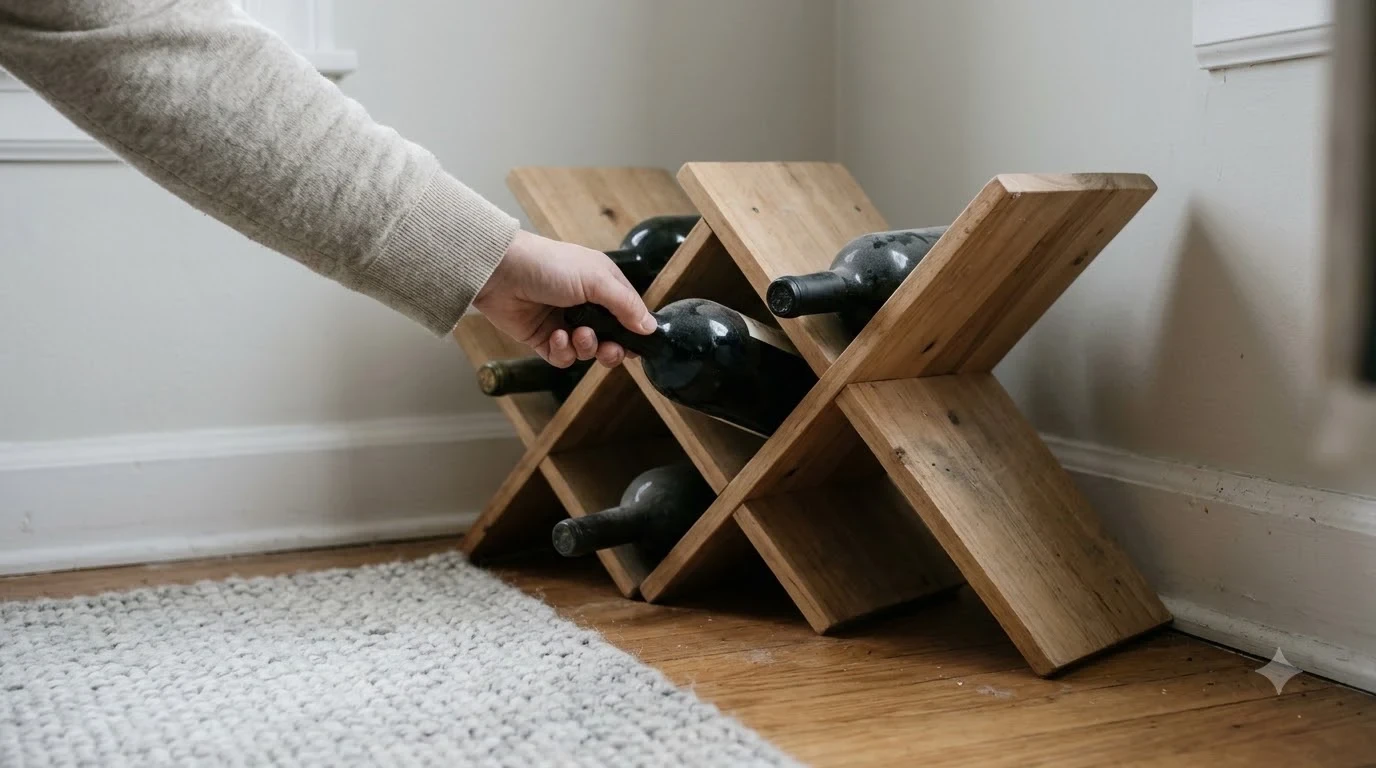
A floor rack in a cool corner keeps the bottles out of the way of pipes, a water heater, and a sump pit. Place it on a level spot where the floor drains away from the rack and the walls are dry. Corners that sit below a window or a downspout are poor choices, since water can run toward them in heavy rain.
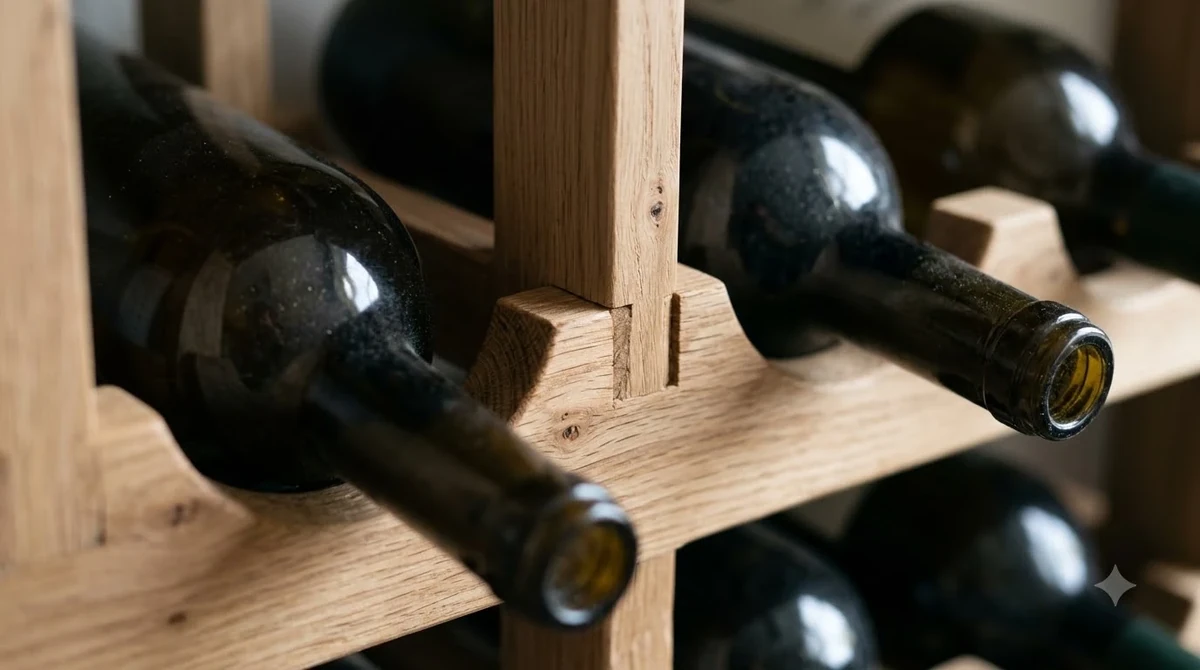
Wine cellar guidance also points to heat, light, and vibration as hazards. The Wikipedia article on wine cellars lists those alongside temperature and humidity swings as the main ways wine can spoil. A corner away from the furnace and the laundry machine keeps the bottles calmer.
Why it stands out: It keeps the rack clear of water sources and vibrating equipment.
Keep in mind: A corner can trap damp air, so leave a gap from the wall and check the spot after heavy rain.
Best for: Basements with a known water path or a sump pump nearby.
Best for Wall-Mounted Shelving
Wall-mounted shelving keeps bottles off the floor and frees the basement for other storage. It works best on a dry interior wall in a finished room, with the shelves fixed into masonry or studs rather than hollow board. Leave room for air to circulate behind the frame, and avoid any wall where moisture shows.
A wall unit also makes it easy to check labels and bottle condition at a glance. Keep the heaviest bottles on the lowest shelves, since a full frame carries more weight than it appears to.
Why it stands out: It holds bottles at eye level and keeps the floor open for other storage.
Keep in mind: Basement walls are often masonry, so use anchors designed for that material and check that the wall is dry before drilling.
Best for: Finished rooms with a dry, solid wall and a clear view of the labels.
Best for Large Bulk Collections
A large collection in a basement usually needs a freestanding rack with a wide base, sitting on a concrete slab that is dry and level. Modular cubes can be added over time, which suits a collection that grows in stages. Because the rack carries a lot of weight, check the floor for cracks and choose feet that spread the load.
The Wikipedia article on basements also notes that basements are commonly used for storage, and that moisture can damage stored materials in lower spaces. For a bulk collection, that means keeping the rack and the bottles off the floor, leaving space for air, and checking the room after each wet season.
Why it stands out: It uses floor space efficiently and grows with the collection.
Keep in mind: A full rack is heavy and hard to move, so set it in its final place before loading the bottles.
Best for: Collectors with a steady stock and a dry, level slab.
How to Choose the Right Basement Wine Rack
Work through these checks in order, starting with the room:
- Check the moisture. Look for damp patches, condensation, or a musty smell before choosing wood or metal.
- Pick the material. Coated or galvanized metal suits damp rooms, and sealed wood suits drier, finished spaces.
- Raise the rack. Feet or a base that stands off the floor keep the frame and bottles out of standing water.
- Plan the airflow. Leave a gap from walls and avoid tight corners where damp air sits.
- Confirm the load. Check the rated capacity and the floor or wall that will carry it.
Tip: Once a season, pull a few bottles and check the labels, corks, and the frame for rust or swelling. Catching damp early is cheaper than replacing a rack.
Frequently Asked Questions
Is a basement a good place for a wine rack?
A basement can be a good place because it is often cool, but it can also be damp. The rack needs to tolerate moisture, stand off the floor, and sit away from water sources. A dehumidifier and airflow help a great deal.
What material holds up best in a damp basement?
Coated or galvanized metal usually holds up best, because it does not warp in damp air. Sealed wood can work in a finished, drier room, but bare wood tends to swell or warp in humidity. Check the coating regularly.
Does humidity matter for wine stored in a basement?
Opinions differ, and the Wikipedia article on wine cellars notes that experts debate the role of humidity. The article quotes one wine writer who warns that low humidity can dry out organic corks, so a basement that is very dry may need attention too. Keep the room steady rather than extreme.
How many bottles should I plan to keep on a basement rack?
Plan around your collection and the space you have. The guide to how many bottles are in a case of wine helps you work out case-sized stock, which makes it easier to size the rack. For more rack styles, see the guide to best wine racks.
A basement wine rack works best when it matches the room: a coated frame for a damp space, a sealed wood unit for a finished room, or a wall system where the floor is wet. Keep the rack off the floor, check it each season, and the bottles stay in good shape. The Racks & Storage section lists the other options, and the best wall-mounted wine racks guide covers the shelving choices in more detail.
More in Racks & Storage
 Best Wine Barrel Racks for Distinctive Bottle StorageUpdated Nov 20, 2026
 Best Wine Storage Tower: Sizing, Protection and Room LayoutUpdated Nov 18, 2026
 Best Pyramid Wine Rack: Materials, Sizes and Where It FitsUpdated Nov 18, 2026
 Best Kitchen Cabinet Wine Rack Insert for Built-In Bottle StorageUpdated Nov 18, 2026
 Best 16 Bottle Wine Rack Options for Kitchens, Bars and CellarsUpdated Nov 18, 2026
 Best 48 Bottle Wine Rack Options for Cellars, Kitchens, and Tight SpacesUpdated Nov 18, 2026