

We may earn a commission when you buy through links on this page, at no extra cost to you. Learn more.
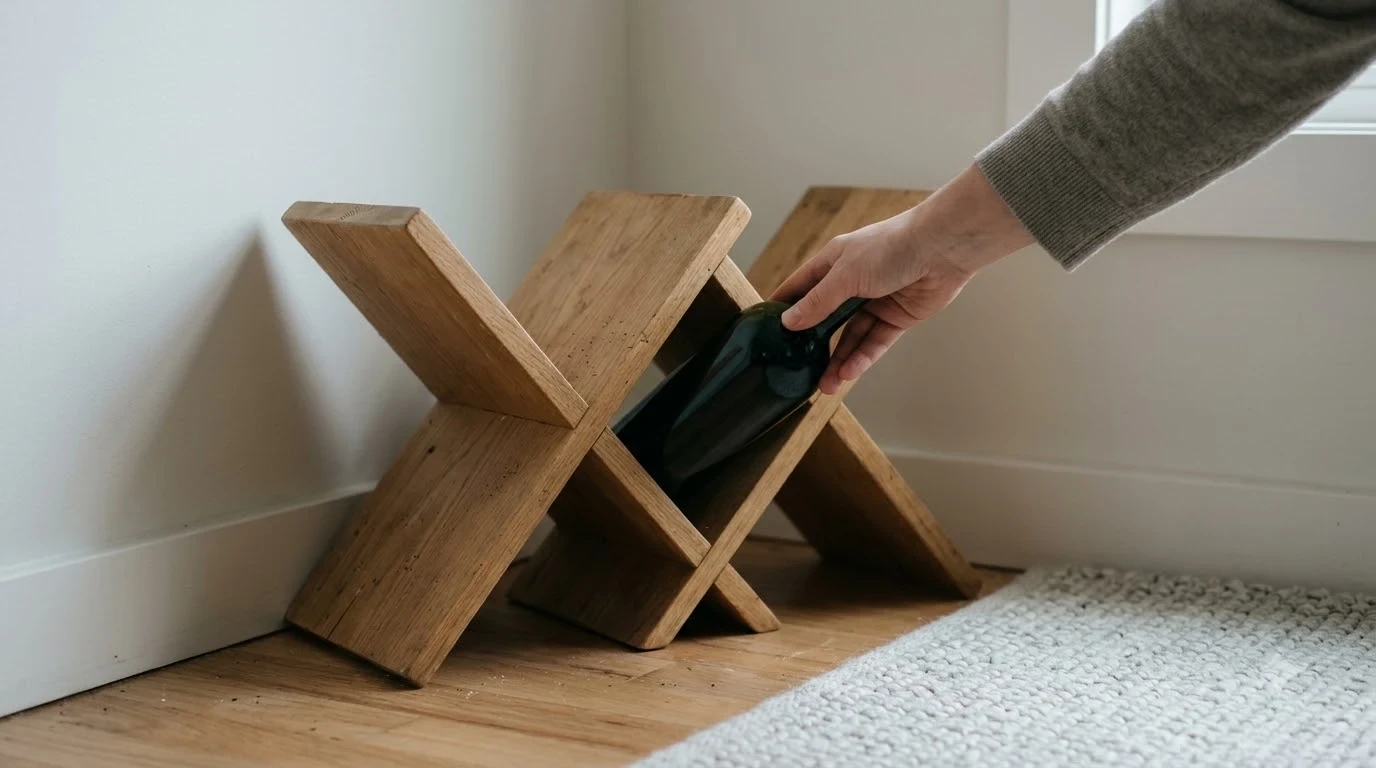
The best floor standing wine rack is the one whose footprint fits your room and whose base can carry a full load, which for most homes means a freestanding tower or bin rack with a wide, stable base. A floor unit holds more bottles than a wall piece, so the main questions are how much floor space you can give it, how tall it can safely stand, and what size bottles it must hold.
A floor standing rack is the right choice when the collection is too large for a wall and the bottles need a permanent home. It also suits anyone who wants storage that can move from one room to another. This guide sorts the options by the shape of the space and the size of the collection, so you can decide which footprint to shortlist before you compare materials.
Quick Comparison of Floor Rack Types
The table below compares the main floor rack types by footprint, capacity and the room each one suits. Use it to pick the shape first, then read the sections below for the details that matter in daily use.
| Type | Footprint | Best space | Main trade-off |
|---|---|---|---|
| Tall slim tower | Narrow, vertical | Tight corners and hallways | Needs a wall or anchor for stability |
| Bin-style floor rack | Wide, low | Pantries and basements | Takes more floor area |
| Heavy-duty large-bottle rack | Wide, reinforced | Collections with oversized bottles | Costly and bulky |
| Rolling floor cart | Compact, on casters | Entertaining spaces | Casters can roll on uneven floors |
| Corner floor rack | Triangular or angled | Unused corners and under-stair spaces | Harder to reach the back bottles |
Best for Tight Spaces and Tall Walls
A tall slim tower is built to use height rather than width. It fits beside a door, along a hallway or in a narrow dining nook, and it can hold a useful number of bottles without covering much floor. The narrow profile also makes it easy to walk past.
Why it stands out: A tower gives the most storage per square foot of floor space. Its slim shape leaves room for the rest of the furniture, and the bottles stay visible at eye level.
Keep in mind: Tall racks can tip if they are overloaded at the top, so fill the lower shelves first and check the base width. Anchor the tower to a wall where the layout allows, especially in a home with children or pets.
Best for: Hallways, dining nooks and any room where floor width is limited but height is not.
Best for Bulk Storage Bins
Bin-style floor racks are the storage workhorse. Wide bins hold bottles in a low, open grid, which suits a large collection that is bought by the case and rotated over time. The bins are easy to reach across and easy to fill from the front.
Why it stands out: A bin rack holds a lot of bottles without the height of a tower, so it works in a pantry or basement with a low ceiling. Bottles of different shapes fit into the open compartments, which simplifies the stock.
Keep in mind: Bin racks take more floor area than a tower, so measure the room before ordering. Keep the heaviest bottles in the lower bins, and check the frame for flex when the rack is fully loaded.
Best for: Pantries, basements and households that buy wine by the case.
Best for Oversized and Large-Format Bottles
Heavy-duty floor racks are built for bottles larger than the standard 750 ml size. Wine racks are often made to hold standard bottles, and big bottle racks are built stronger for oversized bottles, though regular bottles can sit on them too. That extra strength is the reason to choose this type for a collection with magnums and larger formats.
Why it stands out: A reinforced frame and wider slots handle the extra weight of large bottles without bending. The stronger build also gives a sense of security when the rack holds bottles that cost more to replace.
Keep in mind: Heavy-duty racks are bulky and take more space, and not every rack marked large-format fits a standard closet. Check the slot diameter and the weight rating, since a large bottle can be much heavier than a standard one.
Best for: Collectors who keep magnums or other large-format bottles and want a rack built to hold them.
Best for Entertaining and Moving Bottles
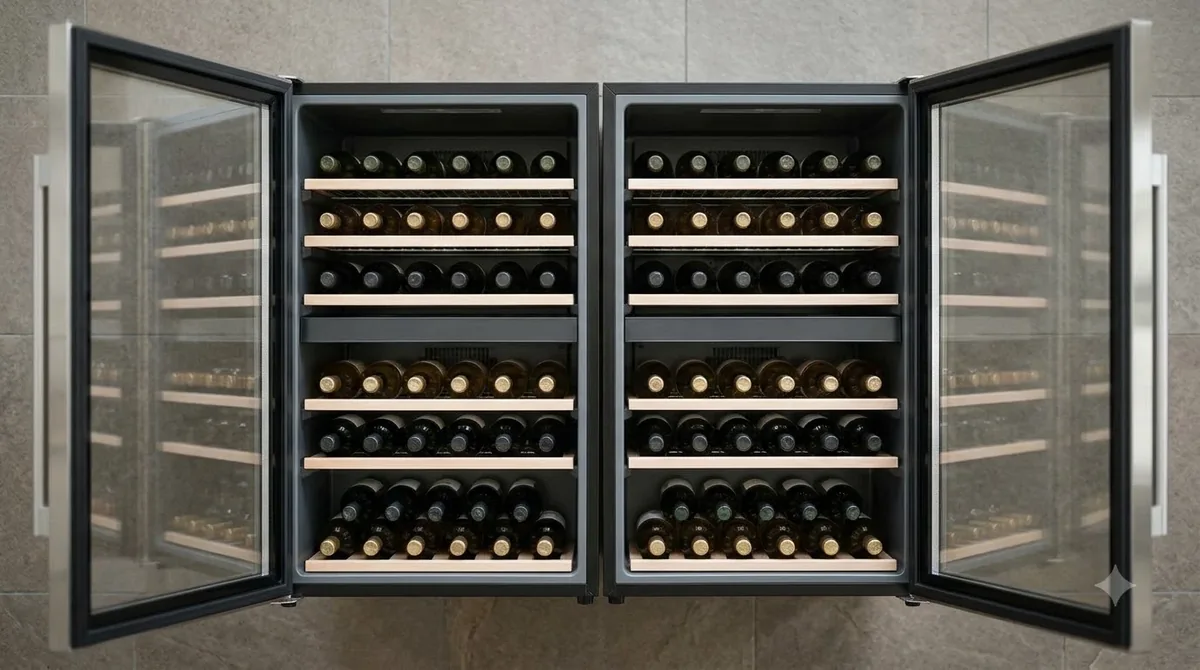
A rolling floor cart puts bottles on casters, so the whole rack can move from the storage room to the dining area for a party. It suits a host who wants a few bottles ready to serve without carrying them one at a time.
Why it stands out: The cart keeps bottles close to where guests will drink, and it can be pushed back out of sight afterward. Many carts have a compact shape that fits between the table and the wall.
Keep in mind: Casters can roll on uneven floors, and a loaded cart can be hard to steer over thresholds. Lock the wheels when the cart is stationary, and keep the bottles low so the cart stays steady.
Best for: Hosts, bars and dining rooms where the bottles need to move.
Best for Unused Corners
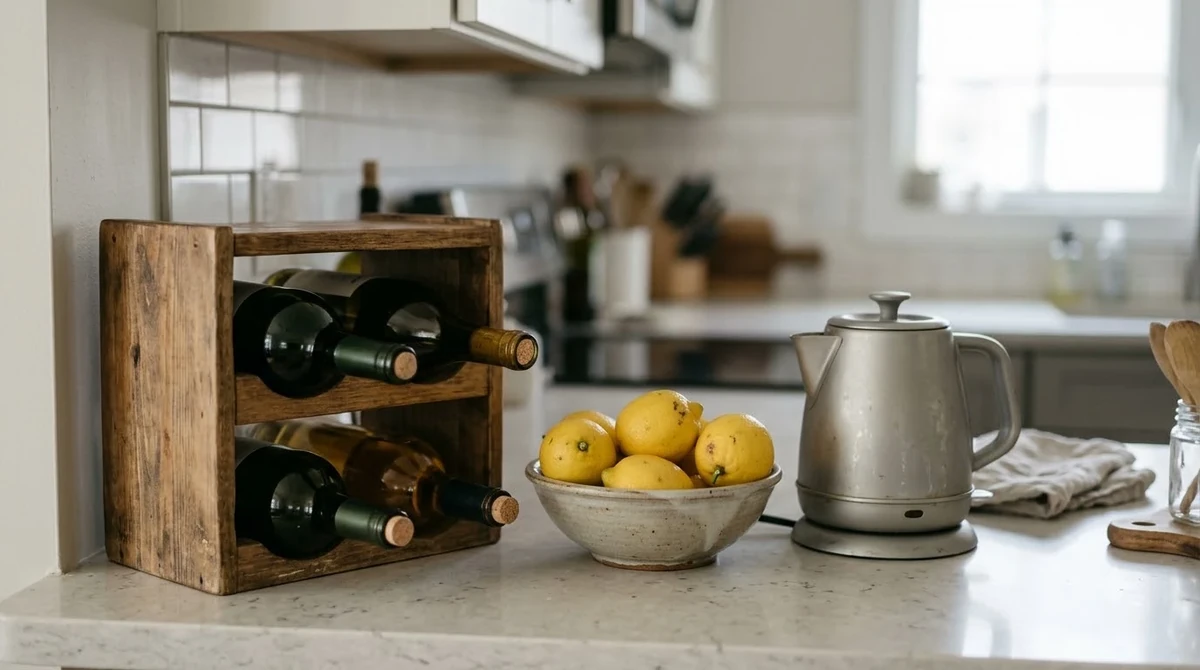
Corner floor racks use the space where a straight rack would leave a gap. The angled or triangular shape fits under a stair, in a dining corner or beside a sofa, and it often holds a surprising number of bottles for its footprint.
Why it stands out: A corner rack turns awkward space into storage, and it keeps the room’s main walkways clear. The angled shape can also look intentional, which helps the rack blend into a room.
Keep in mind: The back bottles can be hard to reach in a tight corner, so keep the most-used wines near the front. Check that the rack sits level, since a corner unit can rock on an uneven floor.
Best for: Under-stair spaces, dining corners and rooms with unused angled space.
How to Choose a Floor Standing Rack
Start with the floor plan. Measure the width, depth and height of the spot you have in mind, and leave room to pull out a bottle without hitting a wall or a door. Then decide how many bottles you need to hold now and how many you expect to add, since a floor rack is harder to expand than a modular cube system.
The list below covers the points that most often decide a purchase.
- Footprint: Measure the full depth, including the bottles, not only the frame.
- Bottle size: Confirm the slots fit standard 750 ml bottles, and check the rating for oversized bottles separately.
- Stability: Choose a wide base and anchor tall units to a wall.
- Floor: Check whether the floor is level, especially for corner and rolling units.
- Material: Wood suits a dining room, while metal suits a pantry or basement.
Wine racks come in many shapes, and most are built around the standard 750 ml bottle. According to Wikipedia’s article on the wine rack, racks are often made of wood, plastic or metal, and larger bottle racks are built stronger for oversized bottles. Those points are worth checking against the rack you plan to buy.
Frequently Asked Questions
How tall should a floor standing wine rack be?
The height depends on the ceiling and the room. Tall towers can be very effective in hallways, but they should stay within the height where they remain stable and can be reached comfortably.
Do floor racks need to be anchored to a wall?
Tall or top-heavy racks should be anchored, especially in homes with children or pets. Low, wide bin racks are often stable enough without anchoring if the floor is level.
Can a floor rack hold magnums?
Yes, if the rack is built for large-format bottles and the slots are wide enough. Standard racks are made for 750 ml bottles, so check the slot size and weight rating before you load a magnum.
Is a rolling wine cart the same as a floor rack?
A rolling cart is a type of floor storage built for moving bottles. It holds fewer bottles than a bin rack, but it makes serving easier, so the two suit different uses.
A floor standing wine rack is the right choice when the collection needs its own place in the room. Measure the space, pick the shape that matches it, and make sure the base can carry a full load. For a shorter list of options, see our guide to wine racks, or compare the best wall mounted wine racks if a wall piece would suit better. To estimate how many bottles to plan for, read how many bottles in a case of wine, and browse the Racks & Storage section for more choices.
More in Racks & Storage
 Best Wine Barrel Racks for Distinctive Bottle StorageUpdated Nov 20, 2026
 Best Wine Storage Tower: Sizing, Protection and Room LayoutUpdated Nov 18, 2026
 Best Pyramid Wine Rack: Materials, Sizes and Where It FitsUpdated Nov 18, 2026
 Best Kitchen Cabinet Wine Rack Insert for Built-In Bottle StorageUpdated Nov 18, 2026
 Best 16 Bottle Wine Rack Options for Kitchens, Bars and CellarsUpdated Nov 18, 2026
 Best 48 Bottle Wine Rack Options for Cellars, Kitchens, and Tight SpacesUpdated Nov 18, 2026