

We may earn a commission when you buy through links on this page, at no extra cost to you. Learn more.
The best 30 bottle wine fridge is a unit that holds about thirty standard 750 ml bottles, keeps a steady temperature, and fits the room it will sit in. Capacity ratings are usually given for Bordeaux-style bottles, so a 30-bottle rating can hold fewer if you store wide Champagne bottles or magnums. Dual-zone models suit people who keep red and white at different temperatures, while single-zone models are simpler and often cheaper to run. Pick the cabinet style and placement first, then match the capacity to how many bottles you actually rotate.
Thirty bottles is a practical size for a household that buys by the case, drinks several wines a week, and wants a small reserve without filling a full cellar. It is large enough to hold a mix of reds, whites and sparkling wine, yet small enough for a kitchen corner, a bar nook or a spare room. This roundup groups 30 bottle wine fridges by the setups they handle best and explains the trade-offs to weigh before you buy.
Quick Comparison
Thirty-bottle units come in several forms. Freestanding models are the most flexible, built-in models blend into cabinetry, and compact versions can fit under a counter. The table compares the main types by where they work and what they ask from you in return.
| Fridge type | Typical placement | Best for | Main trade-off |
|---|---|---|---|
| Dual-zone freestanding | Kitchen corner, dining room, living space | Keeping red and white at different temperatures | Larger footprint and a second temperature to manage |
| Single-zone freestanding | Almost any room with a power outlet | One serving temperature, simple use | Less flexible if you drink both red and white often |
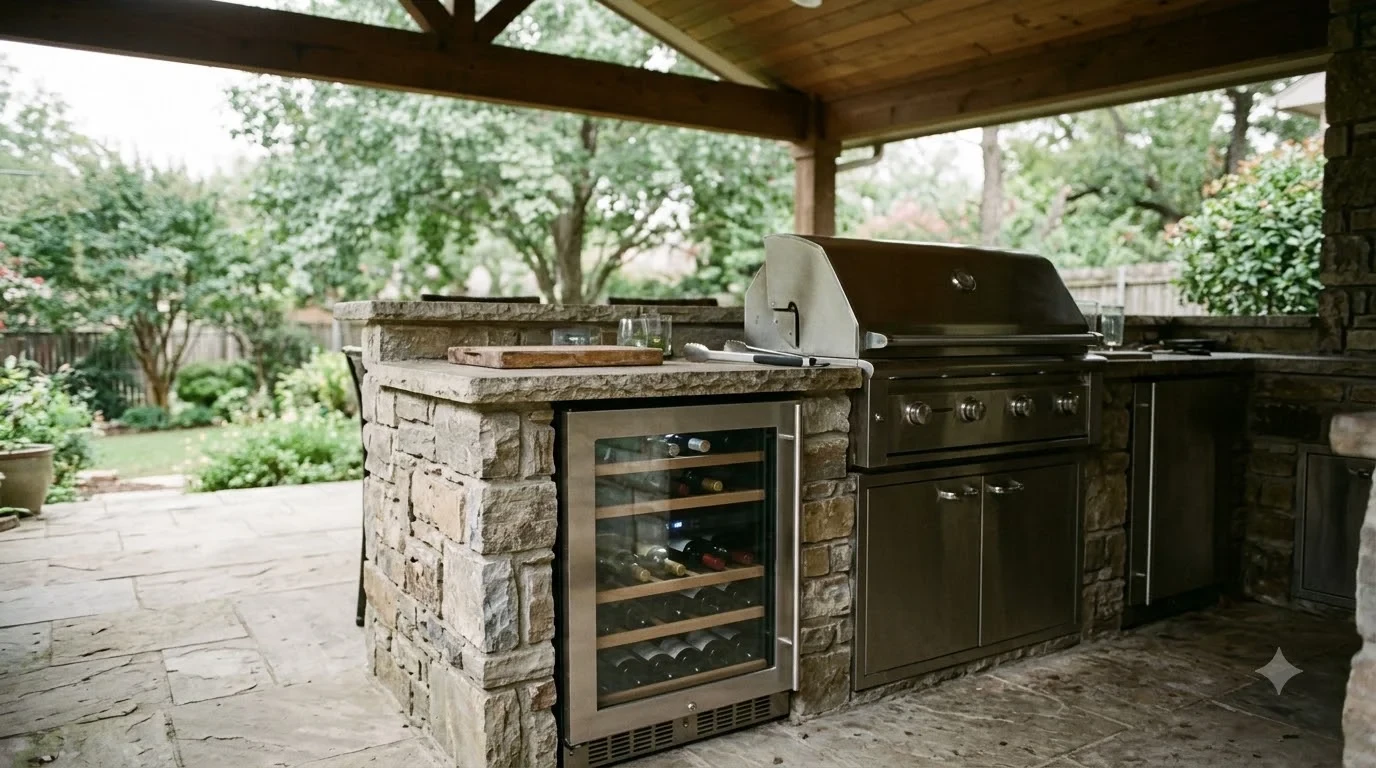
| Built-in or integrated | Within cabinetry or a kitchen run | Clean look and steady placement | Requires a planned opening and ventilation space |
| Under-counter compact | Bar area or narrow nook | Limited floor space | Often the same capacity is harder to reach than a full-height unit |
| Glass-door display | Living room or entertaining space | Showing bottles and quick access | More light exposure and a warmer interior if placed in sun |
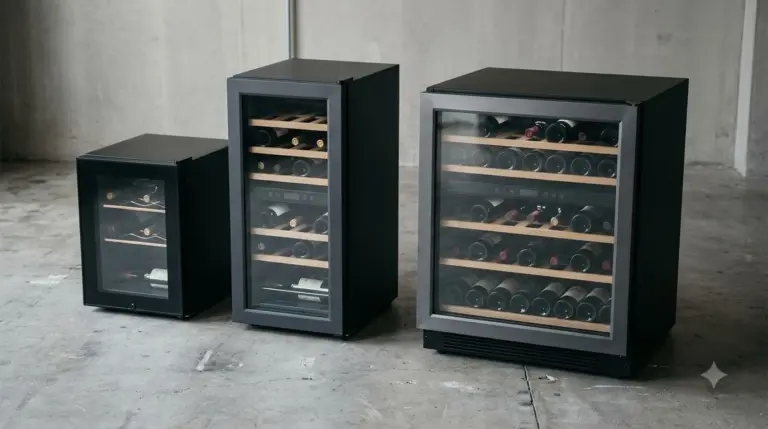
Before comparing models, confirm the rated capacity with the maker, and check whether the figure is based on standard bottles or on a different size. A 30-bottle rating with shelves that hold only standard bottles may fit fewer large sparkling bottles, so measure a few of your own bottles if you plan to store them.
Best for Dual-Zone Red and White Storage
A dual-zone unit gives you two compartments, so reds can sit slightly warmer and whites slightly cooler without a compromise. This is the most common choice for households that drink both styles every week.
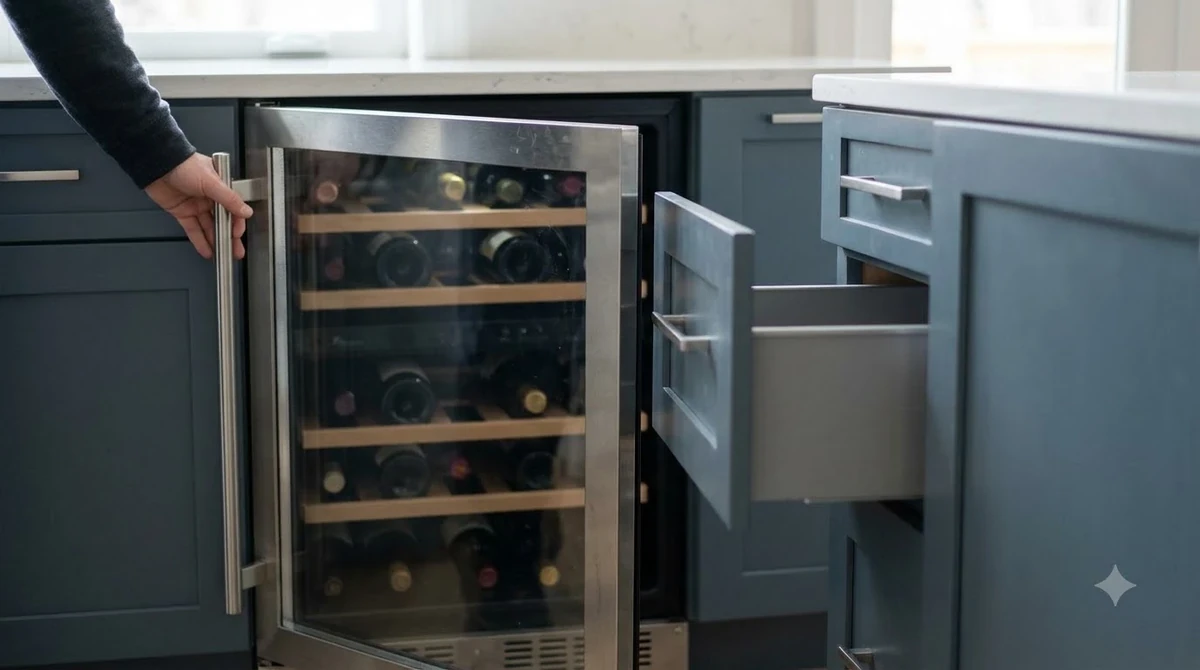
Why it stands out: Two zones let you serve each wine at a closer-to-ideal temperature straight from the fridge, and you do not have to move bottles between the cooler and the table. Most dual-zone models use shelves that can be pulled out, which makes it easier to reach bottles at the back.
Keep in mind: Dual-zone units use more space and draw more power than single-zone models. Place the unit where the fan can breathe, and check the temperature range for each zone before you load it.
Best for: Couples and families who keep red and white on hand and want each one ready to pour.
Best for Freestanding Corners and Living Spaces
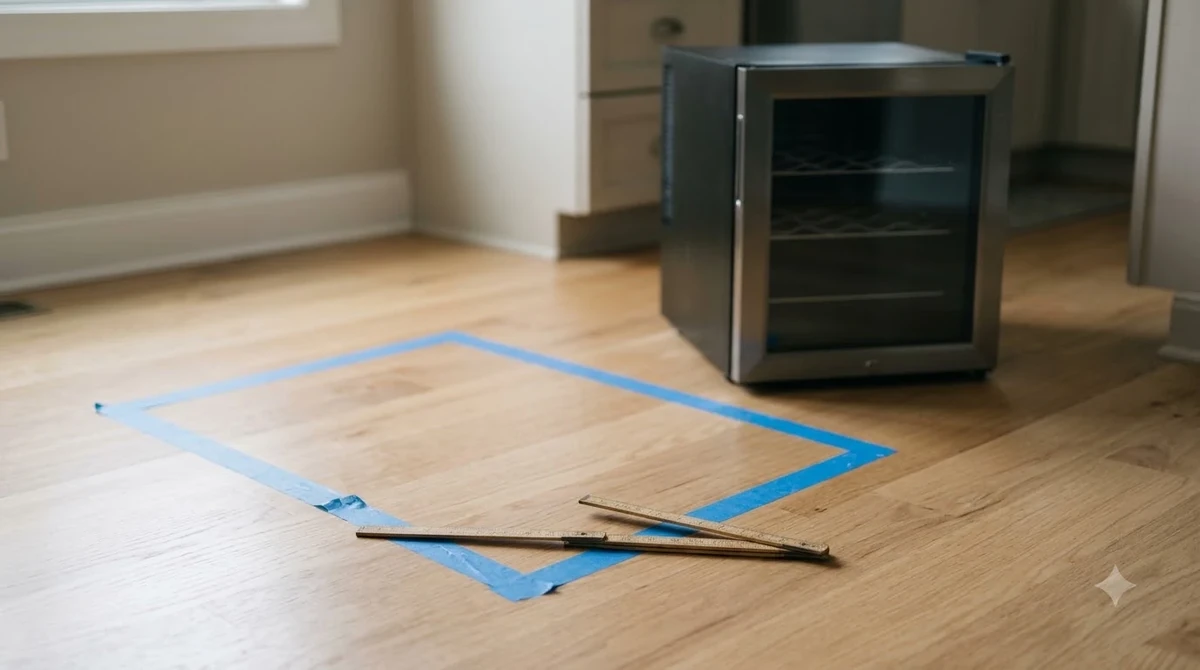
If the fridge will sit in a living room, dining area or spare room, a freestanding single-zone model is usually the simplest fit. It needs only a level floor, an outlet and a few centimeters of clearance around the back and sides.
Why it stands out: Freestanding units can be moved if you rearrange the room, and they do not need a cabinet opening. Single-zone models keep the interior simple, which suits a person who drinks mostly one style at a time.
Keep in mind: A single zone means one temperature for the whole fridge. Reds and whites will sit at the same setting, so you may need to move bottles to the counter for a short time before serving.
Best for: Anyone who wants a flexible unit that fits a room without renovation.
Best for Built-In and Cabinet Installations
A built-in unit fits into a cabinet run and looks like part of the kitchen. It is a good choice for homeowners who plan a wine area during a renovation or who want a clean, integrated look.
Why it stands out: Built-in models sit flush with cabinet faces and often use front ventilation, so they can go into a continuous run of cabinetry. The steady position also keeps the unit from being bumped or moved.
Keep in mind: Installation needs a planned opening and the right ventilation clearance. Check the manufacturer’s specifications for the cutout before you order, because a wrong size can block airflow.
Best for: Homeowners who want the fridge to look like part of the kitchen and are willing to plan the install.
Best for Glass-Door Display and Entertaining
A glass door lets guests see the bottles and pick a wine without opening the unit. It works well in a dining room, a bar corner or a space where the fridge doubles as decor.
Why it stands out: A glass-door fridge makes the collection visible and easy to browse. Many models include a light and a tinted or double-paned door to limit the effect of outside light.
Keep in mind: Glass lets in more light and can warm the interior if the unit sits in direct sun. Light can also affect wine over time, so keep the fridge away from windows and rotate older bottles first.
Best for: Hosts who entertain often and want a display that also keeps wine at a stable temperature.
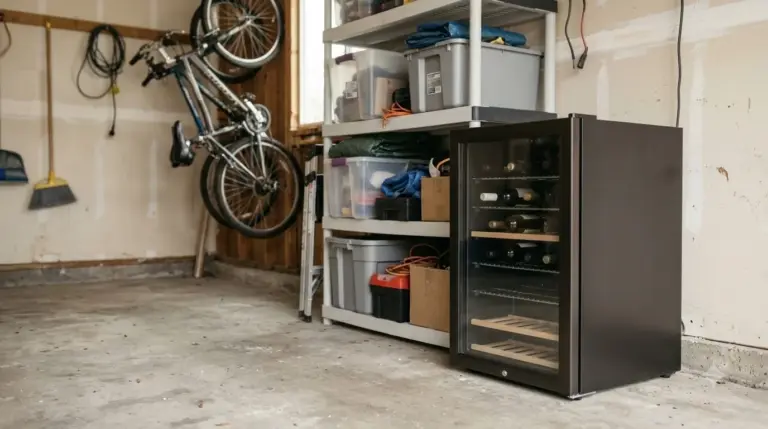
Best for Garages, Basements and Spare Rooms
Basements, garages and unheated spare rooms are common places for a wine fridge, but they have wide temperature swings. A unit with a good thermostat and insulated walls matters more in these spaces than in a climate-controlled room.
Why it stands out: A purpose-built unit keeps a steadier temperature than a room that swings with the seasons, and it protects bottles from the rough conditions of a utility space. Look for a model rated for the ambient temperature range of your room.
Keep in mind: Heavy temperature swings can make wine age faster, so the fridge is only part of the answer. Consider a sheltered location away from the heater and the garage door.
Best for: People who want extra storage in a space that is not heated or cooled.
How to Choose
A 30-bottle fridge is a long-term purchase, so start with the room and the way you drink, then compare the features that affect daily use.
- Zones: Choose dual zone if you keep red and white at different temperatures. Choose single zone for simpler use and a smaller footprint.
- Placement: Measure the space and check the clearance rules for ventilation, especially for built-in models.
- Temperature range: Look for a stable range that suits both storage and serving. Reference guides often describe 7 to 18 °C (45 to 64 °F) as a workable storage band, with 13 °C (55 °F) as a common ideal, provided changes are gradual.
- Noise and vibration: Vibration can disturb wine, so check reviews on compressor noise and whether the unit sits on a level floor.
- Shelving: Adjustable or pull-out shelves make it easier to reach bottles at the back.
For the storage conditions that matter most, the overview of wine cellar conditions on Wikipedia notes that temperature swings of 14 degrees or more can speed aging by letting wine breathe through the cork, and that vibration and light also harm wine over time. A fridge that holds a steady temperature addresses most of these concerns.
If you plan to store more than thirty bottles, compare sizes before you buy. The 12 bottle wine fridge guide covers smaller units for tighter spaces, and the 6 bottle wine fridge guide is a good starting point if you drink only a few bottles a week. For sizing by bottle count across all units, see the by bottle count section.
Frequently Asked Questions
How many bottles does a 30 bottle wine fridge hold?
The rating is based on standard 750 ml Bordeaux-style bottles. Wider sparkling bottles and magnums take more room, so the real count can be lower. If you store a mix of sizes, measure your own bottles against the shelf dimensions.
Is a dual zone wine fridge better than a single zone?
A dual-zone fridge is better if you keep red and white at different serving temperatures. A single-zone unit is simpler and suits people who drink mostly one style or who want a smaller footprint.
Can a 30 bottle wine fridge go in a garage?
It can, but choose a unit rated for the temperature range of the room and place it away from heaters and direct sun. Garages swing widely in temperature, and wine ages faster when temperatures change often.
What temperature should a wine fridge be set to?
A common storage setting is around 13 °C (55 °F), with wine kept in a band of roughly 7 to 18 °C if the change is gradual. Reds are often served slightly warmer and whites slightly cooler, which is why dual-zone units are popular.
For most households, a 30 bottle wine fridge gives enough room for a weekly rotation without taking over a room. Measure the space, decide on one or two zones, and match the style to where it will sit. If you want to compare sizes or styles further, browse the by bottle count section for the full range.
More in By Bottle Count
 Best 52 Bottle Wine Fridge Options for Every Kitchen and CollectionUpdated Nov 18, 2026
 Best 15 Bottle Wine Fridge Options for Quiet Storage and Ready-to-Pour ServingUpdated Nov 18, 2026
 Best 34 Bottle Wine Cooler Types for Kitchens, Bars, and Home CellarsUpdated Nov 18, 2026
 Best 166 Bottle Wine Cooler Types for Serious Collectors and HostsUpdated Nov 18, 2026
 Best 54 Bottle Wine Fridge Types for Undercounter and Home CellarsUpdated Nov 18, 2026
 Best 46 Bottle Dual Zone Wine Cooler for Built-In Kitchens and Home BarsUpdated Nov 19, 2026