

We may earn a commission when you buy through links on this page, at no extra cost to you. Learn more.
The best wine bar furniture depends on how many bottles you store and where they sit. Wall-mounted units save floor space, stackable cube racks hold the most bottles per square foot, wood suits a traditional room, and stainless steel handles the humidity of a kitchen better than most materials. Wine bar furniture also includes glass racks and cabinet-style storage, so the right choice depends on whether you want to store bottles only or keep glasses within reach as well.
A home wine bar can be as simple as one shelf or as built-out as a full cabinet with glass storage and a serving surface. This guide covers the main furniture types, the materials they are made from, and the trade-offs that matter most when you pick a piece for a dining room, kitchen, or living room corner.
Quick Comparison of Wine Bar Furniture Types
Wine bar furniture comes in a few broad forms. The table compares them by how many bottles they hold, how much space they take, and where they tend to fit best. The differences are general, so check the dimensions of any specific piece before you buy.
| Furniture type | Typical capacity | Floor space | Best placed in |
|---|---|---|---|
| Wall-mounted rack | One or a few bottles | None | Kitchens, small dining areas |
| Cube rack | Many bottles, stacked | Small footprint | Closets, corners, pantries |
| Standard floor rack | Most standard 750 ml bottles | Moderate | Dining rooms, living rooms |
| Glass rack combo | Bottles plus hanging or shelved glasses | Moderate to large | Home bars and entertaining spaces |
Placement matters as much as the piece itself. A rack should sit away from heat sources such as ovens, radiators, and direct sunlight, because warmth and light can age wine faster than the rack can protect it. Many people also place furniture where they will actually use it, so a bottle rack near the dining table is more convenient than one tucked in a far corner. Keep the choice of furniture and the location in mind together, since a good rack in the wrong place still makes the bottles harder to reach.
Best for Small Spaces With Bare Walls
A wall-mounted rack is the simplest way to store wine when floor space is tight. These units are usually decorative and hold one or a few bottles, which makes them a good fit for a kitchen wall, a narrow hallway, or a corner of a studio apartment.
The main advantage is that a wall-mounted piece takes no floor space at all and can double as decoration. It keeps a few everyday bottles within reach without needing a full rack, and it works well in a room where the furniture is already crowded.
The limitation is capacity. A wall rack suits a small rotating collection, not a cellar. If you plan to store more than a handful of bottles or want to keep them for years, a larger unit will serve you better.
Best for Storing the Most Bottles in Little Floor Space
Cube racks stack bottles on top of each other, so they can hold a large number of bottles in a small footprint. According to the Wikipedia wine rack article, cubes can store any bottle shape and are small while holding many bottles, which makes them useful for a closet or pantry.
The stacked layout is efficient and flexible. Because the bottles rest on one another, the rack handles irregular or oversize bottles that a standard shelf would not accept, and the modular design can grow with a collection.
Stacking means you need to reach past other bottles to get to the one at the bottom, so cubes suit a collection you rotate slowly rather than one you pull from every night.
Best for Traditional Rooms and Warm Wood Finishes
Wood is the most popular material for wine racks. The Wikipedia wine rack article describes it as easily obtainable and very workable, with woods such as redwood, mahogany, pine, red oak, cedar, and fir commonly used for these pieces.
Wood fits a dining room or study where the furniture is meant to look warm and classic. It also comes in a wide range of finishes, so a wood rack can match existing furniture rather than stand out from it.
Cedar has a distinct aroma, and the Wikipedia article notes that this scent can pass through the cork into the wine. For that reason, many people prefer other woods for storing bottles they plan to keep for a long time.
Best for Kitchens and Humid Rooms
Stainless steel is a practical choice for a kitchen or any room with humidity. The Wikipedia wine rack article notes that stainless steel resists corrosion and staining, which makes it suitable for spaces where moisture is common.
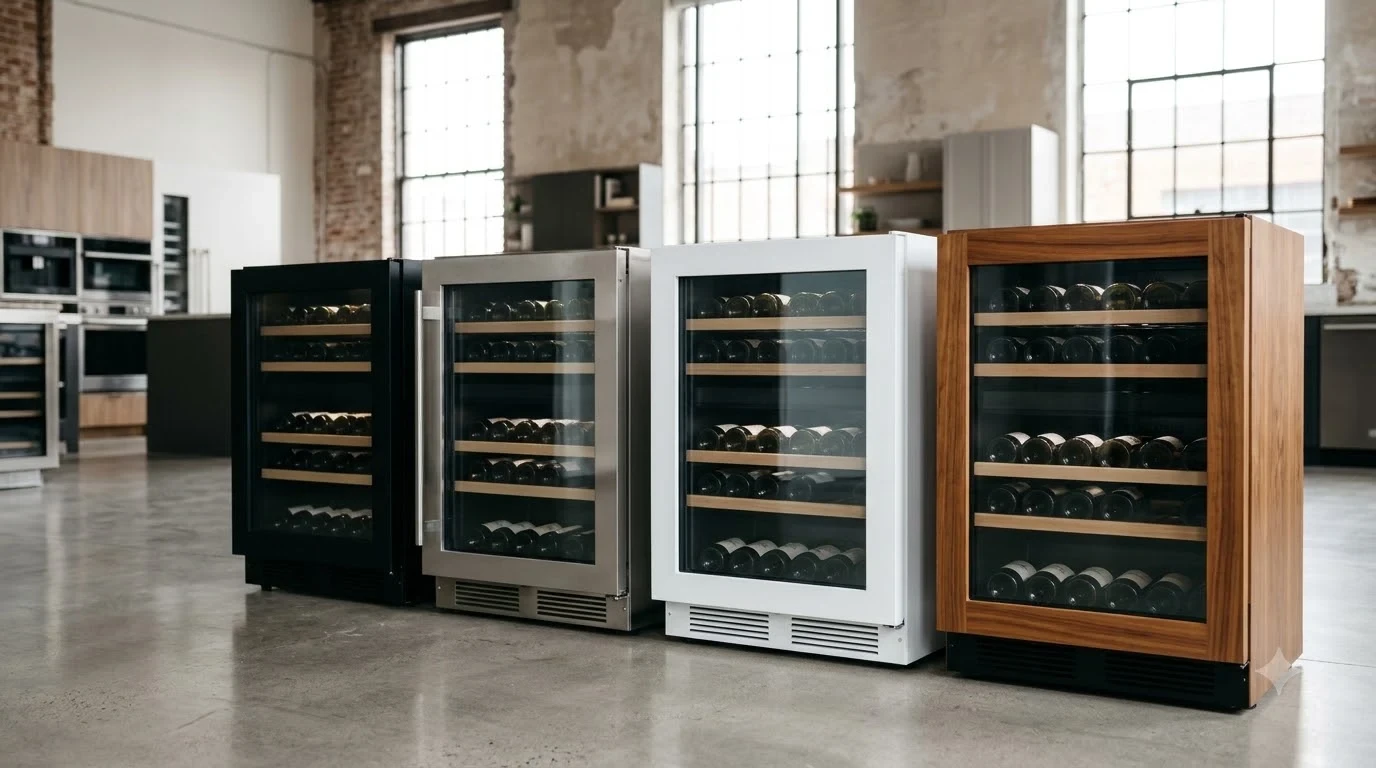
Some stainless steel units go further and double as coolers, with temperature-controlled, tinted glass doors. That design suits a host who wants to keep several bottles chilled close to the table without a separate wine fridge.
Metal racks can feel cold in a warm room, and a plain stainless unit may look more utilitarian than a wood one. If the goal is a cozy living space, a finish that matches the rest of the room may matter more than its resistance to moisture.
Best for Keeping Glasses Next to the Bottles
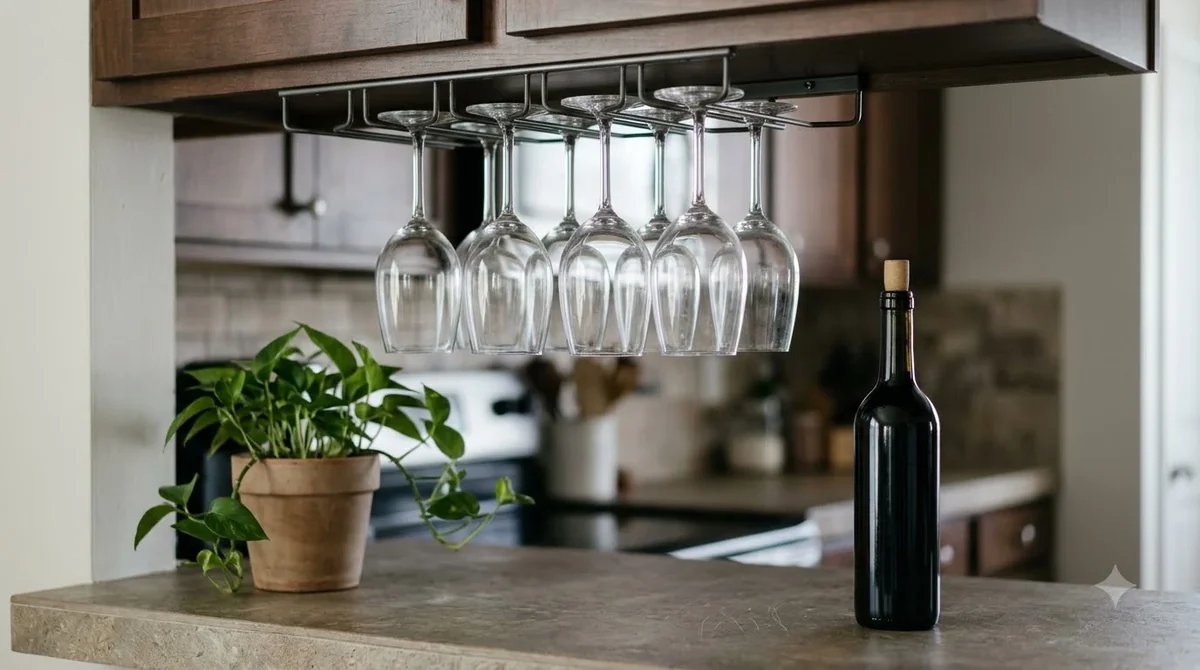
Glass racks store wine and glassware together, so the bottle and the glass are in the same place when you are ready to pour. Many manufacturers add them to a rack, and the glass storage may hang from the frame, sit on a shelf, or form part of a cabinet.
This setup suits a home bar or a dinner-party corner. Guests can find what they need without a trip to the kitchen, and the combined unit makes a clear focal point in a room.
Combined units take up more room and cost more than a plain rack. They also limit how many glasses you can store, so people who host large groups may prefer a separate glass cabinet next to a simple bottle rack.
How to Choose the Right Wine Bar Furniture
The right piece depends on three things: how many bottles you store, how much room you have, and whether you need glass storage as well. Start by counting your bottles and measuring the space before you compare styles.
Think about the room too. Wood suits a dining or living area, stainless steel suits a kitchen, and wall-mounted pieces suit small spaces. Check whether the rack holds a standard 750 ml bottle, since oversize bottles may need a special rack, as the Wikipedia article notes.
Finally, decide how often you will reach for the bottles. A rack you use every evening should sit at a comfortable height, while bottles you save for special occasions can live in a cube or cabinet out of the way.
Tip: If you are planning a bar setup, a bar cart can hold glasses and bottles on wheels, while a fixed rack keeps the storage in one place.
Frequently Asked Questions
What is the best material for a wine rack?
Wood is the most popular choice because it is easy to obtain and work with, and it suits many rooms. Stainless steel is better for humid spaces like kitchens, since it resists corrosion and staining. The right material depends on the room and the look you want.
How many bottles should a wine rack hold?
It depends on the rack. Wall-mounted units hold one or a few bottles, while cube racks can hold many more by stacking them. Count the bottles you plan to store now and leave room for a few more before you buy.
Can wine racks hold oversize bottles?
Standard racks usually hold the common 750 ml bottle. Oversize or irregularly shaped bottles often need a special rack, and cube racks can take many bottle shapes because the bottles rest on top of one another.
Should wine bar furniture hold glasses too?
It helps if you host often, because glasses and bottles stay in the same place. A combined glass rack takes more room and limits glass storage, so people who entertain large groups may do better with a separate glass cabinet.
Good wine bar furniture fits the room, holds the number of bottles you actually own, and matches how often you pour. Measure first, choose a material that suits the space, and decide early whether you want glasses on display or stored out of sight. For more on home bar setups, the best bar cart guide covers the mobile option.
More in Wine Accessories
 Coravin Vs Vacu Vin: Choose the Right Wine Saver for Your BottlesUpdated Nov 21, 2026
 Zwilling Wine Stopper Review: Preserve Open Bottles LongerUpdated Nov 21, 2026
 Wine Enthusiast Wine Preserver Review: Features, Benefits and LimitationsUpdated Nov 21, 2026
 Wine Enthusiast Wine Stopper: An Easier Way to Reseal Open BottlesUpdated Nov 21, 2026
 Vintorio Wine Opener: Two-Step Cork RemovalUpdated Nov 21, 2026
 Zwilling Wine Aerator Review: Aerate, Pour, and Seal With One ToolUpdated Nov 21, 2026