


We may earn a commission when you buy through links on this page, at no extra cost to you. Learn more.
Zalto wine glasses on sale are worth considering for serious wine enthusiasts who want exceptionally lightweight, mouth-blown crystal stemware and carefully differentiated bowl shapes. The Denk’Art collection includes specialized glasses for Burgundy, Bordeaux, Champagne, and other wine styles, along with a versatile Universal option. Their delicate construction, specialized designs, and premium positioning make retailer selection, authenticity, and careful handling important considerations before purchasing.
Zalto has developed a distinctive reputation among wine professionals and enthusiasts for glassware that emphasizes a thin rim, elegant proportions, and minimal weight. Its Denk’Art collection is particularly appealing to people who pay attention to wine aroma, texture, and presentation. However, these glasses are not necessarily the right choice for every household. A thoughtful purchase starts with understanding the differences between the shapes, checking what a retailer actually includes, and deciding whether delicate premium stemware suits your everyday routine.
Specs and Key Features of Zalto Denk’Art Glassware
Zalto Denk’Art glasses combine mouth-blown construction, lightweight proportions, and bowl shapes designed around different wine characteristics. The Universal is the most flexible starting point, while the Burgundy and Bordeaux designs target different red wine profiles.
The manufacturer’s product information identifies the collection by individual glass shape, height, and capacity. These specifications matter because a larger bowl is not automatically better for every wine, and the intended use can help narrow the purchase to one or two useful designs.
The following specifications come from Zalto’s product information. Capacities represent the complete volume of each glass, not recommended serving sizes.
| Glass | Height | Capacity | Intended wine style |
|---|---|---|---|
| Universal | 235 mm | 530 ml | Medium- to full-bodied wines |
| Burgundy | 230 mm | 960 ml | Powerful, expressive wines |
| Bordeaux | 240 mm | 765 ml | Characterful, tannic reds |
| Balance | 195 mm | 590 ml | Structured and complex wines |
| White Wine | 230 mm | 400 ml | Fruit-driven white wines |
| Champagne | 240 mm | 220 ml | Sparkling wines |
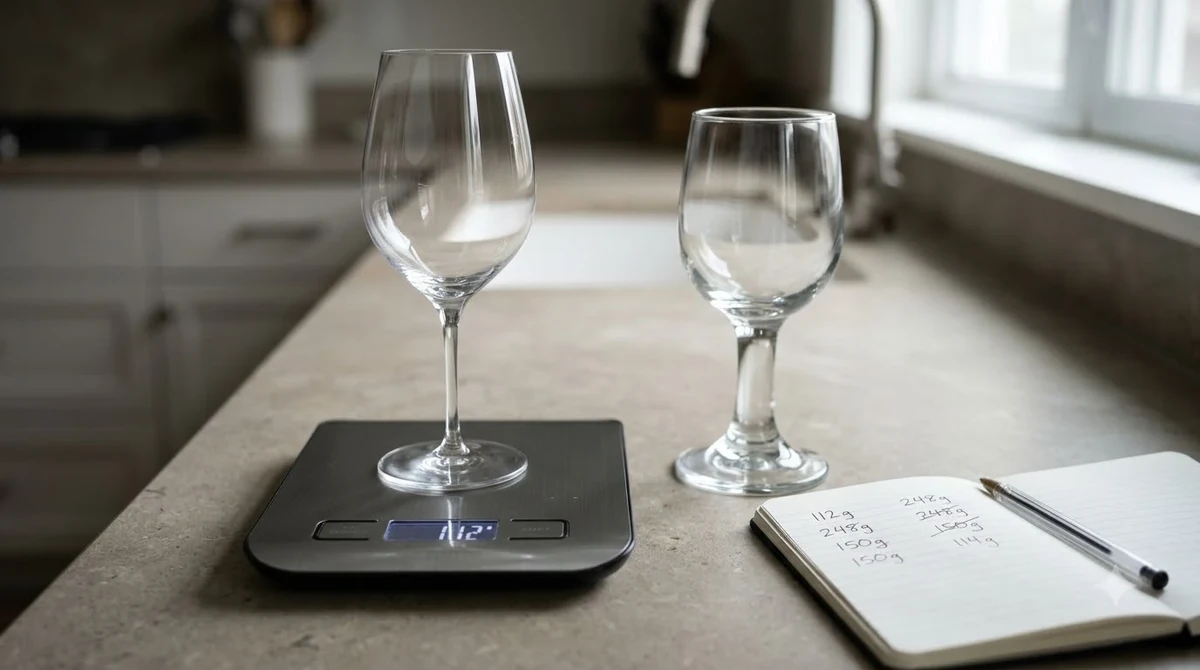
One defining characteristic is the collection’s lightweight feel. The Infatuation describes the Universal glass as weighing approximately 110 grams, making it noticeably lighter than many conventional wine glasses. This contributes to the distinctive experience of holding and drinking from the glass, although it also means that buyers should pay attention to the stem and bowl during handling.
The design is associated with three angles: 24, 48, and 72 degrees. These angles are connected to the inspiration behind the Denk’Art shapes and help distinguish the collection visually. They are part of the design philosophy rather than a guarantee that every wine will taste better in every situation.
Material and construction are equally important. Zalto’s Denk’Art glasses are mouth-blown crystal, and the manufacturer identifies the collection’s individual shapes and capacities in its product documentation. Buyers should distinguish these manufacturer specifications from retailer descriptions, which sometimes use inconsistent wording or combine information from different glass models. The Zalto manufacturer product and safety information is a useful reference for checking dimensions, glass types, and handling instructions.
For a first purchase, the Universal is generally the most practical starting point. It can accommodate a broad range of red and white wines without requiring a separate glass for every grape variety. A dedicated Burgundy or Bordeaux glass makes more sense when a particular wine style regularly appears on your table.
What Owners and Wine Enthusiasts Like
The main attraction of Zalto is the combination of delicate construction, refined proportions, and wine-focused bowl geometry. Enthusiasts appreciate the tactile experience and the way the glass presents aromas, while wine professionals often value having different shapes for different styles.
One frequently discussed benefit is the thin rim. A fine drinking edge creates a different sensation from a thick, heavy rim and allows the glass to feel less intrusive while drinking. This is a design preference rather than an objective guarantee of improved wine quality, but it helps explain why Zalto has developed such a devoted following.
The lightweight construction is another major attraction. A glass that weighs approximately 110 grams, according to The Infatuation’s description of the Universal, feels quite different from conventional stemware. The bowl can be swirled without the substantial sensation associated with heavier glasses, and the long stem contributes to the impression of delicate balance.
Wine enthusiasts also appreciate the specialized shapes. A large Burgundy bowl gives aromatic red wines considerable room, while the Bordeaux design is intended to present concentrated, tannic wines. The Universal provides a middle ground for people who do not want a separate glass for every bottle.
These differences become particularly useful during comparative tastings. Imagine serving Pinot Noir, Cabernet Sauvignon, and Chardonnay during the same evening. A dedicated Burgundy glass, Bordeaux glass, and Universal glass offer different presentations without requiring the drinker to change the wine itself.
Published commentary also provides some perspective on the perceived drinking experience. In a comparison described by Bon Appétit, the writer reported that red and white wines seemed smoother when served in Zalto Universal glasses than in several conventional alternatives. That is a personal tasting observation, not proof that every bottle will produce the same result. The Bon Appétit discussion of Zalto glassware also explores the design and the practical challenges of handling particularly delicate stems.
Another attraction is the visual presentation. The slender stems and carefully shaped bowls look refined on a dining table, particularly when paired with simple dinnerware. For people who enjoy hosting wine-focused dinners, this aesthetic can be a meaningful part of the purchase decision.
Gift appeal is another consideration. A matching pair of specialist glasses can be appropriate for wine enthusiasts who already have a collection of everyday stemware. The recipient is more likely to appreciate the distinctive construction if they understand wine glass shapes and are comfortable handling delicate items.
There is also an important distinction between owning Zalto and needing Zalto. A conventional wine glass can still serve wine effectively, and the bottle’s quality, serving temperature, and condition remain important. The appeal of Denk’Art lies in its refinement and presentation rather than replacing the fundamentals of wine appreciation.
For more general buying advice before committing to specialist stemware, compare the options in our guide to wine glasses. It helps put premium designs into the context of practical everyday use.
Common Complaints and Potential Drawbacks
Fragility is the most significant concern associated with Zalto Denk’Art glasses. Their extremely light construction is attractive during use, but accidental contact, careless polishing, and crowded storage can turn an expensive glassware purchase into a frustrating replacement problem.
Bon Appétit’s account illustrates this concern particularly clearly: its writer reported breaking a glass after it made light contact with an upholstered couch arm. The article also describes the anxiety of using delicate glasses around guests and in busy kitchens. These experiences are individual accounts, but they demonstrate why handling should be part of the buying decision.
The Infatuation similarly describes the stem as extremely delicate and recounts accidentally breaking a shelf of Zalto glasses in a restaurant environment. Its positive assessment of the drinking experience comes with an explicit warning about care. This is a useful reminder that premium glassware is not automatically suitable for every occasion.
Replacement availability can create another inconvenience. A single broken glass may leave an otherwise matching collection incomplete. Before purchasing, check whether the retailer offers individual stems, pairs, or larger sets. Buying a matching pair or keeping a consistent record of the exact glass shape can make future replacement easier.
Another potential complaint is the lack of practicality in busy households. Families, frequent entertainers, and people who regularly serve wine during large gatherings may prefer glassware that can withstand more casual handling. A thin stem requires more attention than a substantial everyday wine glass.
The specialized designs can also create uncertainty. A buyer might assume that the largest bowl is the most versatile, but the 960 ml Burgundy glass and the 765 ml Bordeaux glass are intended for different wine presentations. Choosing a shape simply because it looks impressive can lead to an expensive collection that does not match actual drinking habits.
Storage is another practical issue. The glasses measure approximately 195 to 240 mm in height across the listed models. Buyers should measure their cupboards and shelving before ordering, especially if their kitchen has limited vertical clearance. A beautiful glass that cannot fit safely into the available storage space is not a particularly convenient purchase.
Finally, premium glassware requires realistic expectations. A different bowl can influence aroma and the perception of texture, but it cannot repair an oxidized wine, improve poor storage, or turn an unbalanced bottle into an exceptional one. The benefit is most noticeable to people who already pay attention to the details of wine service.
For households where accidental breakage is a regular concern, compare more practical alternatives in our selection of stemless wine glasses. A stemless design will not reproduce the same drinking experience, but it may suit informal settings better.
Who Should Buy Zalto and Who Should Skip It
Zalto is best suited to wine enthusiasts who value delicate glass construction, thoughtful shapes, and a refined drinking experience. It is less appropriate for people who prioritize inexpensive replacements, rough everyday handling, or glassware that can be passed around a crowded party without much concern.
Who should consider buying
Regular wine drinkers are among the strongest candidates. Someone who frequently opens Burgundy, Bordeaux, Chardonnay, or Riesling may appreciate the differences between the specialized shapes. The Universal is particularly attractive for people who want a premium everyday option without purchasing a large collection.
Wine collectors may also find the range appealing. If a household regularly serves structured Cabernet Sauvignon alongside aromatic Pinot Noir, having separate Bordeaux and Burgundy glasses makes practical sense. The 765 ml and 960 ml capacities provide distinctly different bowl proportions for those styles.
People who enjoy organized tastings are another suitable audience. Different glasses can help participants compare the presentation of a wine under consistent serving conditions. The Balance glass, with its 590 ml capacity, is intended for structured wines involving phenolics, tannins, lees aging, or deliberate oak influence.
Premium glassware also makes a thoughtful gift for someone who already understands wine equipment. A pair of Universal glasses is a sensible starting point for a recipient who enjoys both red and white wine but does not necessarily need several specialist shapes.
Who should skip the collection
Frequent party hosts should think carefully before making a complete collection their primary entertaining glassware. Guests may not be familiar with handling very lightweight stems, and crowded tables increase the possibility of accidental contact.
Households that regularly use glasses outdoors may also prefer more substantial alternatives. Garden gatherings, poolside meals, and informal barbecues create situations where a delicate stem is less convenient than a sturdy everyday glass.
Buyers who rarely notice differences between wine glass shapes may not receive enough practical benefit from the additional expense and care requirements. If most wine is served casually with dinner, a dependable conventional glass may be entirely sufficient.
There is also little reason to purchase every Denk’Art shape immediately. A specialist glass only makes sense when the corresponding wine style appears often enough to justify the extra storage and maintenance.
Tip: Start with the Universal if you regularly drink several wine styles. Add the Burgundy or Bordeaux only when you frequently serve the wines those shapes are designed for. This approach limits unnecessary purchases and makes it easier to decide whether the delicate construction fits your routine.
For households that mostly serve structured reds, our guide to red wine glasses provides additional context on choosing bowl shapes for Cabernet Sauvignon, Merlot, Pinot Noir, and other varieties.
How Zalto Compares to Alternative Wine Glasses
Zalto occupies a specialist position in the premium stemware category. Its strongest distinctions are mouth-blown construction, extremely light proportions, and wine-specific designs, while conventional glasses often prioritize practicality and everyday durability.
One useful comparison is with the conventional glassware discussed in Bon Appétit’s Zalto review. The publication describes a comparison with standard Crate & Barrel glasses and larger-bowled red wine glasses. Its writer preferred the perceived presentation from Zalto, although that individual result should not be treated as a universal outcome.
The distinction is especially relevant for buyers who are deciding whether to replace an existing collection. If conventional glasses already provide satisfactory aroma and drinking comfort, upgrading every place setting may not be necessary. Purchasing two specialist glasses for quieter tasting occasions can be a more sensible approach.
Another comparison appears in Club Oenologique’s discussion of the Jancis Robinson x Richard Brendon glass. The article describes that design as another example of the specialized wine-glass movement that followed Zalto’s influence. Buyers comparing these approaches should focus on bowl proportions, rim thickness, weight, and the types of wines they regularly serve.
The Universal also deserves consideration against the specialized glasses in Zalto’s own range. Its 530 ml capacity offers a practical middle ground, while the 960 ml Burgundy bowl is considerably larger. Someone who drinks mostly Chardonnay, Riesling, and medium-bodied reds may find the Universal easier to use across a complete dinner.
For enthusiasts who frequently drink tannic reds, the Bordeaux shape has a more focused purpose. It is intended for wines such as Cabernet Sauvignon, Rioja, Brunello, and Shiraz. These are often wines with substantial structure, making a dedicated red wine glass appealing to people who regularly serve them.
There is no universal winner in this comparison. The right choice depends on whether the priority is the lightest possible drinking experience, a specialized wine presentation, or straightforward everyday practicality.
| Buying consideration | Zalto Denk’Art | Conventional stemware |
|---|---|---|
| Construction | Mouth-blown crystal | Varies by manufacturer |
| Weight | Very lightweight | Varies by design |
| Wine specialization | Dedicated bowl shapes | General-purpose or specialized |
| Handling | Requires careful attention | Depends on construction |
| Storage | Needs suitable clearance | Depends on dimensions |
| Best use | Considered wine service | Everyday and entertaining |
When comparing retailers, prioritize the exact model rather than relying on broad product descriptions. A listing that simply says Zalto wine glass does not tell you whether the item is Universal, Burgundy, Bordeaux, or another design.
Also compare the number of glasses included, packaging, delivery protection, return conditions, and replacement availability. These details can matter more over time than a small difference in the advertised purchase conditions.
How to Buy Zalto Wine Glasses on Sale
Finding a worthwhile offer requires more than identifying a retailer advertising a reduced price. The most useful purchase is an authentic glass in the correct shape, supplied in suitable packaging by a seller with clear shipping and return policies.
Start with authorized and established retailers
Look for specialist wine merchants, established glassware stores, and retailers that identify their relationship with the manufacturer. A specialist seller is more likely to understand the differences between the Denk’Art models and provide accurate descriptions of individual stems and sets.
For example, the Aldo Sohm FAQ identifies the retailer as an authorized US source for Zalto Denk’Art glassware. This is a useful starting point when comparing product availability. It is still important to confirm the exact model, packaging, and current purchasing conditions before placing an order.
Compare identical configurations
A single Universal glass and a pair of Universal glasses are not directly comparable listings. The same applies to the difference between individual gift packaging and multi-glass sets. Make sure that every retailer comparison uses the same model and quantity.
Pay attention to model names and manufacturer item references. The manufacturer’s documentation identifies the Universal in individual, two-piece, and six-piece packaging configurations. The Bordeaux and Burgundy glasses also have different packaging options.
Check the condition and delivery protection
Glassware is particularly vulnerable during transportation. Look for protective packaging, a clear damage-reporting process, and instructions for documenting a broken delivery. A reputable retailer should explain how damaged or incomplete orders are handled.
Before checkout, read the return policy carefully. Some sellers have different conditions for unused glassware, opened packaging, and items damaged during shipping. These distinctions become important when purchasing delicate products.
Be cautious about unusually attractive listings
Authenticity deserves attention whenever premium glassware appears on unfamiliar websites. Check the retailer’s business details, product photography, model information, and consistency of the specifications. A listing with incorrect dimensions or conflicting model descriptions deserves further investigation.
Also avoid assuming that an attractive promotional banner represents the best overall purchase. Shipping charges, packaging quality, and replacement policies can affect the actual value of an order. A reliable seller with clear product information may be preferable to an unfamiliar seller with a more appealing headline.
Finally, consider buying one pair before building a complete collection. This provides an opportunity to assess the weight, proportions, storage requirements, and handling experience before committing to additional specialist shapes.
Care, Cleaning, and Storage Tips
Proper care helps protect Zalto glasses from unnecessary damage. Although the collection is described as dishwasher safe, careful positioning, controlled temperatures, and appropriate polishing habits remain important.
The Infatuation recommends using a dishwasher when possible, provided the glasses are positioned securely and cannot touch other dishes or glassware. This is useful advice because hand-washing can involve twisting and uneven pressure around the bowl and stem.
If washing by hand, use lukewarm water and a gentle cleaning method. Avoid gripping the bowl with one hand while twisting the stem with the other. That movement creates stress around the narrow connection between the two parts.
When drying or polishing, support the bowl rather than applying pressure to the stem. Use a clean, soft cloth and avoid twisting the glass in opposite directions. If the glass is difficult to polish without excessive movement, allow it to air-dry before removing any remaining marks carefully.
Temperature changes deserve attention as well. The manufacturer’s safety instructions specify a recommended temperature range of 8 to 25 degrees Celsius and warn that sudden changes can shorten the lifespan of glassware. Allow glasses to return to room temperature before introducing cold beverages after exposure to a different temperature environment.
Storage should prevent direct contact with other glasses, metal, and ceramic objects. A dedicated cupboard shelf with sufficient space is a sensible arrangement. Avoid overcrowding glasses or placing them where a cabinet door, nearby bottle, or stacked dinnerware could strike them.
Vertical clearance is important because the listed models range from 195 mm to 240 mm in height. Measure the cupboard before choosing a storage location, and avoid forcing a tall glass into a restricted space.
Check every glass before use. If you notice a crack, chip, or splinter, stop using it. The manufacturer’s instructions specifically state that damaged drinking glasses should no longer be used.
Finally, keep specialist glasses separate from the busiest parts of the kitchen. A dedicated shelf for wine stemware can reduce accidental contact during food preparation, dishwashing, and everyday cleanup.
Frequently Asked Questions
Are Zalto glasses made by hand?
Yes. The Denk’Art glasses are mouth-blown rather than produced as ordinary mass-molded stemware. Club Oenologique reports that a glass takes approximately 15 minutes of labor, excluding cooling, and involves eight people during production.
What makes Zalto glass angles distinctive?
The design is associated with angles of 24, 48, and 72 degrees. These measurements are connected to the tilt of the Earth and form part of the Denk’Art design philosophy. They are not a measurement of the glass’s drinking capacity or a guarantee of a particular tasting result.
Can Zalto glasses be used for nonalcoholic drinks?
The manufacturer’s general product instructions cover drinking glasses for alcoholic and nonalcoholic beverages, subject to their stated temperature and suitability restrictions. They are not intended for hot drinks, and the manufacturer advises against using them in ovens, microwaves, or on stoves.
Should Zalto glasses be stored upside down?
There is no need to invert them for storage. A clean, stable shelf that prevents contact with other objects is a practical arrangement. Avoid hanging delicate stemware from racks if doing so places unnecessary stress on the stem and bowl connection.
Can a Zalto glass be repaired after a chip develops?
A chipped or cracked drinking glass should be removed from use rather than repaired for continued serving. The manufacturer’s safety instructions specifically prohibit using glasses with cracks, chips, or splinters. Inspect the rim and stem periodically, especially after washing and transportation.
Zalto Denk’Art is a compelling choice for wine enthusiasts who appreciate lightweight mouth-blown crystal and specialized glass shapes. The Universal is the most sensible starting point for most buyers, while Burgundy and Bordeaux models suit more focused collections. Compare reputable retailers, confirm the exact configuration, and consider the care requirements before purchasing so that your new glassware becomes a lasting part of your wine routine.
More in Wine Glasses
 Spiegelau Crystal Wine Glasses That Bring Clarity to Every PourUpdated Nov 21, 2026
 Zalto Crystal Wine Glasses: Are They Worth the Investment?Updated Nov 21, 2026
 Villeroy And Boch White Wine Glasses for a More Cohesive TableUpdated Nov 21, 2026
 Zwiesel Glas Champagne Glasses: Features, Quality and Buying AdviceUpdated Nov 21, 2026
 Zwiesel Glas Decanter Review: A Durable, Elegant Choice for Wine ServiceUpdated Nov 21, 2026
 Zalto Cabernet Glass Review: Features, Fit, and CareUpdated Nov 21, 2026