

We may earn a commission when you buy through links on this page, at no extra cost to you. Learn more.
The hamilton beach corkscrew is the cordless electric wine opener model 76610, a lightweight, button-operated tool rated for about 30 bottles per full charge, but it is no longer available directly from the manufacturer and its performance is less convincing with synthetic corks. It includes a foil cutter, a charging base, and simple up-and-down controls for removing and releasing a cork. Its low weight and easy operating sequence are appealing, but the grip design and synthetic-cork results make it a better fit for occasional use with natural corks than for a busy wine station.
This review focuses on model 76610, distinguishing its published specifications from independent test findings and owner comments. The goal is to help current owners assess the tool and help secondhand shoppers judge its limits before buying.
Specs and Key Features
The Hamilton Beach 76610 is a rechargeable, cordless electric opener with a manual start-and-release switch, a foil cutter, and a charging stand. Hamilton Beach rates a full charge for approximately 30 bottles, while the use-and-care manual calls for an initial charge of at least 8 hours. Those figures describe the manufacturer’s stated capacity and setup instructions, not a guarantee for an older battery that has been stored or used for years.

The manufacturer lists dimensions of 11 inches high, 4.25 inches wide, and 4 inches deep. America’s Test Kitchen reports a weight of 11.1 ounces, which makes the opener relatively light to lift and position; the charging base gives it a dedicated storage location rather than leaving the cord and cutter loose in a drawer.
| Specification | Hamilton Beach 76610 |
|---|---|
| Product type | Cordless rechargeable electric wine opener |
| Full-charge capacity | Approximately 30 bottles |
| First charge | At least 8 hours |
| Manufacturer-listed dimensions | 11 in H × 4.25 in W × 4 in D |
| Weight reported by America’s Test Kitchen | 11.1 oz |
| Controls | Manual up/down switch |
| Included accessories | Charging base, charging cord, and foil cutter |
| Foil-cutter storage | Slot at the rear of the charging base |
| U.S. limited warranty in the manual | 1 year from original purchase |
| Manufacturer availability listing | Listed as no longer available |
Operation uses two manual buttons. After removing the foil, place the opener straight over the bottle, press and hold the lower arrow until the cork is extracted, then lift the unit away and press the upper arrow to reverse the worm and release the cork. The manual instructs the user to keep the opener straight down over the bottle and hold the bottle steady with the other hand; a tilted opener may not engage the cork cleanly. The foil cutter stores at the back of the charging base, which also holds the opener and its charging connection. A green indicator signals a completed charge; for more detail, see the official Hamilton Beach 76610 use-and-care manual.
The official product listing labels the model no longer available. An existing owner can still use a working unit, but anyone considering a secondhand one should confirm that the charging base, cord, and foil cutter are included and that the battery accepts a charge. An old retailer listing does not establish that new stock or replacement accessories are currently available.
What Owners Like
The clearest positive theme in owner feedback is straightforward operation. Comments on a retailer listing describe the lower-arrow extraction and upper-arrow release sequence as easy to learn, especially for people who find manual corkscrews awkward.
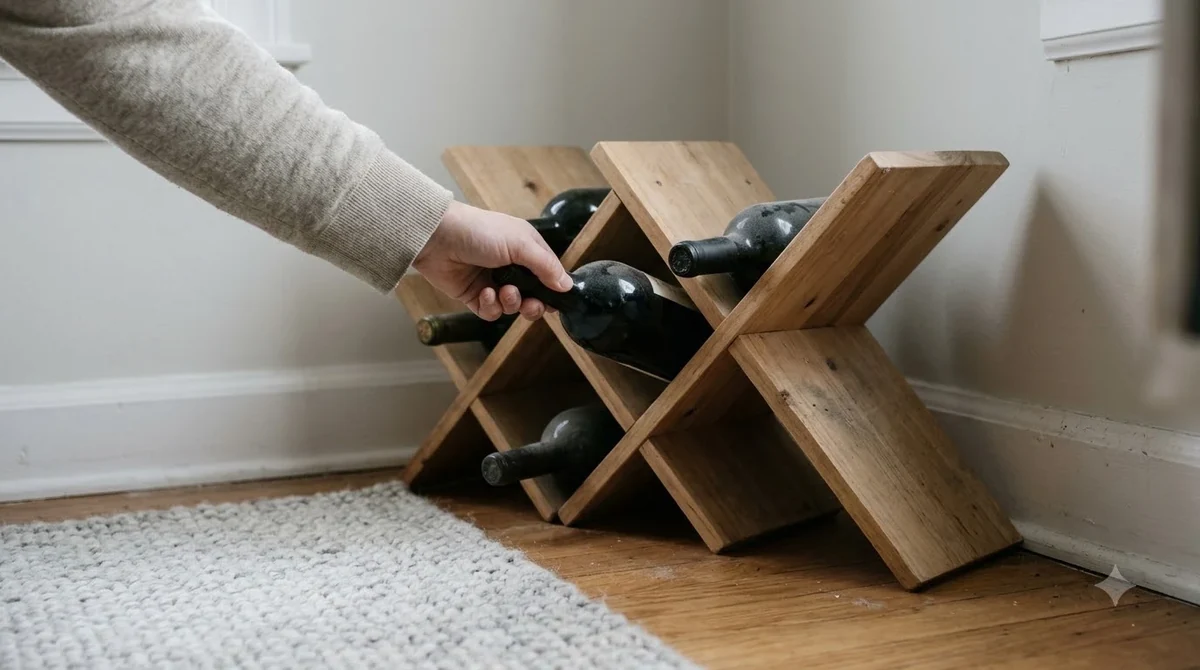
The written comments describe the same practical benefit: users press the lower arrow, let the motor withdraw the cork, and use the upper arrow to release it. One owner who struggled with manual openers praised the simple sequence, while another compared it favorably with a lever-style corkscrew that could be difficult on some bottles. For someone who finds a waiter’s corkscrew awkward, reducing the opening task to a stable two-button routine can make serving wine less of a chore.
Other comments praise its quiet operation and light feel. One owner who regularly opens wine found it easy to handle and quieter than expected, while another appreciated having the unit ready on the counter. These are individual experiences rather than a guarantee, but they fit the 11.1-ounce weight recorded by America’s Test Kitchen and the compact footprint suggested by the manufacturer’s dimensions. The charging base also keeps the opener and foil cutter together, with a storage position for the cutter at the back of the dock. That arrangement is useful in a small bar area because the cutting accessory has a set place instead of disappearing into a drawer. Treat owner comments as evidence of convenience, not proof of long-term battery life; written feedback cannot establish how every unit performs after years of charging.
Common Complaints
The clearest performance weakness is synthetic-cork removal. In its electric wine opener comparison, America’s Test Kitchen found the 76610 effective with natural corks but slower and less effective with synthetic corks, placing it in the “Not Recommended” group.
Synthetic closures can be harder for a corkscrew worm to pierce securely than natural cork. If the worm fails to bite cleanly, the motor may take longer to draw the cork out, and the user may need to steady the body or finish with a different tool. For a household that buys both natural- and synthetic-stoppered wines, this weakness undercuts the point of keeping one electric opener ready for every bottle.
The testers also found the silicone finger pads poorly placed: instead of guiding the hand, they forced fingers into awkward positions. That criticism matters because the 76610 still requires a firm, upright hold as the motor works. Although its 11.1-ounce weight and manual buttons are advantages, they do not correct either the grip issue or the less reliable synthetic-cork performance. The general lesson from electric openers is that the user still has to keep the worm centered as it enters the cork; the motor removes much of the twisting, but it does not make bottle alignment irrelevant. The official listing’s discontinued status adds another concern for secondhand buyers, who should verify the battery and supplied charging base rather than assuming accessories or service are easy to obtain.
Who Should Buy and Who Should Skip
The Hamilton Beach 76610 makes the most sense for someone who already owns a working unit, opens wine at home from time to time, and usually encounters natural cork. Its advertised capacity of approximately 30 bottles on a full charge can cover a number of small dinners or relaxed weekends before the next recharge, while its 11.1-ounce test weight keeps it manageable to lift and store.
Tip: Before buying a secondhand 76610, ask the seller to demonstrate a full charge and a complete opening cycle. A battery that powers on briefly may still fail to deliver the manufacturer’s approximate 30-bottle capacity.
It also suits someone who prefers buttons to the twisting and leverage of a manual corkscrew. The lower arrow extracts the cork and the upper arrow reverses the worm to release it from the opener, while the foil cutter and rear storage slot keep the basic accessories together. For a home bar where the opener stays on its base, those practical details may matter more than extra features.
Skip it if synthetic corks are common in the bottles you buy, if you need a particularly secure grip, or if you regularly open many bottles in succession. The independent test found weaker synthetic-cork performance and awkward finger-pad placement, so the advertised 30-bottle capacity should not be the only deciding factor.
It is also a poor choice as a new purchase if current parts availability and manufacturer support are priorities. The official listing says the 76610 is no longer available, and the manual provides a one-year U.S. limited warranty from the original purchase date. A used unit may have little or no remaining coverage, so inspect the battery and included charger and ask for proof that the opener completes a full charge-and-open cycle. Anyone who prefers to avoid a rechargeable battery altogether may be better served by a waiter’s corkscrew or lever-style opener, which requires more hand movement but does not depend on a charging base. A practical decision is to compare the effort saved by a motor with the likelihood of needing to charge, store, and eventually replace an older electrical device.
How It Compares to Alternatives
The 76610 competes with other electric openers on ease of use, cork compatibility, grip, and storage rather than on a complicated feature set. America’s Test Kitchen evaluated it alongside models from Secura, Cuisinart, Ozeri, Rabbit, and Oster, making that comparison useful for understanding where the Hamilton Beach design falls short.
In that evaluation, the Secura SWO-3N was the top pick. It weighs 14.7 ounces and measures 9.75 inches tall, or 11 inches on its charging stand; testers said it handled natural and synthetic corks effectively and opened more than 30 bottles in a row without losing charge. The Cuisinart CWO-50 was also recommended: it weighs 13.7 ounces and stands 12.75 inches on its dock, and testers liked its clean extraction, quiet operation, stability, foil cutter, and included wine saver. Both earned stronger overall assessments than the Hamilton Beach, although their charging stands are taller or their bodies heavier.
The Rabbit Automatic Electric Corkscrew W6315N takes a different approach. It starts when pressure is applied rather than waiting for the user to press a button; testers found that activation harder to control because it could begin spinning before it was firmly placed over the bottle. Its measured weight was 10.1 ounces and its height was 9.5 inches. The Cuisinart CWO-25 is a heavier alternative at 1.01 pounds and 10.13 inches on its charging stand; it handled natural corks well but struggled with synthetic ones. Readers comparing automatic and button-operated Rabbit designs can consult more rabbit corkscrew reviews before choosing.
The practical Hamilton Beach trade-off is a lighter body, manual controls, and basic accessories against weaker synthetic-cork performance and an awkward grip. A buyer who mainly opens natural-cork bottles may still appreciate its low weight and two-button sequence, especially if a working unit is already at hand. Someone starting from scratch should give more weight to cork compatibility, grip comfort, and current manufacturer support than to a headline capacity figure. America’s Test Kitchen’s comparison used both natural and synthetic corks, so the difference between closure types was part of the evaluation rather than a purely cosmetic preference. For more wine-opening tools and related equipment, browse the site’s wine accessory brands and gear coverage; shoppers who prefer manual lever action can compare the best rabbit corkscrew styles.
Frequently Asked Questions
These answers cover practical details from the manufacturer’s instructions that are easy to miss in a product listing. They are especially useful for owners who have found an older 76610 in a kitchen drawer or acquired one secondhand.
What does the charging light show while the opener is charging?
The indicator glows red during charging and changes to green when charging is complete. A green light therefore signals a completed charge, not simply that the base is connected to power. That color change is the manual’s visual cue that the opener is ready to be removed from the dock.
Can I charge the Hamilton Beach 76610 with another USB or appliance charger?
No. Hamilton Beach’s instructions say to use only the charger supplied with the opener and not to use that charger with another product. The manual does not describe the unit as a USB-charging device, so do not substitute a phone charger or an adapter based only on a matching connector.
Can the opener or charging base be washed in the sink?
No. The manual warns owners not to immerse the wine opener, charging base, charging cord, or charging port in water or another liquid. It directs users to wipe the opener and base with a damp cloth or sponge; stubborn marks can be treated with a mild, nonabrasive cleanser.
Is the Hamilton Beach 76610 intended for outdoor use?
No. The safety section of the use-and-care guide says not to use the appliance outdoors. That instruction should take priority over any promotional description that mentions serving wine on a deck or patio, so keep the opener and its charging base indoors.
What should I keep if I may need warranty service?
Keep the original sales receipt, because the written warranty requires proof of purchase for a claim. The manual also asks owners to identify the model, type, and series numbers before contacting Hamilton Beach support, which can help the service team identify the exact unit.
The Hamilton Beach 76610 is a simple, light electric opener with useful basics, but its synthetic-cork performance, grip layout, and discontinued status limit its appeal as a new purchase. It remains reasonable for an owner whose unit is working well and whose bottles mostly use natural cork; shoppers seeking a dependable replacement should compare newer, independently better-performing options before settling on an older model.
More in Wine Accessories
 Metrokane Wine Chiller Review: Keep Bottles Cold LongerUpdated Nov 21, 2026
 OXO Wine Aerator Review: A Simpler Way to Aerate WineUpdated Nov 21, 2026
 NutriChef Wine Aerator Review for Easier Wine ServingUpdated Nov 21, 2026
 Metrokane Wine Aerator Review: Faster, Easier Wine AerationUpdated Nov 21, 2026
 Oster Wine Opener Instructions for Easy, Reliable Cork RemovalUpdated Nov 21, 2026
 Moocoo Wine Opener Review: Features, Performance and Buying AdviceUpdated Nov 21, 2026