

We may earn a commission when you buy through links on this page, at no extra cost to you. Learn more.
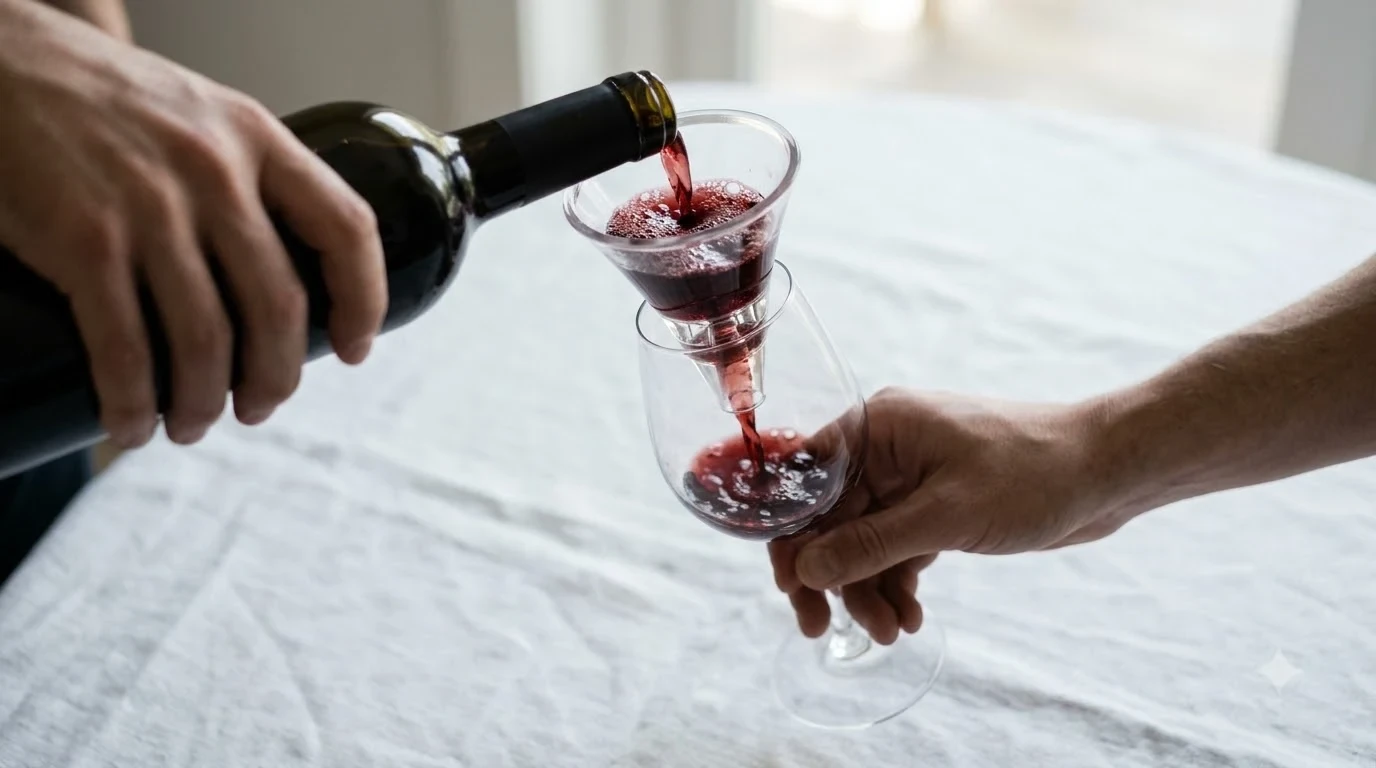
The oxo wine aerator is a simple pour-through accessory that introduces air to wine as it flows into your glass, making serving young reds and other wines that benefit from aeration more convenient. The OXO SteeL Aerating Wine Pourer uses a generous opening, a stainless steel ring and flexible bottle-gripping ribs to encourage airflow during pouring. It is best suited to wine drinkers who want aeration without preparing a separate decanter, although it should not be confused with OXO’s separate stopper-and-pourer combination.
A wine aerator can make a difference to the serving routine, particularly when a bottle of Cabernet Sauvignon, Syrah or another structured red is opened shortly before dinner. Instead of transferring wine into a large vessel and waiting, a pour-through accessory introduces air while wine travels from the bottle to the glass. OXO’s approach is straightforward: use the shape of the pourer and the movement of the wine to encourage aeration without electricity, complicated assembly or a separate serving vessel. The important question is whether this relatively simple design offers enough practical value for everyday wine drinkers.
Specs and Key Features
The OXO SteeL Aerating Wine Pourer is designed around three main elements: an open pouring design, a stainless steel ring and flexible ribs that secure the accessory in a bottle. Its purpose is to encourage wine to interact with air during the pour while providing a convenient alternative to transferring wine into a decanter. The manufacturer’s catalog identifies the product as model 3110400.
According to OXO’s product description, wine flows over the stainless steel ring while air circulates on either side of the stream. This arrangement is intended to provide aeration as the wine enters the glass. The generous opening also allows the wine to cascade rather than simply pass through a narrow conventional spout.
The flexible ribs are another important design detail. They are intended to accommodate different bottle openings and keep the accessory securely positioned during serving. This matters because a loose-fitting pourer can move unexpectedly when a bottle is tilted, creating unnecessary spills or an inconsistent stream.
| Specification | OXO SteeL Aerating Wine Pourer |
|---|---|
| Product category | Wine aerator and pourer |
| Manufacturer | OXO |
| Model number | 3110400 |
| Pouring design | Generous opening |
| Aeration mechanism | Air circulates on both sides of the wine stream |
| Contact component | Stainless steel ring |
| Bottle attachment | Flexible ribbed base |
| Power source | None required |
| Operating method | Gravity-fed pouring |
| Published aeration time | Not specified |
| Published dimensions | Not specified in the manufacturer’s catalog |
One distinction deserves attention before comparing specifications. OXO also produces a Steel Wine Stopper & Pourer Combination, identified in its catalog as model 11136400. That product has a lever that switches between pouring and short-term bottle sealing. It is not the same accessory as the model 3110400 aerating pourer. The distinction matters when shopping online because product listings, photographs and descriptions can sometimes use similar names.
The manufacturer’s description provides useful information about the aeration mechanism, but it does not establish a specific number of minutes of decanting equivalence, an exact increase in oxygen exposure or a measurable improvement in wine quality. Those omissions make it sensible to approach the product as a convenient serving tool rather than a scientifically quantified replacement for traditional decanting.
What Owners and Everyday Wine Drinkers May Like
The strongest appeal of the OXO aerating pourer is convenience. It combines the aeration process with the act of serving, allowing someone to pour directly from a bottle without preparing a separate vessel or waiting through a dedicated decanting period. Its simple design also avoids the batteries, charging and controls associated with electric wine aerators.
A quicker serving routine. Traditional decanting involves opening a bottle, transferring the wine and cleaning another piece of equipment afterward. An aerating pourer reduces those steps to a single serving action. For a casual dinner with two or three guests, this can be a meaningful advantage, especially when the bottle is intended for immediate consumption rather than an extended tasting session.
A practical approach to bottle compatibility. The flexible ribs on the base are designed to hold the accessory securely in different bottle openings. That design is more accommodating than a rigid fitting that depends on one precise neck measurement. People who regularly purchase wines from different producers may appreciate this feature because bottle shapes and neck finishes are not completely uniform.
No complicated operating procedure. A gravity-fed accessory has relatively little to learn. Position it in the bottle, tilt the bottle and pour into the glass. There is no motor to activate, no air pump to operate and no separate chamber to fill. This straightforward approach is particularly appealing to occasional wine drinkers who do not want another complicated piece of bar equipment.
A restrained appearance. OXO’s SteeL range emphasizes practical kitchen and bar accessories. The stainless steel ring gives the aerating pourer a more finished appearance than a basic plastic pouring spout. It can sit comfortably alongside a corkscrew, wine stopper and other serving tools without making the bar setup feel overly technical.
Less equipment on the table. A traditional decanter can occupy considerable table space, especially when several bottles are being served. A compact pourer leaves the table available for glasses, food and serving dishes. It can also be convenient in smaller dining rooms where a large decanter is not especially practical.
There is a broader benefit to this type of accessory: it encourages wine drinkers to pay attention to how a wine changes after opening. A glass poured immediately can be compared with another poured later, allowing the drinker to observe changes in aroma and texture. This is more useful than expecting every wine to transform dramatically as soon as air reaches it.
However, convenience should not be mistaken for guaranteed improvement. The amount of aeration and the resulting sensory change depend on the wine, its age, structure, serving conditions and individual preferences. OXO describes how the design introduces air, but does not promise that every bottle will taste noticeably different.
Common Complaints and Limitations
The main limitation of the OXO wine aerator is that its simple pouring mechanism cannot reproduce every function of a full-sized decanter. It encourages air contact during serving, but it does not provide the same opportunity for an entire bottle to rest in a wide vessel. Buyers should also distinguish between manufacturer-documented features and performance claims that have not been independently established.
It is not a substitute for extended decanting. Some wines benefit from spending 30 to 60 minutes in a decanter, particularly young, full-bodied reds with pronounced structure. A pour-through aerator is designed to introduce air during a relatively short serving process. It cannot guarantee the same development that may occur when a bottle is opened and allowed to breathe over a longer period.
Not every wine needs additional aeration. A delicate older Pinot Noir may already have developed complex aromas that can become less expressive with excessive air exposure. Similarly, many light-bodied whites are enjoyable immediately after opening. The presence of an aerator does not mean that every bottle should automatically pass through it.
The manufacturer does not publish quantified performance results. OXO describes the airflow around the wine stream and the stainless steel ring, but the available product specifications do not provide a measured aeration rate or a controlled comparison against conventional pouring. Consequently, buyers should not expect a guaranteed improvement in aroma, flavor intensity or finish.
Cleaning details require attention. The OXO catalog description for model 3110400 does not establish a specific dishwasher-safe rating or provide detailed cleaning instructions. This is important because the separate OXO stopper-and-pourer combination is listed as dishwasher safe by retailers, but that specification should not automatically be transferred to the aerating pourer. Cleaning the accessory according to its own product instructions is the sensible approach.
It does not preserve unfinished wine. An aerating pourer is primarily a serving accessory. It should not be mistaken for a vacuum pump, airtight stopper or wine preservation system. Once a bottle has been opened, oxygen continues to affect the remaining wine regardless of whether an aerator is attached.
Another possible disappointment is the expectation of a dramatic transformation. A wine that is already expressive and balanced may show little noticeable change from an aerated pour. A tightly structured young Cabernet Sauvignon may respond differently from a delicate white wine. The result depends on the individual bottle, not simply on the presence of an accessory.
Finally, buyers should pay attention to the exact model being offered. An online listing for the OXO Wine Stopper & Pourer Combination may show a similar stainless steel appearance, but its lever-operated sealing function belongs to a different product. Purchasing the wrong version can create disappointment even if the accessory itself performs as described.
Who Should Buy the OXO Wine Aerator and Who Should Skip It
The OXO aerating pourer is most appropriate for casual and regular wine drinkers who value convenient serving and want to introduce air without using a separate decanter. It makes the most sense as a supporting bar accessory rather than a replacement for every traditional wine-serving tool.
Who should consider buying it
Casual red wine drinkers. People who frequently open young Merlot, Cabernet Sauvignon or Syrah for dinner may appreciate the ability to aerate wine during pouring. These wines can have more noticeable tannin and structure than lighter alternatives, so a little additional air contact may be welcome depending on the bottle.
People who entertain regularly. Hosts serving several guests often want a simple way to pour wine without interrupting conversation. A pour-through accessory keeps the bottle in use and eliminates the need to manage a separate decanter for every wine being served. It also makes the serving routine more consistent when several glasses are being filled.
Small-space households. People with limited kitchen or bar storage may prefer one compact accessory over a large collection of wine equipment. A pourer is easier to accommodate alongside a corkscrew, wine glasses and bottle stopper. It also makes sense for apartment dining areas where table space is limited.
Wine beginners. Someone learning about wine does not necessarily need a complicated decanting setup. A simple aerating pourer provides an easy introduction to the concept of air contact while allowing the drinker to compare wines under ordinary serving conditions.
Who should skip it
Collectors of mature wines. People who regularly open older Bordeaux, Burgundy or other age-worthy bottles may prefer a carefully controlled decanting routine. Some mature wines contain sediment that needs to be separated from the liquid, and a simple pourer does not provide the same visibility or control as a transparent decanter.
Dedicated wine enthusiasts seeking measurable performance. Buyers who want a quantified aeration rate, adjustable oxygen exposure or controlled serving times may prefer a more specialized aeration system. OXO’s published description explains the airflow concept but does not provide those measurements.
People who primarily drink delicate whites and sparkling wines. Additional aeration is not automatically desirable for every style. A chilled Sauvignon Blanc, delicate Riesling or sparkling wine may be better served using conventional pouring techniques. Sparkling wine also requires care because excessive agitation and loss of carbonation are undesirable.
Anyone primarily looking for wine preservation. If the main goal is keeping an unfinished bottle fresh for several days, a dedicated stopper or preservation system is a better choice. The aerating pourer does not perform that function.
Tip: Before choosing an aerator, identify the type of wine you usually drink. If young Cabernet Sauvignon and Syrah dominate your collection, experimenting with aeration may be useful. If you mostly enjoy delicate Pinot Noir, Sauvignon Blanc or sparkling wine, a conventional pourer and suitable storage stopper may offer greater everyday value.
How It Compares to Alternative Wine Aeration Methods
The OXO aerating pourer occupies the simplest end of the wine aeration category. It introduces air during pouring, whereas handheld aerators, electric dispensers and traditional decanters approach the same serving goal through different designs. The right alternative depends on whether convenience, control, sediment separation or presentation matters most.
OXO aerating pourer versus a traditional decanter
A decanter is a wide vessel that exposes a larger surface area of wine to air. It allows an entire bottle to rest before serving, making it particularly useful when preparing young, structured reds. It can also help separate wine from sediment when the transfer is performed carefully.
The OXO accessory is more convenient for immediate individual pours, but it cannot provide the same full-bottle resting process. A decanter also makes it easier to observe the wine’s appearance and any sediment during transfer. For people who regularly serve mature Bordeaux or other cellar-aged wines, this difference can matter more than the convenience of a pourer.
A decanter with aerator offers another approach by combining air exposure with a dedicated serving vessel. This can suit people who want a more traditional presentation while still making aeration part of the pouring routine.
OXO versus handheld aerators
Handheld aerators generally require the user to hold a separate device above the glass or position it between the bottle and glass. Some designs use internal channels or air-intake openings to mix air with the wine as it passes through.
The advantage is that some handheld products offer a more specialized aeration mechanism. Their disadvantage is the additional handling involved during service. The OXO pourer takes a simpler approach by remaining attached to the bottle while wine is poured.
OXO versus electric aerators
Electric wine aerators typically dispense wine using a motorized or pump-assisted mechanism. They can be useful for people who frequently serve wine at gatherings and prefer a button-operated serving experience. Certain designs also include measured dispensing features.
However, electric devices require more equipment and may introduce battery or charging requirements. They can also be more complicated to clean than a simple gravity-fed accessory. The OXO model 3110400 avoids these additional components entirely.
OXO aerating pourer versus the OXO stopper-pourer combination
This is the most important product distinction for anyone shopping specifically for OXO wine accessories. The SteeL Aerating Wine Pourer, model 3110400, is designed around airflow during pouring. The separate SteeL Wine Stopper & Pourer Combination, model 11136400, adds a lever-operated seal for short-term storage.
According to Sur La Table’s product specifications, the combination accessory uses stainless steel and silicone, measures 1.8 inches long by 2.6 inches wide by 4.1 inches high, and is dishwasher safe. Its lever is lifted for pouring and pressed down for sealing.
That extra storage function may be useful for households that frequently leave bottles unfinished. However, the stopper-pourer should not be considered a long-term wine preservation system. Its sealing function is intended for short-term storage, not extended protection against oxidation.
For someone who wants the simplest possible aeration accessory, the original pourer is the more direct match. For someone who prioritizes both pouring and temporarily closing an opened bottle, the combination product deserves separate consideration.
How to Use the OXO Aerating Wine Pourer Effectively
Getting the most from an aerating pourer involves choosing an appropriate wine, positioning the accessory securely and paying attention to the wine after it reaches the glass. The process is straightforward, but a few serving habits can make the experience more useful.
1. Choose a wine that may benefit from aeration
Start with a young red that has noticeable structure. Cabernet Sauvignon, Syrah and some young Bordeaux blends are reasonable wines to explore because their tannins and concentrated flavors can make aeration an interesting part of serving.
Merlot can also be a suitable choice, particularly when a young bottle tastes slightly closed after opening. Pinot Noir requires more discretion because its lighter tannin structure and delicate aromas do not always benefit from the same treatment as a powerful Cabernet.
For white wines, the results are more variable. A fuller-bodied Chardonnay may tolerate some air contact, while a delicate Sauvignon Blanc is generally better served without assuming additional aeration will improve it.
2. Position the accessory securely
Place the flexible ribbed base into the bottle opening, ensuring the accessory sits securely before lifting the bottle. The flexible design is intended to accommodate different bottle sizes, but a careful fit remains important for controlled pouring.
Do not force the accessory into a bottle if the opening feels incompatible. A stable fit is preferable to applying unnecessary pressure. This is particularly important when switching between bottles from different producers.
3. Pour at a controlled angle
Gradually tilt the bottle and allow the wine to flow through the opening. The OXO design uses the stainless steel ring and surrounding airflow to encourage aeration as the wine enters the glass.
A steady pour is preferable to aggressively tipping or shaking the bottle. Controlled serving also makes it easier to avoid splashing and to maintain a consistent amount in each glass.
4. Compare the aroma after pouring
Rather than assuming the aerator has transformed the wine, take a moment to smell the first pour. Notice whether the fruit, spice and other aromas are easy to identify. Then give the glass a gentle swirl and compare the aromas again.
Repeat the comparison with a second glass after a few minutes. This provides a practical way to understand how the wine develops after opening, while separating the effect of pouring through an aerator from the natural changes that occur as wine sits in the glass.
5. Serve at an appropriate temperature
Temperature can influence how aromas, alcohol and tannins are perceived. Full-bodied reds such as Cabernet Sauvignon and Syrah are generally best served around 60 to 65 degrees Fahrenheit. Lighter reds such as Pinot Noir are more appropriate around 55 to 60 degrees Fahrenheit.
Aeration does not replace temperature control. Serving an overly warm red can make alcohol feel more prominent, while a wine served too cold may seem muted. Correct temperature is an important part of evaluating whether an aerating accessory provides a useful difference.
When serving several bottles at the same gathering, a well-organized bar cart can keep the aerator, corkscrew, glasses and other essentials together. This also reduces the likelihood of misplacing small accessories between bottles.
Frequently Asked Questions
Does the OXO wine aerator work with white wine?
Yes, a pour-through aerator can physically be used with white wine, although additional air exposure is not always desirable. Fuller-bodied Chardonnay may be more suitable for experimentation than a delicate, highly aromatic Sauvignon Blanc. White wine should also be served at an appropriate temperature, generally 45 to 50 degrees Fahrenheit for lighter styles and 50 to 55 degrees for fuller styles.
Can the OXO aerating pourer be used with sparkling wine?
It is not the most appropriate choice for sparkling wine because the main purpose of aeration is different from preserving carbonation. Champagne, Cava and Prosecco depend on dissolved carbon dioxide for their characteristic bubbles. A conventional sparkling wine stopper and careful pouring technique are generally better suited to these bottles.
Does the OXO aerator remove sediment from older wine?
The published description of model 3110400 does not identify it as a sediment-filtering accessory. Mature red wines can develop deposits during bottle aging, particularly when they have not been filtered extensively. A transparent decanter and careful pouring are more appropriate when separating clear wine from sediment is important.
How much wine fits in the OXO aerating pourer?
The manufacturer does not publish a reservoir capacity for model 3110400 because it is a pour-through accessory rather than a wine-holding vessel. A standard 750 ml bottle contains approximately five conventional 5 oz servings. The accessory allows wine to pass directly from the bottle into the glass instead of storing a measured quantity inside an aeration chamber.
Is the OXO aerating wine pourer still a useful accessory for occasional wine drinkers?
It can be useful if occasional wine drinkers regularly serve young red wines and prefer a simple pouring routine. People who open only a few bottles each year may find that a basic corkscrew and conventional decanter cover their needs. The decision depends more on serving habits than on how frequently someone buys expensive wine.
The OXO SteeL Aerating Wine Pourer is a straightforward accessory for wine drinkers who want air exposure during serving without introducing a complicated piece of equipment. Its stainless steel ring, generous opening and flexible ribs provide a practical design, although it should not be expected to replace a traditional decanter for every wine. Buyers should also verify that they are choosing model 3110400 rather than OXO’s separate stopper-and-pourer combination. For everyday serving convenience, that distinction makes all the difference.
More in Wine Accessories
 Coravin Vs Vacu Vin: Choose the Right Wine Saver for Your BottlesUpdated Nov 21, 2026
 Zwilling Wine Stopper Review: Preserve Open Bottles LongerUpdated Nov 21, 2026
 Wine Enthusiast Wine Preserver Review: Features, Benefits and LimitationsUpdated Nov 21, 2026
 Wine Enthusiast Wine Stopper: An Easier Way to Reseal Open BottlesUpdated Nov 21, 2026
 Vintorio Wine Opener: Two-Step Cork RemovalUpdated Nov 21, 2026
 Zwilling Wine Aerator Review: Aerate, Pour, and Seal With One ToolUpdated Nov 21, 2026