

We may earn a commission when you buy through links on this page, at no extra cost to you. Learn more.
This laguiole wine opener review finds that a genuine Laguiole sommelier corkscrew is a worthwhile choice for wine drinkers who value precise cork extraction, attractive materials, and traditional French craftsmanship. Its folding foil cutter, spiral worm, and bottle-lip lever provide the essential functions of a professional waiter’s corkscrew. However, quality varies between manufacturers and models, and the higher-end versions require more careful maintenance than inexpensive stainless steel openers. Buyers should also distinguish genuine French-made products from generic Laguiole-style corkscrews.
A wine opener is one of those accessories that can become part of a regular serving routine. It needs to grip comfortably, enter a cork cleanly, and provide enough leverage to remove the cork without damaging it. Laguiole sommelier knives combine these practical requirements with distinctive styling, including decorative metalwork, natural wood handles, and folding blades. This review examines the construction, everyday performance, ownership considerations, and alternatives to consider before choosing one.
Specs and Key Features
A genuine Laguiole sommelier knife is a folding waiter’s corkscrew rather than a large countertop lever opener. Its compact construction combines a spiral worm, a foil-cutting blade, and a lever that rests against the bottle lip during extraction. The exact materials, dimensions, and construction depend on the maker and model.
One recognizable example is the Château LAGUIOLE Classic Briarwood, designed by sommelier Guy Vialis and introduced in 1993. The manufacturer’s product information identifies its workshop near Thiers, France, and describes its forged bee emblem and engraved guilloché spring. These details distinguish the Classic design, although they should not be assumed to appear on every product marketed under the broader Laguiole name. Buyers can examine the manufacturer’s Château LAGUIOLE Classic specifications for the listed materials and construction details.
The five-turn stainless steel worm is an important functional component. A longer spiral distributes engagement along more of the cork than a short, blunt screw, helping the user maintain control during extraction. Its purpose is not simply to look professional: correct positioning and steady leverage still determine how cleanly the cork comes out.
| Feature | Château LAGUIOLE Classic Briarwood | What It Means |
|---|---|---|
| Design type | Folding sommelier knife | Combines three opening functions |
| Handle material | Briarwood | Natural grain and individual appearance |
| Handle construction | Single liner, two bolsters | Structural details of this configuration |
| Worm | Stainless steel | Five-turn spiral in the Classic design |
| Foil cutter | Folding blade | Cuts the capsule around the bottle neck |
| Decorative detail | Forged bee and guilloché spring | Recognizable design features |
| Manufacturing location | Near Thiers, France | French workshop production |
| Warranty | Lifetime | Subject to stated care and use conditions |
These specifications describe the Château LAGUIOLE Classic Briarwood configuration, not every corkscrew sold as Laguiole. For example, the Laguiole en Aubrac olivewood model also features a five-turn stainless steel spiral, but its manufacturer specifies forged Sandvik brushed stainless steel for both the worm and foil cutter. It has a contoured olivewood handle and decorative chasing along the metal spine.
There are also differences in dimensions and included accessories. The Franmara Michelangelo specification sheet describes a separate waiter-style design measuring 5 3/4 inches long and 1/2 inch wide, with a two-inch serrated blade, wide boot lever, and five-turn spiral. These differences demonstrate why buyers should examine the actual manufacturer’s specifications instead of treating the Laguiole name as a guarantee of identical construction.
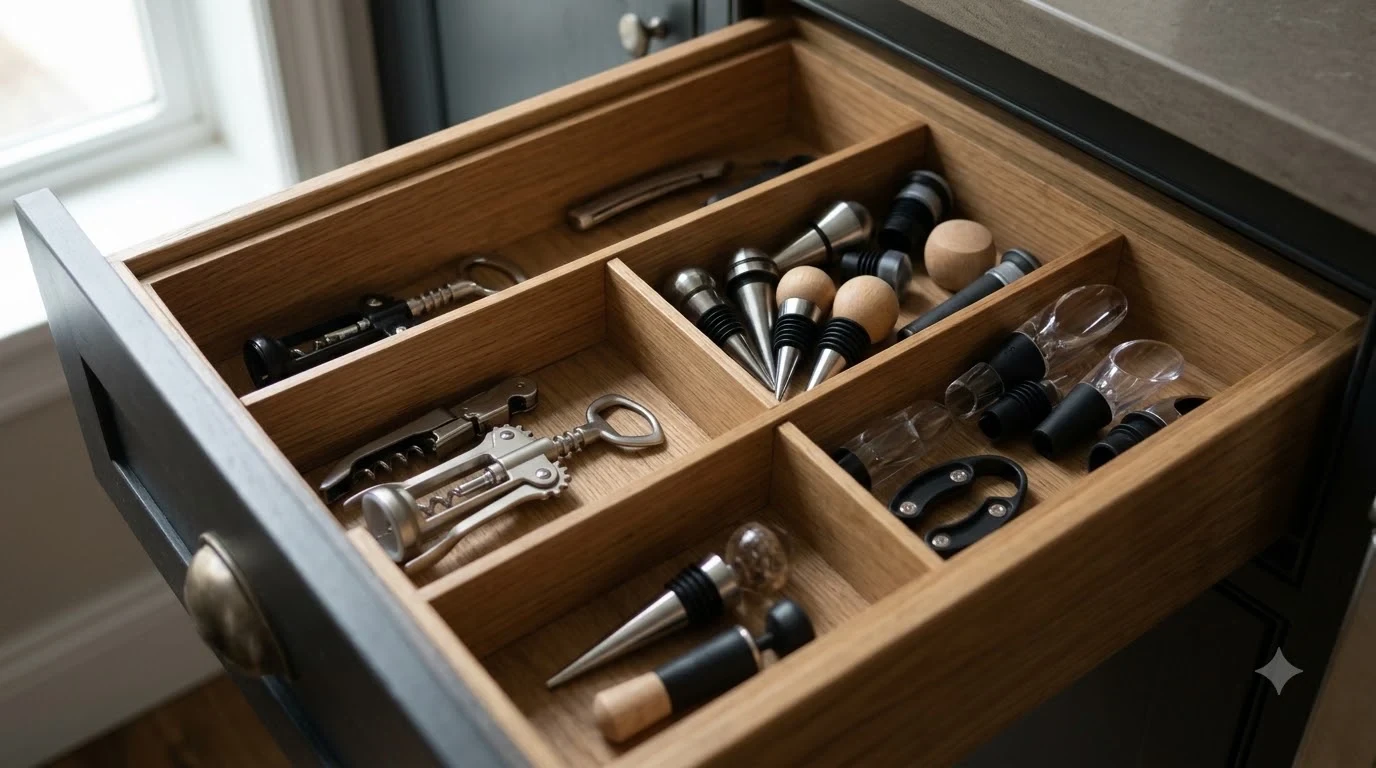
For a wine-serving setup, the folding design also has an advantage over larger openers: it fits easily into a drawer, serving station, or compact bar cart. Its storage footprint is small, although the exposed blade and moving components deserve attention.
What Owners Like
The strongest reasons to choose a genuine Laguiole opener are its balanced waiter-style design, distinctive materials, and carefully finished metal components. These qualities make it appealing to regular wine drinkers who want a functional tool that also looks appropriate on a dining table or serving station.
Controlled cork extraction. The five-turn worm and bottle-lip lever are the main functional attractions. The spiral gives the corkscrew several points of engagement, while the lever creates mechanical assistance as the cork rises. Instead of pulling directly upward with the wrist, the user works against the bottle lip in a controlled movement. This is especially useful when opening a bottle with a firm natural cork.
Natural handle materials. Wood handles give individual examples a distinctive appearance. Briarwood, for instance, comes from the burl of the Mediterranean tree heath, Erica arborea. Its grain pattern varies naturally between pieces, so two handles need not look identical. Olivewood offers another traditional appearance, with its own grain and color variations.
Natural materials can make an opener feel more personal than a standard metal tool. A wooden handle may develop a different appearance with regular handling, and small variations are part of the material rather than necessarily a manufacturing problem. Buyers who prefer a consistent finish, however, may find brushed stainless steel more suitable.
Useful integrated functions. A proper sommelier knife does more than extract corks. Its folding blade cuts the foil around the bottle neck, the worm enters the cork, and the lever helps lift it. Some versions also include a bottle-cap opener. Having these functions in one compact accessory means there is no need to keep a separate foil cutter and cap opener nearby.
Presentation and finishing. The forged bee, decorative spine, and guilloché spring on the Château LAGUIOLE Classic provide a recognizable visual identity. The Laguiole en Aubrac olivewood model uses decorative chasing on the spine as a maker’s signature. These details matter to buyers who appreciate traditional metalworking and want an opener that can also serve as a thoughtful wine-related gift.
Warranty support on specified genuine models. Warranty coverage can make a premium tool more attractive as a long-term purchase. The Château LAGUIOLE Classic Briarwood carries a lifetime warranty subject to its stated conditions and online registration. The Laguiole en Aubrac olivewood model is also listed with lifetime coverage against manufacturing defects. Buyers should verify which manufacturer provides the warranty and which registration procedure applies to the particular product.
The overall attraction is the combination of everyday usefulness and presentation. A well-made waiter-style opener can be used for an ordinary weeknight bottle of Sauvignon Blanc just as readily as a special bottle of Bordeaux. Its appearance may be more decorative than necessary, but the underlying functions remain practical.
Common Complaints
The main disadvantages are the higher expectations associated with premium craftsmanship, the care required by natural handle materials, and the possibility of confusing genuine products with generic Laguiole-style designs. A decorative finish does not automatically make a corkscrew easier to operate or more durable.
Authenticity can be confusing. Laguiole is associated with a recognizable French knife-making tradition, but the name appears across products from different manufacturers. A bee emblem or decorative spring alone should not be treated as sufficient proof of origin. Buyers should identify the actual maker, manufacturing location, product documentation, and warranty provider before purchasing.
The distinction matters because Château LAGUIOLE, Laguiole en Aubrac, and other Laguiole-related products are not interchangeable brands. Their designs, construction details, materials, and support arrangements can differ. A generic product may resemble a traditional sommelier knife without offering the same documented origin or construction.
Wood needs more attention than metal. A natural handle can be affected by excessive humidity, prolonged water exposure, and careless storage. The Château LAGUIOLE manufacturer advises wiping the briarwood handle dry after use rather than soaking it. The Forge de Laguiole maintenance guide also warns that natural handle materials are sensitive to humidity.
The folding mechanism requires care. The blade, worm, and lever move around joints that should remain clean and properly maintained. If the mechanism becomes stiff, forcing it open can create unnecessary strain. A small amount of appropriate lubricant may be necessary, following the specific manufacturer’s recommendations.
The learning curve is real. A waiter-style corkscrew requires the user to position the worm correctly and stabilize the lever against the bottle lip. Someone accustomed to an electric opener may initially find this less convenient. A poorly positioned worm can travel diagonally through the cork, and excessive pulling can cause a fragile cork to split.
Decorative finishes may not suit everyone. A wooden handle, engraved spine, or forged emblem adds visual character, but these features do not improve extraction by themselves. Someone who wants a tool for a busy restaurant environment may prefer a simpler handle that can tolerate frequent handling and requires less attention.
Another consideration is the blade. A folding foil cutter is convenient, but it is still a sharp exposed component when open. It should be closed after use and stored where children cannot reach it. This is a practical safety requirement rather than a drawback unique to Laguiole products.
Who Should Buy and Who Should Skip
A genuine Laguiole sommelier corkscrew makes the most sense for wine enthusiasts who open bottles regularly and appreciate a combination of mechanical function and traditional craftsmanship. It is less compelling for someone who wants the simplest possible way to remove a cork or does not want to maintain a wooden-handled accessory.
Who should buy one
Regular home wine drinkers: People who open several bottles each week can benefit from learning a consistent waiter-style opening technique. The integrated foil cutter, spiral, and lever reduce the number of separate tools needed during service. A quality stainless steel mechanism also provides a practical alternative to bulky countertop equipment.
Wine collectors: Collectors often appreciate accessories that complement their glassware, decanters, and bottle presentation. A carefully made opener with a natural handle can be a suitable addition to a dedicated serving collection. Its folding design is particularly convenient when a compact accessory is preferable to a large mechanical device.
Gift buyers: A genuine model with documented origin, an attractive natural handle, and a presentation box can make a considered gift for a wine enthusiast. The Laguiole en Aubrac olivewood version, for example, is supplied with a French oak gift box and certificate of authenticity according to its retailer’s product information.
People who enjoy traditional tools: Someone who appreciates mechanical objects, hand-finished details, and natural materials may find the ownership experience rewarding. The appeal is not limited to opening bottles; it also includes the feel, appearance, and maintenance of a well-made folding instrument.
Who should skip one
Occasional wine drinkers: If a bottle is opened only a few times each year, a simpler waiter-style opener may provide all the necessary functionality. The extra attention required by natural wood and decorative metalwork may not offer enough practical benefit.
People who prioritize speed above everything else: An electric opener or a larger lever-style corkscrew may be easier for someone who does not want to learn manual extraction. A Laguiole knife is compact and capable, but its operation involves several deliberate movements.
Commercial users with very high opening volumes: A busy service environment may favor inexpensive, easily replaceable tools. Although a premium opener can be appropriate for professional use, an individual establishment should consider repair arrangements, replacement availability, and how much time staff can spend maintaining accessories.
People who dislike manual maintenance: If an accessory is likely to be left wet in a sink or placed in a dishwasher, a natural-material Laguiole model is not an ideal choice. A straightforward stainless steel opener with fewer decorative elements may better match those habits.
Buyers who want a compact secondary tool can also compare a wine bottle opener keychain. It serves a different purpose, but it can be useful for travel or occasional situations where carrying a full sommelier knife is unnecessary.
How It Compares to Alternatives
Laguiole sommelier knives occupy the traditional waiter-style corkscrew category, but they are not the only way to open a wine bottle. The best alternative depends on how much manual control the user wants, how often bottles are opened, and whether compact storage or speed matters most.
Against a basic waiter’s corkscrew: The main difference is generally the finish, handle material, and level of construction detail rather than the fundamental opening process. Both designs use a spiral and a lever against the bottle lip. A basic opener may be entirely adequate for routine service, while a genuine premium Laguiole model appeals to buyers who value natural materials and decorative craftsmanship.
Against the Franmara Michelangelo: The Michelangelo specification sheet describes a waiter-style opener with a five-turn spiral, wide boot lever, serrated blade, and wood-inset handle. Its listed 5 3/4-inch length and 1/2-inch width provide a useful dimensional comparison. It offers a similar collection of practical features, but its construction and design details should be evaluated independently rather than assumed to match a Château LAGUIOLE or Laguiole en Aubrac product.
Against a Laguiole en Aubrac sommelier knife: This is a closer comparison because both products combine French craftsmanship with a five-turn spiral. The olivewood version uses forged Sandvik brushed stainless steel for its worm and foil cutter, and its contoured handle is handcrafted from olivewood. The Château LAGUIOLE Classic Briarwood has a different design identity, including its forged bee emblem and guilloché spring.
Against a lever-style opener: A countertop lever opener uses a larger mechanism to extract corks with less wrist movement. This can be convenient for someone opening multiple bottles at a gathering. However, the tool occupies more storage space and does not offer the portability of a folding sommelier knife.
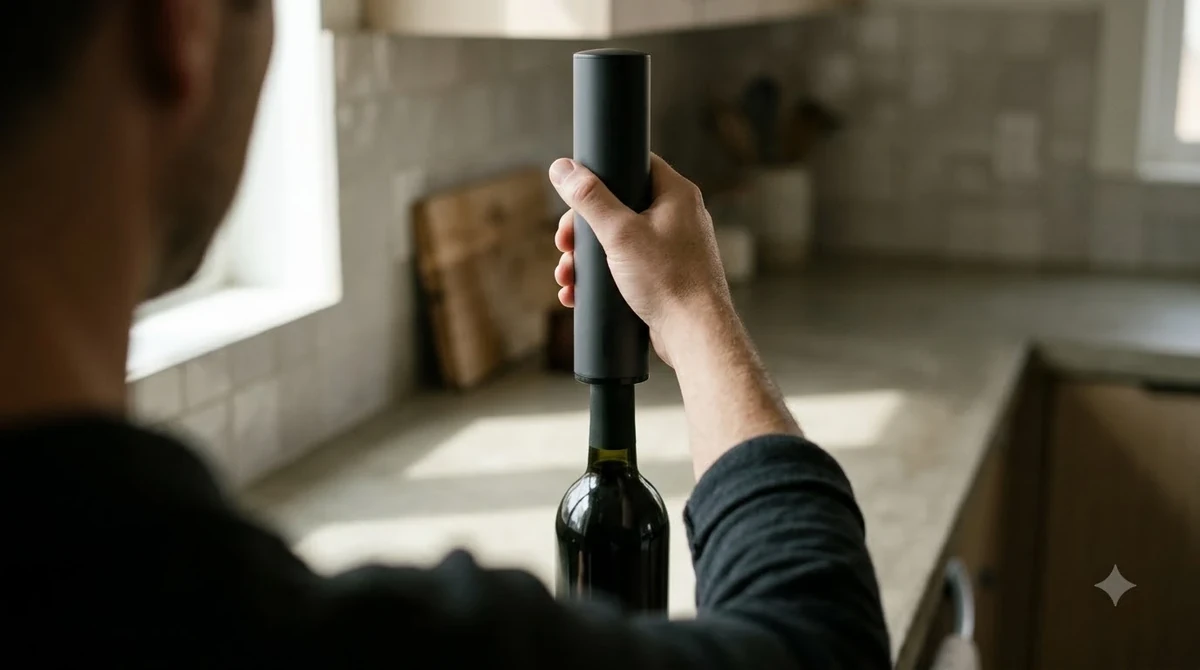
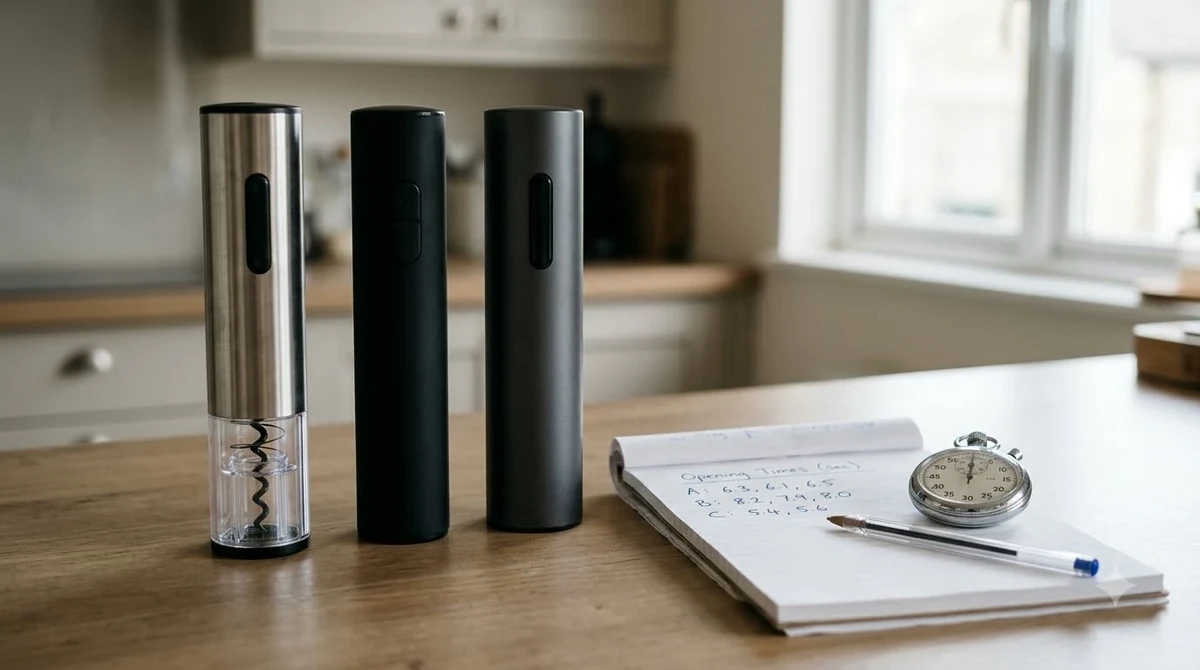
Against an electric opener: Electric models prioritize convenience. They can be helpful for users who have difficulty operating a manual corkscrew, but they require batteries or charging and usually have a larger storage footprint. A Laguiole opener does not depend on an electrical supply and is ready to use whenever its mechanism is in good condition.
For buyers assembling a coordinated serving collection, a wine opener and preserver set may also be worth considering. A separate preservation tool addresses a different need after the bottle is opened, whereas the Laguiole sommelier knife is specifically designed for bottle opening.
The key distinction is that a premium Laguiole model is primarily a refinement of the traditional waiter-style format. It does not replace every other opener category, and its higher level of finish should not be confused with a completely different extraction mechanism.
Care, Maintenance, and Warranty
A Laguiole sommelier knife should be cleaned and stored with attention to its handle material and moving joints. The safest general approach is to wipe it after use, keep it dry, and avoid forcing the folding mechanism. Specific lubrication and handle treatments should follow the instructions for the actual manufacturer and material.
Cleaning after opening a bottle: Use a soft cloth to remove moisture and residue from the metal parts. If a slightly damp cloth is needed, dry the metal immediately afterward. Do not put the knife in a dishwasher, leave it soaking in a sink, or expose the wooden handle to prolonged moisture. These precautions are consistent with the care instructions from both Château LAGUIOLE and Forge de Laguiole.
Protecting natural handles: Briarwood, olivewood, and horn each have their own appearance and care characteristics. The Château LAGUIOLE briarwood instructions recommend wiping the material dry and avoiding unnecessary oil treatment. Forge de Laguiole discusses occasional linseed oil for certain wooden handles, illustrating why it is important not to apply a treatment intended for one model to another manufacturer’s product.
Maintaining the joints: A folding sommelier knife has several moving parts. If the mechanism starts to resist movement, consult the manufacturer’s maintenance instructions before applying lubricant. Château LAGUIOLE specifies food-grade mineral oil for its moving parts when resistance develops. Forge de Laguiole separately recommends occasional lubrication at the mechanism joint between the blade and spring.
Using the worm correctly: Place the spiral vertically in the center of the cork. Turn it into the cork without allowing its point to pierce completely through the bottom. Keep the opener straight in line with the bottle neck and use the lever to control the extraction. This approach helps prevent unnecessary sideways force on the worm. The Forge de Laguiole sommelier knife care guide provides additional instructions on positioning, extraction, and cleaning.
Tip: When removing a natural cork, stop turning before the worm reaches the bottom of the cork. Keep the opener straight and lift with the lever in a controlled movement rather than pulling the handle sideways. This reduces the chance of breaking the cork or bending the spiral.
Checking warranty coverage: Warranty terms are manufacturer-specific. The Château LAGUIOLE Classic Briarwood has a lifetime warranty that requires online registration through the member card supplied with the product. Laguiole en Aubrac’s olivewood model is also described as having lifetime protection against manufacturing defects. Keep the purchase documentation and registration information so that a future service request can be handled through the appropriate company.
It is also important to distinguish manufacturing defects from damage caused by incorrect operation. Excessive force, impacts, neglect, and improper cleaning may not be covered. A warranty should be viewed as a useful ownership benefit, not as permission to use the opener as a general-purpose tool.
For buyers comparing several models, the broader Accessory Brands section can help put a premium sommelier knife into the context of other wine-serving equipment.
Frequently Asked Questions
Is Laguiole a brand or a style of knife?
Laguiole refers to a French knife-making tradition associated with a distinctive folding-knife design and decorative features. Several makers produce Laguiole products, so the name alone does not identify one manufacturer. Check the maker’s identity and manufacturing information when origin and authenticity matter.
What is the forged bee on a Laguiole corkscrew?
The bee is a recognizable decorative emblem associated with traditional Laguiole knife designs. On the Château LAGUIOLE Classic, the manufacturer describes it as a forged feature integrated into the spring. Its appearance is part of the design identity, not a measurement of extraction performance.
Can a Laguiole opener remove synthetic corks?
A suitable waiter-style corkscrew can generally remove many synthetic corks, provided the worm engages securely and the cork is compatible with the bottle opening. Synthetic materials can have different friction and compression characteristics from natural cork. Use controlled leverage and stop if the cork does not move normally.
Can the opener be used on sparkling wine bottles?
A sommelier knife is not intended to remove the mushroom-shaped closure of a traditional sparkling wine bottle. Champagne and other pressure-sealed sparkling wines should be opened by carefully controlling the cork by hand after removing the foil and wire cage. Keep the bottle pointed away from people and avoid using a conventional corkscrew on a pressurized closure.
Does a five-turn worm work with every cork length?
A five-turn spiral is a common feature of premium sommelier knives, but cork dimensions and construction vary between bottles. The correct insertion depth depends on the cork and the design of the opener. The objective is secure engagement without allowing the tip to pierce the underside of the cork.
A genuine Laguiole sommelier corkscrew is a compelling choice for wine drinkers who appreciate a well-finished manual opener and are willing to maintain it properly. The Château LAGUIOLE Classic and Laguiole en Aubrac models offer distinct combinations of materials and craftsmanship, so choosing the actual maker is just as important as choosing the handle. For regular bottle opening, a quality waiter-style design offers practical functionality alongside the traditional French styling that makes these accessories distinctive.
More in Wine Accessories
 Ozeri Replacement Parts: Find the Right Fix for Your Kitchen ScaleUpdated Nov 21, 2026
 Metrokane Wine Chiller Review: Keep Bottles Cold LongerUpdated Nov 21, 2026
 OXO Wine Aerator Review: A Simpler Way to Aerate WineUpdated Nov 21, 2026
 NutriChef Wine Aerator Review for Easier Wine ServingUpdated Nov 21, 2026
 Metrokane Wine Aerator Review: Faster, Easier Wine AerationUpdated Nov 21, 2026
 Oster Wine Opener Instructions for Easy, Reliable Cork RemovalUpdated Nov 21, 2026