

We may earn a commission when you buy through links on this page, at no extra cost to you. Learn more.
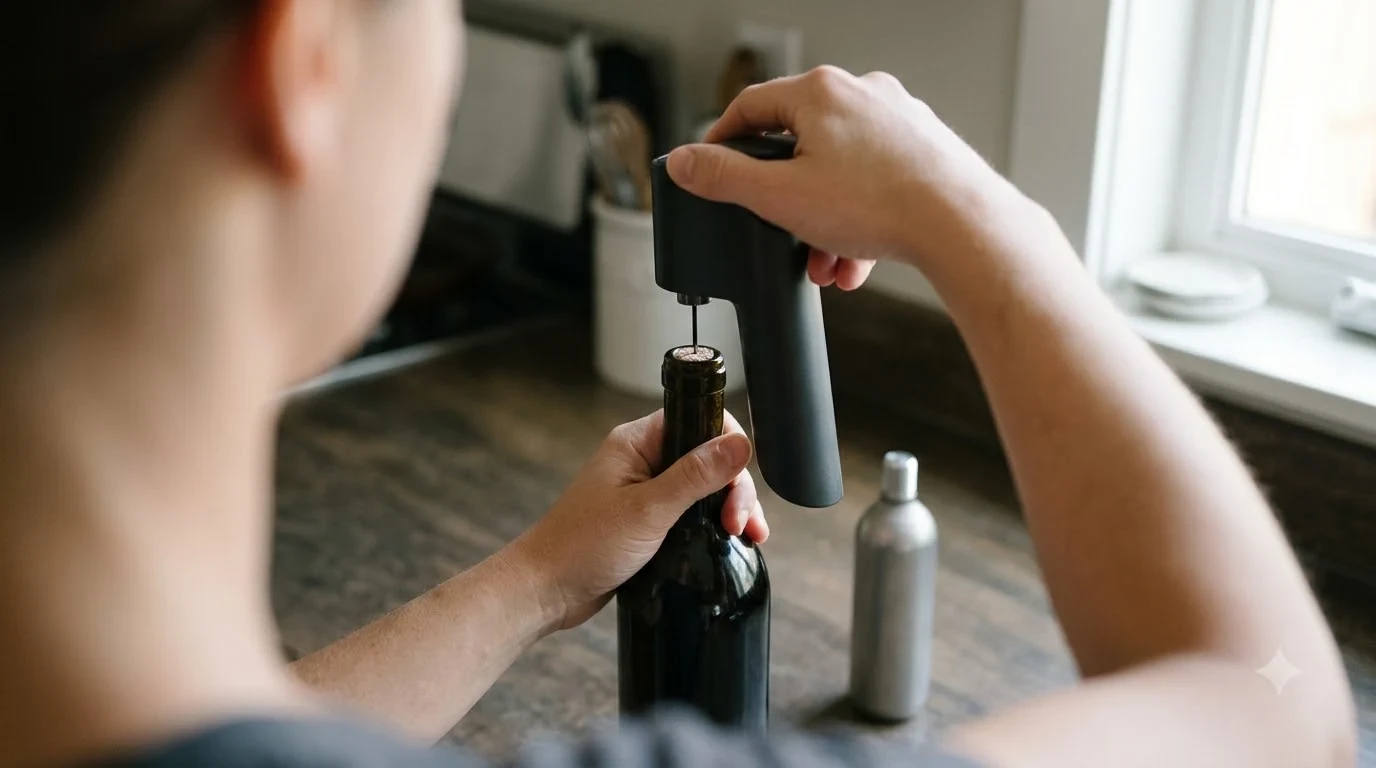
The Cuisinart wine preserver is a practical vacuum-sealing accessory for keeping partially finished bottles of still wine fresher for several additional days. Its cordless electric design makes sealing easier than using a traditional hand pump, while the included reusable stoppers provide a straightforward way to close an opened bottle. However, Cuisinart offers several different wine-preserving products, and buyers should distinguish the rechargeable CWP-55C from older manual vacuum savers and combined electric opener systems before purchasing.
Opening a bottle does not always mean finishing it at dinner. A glass of Cabernet Sauvignon on Monday might leave enough wine for Tuesday’s meal, while a bottle of Chardonnay opened for guests could have several servings remaining. A vacuum preserver helps reduce exposure to oxygen, which contributes to changes in a wine’s aroma and flavor. Cuisinart’s approach is particularly interesting for households that prefer an electric accessory instead of a conventional hand-operated pump. This review examines its available designs, manufacturer specifications, practical advantages, limitations and the alternatives worth considering.
Specs and Key Features of the Cuisinart Wine Preserver
The Cuisinart CWP-55C is a rechargeable electric vacuum preserver designed around a reusable stopper and an automatic sealing mechanism. Its main attraction is convenience: position the appliance over the stopper, press down gently and allow the motor to complete the sealing process.
The CWP-55C is not simply a decorative bottle stopper. It is a complete electric accessory with a charging base, a rechargeable battery and a dedicated vacuum-sealing cuff. Cuisinart also includes two stoppers, allowing the owner to keep an additional bottle sealed without moving the same stopper between bottles. The manufacturer’s instruction booklet identifies a standard 750 ml bottle as its intended bottle size and specifies a compatible opening diameter of 17.5 mm to 19.5 mm.
One important specification deserves careful attention. Cuisinart estimates approximately nine days of preservation for the CWP-55C, but this is not a guarantee that every wine will taste unchanged for that entire period. The manufacturer specifically explains that preservation depends on environmental conditions, including temperature and humidity. Wine composition, how much remains in the bottle and how consistently the stopper seals also matter in everyday use.
| Specification | Cuisinart CWP-55C |
|---|---|
| Preservation method | Electric vacuum sealing |
| Power source | Rechargeable Ni-MH battery |
| Charging time before first use | At least 12 hours |
| Included stoppers | 2 |
| Charging indication | LED charging light |
| Compatible bottle capacity | Standard 750 ml |
| Compatible opening diameter | 17.5–19.5 mm |
| Manufacturer’s estimated preservation period | Approximately 9 days |
| Date indicator | 1–31 |
| Sealing operation | Automatic stopping mechanism |
| Cleaning method | Soft cloth; no dishwasher |
These specifications describe the CWP-55C rather than every Cuisinart accessory marketed for wine preservation. The company’s older CTG-00-VWS, for example, is a manual vacuum saver that extracts air when its center is pressed down. The CWO-400 Wine Center combines an electric opener and preserver, while the CWO-50 is another combined opener-and-vacuum-sealer design. Treating all these products as interchangeable can lead to confusion about charging requirements, included components and bottle-opening compatibility.
There is also an important purchasing consideration for American customers. The CWP-55C instruction booklet is published through Cuisinart’s Canadian website and specifies a 120-volt appliance. Buyers should confirm the exact model, regional version, supplied adapter and support arrangements before ordering an imported unit. A product description for another Cuisinart preserver does not establish that its charger or accessories will fit the CWP-55C.
What Owners and Everyday Wine Drinkers May Like
The strongest attraction of the Cuisinart electric preserver is the reduced physical effort involved in sealing a bottle. Instead of repeatedly operating a hand pump, the user relies on a rechargeable appliance to complete the vacuum process. The charging base and included stoppers also make the system convenient for a regular home wine routine.
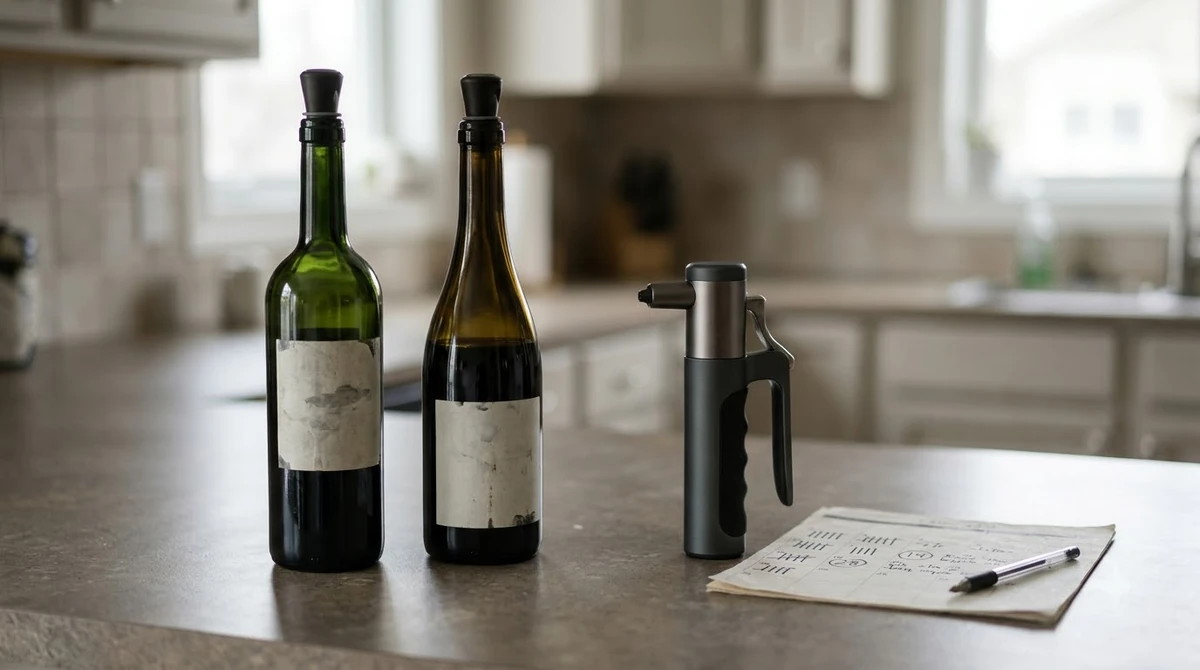
For someone who opens a bottle of Pinot Noir or Sauvignon Blanc and drinks only one or two glasses, a reusable vacuum system makes practical sense. The stopper can remain in the bottle between servings, while the electric unit can be returned to its charging base. This is a more organized arrangement than keeping a loose pump and several separate rubber stoppers in a kitchen drawer.
The CWP-55C’s date indicator is another useful detail. Its dial runs from 1 through 31, allowing the user to mark the day the bottle was sealed. This is especially helpful when several bottles are open at once. A bottle of Merlot from Saturday and a bottle of Chardonnay from Sunday can otherwise become difficult to distinguish when both are stored in the refrigerator.
The automatic stopping mechanism is also a sensible convenience feature. The user does not need to estimate how many pumping motions are necessary or repeatedly operate a manual mechanism. Cuisinart instructs users to hold the appliance upright and let the process finish naturally. Returning the appliance to its base after use also keeps it together with its charging accessories.
For people furnishing a home entertaining area, Cuisinart’s broader range of wine accessories offers several ways to organize bottle opening and preservation. A combined electric opener and vacuum sealer can reduce the number of separate tools required, while a standalone preserver makes more sense for someone who already owns a reliable corkscrew. A thoughtfully arranged bar cart can provide space for these accessories alongside glasses, a decanter and frequently used wine service equipment.
The most appealing feature is therefore not a complicated preservation technology. It is the combination of reusable stoppers, cordless operation and simple storage. People who routinely save half a bottle for the following evening are more likely to appreciate those practical details than occasional wine drinkers who finish every bottle immediately.
Common Complaints and Important Limitations
A Cuisinart vacuum preserver can help slow oxidation, but it cannot stop every change that occurs after opening. Its performance also depends on correct positioning, a compatible bottle opening and a properly fitted stopper.

The first limitation is the difference between a manufacturer’s preservation estimate and a guaranteed drinking experience. Cuisinart lists approximately nine days for the CWP-55C, but the same manual explains that environmental conditions affect quality. A delicate Pinot Noir may lose some of its aromatic detail before a sturdy red wine shows obvious changes. A fresh Sauvignon Blanc may also become less expressive even if the bottle still appears properly sealed.
The second limitation is the seal itself. According to Cuisinart’s instructions, a bottle may lose its full vacuum after a few days. The manufacturer recommends repeating the sealing process to maintain the vacuum. This means owners should not assume that sealing once creates a permanent closure. A loose stopper, imperfect positioning or repeated handling can affect the result.
Charging is another consideration. The CWP-55C manual recommends a minimum initial charging period of 12 hours. That is a meaningful setup requirement for buyers accustomed to simple mechanical stoppers that are ready immediately. The manual also specifies a built-in nickel-metal hydride battery, so the product is not a battery-free accessory that can operate indefinitely without charging.
Compatibility is relatively specific, too. The CWP-55C is intended for standard 750 ml bottles with openings measuring 17.5 mm to 19.5 mm. Unusual bottle shapes, nonstandard openings and specialty closures should not automatically be assumed compatible. This matters particularly for wine collectors who buy large-format bottles or wines packaged in unusual containers.
Cleaning also requires more care than washing a conventional silicone stopper. Cuisinart instructs owners to wipe the appliance with a soft, dry cloth and clean the stopper using a damp, soft cloth. The manufacturer explicitly prohibits putting any part of the CWP-55C in a dishwasher or immersing the appliance and charging components in water. Buyers who prefer dishwasher-safe kitchen tools should consider this requirement before purchasing.
Finally, the product should not be confused with a sparkling-wine preservation system. Vacuum-sealing a bottle of Champagne or Prosecco is not equivalent to maintaining its carbonation with a dedicated sparkling-wine closure. Sparkling wine contains dissolved carbon dioxide, and the loss of pressure affects its bubbles. A specialized sparkling stopper is generally the more suitable choice for an unfinished bottle of Cava or Champagne.
Tip: Refrigerate opened still wine even after vacuum sealing. Lower temperatures slow many of the changes that affect an opened bottle. If a bottle has been sealed for several days, check its aroma and flavor before serving rather than relying exclusively on the date dial or the manufacturer’s estimated preservation period.
Who Should Buy the Cuisinart Wine Preserver and Who Should Skip It
The Cuisinart electric preserver is best suited to households that regularly leave wine unfinished and appreciate an automatic sealing process. It is less compelling for occasional drinkers, people who prefer minimal kitchen gadgets or buyers who need a dedicated sparkling-wine stopper.
Regular still-wine drinkers are the clearest potential audience. Someone who opens a bottle of Cabernet Sauvignon on Friday and saves the remaining wine for Saturday can benefit from reducing the bottle’s exposure to air. The same applies to people who enjoy smaller servings of Chardonnay, Merlot or Pinot Noir throughout the week.
People who prefer electric accessories may also appreciate the CWP-55C. Its rechargeable construction eliminates the repetitive motion associated with conventional manual pumps. The charging base keeps the appliance organized, and the two included stoppers make it possible to prepare another bottle without immediately removing the first stopper.
Wine enthusiasts who open several bottles may find the date indicator particularly useful. When a dinner party includes a white Burgundy, a Rioja and a bottle of Oregon Pinot Noir, tracking opening dates can help prevent confusion. The ability to mark the sealing day provides a simple reference during storage.
However, there are several groups that should look elsewhere. Someone who drinks a single bottle over one evening probably does not need an electric preserver. A person who mainly enjoys Champagne, Prosecco or other sparkling wines should prioritize a dedicated pressure-retaining closure instead. Buyers who want to preserve expensive collectible wines over extended periods may also prefer a more advanced preservation system rather than an ordinary vacuum stopper.
People who already own an effective manual vacuum pump may not gain enough additional functionality to justify adding another appliance. A manual system can provide a similar basic purpose without a charging base or rechargeable battery. The choice largely comes down to whether the convenience of automatic operation is important enough to warrant the additional equipment.
There is also a practical distinction between buying a standalone preserver and choosing an opener-and-preserver combination. If the existing corkscrew is reliable, purchasing another electric opener may duplicate equipment. If opening bottles has become inconvenient, a combined system may be a more useful addition to the household.
For gift buyers, the intended recipient’s wine habits matter more than the appearance of the appliance. A person who regularly enjoys half a bottle with dinner is a more suitable recipient than someone who collects sparkling wine or rarely opens wine at home. A broader wine opener and preserver set may be more useful for someone establishing a wine-serving collection from scratch.
How the Cuisinart Compares to Alternative Wine Preservers
Cuisinart’s vacuum approach is one of several ways to protect unfinished wine. Manual vacuum pumps, basic stoppers, sparkling-wine closures and gas-based systems address different needs, so the right alternative depends on the bottle type and the expected storage period.
The most direct comparison is with a manual vacuum pump. Cuisinart’s electric CWP-55C automates the sealing operation, while a traditional pump requires the user to create the vacuum through repeated manual movements. Both approaches use a stopper and aim to reduce the air remaining in the bottle. Manual systems are generally simpler to store and do not need charging, while the electric design offers a more automated routine.
Food & Wine’s comparison of 11 wine stoppers provides useful context. Its Vacu Vin Wine Saver was selected as its overall favorite, with a vacuum pump and reusable silicone stoppers. The publication reported that its Pinot Grigio remained crisp after three days in refrigerated storage. Its findings illustrate why vacuum stoppers remain a practical option for people who regularly save still wine between servings. Read its wine stopper comparison and recommendations for additional information about the differences between closure designs.
Basic bottle stoppers offer a simpler alternative. They can close a bottle without removing air through a pump, making them convenient for short storage periods. However, an ordinary stopper does not provide the same vacuum-sealing process as the CWP-55C. Food & Wine’s comparison emphasizes that a tight seal is important because wine begins changing after exposure to oxygen.
For sparkling wine, a dedicated Champagne stopper is more appropriate. Food & Wine found that its tested Cuisinart lever-style Champagne stopper retained much of a Cava’s carbonation but showed signs of oxidation after three days. Its comparison also highlighted the effectiveness of switch-style sparkling-wine closures. This is a separate Cuisinart accessory category and should not be confused with the CWP-55C electric vacuum preserver.
More advanced systems use inert gas rather than relying on a conventional vacuum. Coravin’s preservation systems are designed for people who want to pour individual servings while protecting the remaining wine. Some systems use a needle through a natural cork, while others use a replacement stopper and inert gas. These options involve different equipment and operating methods, making them more specialized than a straightforward Cuisinart vacuum accessory.
Another important comparison involves Cuisinart’s own discontinued models. The CTG-00-VWS is a manual vacuum saver, while the CWO-400 combines an electric opener and preserver. The CWO-400 includes two stoppers, a foil cutter and a charging base, with the manufacturer specifying an opener capacity of up to 50 natural or synthetic corks per charge. The CWO-50 is another combined accessory, with retailer specifications listing an opening capacity of up to 80 bottles per charge. These figures describe cork-opening performance, not the number of bottles the vacuum sealer can preserve.
The practical comparison is straightforward: choose the CWP-55C if the electric vacuum process and standalone format appeal to you; choose a manual pump if simplicity is more important; choose a sparkling stopper for Champagne and Prosecco; and investigate an inert-gas system if preserving more expensive wines for longer periods is the priority. Before purchasing an older Cuisinart product, confirm that replacement stoppers, charging accessories and manufacturer support are available.
Frequently Asked Questions
Can the Cuisinart wine preserver be used on screw-cap bottles?
The CWP-55C manual describes inserting its dedicated stopper into a compatible bottle opening and does not establish compatibility with every screw-cap bottle design. Once the original cap has been removed, the opening diameter and stopper fit become important. The specified opening range is 17.5 mm to 19.5 mm, so unusual screw-cap necks should not be assumed compatible.
Does the Cuisinart wine preserver need replacement vacuum cartridges?
The CWP-55C does not use disposable vacuum cartridges. Its sealing mechanism operates using a built-in rechargeable nickel-metal hydride battery and the included charging base. This differs from certain gas-based preservation systems that require replacement cartridges or capsules.
Can the Cuisinart preserver be used with half bottles of wine?
Cuisinart specifies compatibility with standard 750 ml bottles, not a universal fit for every smaller bottle format. A half bottle may have a different neck opening or shape, so compatibility should not be assumed based on capacity alone. The stopper must fit firmly and the appliance must be positioned correctly for the vacuum mechanism to operate.
Can the Cuisinart wine preserver be left plugged in permanently?
The CWP-55C manual explains how to charge the appliance using its supplied base and adapter, but it does not provide a universal recommendation for permanently leaving the charging equipment connected. It also advises storing the appliance in a cool, dry place. Following the supplied charging instructions is preferable to assuming that every charging arrangement is suitable.
Does vacuum sealing prevent wine from developing cork taint?
No. Cork taint is associated with compounds such as TCA and is a different issue from oxidation after opening. A vacuum preserver reduces air exposure but cannot remove cork-taint compounds or reverse a wine fault that was already present when the bottle was opened. A musty, damp-cardboard aroma is a different warning sign from the gradual loss of freshness associated with oxidation.
The Cuisinart wine preserver is a sensible accessory for households that regularly save unfinished bottles of still wine and prefer an automatic vacuum-sealing routine. Its rechargeable design, two included stoppers and date indicator make the CWP-55C convenient, although the 12-hour initial charge, specific bottle-opening requirements and careful cleaning instructions deserve consideration. Buyers should identify the exact Cuisinart model before purchasing and choose a different preservation method if their priority is sparkling wine or extended storage of valuable bottles.
More in Wine Accessories
 Coravin Vs Vacu Vin: Choose the Right Wine Saver for Your BottlesUpdated Nov 21, 2026
 Zwilling Wine Stopper Review: Preserve Open Bottles LongerUpdated Nov 21, 2026
 Wine Enthusiast Wine Preserver Review: Features, Benefits and LimitationsUpdated Nov 21, 2026
 Wine Enthusiast Wine Stopper: An Easier Way to Reseal Open BottlesUpdated Nov 21, 2026
 Vintorio Wine Opener: Two-Step Cork RemovalUpdated Nov 21, 2026
 Zwilling Wine Aerator Review: Aerate, Pour, and Seal With One ToolUpdated Nov 21, 2026