


We may earn a commission when you buy through links on this page, at no extra cost to you. Learn more.
The coravin corkscrew is not a conventional corkscrew but a wine preservation system that lets you pour wine without removing the cork. Coravin Timeless uses a thin needle and argon gas to access wine through natural cork, while Coravin Pivot replaces the original closure with a reusable stopper after opening. These systems serve different purposes, so choosing the right one depends on how you open, serve, and store wine.
Searching for a Coravin corkscrew can be confusing because the brand is associated with wine opening, yet its main technology works differently from traditional bottle openers. Instead of extracting a cork, certain Coravin devices allow wine to flow through a needle while the original closure remains in place. This review explains the technology, examines the main advantages and limitations, and compares the available approaches with conventional corkscrews. It also covers the practical details that matter before buying a wine accessory for a home bar or wine collection.
Specs and Key Features
Coravin’s defining feature is its ability to dispense wine while limiting its exposure to oxygen. However, Timeless and Pivot accomplish this in different ways, and neither should be confused with a standard cork-removal tool.

The Timeless system uses a precision-engineered needle that passes through natural cork. Argon gas replaces the wine removed from the bottle, and the needle comes out without requiring the cork to be pulled. The natural cork then expands back toward its original shape. This approach is particularly useful for collectors who want to sample a bottle over several occasions without opening it in the conventional sense.
Pivot takes a different route. The user removes the original cork or screw cap, inserts the Pivot Stopper, and attaches the dispensing device when ready to pour. Its preservation method uses argon gas, but the wine has already been exposed to air during the initial opening. Coravin states that Pivot can preserve wine for up to four weeks when used as directed.
| Feature | Coravin Timeless | Coravin Pivot |
|---|---|---|
| Original cork removal | No | Yes |
| Wine access method | Needle through cork | Wine tube through stopper |
| Preservation gas | 100% pure argon | 100% pure argon |
| Compatible closures | Natural cork; screw caps with accessory | Multiple closure types |
| Published preservation period | Potentially years, depending on conditions | Up to 4 weeks |
| Glasses per capsule | Up to 15 five-ounce pours | Up to 20 five-ounce pours |
| Standard Needle pour time | 25–29 seconds per 5 ounces | Not specified for the same needle |
| Traditional corkscrew required | No | Yes, for cork closures |
The capsule figures and average pour time come from Coravin’s published technical information. Actual results depend on pouring technique and the system being used. A five-ounce serving is a useful reference because it makes the capsule capacity easier to understand: one Timeless capsule supports up to three 750 ml bottles if each bottle supplies five standard servings, assuming the stated maximum is achieved.
Another important distinction concerns the needle. Timeless uses a dedicated needle, and Coravin offers Standard, Fast Pour, Vintage, and Premium versions. The appropriate choice depends on the type of cork and the desired pouring experience. Pivot does not require this needle because its wine tube connects to the replacement stopper.
For more information about the operating differences, consult Coravin’s explanation of its wine preservation systems. The manufacturer’s instructions are particularly useful for understanding why the two devices should not be treated as interchangeable corkscrews.
One additional accessory deserves attention: the Timeless Screw Cap accessory. It provides a silicone closure that can be punctured by the Timeless needle, making compatible screw-cap bottles accessible without permanently removing the original preservation advantage. Coravin’s technology information describes this accessory as supporting up to 50 punctures before replacement.
What Owners Like
The strongest reason to choose Coravin is the ability to enjoy individual glasses from a bottle without committing to finishing it shortly after opening. This is particularly appealing for collectors, households with different wine preferences, and anyone who likes comparing several bottles during the same week.
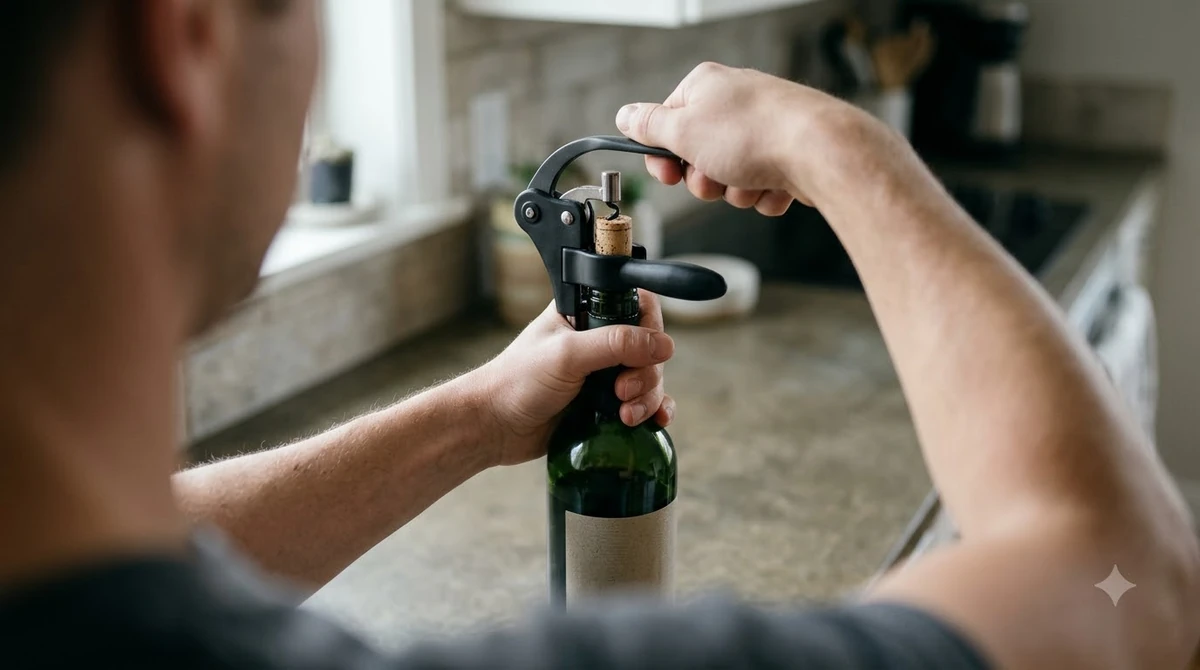
Consider a household that keeps Cabernet Sauvignon, Pinot Noir, and Chardonnay available for different meals. With a conventional corkscrew, opening all three bottles creates three partially consumed bottles that need proper storage. A Timeless system offers another option: pour a glass from each suitable natural-cork bottle while leaving the remaining wine behind its original closure.
This flexibility also changes how wine enthusiasts approach expensive or older bottles. A collector might want a small sample of a mature Bordeaux before deciding whether to serve the bottle at a dinner party. Another person might want to compare two vintages of the same producer without opening both bottles completely. Coravin makes those situations easier to manage.
More freedom to serve different wines
Traditional bottle opening creates a practical commitment. Once the cork is removed, the wine begins interacting with oxygen, and the remaining contents need to be consumed or preserved. A stopper, vacuum pump, or inert-gas spray can help manage an opened bottle, but none recreates the original unopened condition.
Timeless changes that arrangement by accessing wine through the cork. For someone who enjoys one glass of wine with dinner rather than several glasses from the same bottle, this can be a meaningful advantage. It also gives hosts more freedom to offer different wine styles without asking guests to finish every bottle they sample.
Useful options for different closures
Pivot receives attention because it does not depend on natural cork. Synthetic closures and screw-cap bottles can be used after the original closure is removed and the Pivot Stopper is installed. That flexibility makes it attractive to people whose wine collections include bottles from regions and producers that commonly use alternative closures.
The distinction matters because Timeless and Pivot solve slightly different problems. Someone who primarily collects traditional cork-sealed wines may prefer Timeless. Someone who regularly buys casual wines with screw caps or synthetic closures may find Pivot more practical.
A practical serving accessory for entertaining
Coravin can also be useful in a home entertaining setup. A host with a collection of different wines can serve smaller portions of several varieties rather than opening multiple bottles and managing their leftovers. This can be particularly useful when serving food with different flavor profiles.
For example, a dinner featuring roast beef might include Cabernet Sauvignon, while a seafood course could call for Sauvignon Blanc. A preservation system makes it easier to offer those different selections without treating every bottle as an all-evening commitment.
It also fits into a dedicated bar cart arrangement for people who prefer wine accessories that have a clear serving purpose. However, Coravin is a specialized device rather than a basic opening tool, so its value depends on how often that extra flexibility is used.
Common Complaints
Coravin’s specialized technology comes with trade-offs. The main disadvantages are the need for compatible consumables, careful handling, a learning period, and the fact that some models do not actually remove corks.
The first potential frustration is the ongoing need for gas capsules. Timeless and Pivot use proprietary-format Coravin capsules, and the capsule supply becomes part of the long-term ownership cost. A buyer who opens a bottle every weekend may find the recurring expense reasonable, but someone who opens several bottles every evening might prefer a simpler opening and preservation routine.
Capsule capacity also requires realistic expectations. Coravin’s published maximum is 15 five-ounce pours for Timeless and 20 for Pivot. Those figures are useful planning estimates, not a promise that every capsule will deliver exactly that number under every circumstance. Pouring habits, system condition, and technique can influence consumption.
The needle needs careful handling
The Timeless needle is a precision component, not a sturdy metal corkscrew spiral. It must pass through natural cork without damaging the wine-access mechanism, so careless handling can cause problems. Coravin says its needles are designed to last well over 500 uses on average, but this is not a reason to treat them roughly.
The needle can become damaged if it is bent, struck against a hard surface, or handled improperly. It is also important to use the appropriate needle for the bottle and cork condition. Older corks can be more delicate than younger ones, which is one reason Coravin offers a Vintage Needle.
There is also a distinction between needle wear and cork wear. The company notes that repeated punctures can eventually affect the natural cork itself. Its US FAQ recommends considering cork replacement after approximately 15 uses in certain circumstances, particularly if a bottle is being accessed in very small portions over many occasions.
Not every bottle benefits equally
Timeless is designed around natural cork. It is not the straightforward choice for a collection dominated by screw caps or synthetic closures. The separate Screw Cap accessory addresses compatible screw-cap bottles, but it adds another component to the setup.
Pivot is more flexible in this respect, although it does not preserve wine in exactly the same way as Timeless. Because the bottle must first be opened, the original closure is no longer protecting the wine when the initial serving takes place. The Pivot Stopper then becomes responsible for limiting further oxygen exposure.
That difference is important for anyone expecting every Coravin device to keep wine unchanged for years. Pivot is intended for a shorter preservation period, while Timeless is the system designed to leave the original natural cork in place.
Safety deserves attention
There is a historical safety issue that buyers should understand. The US Consumer Product Safety Commission published a recall-to-repair notice for the original Coravin 1000 Wine Access System in 2014. The notice reported bottle breakage during pressurization and described a repair remedy that included a protective neoprene bottle sleeve and updated instructions.
The recall covered approximately 65,000 units in the United States. It concerned the specified original system, not an automatic finding that every later Coravin product is defective. Nevertheless, owners considering a used or older Model 1000 should verify its recall remedy before operating it.
The CPSC’s Coravin 1000 recall notice explains the affected product and the recommended response. Do not use a bottle with cracks, chips, or other visible damage in a pressurized system.
Tip: Before using any pressurized Coravin system, inspect the bottle carefully, follow the instructions for the specific model, and use the supplied protective equipment where required. Never assume that an older secondhand unit has received an applicable recall repair.
Who Should Buy and Who Should Skip
Coravin is most suitable for wine drinkers who regularly want individual glasses from different bottles. It is less attractive for people who simply want a reliable way to remove corks and pour a bottle for a group.
Collectors are among the clearest potential buyers. Someone who maintains a cellar of Bordeaux, Burgundy, Napa Valley Cabernet Sauvignon, or other natural-cork wines may appreciate the opportunity to sample bottles without removing their original closures. The same benefit applies to people who enjoy comparing producers or vintages over multiple occasions.
It can also make sense for households where wine preferences differ. One person might prefer a dry Riesling, while another prefers Merlot. Rather than opening a full bottle of each and worrying about leftovers, the household can access smaller servings from suitable bottles.
Buy Timeless if preserving natural-cork bottles is the priority
Timeless is the more appropriate choice for someone who wants to preserve wine while leaving its natural cork in place. It is especially relevant for a collection containing bottles that may be revisited over months or years.
For instance, someone might want to follow the development of a bottle of Cabernet Sauvignon over several tasting occasions. Another collector might want to sample a bottle of Pinot Noir before deciding whether it is ready for a special dinner. Timeless makes these approaches more practical because the cork is not removed during dispensing.
However, the owner must be comfortable handling a precision needle and maintaining a supply of argon capsules. This is a specialized purchase, not simply a more expensive version of a waiter-style corkscrew.
Buy Pivot if closure flexibility matters more
Pivot is a sensible option for people who buy a mixture of natural-cork, synthetic-cork, and screw-cap wines. Its replacement stopper allows the system to work across closure types without needing the Timeless needle.
Its four-week preservation period is also more aligned with everyday drinking. Someone who opens a bottle on Friday and wants to enjoy another glass the following week may appreciate this arrangement. It provides a useful alternative to conventional stoppers and vacuum preservation methods, provided the user follows the installation and storage instructions.
Pivot is not the right purchase for someone who specifically wants to keep the original cork untouched. Its operating method requires the original closure to be removed.
Skip Coravin if a normal corkscrew is all you need
There is no reason to buy a sophisticated preservation device solely to open an ordinary bottle of wine. A traditional waiter-style corkscrew is smaller, easier to carry, and does not require gas capsules or specialized replacement components.
People who usually finish a bottle during one dinner will probably get little practical benefit from preserving individual servings. The same is true for someone who mainly serves wine at large gatherings, where opening a bottle and pouring several glasses is the simplest approach.
For that audience, a conventional opener may be a better purchase. A buyer comparing mechanical opening tools can explore our best Rabbit corkscrew recommendations instead of paying for a preservation system.
Coravin should also be considered carefully by people who rarely drink wine. If bottles are opened only a few times each year and usually shared among several guests, the additional system components may spend more time in storage than in use.
How It Compares to Alternatives
Coravin competes in a different category from most wine openers. Its closest comparison is not another corkscrew but other approaches to opening, serving, and preserving wine.
The main decision is whether the buyer wants to remove a cork, keep the original closure in place, or preserve a bottle after conventional opening. Those are three different requirements, and the best accessory depends on which one matters most.
Coravin versus a traditional waiter-style corkscrew
A waiter-style corkscrew is the classic wine-opening tool used in restaurants. It generally combines a small foil cutter, a spiral, and a lever that helps pull the cork out of the bottle. It is compact, portable, and useful for almost any ordinary wine service situation involving a removable cork.
Coravin Timeless does not perform the same job. Instead of extracting the cork, it accesses the wine through a needle. This makes it more useful for selective pouring but less appropriate for someone who simply wants to open bottles quickly.
The waiter-style opener also has fewer operating requirements. It does not need gas capsules, a precision needle, or a preservation stopper. For a person who regularly finishes bottles with family or friends, it is often the more practical everyday choice.
Coravin versus a Rabbit lever corkscrew
A Rabbit lever corkscrew uses a mechanical lever system to extract corks. It is designed to make opening a bottle easier by reducing the amount of manual effort involved. This is a useful distinction for people who open several bottles at a time or prefer a more mechanical opening experience.
Coravin is not a direct substitute. Timeless avoids removing the cork, while Pivot requires an initial opening before the preservation stopper can be fitted. The Rabbit approach is about extraction; Coravin is about dispensing and preservation.
Anyone comparing lever-based openers should consider handle comfort, storage space, bottle compatibility, and the condition of the cork. Our Rabbit corkscrew reviews provide a more relevant starting point for that type of purchase.
Coravin versus vacuum stoppers
Vacuum stoppers are designed for bottles that have already been opened. They remove some air from the bottle or create a sealed closure that slows further exposure. They are generally simpler to store and use than a Coravin system.
However, the first pour from an opened bottle has already exposed the wine to oxygen. A vacuum stopper cannot reverse that initial exposure. Coravin Timeless avoids removing the cork in the first place, while Pivot uses argon after the original bottle has been opened.
For casual wine drinkers who finish an opened bottle within a few days, a conventional stopper may be sufficient. For people who want to sample different wines over a longer period, Coravin offers a more specialized approach.
Which approach makes the most sense?
The following comparison summarizes the main practical differences:
| Accessory | Main purpose | Best suited to | Ongoing requirements |
|---|---|---|---|
| Coravin Timeless | Pour through natural cork | Collectors and selective sampling | Argon capsules and needle care |
| Coravin Pivot | Preserve an opened bottle | Mixed closure collections | Argon capsules and stopper care |
| Waiter-style corkscrew | Remove cork manually | Everyday wine opening | Minimal maintenance |
| Rabbit lever corkscrew | Remove cork with a lever | Frequent bottle opening | Mechanical cleaning and storage |
| Vacuum stopper | Seal an opened bottle | Short-term leftover storage | Stopper maintenance |
There is no universal winner because these accessories address different needs. The important question is whether the bottle should remain unopened, be opened and preserved, or simply be opened and enjoyed immediately.
Frequently Asked Questions
Can Coravin be used with sparkling wine?
Coravin offers a separate Sparkling system designed for sparkling bottles. It uses carbon dioxide rather than the argon used by Timeless and Pivot. The Sparkling system is intended to maintain the wine’s carbonation after the bottle has been opened, so it should not be confused with the still-wine devices.
Can Coravin be used on every wine bottle shape?
Compatibility depends on the device and the bottle neck rather than simply the wine’s color or grape variety. Unusual neck dimensions and bottle designs may affect how securely a system fits. Inspect the specific model’s compatibility instructions before using it on an unfamiliar bottle.
Does Coravin work with synthetic corks?
Timeless is designed for natural cork and should not be treated as a universal solution for synthetic closures. Pivot is the more appropriate option for synthetic-cork bottles because the original closure is removed and replaced with its stopper. This difference is important when buying for a collection containing wines from multiple producers.
Can a Coravin system be taken on an airplane?
The device itself and its pressurized gas capsules may be subject to different airline and aviation-security rules. Gas cartridges are not automatically permitted in checked or carry-on luggage. Check the current rules of the airline and relevant aviation authorities before packing any Coravin capsule for a flight.
Can Coravin be used with half bottles?
Many standard Coravin systems are designed around compatible wine bottle necks rather than a specific wine volume. A half bottle may therefore be suitable if its neck and closure meet the model’s requirements. The smaller volume also means that the amount of wine removed represents a larger proportion of the bottle’s contents, making storage and serving plans particularly important.
Coravin is best understood as a specialized wine preservation accessory rather than a conventional corkscrew. Timeless is the stronger match for people who want to sample natural-cork wines while leaving the original closure in place, whereas Pivot offers a more flexible approach for opened bottles and alternative closures. If the main priority is simply removing corks, a traditional waiter-style or Rabbit lever opener remains the more straightforward purchase.
More in Wine Accessories
 Coravin Vs Vacu Vin: Choose the Right Wine Saver for Your BottlesUpdated Nov 21, 2026
 Zwilling Wine Stopper Review: Preserve Open Bottles LongerUpdated Nov 21, 2026
 Wine Enthusiast Wine Preserver Review: Features, Benefits and LimitationsUpdated Nov 21, 2026
 Wine Enthusiast Wine Stopper: An Easier Way to Reseal Open BottlesUpdated Nov 21, 2026
 Vintorio Wine Opener: Two-Step Cork RemovalUpdated Nov 21, 2026
 Zwilling Wine Aerator Review: Aerate, Pour, and Seal With One ToolUpdated Nov 21, 2026