

We may earn a commission when you buy through links on this page, at no extra cost to you. Learn more.
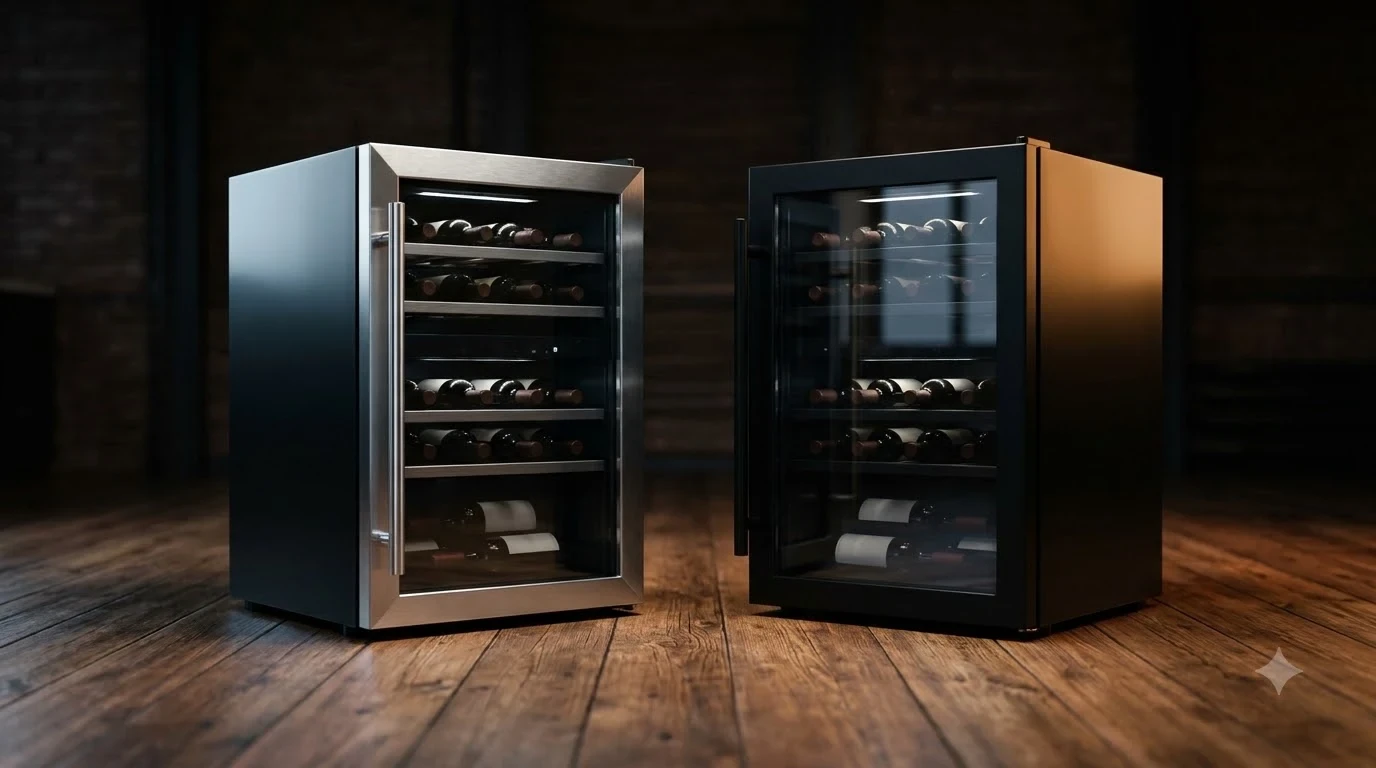
edgestar vs kalamera is best decided by cabinet fit, bottle capacity, and the warranty language on the exact model. EdgeStar’s CWR362FD holds 36 standard 750 ml bottles and gives each of its two side-by-side zones a 40–65°F setting range. Kalamera’s KRC-150DZB advertises up to 46 bottles, with an upper zone of 40–50°F and a lower zone of 50–66°F. EdgeStar’s CWR362FD manual states full one-year parts-and-labor coverage, while Kalamera’s current FAQ describes a one-year manufacturing-defect warranty with replacement parts.
These are not interchangeable appliances with different badges: the shelf layout, zone arrangement, ventilation instructions, and service process all affect ownership. The comparison below uses specific, documented examples rather than assuming every cooler sold by either brand shares the same features. That model-by-model approach is also useful in our Versus comparisons.
| Comparison | EdgeStar CWR362FD | Kalamera KRC-150DZB |
|---|---|---|
| Published capacity | 36 standard 750 ml bottles | Up to 46 bottles, manufacturer claim |
| Zones | Two side-by-side zones | Two stacked zones |
| Temperature settings | 40–65°F in each zone | Upper 40–50°F; lower 50–66°F |
| Cabinet dimensions | 33 7/8 in. H × 23 7/16 in. W × 24 1/2 in. D, including handle | 33 in. H × 23.4 in. W × 22.4 in. D |
| Installation | Built-in or freestanding; manual specifies rear and side/top clearances | Built-in or freestanding; front-venting design |
| Warranty in published documentation | One year, parts and labor | One year for manufacturing defects; free replacement parts stated |
Capacity and Cabinet Fit
Kalamera has the larger published bottle count in this particular comparison, while EdgeStar’s CWR362FD has a clearly stated capacity based on standard Bordeaux-size bottles. The physical difference is modest: the Kalamera cabinet is 33 inches tall and 22.4 inches deep, while the EdgeStar is 33 7/8 inches tall and 24 1/2 inches deep when its handle is included.
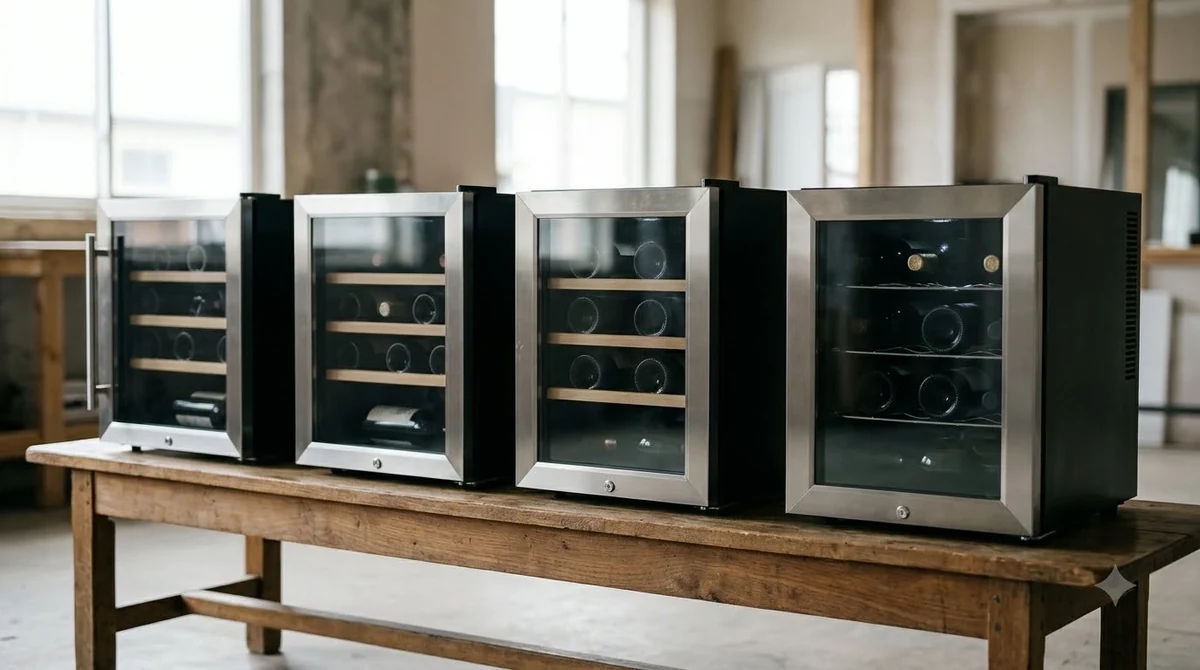
The KRC-150DZB product page lists a 46-bottle capacity and an outside width of 23.4 inches. Its height is 33 inches and its depth is 22.4 inches. That makes it a plausible candidate for a standard 24-inch cabinet opening, but a nominal width is not a complete installation measurement. The opening must also account for leveling feet, door swing, ventilation, electrical access, and the space needed to pull the cooler forward for service.
EdgeStar lists the CWR362FD at 36 standard 750 ml bottles, with dimensions of 33 7/8 inches high, 23 7/16 inches wide, and 24 1/2 inches deep including its handle. The manual gives a weight of 110 pounds, a relevant figure when planning delivery and placement. A third-party review describes the unit as a 36-bottle, 24-inch under-counter model with French doors; its published dimensions are close to the maker’s manual figures.
Capacity claims are not directly comparable unless the bottle shape is comparable. A rack count based on narrow Bordeaux bottles can fall when the collection includes wider Burgundy bottles, Champagne bottles, or other broad formats. A practical buyer should count the shelf spaces and look at the usable depth, rather than treating the maximum bottle figure as a guarantee that every 750 ml bottle will fit at once.
Dual-Zone Temperature Control
Both representative models offer two independently adjusted zones, but the ranges are arranged differently. EdgeStar allows 40–65°F in both compartments, whereas Kalamera specifies 40–50°F for the upper compartment and 50–66°F for the lower one.
That difference matters more than the phrase “dual zone” alone. On the EdgeStar, either side can be assigned a cooler or warmer setting within the same 25-degree range. This flexibility is useful when the collection changes, such as when one side holds sparkling wine for a gathering and the other holds Pinot Noir or Cabernet Sauvignon for later service.
Kalamera’s split is more prescriptive. Its upper compartment reaches 40–50°F, a range suited to chilling Sauvignon Blanc, Riesling, rosé, and sparkling wine for serving. The lower compartment runs from 50–66°F, which gives more room for fuller whites and reds. Chardonnay is often served around 50–55°F, light reds such as Pinot Noir around 55–60°F, and fuller reds such as Cabernet Sauvignon around 60–65°F.
Neither unit should be mistaken for a substitute for a wine cellar with a tightly controlled long-term aging environment. A cooler is most useful for holding bottles at stable, ready-to-serve or short-term storage temperatures. For a mixed collection, choose settings according to the wines you open most often, then confirm the interior temperature with a separate appliance thermometer instead of assuming the displayed set point is the exact temperature around every bottle.
Installation and Ventilation
Both models are marketed for built-in or freestanding use, but their installation requirements should be read before a cabinet is ordered or modified. EdgeStar’s CWR362FD owner manual specifies clearance behind the unit and around its top and sides; Kalamera describes the KRC-150DZB as front-venting but also publishes clearance guidance that buyers should reconcile with the instructions supplied for their exact version.
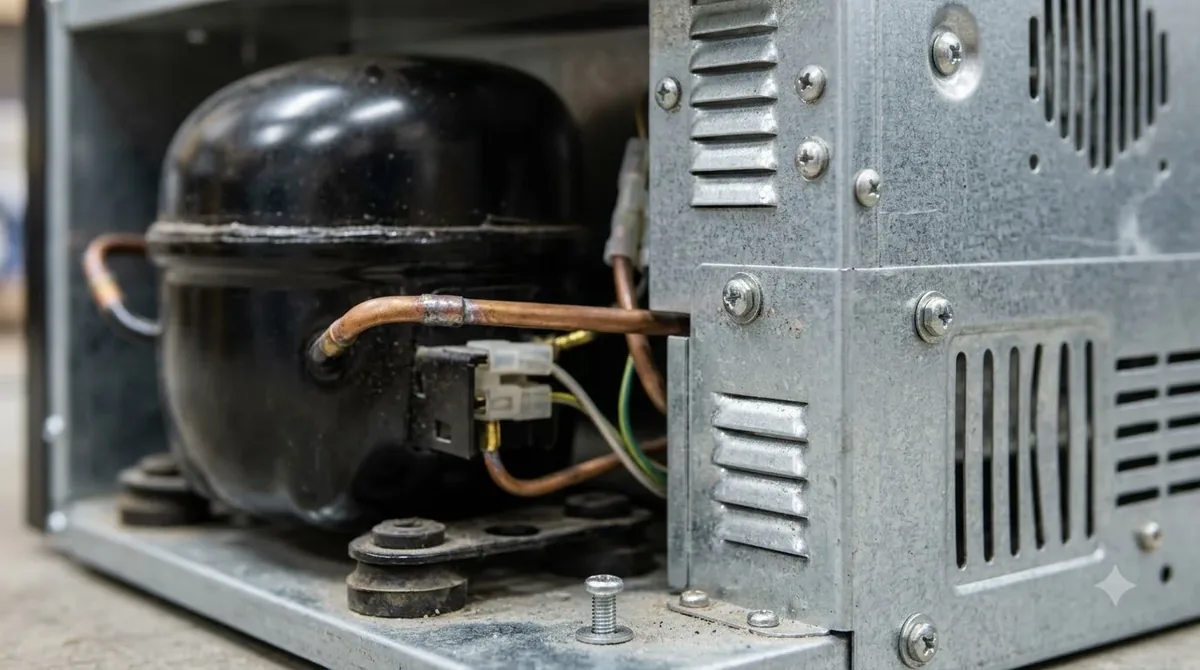
For the CWR362FD, the EdgeStar manual calls for 1–2 inches at the rear, 1/4 inch at the top, and 1/4 inch at the sides for ventilation and service access. It also says to allow at least 2 3/8 inches when the door side is next to a wall. The manual gives an operating ambient range above 50°F and below 95°F. The cabinet is designed to work under a counter, but it is not a “push it into any tight box” appliance.
Kalamera’s KRC-150DZB product page describes front ventilation and says the unit can be built in or used freestanding. Its current FAQ gives a more conservative clearance guide for built-in installation: at least 1 inch at the top, 1 inch at the sides, and 2 inches at the back. These statements are not perfectly aligned with the product page’s shorter installation note, so the safest course is to obtain the manual for the exact model and revision before finalizing the cutout. Do not assume that “front vent” means every surface can be pressed tightly against cabinetry.
Measure the opening at the narrowest point, not just at the countertop edge. Account for the depth of the handle, door swing, adjacent cabinet pulls, baseboard, and the path the appliance must follow during installation. A 23.4-inch-wide refrigerator may not pass through a doorway or fit between finished panels that measure 23.4 inches exactly. Allow room for a person to open the door and remove a shelf without hitting a wall or counter overhang.
Shelves, Doors, and Everyday Features
The two coolers take different approaches to access and presentation. EdgeStar’s CWR362FD uses side-by-side French doors, with separate left- and right-zone displays, while Kalamera’s KRC-150DZB has one reversible glass door and five removable wooden shelves with protective stoppers.
The EdgeStar layout can be convenient when the cabinet is installed in a busy kitchen. Opening one side does not require opening the other compartment, and the two displays show the set temperature for their respective zones. Its manual also describes an internal fan and a carbon filter intended to limit odors. The double-door design has more visible hardware and requires enough clearance for both doors to swing without hitting adjacent cabinets or walls.
Kalamera’s single-door format gives the front a simpler appearance, and its reversible hinge can help when the available wall or cabinet arrangement favors a left- or right-hand opening. The five removable shelves make it easier to adapt the interior to a changing collection, but the shelf spacing still determines whether wide bottles can be stored without losing several slots. Its temperature-memory feature is intended to restore the previous settings after a power interruption.
Noise should be judged at the installation site, not only from a product description. Compressor cycles, fans, refrigerant movement, and cabinet vibration can be audible in a quiet kitchen or open-plan room; a level floor and proper clearances can reduce avoidable rattling. For entertaining, remember that a wine cooler is not automatically a beverage fridge with flexible can shelving: it can keep Prosecco ready for a cocktail, but mixers, citrus, and opened juices belong in a regular refrigerator, as in this Aperol Spritz recipe.
Warranty, Repairs, and Owner Feedback
The warranty language is one of the clearest differences in the paperwork. EdgeStar’s CWR362FD manual states full one-year parts-and-labor coverage for qualifying defects and directs service through an authorized repair facility. Kalamera’s current FAQ states a one-year warranty for manufacturing defects and free replacement parts during that period; it estimates 15–25 business days for replacement parts shipped from its overseas factory. The practical questions are who diagnoses a failure, who pays for labor, and how soon the required component can arrive.
Kalamera says separate warranty registration is not required when an order record is available. Its FAQ asks customers for purchase information and rating-label details, says it does not sell compressor parts separately, and recommends a local refrigeration technician for a compressor failure. EdgeStar’s CWR362FD manual lists a website self-diagnostic tool, email, and telephone support. Its warranty is limited to the original purchaser and residential use in the contiguous United States; commercial or rental use has different terms. A different EdgeStar model can carry different wording, so do not substitute the CWR302SZ manual for the CWR362FD documentation.
Owner comments help identify things to inspect, but they are not a failure-rate study. An independent CWR362FD review describes the feature set positively while noting that some owners objected to operating noise; broad wine-cooler roundups can pool different capacities and revisions, so a complaint about one model should not be assigned automatically to a whole brand. Give the most weight to repeated reports about the exact model number and a clearly described fault. The Kalamera KRC-150DZB product specifications are a useful starting point, while the CWR362FD owner manual is more useful for EdgeStar ventilation and warranty questions.
Tip: Before ordering, save the full model number and written warranty, then ask the seller or manufacturer to confirm labor coverage, parts availability, and the correct installation clearance for that revision. This is especially useful when a retailer listing, product page, and support FAQ use different language.
Which Should You Pick?
Choose Kalamera if its 46-bottle claim is the deciding factor, you prefer a single reversible door, and the 40–50°F upper zone plus 50–66°F lower zone suits the wines you keep. Its slightly shorter and shallower listed cabinet may help in a tight space, but the actual built-in clearance must be confirmed before cabinetry is finalized. For a household with many whites and reds stored at separate temperatures, the preset temperature split is straightforward.
Choose EdgeStar’s CWR362FD if you prefer the French-door arrangement, want both zones to share the same broad 40–65°F adjustment range, or value the manual’s explicit full one-year parts-and-labor statement. Its stated 36-bottle capacity is lower, and its handle-inclusive depth is 24 1/2 inches, so check that extra projection against the countertop and walkway. The manufacturer also documents its zone displays, power-loss memory, door-ajar alarm, and carbon filter in the owner manual.
For buyers who value easy service over a larger capacity claim, compare the actual service options in writing before purchase. EdgeStar’s published warranty language is more explicit about labor for the CWR362FD; Kalamera’s FAQ is more explicit about replacement-part ordering and estimated delivery. Neither statement guarantees that every repair will be quick or inexpensive after the first year. A well-sized cooler installed with proper airflow is a better choice than a larger appliance squeezed into an unsuitable cabinet.
Frequently Asked Questions
These additional details help with setup and maintenance beyond the main model comparison. They are specific to the manuals and support information cited above, rather than promises that apply to every wine cooler from either brand.
How long should the EdgeStar CWR362FD stand before it is switched on?
EdgeStar’s manual says to leave the unit upright for at least 24 hours before connecting power so compressor oil can settle after transport. After the cooler is running, allow at least another 24 hours for it to reach its set temperature before loading wine. Keep the unit level during that process.
Does the EdgeStar CWR362FD have a door-open alarm?
Yes. Its manual says the door-ajar alarm sounds if either door remains open for more than five minutes. The same manual describes a high-temperature warning when the interior rises above 73°F for an hour and a low-temperature warning below 32°F.
How often should the EdgeStar carbon filter be changed?
The CWR362FD manual recommends replacing its carbon filter every three to six months, depending on odor exposure. It calls for a three-month interval when the cooler is placed in a kitchen, where cooking smells may be more common. This filter schedule is specific to the model covered by that manual.
Can Kalamera wooden shelves be swapped for wire shelves?
Kalamera says wooden and wire-mesh shelves are not interchangeable because their mounting clips differ. Confirm the shelf type and part compatibility using the complete model number before ordering replacements. Do not assume shelves from two units with similar capacities will fit each other.
Are control boards available for every older Kalamera model?
Kalamera says control boards and temperature-control boards for KRC-150CB and KRC-180CB units made before 2022 have been discontinued once existing stock is gone. The first four digits of the serial number indicate the production year, which helps identify the unit’s batch. This notice concerns those named models, not every Kalamera wine cooler.
For most buyers, the deciding factors are not the logo but the layout, clearances, and service promise attached to the model number. Confirm those details in writing before purchase, then choose the cooler that fits the cabinet and the bottles you actually own.
More in Versus
 Frigidaire Vs Magic Chef: Compare Wine Cooler Features and FitUpdated Nov 21, 2026
 EdgeStar Vs Whynter Wine Coolers for Smarter StorageUpdated Nov 21, 2026
 Newair Vs Whynter: Choose the Right 46-Bottle Wine CoolerUpdated Nov 21, 2026
 Kalamera Vs Newair: Choose the Right Wine Cooler for Your HomeUpdated Nov 21, 2026
 Danby Vs Vinotemp: Choose the Right Wine Cooler for Your SpaceUpdated Nov 21, 2026
 Dual Zone vs Single Zone Wine Fridge: Choose the Right Storage SetupUpdated Nov 21, 2026