

We may earn a commission when you buy through links on this page, at no extra cost to you. Learn more.
The whynter 164 bottle wine cooler, model BWR-1642DZ, is a large-capacity dual-zone refrigerator that stores up to 164 standard wine bottles and offers built-in or freestanding installation. Its adjustable 40°F to 65°F temperature range, removable shelving, and separate cooling zones make it suitable for collections containing both red and white wines. However, its substantial 278-pound weight, tall cabinet, and reliance on standard bottle dimensions mean buyers should plan the installation carefully before purchasing.
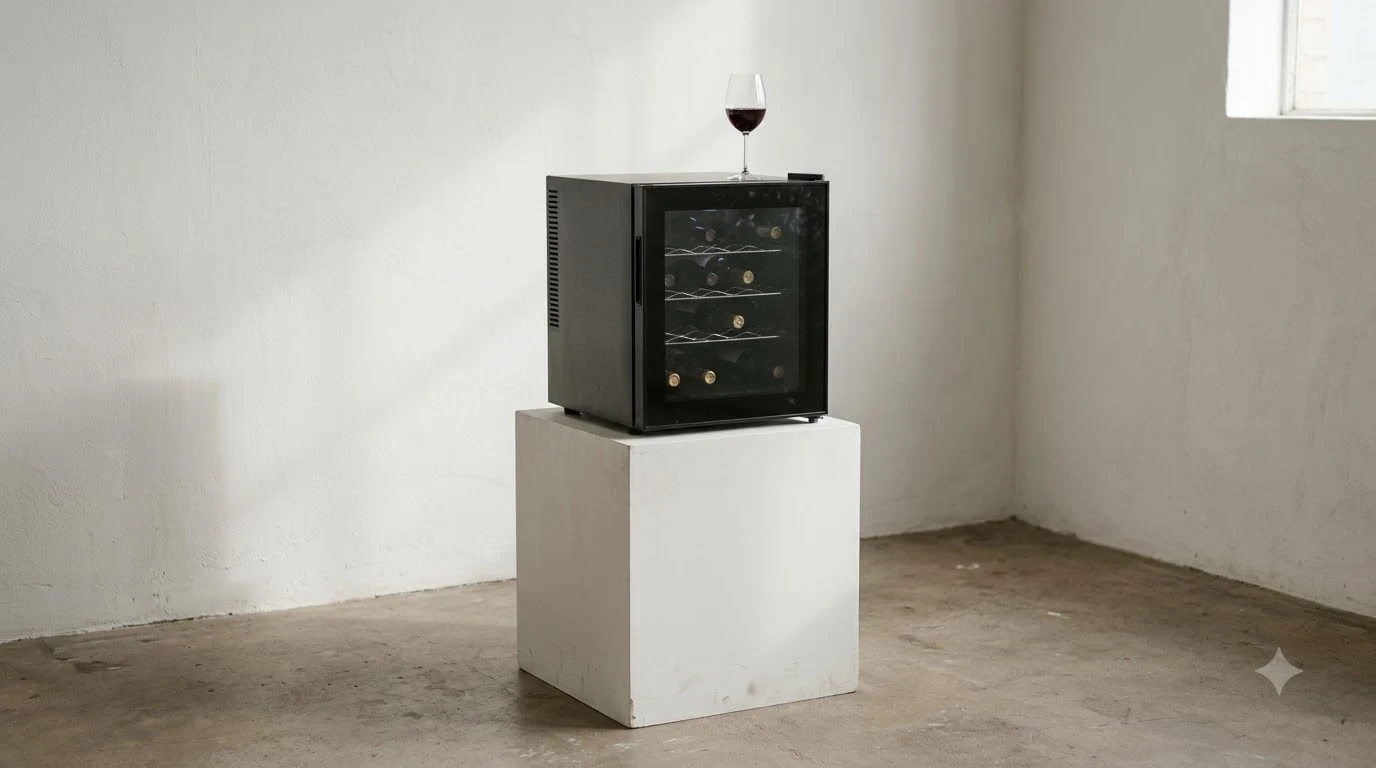
The Whynter BWR-1642DZ targets wine collectors who need considerably more storage than a typical undercounter refrigerator provides. Its stainless steel-trimmed glass door, black cabinet, digital temperature controls, and display shelf give it the appearance of a dedicated wine cellar while keeping the footprint relatively narrow. The important purchasing questions concern more than its advertised capacity: buyers also need to consider bottle shapes, shelf configuration, ventilation, temperature settings, and access to the installation space.
Below is a detailed review of the refrigerator’s specifications, owner feedback, practical advantages, and limitations to help determine whether this model deserves a place in a home wine-storage setup.
Specs and Key Features
The BWR-1642DZ combines 164-bottle advertised storage with two independently adjustable temperature zones. Its strongest specifications are the compressor cooling system, front ventilation, removable shelving, and a cabinet designed to accommodate built-in or freestanding installation.
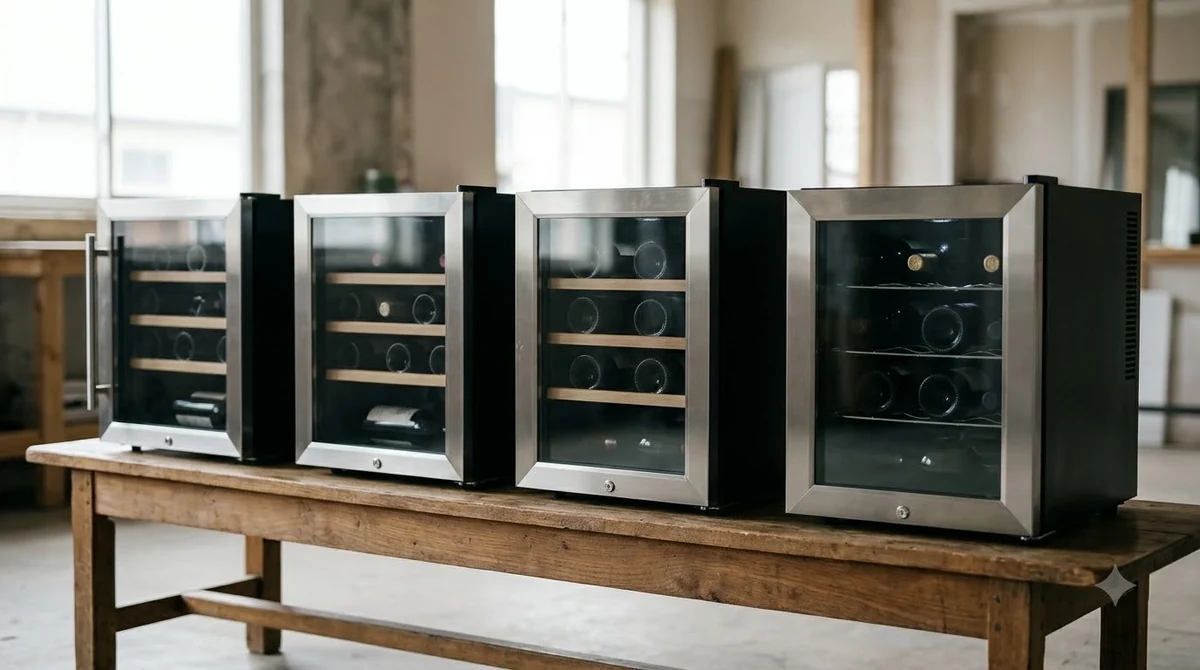
Whynter identifies this appliance as a 24-inch dual-zone wine refrigerator. The upper section accommodates up to 86 standard bottles, while the lower section holds 78. That division provides practical flexibility for collectors who maintain separate storage conditions for different wine styles. Both sections have a temperature adjustment range of 40°F to 65°F, giving buyers room to organize their collection according to serving preferences and storage requirements. The manufacturer’s official BWR-1642DZ product specifications provide additional details about its construction and features.
| Specification | Whynter BWR-1642DZ |
|---|---|
| Model | BWR-1642DZ |
| Advertised capacity | 164 standard 750 ml bottles |
| Upper zone capacity | 86 bottles; 72 with display shelf |
| Lower zone capacity | 78 bottles |
| Temperature range | 40°F–65°F per zone |
| Cooling system | Compressor |
| Installation | Built-in or freestanding |
| Cabinet dimensions | 69.75 × 23.5 × 26.5 inches |
| Depth with handle | 28.5 inches |
| Net weight | 278 pounds |
| Shelving | 15 removable shelves and one display shelf |
| Electrical rating | 115V / 60Hz, 2.0 amps |
| Input power | 140 watts |
| Refrigerant | R600a |
| Door | Double-pane glass, reversible |
| Lighting | Nine soft-white LED lights |
| Warranty | One-year limited warranty |
These specifications are drawn from Whynter’s official product information and instruction manual. The manufacturer also lists a carbon filter, fan-forced internal circulation, a cylinder lock, and two keys. These features make the refrigerator more versatile than a basic beverage cooler intended primarily for short-term chilling.
The double-pane smoked glass door is another useful feature. It provides a view of the collection while helping limit exposure to ultraviolet light. The smoked finish also gives the refrigerator a more understated appearance than a fully transparent glass cabinet. The reversible door is particularly relevant for installations where the refrigerator sits beside cabinetry, a wall, or another appliance. Buyers should still confirm that the door can open sufficiently in the intended configuration.
One specification deserves particular attention: the advertised 164-bottle capacity depends on the standard shelving arrangement. The upper zone’s capacity falls to 72 bottles when its display shelf is installed. Consequently, the most attractive display configuration does not provide the same storage capacity as the maximum-capacity arrangement.
What Owners Like
Owner feedback generally highlights the refrigerator’s appearance, useful storage capacity, cooling performance, and relatively quiet operation. The dual-zone arrangement and large glass door are particularly appealing to households that want their wine collection to be both accessible and visible.
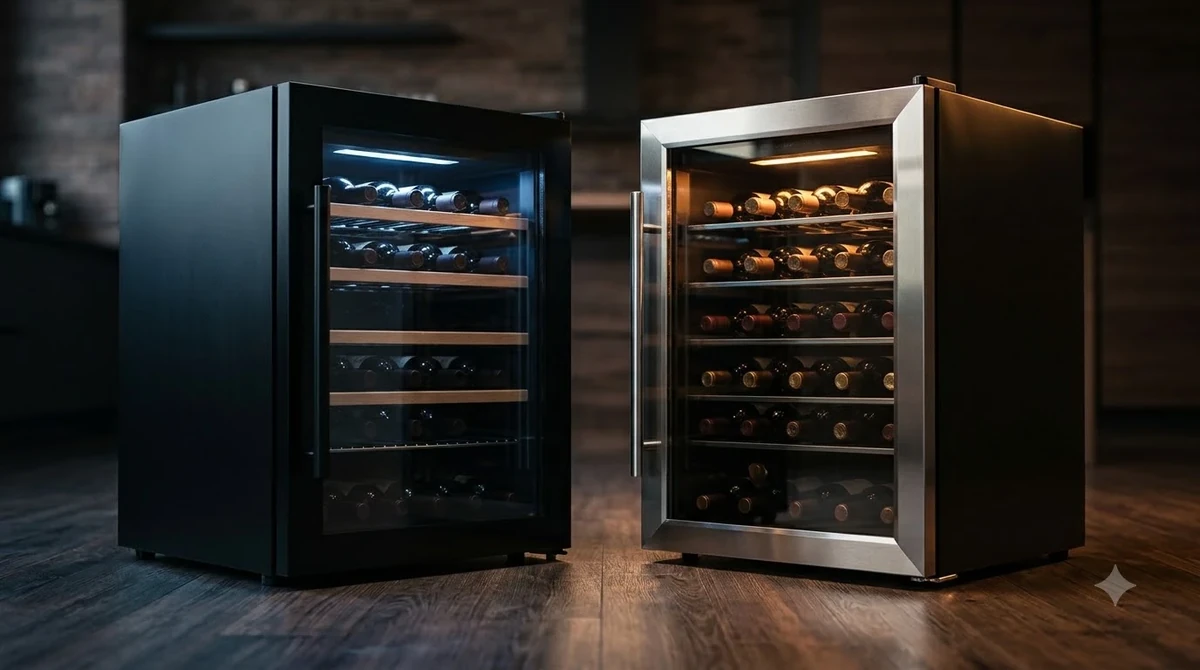
Wayfair’s customer-review summary identifies functionality, appearance, and temperature control among the recurring positive comments. Customers also describe the refrigerator as quiet. These observations are useful because noise can become an important consideration when a tall wine refrigerator is installed in a kitchen, dining area, or living space rather than a separate cellar.
The visual design is another attraction. The stainless steel-trimmed door and dark cabinet provide a relatively understated appearance that works with many contemporary kitchen finishes. The smoked glass allows bottles and labels to remain visible without making the refrigerator look like an ordinary commercial beverage cabinet. Nine interior LED lights also make it easier to identify bottles without relying entirely on overhead room lighting.
Owners looking for a large collection display may appreciate the combination of removable shelves and an inclined display shelf. The display arrangement provides a place for selected bottles to face outward, making it easier to identify special vintages or organize wines intended for upcoming meals. The display area can also accommodate opened bottles, according to Whynter’s product information.
The two temperature zones are arguably the most important functional advantage. A collector can organize the upper section for whites and sparkling wines while reserving the lower section for reds, for example. The ability to adjust each section independently is more useful than simply having a large refrigerated cabinet with one shared thermostat.
Its installation flexibility also receives attention. A front-vented design allows the BWR-1642DZ to be integrated into suitable cabinetry or used as a freestanding appliance. This gives buyers more placement choices, although the installation requirements still need to be followed. A built-in designation does not mean the appliance can be enclosed without ventilation clearances.
For households moving from a small 30- or 50-bottle cooler, the additional capacity can make wine organization considerably easier. Instead of keeping everyday bottles in one refrigerator and longer-term selections in another location, owners can consolidate much of their collection in one appliance.
Common Complaints
The main concerns surrounding the Whynter 164-bottle refrigerator involve actual bottle capacity, shelf usability, installation logistics, and the importance of checking the appliance after delivery. Its large advertised capacity should not be interpreted as a guarantee that every wine bottle shape will fit equally well.
Wayfair’s customer-review summary specifically mentions differences between advertised and practical bottle capacity, along with mixed feedback about shelving and instructions. This is a meaningful limitation for collectors who regularly purchase Champagne, Burgundy, or unusually shaped bottles. Standard Bordeaux bottles are generally easier to organize in tightly arranged wine racks than wider bottles with different shoulder profiles.
The display shelf creates another capacity trade-off. Whynter lists 86 bottles for the upper zone in the standard configuration but only 72 when the display shelf is fitted. Buyers who prioritize presentation over maximum storage should account for this difference before deciding how to arrange their collection.
The shelving itself also requires realistic expectations. Removable shelves provide flexibility, but they do not turn the cabinet into a completely customizable storage system. Wider bottles can occupy additional space and may prevent neighboring bottles from fitting in the intended arrangement. Removing shelves can create room for selected larger bottles, but doing so reduces the total number of available storage positions.
Another practical complaint is the refrigerator’s weight. At 278 pounds before adding wine, it is not a convenient appliance to move through a narrow hallway or position alone. A fully stocked unit becomes considerably heavier. Buyers should arrange suitable delivery assistance and verify that the installation floor can support the appliance and its contents.
Delivery condition deserves attention as well. Home Depot customer discussions concerning this model include reports of damaged deliveries and difficulties associated with handling large appliances. These experiences do not establish that the refrigerator itself has a manufacturing defect, but they demonstrate why buyers should inspect the cabinet, glass, door alignment, and shelves before accepting a delivery whenever possible.
Finally, the one-year limited warranty is relatively short for a major appliance that may be expected to support a wine collection over many years. Buyers should read the actual warranty terms and understand the process for service, replacement, and transportation before committing to the purchase.
Tip: Do not plan your collection around 164 bottles of mixed shapes. Measure your widest bottles, account for the display shelf, and leave some spare capacity so that removing and replacing bottles does not become difficult.
Who Should Buy and Who Should Skip
The Whynter BWR-1642DZ makes the most sense for collectors who need substantial storage, want separate temperature settings, and have a suitable installation location. It is less compelling for occasional wine drinkers, owners with limited floor space, or collectors who primarily purchase unusually shaped bottles.
Who should consider buying it
Established home collectors: Anyone maintaining a collection approaching or exceeding 100 standard bottles may appreciate the additional capacity. The advertised 164-bottle arrangement offers room for everyday wines, special-occasion bottles, and selections intended for future meals.
Red and white wine enthusiasts: Separate temperature controls make the refrigerator useful for households that regularly serve several wine styles. A collector can assign the upper and lower sections to different categories instead of keeping every bottle at the same temperature.
Homeowners planning integrated storage: The front-vented construction and 24-inch width make the appliance relevant to certain built-in kitchen and bar installations. The reversible door also provides additional flexibility when planning the surrounding cabinetry.
Wine-focused entertaining spaces: The glass door, lighting, and display shelf can make a collection more accessible during gatherings. A bottle can be selected without opening several cabinets or searching through separate storage areas.
Who should skip it
Small households with limited collections: A 164-bottle refrigerator may occupy more space than necessary if only 20 or 30 bottles are normally kept at home. A smaller cabinet can provide more practical storage without requiring a tall installation area.
Buyers with difficult delivery access: The 278-pound net weight and 69.75-inch height make measurements essential. Narrow doorways, stairs, sharp turns, and limited elevator capacity can complicate delivery considerably.
Collectors of many oversized bottles: The advertised capacity is based on standard bottle dimensions. A collection dominated by Champagne, large-format bottles, or unusual Burgundy shapes may require a different shelving arrangement and considerably more space.
Buyers seeking extensive warranty coverage: The listed one-year limited warranty may not satisfy people who want longer manufacturer coverage. Those buyers should compare warranty terms and service arrangements before purchasing.
For a broader look at how different appliance designs and capacities compare, the site’s model reviews provide another useful starting point.
How It Compares to Alternatives
The BWR-1642DZ is best understood as a high-capacity, dual-zone wine refrigerator rather than a general-purpose beverage cooler. Its most relevant comparison is with other wine-storage configurations that prioritize different combinations of capacity, temperature control, and cabinet size.
One important distinction is between dual-zone and single-zone refrigerators. A single-zone appliance maintains one general temperature throughout its storage compartment. This arrangement can work well for collectors who store primarily one wine category or prefer to keep their entire collection at a consistent cellar temperature.
The Whynter’s dual-zone design provides more flexibility for collections containing different styles. For example, the upper section can be organized for Sauvignon Blanc, Riesling, and sparkling wines, while the lower section accommodates Cabernet Sauvignon, Merlot, and Pinot Noir. This is particularly useful when bottles are purchased for different serving occasions.
Another comparison concerns large-capacity versus compact wine refrigerators. A compact 24-inch cooler is easier to position beneath a counter, but its storage capacity may be insufficient for a growing collection. The BWR-1642DZ instead uses a tall cabinet measuring almost 70 inches, trading vertical space for a considerably larger bottle count.
Collectors should also distinguish between a wine refrigerator and a beverage refrigerator. A wine refrigerator generally prioritizes horizontal bottle storage, temperature consistency, and wine-friendly shelf arrangements. A beverage refrigerator may use adjustable racks or shelves intended for cans, bottles, and mixed drinks. The latter is not necessarily a suitable replacement for dedicated wine storage.
For buyers who entertain frequently, the storage arrangement may also influence how the appliance fits into a home bar. A collection containing Prosecco and other sparkling wines can benefit from a dedicated wine cabinet, while ready-to-serve mixed drinks may be stored separately. For example, the site’s Aperol Spritz recipe is a useful reference for planning a sparkling-wine cocktail alongside a home wine collection.
The most important comparison is therefore not simply the number printed on the product listing. Consider the amount of usable shelf space, whether the appliance supports the preferred temperature arrangement, and how much room it occupies after installation.
Buyers comparing the Whynter with another large wine refrigerator should request the competing model’s installation drawing, shelf layout, temperature range, and warranty terms. Those details offer a more meaningful comparison than bottle capacity alone.
Installation, Temperature Settings, and Everyday Use
Correct installation is essential for the BWR-1642DZ because its cooling system depends on adequate ventilation and a stable position. The manual also provides specific recommendations for electrical connections, initial setup, and temperature adjustment.
The cabinet measures 69.75 inches high, 23.5 inches wide, and 26.5 inches deep without the handle. The handle increases the overall depth to 28.5 inches. For built-in installation, Whynter specifies a minimum cabinet opening of 24 inches wide, 70 inches high, and 27 inches deep, with additional room allowed for the handle.
Ventilation is particularly important. The instruction manual recommends five inches of clearance behind and beside the refrigerator when used freestanding. For built-in installation, it calls for at least one-quarter inch of clearance on each side and at the top. The front ventilation opening must remain unobstructed.
The appliance also requires a grounded three-prong electrical outlet. The manual recommends a dedicated electrical circuit and specifies a standard 115/120-volt AC connection. Buyers should arrange the electrical installation before positioning the cabinet, particularly when integrating it into new kitchen cabinetry.
Choosing temperatures for different wines
The 40°F to 65°F adjustment range provides considerable flexibility. However, the ideal settings depend on whether the primary objective is long-term storage or preparing bottles for service. A practical arrangement is to dedicate one section to white and sparkling wines and the other to red wines.
For serving purposes, sparkling wines generally benefit from temperatures around 40°F to 50°F. Light-bodied white wines and rosé are usually served at 45°F to 50°F, while fuller-bodied whites such as Chardonnay generally work well around 50°F to 55°F.
Light reds, including Pinot Noir, are often served around 55°F to 60°F. Fuller-bodied reds, including Cabernet Sauvignon and Syrah, generally benefit from approximately 60°F to 65°F. These serving temperatures are useful starting points rather than mandatory storage settings.
Collectors keeping bottles for longer periods may prefer a consistent cellar-style temperature rather than constantly adjusting the refrigerator for individual serving occasions. Separate zones make it possible to establish different storage arrangements without repeatedly changing the entire collection’s environment.
Understanding the controls
According to the instruction manual, the appliance has separate controls for its upper and lower temperature zones. The display shows the internal temperature during normal operation. Users can select a zone and adjust its setting through the control panel.
The manual lists factory preset temperatures of 50°F for the upper section and 60°F for the lower section. Each press of the temperature adjustment buttons changes the selected setting by one degree Fahrenheit or Celsius, depending on the display mode.
After making an adjustment, the display flashes before returning to the current internal temperature. Users can also briefly view the selected temperature by pressing an adjustment button. This distinction between the target temperature and the current internal reading is important when evaluating how the appliance is operating.
Before loading the refrigerator, Whynter recommends allowing the appliance to stand upright for approximately four hours after transportation. The interior should be cleaned with lukewarm water and a soft cloth before use. This preparation helps reduce the risk of problems associated with moving and setting up the cooling system.
Warranty and Support
Whynter lists a one-year limited warranty for the BWR-1642DZ. Buyers should review the manufacturer’s actual warranty documentation to understand what is covered, what exclusions apply, and how service requests are handled.
Warranty duration is only one part of the ownership decision. A large wine refrigerator can be difficult to transport after installation, so the practical service arrangements matter as much as the stated coverage period. Before purchasing, confirm whether an authorized technician can service the appliance locally and whether transportation or removal expenses are the owner’s responsibility.
It is also sensible to retain the original packaging and purchase documentation when possible. The appliance weighs 278 pounds, and its glass door and internal shelving require careful handling during transportation. Keeping the model number, serial number, and proof of purchase accessible can make support requests easier.
Whynter provides customer support through its official website and lists a support email and telephone contact. Buyers should use the manufacturer’s documentation for current warranty procedures rather than relying on assumptions based on a retailer’s general return policy.
Retailer return policies and manufacturer warranties are separate arrangements. A retailer may have a specific inspection, collection, or return window, while the manufacturer warranty follows its own conditions. Checking both before delivery is a sensible step for a major appliance.
Another useful precaution is to document the refrigerator’s condition immediately after delivery. Inspect the stainless steel trim, cabinet panels, glass, door hinges, shelves, and power cord. If damage is visible, photograph it and contact the seller promptly rather than waiting until the appliance has been installed and filled.
Frequently Asked Questions
Does the Whynter BWR-1642DZ have a built-in carbon filter?
Yes. Whynter lists an activated carbon filter as part of the BWR-1642DZ feature set. The filter is intended to help manage odors inside the storage cabinet, making it a useful addition for a refrigerator holding different wine varieties.
Can the refrigerator operate in a garage?
The instruction manual specifies an appropriate operating environment above 60°F and below 90°F. An unconditioned garage that regularly falls outside this ambient temperature range may not provide suitable operating conditions. The appliance is also intended for indoor use rather than outdoor installation.
Can the Whynter BWR-1642DZ store opened wine bottles?
Yes. The manufacturer describes its display shelf as suitable for storing opened bottles. For better preservation after opening, reseal still wine and refrigerate it, even when the bottle is a red wine. The display shelf is a storage convenience rather than a replacement for an appropriate wine stopper.
Does the refrigerator have an automatic defrost function?
The manufacturer’s published feature list does not identify an automatic defrost function as a headline specification. Buyers who consider defrosting requirements important should confirm the exact operating and maintenance procedure with Whynter before purchasing rather than assuming that every compressor wine refrigerator uses the same system.
Should the refrigerator be switched on immediately after delivery?
No. Whynter’s instruction manual recommends allowing the appliance to stand upright for approximately four hours before connecting it to electricity after transportation. The manual also advises waiting three to five minutes before restarting the refrigerator after an interruption or shutdown.
The Whynter BWR-1642DZ is a compelling option for collectors who want substantial wine storage, separate temperature zones, and a built-in-capable cabinet. Its biggest advantages are its 164-bottle advertised capacity, flexible shelving, and temperature controls, while its weight, installation requirements, and practical bottle limitations deserve careful consideration. Measure the installation opening, review the warranty, and plan your shelf configuration before ordering so the refrigerator can accommodate your collection as intended.
More in Model Reviews
 Magic Chef 44 Bottle Wine Cooler Review for Flexible StorageUpdated Nov 21, 2026
 Insignia NS WC16BK6 Review: Compact 16-Bottle Wine StorageUpdated Nov 21, 2026
 Wine Enthusiast Electric Blue Omega Review: Opening, Pouring, and Preserving Made EasierUpdated Nov 21, 2026
 Koolatron 20 Bottle Wine Cooler Review: Features, Fit, and PerformanceUpdated Nov 21, 2026
 NewAir AWC 330E Review for Home Wine StorageUpdated Nov 21, 2026
 Ivation 18 Bottle Wine Cooler Review for Compact Home StorageUpdated Nov 21, 2026