

We may earn a commission when you buy through links on this page, at no extra cost to you. Learn more.
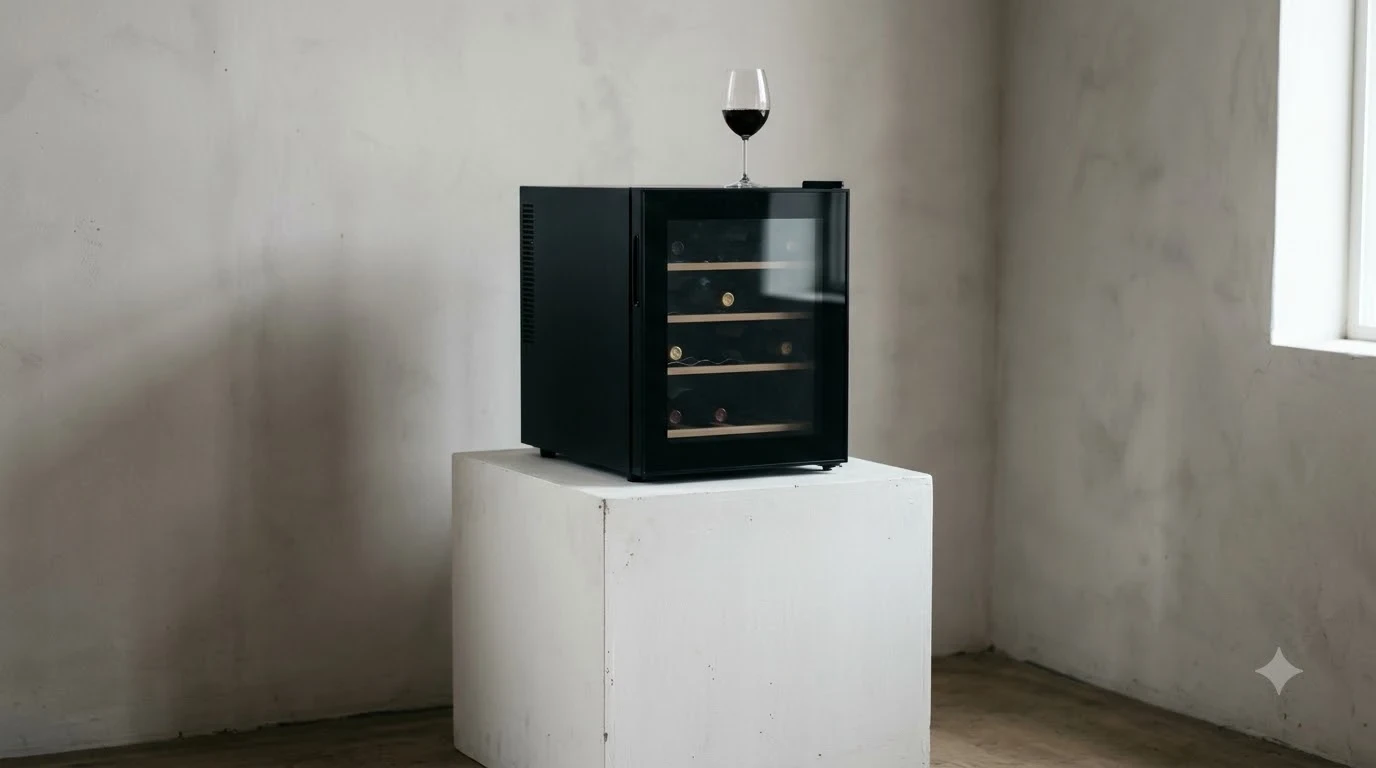
The insignia ns wc16bk6 is a compact 16-bottle compressor wine and beverage cooler best suited to casual storage rather than precision cellaring. It has a manual thermostat with a broad stated range, two sliding chrome shelves, a glass door, and a relatively small footprint. Its limitations are important: there is no digital temperature readout or interior light, it is not designed for built-in installation, and placement affects cooling performance.
The Insignia NS-WC16BK6 is a straightforward compact cooler from an earlier generation of wine appliances. Its small capacity and flexible shelves can suit a modest bottle rotation, but it is not a substitute for a temperature-controlled cellar cabinet. The review below separates manufacturer specifications from owner feedback and explains what to inspect before buying an older or used example.
Specs and Key Features
The NS-WC16BK6 is a freestanding wine and beverage cooler with room for up to 16 standard bottles. It has a manual thermostat, two sliding chrome shelves, a lower wine basket, and adjustable leveling feet; the overall design is functional rather than feature-rich.
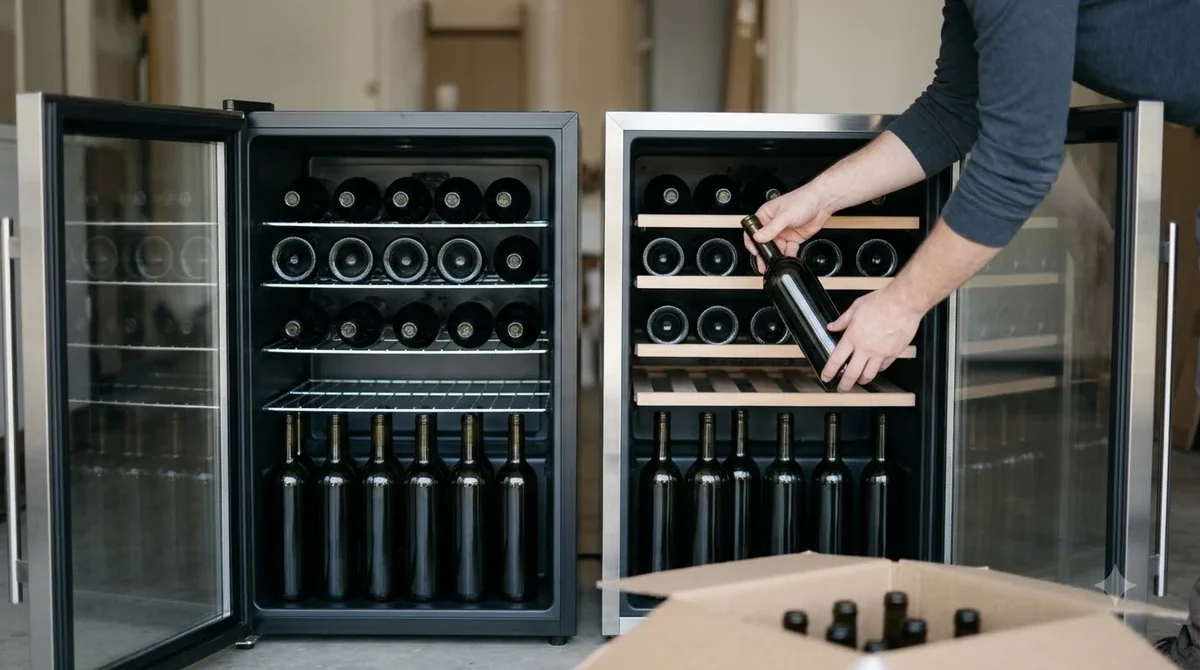
According to the Insignia user guide, the cabinet measures 19.3 inches wide, 18.5 inches deep, and 17.7 inches high, and weighs 47.2 pounds. It uses a 115-volt, 60-hertz supply and draws 1.1 amps. Insignia requires five inches of clearance at the back and sides for ventilation, so the necessary space is larger than the cabinet’s listed dimensions. A 19.3-inch-wide alcove, for example, is not wide enough for a properly ventilated installation.
The manual lists three thermostat ranges: MAX from 35.6 to 46.4 degrees Fahrenheit, NORMAL from 46.4 to 59 degrees, and MIN from 59 to 69.8 degrees. These are broad ranges, not exact digital targets. There is no front temperature display, and the guide recommends running the cooler for 24 hours before the first adjustment, then changing the dial one increment at a time and allowing several hours for the temperature to settle. The glass door is not paired with an interior light: the manufacturer’s comparison sheet lists LED lighting on its larger 24- and 34-bottle models, but not the 16-bottle version.
| Specification | Insignia NS-WC16BK6 |
|---|---|
| Rated capacity | 16 bottles |
| Dimensions (W × D × H) | 19.3 × 18.5 × 17.7 inches |
| Net weight | 47.2 pounds |
| Electrical rating | 115 V, 60 Hz; 1.1 A |
| Thermostat settings | MAX: 35.6–46.4°F; NORMAL: 46.4–59°F; MIN: 59–69.8°F |
| Shelving | Two sliding chrome shelves and a lower wine basket |
| Lighting | No interior LED listed for this model |
| Installation | Freestanding; five inches of clearance at back and sides |
These figures are drawn from the Insignia NS-WC16BK6 user guide and the manufacturer’s product sheet. The key planning details are the ventilation gap, manual temperature control, and lack of a light. Also, 16 bottles is a best-case count for standard shapes: wider Champagne or Burgundy bottles can reduce usable capacity even when the shelves are rearranged.
Tip: Before buying, measure the widest bottles in the collection and confirm that the shelves can be arranged without pressing bottles against the rear wall. Insignia says bottles should not touch the back because that can interfere with air circulation.
What Owners Like
Owner feedback most often favors the cooler’s compact size, straightforward operation, and useful capacity for its footprint. Best Buy’s review summary also highlights temperature control, appearance, and quiet operation, although individual experiences vary and should not be treated as a guarantee for every appliance.
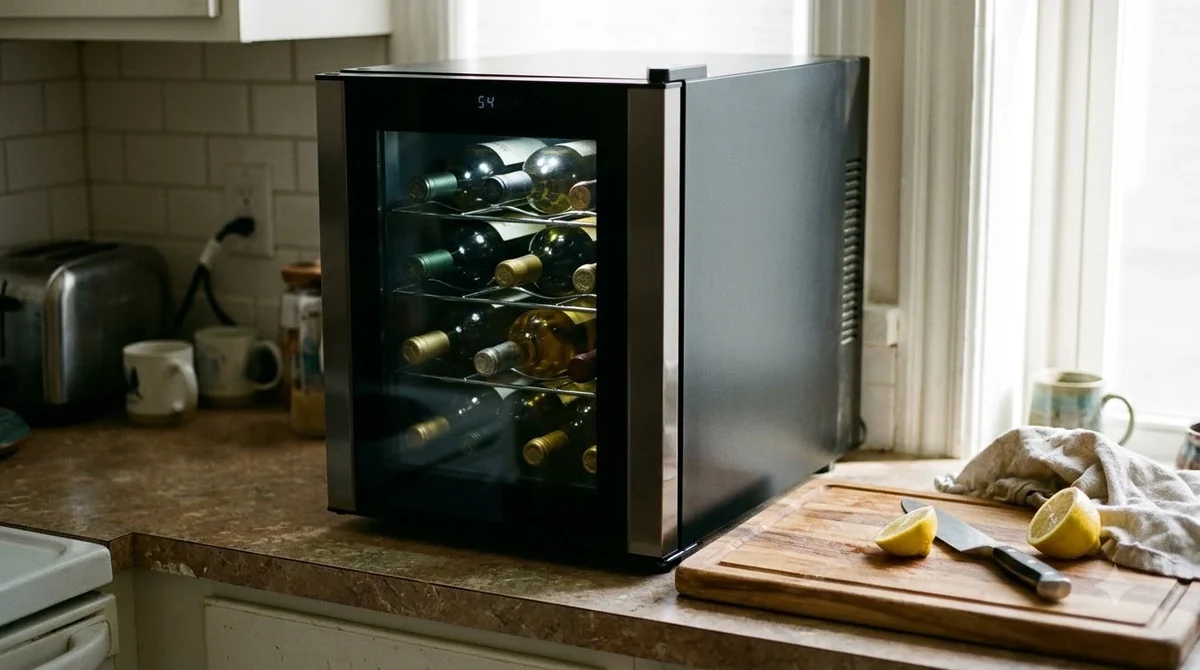
The dimensions make the unit practical for households that cannot fit a tall wine cabinet. At just under 20 inches wide and under 18 inches high, it can sit on a sturdy counter or low cabinet if the surface can support it and the ventilation gaps remain open. Best Buy reviewers describe using it in conference rooms, small kitchens, and shared spaces where a full refrigerator would take up too much room. One owner valued having cold drinks available without giving up space in the main kitchen refrigerator.
The 16-bottle capacity can also feel generous relative to the cabinet’s size. A small selection of reds, whites, and sparkling bottles can be kept separate from groceries, and the sliding shelves make individual bottles easier to reach than a tightly packed stack. One reviewer used the cooler for iced tea, soft drinks, and beer as well as wine, matching the appliance’s wine-and-beverage positioning. Keep in mind that loading many warm drinks at once can reduce cooling efficiency while the cabinet pulls the temperature back down.
Several owners describe the compressor noise as unobtrusive and praise the simple controls and easy setup. One purchaser called the unit very quiet even when the cooling cycle started. Correct leveling and airflow matter: Insignia warns that an uneven cabinet or contact with a wall can cause vibration or unusual noise. For occasional entertaining, the separate cold space can also keep sparkling wine ready for an Aperol Spritz recipe, though the coldest setting is not the right long-term temperature for every bottle.
Common Complaints
The main compromises are the lack of a digital temperature display, no interior light, and less precise control than a dedicated cellar cabinet. Owner reports also indicate that noise and temperature consistency can vary by unit, making an inspection important when buying secondhand.
The manual thermostat shows ranges rather than an exact cabinet temperature. An owner who used a separate thermometer reported that the unit took about 48 hours to stabilize and varied by as much as four degrees Fahrenheit as room temperature changed. That is an individual report, not a controlled performance test, but it illustrates the limits of a broad dial setting. Anyone who wants to set and verify a precise target such as 55 degrees Fahrenheit will need a separate thermometer and may prefer a cooler with a digital readout.
The lack of an interior light is a confirmed feature omission. The manufacturer’s product sheet lists LED lighting for the larger 24- and 34-bottle designs, but not for this 16-bottle model. A glass door still lets the owner see what is inside, though labels can be difficult to read in a dim room. Best Buy’s review summary notes that some owners wished for an interior light, so this is worth considering if the cooler will sit in a dark bar area or be opened often at night.
Noise feedback is mixed: some owners describe quiet operation, while others mention having seen complaints about loud running. A compressor naturally cycles, so a soft hum or brief click is different from a persistent rattle or harsh mechanical sound. With a used unit, listen through more than one cooling cycle, check that the cabinet is level, and confirm it is not touching a wall. Insignia also advises keeping the cooler away from heat sources and providing the specified air space.
Who Should Buy and Who Should Skip
This model is most appropriate for someone who wants a small, separate place for a modest bottle collection and values simple operation over fine temperature control. It is not the right choice for an expensive long-term collection, a built-in kitchen space, or a room that cannot stay within the manufacturer’s recommended ambient range.
Consider it if the household typically keeps 6 to 16 standard bottles and drinks them regularly. A rotating selection of Pinot Noir, Merlot, Sauvignon Blanc, and sparkling wine can stay out of the main refrigerator. The manual notes that air circulation makes the upper area warmer and the lower area cooler, and recommends placing stronger reds higher, then rosé and lighter reds, whites, and Champagne or spritzers toward the bottom. This helps organize a small mixed collection, but it is not independent two-zone control. An office or small entertaining area may also benefit from its under-20-inch width and shelves that slide for easier access; remember that wider Champagne or Burgundy bottles reduce the rated capacity, and loading many warm drinks at once can slow cooling.
Skip it if close temperature management is important. Collectors aging valuable bottles should look for a dedicated wine cabinet with a digital thermostat, a temperature display, and published performance information. The NS-WC16BK6’s broad settings and lack of a built-in readout suit everyday holding and chilling better than close cellar monitoring. It is also unsuitable for built-in installation, a hot garage, or a spot with less than five inches of clearance at the back and sides. Insignia warns that ambient temperatures below 50 degrees or above 85 degrees Fahrenheit can hinder performance, says the model is not designed for garage or outdoor use, and requires a grounded outlet rather than an extension cord.
Finally, consider availability and warranty status. Best Buy’s listing identifies the NS-WC16BK6 as no longer available in new condition, so remaining examples may be used, open-box, or old stock. The manual describes a one-year limited warranty for the original purchaser under its stated purchase conditions, and says coverage ends if the product is sold or transferred. A secondhand buyer should not assume the warranty follows the appliance; inspect the door seal, shelves, cord, cabinet, and cooling performance before purchase.
How It Compares to Alternatives
The NS-WC16BK6 sits at the entry-level end of the wine-cooler category: a compact compressor cabinet with one manual control and modest capacity. Compared with a kitchen refrigerator, a dual-zone wine cabinet, or a small thermoelectric cooler, its strengths are its separate bottle storage and straightforward cooling; its weaknesses are temperature precision, display features, and installation flexibility.
Against a regular kitchen refrigerator, the Insignia offers a separate place for wine and bottle-friendly shelves, freeing food-fridge space. Its thermostat also includes settings warmer than a typical refrigerator. A kitchen refrigerator remains convenient for rapidly chilling a bottle before dinner, but it may be colder than needed for routine wine storage. Compared with a thermoelectric countertop cooler, the Insignia uses a compressor: a Best Buy product Q&A response confirms this, and the manual discusses the airflow needed around it. Compressor cooling provides a broad range, but requires open ventilation and includes a mechanical cooling cycle. Buyers comparing thermoelectric designs should check their capacity and room-temperature limits rather than assume all compact coolers perform alike.
A modern dual-zone wine refrigerator is a stronger alternative for households that keep reds and whites at separate target temperatures. The NS-WC16BK6 has one thermostat setting; its warmer upper area and cooler lower area result from air circulation, not independent controls. If whites need to be ready to serve while reds remain at a warmer storage temperature, dual-zone control is a functional upgrade. A cellar cabinet is also a better match for long-term storage because it is selected for more consistent conditions and closer monitoring, while Insignia markets this unit for wine, Champagne, and everyday beverages.
The NS-WC16BK6’s range runs from 35.6 to 69.8 degrees Fahrenheit across three broad settings, but that does not make it a precise serving station for every style at once. Choose a standard refrigerator for general convenience, a dual-zone cabinet for separate wine temperatures, or this compact model for an accessible small collection. For more appliance comparisons, the site’s Model reviews section offers a broader starting point for evaluating product types.
Frequently Asked Questions
These answers cover setup and care details that can be easy to miss in a short product listing. The cooler is simple to operate, but following the manufacturer’s installation and restart instructions matters.
How long should the cooler stand before it is plugged in?
After transportation, the manual instructs owners to let the cabinet stand upright for approximately two hours before connecting it to power. This reduces the risk of a cooling-system malfunction associated with handling during transport. Ask how a used appliance was moved before plugging it in.
What should happen after a power interruption?
The manual says to wait three to five minutes before restarting after the cooler has been unplugged or has lost power. Trying to restart it sooner may prevent it from starting. This pause is separate from the 24-hour initial run period recommended before the first thermostat adjustment.
Does turning the thermostat to OFF disconnect the cooler from power?
No. The manual explains that OFF stops the cooling cycle but does not shut off electrical power to the appliance. Unplug the unit from the wall outlet before carrying out maintenance or cleaning.
Why does the cooler need to be level?
An uneven cabinet can prevent the door from closing and sealing correctly. The manual warns that a poor seal can cause cooling, frost, or moisture problems. Use the adjustable feet to raise or lower each side until the appliance sits level.
What cleaning solution does the manual recommend?
The guide specifies a solution made from one quart of lukewarm water and two tablespoons of baking soda for the interior. Unplug the cooler and remove all beverages before cleaning, then dry the interior with a soft cloth. Keep the door gasket clean so the door can seal properly.
The Insignia NS-WC16BK6 can still fill a useful role as a small beverage-and-wine cooler when its basic controls and freestanding placement suit the room. Its missing light and digital display, plus limited new-condition availability, make inspection and realistic expectations important. For casual bottle storage it can be practical, but serious collectors should choose a cabinet designed for closer temperature control.
More in Model Reviews
 Magic Chef 44 Bottle Wine Cooler Review for Flexible StorageUpdated Nov 21, 2026
 Whynter 164 Bottle Wine Cooler Review: Capacity, Features, and FitUpdated Nov 21, 2026
 Wine Enthusiast Electric Blue Omega Review: Opening, Pouring, and Preserving Made EasierUpdated Nov 21, 2026
 Koolatron 20 Bottle Wine Cooler Review: Features, Fit, and PerformanceUpdated Nov 21, 2026
 NewAir AWC 330E Review for Home Wine StorageUpdated Nov 21, 2026
 Ivation 18 Bottle Wine Cooler Review for Compact Home StorageUpdated Nov 21, 2026