

We may earn a commission when you buy through links on this page, at no extra cost to you. Learn more.
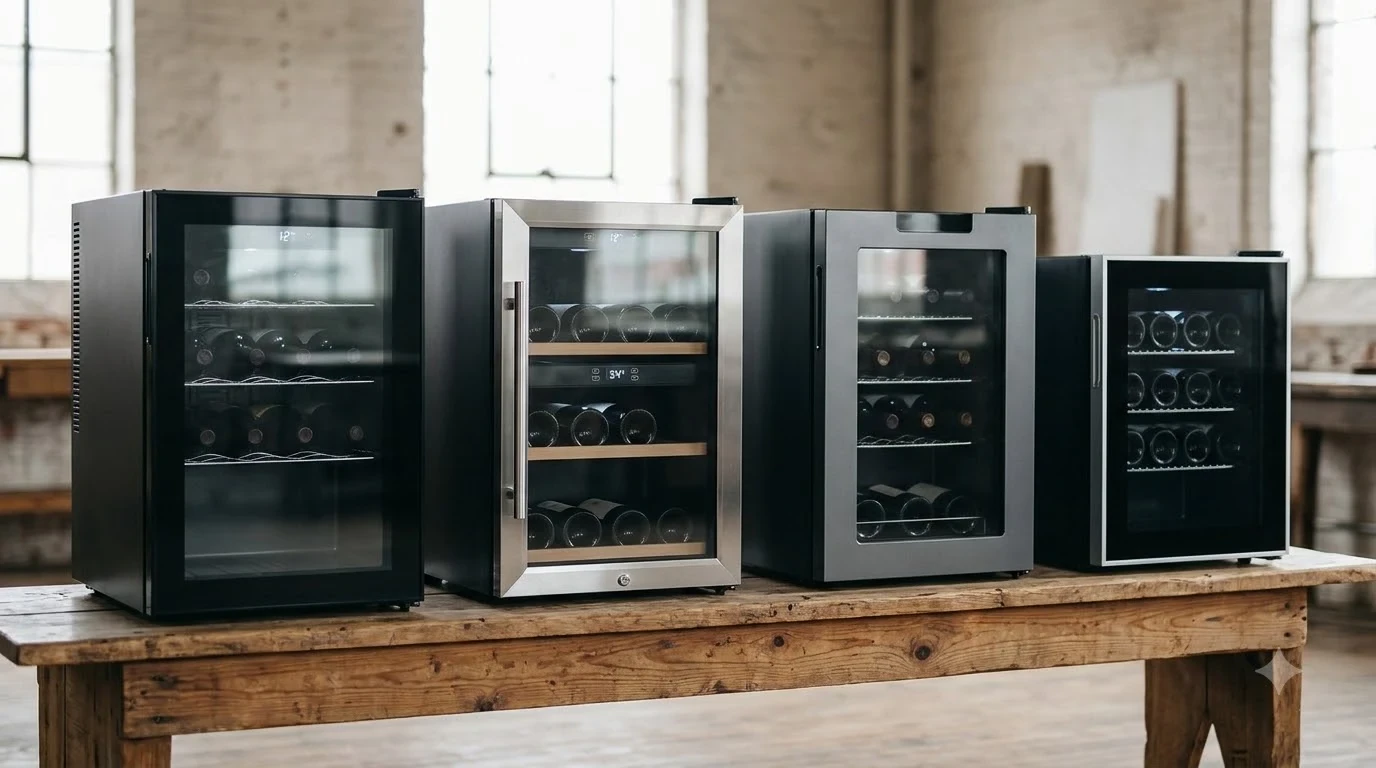
The Haier countertop wine cooler is a compact six-bottle wine cellar designed for small kitchens, apartments, and wine drinkers who want convenient access to a few chilled bottles without dedicating space to a full-size refrigerator. The Haier HVTEC06ABS offers thermoelectric cooling, an adjustable digital thermostat, a blue LED display, and a smoked-glass door. Its biggest advantages are its narrow footprint and straightforward design, while its limited capacity and dependence on room temperature make it less suitable for serious wine collecting or demanding storage conditions.
A countertop wine refrigerator can solve a familiar household problem: the kitchen refrigerator is full, but several bottles of wine still need a dedicated place to stay cool. Haier’s six-bottle HVTEC06ABS addresses that need with a small cabinet that fits on a suitable countertop. However, its specifications deserve a closer look before buying, particularly because thermoelectric cooling behaves differently from the compressor systems found in larger wine refrigerators.
Specs and Key Features of the Haier HVTEC06ABS
The Haier HVTEC06ABS is a six-bottle countertop wine cellar with a digital temperature control system and thermoelectric cooling. Its combination of compact dimensions, two storage racks, and a glass door makes it a straightforward option for households that prioritize convenience over storage capacity.
The manufacturer’s specification sheet identifies this model as the HVTEC06ABS. It measures 10 inches wide, 20 5/8 inches deep, and 14 1/4 inches high. At 17.6 pounds, the empty appliance is relatively manageable when positioning it on a suitable counter. However, buyers should pay particular attention to its depth. A cabinet only 10 inches wide can sound exceptionally small, but the additional front-to-back space means it still occupies a noticeable portion of a kitchen work surface.
| Specification | Haier HVTEC06ABS |
|---|---|
| Model | HVTEC06ABS |
| Capacity | 6 bottles |
| Width | 10 inches |
| Depth | 20 5/8 inches |
| Height | 14 1/4 inches |
| Empty weight | 17.6 pounds |
| Cooling technology | Thermoelectric |
| Temperature control | Adjustable digital thermostat |
| Listed temperature range | 46°F to 66°F |
| Storage racks | 2 full-width chrome wire racks |
| Door | Curved smoked glass |
| Interior lighting | Soft interior light |
| Electrical requirement | 115V, 60Hz |
| Warranty | 1 year, parts and labor |
These specifications come from Haier’s product specification sheet rather than estimates based on photographs or retailer descriptions. One important distinction is that the listed 46°F to 66°F range describes the thermostat’s adjustment range, not a guarantee that the appliance can maintain every selected temperature under every household condition.
The exterior combines a black cabinet, black door trim, and curved smoked-glass window. This gives the cooler a relatively understated appearance compared with larger wine cabinets that have prominent stainless-steel frames or extensive glass fronts. The blue LED display provides a visible temperature readout, while the soft interior light makes it easier to see bottles without opening the door.
Inside, two full-width chrome wire racks organize the available storage space. The manufacturer specifies six bottles as the total capacity. Buyers should treat that figure as the intended standard-bottle arrangement rather than assume that six unusually shaped bottles will always fit. Sparkling wine, Champagne, Burgundy, and larger-format bottles can have wider bodies than conventional Bordeaux-style bottles.
The one-year limited warranty covering parts and labor is another specification worth recording before purchase. Warranty coverage is important for a powered appliance because a cooling failure can leave wine without its intended storage conditions.
What Owners and Buyers May Appreciate
The Haier countertop wine cooler has several practical features that make sense for a small household. Its narrow cabinet, quiet-oriented thermoelectric design, digital controls, and interior lighting address everyday convenience rather than advanced wine-cellar management.
A small footprint for limited kitchens
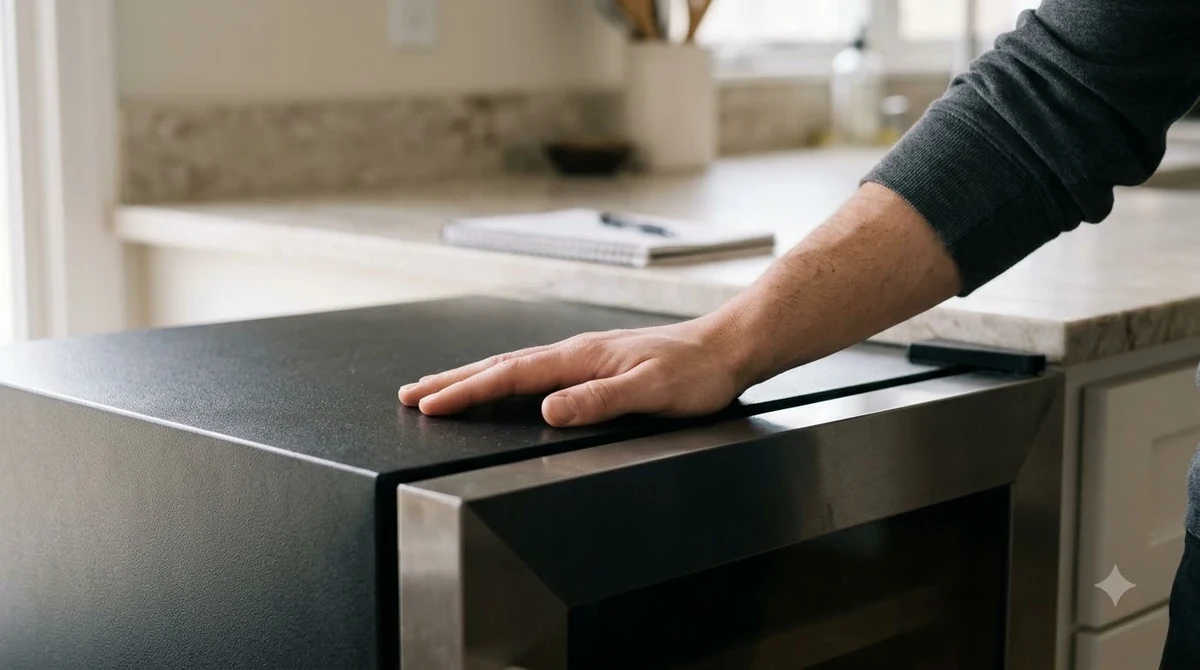
The 10-inch width is the most immediately attractive dimension. A full-size wine refrigerator may require a dedicated section of cabinetry, floor space, or a carefully planned appliance corner. The Haier instead targets buyers who have a little counter space available but do not want to install a larger refrigerator.
Its 14 1/4-inch height also makes it considerably shorter than most freestanding wine cabinets. This can be useful in a kitchen where the available storage area is beneath an existing shelf or on an open countertop. Nevertheless, the 20 5/8-inch depth means that measuring the actual installation area remains essential.
Thermoelectric cooling without a conventional compressor
Haier describes the cooling system as vibration-free and ultra-quiet. Thermoelectric technology uses an electrical process to transfer heat rather than relying on the conventional compressor arrangement found in many larger refrigerators.
This design is attractive for an appliance that might sit on a kitchen counter, breakfast bar, or another location close to everyday living spaces. A cooler that avoids the familiar cycling sound of a compressor can be more pleasant in a small apartment or open-plan kitchen.
However, quiet-oriented design should not be confused with guaranteed silent operation. Fans and other operating components can still produce some sound, and the actual experience depends on the appliance’s condition and installation environment.
Simple temperature adjustments
The digital thermostat and blue LED display are practical advantages over wine chillers that depend entirely on a mechanical dial. Buyers can select a setting within the manufacturer’s listed 46°F to 66°F range and see the displayed temperature.
This range covers several useful serving-temperature applications. For example, a setting around 46°F can suit chilling many sparkling wines, while a higher setting around 55°F can be useful for some fuller-bodied white wines. Light reds are generally served around 55°F to 60°F, so the cooler’s upper settings can also be relevant.
There is an important distinction between serving temperature and long-term storage temperature. A wine cooler with a relatively broad adjustment range is useful for short-term chilling, but it should not automatically be treated as a precision wine-aging cabinet.
A visible and organized interior
The smoked-glass door and soft interior light make the appliance more convenient to use than an opaque storage cabinet. Two chrome wire racks separate the bottles and make the small collection easier to organize.
For someone who regularly keeps a few bottles of Sauvignon Blanc, Chardonnay, Pinot Noir, or sparkling wine available, this arrangement is uncomplicated. The cabinet also offers a dedicated location for wine instead of requiring bottles to compete with food containers, milk, and other groceries in a household refrigerator.
For broader comparisons involving capacity, cooling systems, and installation arrangements, the best rated wine cooler options provide a useful starting point for understanding what larger appliances offer.
Common Complaints and Important Limitations
The most significant limitations of the Haier HVTEC06ABS are its six-bottle capacity, temperature dependence on the surrounding room, and the uncertainty that comes with evaluating an older appliance model. These issues matter more than cosmetic differences when deciding whether this wine cellar is a sensible purchase.
Room temperature affects cooling performance
Thermoelectric wine coolers are particularly sensitive to their operating environment. Haier’s own support guidance explains that the internal temperature of a thermoelectric wine cellar depends on the surrounding room temperature.
This means a cooler placed in a hot kitchen may struggle to reach a low setting that would be easier to maintain in a cooler room. A sunny countertop, a position near an oven, or a poorly ventilated enclosure can make the situation more challenging.
Haier also explains that the temperature control allows a setting within its specified range without guaranteeing that the appliance will actually achieve that temperature. This is a critical buying consideration for people who expect refrigerator-like performance in a warm environment.
The practical implication is straightforward: a thermoelectric cooler is generally more appropriate for a reasonably temperature-controlled room than for a hot utility space or an exposed area receiving direct afternoon sunlight.
Six bottles do not provide much flexibility
The stated capacity is six bottles, which is enough for a small selection but not a substantial collection. Someone who purchases several bottles for a dinner party or likes to keep different wines available throughout the week may find the available space restrictive.
For example, a household might want to store two bottles of Sauvignon Blanc, two bottles of Chardonnay, and two bottles of Pinot Noir. That arrangement already fills the cabinet, leaving no room for a sparkling wine or an additional bottle purchased for an upcoming occasion.
Bottle shape creates another possible restriction. The nominal capacity should not be interpreted as a promise that six bottles of every wine style will fit comfortably. Wider bottles can interfere with neighboring storage positions, particularly in compact cabinets.
Older Haier models have a mixed reliability history
One reason to approach older Haier countertop wine coolers carefully is that other models in the company’s previous tabletop range have received criticism from owners. WineCoolerReviews.com’s assessment of the older HVT12ABS describes reports of units failing within months and identifies reliability as a major concern.
That review discusses the 12-bottle HVT12 series, not the six-bottle HVTEC06ABS. These products should not be treated as identical appliances, and complaints about one model do not establish the failure rate of another. Nevertheless, the older-model history provides a reason to examine warranty coverage, seller return policies, and the operating condition of any used unit.
Retailer information also deserves careful interpretation. Lowe’s identifies the HVTEC06ABS as a countertop wine cooler, but its current listing does not provide a substantial collection of model-specific owner feedback. Consequently, buyers should avoid assuming that a large body of verified customer experience exists for this exact model.
It is not a large wine-aging cabinet
A six-bottle thermoelectric cooler is best understood as a convenience appliance. It does not provide the capacity or environmental management expected from a dedicated wine-storage cabinet designed for a serious collection.
Wine intended for longer storage generally benefits from stable conditions near 55°F, protection from direct light, and limited temperature fluctuations. The Haier’s temperature range may be useful for keeping bottles ready to serve, but its room-temperature dependence is a meaningful limitation for anyone prioritizing long-term preservation.
Tip: Before buying a used Haier countertop wine cooler, allow it to run in the intended room and compare the displayed temperature with an independent refrigerator thermometer. A setting on the display does not prove that the wine compartment has reached or maintained that temperature.
Who Should Buy and Who Should Skip the Haier
The Haier HVTEC06ABS is most appropriate for someone who wants a small, dedicated place for a handful of bottles and has a reasonably cool, well-ventilated kitchen. It is less appropriate for collectors, households with frequent entertaining needs, or anyone who requires tightly controlled wine-storage conditions.
Who should consider it?
Apartment residents with limited space: The 10-inch width and 14 1/4-inch height make the cooler worth considering for a compact kitchen. Someone who does not have room for a full-size wine refrigerator may appreciate having a dedicated appliance for a few bottles.
Occasional wine drinkers: A person who buys two or three bottles at a time and keeps a modest selection available may find six-bottle capacity sufficient. The digital controls also make basic temperature adjustments more straightforward.
Buyers who value a simple design: The black cabinet, smoked-glass door, chrome racks, and blue display offer a conventional appliance appearance without requiring a separate wine-storage installation.
People primarily interested in serving convenience: Someone who wants white wine ready for dinner or a bottle of sparkling wine chilled for a gathering may find a countertop cooler useful. For example, a chilled bottle can be ready for an Aperol Spritz recipe rather than taking up space in the main refrigerator.
Who should skip it?
Wine collectors: Six bottles are insufficient for a growing collection. A household that regularly purchases cases or wants to maintain separate selections of reds and whites should look at a larger wine refrigerator.
People living in particularly hot environments: Thermoelectric cooling is sensitive to surrounding temperatures. A kitchen that regularly becomes very warm can make maintaining a low internal temperature difficult.
People seeking long-term wine preservation: A dedicated wine cabinet with more controlled temperature management is a more appropriate choice for valuable bottles intended to age over several years.
Frequent entertainers: Six bottles can disappear quickly when several guests arrive. A larger appliance offers more practical flexibility for parties, holidays, and regular dinner gatherings.
Buyers who need dual-zone storage: The listed HVTEC06ABS specification describes one adjustable temperature control, not independently controlled red and white compartments. Anyone who needs separate temperature zones should look for a model specifically designed with dual-zone operation.
How the Haier Compares to Other Wine Cooler Options
The Haier countertop wine cooler occupies a different category from larger wine refrigerators and other compact tabletop cabinets. Its appeal comes from its six-bottle capacity and small width, whereas larger alternatives generally offer more storage flexibility or different temperature-management arrangements.
One useful comparison is Haier’s older HVT12ABS. WineCoolerReviews.com describes that model as a 12-bottle thermoelectric tabletop wine cellar with three chrome wire racks, an adjustable thermostat, and a double-pane insulated glass door. It also reports significant owner reliability complaints. The HVT12ABS is a separate, older product and should not be confused with the six-bottle HVTEC06ABS.
The two models illustrate why buyers should compare exact model numbers rather than assuming that every Haier countertop wine cellar has the same features. Their stated capacities differ, their interior arrangements differ, and the older 12-bottle model has a different control configuration.
A larger freestanding wine refrigerator offers another alternative. These appliances generally provide more room for conventional wine bottles and can be more appropriate for people who purchase several bottles at once. Some also offer dual-zone temperature controls, allowing red and white wines to be stored under different conditions.
However, a larger appliance requires more installation space and is not automatically the better choice for every household. A six-bottle countertop unit can make more sense when space is the primary constraint and the collection is genuinely small.
Before comparing products, establish whether the main requirement is serving temperature, short-term storage, or longer-term preservation. These are different jobs, and the right appliance depends on which one matters most.
| Comparison factor | Haier HVTEC06ABS | Larger wine refrigerator |
|---|---|---|
| Stated capacity | 6 bottles | Varies by model |
| Installation | Countertop | Freestanding or built-in, depending on model |
| Cooling technology | Thermoelectric | Thermoelectric or compressor |
| Temperature arrangement | One adjustable control | Single or dual zone |
| Space requirement | 10 inches wide and 20 5/8 inches deep | Varies by model |
| Best application | Small everyday selection | Larger collections and varied storage needs |
For a household that regularly prepares chicken dishes, having a few bottles of white wine available can be convenient. A bottle of Chardonnay, for instance, can accompany a chicken Marsala recipe depending on the recipe and preferred pairing. A larger cooler may make more sense if cooking and entertaining are regular activities that require several bottles to be available simultaneously.
Buyers comparing different appliance categories can also explore wine cooler model reviews to understand how individual models differ in capacity, installation requirements, cooling systems, and storage arrangements.
Installation, Temperature Settings, and Everyday Care
Correct placement is particularly important for the Haier HVTEC06ABS because thermoelectric cooling depends on the surrounding room temperature. Following the manufacturer’s clearance requirements and allowing the unit to stabilize can help it operate under the conditions for which it was designed.
Measure the counter and ventilation space
The appliance measures 10 inches wide, 20 5/8 inches deep, and 14 1/4 inches high. However, those are the cabinet dimensions, not the total amount of counter space required for a suitable installation.
Haier’s specification sheet calls for 2 inches of clearance on both sides, 2 inches behind the appliance, and 4 inches above it. These requirements mean that buyers should measure the complete available area rather than checking only whether the cabinet fits between two objects.
For practical planning, the cooler should sit on a stable, level countertop with the required surrounding space. Avoid placing it directly beside a stove, oven, or another heat-producing appliance. Direct sunlight is also best avoided because it can increase the surrounding temperature.
Allow the temperature to stabilize
Haier recommends waiting at least 30 minutes after initially plugging in a thermoelectric wine cellar before adjusting the temperature. Its support guidance explains that the display initially shows room temperature before the internal temperature appears.
After that initial period, select a suitable setting and allow the appliance time to cool. Opening the door repeatedly during the initial cooling period makes it harder to assess the internal conditions accurately.
For everyday serving, the following wine-temperature ranges provide useful reference points:
- Sparkling wine: 40°F to 50°F.
- Light whites and rosé: 45°F to 50°F.
- Full-bodied whites: 50°F to 55°F.
- Light reds: 55°F to 60°F.
- Full-bodied reds: 60°F to 65°F.
- Sweet whites: 43°F to 50°F.
The Haier’s stated thermostat range overlaps with several of these serving ranges. However, its minimum setting does not cover the lower end of the recommended sparkling-wine range, and its maximum setting does not cover the entire full-bodied red range.
For example, a Sauvignon Blanc can be served around 45°F to 50°F, while a Chardonnay generally benefits from a slightly warmer serving temperature. A light Pinot Noir can be served around 55°F to 60°F. These differences illustrate why one temperature setting is not ideal for every bottle.
Keep the appliance clean and unobstructed
Regular cleaning helps keep the small storage area practical. Remove bottles before wiping the interior, and use a soft cloth with a mild cleaning solution suitable for appliance surfaces. Avoid abrasive materials that could scratch the glass or cabinet finish.
Check the door area for obstructions and make sure the door closes properly. A door that does not seal correctly can allow warmer air to enter, making it more difficult for the appliance to maintain its selected setting.
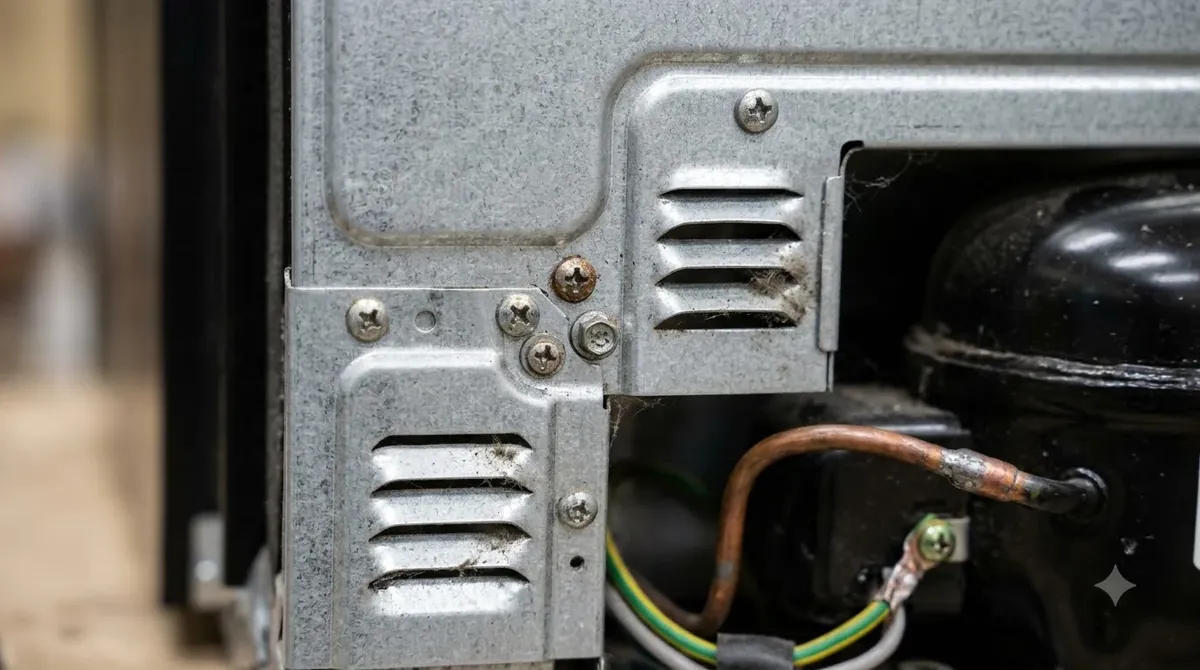
Keep the exterior ventilation areas clear. Dust accumulation and restricted airflow can interfere with heat removal, which is particularly relevant to a thermoelectric cooler operating in a warm kitchen.
For troubleshooting and temperature adjustments, Haier provides additional guidance through its official wine cellar temperature-control instructions. That guidance is useful because it explains why the surrounding room can affect the actual temperature inside a thermoelectric wine cellar.
Use the cooler for appropriate storage periods
The Haier is best treated as a convenient place to keep a small selection of wine ready for use rather than a replacement for a dedicated wine-aging environment. For bottles intended for longer storage, a stable environment near 55°F is generally preferable, with protection from direct light and unnecessary temperature fluctuations.
Once a bottle has been opened, storage needs change. Opened still wines generally keep for about three to five days in the refrigerator when properly recorked, while opened sparkling wines typically retain their quality for about one to three days with a suitable sparkling-wine stopper.
These storage periods concern opened wine rather than the capacity or operating life of the Haier appliance. They are useful reminders that a compact wine cooler should serve a practical household routine rather than become a substitute for every type of wine storage.
Frequently Asked Questions
Is the Haier HVTEC06ABS still manufactured?
The manufacturer’s specification document identifies the HVTEC06ABS, but a specification document alone does not establish current production or retail availability. Buyers should distinguish an existing product listing from confirmation that a model is actively manufactured. This is particularly important when purchasing an older appliance or replacement parts.
Can the Haier countertop wine cooler store beer and soft drinks?
The appliance is designed and specified as a wine cellar, and its storage arrangement is intended for wine bottles. Whether a particular beverage container fits depends on its dimensions and the available rack space. Buyers should not assume that tall cans, wide bottles, or large beverage containers will fit simply because the cabinet has spare capacity.
Does the Haier HVTEC06ABS have an automatic defrost feature?
The product specification sheet used for this review does not identify an automatic defrost function. Buyers who require that feature should obtain confirmation from the exact model’s operating manual or manufacturer support rather than assuming it is included. This distinction matters because defrost arrangements differ between wine refrigerator designs.
Can the Haier wine cooler be installed inside a closed cabinet?
The published installation specifications require 2 inches of side clearance, 2 inches behind the appliance, and 4 inches above it. A closed cabinet that prevents these clearances or restricts heat removal is therefore unsuitable. The countertop design should not be interpreted as permission to enclose the appliance without providing its specified ventilation space.
Does the Haier countertop wine cooler have a reversible door?
The specification sheet identifies a curved smoked-glass door but does not establish that the door is reversible. Buyers who need a particular opening direction should confirm hinge configuration and available replacement hardware with Haier before purchasing. This is especially relevant when the appliance will sit close to a wall or another kitchen appliance.
The Haier HVTEC06ABS makes the most sense as a compact, six-bottle wine chiller for households that value counter-friendly dimensions and uncomplicated controls. Its thermoelectric cooling system and room-temperature sensitivity are important limitations, particularly in warm kitchens or for people who expect precise long-term storage conditions. Measure the installation space, verify the appliance’s operating condition, and compare larger alternatives before deciding whether this older Haier countertop design meets your needs.
More in Model Reviews
 Magic Chef 44 Bottle Wine Cooler Review for Flexible StorageUpdated Nov 21, 2026
 Whynter 164 Bottle Wine Cooler Review: Capacity, Features, and FitUpdated Nov 21, 2026
 Insignia NS WC16BK6 Review: Compact 16-Bottle Wine StorageUpdated Nov 21, 2026
 Wine Enthusiast Electric Blue Omega Review: Opening, Pouring, and Preserving Made EasierUpdated Nov 21, 2026
 Koolatron 20 Bottle Wine Cooler Review: Features, Fit, and PerformanceUpdated Nov 21, 2026
 NewAir AWC 330E Review for Home Wine StorageUpdated Nov 21, 2026