

We may earn a commission when you buy through links on this page, at no extra cost to you. Learn more.
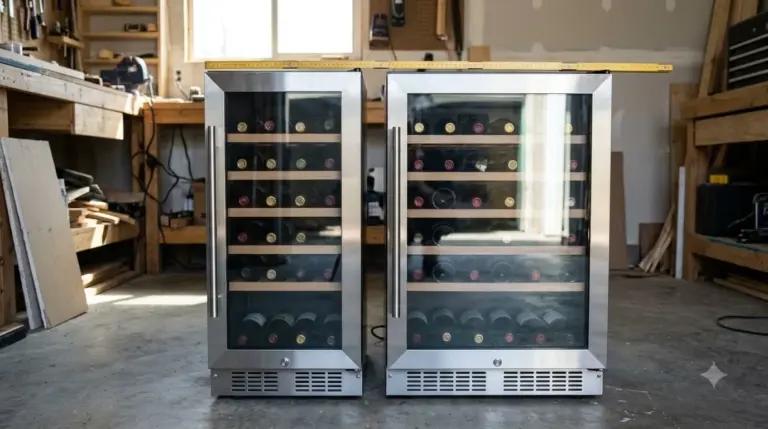
The best 18 inch wine fridge is an under-counter or built-in unit that fits standard cabinet width, with ventilation the manufacturer specifies and a shelf layout that suits the bottles you own. An 18-inch width is narrow enough to fit a kitchen run or a bar, but it is also the size where the installation details, the airflow and the door style decide how well the unit works.
An 18-inch wine fridge is a compact appliance built to sit in a gap that would otherwise hold a standard cabinet. It suits kitchens, bars and basements where width is the limiting factor, and it can hold a useful stock of bottles without taking over the room. This guide looks at how the width affects the install, which styles fit different spaces, and what to check before you buy.
Quick Comparison of 18 Inch Wine Fridge Styles
Narrow wine fridges come in a few styles, and the install method changes how the unit fits into the room. Freestanding units can be moved, while built-in and under-counter models need planning around the cabinetry and ventilation.
| Style | Best setting | Install | Airflow |
|---|---|---|---|
| Freestanding 18 inch unit | Rooms where the fridge can sit beside cabinets | Stands alone, easy to move | Needs open space at the back and sides |
| Under-counter unit | Kitchen runs and bar stations | Fits beneath a counter | Often vents at the front or the sides |
| Built-in unit | Kitchen cabinetry and fitted bars | Set into a cabinet opening | Needs the clearance the manufacturer specifies |
| Glass-door display unit | Bars, dining rooms and display walls | Freestanding or built-in | Needs the same clearance as other units |
The main decision is whether the fridge will sit in a gap or stand in the open. A built-in unit looks cleaner but needs the cabinet opening to be exact, while a freestanding unit is easier to place but may need more room around it.

Best for Under-Counter Kitchen Runs
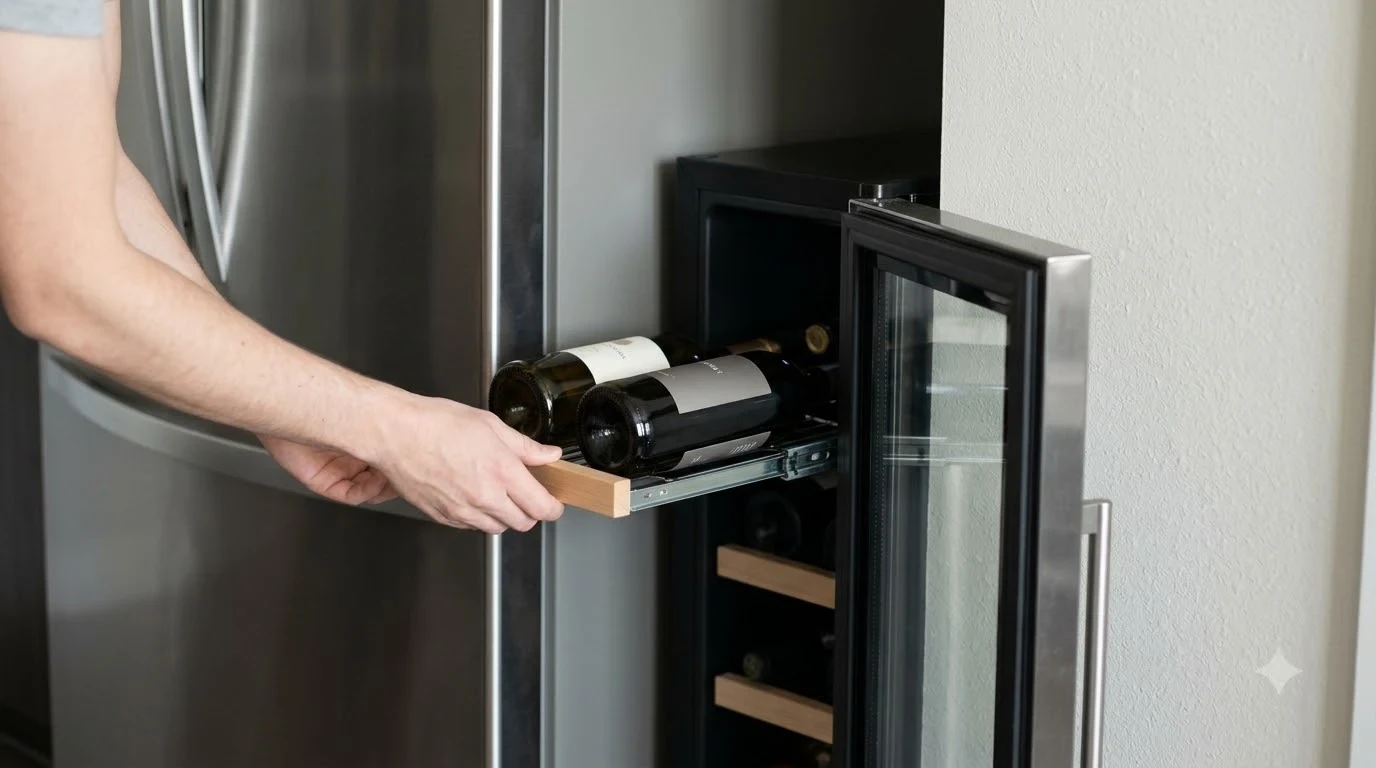
A kitchen run with an 18-inch gap is the classic place for a narrow wine fridge. It sits beside the other appliances, keeps wine within reach of the dining table, and blends into the cabinetry when the front panel matches.
Why it stands out: An under-counter unit uses space that is often wasted, and a panel-ready front can match the kitchen cabinets. Pull-out shelves make it easy to reach the bottles at the back.
Keep in mind: Check where the unit vents. Some models draw air from the front and need an open toe space, while others vent at the back and need room behind them. Confirm the measurements against the cabinet opening before ordering.
Best for: Homeowners with a kitchen gap who want wine stored close to where it is served.
Best for Built-In Bars and Entertaining Areas
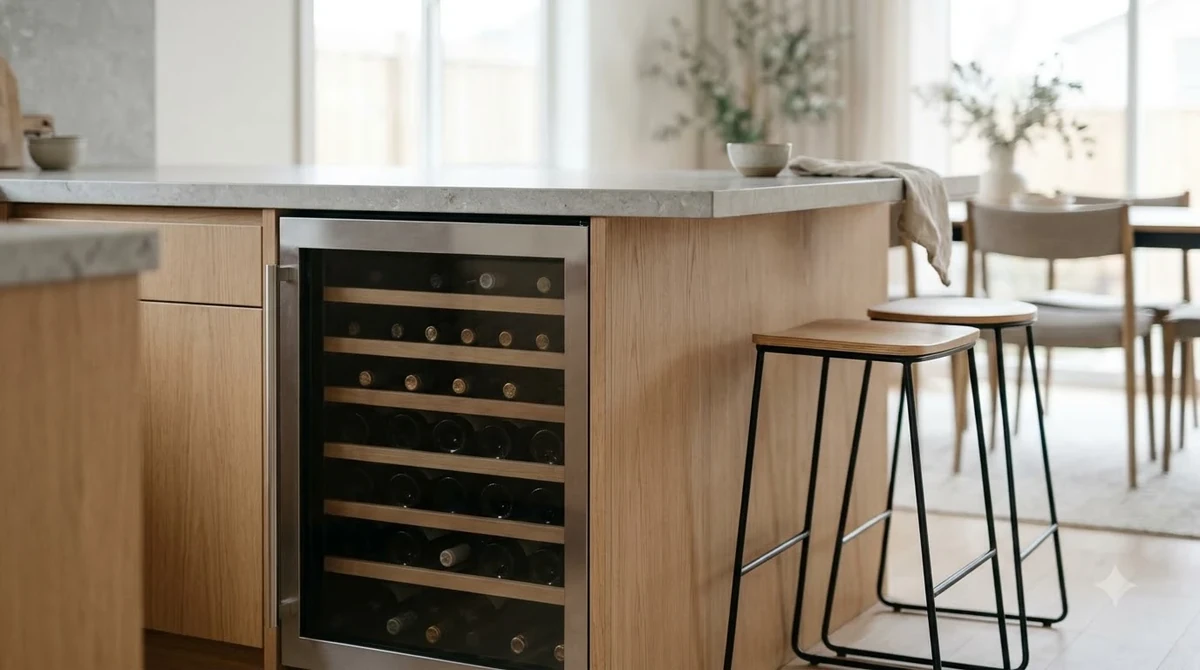
A built-in bar with an 18-inch cabinet opening can hold a small, rotating selection of wine. The unit is part of the bar’s design, so the finish and the door style matter as much as the capacity.
Why it stands out: A built-in fridge keeps the bar tidy and makes wine easy to grab during a gathering. A glass door works well when the bottles are part of the look of the room.
Keep in mind: A fitted bar can trap heat, so make sure the cabinet allows air to move. Check the manufacturer’s ventilation rules before the cabinetry is finished, because changing them later is harder.
Best for: Owners who build a home bar and want the fridge hidden inside the cabinetry.
Best for Small Kitchens and Apartments
In a small kitchen, every inch counts. An 18-inch unit can fit where a full-size cabinet will not, and it holds enough wine for regular dinners without filling the room.
Why it stands out: The narrow width suits a tight wall, and a freestanding version can be placed beside the refrigerator. A compact unit is also easier to move if you rent or rearrange the room.
Keep in mind: Narrow units can still have deep bodies, so measure the depth as well as the width. The door swing and the clearance at the back can take more room than expected.
Best for: Renters and owners in small kitchens who want a dependable stock of wine within reach.
Best for Display in Dining Rooms
An 18-inch glass-door unit can serve as a feature in a dining room or living area. The bottles are visible, and the narrow footprint means the unit can sit in a corner or beside a sideboard without dominating the room.
Why it stands out: Lit glass fronts show a small collection clearly, and a compact unit suits a tight display wall. The look can match other furniture in the room.
Keep in mind: Glass lets light in, so keep the unit away from windows and direct sun. A display fridge still needs its clearance, so do not build it into a closed nook without checking the ventilation.
Best for: Owners who want the wine on show and are happy to rotate the stock often.
Best for Garages and Basement Storage
A basement or garage can take an 18-inch wine fridge, but the room temperature matters. Many units are built for a specific range of room temperatures, and an unheated garage can push them outside that range.
Why it stands out: A narrow unit fits a corner or a storage wall where a larger cabinet would not, and a basement is often cool enough for steady storage.
Keep in mind: Check the operating temperature range of the manufacturer before you place the unit in a garage, because an unheated room can be too cold or too hot. Units that vent at the back also need room to breathe, so do not push them flush against a wall.
Best for: Owners who keep a secondary stock outside the main living space.
How to Choose an 18 Inch Wine Fridge
Start with the opening or the wall, then the ventilation, then the bottles. The width of the gap tells you whether the unit fits, the ventilation tells you whether it can be built in, and the bottles tell you whether you need one zone or two.
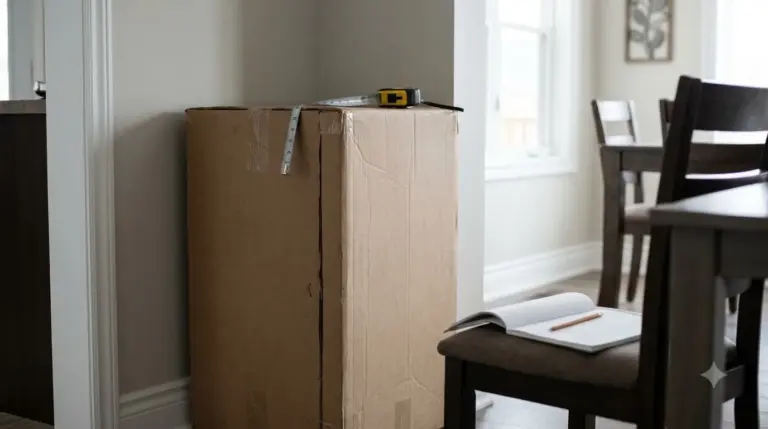
Tip: Measure the opening at the top, middle and bottom, because cabinets are not always square. Write down the depth and the ventilation clearance before you choose a model.
- Measure the width, height and depth of the space, then compare the numbers with the manufacturer’s listing.
- Decide between freestanding, under-counter and built-in, based on the gap and the ventilation.
- Check the airflow path. Front-venting units need toe space, rear-venting units need room behind them.
- Choose a single or dual zone based on whether you keep one style of wine or several.
- Confirm the room’s temperature range falls within the unit’s operating range.
The general guidance on home refrigeration applies here too. The Wikipedia article on refrigerators notes that compact under-counter models are built to sit beneath counters, and that the condenser needs room for air to move and should be kept clean to run efficiently. For wine that is opened and stored in the fridge, VinePair’s guide to storing an open bottle explains that cold temperatures slow the oxidation that spoils a wine once it is opened.
Frequently Asked Questions
Will an 18 inch wine fridge fit under a standard counter?
Many 18-inch models are designed to fit under a counter, but the height, depth and ventilation vary by brand. Check the listed dimensions against the space and confirm whether the unit vents at the front or the back.
Can an 18 inch wine fridge be built in?
Some models are made for built-in installs and include a panel-ready or flush front. They need the cabinet opening and clearance that the manufacturer specifies, so plan the install before the cabinetry is finished.
How many bottles does an 18 inch wine fridge hold?
Capacity varies by model, and a narrow unit usually holds fewer bottles than a wider one. Check the rated capacity and the bottle size, because wide bottles take more room on the shelves.
Should I choose a dual-zone or single-zone 18 inch fridge?
Choose dual zone if you keep both red and white wine and want each at its own temperature. A single zone is simpler and often enough if you drink mostly one style or keep a small rotating stock.
An 18-inch wine fridge is a practical choice when width is the main limit. Measure the gap, check how the unit vents, and choose a layout that suits the bottles you keep. For other widths, compare the 15 inch wine fridge and the 24 inch wine cooler, or browse the wine fridges by width guide.
More in By Width
 Best 10 Inch Wine Fridge Types for Tight Spaces and CountertopsUpdated Nov 18, 2026
 Best 6 Inch Wine Cooler Options for Tight Kitchen GapsUpdated Nov 18, 2026
 Best 36 Inch Wine Fridge for Kitchen Runs, Home Bars and Tight CornersUpdated Nov 18, 2026
 Best 12 Inch Wine Fridge Picks for Narrow Spaces and Small CollectionsUpdated Nov 18, 2026
 The Best 20 Inch Wine Fridge for Under-Counter Kitchens and BarsUpdated Nov 18, 2026
 Best 30 Inch Wine Fridge for Kitchens, Bars and Dining RoomsUpdated Nov 18, 2026