

We may earn a commission when you buy through links on this page, at no extra cost to you. Learn more.
The magic chef 50 bottle wine fridge, model MCWC50DST, is a practical built-in or freestanding cabinet for standard bottles, but its fixed interior layout and single cabinet-wide temperature setting make the 50-bottle rating less flexible than it sounds. It offers a 39–64°F setting range, digital controls, automatic defrost, and a reversible door. It is a better fit for a compact collection of Bordeaux-shaped bottles than for a cellar dominated by wide Pinot Noir, Champagne, or oversized bottles.
The MCWC50DST is an older Magic Chef wine cooler with an attractive stainless-trimmed glass front and a useful under-counter footprint. Its strongest selling points are a broad adjustable temperature range and the option to install it beneath a counter or use it as a freestanding cabinet; its compromises are the shelf design, capacity limitations with larger bottles, and a temperature system that is not equivalent to two independently controlled wine zones.
Specs and Key Features
The MCWC50DST combines a 50-bottle rated capacity with a relatively narrow, under-counter format and a 39–64°F thermostat range. Its feature list is practical rather than elaborate: electronic controls, an interior light, automatic defrost, and a reversible door.
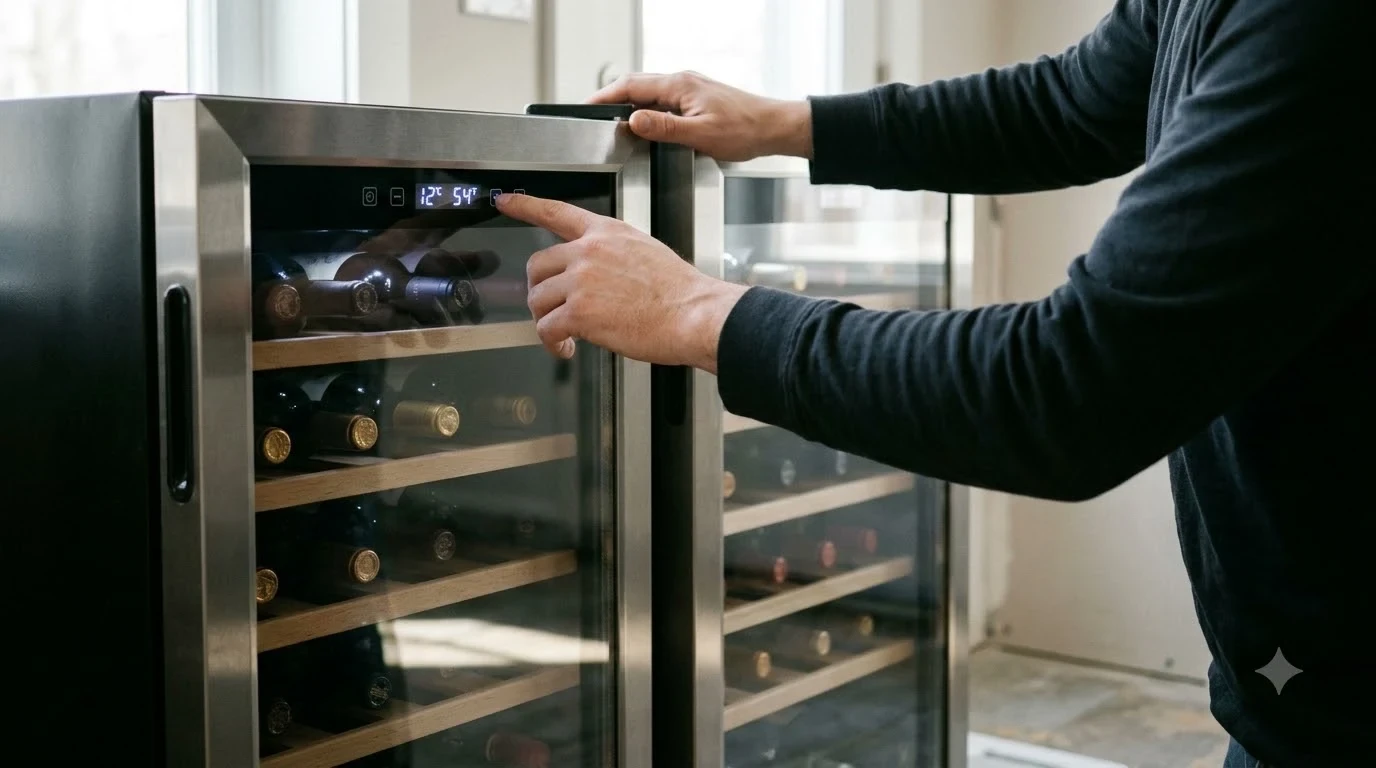
The official Magic Chef product listing identifies the exact model as MCWC50DST and describes it as suitable for built-in or freestanding installation. It also lists a stainless-steel door frame, black cabinet, tempered smoke-glass door, digital control, interior light, auto defrost, and sculpted chrome shelves; see the Magic Chef MCWC50DST product details for the manufacturer’s feature list. The dark glass gives the front a more finished look than a plain utility refrigerator, while the digital display is easier to read than a mechanical dial hidden inside the cabinet.
Dimensions are 23.4 inches wide, 34.4 inches high, and 24.4 inches deep, according to the MCWC50DST manual. Those numbers matter more than the broad “50 bottle” label when measuring a cabinet opening: the door needs room to swing, and the handle and trim can affect how the unit sits in a tight run of cabinetry. The manual describes a reversible door, so the opening direction can be changed to suit the kitchen layout, preferably before the cooler is installed.
| Specification | MCWC50DST details | What it means |
|---|---|---|
| Rated capacity | 50 bottles | Best understood as a nominal capacity for standard wine-bottle shapes. |
| Exterior dimensions | 23.4 in. W × 34.4 in. H × 24.4 in. D | Measure the complete opening and door swing before purchasing. |
| Temperature setting range | 39–64°F, with ±5°F stated in the manual | Wide enough for storage and serving preferences, but verify actual bottle temperature. |
| Manual’s wine recommendations | Red: 54–61°F; white: 43–50°F | The RED and WHITE presets are choices for the cabinet, not two separately cooled compartments. |
| Shelf arrangement | Five full-depth upper wine shelves plus a two-tier lower rack | Removing a shelf creates room for larger bottles but reduces capacity. |
| Cabinet and door | Black cabinet, stainless-steel door frame, tempered smoke glass | A dark, discreet front suits many kitchen and bar designs. |
| Controls and maintenance | Digital thermostat, interior light, automatic defrost | No routine manual defrost cycle is specified. |
| Installation | Built-in or freestanding; 115V AC, 60Hz grounded outlet | Use a grounded outlet and follow the installation instructions. |
The display reports an average appliance temperature, and the manual states a ±5°F tolerance rather than presenting the number as a precision bottle-temperature reading. That matters because the RED and WHITE buttons are presets for one cabinet-wide setpoint, not independent cooling zones. A separate refrigerator thermometer is a sensible way to check conditions after the cabinet has stabilized, especially when the cooler is newly installed or frequently opened.
What Owners Like
Owners most often praise the MCWC50DST’s appearance, built-in flexibility, useful storage volume, and straightforward temperature controls. Positive reports describe a clean stainless-and-glass look and a cabinet that can fit a compact kitchen bar without needing a full-size wine cellar.
Several Home Depot reviewers liked that the model can be installed under a counter, and some described the finish as a good match for other stainless appliances. Others mention that the door looks more expensive than the cabinet’s basic interior, that the display is easy to read, and that the interior light helps identify bottles without relying on room lighting. Those comments point to the unit’s strongest practical role: it adds a dedicated place for everyday wine near the kitchen or dining area.
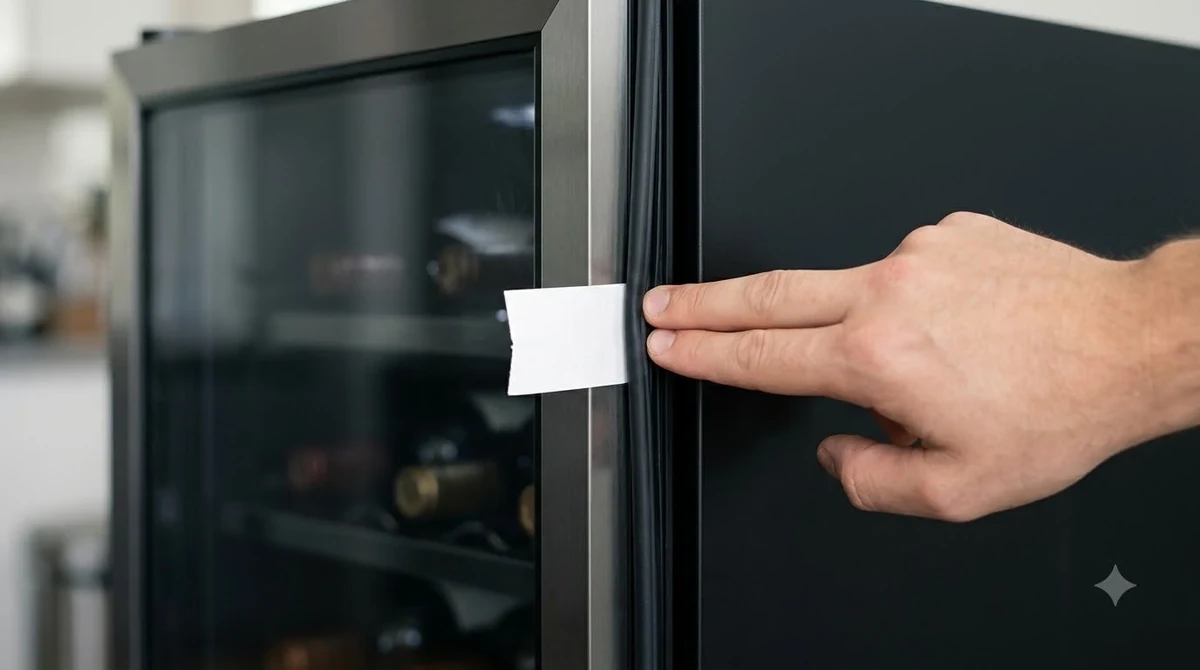
Noise feedback is mixed, with some owners barely noticing the operating sound and others reporting audible compressor cycles or rattling. Room acoustics, leveling, installation clearances, and proximity to a seating area all affect how noticeable vibration becomes, so a level floor and space around the cabinet matter. Owners also appreciate that an upper shelf can be removed for a larger-format bottle, although that flexibility reduces the number of bottles that fit at once; households storing mostly standard 750 ml bottles will get the most from the layout.
Home Depot’s owner-review page shows mixed experiences: some buyers praise the appearance, temperature performance, and quiet operation, while others report cooling problems or difficult shelf access. A separate KitchenReviews owner described the MCWC50DST as quiet and spacious after two years of use, but also noted that its one-zone setup would not suit someone who wants different temperatures for red and white wines. The difference between these accounts is a reminder that an older appliance’s condition and installation can matter as much as its feature list.
Common Complaints
The recurring weaknesses are shelf access, real-world bottle capacity, noise inconsistency, and reports of cooling or reliability problems. The model can work well for a standard-bottle collection, but it is not the strongest choice for buyers who expect every shelf to glide out or who need frequent access to a tightly packed assortment.
The shelves are not full-extension pull-out racks. Home Depot reviewers complain that bottles can obstruct access to the rear and that a full cabinet makes it difficult to remove one bottle without disturbing its neighbors. The wire-and-chrome layout saves space, but it cannot match the access of more advanced cellar racks; grouping bottles by drinking order and keeping frequent choices near the front helps. The advertised 50-bottle capacity is also optimistic for collections with broad Pinot Noir, Syrah, Champagne, or heavier bottles, which may require removing a shelf and sacrificing positions.
Owner reports about operation range from very quiet to audible compressor cycles and rattling racks. A few reviewers describe cooling failures, so a used unit should be checked for stable temperatures rather than judged by its illuminated display alone. The controls can also disappoint buyers who expect two zones: the red and white presets do not create separate compartments, and the manual’s ±5°F tolerance means the displayed temperature should not be treated as an exact reading for every bottle. That makes the MCWC50DST a general storage cabinet, not a high-precision cellar for rare wines.
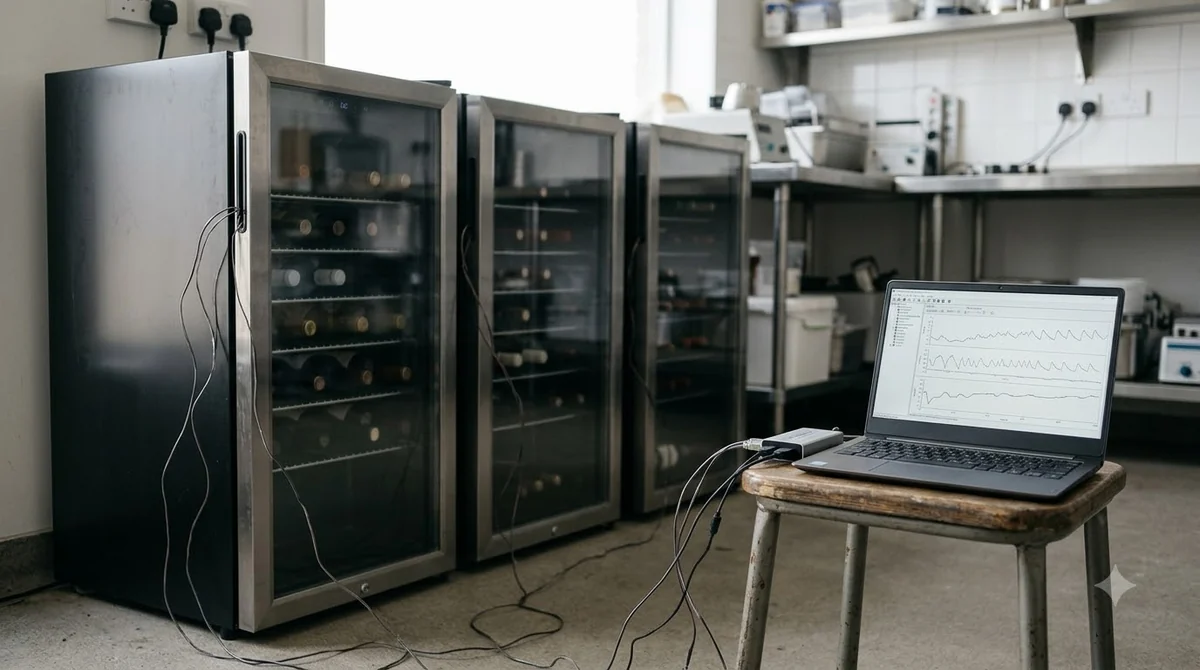
Tip: Before loading the cabinet, check the actual temperature with a separate thermometer for at least 24 hours, then test one of your widest bottles on each shelf position. This quickly reveals both temperature variation and whether the nominal capacity suits the bottle shapes in your collection.
Who Should Buy and Who Should Skip
The MCWC50DST makes the most sense for a household that wants a dedicated wine cabinet close to the kitchen and stores mostly standard 750 ml bottles. It is less suitable for collectors who need two independent zones, very quiet operation, or easy access to every bottle while the unit is fully loaded.
Consider it if a 23.4-inch-wide appliance opening is already available and the 34.4-inch cabinet height works with the countertop. It can be built in or used freestanding, and the reversible door gives some flexibility when planning the surrounding cabinets. For someone who buys a mix of reds and whites but is content to keep the entire collection at one compromise temperature, the manual’s adjustable 39–64°F range provides room to choose a setting that suits the wines being stored most often.
The unit can suit casual drinkers who keep everyday bottles in rotation rather than aging a high-value collection. A general storage setting around 55°F is practical for mixed wines, but it cannot bring every style to its ideal serving temperature at once: light whites and rosé are commonly served around 45–50°F, full-bodied whites around 50–55°F, and light reds around 55–60°F. Skip the MCWC50DST if the collection has many Champagne or large-format bottles, if easy sliding shelves are essential, or if two independent zones and very quiet operation are firm requirements.
Distinguish the MCWC50DST from the HMWC50ST, another Magic Chef 50-bottle product listed by Home Depot. That separate model is advertised with a 41–61°F operating range, so its specifications should not be transferred to this one; match the model number on the rating plate and documentation before relying on a listing. For related appliance comparisons, the site’s model reviews can help establish what to compare beyond bottle count, including range, rack access, door swing, and installation dimensions. A recipe such as chicken marsala is a useful starting point for planning a dinner around a bottle from the cabinet.
How It Compares to Alternatives
The MCWC50DST is a capacity-focused, one-cabinet wine cooler rather than a premium cellar system. Compared with a modern dual-zone wine fridge, it gives up independent temperature control; compared with a freestanding thermoelectric model, it offers built-in installation flexibility and a larger rated capacity.
A true dual-zone cooler is the more practical choice for a household that regularly keeps sparkling wine or crisp whites at a lower temperature while holding reds warmer. Its separate compartments can be set independently, which the MCWC50DST’s single cabinet-wide temperature control does not provide. That matters if the fridge is expected to store and serve different wine styles at the same time rather than act as a general holding cabinet.
A freestanding cooler may be easier to relocate and can be chosen in a narrower size, while the MCWC50DST’s built-in rating is useful when a kitchen has a dedicated opening. A beverage refrigerator is a different option again: its shelves are designed for cans, mixers, and assorted drinks, whereas the MCWC50DST’s racks and 39–64°F range are organized around wine bottles. A separate beverage center may suit a party station better while the wine cabinet keeps bottles horizontal and organized.
In practical terms, choose the MCWC50DST when its exact dimensions, built-in option, and one-temperature approach match the room and collection. Choose another class of cooler when bottle access, separate zones, very low noise, or consistent long-term storage is more important than a 50-bottle headline. The right comparison is not simply one 50-bottle label against another: rack shape, usable bottle count, controls, installation, and service coverage have a bigger effect on day-to-day satisfaction.
Frequently Asked Questions
These practical details help complete the buying decision, particularly when installing the MCWC50DST or assessing an older unit. They cover setup, electrical requirements, warranty limits, and maintenance points that are easy to overlook in a short product listing.
How long should the MCWC50DST stand upright before it is plugged in?
The instruction manual recommends leaving the appliance upright for approximately 4 hours before connecting it to power. This allows the refrigeration system to settle after transport and reduces the chance of problems caused by handling.
Can the cooler run from an extension cord or power inverter?
No. The manual says not to use an extension cord and states that the appliance is not designed for an inverter. If the factory cord cannot reach a suitable outlet, the manual recommends having a qualified electrician install an outlet nearby.
Does the warranty cover wine lost if the cooler stops working?
No. The warranty text specifically excludes losses of stored contents caused by appliance failure, even though it provides parts and labor coverage for the first year. Keep valuable bottles in mind when deciding whether to rely on any older unit as the only storage for a collection.
What replacement bulb does the interior light use?
The manual specifies an E12 bulb with a maximum rating of 15 watts. It instructs owners to switch off and unplug the appliance before removing the light cover or changing the bulb.
Can the MCWC50DST be installed in a garage?
The manual says the model is not designed for garage or outdoor installation. It also warns that ambient temperatures below 55°F or above 77°F can hinder performance, so a climate-controlled indoor location is the appropriate environment.
The Magic Chef MCWC50DST is worth considering when built-in flexibility and a standard-bottle capacity matter more than advanced cellar features. Its main limitations are the single temperature zone and awkward access when the racks are fully loaded, so compare those trade-offs carefully before committing to an older unit or a remaining-stock listing.
More in Model Reviews
 Magic Chef 44 Bottle Wine Cooler Review for Flexible StorageUpdated Nov 21, 2026
 Whynter 164 Bottle Wine Cooler Review: Capacity, Features, and FitUpdated Nov 21, 2026
 Insignia NS WC16BK6 Review: Compact 16-Bottle Wine StorageUpdated Nov 21, 2026
 Wine Enthusiast Electric Blue Omega Review: Opening, Pouring, and Preserving Made EasierUpdated Nov 21, 2026
 Koolatron 20 Bottle Wine Cooler Review: Features, Fit, and PerformanceUpdated Nov 21, 2026
 NewAir AWC 330E Review for Home Wine StorageUpdated Nov 21, 2026