

We may earn a commission when you buy through links on this page, at no extra cost to you. Learn more.
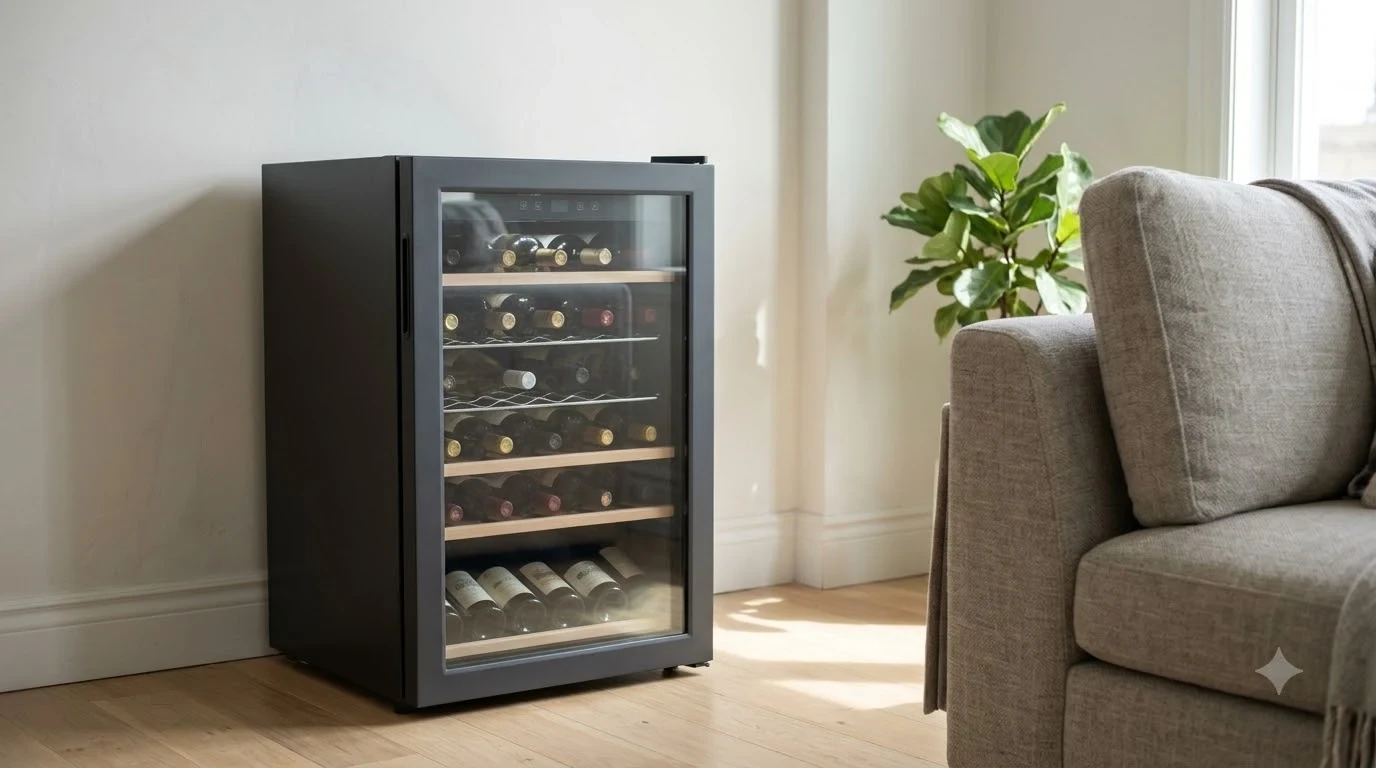
The magic chef 6 bottle wine fridge is a compact countertop wine cooler designed for households that want convenient access to six standard wine bottles without dedicating space to a full-size refrigerator. The MCWC6B combines thermoelectric cooling, an adjustable temperature control, two removable chrome racks, and an interior LED light. Its small footprint makes it appealing for apartments and compact kitchens, although its limited capacity, temperature-control limitations, and ventilation requirements make it less suitable for serious wine collectors.
The Magic Chef MCWC6B is best understood as a small wine-chilling appliance rather than a dedicated long-term wine cellar. Its six-bottle capacity suits occasional drinkers who want a few bottles ready for dinner, entertaining, or an evening glass. However, understanding how thermoelectric cooling works and which bottles physically fit inside is essential before choosing this model. This review examines its specifications, owner feedback, practical limitations, and the situations where another type of wine refrigerator would make more sense.
Specs and Key Features
The Magic Chef MCWC6B prioritizes compact dimensions, straightforward controls, and basic wine storage. Its most useful features are the adjustable thermostat, removable shelving, glass door, and small freestanding cabinet.
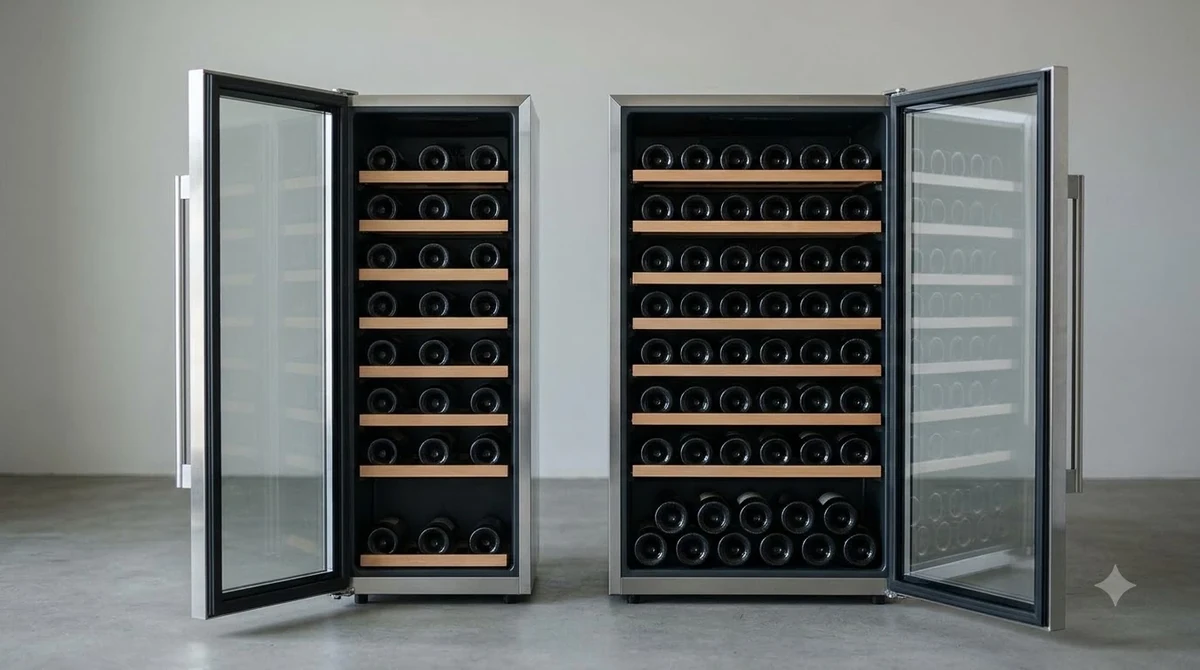
According to the manufacturer’s product specification sheet, the cabinet measures 10.9 inches wide, 15 inches high, and 20.1 inches deep. At 19.4 pounds, it is relatively manageable to position on a suitable countertop or another stable surface. However, its required ventilation clearance means the actual space needed is considerably larger than the cabinet dimensions alone suggest.
| Specification | Magic Chef MCWC6B |
|---|---|
| Maximum capacity | 6 standard wine bottles |
| Cooling technology | Thermoelectric |
| Temperature range | 46°F–66°F in instruction manual |
| Product sheet temperature range | 46°F–64°F |
| Width | 10.9 inches |
| Height | 15 inches |
| Depth | 20.1 inches |
| Weight | 19.4 pounds |
| Shelving | 2 removable chrome racks |
| Temperature adjustment | Manual control knob |
| Interior lighting | LED |
| Door | See-through glass |
| Installation | Freestanding only |
One specification deserves particular attention: the published temperature range is not entirely consistent across the manufacturer’s documentation. Its product specification sheet lists 46°F to 64°F, while the instruction manual describes an adjustable range of 46°F to 66°F. This discrepancy does not change the general purpose of the appliance, but buyers should understand that the temperature control is not a precision digital system.
The thermoelectric cooling system also behaves differently from a traditional compressor refrigerator. Rather than relying on a conventional compressor-based refrigeration cycle, it uses thermoelectric technology. This design suits a small appliance, but its cooling performance is influenced substantially by the surrounding environment. A warm kitchen can therefore affect the temperature inside the cabinet.
The two chrome racks provide separate spaces for organizing bottles, while the glass door makes it possible to see the collection without opening the appliance. The LED lighting is another practical addition, especially when the cooler is positioned in a darker kitchen corner or home bar.
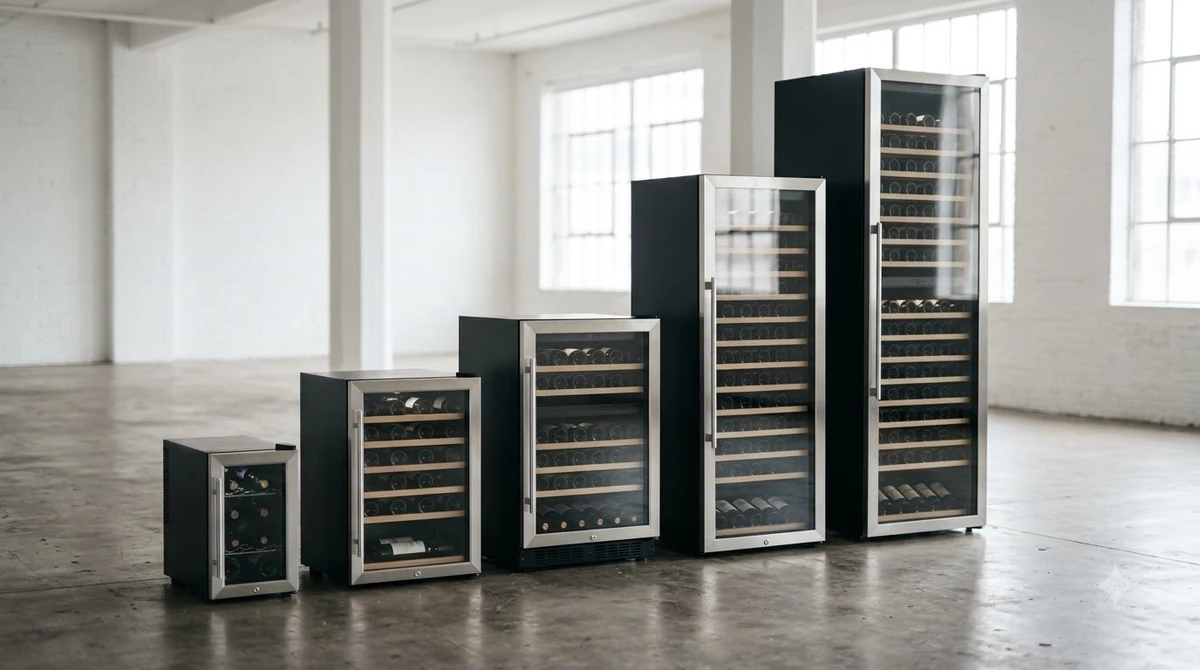
For shoppers comparing other compact appliances, the Brand x Capacity wine cooler reviews category can help put a six-bottle model into perspective alongside larger storage options.
What Owners Like
Owner feedback points to three recurring advantages of the Magic Chef MCWC6B: its small footprint, convenient bottle storage, and straightforward temperature adjustment. These characteristics make it attractive to people who want a dedicated place for a few wines without reorganizing an entire kitchen.
On Best Buy’s customer review page, owners repeatedly mention that the compact design fits comfortably on kitchen counters. Several reviewers also describe the appliance as useful for keeping a small selection of wine available. This is consistent with the product’s intended role: a convenient refrigerator for everyday bottles rather than a large collection-storage solution.
The Best Buy owner reviews for the Magic Chef MCWC6B provide additional context about its countertop suitability, temperature control, and everyday use. Individual experiences naturally differ, so these comments are best considered alongside the manufacturer’s operating specifications.
Convenient countertop dimensions
The cabinet’s 10.9-inch width and 15-inch height are important advantages in a home with limited storage space. A full-size wine refrigerator can occupy substantial floor area, whereas the MCWC6B is designed around a much smaller footprint.
That makes it potentially useful in apartments, small kitchens, home bars, and entertainment areas. It can hold a few bottles for regular use without requiring a dedicated appliance cabinet. Its 19.4-pound weight also makes initial positioning less demanding than moving a large wine refrigerator.
Nevertheless, countertop suitability depends on the available surface. The cooler is 20.1 inches deep, and the manufacturer requires ventilation space behind and beside the cabinet. A narrow counter that barely accommodates the appliance itself may not provide enough room for safe and effective operation.
Simple temperature adjustment
The manual temperature control is another feature that suits people who prefer uncomplicated appliances. Instead of navigating a digital interface, owners adjust the temperature using a control knob. A separate light switch operates the interior illumination.
This straightforward approach is convenient for basic chilling. Someone who regularly keeps a few bottles of Sauvignon Blanc, Chardonnay, or Pinot Noir available may appreciate having a dedicated appliance instead of repeatedly making room in the main kitchen refrigerator.
The important distinction is that the control knob does not provide the same level of temperature information as a digital display. It adjusts the cooling setting, but owners should not assume that the selected setting represents a verified, continuously displayed cabinet temperature.
Useful presentation and removable racks
The glass door and LED lighting make the MCWC6B look more like a small wine display than a conventional refrigerator. This can be useful when the appliance sits in a home bar or entertaining area where bottles are part of the room’s presentation.
The two removable chrome racks also provide flexibility for cleaning and organizing the interior. Best Buy’s product Q&A confirms that the metal shelves can be removed. This is useful because wine storage can involve occasional spills, dust, or condensation that needs to be cleaned without leaving residue around the bottles.
Some owners also appreciate that the appliance can accommodate a small mixture of drinks. However, wine bottles should remain the primary consideration when planning its six-bottle capacity. Adding beer cans or other containers changes how much usable wine storage remains.
Common Complaints and Cooling Limitations
The biggest drawbacks of the Magic Chef MCWC6B are its limited bottle compatibility, dependence on room temperature, and lack of precise digital temperature monitoring. These limitations are more important than its appearance or compact dimensions because they determine whether the cooler can meet a particular wine-storage need.
Thermoelectric cooling is especially sensitive to ambient conditions. The manufacturer’s instruction manual gives two useful examples: when the surrounding room is 77°F, the lowest achievable cabinet temperature is approximately 50°F; when the room reaches 82°F, the lowest achievable temperature rises to approximately 55°F.
That difference matters because a temperature setting is not necessarily the same as the temperature the wine experiences. A warm kitchen, nearby oven, or direct sunlight can make the appliance work harder while limiting its ability to cool the interior.
No precise digital temperature readout
The manual control is easy to operate, but it is less informative than a digital thermostat with an actual temperature display. Without a clear numerical readout, owners may have difficulty determining whether the wine is being held at the desired temperature.
This is particularly relevant for people who enjoy serving several wine styles. A light-bodied white wine generally benefits from colder serving conditions than a full-bodied red, while sparkling wine requires an even colder serving temperature. A small cooler without precise monitoring requires more attention if those distinctions matter.
A separate refrigerator thermometer can help owners understand the actual interior conditions. It is a practical addition for anyone who wants to use the appliance regularly rather than simply keeping a few bottles cool.
Large bottles may not fit
The stated six-bottle capacity should not be interpreted as a promise that every wine bottle shape will fit. Best Buy’s product Q&A includes a manufacturer response explaining that the cooler accommodates standard 750 ml bottles rather than 1.5-liter bottles.
This is an important distinction for people who regularly purchase magnums, large-format sparkling wines, or unusually shaped bottles. Even some standard-volume bottles have wider bodies or longer necks that may create problems with closely spaced racks.
Champagne bottles and certain sparkling wine bottles can be especially awkward because their proportions differ from conventional Bordeaux-style bottles. A six-bottle cabinet may therefore have less practical capacity when the collection contains a variety of bottle shapes.
Ventilation and fan operation
The manufacturer specifies five inches of clearance around the back and sides. This is a substantial requirement for such a compact appliance, and it means that the cooler cannot simply be squeezed into a tight kitchen cubby.
The instruction manual also explains that the fan may run continuously as part of the cooling system. Its operating time can increase when the room is warmer than 77°F or when the temperature setting is particularly cold.
Consequently, shoppers should not assume that thermoelectric technology means completely silent operation. The fan remains a mechanical component, and the sound it produces may be noticeable in a quiet bedroom, office, or small studio apartment.
Another consideration is temperature recovery. Opening the door repeatedly allows warmer air to enter, potentially making it harder for the unit to maintain a stable interior environment. The manual identifies frequent opening and improper door closure among the possible causes of excessive interior temperature.
Who Should Buy and Who Should Skip
The Magic Chef MCWC6B makes the most sense for people who want a small, dedicated wine-chilling appliance with simple controls. It is less appealing for households that store different bottle formats, maintain a large collection, or need highly consistent temperature management.
Who should consider this model?
Apartment residents and small households: The compact cabinet is useful when floor space is limited and a full-size wine refrigerator would be excessive. Its six-bottle capacity can cover a modest collection intended for regular consumption.
Occasional wine drinkers: Someone who typically keeps a few bottles available for dinner may find the storage capacity adequate. The cooler can provide a dedicated space for a red, a white, and several additional bottles without taking over the main refrigerator.
People with a small home bar: The glass door and LED light create a convenient display. The appliance can sit in an entertainment area, provided the location has sufficient ventilation and a suitable electrical outlet.
Buyers who prefer simple controls: The manual thermostat avoids unnecessary interface complexity. People who do not need digital scheduling, multiple temperature zones, or advanced monitoring may appreciate the simpler design.
Who should skip it?
Serious wine collectors: Six bottles provide very little room for a growing collection. Collectors who purchase wine by the case or maintain multiple vintages will quickly outgrow the available space.
People who regularly buy magnums: The manufacturer specifically identifies standard 750 ml bottles as the intended format. Buyers who frequently purchase 1.5-liter bottles should select a refrigerator with a more accommodating interior.
Households in consistently hot rooms: The thermoelectric system is affected by ambient temperature. The manual’s examples show that a room at 82°F can limit the lowest cabinet temperature to approximately 55°F, making hot environments a poor match.
People who need exact temperature management: A manual adjustment knob without a numerical display is not ideal for someone who wants to monitor specific temperature targets closely.
Anyone planning a built-in installation: The manufacturer explicitly identifies the MCWC6B as freestanding only. Installing it inside an enclosed cabinet or recessed kitchen space can restrict ventilation and compromise cooling performance.
Tip: Before buying, measure the entire installation area rather than just the cabinet footprint. Allow five inches of clearance behind and beside the appliance, keep it away from ovens and direct sunlight, and make sure the surface can support the unit securely.
How It Compares to Alternatives
The Magic Chef MCWC6B occupies the compact end of the wine refrigerator category. Its six-bottle capacity and thermoelectric cooling make it appropriate for light household use, but shoppers should consider whether a different storage format would better match their collection and serving habits.
The most useful comparison is not simply the number of bottles advertised. Cooling technology, usable interior dimensions, temperature controls, installation requirements, and the ability to accommodate different bottle shapes all influence the value of a wine refrigerator.
Compact thermoelectric coolers
A compact thermoelectric cooler is a reasonable category to compare against the MCWC6B. These appliances are designed for smaller collections and generally appeal to buyers who want a dedicated wine-chilling space without a large cabinet.
The Magic Chef model provides two removable racks, manual temperature adjustment, and an illuminated glass door. Those features cover the basic requirements of a small wine refrigerator. However, shoppers should compare actual cooling performance and room-temperature limitations rather than assuming every thermoelectric unit will maintain the same conditions.
Larger compressor wine refrigerators
A larger compressor-based wine refrigerator is a more appropriate alternative for households with expanding collections. Its additional capacity can accommodate more bottles, while a larger interior may provide more flexibility for different bottle shapes.
Compressor models are not automatically better in every respect. They can require more room and may produce different operating sounds. Their advantage is that they offer a more suitable direction for buyers who need substantially more storage than six standard bottles.
Dual-zone wine refrigerators
People who regularly serve both red and white wines may prefer a dual-zone wine refrigerator. Separate temperature zones allow different wine styles to be kept at different settings without repeatedly adjusting one shared cabinet.
The MCWC6B does not offer separate zones. Its single temperature environment is therefore less flexible for households that want sparkling wine, crisp whites, and reds ready for service at the same time.
For example, sparkling wine is generally served around 40°F to 50°F, light whites and rosé around 45°F to 50°F, and full-bodied reds around 60°F to 65°F. A single-zone cooler cannot simultaneously provide all those ideal serving conditions.
Another useful distinction is that a wine refrigerator intended for serving temperatures is not necessarily a substitute for a dedicated long-term cellar. Collectors interested in preserving valuable bottles should look beyond the six-bottle format and consider more consistent storage conditions.
The MCWC6B remains a reasonable choice when the priorities are small size, basic chilling, and convenient access. It becomes less compelling when the requirements involve larger collections, independent temperature zones, or unusually shaped bottles.
Setup, Everyday Use, and Maintenance
Correct installation is particularly important for the Magic Chef MCWC6B because its cooling system depends on adequate airflow and a suitable surrounding environment. A few simple setup decisions can reduce unnecessary operating problems and make the small refrigerator easier to use.
Allow sufficient cooling time
The manufacturer recommends allowing the appliance to cool for three to four hours before placing wine bottles inside. This initial waiting period gives the cabinet time to begin reaching its operating conditions rather than immediately filling it with room-temperature bottles.
After a significant temperature interruption, the manual recommends allowing at least 24 hours for the interior temperature to adjust properly in the relevant troubleshooting circumstances. This is useful information when setting up the refrigerator for the first time or evaluating a temperature that appears unstable.
Choose a suitable location
Place the appliance on a level, stable surface away from direct sunlight and heat-producing equipment. Ovens, dishwashers, radiators, and heating ducts are poor neighbors for a small thermoelectric wine refrigerator.
The manufacturer’s installation instructions also identify 55°F to 80°F as the preferred surrounding temperature range for proper operation. Conditions outside this range can hinder performance. This makes an ordinary indoor kitchen or appropriately ventilated home bar more suitable than an unconditioned garage.
Maintain five inches of clearance around the back and sides, and avoid enclosed niches or cabinets. The appliance should also have access to a properly grounded electrical outlet. The manual specifies a 100–120V AC, 60Hz supply and advises against using an extension cord.
Organize bottles carefully
Begin with standard 750 ml bottles, which are the format the manufacturer identifies as suitable. Place bottles securely on the provided racks and avoid forcing wider containers into restricted spaces.
Think about drinking order when organizing the six available positions. Bottles intended for an upcoming dinner can be placed where they are easy to access, while bottles intended for another occasion can remain undisturbed.
Wine storage temperature and serving temperature are not always identical. For example, a full-bodied red can benefit from cellar-like storage conditions but may be served slightly warmer than a light red. The refrigerator should therefore be treated as a convenient chilling appliance rather than a device that automatically serves every wine at its ideal drinking temperature.
Clean the interior and maintain airflow
The manual recommends unplugging the refrigerator, removing its contents, and cleaning the interior with a damp cloth and a lukewarm baking soda solution. Its suggested mixture is approximately two tablespoons of baking soda per quart of water.
The removable racks can be washed separately with a mild detergent solution. Dry the interior and exterior with a soft cloth, and keep the door gasket clean so that it can maintain a proper seal.
Ventilation maintenance is equally important. Dust accumulating around the ventilation openings can interfere with cooling efficiency. The manufacturer recommends vacuuming the vent when necessary.
For longer periods away from home, the manual distinguishes between short and extended vacations. It recommends leaving the appliance operating during absences of less than three weeks. For an absence lasting several months, it advises removing the contents, unplugging and cleaning the unit, drying the interior, and leaving the door slightly open to discourage odors and mold growth.
Build a practical wine selection
A six-bottle cooler is most useful when its contents reflect what the household actually drinks. A practical selection might include two bottles of Sauvignon Blanc, two bottles of Pinot Noir, and two bottles of Chardonnay.
This arrangement provides several options for casual meals and entertaining, although the wines will share the same cooling environment. If the refrigerator is set for white wine, red wine may need additional time outside the cooler before serving.
Food pairing can also help determine which bottles deserve a place inside. Chardonnay can work well with roast chicken, while Pinot Noir offers a lighter red option for mushroom dishes and poultry. For a dinner featuring chicken Marsala, keeping a suitable bottle ready makes the small appliance more useful as part of an everyday dining routine.
For entertaining, the cooler can also hold a bottle intended for a refreshing Aperol spritz recipe, provided the bottle fits comfortably and the selected temperature suits the intended drink. However, the limited capacity makes it important to decide which bottles deserve the available space.
Frequently Asked Questions
Does the Magic Chef MCWC6B have a digital temperature display?
No. The MCWC6B uses a manual temperature adjustment knob rather than a digital temperature display. This means owners cannot read the exact cabinet temperature directly from a screen. A separate refrigerator thermometer can help monitor actual conditions, particularly when the surrounding room temperature changes.
Can the Magic Chef six-bottle cooler store opened wine bottles?
Opened wine bottles may be stored inside if they fit securely and are properly resealed. Use an appropriate wine stopper to limit exposure to oxygen, and keep the bottles upright when practical to reduce the risk of leakage. The appliance does not include a dedicated preservation system or vacuum-sealing feature.
Does the Magic Chef MCWC6B have a reversible door?
The manufacturer’s product specification sheet and instruction manual do not establish a reversible-door feature. Buyers who need a particular hinge orientation should confirm the physical configuration and available installation options before purchasing rather than assuming the door can be changed.
What happens to the temperature setting after a power outage?
The instruction manual states that modified settings are lost following a power failure or interruption. After power returns, the temperature control should be checked and adjusted again as needed. Allow sufficient time for the cabinet to stabilize before relying on it to maintain a consistent storage temperature.
Can the MCWC6B be used for long-term wine aging?
It is better suited to short-term household chilling and convenient bottle storage than to specialized wine aging. Long-term collectors generally benefit from more consistent temperature management, appropriate humidity conditions, and storage designed to protect wine over extended periods. The MCWC6B does not provide dedicated humidity controls or independent storage zones.
The Magic Chef MCWC6B is a practical small wine cooler for households that value compact dimensions, simple operation, and space for six standard bottles. Its thermoelectric cooling system and manual controls come with meaningful limitations, especially in warm rooms and situations requiring precise temperature management. For occasional wine drinkers with limited space, it can serve a useful purpose; collectors and buyers who need greater capacity or more advanced storage features should consider a larger wine refrigerator instead.
More in Model Reviews
 Magic Chef 44 Bottle Wine Cooler Review for Flexible StorageUpdated Nov 21, 2026
 Whynter 164 Bottle Wine Cooler Review: Capacity, Features, and FitUpdated Nov 21, 2026
 Insignia NS WC16BK6 Review: Compact 16-Bottle Wine StorageUpdated Nov 21, 2026
 Wine Enthusiast Electric Blue Omega Review: Opening, Pouring, and Preserving Made EasierUpdated Nov 21, 2026
 Koolatron 20 Bottle Wine Cooler Review: Features, Fit, and PerformanceUpdated Nov 21, 2026
 NewAir AWC 330E Review for Home Wine StorageUpdated Nov 21, 2026