

We may earn a commission when you buy through links on this page, at no extra cost to you. Learn more.
The best 18 bottle wine fridge for most homes is a dual-zone unit, so reds and whites can sit at different temperatures, with shelves that pull out so you can reach any bottle without moving the rest. An 18-bottle capacity suits a steady household stock, but check the layout and the cooling before you buy, since the rated bottle count depends on the bottle size and shelf design.
An 18-bottle wine fridge sits between the very small units that hold a half-dozen bottles and the large cabinets that hold a case or more. It is a practical size for a kitchen corner, a dining room or a basement bar, and it gives you enough room to rotate a few favorite wines without a full cellar. This guide covers how the layout and zones work, which setups suit different homes, and what to check before buying.
Quick Comparison of 18 Bottle Wine Fridge Layouts
Most 18-bottle units use one of a few shelf layouts, and the layout changes how easy it is to find a bottle. Single-zone units keep everything at one temperature, while dual-zone units split the cabinet so each side can hold a different setting.
| Layout | Best for | Access | Temperature |
|---|---|---|---|
| Single zone with wood shelves | One style of wine, such as mostly reds | Shelves are fixed, bottles sit in rows | One setting for the whole unit |
| Dual zone with pull-out shelves | Mixed collections of red and white | Easy to reach each bottle | Two settings, one per zone |
| Dual zone with glass door | Display in a dining room or kitchen | Labels visible from outside | Two settings, lit interior |
| Single zone with glass door | Casual display and everyday wine | Labels visible, fewer zone choices | One setting for the whole unit |
The table shows the trade-off. Dual-zone units give you more control and easier access, but they cost more and take up more of the cabinet’s internal space. A single-zone unit is simpler and often enough for a collection that is mostly one style.
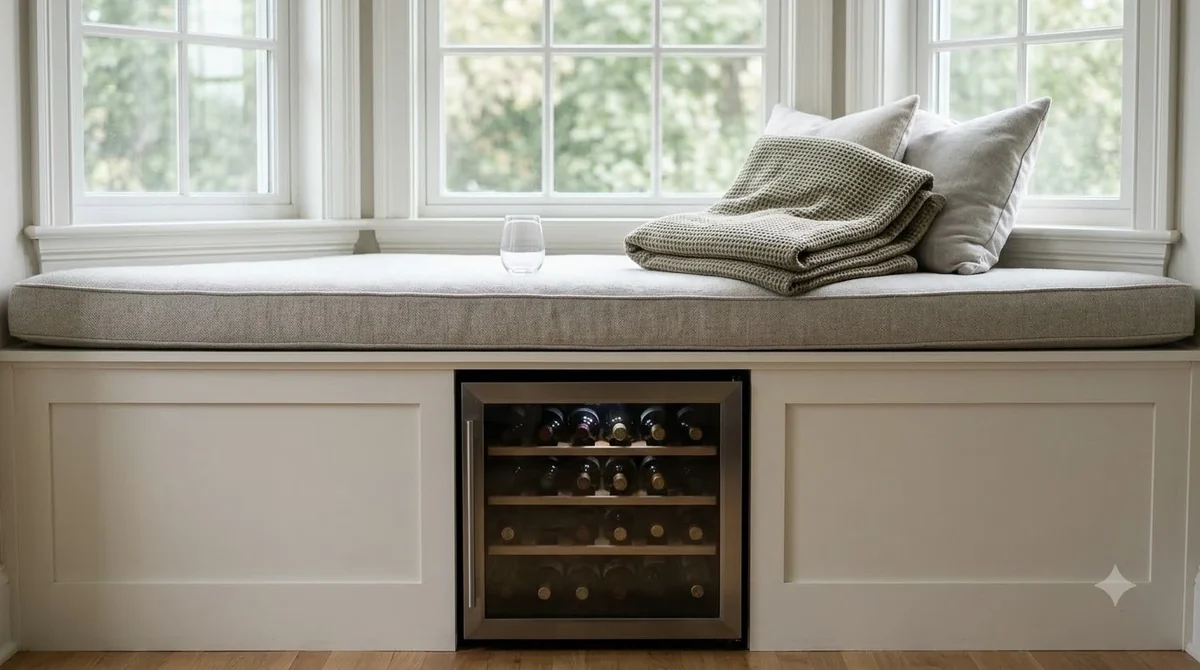
Best for Mixed Red and White Collections
A household that drinks both red and white wine wants each to be served at the right temperature. A dual-zone unit with pull-out shelves lets you keep the whites cooler and the reds slightly warmer, without splitting the collection across two appliances.
Why it stands out: Two temperature zones let each style sit at its own setting. Pull-out shelves let you reach a bottle at the back without shifting the others, which makes rotation easier.
Keep in mind: Check that the zone temperatures can be set separately and that the controls are easy to read. Dual-zone units are a good fit when the collection is mixed, but they are more than you need if you drink one style.
Best for: Couples and families who keep both red and white on hand every week.
Best for Kitchens and Open-Plan Living Rooms
An 18-bottle unit can sit in a kitchen run or beside the dining table, where it is part of the everyday routine. The look and noise level matter as much as the capacity, because the unit is in the room where people spend time.
Why it stands out: A glass-door or lit interior shows the labels and fits a modern kitchen. Many units are built to sit flush with cabinets, which keeps the room tidy.
Keep in mind: Check the ventilation the manufacturer asks for, especially for built-in units, because a closed cabinet needs air to move at the back and sides. Place it away from the oven and the dishwasher where possible.
Best for: Homeowners who want an everyday wine fridge that is visible and easy to use.
Best for Basement Bars and Entertaining Spaces
A basement bar or entertaining room often has more floor space and less daily traffic, so the fridge can sit a little further from the main cooking area. The goal here is a steady setting and enough bottles to keep guests supplied for a weekend.
Why it stands out: An 18-bottle unit holds enough for a small gathering without taking over the room. A dual-zone setting lets you keep sparkling and white wine cooler than the reds you open at the table.
Keep in mind: A basement is usually cooler than the rest of the house, so check that the unit can hold its setting in that environment. Note whether the unit is freestanding or built in, since that changes the airflow it needs.
Best for: Hosts and families who entertain regularly at home.
Best for Small Apartments and Compact Homes
In a small apartment, an 18-bottle fridge can be a good compromise. It holds a useful stock without filling the room, but the footprint still matters, so the measurements have to be checked against the space before you order.
Why it stands out: The capacity is larger than a six-bottle unit but smaller than a full cabinet, which suits a limited floor plan. A single-zone version is often simpler to run and quieter in a bedroom or living area.
Keep in mind: Measure the depth as well as the width, because the door swing and the clearance behind the unit can take more space than the front suggests. Compact units can also be noisier than expected, so check the noise level if the fridge will sit near a bedroom.
Best for: Renters and owners with limited space who still want a dependable stock of wine.
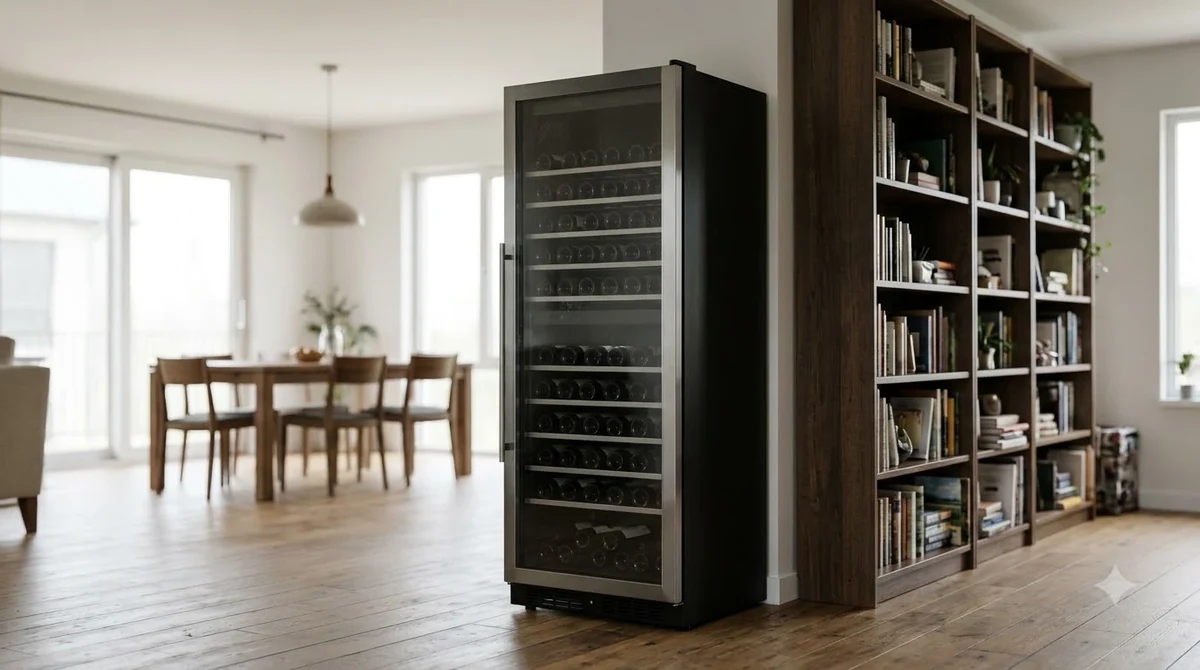
Best for Gift-Ready and Display Setups
Some owners buy an 18-bottle fridge mainly to show off a small collection. A glass front, even lighting and a clear layout turn the unit into a feature, and the shelves can be arranged by region or price.
Why it stands out: A display-focused unit makes a small collection look intentional. Labels that face forward make it easy to choose a bottle for a gift or a dinner.
Keep in mind: Glass lets light in, so keep the unit away from windows and strong sunlight. A display fridge still needs a steady temperature, and a lit interior adds a small amount of heat.
Best for: Collectors who want the bottles on show and are happy to rotate them often.
How to Choose an 18 Bottle Wine Fridge
Start with the bottles, then the room, then the layout. The bottles tell you whether you need one zone or two, the room tells you whether the unit can be freestanding or built in, and the layout tells you how easy it is to reach each bottle. Those three answers narrow the choice more than any single feature.
Tip: Check the rated bottle count against the bottles you actually own. Wide Bordeaux bottles and large formats take more space than standard bottles, so a unit rated for 18 may hold fewer of them.
- Decide whether your collection is mostly one style or a mix of red and white.
- Choose single zone for simplicity or dual zone for two settings and easier access.
- Measure the space, including the depth, door swing and the ventilation the manufacturer asks for.
- Check the noise level and where the unit will sit, especially near a bedroom or living area.
- Decide whether you want a solid door for storage or a glass door for display.
Wine storage is about keeping the bottles away from heat, light and sudden changes. According to VinePair’s guide to aging wine, aging means keeping wine in a cool, dark place for a number of years, and a home fridge is built more for holding a steady stock than for long aging. An 18-bottle fridge suits wines you plan to drink within a few years, which is how most households use it.
Frequently Asked Questions
How many bottles does an 18 bottle wine fridge hold?
The rated number is 18 standard bottles, but the real capacity depends on bottle width and shelf design. Wide or large-format bottles take more room, so the practical count can be lower than the rating.
Is a dual-zone 18 bottle wine fridge worth the extra cost?
It is worth it if you keep both red and white wine and want each at its own temperature. If you drink mostly one style, a single-zone unit is often simpler and less expensive.
Can an 18 bottle wine fridge be built in?
Some models are designed for built-in use, and they usually need specific ventilation and clearance. Check the manufacturer’s instructions for the install before you plan the cabinet opening.
Is an 18 bottle fridge enough for a home collection?
For most households that drink wine weekly, 18 bottles is enough to keep a rotating selection on hand. Collectors who buy by the case or age wine for years will usually need more space, either a larger unit or a separate cellar.
An 18-bottle wine fridge is a practical size for a steady household stock. Decide on one zone or two, measure the space with the depth in mind, and check the rated capacity against your own bottles. For smaller options, see our guide to the 6 bottle wine fridge, and for a larger stock, compare the 12 bottle wine fridge before you choose.
More in By Bottle Count
 Best 52 Bottle Wine Fridge Options for Every Kitchen and CollectionUpdated Nov 18, 2026
 Best 15 Bottle Wine Fridge Options for Quiet Storage and Ready-to-Pour ServingUpdated Nov 18, 2026
 Best 34 Bottle Wine Cooler Types for Kitchens, Bars, and Home CellarsUpdated Nov 18, 2026
 Best 166 Bottle Wine Cooler Types for Serious Collectors and HostsUpdated Nov 18, 2026
 Best 54 Bottle Wine Fridge Types for Undercounter and Home CellarsUpdated Nov 18, 2026
 Best 46 Bottle Dual Zone Wine Cooler for Built-In Kitchens and Home BarsUpdated Nov 19, 2026