


We may earn a commission when you buy through links on this page, at no extra cost to you. Learn more.
Touriga Nacional tasting notes center on an intense combination of dark berry fruit, prominent violet aromatics, herbal undertones, and firm, structured tannins. Originating in Portugal, this thick-skinned red grape produces full-bodied wines with deep ruby-purple color and aromas of blueberry, black plum, and bergamot. Because of its high phenolic concentration and bright natural acidity, it delivers both youthful power and multi-decade aging potential.
Once known primarily as the structural backbone behind fortified Port wines, Touriga Nacional now stars in dry single-varietal bottles and premium regional blends across Portugal and beyond. Understanding its sensory profile helps you recognize what sets this variety apart from other full-bodied reds on the shelf.
What Is Touriga Nacional?
Touriga Nacional is a native Portuguese red wine grape celebrated for its small, thick-skinned berries, low vineyard yields, and extraordinary aromatic concentration. Winemakers prize the variety for delivering intense color, gripping tannins, and distinctive floral aromatics that survive both oak aging and decades in the cellar.
The grape originated in northern Portugal, with historical roots tied closely to the Dão and Douro regions. Before modern viticultural research improved vine selection and pruning techniques in the mid-to-late twentieth century, Touriga Nacional nearly vanished from commercial vineyards because its tiny clusters produced frustratingly low harvests. Today, clonal improvements have restored its standing as Portugal’s signature red grape, widely regarded as a benchmark for quality across the country.
Because each small berry holds a high ratio of skin to juice, crushing Touriga Nacional extracts substantial anthocyanins and tannins. According to Wine Folly, Touriga Nacional is also the genetic parent of Touriga Franca, another staple grape in Portuguese blends. While it still anchors vintage Port, contemporary winemakers increasingly bottle it as a dry table wine to showcase its pure varietal character.
Flavor and Styles
Dry Touriga Nacional wines typically exhibit a nearly opaque ruby-purple hue with primary flavors of blueberry, black plum, and black currant layered beneath lifted notes of violet, mint, and wet slate. On the palate, the wine feels full-bodied and muscular, balanced by medium-plus acidity and a long, mineral-driven finish.
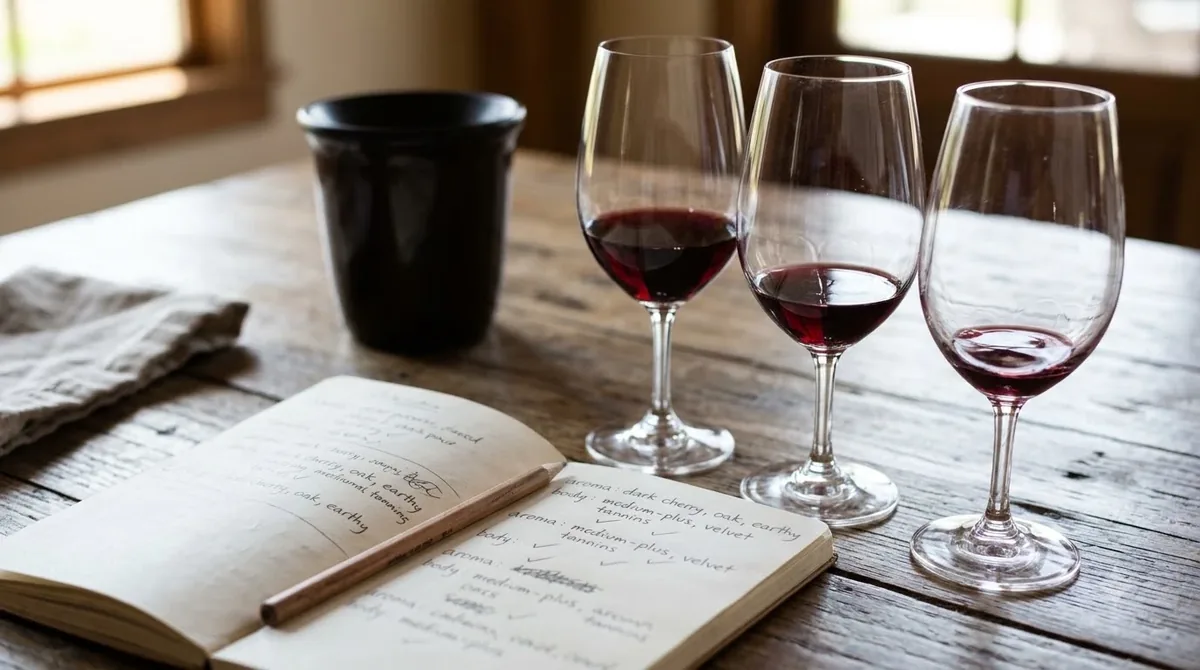
Aromatically, Touriga Nacional stands out among full-bodied red wines because it contains high levels of terpenes—the same aromatic compounds found in fragrant white grapes. When you swirl a glass, bright floral notes of violet, rose petal, and bergamot rise directly above concentrated dark fruit. Herbal hints of rosemary, eucalyptus, and crushed rock frequently appear on the mid-palate, reflecting the rugged terrain where the vines grow.
Winemaking choices and regional climates create distinct stylistic expressions. Un-oaked or lightly oaked examples emphasize fresh berries, vibrant acidity, and snappy floral lift, whereas bottles aged in French oak barrels develop secondary notes of bittersweet cocoa, vanilla, cedar, and sweet spice. Over five to ten years in the bottle, those youthful tannins soften into a velvety texture while tertiary aromas of leather, dried fig, and tobacco emerge.
You will encounter Touriga Nacional both as a 100 percent varietal wine and as the anchor in traditional Portuguese field blends. Winemakers frequently pair it with Touriga Franca, Tinta Roriz (Tempranillo), or Alfrocheiro to round out its firm grip with softer red-fruit notes. If you already enjoy the structured intensity found in petit verdot tasting notes or the dark, spiced fruit profile of grenache tasting notes, Touriga Nacional offers a compelling middle ground of power and floral perfume.
Where It Grows
While Portugal remains the undisputed heartland of Touriga Nacional—led by the steep schist slopes of the Douro Valley and the high-elevation granite hills of the Dão—the grape has also gained traction in warm wine regions worldwide. Regional terroir dramatically shifts the balance between dense fruit weight and lifted floral elegance.
In the Douro Valley, vines cling to terraced vineyards made of decomposing schist rock with minimal rainfall and no irrigation. These harsh conditions force roots deep underground, yielding small berries that produce brooding, full-bodied wines packed with black currant, blueberry, roasted meat, and graphite notes. Farther south and slightly inland, the Dão region sits at higher elevations on sandy granite soils with cooler nights and greater precipitation. Dão bottlings tend to feel slightly lighter on their feet, displaying higher natural acidity, finer tannins, and pronounced aromas of red cherry, raspberry, and fresh violet.
Beyond northern Portugal, producers in the sun-drenched plains of Alentejo and the coastal hills of Lisboa use Touriga Nacional to add backbone and aromatic complexity to regional reds. Internationally, winemakers in Australia, California, South Africa, and even Bordeaux have planted the variety for its natural heat tolerance and ability to retain acidity during hot growing seasons.
| Region | Dominant Soil | Body and Structure | Key Tasting Notes |
|---|---|---|---|
| Douro Valley, Portugal | Decomposing schist | Full-bodied, high tannin, concentrated | Blueberry, black currant, violet, graphite, cocoa |
| Dão, Portugal | Sandy granite | Medium-to-full body, fine tannin, higher acidity | Black cherry, raspberry, violet, bergamot, wild herbs |
| Alentejo, Portugal | Clay, limestone, granite | Full-bodied, plush, ripe tannin | Blackberry jam, plum, sweet spice, dark chocolate |
How to Serve
Serve dry Touriga Nacional slightly below room temperature at 60 to 68 degrees Fahrenheit (15 to 20 degrees Celsius) in a large Bordeaux-style wine glass, and decant young bottles for at least one hour before pouring. Proper temperature and aeration keep the alcohol in check while allowing the complex floral aromatics to open up.
Serving this wine too warm accentuates its alcohol—often between 13.5 and 14.5 percent ABV—and can make the fruit taste heavy or jammy. Conversely, chilling it below 55 degrees Fahrenheit clamps down on the bouquet and makes the substantial tannins feel astringent. Aiming for 60 to 65 degrees Fahrenheit strikes the sweet spot where fresh acidity and violet perfume shine together.
A large-bowled glass gives the dense liquid plenty of surface area to breathe, funneling delicate bergamot and herb notes toward your nose. For bottles under five years old, pouring the wine into a decanter an hour ahead of dinner softens its firm structural grip. Mature bottles older than ten years require gentler handling; stand the bottle upright a day prior to let sediment settle, then pour slowly without aggressive aeration.
Tip: If a young bottle of Douro Touriga Nacional feels overly tight right after opening, pour it into a wide decanter 60 to 90 minutes before dinner to tame the tannins and bring out the violet aromatics.
Food Pairing
Rich, protein-heavy dishes with moderate fat content make the ideal match for Touriga Nacional because dietary fats and proteins bind to the wine’s firm tannins, softening its grip on your palate. Keep seasonings savory and herbaceous rather than overly spicy or salty so they complement the grape’s delicate floral notes.
Grilled and roasted meats sit at the top of the pairing list. Thick-cut ribeye steak with herb compound butter, rosemary-crusted roast lamb, braised beef short ribs, and slow-cooked pork shoulder match the wine’s full body without overpowering its aromatic lift. Dishes seasoned with rosemary, thyme, bay leaf, or fennel echo the natural Mediterranean scrub notes already present in the glass.
Vegetarian cooks and cheese lovers also have strong options. Charred portobello mushrooms, smoky lentil stews, and aged firm cheeses like Manchego, Gruyère, or aged white cheddar provide enough umami and richness to balance the wine’s structure. Creamy accompaniments, such as a garlic-yogurt sauce or blue cheese mashed potatoes, buffer the astringency while letting the dark berry fruit linger on the finish. When planning a multi-course dinner, you might start guests with crisp white wines—similar to what you find in sancerre tasting notes—before transitioning to Touriga Nacional for the main course.
How to Choose a Bottle
When shopping for Touriga Nacional, check the front and back labels to see whether the bottle is a single-varietal wine or a regional blend, and look at the region of origin to match the style to your palate. Exploring different Wine by Type categories makes it easier to spot how Portuguese producers label their dry table wines versus fortified styles.
First, confirm that the wine is a dry table wine (“Vinho Tinto“) rather than a sweet fortified Port, as both use the exact same grape and often share similar regional names like Douro. Dry table wines will typically list an alcohol level between 12.5 and 14.5 percent ABV, whereas Port wines sit closer to 19 or 20 percent ABV.
Second, decide between a 100 percent Touriga Nacional bottling and a blend. Single-varietal bottles showcase the grape’s unfiltered power, deep purple color, and unmistakable floral perfume. Blends from the Douro or Dão—which combine Touriga Nacional with Touriga Franca, Tinta Roriz, or Jaen—often deliver greater immediate drinkability and layered red-and-black fruit complexity. As reviewers at Wine Enthusiast note, even a small percentage of Touriga Nacional in a blend acts as a structural anchor that adds longevity and aromatic depth. Finally, pick Dão on the label if you prefer bright acidity and floral finesse, or reach for Douro if you want dark fruit density and muscular structure.
Frequently Asked Questions
Is Touriga Nacional a dry or sweet wine?
Touriga Nacional itself is a red grape variety used to make both completely dry table wines and sweet fortified Port wines. When bottled as a standard red wine from regions like the Douro Valley or Dão, it is fermented dry and tastes rich, floral, and tannic rather than sweet.
What does Touriga Nacional compare to in flavor and body?
Wine critics frequently compare dry Touriga Nacional to Cabernet Sauvignon or Syrah because of its full body, deep color, firm tannins, and long aging potential. However, Touriga Nacional stands apart with its signature aromatic lift of violet, rose petal, and bergamot over concentrated blueberry and black plum fruit.
Does Touriga Nacional need to be aged before drinking?
Entry-level blends and lighter Dão styles can be enjoyed within three to five years of the vintage date, especially if decanted before serving. Top single-varietal bottlings from the Douro Valley possess enough tannin and acidity to cellar gracefully for ten to twenty years, developing complex notes of leather, dried fig, and tobacco.
Why does Touriga Nacional smell like flowers?
Touriga Nacional naturally contains high concentrations of aromatic compounds called terpenes inside its thick grape skins. During fermentation, these compounds release distinct floral scents—most notably violet, lavender, and orange blossom—that persist even in full-bodied, oak-aged styles.
Whether poured from a cool-climate Dão vineyard or a sun-baked Douro terrace, Touriga Nacional rewards anyone looking for a full-bodied red with serious aromatic personality. Pay attention to serving temperature and give young bottles time in a decanter to experience the full spectrum of dark fruit, wild herbs, and violet perfume.
More in Wine Types & Grapes
 What Does Mourvèdre Taste Like? Flavor Profile, Regions, and PairingsUpdated Nov 20, 2026
 What Does Marsanne Taste Like? Flavors, Styles, and Food PairingsUpdated Nov 20, 2026
 What Does Malvasia Taste Like? Styles, Flavors, and Food PairingsUpdated Nov 20, 2026
 What Does Grenache Blanc Taste Like? Flavor Profile, Styles, and PairingsUpdated Nov 20, 2026
 What Does Garnacha Taste Like? Key Flavors, Styles, and Pairing TipsUpdated Nov 20, 2026
 What Does Fruit Wine Taste Like? A Complete Flavor and Style BreakdownUpdated Nov 20, 2026