

We may earn a commission when you buy through links on this page, at no extra cost to you. Learn more.
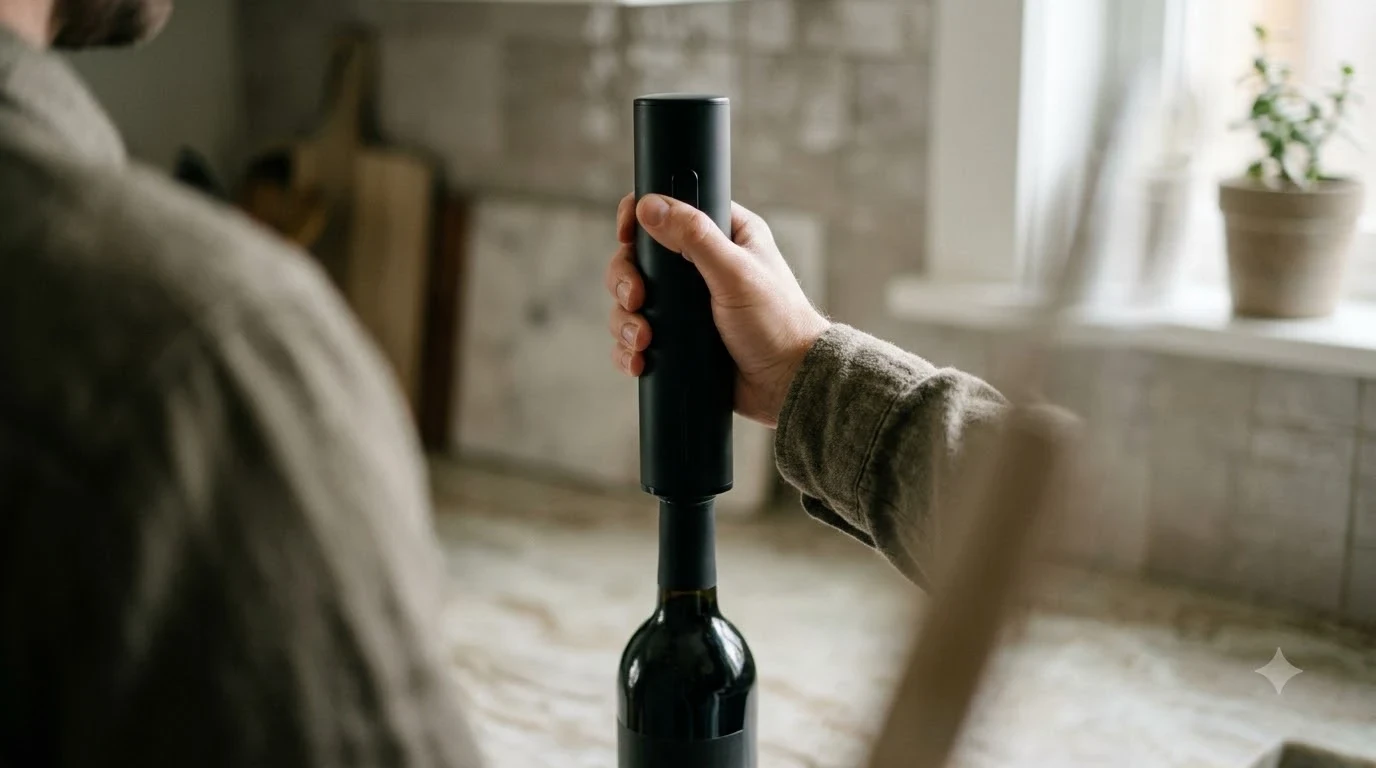
The vacu vin electric wine opener is a rechargeable, button-operated corkscrew that makes opening standard wine bottles easier, with capacity for approximately 35 bottles per full charge. It includes a foil cutter and USB-C charging cable, and its extraction mechanism stops automatically after removing the cork. Its main advantages are straightforward operation and cordless convenience, while the 2.5-hour charging time, separate charging adapter requirement, and plastic construction are worth considering before buying.
An electric wine opener can be a useful addition to a home bar, particularly for households that open bottles regularly or prefer not to use a traditional waiter’s corkscrew. Vacu Vin takes a relatively simple approach: position the device over the bottle, press a button, and allow the motor to remove the cork. This review examines its specifications, practical strengths, reported drawbacks, and how it compares with other electric corkscrews. The goal is to establish whether its features justify choosing it over a manual opener or another electric model.
Specs and Key Features
The Vacu Vin Electric Wine Opener combines a rechargeable battery, automatic cork extraction, and a separate cork-release function in one handheld device. Its stated capacity of approximately 35 bottles per charge makes it suitable for regular household use without requiring constant access to a power outlet.
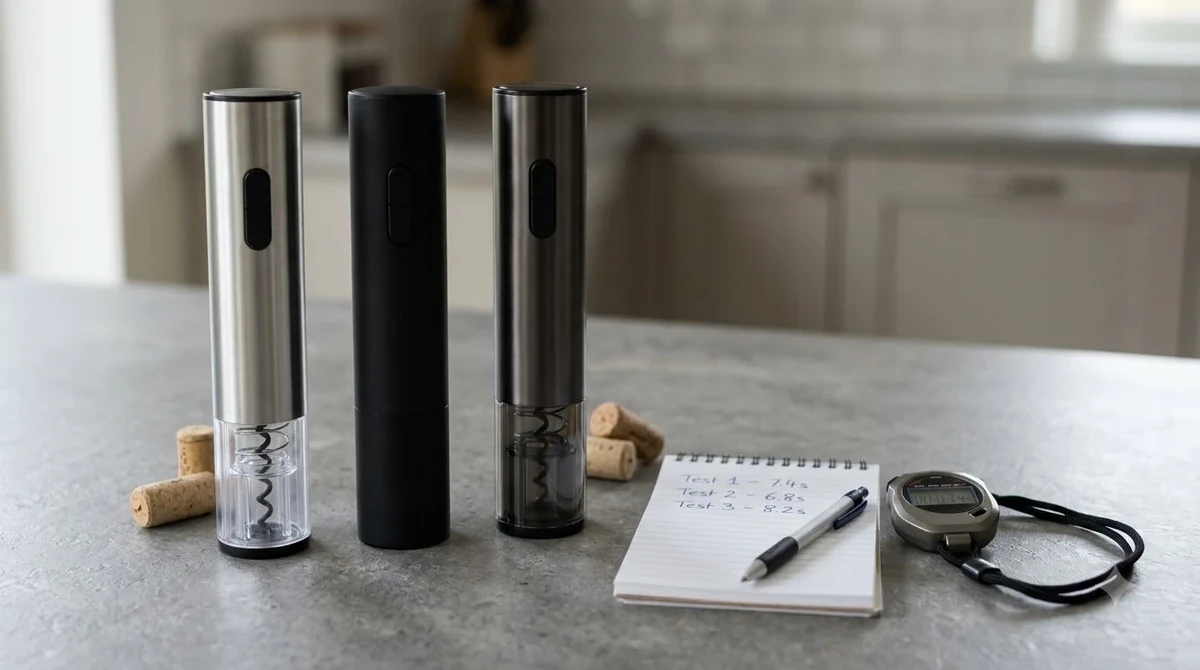
The manufacturer’s product listing identifies the model as article number 91004606-USA. Its built-in lithium-ion battery connects through USB-C, and the package includes a charging cable and foil cutter. The overall weight is approximately 452 grams, which gives buyers a useful indication of how the device will feel during repeated use. It is not an especially tiny accessory, but it remains a handheld countertop tool rather than a large electric appliance.
The operating process has two separate stages. One button extracts the cork from the bottle, while another releases the cork from the mechanism afterward. According to the manufacturer’s instructions, extraction takes approximately 6 to 8 seconds of button operation, followed by 5 to 7 seconds for cork release. The device stops automatically after extraction, so users do not need to estimate when the cork has cleared the bottle.
| Specification | Vacu Vin Electric Wine Opener |
|---|---|
| Product article number | 91004606-USA |
| Product weight | 452 g |
| Battery type | Rechargeable lithium-ion |
| Battery voltage | 3.7V |
| Battery capacity | 300 mAh / 1.11 Wh |
| Charging connection | USB-C |
| Charging input | 5V DC, 1A |
| Full charging time | Approximately 2.5 hours |
| Claimed bottle capacity | Approximately 35 bottles |
| Extraction button operation | Approximately 6–8 seconds |
| Cork-release operation | Approximately 5–7 seconds |
| Included accessories | Foil cutter and USB-C cable |
| Charging adapter | Not included |
These specifications come from the manufacturer’s US product listing and multilingual user manual. The 35-bottle figure is a stated capacity rather than a guarantee that every battery will deliver exactly the same number of openings. Cork condition, alignment, battery age, and operating conditions can affect actual performance. For someone who opens a bottle every evening, the claimed capacity represents several weeks of use under normal conditions.
One detail deserves attention before ordering: the included USB-C cable does not mean a wall adapter is included. The manual specifies a compatible 5V DC adapter. Buyers who already have an appropriate USB charging adapter may not need another accessory, but anyone expecting a complete wall-charging kit should account for this distinction. The full specifications and product details are available on the official Vacu Vin Electric Wine Opener product page.
What Owners and Wine Tool Buyers May Like
The strongest appeal of the Vacu Vin is its uncomplicated approach to removing corks. Rather than requiring a twisting motion and leverage, it uses a motor-driven extraction mechanism, with a separate control for releasing the cork afterward. This arrangement makes it an attractive option for people who prefer an electric accessory over a traditional corkscrew.

The first advantage is the two-button operating arrangement. The extraction and release functions have distinct purposes, which makes the sequence easier to understand. Once the device is positioned correctly, the user controls the extraction instead of relying on a pressure-triggered automatic start. The manufacturer describes a 6-to-8-second extraction operation, followed by a separate release cycle. That predictable sequence is useful when opening several bottles during a dinner gathering.
The second advantage is rechargeable operation. A capacity of approximately 35 bottles means the device is not dependent on disposable batteries or a permanently connected power cord. The USB-C connection is also familiar to people who already use rechargeable household accessories. A full charge takes around 2.5 hours, which is manageable if the opener is returned to its storage area after use and charged before the next event.
The included foil cutter adds another practical benefit. Removing the capsule is the first step in opening a traditionally corked wine bottle, and having a dedicated cutter in the package means buyers do not immediately need to purchase another tool. The cutter also helps make the opening sequence more consistent: remove the foil, position the opener, extract the cork, and release it.
There is also a broader convenience argument. A manual corkscrew is inexpensive and perfectly adequate for many wine drinkers, but it requires coordinated hand movements. An electric model can reduce the amount of twisting and pulling involved. This is particularly appealing when opening multiple bottles for guests, preparing a tasting with several wines, or setting up a home bar where convenience matters more than mastering traditional corkscrew technique.
Food & Wine’s evaluation of electric wine openers included the Vacu Vin opener and preserver combination. Its review reported that the device removed corks in under 7 seconds during its evaluation and highlighted the set’s straightforward operation. That assessment provides useful independent context for buyers, although the published evaluation concerned the combination set rather than a guarantee of identical results in every household.
Another useful point is that the opener has a dedicated cork-release function. Some people focus exclusively on removing the cork from the bottle when comparing electric openers, but getting the cork out of the device matters just as much. A separate release control makes this second part of the process explicit rather than leaving the user to pull the cork out manually.
Common Complaints and Practical Limitations
The Vacu Vin is designed to simplify cork removal, but electric operation does not eliminate every handling requirement. Buyers should consider its weight, battery maintenance, alignment requirements, and construction before treating it as a completely hands-free accessory.
Its weight is approximately 452 grams. That is a relevant consideration for anyone who prefers lightweight kitchen tools or finds it uncomfortable to hold a device above a bottle for several seconds. The weight is not necessarily a disadvantage for everyone, but it makes the opener less suitable for buyers whose first priority is a particularly light accessory.
Plastic construction is another consideration. Food & Wine describes the Vacu Vin set’s opener as having a durable ABS plastic body with a matte finish. Its assessment also notes that the device does not provide the premium feel some buyers may expect from a more expensive wine accessory. Those who prefer a stainless-steel appearance or a more substantial metal-bodied appliance may want to compare other options before deciding.
Battery management is a further limitation. The opener requires approximately 2.5 hours for a full charge, and the claimed capacity is around 35 bottles. This should be sufficient for ordinary household entertaining, but a busy tasting room or commercial venue may prefer equipment designed for frequent professional operation. The manufacturer specifies non-professional use in its manual.
Alignment also matters. An electric corkscrew still needs to sit vertically over the cork. If it is tilted or positioned incorrectly, the mechanism may struggle to extract the cork cleanly. America’s Test Kitchen explains that electric openers can wobble during operation and that users may still need some hand strength to keep the bottle and device stable.
There is also a visibility trade-off. Food & Wine notes that the Vacu Vin set does not provide the same view of the cork-removal process offered by some transparent electric openers. Buyers who like seeing the cork travel through the mechanism may prefer an alternative with a transparent housing. For those primarily interested in straightforward operation, this is less important.
Finally, the charging adapter is not included. USB-C is convenient, but the additional adapter requirement can catch buyers by surprise if they assume everything needed for wall charging comes in the package. This is a small purchasing consideration rather than a fundamental product defect, but it belongs on the checklist.
Who Should Buy and Who Should Skip
The Vacu Vin Electric Wine Opener is best suited to home wine drinkers who value convenient cork removal, want a rechargeable accessory, and prefer a defined button-operated sequence. It is less compelling for people who open bottles only occasionally, prefer manual control, or need equipment for frequent professional service.
Who should consider buying it
Regular wine drinkers are a natural audience. Someone who opens a bottle several times each week may appreciate having an electric opener ready on the counter. With a stated capacity of approximately 35 bottles per charge, the battery should provide a reasonable interval between charging sessions for a typical household.
Hosts who entertain frequently may also appreciate its operating sequence. Opening multiple bottles of Cabernet Sauvignon, Pinot Noir, Chardonnay, or other still wines with traditional corks can involve repetitive work with a manual opener. The electric mechanism reduces the twisting motion required for compatible corks. Sparkling wine, however, should be opened using the appropriate sparkling-wine method rather than an electric corkscrew.
People who find traditional corkscrews awkward may also find the button-operated approach appealing. It removes much of the twisting and pulling associated with a waiter-style opener. However, it still requires a secure grip, vertical positioning, and gentle downward pressure, so it should not be considered entirely free of physical effort.
It can also make a practical gift for someone setting up a home bar. The included foil cutter, rechargeable cable, and separate cork-release control provide the essential opening accessories without requiring a complicated collection of attachments.
Who should skip it
Occasional wine drinkers may not need an electric opener at all. A basic waiter’s corkscrew can handle a bottle without requiring charging, battery maintenance, or dedicated storage space. Someone opening only one bottle every few weeks may find that a traditional opener is the more sensible choice.
Buyers who prioritize metal construction, a transparent cork chamber, or a particularly lightweight design should compare alternatives. The Vacu Vin’s 452-gram weight and plastic construction may not match those preferences.
Professional users should also think carefully about the intended workload. The manufacturer describes approximately 35 openings per charge and specifies non-professional use in its manual. A commercial wine bar with continuous service requirements should consider equipment intended for that environment rather than assuming a household opener will meet professional demands.
Anyone who wants an opener that operates without any hand stabilization should reconsider the category itself. Electric corkscrews still require proper positioning and a firm hold on the bottle. America’s Test Kitchen specifically highlights the need for hand strength and stability during extraction.
Tip: Before buying, compare the opener’s 452-gram weight, approximately 35-bottle battery capacity, and USB-C charging requirements with your usual wine-opening routine. If you regularly host dinners, those features may be more valuable than a compact manual corkscrew.
How It Compares to Alternatives
The Vacu Vin occupies the convenience-focused end of the electric corkscrew category. It offers USB-C charging, a foil cutter, and a two-button operating sequence, while alternatives such as the Peugeot Elis Touch and Zwilling Enfinigy offer different approaches to design, storage, and operation.
Food & Wine included the Vacu Vin Electric Wine Opener and Preserver combination in its comparison of electric openers. The same evaluation discussed the Peugeot Elis Touch, Zwilling Enfinigy, Tomentific, and VINABON models. These comparisons are helpful because they show that electric openers are not interchangeable: their construction, charging arrangements, controls, and storage requirements can differ substantially.
| Comparison point | Vacu Vin | Other reviewed options |
|---|---|---|
| Operation | Separate extraction and release controls | Varies by model |
| Battery capacity | Approximately 35 bottles | Varies by model |
| Charging | USB-C cable | Some models use different charging arrangements |
| Included accessories | Foil cutter | Varies by model and package |
| Construction | Plastic-bodied design | Plastic, stainless steel, or mixed materials |
| Additional functionality | Primarily cork removal | Some sets include preservation accessories |
Vacu Vin vs. Peugeot Elis Touch
The Peugeot Elis Touch is a useful comparison for buyers who place a greater emphasis on premium presentation and a dedicated charging base. Food & Wine describes its construction as a combination of stainless steel and acrylic and reports that it removed corks in under 10 seconds during its evaluation.
The Peugeot also has a different operating arrangement. Food & Wine reports that it starts when firmly positioned over the bottle and activated through downward pressure. The review found that the mechanism worked quickly, although it required some downward force. Its foil cutter received less favorable comments regarding its plastic construction.
The Vacu Vin offers a simpler USB-C charging arrangement and a stated capacity of approximately 35 bottles per charge. The Peugeot evaluation reported a higher capacity of 80 bottles per charge. Buyers who prioritize the manufacturer’s stated battery capacity may therefore want to examine both products closely rather than choosing based on appearance alone.
Vacu Vin vs. Zwilling Enfinigy
The Zwilling Enfinigy offers another design-focused alternative. Food & Wine describes it as a compact electric opener with a matte black plastic body, stainless-steel corkscrew, and a foil cutter that clips into the device.
Its evaluation reported a capacity of approximately 50 bottles per charge. The review also identified some limitations, including a foil cutter that required considerable force and occasional corks becoming stuck during extraction. This illustrates why battery capacity should not be the only factor in an electric opener comparison.
The Vacu Vin has a lower stated capacity of approximately 35 bottles, but it includes a separate extraction and release sequence. The better choice depends on whether the buyer values the particular control arrangement, storage format, and overall design more than the difference in stated battery capacity.
Vacu Vin vs. a Traditional Waiter’s Corkscrew
A traditional waiter’s corkscrew remains a sensible alternative for people who value portability, simplicity, and direct control. It requires no charging cable and can be stored in a kitchen drawer or carried in a small wine accessory kit.
For wine enthusiasts who enjoy learning proper bottle-opening technique, a manual opener offers more direct control over the extraction process. A compact wine bottle opener keychain can also be useful as a portable backup, although it serves a different purpose from a rechargeable electric model.
Ultimately, the Vacu Vin makes more sense for households that regularly open cork-sealed bottles and want to reduce repetitive manual effort. A manual corkscrew remains the more economical and maintenance-free choice for occasional use. Buyers exploring additional home wine equipment can also browse the wider Accessory Brands collection.
How to Use, Charge, and Maintain the Opener
Correct positioning and basic battery care are important for getting consistent results from the Vacu Vin. The manufacturer provides a straightforward operating sequence, but following its instructions helps prevent alignment problems and unnecessary strain on the mechanism.
Opening a wine bottle
- Remove the foil. Use the included foil cutter to remove the capsule from the bottle neck. The cork should be exposed before the electric mechanism is positioned.
- Position the opener vertically. Place the device directly over the cork, keeping its body aligned with the bottle neck.
- Secure the bottle. Hold the bottle firmly with one hand and the opener with the other. Keep the device stable throughout the extraction.
- Activate extraction. Press and hold the extraction control for approximately 6 to 8 seconds while applying gentle pressure. The motor extracts the cork and stops automatically when the operation is complete.
- Remove the opener. Release the extraction control and lift the device away from the bottle.
- Release the cork. Operate the release button for approximately 5 to 7 seconds until the cork exits the mechanism.
Do not force the device down onto the bottle or attempt to accelerate the extraction. If the opener stops unexpectedly, the manufacturer’s troubleshooting instructions recommend using the release control, checking the vertical alignment, and recharging the device if necessary.
Charging the battery
Connect the supplied USB-C cable to the charging port and use a suitable safety-approved 5V DC adapter. The charging indicator illuminates during charging and switches off when the battery is full. Allow approximately 2.5 hours for a complete charge.
The manufacturer advises against using the opener while it is charging. It also recommends charging the battery every three months when the device is not in use. This is particularly relevant for people who store their wine accessories for long periods between entertaining occasions.
Cleaning and storage
The opener requires more careful maintenance than a manual metal corkscrew because it contains electrical components and a rechargeable battery. Vacu Vin specifically instructs users not to immerse the product in water, use it with wet hands, or place it in a dishwasher.
The manual also advises against using detergents or cleaning products on the opener. Keep it away from excessive heat, moisture, and freezing conditions. Store the device in a dry indoor location, away from areas where it might be knocked off a counter or exposed to liquids.
These precautions are straightforward, but they matter for long-term usability. An electric wine opener is a small appliance rather than a conventional utensil, and treating it accordingly can help protect its charging connection and internal mechanism.
For a more complete home wine setup, buyers may also want to consider an electric wine chiller for serving temperature control or Le Nez du Vin for developing wine aroma recognition. These accessories perform entirely different jobs, but they complement the bottle-opening process for people who regularly host tastings or dinner parties.
Frequently Asked Questions
Does the Vacu Vin electric wine opener work with synthetic corks?
Electric wine openers as a category can work with both natural and synthetic corks, although the manufacturer’s compatibility specifications remain important. Vacu Vin lists a compatible cork diameter of 20 to 24 mm and a cork height of 44 mm. Unusually shaped or oversized closures may fall outside those dimensions.
What should you do if the cork gets stuck inside the opener?
Use the designated release control rather than trying to pull the cork out with your fingers or inserting an object into the mechanism. The manual specifies approximately 5 to 7 seconds for the release operation. Keep your hands away from the working end of the opener while the mechanism is operating.
Can the Vacu Vin opener open screw-cap wine bottles?
No. An electric corkscrew is designed to extract cork closures, not unscrew threaded bottle caps. A screw-cap bottle should be opened by twisting the cap normally. Attempting to use the electric mechanism on a screw cap is unnecessary and does not follow the manufacturer’s operating instructions.
Can the Vacu Vin opener be used with champagne bottles?
It is not intended to replace the traditional method of opening sparkling wine. Champagne and other sparkling wines can contain significant internal pressure, so their closures require controlled handling. Keep a hand over the cork, point the bottle away from people, and twist the bottle rather than treating its closure like an ordinary still-wine cork.
Does the opener come with a replacement battery?
The manufacturer’s product information identifies a built-in 3.7V lithium-ion battery rather than a user-replaceable battery pack. Its stated capacity is 300 mAh, and the supplied USB-C cable is intended for recharging. Buyers should contact the seller or manufacturer for service options if the internal battery eventually stops holding a charge.
The Vacu Vin Electric Wine Opener is a practical choice for home wine drinkers who want rechargeable convenience, straightforward controls, and an included foil cutter. Its approximately 35-bottle capacity and USB-C charging make it suitable for regular entertaining, although the plastic construction, charging adapter requirement, and need for careful alignment are genuine considerations. For someone who opens wine frequently and prefers electric operation, it deserves consideration; occasional wine drinkers may be equally well served by a traditional waiter’s corkscrew.
More in Wine Accessories
 Vinglace Wine Tumbler Review: A Glass-Lined Choice for Better SippingUpdated Nov 20, 2026
 ZWILLING Electric Wine Opener Review: Features and DrawbacksUpdated Nov 20, 2026
 Vinturi Electric Wine Opener Review for Easy UncorkingUpdated Nov 20, 2026
 Vinabon Wine Aerator Review for Easier, Cleaner Wine ServingUpdated Nov 20, 2026
 Rabbit Wine Accessories for Easier Home Wine ServiceUpdated Nov 20, 2026
 Vinabon Wine Opener Review: Fast Cork Removal With Less EffortUpdated Nov 20, 2026