

We may earn a commission when you buy through links on this page, at no extra cost to you. Learn more.
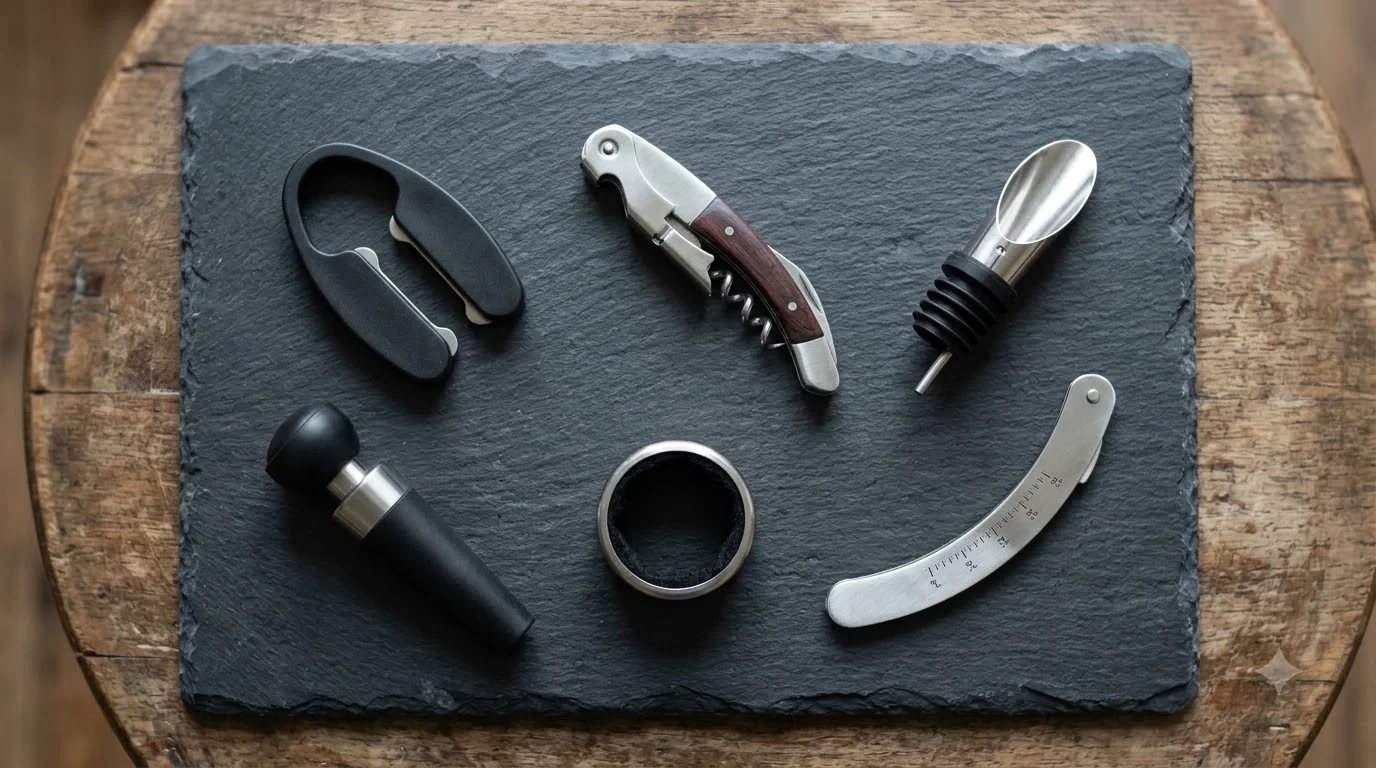
Rabbit wine accessories are practical wine-opening, serving, and preservation tools designed to make enjoying wine at home easier. The collection includes lever corkscrews, electric openers, foil cutters, aerators, pourers, decanting systems, and reusable bottle stoppers. Its strongest appeal is convenience: individual tools address specific tasks, while multi-piece sets combine several useful accessories into one collection. For most home wine drinkers, a dependable corkscrew, a good stopper, and a simple aerating pourer are the most useful starting points.
Rabbit has built its name around wine-opening equipment, but its accessories cover considerably more than removing corks. The brand offers tools for preparing bottles, serving wine, and managing leftovers after dinner. Choosing the right combination depends on how frequently wine is opened, how much counter or drawer space is available, and whether convenience or versatility matters most. This review examines the main accessory categories, their practical strengths, potential drawbacks, and the features worth considering before choosing a Rabbit collection.
Specs and Key Features of Rabbit Wine Accessories
Rabbit wine accessories form a broad collection rather than a single coordinated appliance. The range includes standalone tools and bundled sets, with different mechanisms and functions for opening, pouring, aerating, and preserving wine. The Rabbit Pro six-piece set provides a useful example of how several of these accessories work together.
Rabbit identifies the Original Rabbit Corkscrew as its signature product. The company says the brand has more than 30 years of history and that its wine and bar tools are developed and designed in Seattle. Its broader collection also includes electric openers, manual corkscrews, aerators, decanters, pourers, and preservation accessories.
The following table summarizes documented features of the Rabbit Pro six-piece set and other identifiable Rabbit accessories. Dimensions are particularly useful because they help shoppers understand how much room the larger tools may require.
| Accessory | Function | Documented specifications or features |
|---|---|---|
| Lever corkscrew | Removes natural and synthetic corks | 4-inch diameter; 7-inch length in the Pro set |
| Foil cutter | Removes bottle capsules | Four-blade design in the Pro set |
| Aerating pourer | Aerates wine during pouring | 1-inch diameter; 4.25-inch height |
| Silicone stoppers | Seals opened bottles | Two included in the Pro set |
| Replacement spiral | Provides a spare corkscrew component | One additional spiral included |
| Rabbit 2-Step Waiter’s Corkscrew | Manual bottle opening | Compact, folding waiter-style design |
| Rabbit Aero Wine Opener | Pressure-assisted cork removal | Lever-operated air-pressure mechanism |
The distinction between a complete set and an individual accessory matters. A person who already owns a dependable corkscrew may gain little from purchasing another opening tool, but could benefit from an aerator, stopper, or replacement component. Someone establishing a home wine station from scratch may find a multi-piece collection more convenient because several basic tasks are covered in one purchase.
The Rabbit Pro set also demonstrates the practical advantage of combining accessories with different jobs. The corkscrew handles bottle opening, the foil cutter prepares the capsule, the aerating pourer assists with serving, and the stoppers provide a reusable closure. The additional spiral offers a replacement component rather than requiring the owner to replace the entire opening tool if the original spiral needs attention.
For shoppers comparing the larger opening tools, our best Rabbit corkscrew overview provides a more focused look at the opening mechanisms and their differences.
What Owners and Wine Drinkers May Appreciate
The strongest appeal of Rabbit accessories is the variety of practical functions available under one brand. Buyers can assemble a small collection around their drinking habits instead of relying on one oversized gadget that attempts to handle every task.
Convenient lever-operated opening
Lever corkscrews are the best-known part of the Rabbit collection. Their main advantage is mechanical assistance. Instead of repeatedly twisting a small handle while holding the bottle steady, the user positions the opener over the bottle and operates a lever to insert and extract the cork.
Rabbit describes its dual-lever approach as providing a secure grip and smoother cork extraction. The company also says its Original Rabbit Corkscrew has been tested for 20,000 cork pulls. That figure is a manufacturer-reported durability test, not a guarantee that every individual opener will deliver identical service life under every household condition. Rabbit explains the mechanism and its product design in its guide to choosing a wine opener.
Useful accessories beyond the opener
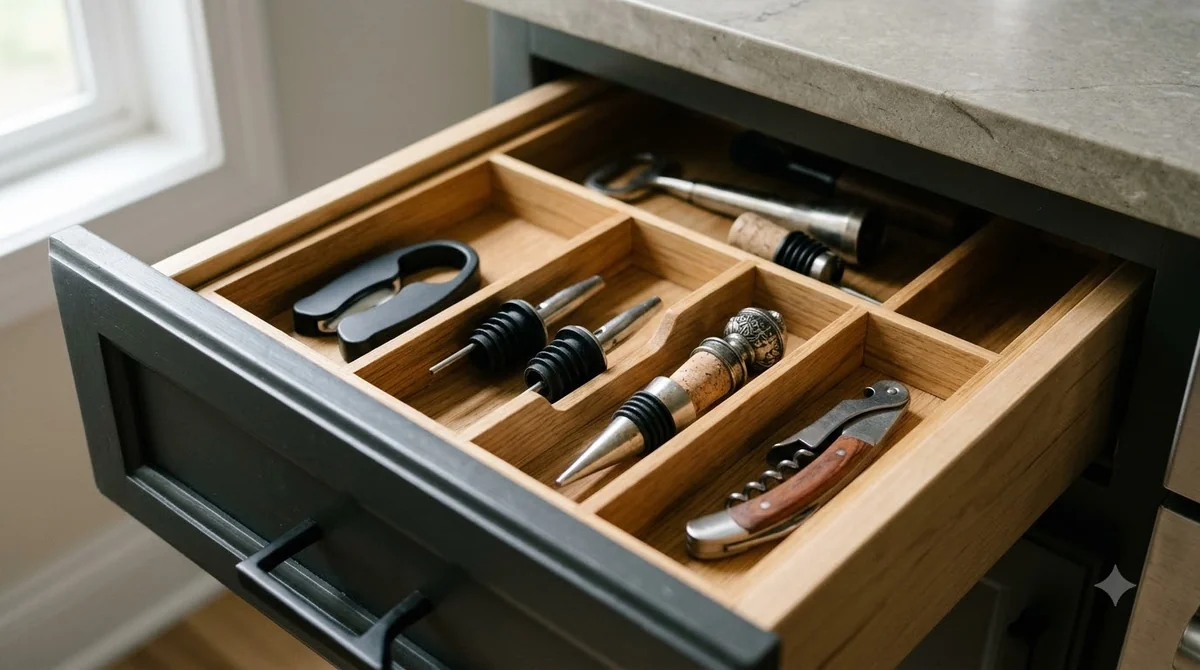
The smaller Rabbit accessories address jobs that are easy to overlook when purchasing a corkscrew. A dedicated foil cutter can make capsule removal neater, while a pourer helps direct wine into the glass. A stopper provides a more convenient closure than attempting to push a natural cork back into the bottle.
The aerating pourer in the Rabbit Pro set is especially relevant for people who frequently serve young red wines. It allows wine to pass through an aerating accessory during pouring rather than requiring a separate decanter and a long preparation period. The result depends on the wine itself, the pouring method, and individual preferences, so it should be considered a serving convenience rather than a guaranteed improvement for every bottle.
Rabbit’s Pura Decanting System offers another approach. Costco’s description of the seven-piece Rabbit Open and Serve set identifies the Pura system as a combination aerator and filter that remains in the decanter during serving. This makes it more suitable for people who regularly decant wine and want to incorporate filtration into the process.
Convenience for different household routines
Not every wine drinker needs the same collection. Someone who opens one bottle on Friday evening may need only a manual corkscrew and a stopper. A household that serves wine several times a week may appreciate a dedicated foil cutter, aerator, and a more substantial lever opener.
There is also a gifting advantage to bundled collections. A set containing an opener, stoppers, and pouring accessories provides a recognizable group of tools that a new wine enthusiast can use immediately. The recipient does not have to research every accessory separately or determine whether individual components will perform compatible jobs.
For people arranging a dedicated serving area, the collection can also complement a practical bar cart. Keeping the opener, foil cutter, pourer, and stoppers together reduces the likelihood of searching through kitchen drawers whenever guests arrive.
Common Complaints and Practical Limitations
Rabbit accessories are designed around convenience, but convenience does not mean every product is suitable for every kitchen. Lever openers can be bulky, accessory sets may include tools that remain unused, and manual operation still requires correct positioning and handling.

Lever openers need storage space
The larger Rabbit lever corkscrews occupy more space than compact waiter-style openers. Good Housekeeping lists the dimensions of the Rabbit lever model it reviewed as 7.76 by 6.3 inches, with a weight of 1 pound. Those measurements illustrate why a lever model is better suited to a kitchen drawer, cabinet, or dedicated wine station than a small pocket or travel kit.
This is an important consideration for apartment kitchens and compact home bars. A large opener can be pleasant to use but inconvenient to store if the available drawer is already filled with kitchen equipment. A slim two-step waiter-style corkscrew is often a more sensible choice for occasional use, picnics, and travel.
Manual tools still require technique
A lever mechanism simplifies cork extraction, but the user still needs to position the opener correctly. A poorly aligned corkscrew can enter a cork at an angle, making extraction more difficult. Users should also follow the instructions for the particular opener instead of assuming that every Rabbit product works in exactly the same way.
The Rabbit Aero illustrates why this matters. Its instructions describe a pressure-assisted opening process that differs from the conventional lever mechanism. The user first removes the foil, positions the pressurization pin through the cork, and operates the lever to build pressure. The instructions specifically warn against using the lever to pull the cork from the opener.
That warning is significant because the Aero is not operated like a standard lever corkscrew. Following the correct removal procedure prevents users from applying force to the wrong component.
Multi-piece sets can include unnecessary items
A six-piece collection looks comprehensive, but the number of included accessories does not automatically determine its usefulness. A household that rarely decants wine may not need a dedicated decanting system. Someone who usually finishes a bottle with dinner may have little use for multiple preservation accessories.
Likewise, a person who already owns a suitable foil cutter and two reusable stoppers may gain more from purchasing a replacement corkscrew than from acquiring another complete set.
Before selecting a bundle, consider which tools will be used weekly, which will be used occasionally, and which may remain in storage. A smaller selection of frequently used accessories can provide better practical value than a large collection of duplicate tools.
Aeration is not necessary for every wine
Aerators are popular because they allow wine to receive air during pouring, but not every wine benefits from the same treatment. Young, structured red wines may respond differently from delicate older reds, crisp Sauvignon Blanc, or sparkling wine.
For example, a young Cabernet Sauvignon may benefit from additional air, while an older Pinot Noir may be more delicate and better served with careful handling. A sparkling wine should not be passed through an ordinary red-wine aerator because preserving its carbonation is generally more important than increasing oxygen exposure.
Buyers should therefore treat an aerator as an optional serving tool, not an essential requirement for every bottle.
Who Should Buy Rabbit Accessories and Who Should Skip Them
Rabbit is a sensible choice for home wine drinkers who value straightforward opening tools and coordinated serving accessories. The collection is less compelling for people who need a minimalist travel opener or already own equipment that covers their regular wine-serving routine.
Good candidates for Rabbit accessories
Frequent home wine drinkers: People who open bottles several times a week can benefit from keeping a dedicated opener, foil cutter, and stopper in one accessible location. A lever corkscrew is particularly useful when several bottles need to be opened during a dinner party.
New wine enthusiasts: Someone building a first home wine collection may appreciate a set containing the basic equipment for opening, pouring, and preserving wine. A multi-piece collection also makes it easier to understand the purpose of accessories such as aerators and replacement spirals.
Hosts who entertain regularly: People who serve wine to guests may prefer having a dedicated serving station with an opener, pouring accessory, and reusable closures. The accessories help organize the process from bottle preparation to storing leftovers.
People who prefer mechanical assistance: Lever-operated corkscrews can be more convenient than small manual corkscrews for people who dislike repeated wrist twisting. However, larger tools still require the user to hold and position the bottle and opener properly.
Gift shoppers: A Rabbit wine tool collection can make a practical gift for someone setting up a home bar. Its combination of recognizable opening equipment and serving accessories makes more sense than a decorative item with no everyday function.
Who may prefer another option
Minimalist travelers: A large lever opener is not the most convenient tool for a picnic bag or suitcase. A compact waiter-style corkscrew is easier to carry and requires less storage space.
Occasional wine drinkers: Someone who opens only a few bottles each year may not need a complete collection. One dependable opener and a reusable stopper can cover the basic requirements without adding unused accessories.
People who already own similar equipment: If the kitchen already has a functional corkscrew, foil cutter, aerator, and stopper, purchasing a complete Rabbit set may introduce unnecessary duplication. Buying only the missing accessory is more practical.
Collectors who prioritize specialized preservation: Basic bottle stoppers are useful for short-term closure, but they are not equivalent to specialized wine-preservation systems designed to manage oxygen exposure. People who regularly save expensive bottles for extended periods should compare dedicated preservation products rather than assuming that a simple stopper provides the same performance.
Choosing according to drinking frequency
A useful way to narrow the collection is to consider how many bottles are typically opened in a household. A person opening one bottle occasionally has different needs from someone hosting a weekly wine night.
For occasional use, prioritize compactness and simplicity. For regular entertaining, prioritize quick opening, easy access to serving tools, and enough stoppers for the number of bottles likely to remain unfinished. For a more elaborate wine station, consider adding a decanter or Pura system after the basic tools are covered.
Tip: Start with the accessories that solve recurring problems. A reliable corkscrew, foil cutter, and two reusable stoppers are a practical foundation. Add an aerator or decanting system only if the wines you regularly serve and your preferred pouring routine make those tools useful.
How Rabbit Compares to Alternative Wine Accessories
Rabbit’s strongest identity is its lever-style corkscrew collection, but other brands and opener designs compete for the same place in a home wine setup. Comparing the basic functions helps clarify whether Rabbit is the right choice or whether a simpler alternative would work better.
Rabbit lever corkscrews versus waiter-style openers
The most important comparison is between a lever corkscrew and a traditional waiter-style tool. Rabbit’s larger lever designs prioritize mechanical assistance and a more substantial grip. Waiter-style corkscrews prioritize portability, simple construction, and compact storage.
Food Network selected the Rabbit 2-Step Waiter’s Corkscrew as its preferred manual opener in its wine opener comparison. The publication highlighted its balanced feel and simple design, while also acknowledging that beginners may find waiter-style opening more challenging. Its wine opener comparison also provides context for comparing manual and lever-style alternatives.
This distinction is useful because Rabbit offers both approaches. Buyers do not necessarily have to choose another manufacturer to find a compact option. They can select a Rabbit waiter-style opener if portability matters more than the convenience of a larger lever mechanism.
Rabbit versus OXO lever openers
OXO is another recognizable name in manual lever-style wine openers. Good Housekeeping compared a Rabbit lever corkscrew with other opening designs and highlighted its ease of operation and built-in foil cutter. Food Network, meanwhile, selected an OXO Steel Vertical Lever Corkscrew as its preferred lever option in its comparison.
The practical decision is not simply which brand is better. Buyers should examine the handle arrangement, grip, dimensions, foil-cutting arrangement, and available storage space. A larger lever opener may be attractive for frequent use, but a compact design can be more appropriate for a small kitchen.
For a more detailed look at the different Rabbit mechanisms, the site’s Rabbit corkscrew reviews provide a useful starting point for comparing individual opener styles.
Rabbit aerators versus traditional decanters
An aerating pourer and a decanter serve related but different purposes. An aerating pourer introduces air as wine flows into the glass, making it convenient for immediate serving. A decanter provides a separate vessel where wine can be exposed to air over a longer period.
Rabbit’s Pura Decanting System combines aeration and filtration, according to the product description for its seven-piece Open and Serve collection. This is a more involved serving arrangement than a simple pourer. It may appeal to people who regularly serve wines that benefit from decanting or who want filtration as part of the pouring process.
Neither approach is automatically superior. A pourer is generally more compact and convenient for quick service. A decanter is more versatile for deliberate wine presentation and controlled serving, particularly for bottles with sediment or wines that benefit from additional time in contact with air.
Rabbit stoppers versus basic bottle closures
Rabbit’s reusable stoppers are intended to provide a convenient seal after a bottle has been opened. They are useful for keeping a bottle closed in the refrigerator between servings, although a basic stopper should not be confused with a vacuum preservation system.
The Rabbit Pro kit includes two silicone stoppers, which gives the owner a simple way to close multiple bottles or keep a spare available. This is a practical inclusion for households that occasionally serve more than one wine at a time.
For everyday use, a reusable stopper is often sufficient for a bottle that will be finished within a few days. People who regularly preserve partially consumed premium bottles for longer periods should consider more specialized equipment and compare the operating method and replacement requirements.
Frequently Asked Questions
Are Rabbit wine accessories made by Lifetime Brands?
Rabbit is identified as a division of Lifetime Brands, Inc. on its official website. Lifetime Brands also presents Rabbit alongside other beverage and barware brands, including RBT and Houdini. This provides useful context for shoppers researching the company behind the collection.
Can Rabbit accessories be used with synthetic wine corks?
Rabbit describes its Original Rabbit Corkscrew as working with different cork types, and its opening range is designed for ordinary household wine bottles. Synthetic corks can vary in density and friction, however, so users should follow the operating instructions for their particular opener. A centered spiral and steady positioning help avoid unnecessary strain on the mechanism.
Does Rabbit make accessories for Champagne bottles?
Yes. Rabbit’s wine collection includes Champagne-oriented accessories, including a Champagne opener and a Champagne preserver. These tools address the different closure and carbonation requirements of sparkling wine. A standard still-wine stopper should not automatically be treated as a substitute for a dedicated sparkling-wine closure.
Can Rabbit wine accessories be given as wedding gifts?
Rabbit’s bundled wine tool collections are suitable for wedding and housewarming gifts because they combine several recognizable serving functions. A set with an opener, foil cutter, pouring accessory, and stoppers is particularly practical for a couple establishing a shared home bar. Choosing a collection that avoids unnecessary duplicate tools makes the gift more useful.
Does Rabbit sell replacement corkscrew spirals separately?
Rabbit includes an extra spiral in certain bundled collections, including the Pro six-piece set. That confirms that replacement spirals are considered part of the accessory ecosystem. Availability and compatibility of separately purchased replacement parts can differ, so buyers should identify their specific opener before ordering a component.
Rabbit offers a useful range of tools for opening, serving, and preserving wine, with its lever corkscrews providing the clearest reason to consider the brand. The most sensible purchase is the collection that matches actual drinking and entertaining habits rather than the one containing the greatest number of pieces. For many households, a dependable opener, a foil cutter, and reusable stoppers provide an excellent foundation, with aerators and decanting accessories available as useful additions.
More in Wine Accessories
 Vinglace Wine Tumbler Review: A Glass-Lined Choice for Better SippingUpdated Nov 20, 2026
 ZWILLING Electric Wine Opener Review: Features and DrawbacksUpdated Nov 20, 2026
 Vinturi Electric Wine Opener Review for Easy UncorkingUpdated Nov 20, 2026
 Vinabon Wine Aerator Review for Easier, Cleaner Wine ServingUpdated Nov 20, 2026
 Vacu Vin Electric Wine Opener Review: Easy Cork Removal for Home Wine LoversUpdated Nov 20, 2026
 Vinabon Wine Opener Review: Fast Cork Removal With Less EffortUpdated Nov 20, 2026