

We may earn a commission when you buy through links on this page, at no extra cost to you. Learn more.
The vacu vin wine aerator is a reusable, on-bottle wine accessory that introduces additional oxygen as wine flows into your glass, making it a convenient option for drinkers who want to aerate wine without waiting for a traditional decanter. Its transparent design lets you watch the pouring process and spot sediment, while its compact shape makes it easy to keep with your other wine accessories. However, its effectiveness depends on the wine, and its plastic construction and cleaning requirements deserve consideration before buying.
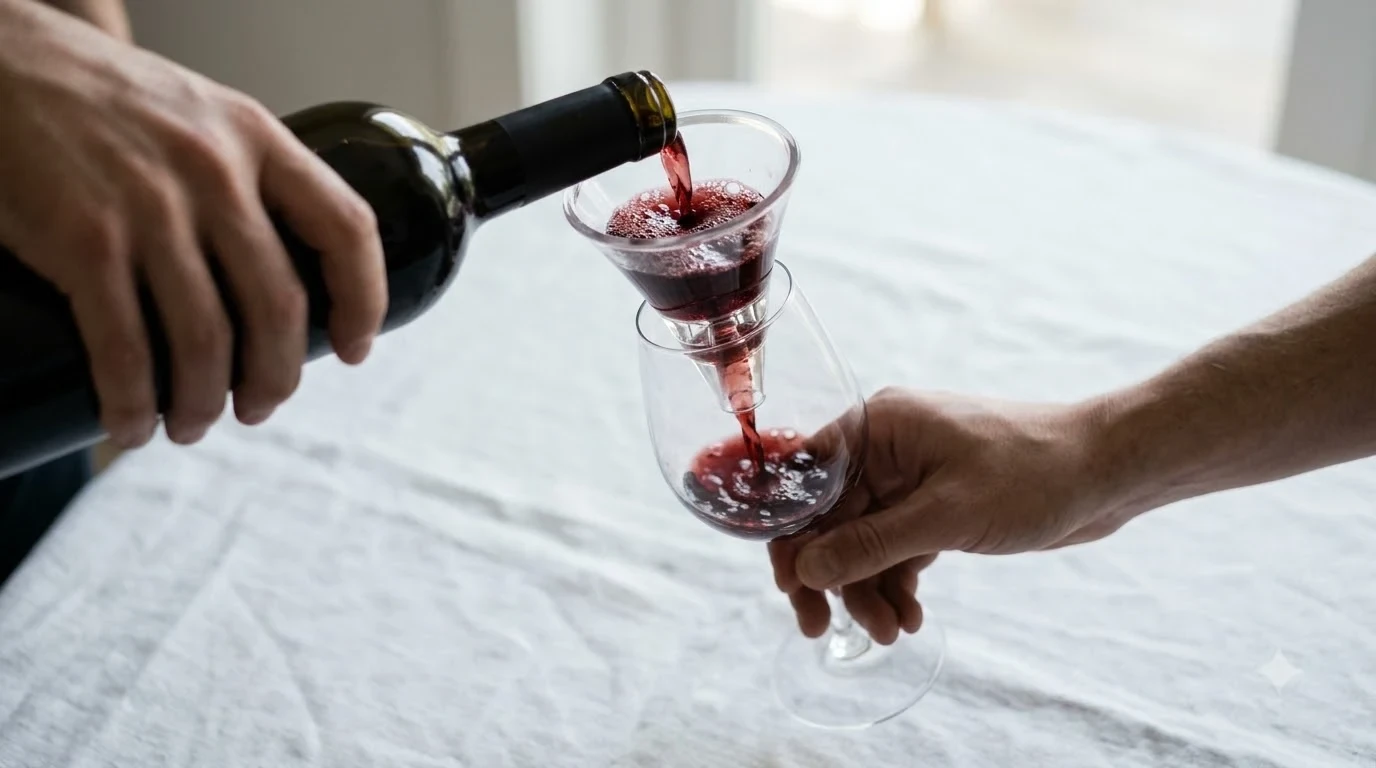
Wine aeration can change how a wine expresses its aromas and structure, particularly with younger reds that benefit from additional oxygen exposure. The Vacu Vin approach is straightforward: attach the aerator to the bottle, pour normally, and let the wine pass through its internal structure on the way to the glass. It is a practical alternative to pouring an entire bottle into a decanter, although it does not provide the same extended air exposure. This review examines its construction, functionality, owner feedback, maintenance, and suitability for different wine-drinking habits.
Specs and Key Features of the Vacu Vin Wine Aerator
The Vacu Vin Wine Aerator is designed for immediate aeration during serving rather than prolonged wine breathing. Its main selling points are its transparent housing, compatibility with most conventional wine bottles, and straightforward installation.
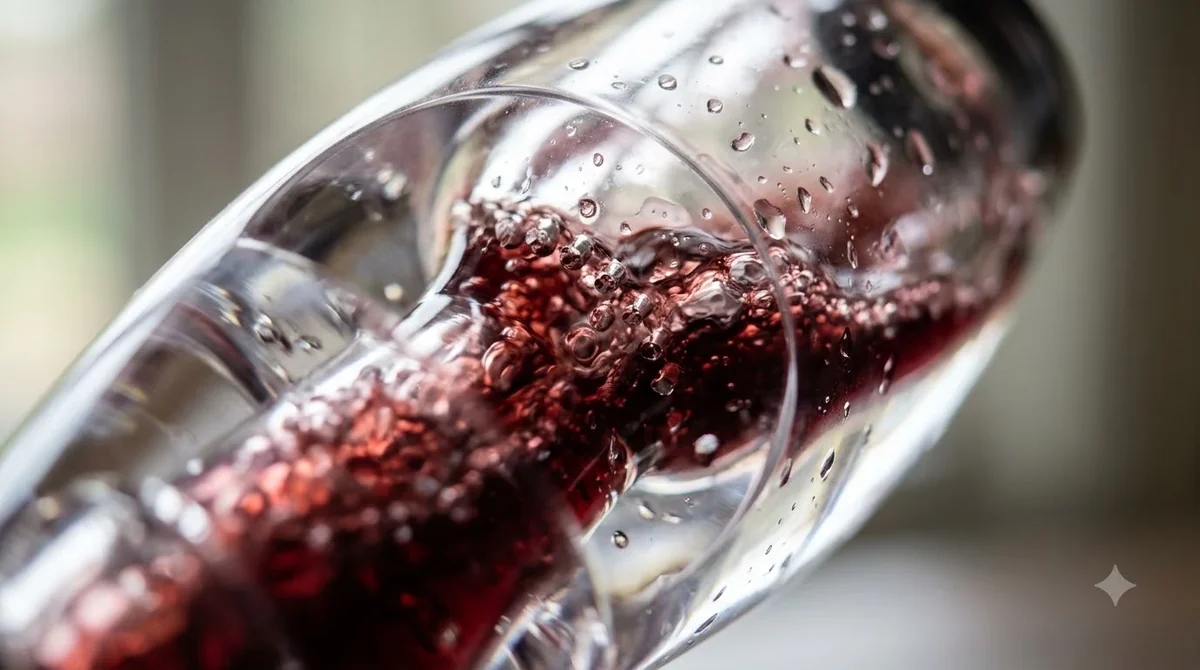
The aerator has an elongated, compact body that attaches to the bottle opening. Wine passes through its internal structure as the bottle is tilted, allowing additional oxygen contact before the liquid reaches the glass. The transparent upper section makes the process visible, which is particularly useful for monitoring the wine flow and identifying sediment.
According to Vacu Vin, the design slows the flow of wine into the glass so that it can take up additional oxygen. The manufacturer also describes the intended benefits as improved aroma expression and softer tannins. These are reasonable goals for an aerating accessory, but they should not be interpreted as a guarantee that every wine will undergo a dramatic improvement.
The product is identified by the US article number 1854660-USA. Its European product reference is 1854660. The manufacturer describes it as designed in the Netherlands and produced in Europe.
| Specification | Vacu Vin Wine Aerator |
|---|---|
| Product type | On-bottle wine aerator and pourer |
| Manufacturer | Vacu Vin |
| US article number | 1854660-USA |
| UPC | 084256185469 |
| Dimensions | 82 x 158 x 34 mm |
| Approximate dimensions in inches | 3.2 x 6.2 x 1.3 inches |
| Net weight | 65 grams (approximately 0.14 pounds) |
| Design | Transparent upper section with detachable components |
| Bottle compatibility | Most cork-top and screw-top wine bottles |
| Power requirement | No batteries required |
| Cleaning recommendation | Hand washing |
| Storage | Around the neck of a wine bottle |
| Warranty | Manufacturer advertises a minimum five-year warranty |
The specifications make this a relatively uncomplicated accessory. There is no motor, electrical connection, charging requirement, or separate aeration chamber to assemble. Its usefulness comes from the physical design and the additional oxygen contact created during pouring.
One detail worth understanding is the distinction between aeration and filtration. The transparent housing helps you notice sediment, but the aerator should not be treated as a dedicated fine-mesh filtration system. If an older bottle contains substantial deposits, careful decanting remains a more suitable approach.
The manufacturer’s product information is available on the official Vacu Vin Wine Aerator product page, which provides the product description, identification details, and warranty information.
What Owners Like About Its Design and Everyday Performance
The most appealing aspect of the Vacu Vin Wine Aerator is its convenience. It allows users to introduce oxygen during the ordinary act of pouring, eliminating the need to transfer wine into a separate vessel before serving.

For someone opening a bottle of young Cabernet Sauvignon, Syrah, or Merlot at dinner, this can be useful. These wines can have noticeable tannin structure, and additional oxygen exposure may help some young examples express their aromas more openly. The aerator makes that process part of serving rather than a separate preparation step.
Another advantage is its visible construction. The transparent upper section allows users to see wine moving through the device. This is more than a decorative feature because the manual specifically identifies sediment detection as one of its practical functions. If visible deposits approach the pouring section, the user can stop pouring and avoid transferring them into the glass.
Convenient bottle compatibility
Vacu Vin describes the product as fitting most cork-top and screw-top wine bottles. This gives it broader everyday usefulness than accessories that depend on a particular bottle closure. A household that regularly buys wine from different producers can generally use the same aerator without changing its setup for every bottle.
However, universal compatibility should be understood as compatibility with most conventional bottles, not every bottle ever produced. Bottle openings and neck shapes can vary. Unusually shaped bottles, nonstandard closures, and specialty wine containers may not provide the same secure fit.
Positive feedback about practicality
Customer feedback published on Vacu Vin’s website includes positive comments about its convenience and fit. One reviewer described it as handy for wine intended for immediate drinking rather than storage. Another reviewer reported that it fitted a normal wine bottle properly and fulfilled its intended function.
These comments support the product’s appeal as a simple serving accessory. They do not establish that the aerator produces the same result with every wine, but they illustrate why a compact, reusable attachment can be attractive to casual wine drinkers.
The design also avoids several inconveniences associated with larger aeration equipment. There is no stand to assemble, no separate glass chamber to position, and no electrical mechanism to maintain. It can remain with the bottle during a meal and be removed afterward.
Its small footprint also makes it easier to store than a full-sized decanter. For households with limited cabinet space, that practical advantage may matter more than elaborate construction or multiple accessories.
Visible sediment monitoring
Sediment is particularly relevant when serving older red wines. Natural deposits can form as wine ages, especially in bottles that have not been filtered heavily. The clear housing makes it easier to notice material moving through the pouring path.
This feature should be treated as a visual aid rather than a substitute for proper bottle handling. Standing an older bottle upright before opening, pouring slowly, and stopping before the sediment reaches the glass remain useful practices. A dedicated decanter can offer better control when the objective is to separate clear wine from substantial deposits.
Common Complaints and Practical Limitations
The main concerns surrounding the Vacu Vin Wine Aerator involve construction quality, cleaning, connection security, and inconsistent perceptions of aeration performance. These limitations are important because the product’s appeal depends on being convenient and dependable during ordinary serving.
One independent review published by Exploring.Wine questioned the solidity of the connections between the aerator’s components. The reviewer also reported that the device did not produce a clearly noticeable improvement in the wine being served. This is a useful counterpoint to the manufacturer’s performance claims.
Wine aeration is not equally noticeable in every bottle. A young, tightly structured red may respond differently from an already expressive Pinot Noir or a delicate white wine. Some differences may become apparent in aroma, while others may be difficult to distinguish during a normal meal.
Plastic construction and durability concerns
The retailer Target identifies the product as plastic and BPA-free. Although this keeps the accessory lightweight, some buyers may prefer glass or stainless steel for wine-serving equipment.
Customer feedback on Vacu Vin’s own website includes a complaint about fragility and a report that one aerator broke within a month. The same reviewer also mentioned difficulty cleaning the device. These comments do not establish a general failure rate, but they show why careful handling and proper maintenance matter.
Another independent reviewer questioned the perceived build quality and described potential leak points around the connections. A secure connection is especially important because wine should flow through the aerator without unexpected dripping or separation during serving.
Cleaning requires attention
The manufacturer’s instructions recommend hand washing and rinsing the aerator under running water. The detachable upper section is helpful because it provides access to components that would otherwise be difficult to reach.
However, wine residue can collect inside narrow openings if the accessory is left unwashed after use. Red wine is particularly noticeable when allowed to dry on transparent surfaces. A quick rinse immediately after pouring is a sensible habit, followed by more thorough cleaning as needed.
There is also conflicting retailer information. Target lists the item as dishwasher-safe, whereas the manufacturer’s instruction manual recommends hand washing. The manufacturer’s maintenance guidance is the more conservative approach, so hand washing is the sensible default for protecting the components.
Not every wine benefits equally
Perhaps the biggest limitation is the assumption that more oxygen always improves wine. That is not how wine aeration works. Oxygen exposure can change aroma and texture, but the ideal amount depends on the wine’s age, structure, condition, and style.
A young Cabernet Sauvignon with prominent tannins may benefit from additional air. An older Pinot Noir with delicate aromas may need gentler treatment. A mature bottle that already expresses its aromas clearly may not require an aerator at all.
The Vacu Vin also cannot provide the extended exposure associated with a traditional decanter. Its action occurs during the relatively brief time that wine passes through the device. It should therefore be considered a convenient serving accessory rather than a replacement for every decanting technique.
Tip: Compare the same young red wine before and after using the aerator. Pour two small samples, aerate one, and smell both after a few minutes. This gives you a more useful indication of whether the accessory changes the wine you actually drink than relying on a general claim about smoother flavor.
Who Should Buy the Vacu Vin Wine Aerator and Who Should Skip It
The Vacu Vin Wine Aerator is best suited to people who prioritize quick serving and want a compact accessory that requires little preparation. It is less appropriate for wine enthusiasts who need precise control over extended aeration, sediment separation, or the handling of fragile older bottles.
Who should consider buying it?
Casual red wine drinkers: People who regularly open young Merlot, Cabernet Sauvignon, or Syrah may appreciate the ability to introduce oxygen while pouring. Instead of preparing a decanter before dinner, they can attach the accessory directly to the bottle.
People who entertain occasionally: When serving several guests, a simple bottle attachment can make pouring more convenient. The transparent design also provides a visible feature that some guests may find interesting during a dinner gathering.
Small-space households: A compact accessory can be easier to store than a large glass decanter. The Vacu Vin is also relatively light, with a manufacturer-listed weight of approximately 65 grams.
People who want a reusable gift: Wine accessories can make useful gifts for people who enjoy hosting or collecting practical kitchen tools. The aerator is particularly suitable for someone who already owns basic equipment such as a corkscrew and wine stopper.
Drinkers who serve wine by the glass: Someone who opens a bottle for a small dinner and pours individual servings may appreciate on-bottle aeration without transferring the entire bottle into another container.
Who should skip it?
Collectors of mature wines: Older wines often need careful handling. Some bottles contain substantial sediment, while others have delicate aromas that can become less expressive with excessive air exposure. A traditional decanter or careful direct pouring may provide better control.
People who prefer premium materials: Buyers looking for stainless steel, glass, or a more substantial serving accessory may not appreciate the lightweight plastic construction. The product’s practical design does not make it a premium presentation piece.
Drinkers who expect dramatic transformation: An aerator cannot repair an unbalanced bottle, reverse oxidation, or turn an ordinary wine into an exceptional one. It changes how wine encounters oxygen during pouring, not the underlying quality of the wine.
People who dislike detailed cleaning: The detachable construction and hand-washing recommendation may be inconvenient for buyers who want to put every kitchen accessory straight into the dishwasher.
People who primarily drink delicate whites: Sauvignon Blanc, unoaked Chardonnay, and aromatic Riesling generally do not require the same approach as a young, heavily structured red. While aeration is not automatically harmful to white wine, the potential benefit may be less compelling for someone who mainly drinks fresh, aromatic styles.
The decision is therefore less about whether the product is universally good or bad and more about whether its specific strengths match your drinking habits. If speed and simplicity matter most, its design makes sense. If control and material quality matter more, a different accessory may be a better long-term purchase.
How the Vacu Vin Wine Aerator Compares to Alternatives
The Vacu Vin occupies the category of simple on-bottle aerators. Its main distinction is that it works directly during pouring, whereas a decanter or standalone aeration device may provide different levels of oxygen exposure and control.
Understanding these differences helps buyers avoid choosing an accessory based only on appearance or the promise of improved flavor. The right option depends on the wine being served, the available preparation time, and the amount of control required.
On-bottle aerator versus traditional decanter
A traditional decanter transfers wine into a separate vessel with a relatively broad surface area. This creates an opportunity for oxygen exposure over a longer period, depending on the vessel’s shape, the wine volume, and the amount of time the wine remains inside.
The Vacu Vin is more convenient for immediate serving. It attaches to the bottle and aerates wine as it flows toward the glass. There is no need to pour the entire bottle into a second container or wash a large glass vessel afterward.
However, a decanter offers more control over timing. A young full-bodied red can be allowed to rest for 30 to 60 minutes when extended aeration is desirable. An on-bottle accessory does not provide the same preparation window.
For anyone deciding between these approaches, a decanter with aerator provides another category to consider, combining the functions of wine transfer and oxygen exposure in a serving vessel.
On-bottle aerator versus standard wine pourer
A conventional wine pourer is primarily designed to improve the pouring experience. It can help direct the stream, reduce dripping, and make serving more controlled without necessarily introducing additional oxygen.
The Vacu Vin has a different purpose. Its internal design is intended to slow the wine flow and encourage oxygen contact. That distinction matters because a clean pour and meaningful aeration are separate objectives.
If your main problem is wine dripping down the outside of the bottle, a simple pourer may be sufficient. If you specifically want an aerating function, the Vacu Vin is more relevant.
On-bottle aerator versus electric aerator
Electric wine aerators generally focus on convenience through powered dispensing. Depending on the design, they may use a motorized mechanism or pump to move wine from the bottle into the glass.
The Vacu Vin does not require batteries or an electrical connection. That means fewer components to charge or maintain, but it also means that pouring remains a manual process.
For occasional use, the manual approach can be entirely adequate. People who serve wine frequently at larger gatherings may prefer an electric dispenser if speed and repeated serving are more important than simplicity.
On-bottle aerator versus a wine decanting funnel
A decanting funnel is useful for transferring wine into a decanter and, in some designs, separating sediment through a filtration component. Its purpose is not necessarily the same as an aerating pourer.
The Vacu Vin provides a visible pouring path and helps users notice sediment, but it should not be considered a replacement for a dedicated filtration funnel. For older bottles, careful decanting remains the more controlled option.
People exploring different serving and tasting tools may also find Accessory Brands useful when comparing equipment categories and deciding which pieces deserve space in a home wine setup.
Likewise, learning how aroma influences wine perception can help buyers understand why aeration is sometimes useful and sometimes unnecessary. Resources such as Le Nez du Vin introduce the subject of wine aromas and sensory recognition, which is relevant when evaluating whether an aerator changes what you smell in the glass.
Frequently Asked Questions
Does the Vacu Vin Wine Aerator change the alcohol content of wine?
No. The accessory is designed to introduce oxygen during pouring, not to remove or add alcohol. A wine’s stated alcohol by volume remains essentially the same after passing through the aerator.
Can the Vacu Vin Wine Aerator be used with sparkling wine?
It is not specifically designed as a sparkling wine preservation or serving accessory. Introducing additional oxygen and disturbing the wine during pouring can affect carbonation, so a conventional sparkling wine stopper and careful pouring are preferable when preserving bubbles is the priority.
Does the aerator remove unwanted odors from wine?
No. Aeration may change the way certain aromas are perceived, but it cannot reliably eliminate cork taint, bacterial spoilage, or other wine faults. A bottle with a persistent musty, vinegar-like, or otherwise unpleasant smell should not be expected to improve simply by passing it through an aerator.
Can the Vacu Vin Wine Aerator be stored while still wet?
It is better to let the cleaned components dry thoroughly before putting the accessory away for an extended period. This reduces the chance of trapped moisture remaining inside its detachable sections. Keeping the parts clean and dry also makes the next use more convenient.
Does a wine aerator need to be used for every glass from the same bottle?
No. Aeration is a serving choice rather than a requirement. You can use the accessory for one pour and serve subsequent glasses without it, allowing you to compare the wine’s changing expression as it receives additional exposure to air.
The Vacu Vin Wine Aerator is a practical option for drinkers who want simple, immediate aeration without the storage demands of a traditional decanter. Its transparent design, broad bottle compatibility, and lightweight construction are appealing, although cleaning, durability, and inconsistent perceived results deserve consideration. For casual wine service and younger reds, it can be a useful addition to a home bar; for mature bottles and more demanding decanting needs, a traditional decanter remains the more versatile choice.
More in Wine Accessories
 Vinglace Wine Tumbler Review: A Glass-Lined Choice for Better SippingUpdated Nov 20, 2026
 ZWILLING Electric Wine Opener Review: Features and DrawbacksUpdated Nov 20, 2026
 Vinturi Electric Wine Opener Review for Easy UncorkingUpdated Nov 20, 2026
 Vinabon Wine Aerator Review for Easier, Cleaner Wine ServingUpdated Nov 20, 2026
 Vacu Vin Electric Wine Opener Review: Easy Cork Removal for Home Wine LoversUpdated Nov 20, 2026
 Rabbit Wine Accessories for Easier Home Wine ServiceUpdated Nov 20, 2026