

We may earn a commission when you buy through links on this page, at no extra cost to you. Learn more.
The best decanting funnel for most wine drinkers is a stainless steel model with a removable fine-mesh screen and a curved or angled spout, which filters out gritty sediment while fanning wine gently down the inner wall of a decanter. Because different bottles demand different levels of air and filtration, choosing the right design depends on what you open most often. Older, fragile reds benefit from a fine-mesh or muslin-lined funnel that traps bitter deposits without aggressively churning the wine, whereas tight, young Cabernet or Syrah opens up faster through a multi-hole aerating funnel.
Even with a steady hand and a flashlight under the neck of the bottle, pouring wine cleanly into a narrow-mouthed vessel is harder than it looks. A well-built wine funnel acts as both a splash guard and a physical barrier against tartrate crystals, crumbling cork bits, and aging deposits. Whether you are prepping a dusty cellar bottle for dinner or double-decanting a weeknight red back into its original bottle, the geometry of the spout and the fineness of the screen determine how smoothly the pour goes.
Quick Comparison
Each funnel style balances sediment trapping, oxygen exposure, and cleanup differently depending on the age and structure of the bottle.
| Funnel Type | Best For | Sediment Filtration | Aeration Level | Cleanup Effort |
|---|---|---|---|---|
| Stainless Steel with Removable Screen | Everyday versatility and easy cleanup | Moderate to high (fine wire mesh) | Gentle wall-cascade | Low (dishwasher-safe parts) |
| Multi-Hole Aerating Funnel | Young, full-bodied, high-tannin reds | Light to moderate | High (dispersed streams) | Moderate (rinse holes thoroughly) |
| Curved-Spout Sommelier Funnel | Mature reds and Vintage Port | High (often paired with muslin) | Minimal and controlled | Moderate to high |
| Glass Spiral or Ribbed Funnel | Visual table presentation | Low (relies on separate screen) | Moderate to high | Moderate (fragile handling) |
| Compact Silicone or Travel Funnel | Double-decanting and tight storage | Light (basic strainer insert) | Low to moderate | Low (flexible and durable) |
Best for Everyday Versatility: Stainless Steel Funnel with Removable Screen
A two-piece stainless steel funnel with a drop-in mesh strainer handles both sediment capture and gentle aeration without requiring extra accessories. It sits securely in standard decanter necks and comes apart in seconds when the pour is finished.
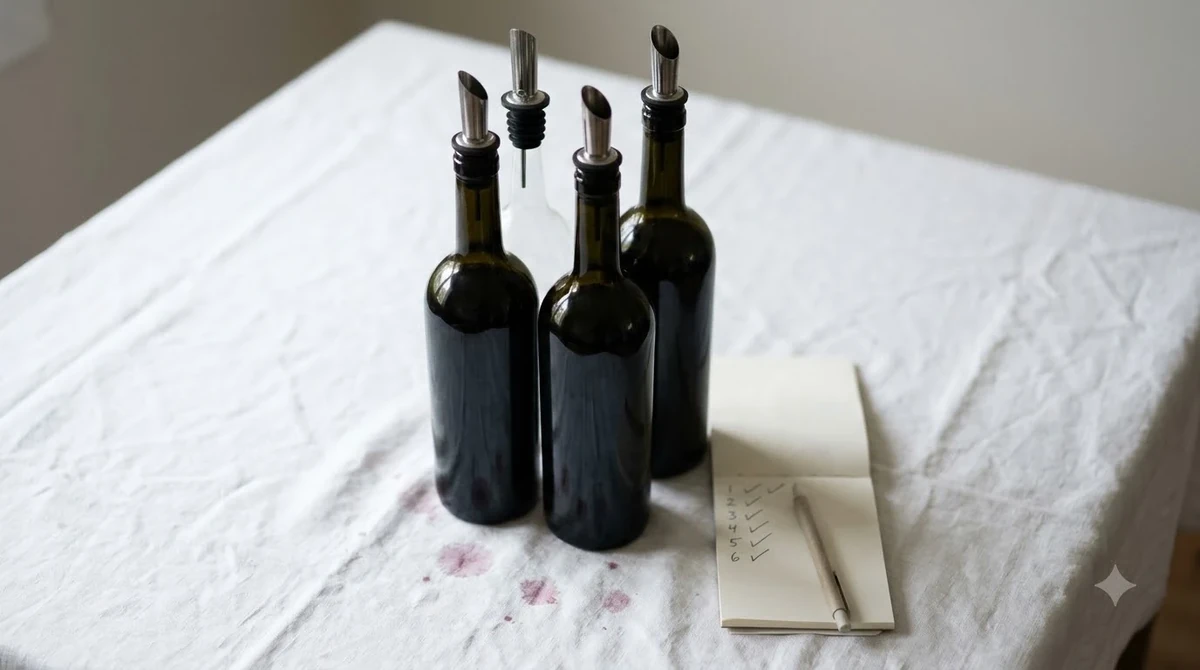
Why it stands out: As Wine Folly notes in its guide to essential wine accessories, a stainless steel wine funnel and filter is the dependable upgrade over a makeshift kitchen tea strainer when you want clean results without metallic flavor transfer. The removable mesh disc sits high enough in the bowl to catch broken cork fragments and coarse grape solids before they reach the narrow stem, while the angled exit directs wine along the glass wall rather than straight into the pool at the bottom. Most models also include a small drip stand so sticky red droplets do not stain a tablecloth or bar cart after you lift the funnel out.
Keep in mind / Best for: Standard wire mesh traps gritty deposits and cork pieces easily, though ultrafine silt in decades-old bottles can still slip through unless you lay a small piece of damp cheesecloth over the screen. Choose this style if you want one durable, corrosion-resistant tool that works for Tuesday night blends and weekend cellar pulls alike.
Best for Young, Tannic Reds: Multi-Hole Aerating Funnel
Designed with small side perforations or an internal diffuser cone, an aerating funnel splits a single stream of wine into multiple thin rivulets that absorb oxygen immediately during the transfer. It speeds up the softening process for tight, youthful reds that otherwise need hours in a wide-base vessel.
Why it stands out: Bold young wines made from Cabernet Sauvignon, Syrah, Malbec, and Nebbiolo often taste closed or overly grippy right after pulling the cork. Instead of forcing you to wait two hours before pouring the first glass, an aerating funnel dramatically increases the surface area of the liquid as it enters the decanter, letting volatile aromas blow off and fruit notes emerge faster. Many versions pair this shower-head dispersion with a top-mounted strainer basket so you still catch any stray tartrate crystals or cork dust while giving the wine a vigorous wake-up call.
Keep in mind / Best for: Aggressive aeration is too rough for fragile, mature bottles, where sudden oxygen exposure can flatten delicate tertiary aromas within minutes. This type is best for drinkers who regularly open young, full-bodied reds shortly before dinner and want maximum flavor development in a short window.
Best for Aged Reds and Vintage Port: Curved-Spout Sommelier Funnel
Built with a bent or side-angled tip and a deep bowl that accommodates a muslin liner, a traditional sommelier funnel guides wine silently down the inner curve of a decanter while trapping powdery sediment. It prioritizes precision and gentle handling over rapid oxygenation.
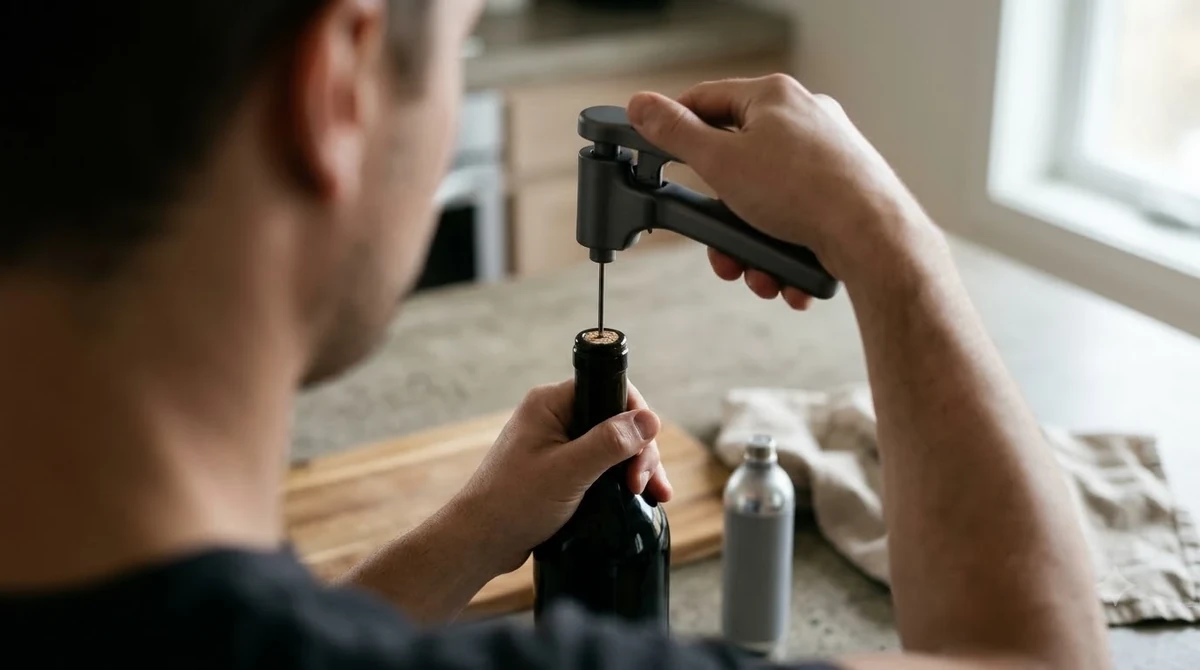
Why it stands out: When decanting mature bottles, Decanter Magazine’s guide to decanting emphasizes separating the clear wine from its deposit smoothly so the wine does not splash violently into the vessel. A curved spout aims the stream directly against the interior shoulder of the glass, preventing turbulence and excessive air mixing that could tire out an older Bordeaux, Rioja, or Vintage Port. Traditional silver-plated or heavy-gauge steel versions also feature a small vent rib along the outside of the stem so air can escape from the decanter as liquid flows in, eliminating airlocks and sudden overflows.
Keep in mind / Best for: The narrow, curved tube takes a little extra care to rinse completely, and fine muslin cloths need thorough washing in plain hot water without scented detergent. Pick this design if you collect aged wines or fortified bottles that throw heavy, fine-grained sediment.
Best for Tableside Presentation: Glass Spiral or Ribbed Funnel
Crafted from clear borosilicate glass with internal flutes or a twisted stem, a glass funnel turns the transfer from bottle to decanter into a visible centerpiece at the dining table. Watch the wine fan out across the clear ridges before cascading down the sides of the vessel.
Why it stands out: Glass funnels appeal to hosts who treat decanting as part of the dinner-party ritual rather than a behind-the-scenes kitchen chore. Because borosilicate glass is completely non-porous and visually transparent, you can monitor the color and clarity of the pour in real time and spot the exact moment dark sediment begins approaching the bowl. The molded spiral channels naturally slow the descent of the liquid, providing moderate, even aeration without the mechanical look of perforated metal inserts.
Keep in mind / Best for: Most all-glass funnels lack an integrated micro-mesh filter, meaning you must pair them with a separate drop-in screen if your bottle has heavy deposits, and they require careful hand-washing to avoid chipping the delicate tip. They are best for hosts pouring sediment-light wines in front of guests where aesthetics matter as much as function.
Best for Double-Decanting and Small Spaces: Compact Silicone or Travel Funnel
Flexible, collapsible, and narrow enough to fit inside a standard 750-milliliter wine bottle neck, a compact funnel makes it easy to pour aerated wine back into its original bottle for service or storage. It tucks flat into a kitchen drawer or travel bag without denting.
Why it stands out: Double-decanting—pouring wine into a wide pitcher to breathe, rinsing the empty bottle, and funneling the wine back in—lets you serve a properly aerated bottle with its original label on the table. Standard wide-stemmed decanter funnels often sit too loosely or choke the narrow opening of a regular wine bottle, whereas a tapered compact model creates a stable seal and vents displaced air cleanly. Food-grade silicone or slim stainless steel travel designs also survive drops on tile floors and pack effortlessly alongside a waiter’s corkscrew in our Accessories Library.
Keep in mind / Best for: Small funnels hold less liquid at once, so you have to pour at a measured pace to avoid overfilling the shallow bowl, and their removable strainers usually have slightly wider perforations than full-size cellar funnels. This style is ideal for apartment dwellers short on cabinet space and anyone who likes double-decanting before a gathering.
How to Choose
Match the spout geometry to your vessels: Check the interior diameter of your decanter’s neck before buying. Most standard decanters accept stems up to one inch wide, while narrow-necked sediment decanters and standard wine bottles require a slimmer taper. A curved or side-ported tip is always preferable to a straight vertical drop because it directs wine along the glass wall instead of splashing straight down.
Look for an air-release channel: When liquid enters a narrow opening, trapped air has to escape upward. Good funnels include a small vertical groove, ridge, or vent hole along the outside of the stem. Without that channel, wine can pool in the bowl and burp over the rim onto your counter.
Choose non-reactive materials: Food-grade 18/8 or 304 stainless steel and borosilicate glass will never impart metallic or plastic notes to delicate wines. Avoid unlined silverplate if you do not want to polish away tarnish, and skip any plastic funnel with tight internal seams where red wine pigments and yeast residue can hide.
Verify screen removability and mesh gauge: A fixed screen is frustrating to scrub once grape skins or cork crumbs wedge into the rim. Look for a screen that pops out cleanly with a fingertip, and consider whether you need coarse holes for broken corks or fine woven mesh for tartrate crystals and aging deposits.
Tip: Rinse your funnel and decanter with plain warm water immediately after pouring, then finish with a cold water rinse before air-drying. Skip scented dish soaps on any wine gear, as lingering fragrance residues inside a mesh screen or glass bowl can mask subtle floral aromas in your next bottle—especially when you are splitting a single pour across how many glasses in a bottle of wine you plan to serve.
Frequently Asked Questions
Do I need a decanting funnel if my decanter already has a wide mouth?
A wide mouth makes it easier to pour without spilling, so you do not need a funnel strictly for aim. However, a funnel still adds a mesh screen to catch crumbling cork and bitter sediment, plus a curved spout that spreads wine thinly along the glass wall for smoother aeration.
What is the difference between a wine aerator and a decanting funnel?
A wine aerator uses narrow air-intake tubes or internal chambers to force oxygen rapidly into young wines as you pour by the glass or into a vessel. A decanting funnel focuses primarily on guiding wine cleanly into a decanter while filtering out solids, though some hybrid models include side holes to combine both functions.
How do I filter out very fine sediment that passes through a metal mesh screen?
Line the inside of your funnel bowl with a small square of damp, unbleached cheesecloth or food-grade muslin before pouring. Dampening the fabric first prevents it from absorbing too much wine and keeps stray lint fibers out of your decanter.
Can you put a stainless steel decanting funnel in the dishwasher?
Most plain stainless steel funnels and removable mesh screens are top-rack dishwasher safe, though hand-rinsing with hot water right after use is usually faster and prevents red wine stains from drying in the mesh. If your funnel is silver-plated, glass, or paired with a wooden stand, always wash it by hand.
The right decanting funnel turns a potentially messy transfer into an effortless part of opening a good bottle, protecting every glass from gritty sediment and broken cork while giving the wine the exact amount of air it needs. Start by matching the spout size and filtration level to the bottles you open most, and keep a simple drip stand nearby so cleanup takes seconds once the pouring is done.
More in Wine Accessories
 Coravin Vs Vacu Vin: Choose the Right Wine Saver for Your BottlesUpdated Nov 21, 2026
 Zwilling Wine Stopper Review: Preserve Open Bottles LongerUpdated Nov 21, 2026
 Wine Enthusiast Wine Preserver Review: Features, Benefits and LimitationsUpdated Nov 21, 2026
 Wine Enthusiast Wine Stopper: An Easier Way to Reseal Open BottlesUpdated Nov 21, 2026
 Vintorio Wine Opener: Two-Step Cork RemovalUpdated Nov 21, 2026
 Zwilling Wine Aerator Review: Aerate, Pour, and Seal With One ToolUpdated Nov 21, 2026