

We may earn a commission when you buy through links on this page, at no extra cost to you. Learn more.
The Metrokane wine preserver is a practical vacuum-pump accessory for removing air from opened wine bottles and helping preserve leftover wine for another occasion. Its Rabbit and Houdini versions combine reusable bottle stoppers with a manual pump, offering a straightforward alternative to simply pushing a cork back into an unfinished bottle. The main advantages are uncomplicated operation, reusable components, and convenient storage, while inconsistent seals and pump performance are the primary concerns to consider before buying.
Not every bottle of wine gets finished at dinner, and an ordinary cork does little to reduce the oxygen remaining inside an opened bottle. Metrokane’s vacuum-preservation accessories address that problem with a compact mechanical system. This review examines the Rabbit and Houdini products, their documented features, reported owner experiences, and the situations in which a vacuum preserver makes practical sense. It also explains what the technology can and cannot do, so buyers can distinguish a useful storage accessory from a guarantee of indefinitely fresh wine.
Specs and Key Features
The Metrokane wine preserver is designed around a simple principle: reduce the amount of air in an opened bottle before storing the remaining wine. The Rabbit system combines a hand-operated pump with a fitted stopper, while the Houdini version uses a similar vacuum-sealing approach with a push-button stopper. Both are intended for people who regularly save unfinished bottles rather than finish every bottle at one sitting.

The current Rabbit Vacuum Wine Saver and Preserver listing describes a hand pump and reusable stoppers. The manufacturer claims that the system can preserve the flavor of opened wine for up to two weeks. That figure should be understood as a manufacturer-stated performance claim, not a guaranteed result for every wine, storage condition, or bottle. Wine begins changing as soon as it is opened, and the amount of remaining wine, temperature, and quality of the seal all affect how it develops.
Several details make the design appealing. Rabbit says its stoppers fit any size wine bottle, are dishwasher safe, and have release buttons that make removing them easier. The operating instructions are equally straightforward: insert the stopper, attach the pump, and continue pumping until resistance is felt. Buyers can read the manufacturer’s Rabbit vacuum wine preserver specifications to distinguish the current product from older Metrokane accessories that may appear in resale listings.
| Feature | Documented specification | Practical significance |
|---|---|---|
| Preservation method | Manual vacuum pump | Reduces air inside the opened bottle |
| Included components | Hand pump and stoppers | Allows repeated use with compatible bottles |
| Preservation claim | Up to 14 days | Manufacturer’s stated maximum, not a guarantee |
| Stopper cleaning | Dishwasher safe | Reduces routine cleaning effort |
| Removal mechanism | Push-button vacuum release | Releases pressure before stopper removal |
| Operation | Pump until resistance is felt | Does not require an electrical connection |
| Compatibility claim | Fits any size wine bottle | Designed for flexible bottle use |
There is an important distinction between the Rabbit and Houdini names. Both appear in Metrokane’s wine-accessory range, but packaging and component details can vary between versions. H-E-B, for example, identifies its Metrokane Houdini Wine Preserver with Stoppers as a three-piece product and describes a patented push-button stopper that holds a vacuum for days. That description is useful when comparing listings, but it should not automatically be treated as a specification for every Rabbit model.
Another distinction concerns the broader Metrokane product family. The V1 vacuum decanter reviewed by WIRED was a separate product, not the same accessory as the compact Rabbit hand pump. It included a 52-ounce crystal decanter, rubber stopper, vacuum gauge, and manual pump. Its features demonstrate the brand’s use of vacuum technology across different wine accessories, but its specifications should not be transferred to a standard bottle preserver.
What Owners Like
The biggest reported advantage of the Metrokane wine preserver is its simple, repeatable approach to saving unfinished bottles. Owners who regularly drink a glass or two rather than an entire bottle appreciate having a dedicated stopper and pump ready for the refrigerator. The compact arrangement also avoids the need for a large preservation appliance or a separate system that requires electrical power.
Owner feedback on the Rabbit product page includes reports of effective sealing and satisfactory performance over several years. One customer describes using the product for approximately 10 years before replacing it, while another reports that the air lock holds for two to three days. These accounts suggest that the product can serve as a useful everyday accessory, although individual experiences do not establish a consistent lifespan or preservation period for every unit.
Ease of storage is another advantage. A hand pump and a small number of stoppers occupy considerably less cabinet space than a large wine-storage machine. The components can be kept together in a kitchen drawer, a bar cabinet, or a dedicated accessory organizer. For a household that opens several bottles each week, having a stopper readily available can make preserving leftovers a routine part of serving wine.
The release-button arrangement is particularly useful for anyone who has struggled with tightly fitted rubber stoppers. Instead of pulling against a vacuum seal, the user releases the pressure first. Rabbit’s manufacturer description specifically identifies this feature as a way to make extraction smoother. That small mechanical detail can make repeated use more convenient, especially when the accessory is used several times during a week.
Cleaning is another positive point. Rabbit describes its stoppers as dishwasher safe, which makes maintenance relatively uncomplicated compared with accessories containing more intricate components. Keeping the stopper clean is important because wine residue around its sealing surface can interfere with a close fit. Regular inspection also helps users identify damaged rubber or worn components before a bottle is stored.
ShopSavvy’s review summary also identifies long-term performance and air removal as strengths reported by customers. Its assessment draws on professional reviews and a broad collection of customer feedback rather than presenting one isolated owner experience. The overall picture is favorable for buyers who want a basic preservation tool, although the same summary also highlights mechanical reliability concerns that should not be ignored.
One further benefit is the absence of a complicated setup. There is no need to charge a battery, install a cartridge, or connect a machine to a wall outlet. The pump operates mechanically, and the stopper is reusable. For someone who wants a straightforward way to reseal an opened Cabernet Sauvignon, Merlot, or Chardonnay, that simplicity is a meaningful part of the product’s appeal.
Common Complaints
The main weakness reported by Metrokane wine preserver owners is inconsistency. Some users describe dependable seals, while others report stoppers that fail to maintain a vacuum or pumps that become difficult to operate. A vacuum preserver is only useful when its components work together properly, so the quality of the stopper seal and the pump mechanism matters as much as the basic design.
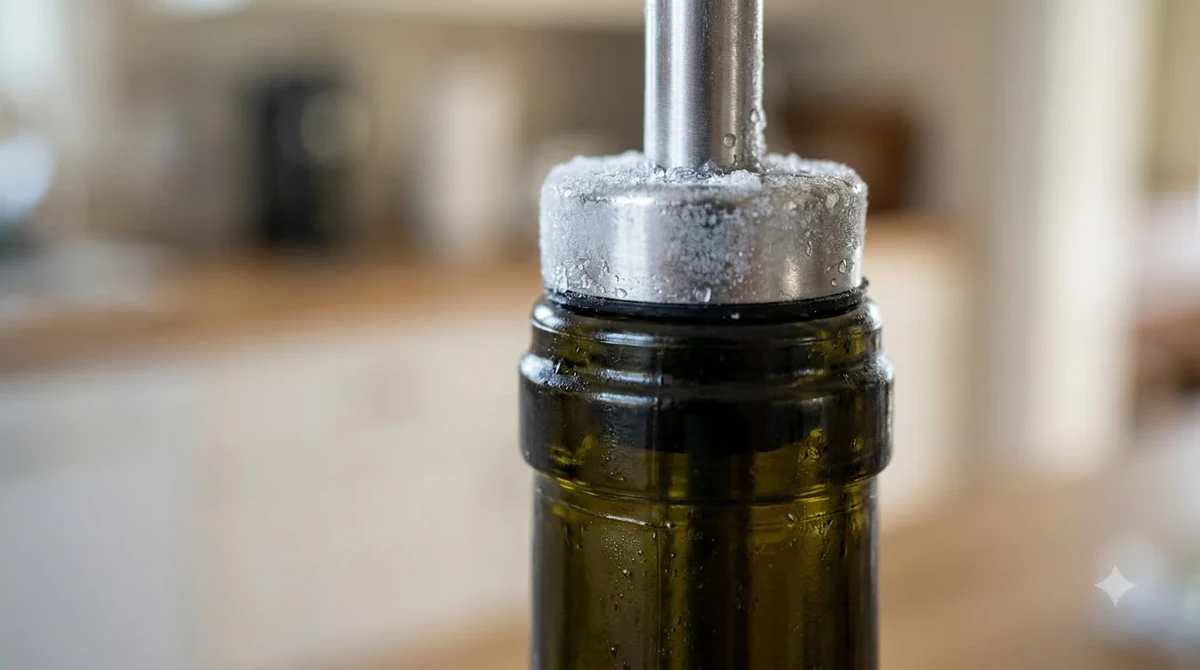
Rabbit’s own customer feedback includes a report of a pump that was difficult to operate despite still functioning. Another owner describes newer stoppers as less rigid than an older version, making them harder to insert securely. These complaints point to two different potential problems: mechanical resistance in the pump and insufficiently firm stopper engagement. Both can affect the user’s experience, but neither should be assumed to affect every unit.
Seal failure is a more significant concern because it undermines the product’s central purpose. ShopSavvy reports that some users experienced air returning to the bottle after sealing. Its review also identifies difficult plunger operation as a drawback. These observations suggest that buyers should pay attention to how a stopper fits and whether the vacuum remains established rather than assuming that pumping alone guarantees a successful seal.
Another limitation is the possibility of unrealistic expectations. A vacuum preserver does not restore wine to its original unopened condition. Once a bottle has been opened, oxygen has already contacted the wine, and some aromatic and flavor changes may have begun. Removing some of the remaining air can slow further exposure, but it cannot reverse oxidation or restore lost freshness.
The preservation period is also less predictable than a headline claim might suggest. Rabbit advertises up to two weeks for its current vacuum saver, while customer feedback on the same product page includes an account of an air lock holding for two to three days. The difference illustrates why the maximum manufacturer claim should not be treated as a dependable everyday expectation.
Manual operation can be inconvenient for people who prefer a one-touch accessory. Pumping requires physical movement, and a faulty or poorly fitting component can make the process frustrating. Although the mechanism is simpler than an electronic device, it still relies on the user establishing an adequate seal. Anyone looking for an entirely automatic preservation experience may prefer a different type of equipment.
There are also limitations associated with the wine itself. A delicate Pinot Noir or aromatic Sauvignon Blanc may show noticeable changes after opening, while a fuller-bodied red may remain enjoyable for a different period depending on its condition and storage. A vacuum stopper does not make every grape variety behave identically. Wine quality, temperature, bottle fill level, and time between opening and resealing remain important factors.
For a broader perspective on vacuum preservation, WIRED’s separate review of the Metrokane V1 decanter identifies another inherent limitation: a vacuum seal does not undo the wine’s previous exposure to air. The review also mentions the physical effort needed to achieve a tight seal. Although the V1 is a different product, those observations help explain why vacuum preservation should be viewed as a practical storage aid rather than a complete solution to wine oxidation.
Who Should Buy and Who Should Skip
The Metrokane wine preserver makes the most sense for people who frequently leave part of a bottle unfinished and want a compact, reusable way to close it. It is particularly relevant to households where one person drinks wine occasionally, couples who prefer different varieties, or hosts who open multiple bottles during a meal. Its manual operation is simple enough for ordinary kitchen use when the components fit and function correctly.
Buyers who usually pour one or two glasses at a time may find the accessory especially useful. A 750 ml wine bottle provides approximately five standard 5-ounce servings, so an unfinished bottle can represent several additional glasses. Instead of relying on the original cork, a dedicated stopper can create a more practical closure for the remaining wine. The wine should still be refrigerated after opening, including most reds intended for later consumption.
The accessory also suits people who prefer reusable equipment. The hand pump does not require electricity, and the stoppers can be used repeatedly when kept clean and in good condition. A small storage space is sufficient, making it suitable for apartments, compact kitchens, and home bars. People assembling a complete serving setup can also consider a wine opener and preserver set that combines bottle-opening and preservation equipment.
However, the product is not necessarily the right choice for every wine drinker. Someone who usually finishes bottles at a single sitting may have little reason to purchase a dedicated preservation tool. Similarly, a person who expects opened wine to remain unchanged for weeks may be disappointed by the limits of vacuum preservation.
Buyers who frequently preserve expensive or particularly delicate wines may want to investigate other preservation approaches before settling on a basic pump. Systems that use inert gas or preserve wine through a specialized dispensing mechanism address oxygen exposure differently. They can also involve additional equipment, consumables, or operating steps, so the appropriate choice depends on how frequently bottles are opened and how much wine remains.
People who primarily drink sparkling wine should also look elsewhere for their main preservation accessory. Sparkling wine needs a stopper designed to retain carbonation rather than a conventional still-wine vacuum closure. Champagne and other sparkling wines can lose their bubbles after opening, and removing air with a standard vacuum pump is not the appropriate way to preserve their effervescence.
For buyers who entertain frequently, the Rabbit accessory can be a useful addition to a larger home-bar arrangement. Keeping spare stoppers near glasses, a corkscrew, and serving equipment makes it easier to handle unfinished bottles during gatherings. A coordinated bar cart can provide an organized place for those accessories, especially when wine and cocktail tools share the same serving area.
Tip: After resealing a still wine bottle, store it upright in the refrigerator. Keeping the wine cold slows its development after opening, while the stopper helps limit additional air exposure. For the best practical results, save leftover wine promptly instead of waiting until the following day to reseal it.
How It Compares to Alternatives
The Metrokane wine preserver belongs to the manual vacuum-stopper category. Its main competition comes from other vacuum pumps, inert-gas preservation systems, and specialized wine dispensers. Each approach has a different balance of convenience, cost of ownership, storage requirements, and preservation expectations. The best comparison begins with the user’s actual habits rather than the longest advertised preservation period.
A conventional vacuum stopper works in much the same general way as the Rabbit system. A reusable closure is placed in the bottle, and a pump removes some of the air from the remaining space. The main differences between products can involve stopper design, pump resistance, ease of release, and consistency of the seal. Rabbit’s push-button arrangement is a useful feature, but buyers should still consider owner feedback about its mechanical reliability.
Inert-gas preservation takes a different approach. Instead of relying primarily on a vacuum, the system introduces a protective gas into the bottle before it is resealed. This approach is designed to reduce the wine’s contact with oxygen. It may appeal to someone who regularly saves expensive bottles or wants a different method of managing oxidation, although gas-based systems introduce consumables and additional handling steps.
Specialized wine dispensers offer another option for people who want to pour wine without removing the cork from certain bottles. These systems are designed around controlled access to wine rather than simply resealing an already-opened bottle. They can be more involved than a manual pump and may be unnecessary for someone who only wants to save half a bottle of everyday wine.
The Metrokane V1 vacuum decanter provides an interesting historical comparison within the brand’s own product range. WIRED described its 52-ounce crystal vessel, rubber stopper, vacuum gauge, and manual pump. The publication reported that wine stored overnight in the decanter compared favorably with a freshly opened bottle of the same Pinot Noir. However, it also noted that repeated sealing could not reverse previous exposure to air. The V1 is therefore a distinct decanter-style solution, not a direct specification match for the compact Rabbit stopper.
The Houdini preserver is a closer alternative because it is another Metrokane-branded accessory built around vacuum sealing. H-E-B lists the Houdini product as a three-piece set with a push-button stopper and describes its ability to hold a vacuum for days. Buyers comparing Houdini and Rabbit listings should examine the actual included components and stopper design rather than assuming that the two product names refer to identical packaging.
Here is a practical comparison of the preservation approaches:
| Preservation approach | How it works | Best suited to | Main limitation |
|---|---|---|---|
| Metrokane Rabbit vacuum pump | Manual pump and stopper | Everyday opened still wine | Seal and pump consistency |
| Houdini vacuum preserver | Push-button vacuum stopper | People seeking a similar manual system | Version-specific component differences |
| Inert-gas preserver | Protective gas introduced before sealing | People preserving selected bottles | Requires gas supplies and additional steps |
| Specialized wine dispenser | Controlled dispensing system | People wanting access without conventional opening | Greater equipment complexity |
| Sparkling-wine stopper | Pressure-retaining bottle closure | Champagne and other sparkling wines | Not intended as a general still-wine vacuum pump |
For most casual wine drinkers, a basic manual vacuum preserver remains a reasonable starting point. It provides a dedicated closure without requiring a large machine or ongoing gas supplies. The Metrokane option is most attractive when the pump works smoothly and the stopper creates a dependable seal. Buyers who prioritize consistency above simplicity should compare alternatives carefully and consider whether another preservation method better matches their drinking habits.
Storage practices matter regardless of which system is chosen. Still wine generally benefits from refrigeration after opening, and bottles should be kept upright once a vacuum stopper has been installed. A standard opened bottle is commonly best enjoyed within three to five days, although the wine’s condition and storage environment influence its development. Vacuum equipment may help, but it should not replace sensible temperature control and timely consumption.
Frequently Asked Questions
Can a Metrokane wine preserver be used with screw-cap bottles?
Yes, a compatible vacuum stopper can generally be used with an opened screw-cap bottle if its neck accepts the stopper securely. The original screw cap does not need to remain in place during vacuum sealing. The important consideration is the fit of the replacement stopper rather than whether the bottle originally used a cork or screw cap.
Does a Metrokane vacuum pump remove every bit of oxygen?
No. A manual vacuum pump reduces the air pressure inside the bottle but does not create a perfectly oxygen-free environment. Some oxygen remains dissolved in the wine and may also remain in the bottle headspace. This is why vacuum preservation can slow further deterioration without returning an opened bottle to its original condition.
Can the Rabbit stopper be left in a wine bottle overnight?
Yes. The purpose of the reusable stopper is to remain in the bottle while the wine is stored. For an opened still wine bottle, refrigeration is generally preferable overnight. Keep the bottle upright so that the remaining wine does not unnecessarily contact the stopper mechanism.
Will the Metrokane preserver keep wine suitable for cooking?
It can help retain leftover wine for later cooking, provided the wine remains in good condition and is stored appropriately. Dry white wine can be useful in sauces and risotto, while red wine can contribute flavor to braises and reductions. Avoid using wine that has developed unpleasant vinegar-like or otherwise objectionable characteristics.
How can buyers recognize a damaged vacuum stopper?
Look for visible cracks, deformation, loose components, or a sealing surface that no longer sits evenly against the bottle opening. A stopper that repeatedly loses its vacuum or becomes unusually difficult to release may also need replacement. Cleaning and drying reusable components after use helps make inspection easier and reduces residue around the sealing surfaces.
The Metrokane wine preserver is a sensible accessory for people who regularly save unfinished bottles and prefer a compact, manually operated solution. Its reusable stoppers, straightforward pump operation, and push-button release are useful features, although reported seal and pump inconsistencies deserve consideration before purchasing. For everyday still wine, it offers a practical way to manage leftovers, provided bottles are also stored cold and enjoyed within a reasonable period. Buyers who need longer-term preservation or reliable sparkling-wine storage should compare specialized alternatives before choosing their equipment.
More in Wine Accessories
 Vinglace Wine Tumbler Review: A Glass-Lined Choice for Better SippingUpdated Nov 20, 2026
 ZWILLING Electric Wine Opener Review: Features and DrawbacksUpdated Nov 20, 2026
 Vinturi Electric Wine Opener Review for Easy UncorkingUpdated Nov 20, 2026
 Vinabon Wine Aerator Review for Easier, Cleaner Wine ServingUpdated Nov 20, 2026
 Vacu Vin Electric Wine Opener Review: Easy Cork Removal for Home Wine LoversUpdated Nov 20, 2026
 Rabbit Wine Accessories for Easier Home Wine ServiceUpdated Nov 20, 2026