

We may earn a commission when you buy through links on this page, at no extra cost to you. Learn more.
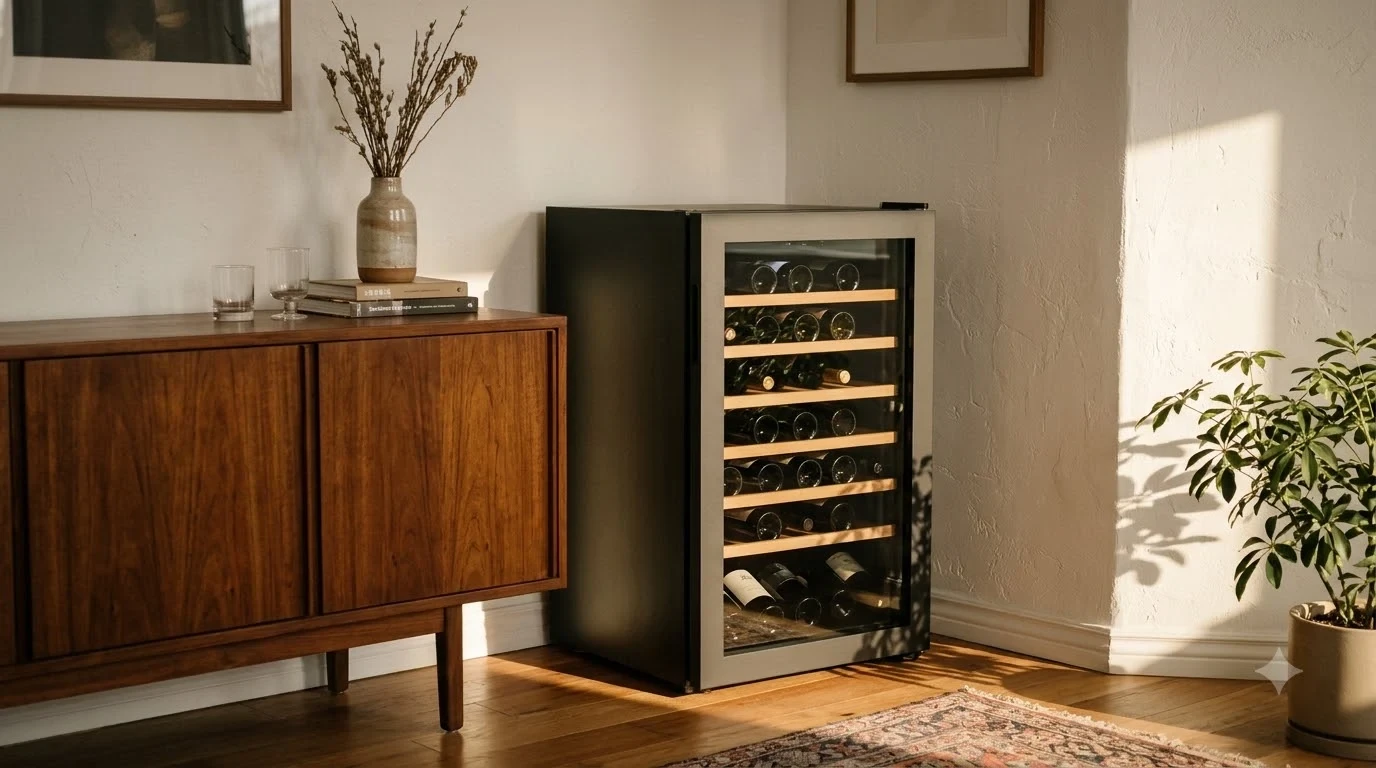
The best wine fridge sideboard is a low, freestanding or built-in unit that fits a dining or living wall, keeps the cooling vents clear, and holds a steady temperature in a room that stays cool and out of direct sun. A sideboard puts the wine in plain view, so the right model balances looks, capacity, and the room conditions that keep the bottles stable.
Few pieces of furniture earn their place in a dining room as easily as a sideboard. It holds the serving dishes, the linens, and the candles, and when it also keeps wine cool, it stops being a place to hide clutter and becomes part of the meal. A wine fridge tucked into a sideboard solves two problems at once. It keeps bottles at a stable temperature, and it gives a dining room or living room a calm, furniture-like storage piece. This guide explains what to check in a wine fridge sideboard, how the features affect daily use, and which room conditions matter most before you buy.
Quick Comparison of Sideboard Wine Fridge Options
A wine fridge sideboard can mean a built-in unit that sits flush in a cabinet, a freestanding compact fridge with a wood-look front, or a sideboard with a separate cooled drawer. Each option behaves differently in heat, noise, and capacity, so compare them against the room first.
| Option | Fit | Airflow | Best fit |
|---|---|---|---|
| Built-in sideboard unit | Flush in a cabinet opening | Front or rear venting, needs clearance | Dining rooms with a fixed wall |
| Freestanding wood-look fridge | Stands on its own legs | Side or top venting | Flexible or rented spaces |
| Sideboard with cooled drawer | Drawer sits in the cabinet | Limited, often a smaller zone | Small bottle collections |
Think about the whole room when you choose a sideboard. A tall cabinet in a narrow dining room can feel crowded, while a low unit with a clean top can hold a lamp or a bowl and still leave space to walk. Measure the path from the chairs to the sideboard so that guests can reach the door while someone is pouring.
The most common problem with a sideboard is that it blocks its own vents. A unit pushed tight against a wall or covered by décor can run hotter than the manufacturer intends, which affects both the sound and the temperature inside.
Best for Dining Rooms With a Fixed Wall
A dining room wall is a natural home for a wine fridge sideboard. Choose a built-in unit that matches the cabinetry, and keep the space in front of the vents free so that the air can move.
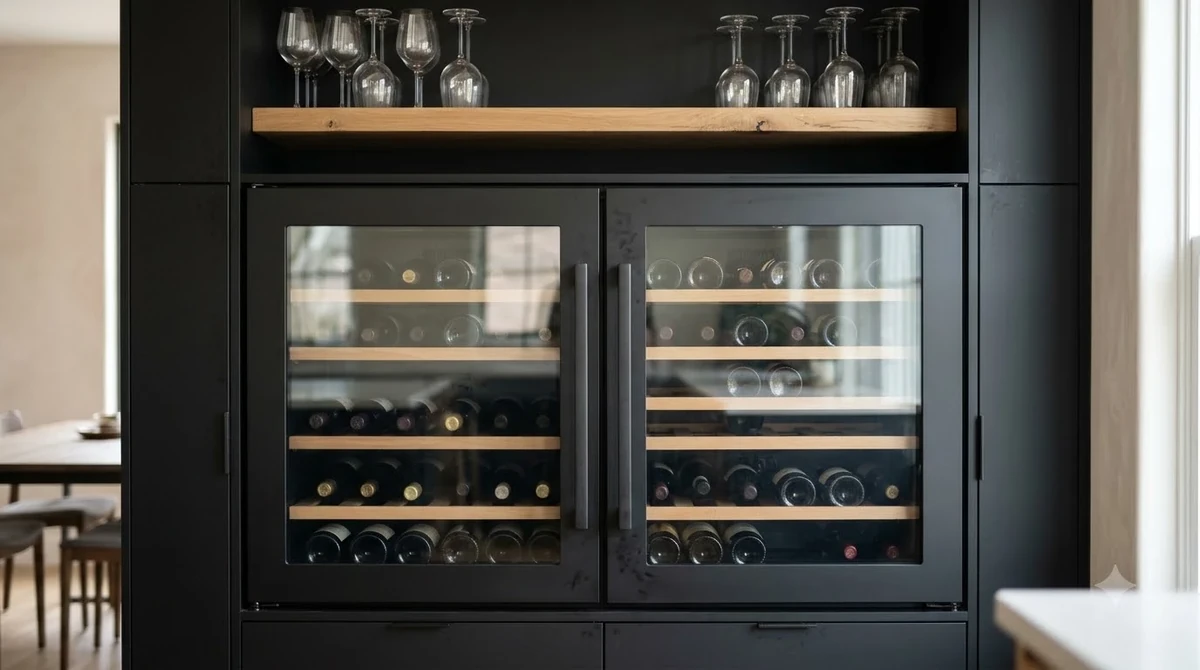
Why it stands out: A built-in unit keeps the look clean and suits a room where the sideboard is a permanent feature.
Keep in mind: Built-in units need a planned opening and venting path, so check the dimensions before the wall is finished.
Best for: Households that host dinners and want wine close to the table.
Best for Living Rooms and Flexible Layouts
In a living room, a freestanding wood-look wine fridge can sit against a wall without any cabinet work. It moves more easily than a built-in, which helps if the furniture layout changes often.
Why it stands out: No installation is needed, and the front can match the room’s furniture.
Keep in mind: Leave a gap at the sides or top for airflow, and keep it away from the television and speakers if vibration bothers you.
Best for: Renters and anyone who wants the option to move the unit later.
Best for Small Collections and Tight Spaces
A sideboard with a cooled drawer gives a small collection its own zone without a full wine fridge. It works well for a few bottles of everyday wine, but the drawer holds less than a full unit, so plan around your habits.
Why it stands out: The drawer hides inside the cabinet and keeps bottles away from light.
Keep in mind: A smaller zone means fewer bottles and more frequent restocking.
Best for: Couples and small households that drink a few bottles a week.
Best for Serving Red and White Wines
A dual-zone sideboard unit lets you keep reds and whites at different temperatures, which is useful if you serve both at the same meal. The guidance from Wine Folly’s serving temperature guide gives useful ranges: red wines are usually served at 15 to 20 °C (62 to 68 °F), and white wines at 7 to 12 °C (49 to 55 °F).
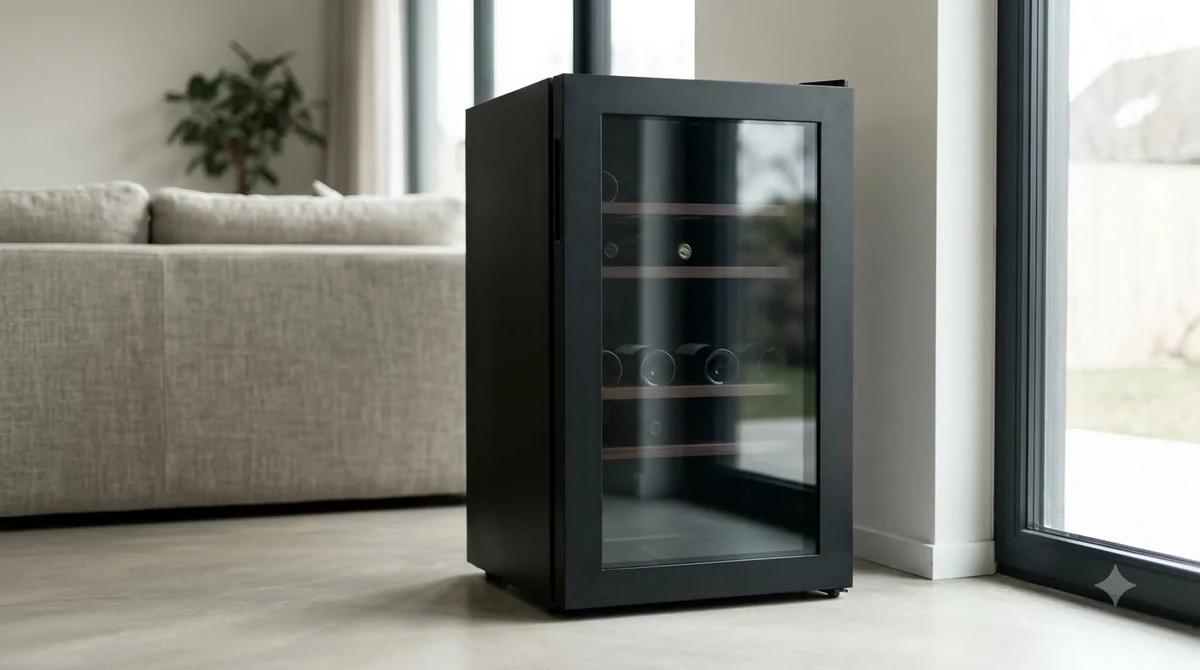
Why it stands out: Separate zones let you serve each style at its own temperature without moving bottles between appliances.
Keep in mind: Serving temperature and storage temperature are different. A zone set for serving is not always the best setting for long-term aging.
Best for: Hosts who serve several styles at one dinner.
Best for Long-Term Storage in a Dining Room
A dining room is often warm during meals and cooler at night, so temperature swings are a real concern. Wikipedia’s overview of wine cellars notes that wines age normally between about 10 and 14 °C (50 and 57 °F), and that large swings can speed aging. Place the sideboard away from radiators, sunny windows, and the kitchen door.
Why it stands out: A sideboard can keep bottles in a cool, dark interior that is easy to reach at the table.
Keep in mind: The room sets the baseline. A wine fridge cannot fully correct a room that stays hot.
Best for: Collectors who want aging wine in a room they use every day.
How to Choose a Wine Fridge Sideboard
A good sideboard should work on a normal Tuesday as well as at a holiday dinner. Think about how often you open the door, where you keep your glasses, and whether the top will hold serving pieces. These habits matter as much as the cooling specs, and they decide whether the piece gets used or ends up as a shelf for mail.
Start with the wall and the room, then move on to the cooling and the features. Many buyers reverse that order and fall for a finish first, only to find that the vents cannot breathe against the wall. Settle the practical questions early, and the design choices become easier because you already know what the cabinet must allow.
Start with the wall and the room, then move on to the cooling and the features. The checklist below covers the decisions that shape daily use.
- Wall space: Measure the width, height, and depth, and allow space for venting.
- Room temperature: Check whether the room stays cool and out of direct sun.
- Zones: Choose single-zone for one wine style, or dual-zone for mixed serving.
- Finish: Match the door and handles to the sideboard or dining furniture.
- Controls: Look for a clear display and a simple temperature setting.
If you are still deciding between sizes, the guide to mini wine fridges shows how capacity changes the footprint. For specs to compare, see wine fridge features.
Frequently Asked Questions
Can a wine fridge sit inside a sideboard?
Yes, if the cabinet opening matches the unit’s dimensions and the vents have clear airflow. Check the manufacturer’s clearance guidance before you order or build the cabinet.
What temperature should wine be served at from a sideboard fridge?
Red wines are often served at about 15 to 20 °C, and white wines at about 7 to 12 °C. Lighter reds and sparkling wines sit at the cooler end of their ranges.
Is a dining room a good place to store wine long term?
It can be, if the room stays cool and out of direct sun. Large temperature swings are the main risk, so keep the sideboard away from heat sources.
How many bottles fit in a wine fridge sideboard?
Capacity depends on the model and whether it has one zone or two. Compare the listed bottle count and choose a size that matches how often you entertain.
Plan the layout before you buy, and try to picture the unit with the furniture around it. A sideboard that suits the room will feel like a natural part of the space rather than an appliance that was added later. Take your time with the measurements, because the right size makes the difference between a unit you enjoy and one you work around. A wine fridge sideboard brings wine into the room where it is served. Measure the wall, check the room conditions, and pick the cooling style that fits how you drink. For a related idea, see the wine and beer fridge guide if you keep more than one drink type.
More in Wine Fridge Features
 Best Wine Fridge Bar Cabinet Setups for a Better Home BarUpdated Nov 20, 2026
 Wine Fridge for Champagne Bottles: Sizes and Storage GuideUpdated Nov 18, 2026
 Best Wine Fridge for Champagne Bottles: Shelf and Bottle FitUpdated Nov 18, 2026
 Best Wine Fridge with Display Shelf: Glass Doors and Open RacksUpdated Nov 18, 2026
 Best Wine Fridge With Drawers for Easy Access to Every BottleUpdated Nov 18, 2026
 Best Wine Fridge With Freezer: Combo Styles for Kitchens and BasementsUpdated Nov 18, 2026