

We may earn a commission when you buy through links on this page, at no extra cost to you. Learn more.
The haier 18 bottle wine fridge is a compact dual-zone wine cellar designed to store up to 18 standard wine bottles while keeping reds and whites in separate temperature-controlled compartments. The Haier HVTEC18DABS combines thermoelectric cooling, seven chrome storage racks, touchscreen controls, and a glass-front design. Its quiet operation and narrow footprint make it attractive for smaller collections, but its sensitivity to room temperature and discontinued status are important considerations before purchasing.
The Haier 18-bottle wine cellar is best understood as a specialized storage appliance rather than a replacement for a large wine refrigerator. It offers separate upper and lower temperature controls, a slim cabinet measuring approximately 10 inches wide, and a capacity suited to everyday bottles rather than extensive collections. This review focuses primarily on the HVTEC18DABS, the model listed on Haier’s US website, while distinguishing it from older Haier 18-bottle models that have different specifications.
Specs and Key Features of the Haier HVTEC18DABS
The HVTEC18DABS offers a combination of compact storage, two independently adjustable compartments, and thermoelectric cooling. Its most important specifications are the 18-bottle capacity, seven chrome racks, and separate temperature ranges for the upper and lower zones.
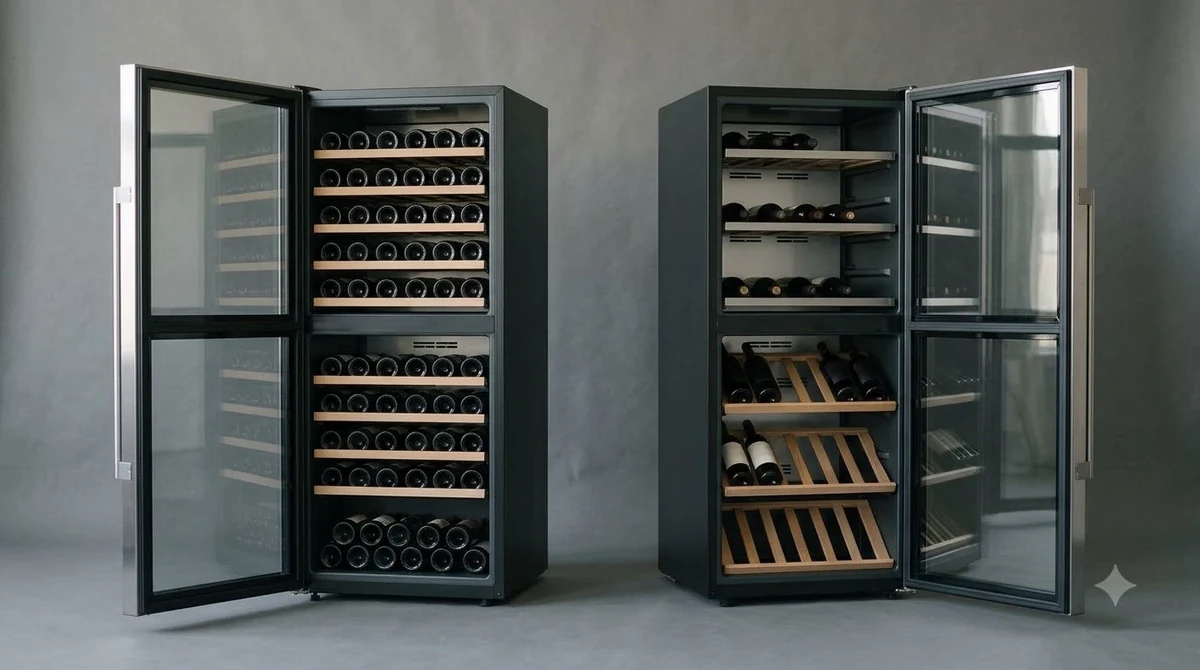
Haier designed this wine cellar with a tall, narrow cabinet and a transparent front door. The appearance suits a kitchen, dining room, or entertainment area where bottles need to remain accessible without occupying the floor space of a full-size refrigerator. Its black exterior and recessed handle give it a relatively understated appearance, while the interior light helps make the bottles visible.
The most useful feature is the independent temperature adjustment. The upper compartment operates between 54 and 66 degrees Fahrenheit, while the lower compartment has a wider listed range of 46 to 66 degrees Fahrenheit. This allows different wine styles to occupy separate sections rather than sharing one temperature setting.
| Specification | Haier HVTEC18DABS |
|---|---|
| Manufacturer | Haier |
| Model | HVTEC18DABS |
| Rated bottle capacity | 18 bottles |
| Cooling technology | Thermoelectric |
| Temperature zones | 2 independent zones |
| Upper temperature range | 54–66°F |
| Lower temperature range | 46–66°F |
| Storage racks | 7 chrome racks |
| Height | 36 1/8 inches |
| Width | 10 inches |
| Depth | 20 5/8 inches |
| Net weight | 41.8 pounds |
| Electrical requirement | 115V, 60Hz |
| Installation | Freestanding |
| Interior lighting | Yes |
These specifications come from Haier’s official product listing and the model’s documentation. The seven-rack specification is particularly important because some listings for older Haier wine coolers show different shelf arrangements. Buyers should identify the actual model number rather than assuming every Haier 18-bottle appliance has identical construction.
Two separate temperature displays
The electronic control system makes the two compartments easier to manage. Each zone has its own temperature adjustment, allowing a collection containing Sauvignon Blanc, Chardonnay, Pinot Noir, and Cabernet Sauvignon to be organized according to serving preferences.
The controls are more useful than a single thermostat because different wines generally benefit from different serving temperatures. For example, light whites are commonly served around 45–50 degrees Fahrenheit, full-bodied whites around 50–55 degrees, light reds around 55–60 degrees, and fuller reds around 60–65 degrees.
Thermoelectric cooling
Instead of using a conventional compressor, the HVTEC18DABS uses thermoelectric technology. Haier promotes this system for its quiet operation and reduced vibration. The absence of a conventional compressor makes the appliance appealing for rooms where refrigerator noise would be distracting.
However, thermoelectric technology has a meaningful limitation: its cooling performance depends on the temperature of the surrounding room. A setting on the digital display does not guarantee that the cabinet will achieve that temperature under every environmental condition.
For the official product details, see Haier’s HVTEC18DABS product specifications.
What Owners Like About the Wine Cellar
The strongest advantages of the Haier 18-bottle wine cellar are its narrow footprint, independent temperature controls, and low-vibration cooling system. These characteristics make it particularly appealing to households that want organized wine storage without installing a large appliance.
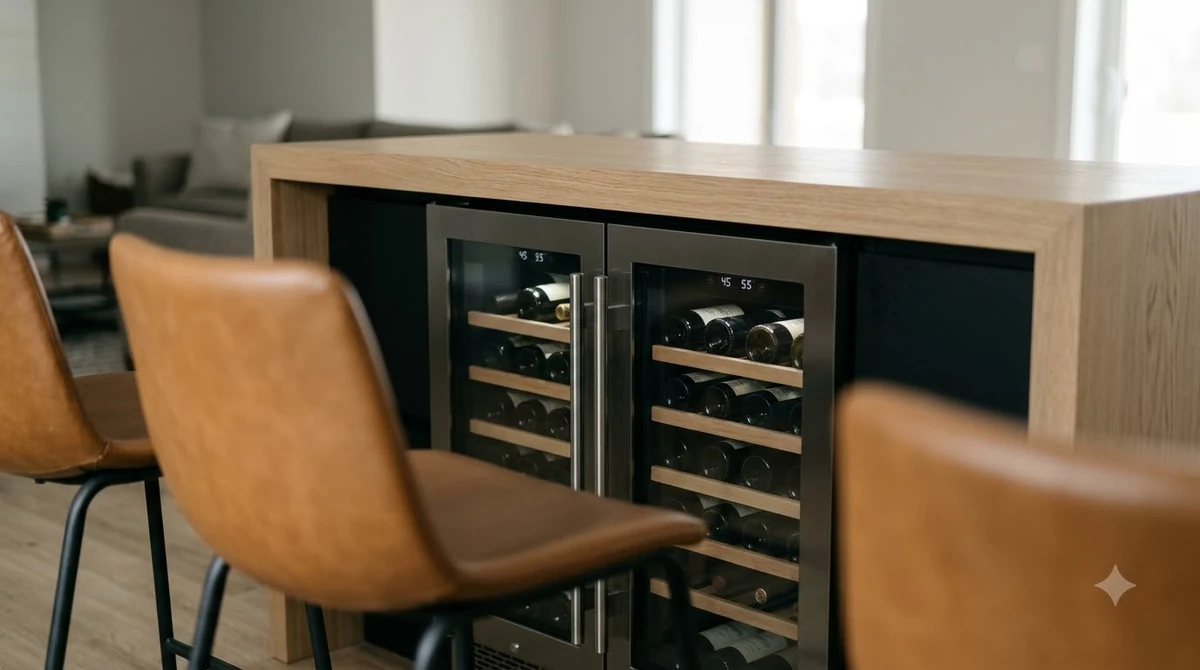
The narrow cabinet is a practical advantage. At approximately 10 inches wide and 36 1/8 inches tall, the appliance takes up considerably less horizontal space than many larger wine refrigerators. Its vertical format can work in a compact dining area, a home bar, or a dedicated beverage corner.
The 18-bottle rating is also appropriate for a modest collection. A household that regularly keeps several bottles of white wine, a few reds, and some bottles for entertaining may find this capacity sufficient. Instead of leaving bottles on kitchen counters or storing everything in a regular refrigerator, the wine cellar creates a dedicated location for the collection.
Independent temperature zones add flexibility. A single-temperature cooler requires compromises when storing red and white wines together. The Haier arrangement makes it possible to assign the upper and lower compartments different settings. That is useful for people who regularly serve both categories.
For example, the lower zone can be assigned a cooler setting for white wines, while the upper compartment can be kept warmer for lighter reds. The exact settings depend on the wines being stored and the actual temperature the appliance achieves.
Quiet operation is another appealing characteristic. Thermoelectric cooling avoids the conventional compressor cycle associated with many refrigerators. This can be particularly desirable in a living room, dining area, or home office where an appliance that repeatedly starts and stops could become distracting.
The system also reduces the mechanical vibration associated with compressor operation. For everyday storage, minimizing unnecessary movement is a useful design consideration, particularly when bottles are kept in one location for extended periods.
The glass door improves organization. A transparent door makes it easier to see the available bottles without opening the cabinet. The interior lighting also helps identify labels and organize bottles, especially when the cooler is positioned in an area with limited ambient lighting.
The chrome racks provide a coordinated appearance and are easier to wipe clean than some unfinished storage materials. The electronic displays also make the appliance more convenient to adjust than a basic cooler with one manual temperature dial.
It is important to distinguish these design advantages from verified owner-review consensus. Publicly accessible product documentation establishes the features, but it does not provide enough independently substantiated owner feedback to claim that every buyer experiences identical reliability or cooling performance.
Common Complaints and Important Limitations
The most significant concern with the Haier HVTEC18DABS is its dependence on ambient temperature. Its thermoelectric cooling system may struggle to achieve the coldest displayed settings in a warm room, making placement and room conditions important purchasing considerations.
The manufacturer’s manual provides useful examples. When the surrounding temperature is 77 degrees Fahrenheit, the lowest cabinet temperature may be approximately 50–52 degrees. When the room is around 73 degrees, the cabinet may reach approximately 46–48 degrees.
These figures demonstrate why the cooler should not be evaluated solely by looking at its digital temperature range. A displayed setting of 46 degrees does not necessarily mean the lower compartment can consistently maintain that temperature in a warm environment.
This is especially important for people who want very cold storage for sparkling wines or delicate white wines. A cooler that operates in a warm kitchen, near an oven, or in a room receiving direct afternoon sunlight may not provide the desired results.
Capacity is based on standard bottles
The second limitation is the 18-bottle capacity. This rating is a useful reference, but it should not be interpreted as a guarantee that every combination of 18 bottles will fit comfortably.
Standard Bordeaux-style bottles have relatively predictable dimensions. Burgundy bottles can be wider, while sparkling bottles may have larger bodies and thicker glass. These differences can affect how efficiently bottles fit on the available racks.
People who regularly purchase Champagne, sparkling wine, or unusually shaped bottles should consider the actual rack dimensions before purchasing. The stated capacity is most useful for collections made up primarily of conventional wine bottles.
It is not a built-in wine refrigerator
Haier specifies freestanding installation for this model. Its rear ventilation arrangement means it should not be treated as an appliance designed to fit inside a sealed kitchen cabinet.
This distinction matters because an enclosed installation can restrict the movement of air around the cooling system. A thermoelectric appliance needs to release heat from its external cooling components, so adequate ventilation is essential for normal operation.
Discontinued status creates purchasing uncertainty
Haier’s official product page states that the HVTEC18DABS is no longer being manufactured. This does not automatically make an existing unit unsuitable, but it changes the buying decision.
Shoppers may encounter used appliances, remaining inventory, or listings that do not clearly identify the model. Condition, operating history, replacement-part availability, and any remaining warranty coverage deserve particular attention.
A used unit that has been stored in a garage or transported improperly may have issues that are not immediately apparent. Buyers should confirm that both compartments cool, both displays function, the door seals properly, and the fans operate without unusual noise.
Another consideration is that the cooler’s cooling technology is different from that of a conventional compressor refrigerator. People who need dependable low temperatures throughout a hot summer may prefer a compressor-based wine refrigerator designed for their room conditions.
Who Should Buy the Haier 18-Bottle Wine Fridge?
The Haier HVTEC18DABS makes the most sense for someone with a small collection, limited floor space, and a relatively temperature-controlled indoor environment. Its dual-zone arrangement is particularly useful for households that keep both red and white wines ready for serving.
It is a reasonable candidate for a home bar or dining area where the appliance can stand independently and receive adequate airflow. Its 18-bottle capacity is sufficient for a rotating collection rather than long-term storage of dozens of bottles.
Good match for small wine collections
People who usually maintain between 6 and 18 standard bottles may appreciate the appliance’s compact storage arrangement. It gives each bottle a designated place and makes it easier to separate wines by style.
A small collection might include Sauvignon Blanc, Chardonnay, Pinot Noir, Merlot, and Cabernet Sauvignon. These wines have different serving requirements, so the ability to adjust two zones independently is a practical feature.
The appliance can also suit occasional entertainers. Someone who hosts a small dinner gathering may want a few chilled white wines available alongside red wines that are not excessively warm.
Good match for quieter indoor spaces
Thermoelectric operation is appealing for people who prefer to keep appliances in shared living spaces. A home office, dining room, or entertainment area can benefit from an appliance designed to minimize conventional compressor noise and vibration.
The see-through door also makes the wine cellar suitable for display. Instead of hiding bottles in a pantry or cabinet, owners can keep their collection visible and organized.
Who should skip it?
This model is not the strongest choice for someone who needs reliable cooling in a consistently hot room. Its documented temperature limitations under warmer ambient conditions make a compressor-based alternative more appropriate for that environment.
It is also a poor match for anyone looking for a built-in wine refrigerator. The freestanding design and ventilation requirements mean that a properly designed built-in appliance is a better choice for a fitted kitchen installation.
Large collectors should also consider a larger capacity. An 18-bottle unit can fill quickly, particularly if the collection includes bottles intended for aging, sparkling wine, and larger formats.
Finally, buyers who want a brand-new unit with current production support should be cautious. Since Haier identifies the HVTEC18DABS as discontinued, it is important to establish the seller’s warranty and service arrangements before committing to a purchase.
How the Haier Compares to Alternative Wine Storage Options
The Haier 18-bottle cellar occupies a middle ground between basic countertop coolers and larger compressor-based wine refrigerators. Its main selling points are the two temperature zones, narrow design, and thermoelectric cooling, while other refrigerator styles can provide different advantages.
Choosing between these options requires looking at more than bottle capacity. Cooling technology, room temperature, installation requirements, bottle shapes, and the number of temperature zones all affect practical performance.
Thermoelectric versus compressor cooling
Thermoelectric wine refrigerators use semiconductor technology to move heat away from the interior. They generally have fewer conventional moving mechanical components and can operate with relatively little vibration.
Compressor-based wine refrigerators use a refrigeration cycle similar to that found in conventional refrigerators. They are generally a stronger option when more substantial cooling is required, especially in warmer surroundings.
For a quiet room with moderate ambient temperatures, thermoelectric cooling can be attractive. For a hot kitchen or a room where the appliance must achieve consistently colder temperatures, compressor cooling deserves closer consideration.
Single-zone versus dual-zone storage
A single-zone wine refrigerator uses one temperature setting throughout its interior. This can be perfectly adequate for someone who primarily stores one category of wine or wants to keep a collection at a consistent storage temperature.
The Haier’s two-zone design offers more flexibility for mixed collections. White wines can occupy the cooler compartment, while red wines can be kept in the warmer compartment, provided the actual temperatures remain within the desired ranges.
However, two zones do not automatically make an appliance superior. Someone with 18 bottles of predominantly red wine may get more practical value from a larger single-zone unit than from a small dual-zone cooler.
Compact wine coolers versus larger cabinets
A compact 18-bottle cooler is convenient when space is limited. A larger wine cabinet is more appropriate when a collection includes multiple cases, bottles intended for longer storage, or frequent purchases from different wine regions.
The smaller Haier cabinet also has a different organizational role from a dedicated wine-aging refrigerator. Its design is primarily suited to keeping a modest collection organized and ready for use rather than accommodating a substantial cellar.
Shoppers researching other capacities and appliance designs can explore the wine appliance model reviews section to compare storage arrangements and features.
Serving temperature matters more than the displayed number
A wine refrigerator is most useful when its temperature settings correspond to the way its owner actually serves wine. For example, Sauvignon Blanc generally benefits from a cooler serving temperature than Cabernet Sauvignon.
Someone who frequently prepares sparkling wine cocktails may also appreciate a separate cold storage area. The Haier’s lower zone can be useful for bottles intended for chilled service, including Prosecco used in an Aperol Spritz recipe.
Regardless of the appliance, remember that storage temperature and serving temperature are not identical concepts. Wine intended for longer storage is generally kept at a more stable temperature than the temperature at which it is poured.
Installation, Temperature Settings, and Everyday Use
Proper installation is particularly important for the Haier because thermoelectric cooling depends on the surrounding environment. A stable indoor location, adequate ventilation, and sensible temperature settings help the appliance operate as intended.
Haier’s manual provides specific clearance recommendations and installation instructions. Following these requirements is more important than simply finding a narrow space where the cabinet fits.
Allow adequate ventilation
The manual recommends 2 inches of clearance on both sides and at the rear, plus 4 inches above the wine cellar. It also recommends allowing enough space in front for the door to open to approximately 120 degrees.
These requirements should be considered before moving the appliance into position. A space that is only slightly wider than the cabinet may prevent adequate airflow and make maintenance more difficult.
The unit should stand on a stable, level surface. Adjustable leveling legs help compensate for minor floor irregularities and can improve door alignment.
Choose a suitable room
A temperature-controlled indoor room is preferable to a garage, enclosed porch, or unconditioned utility room. Avoid placing the wine cellar beside a cooking appliance, radiator, or window that receives prolonged direct sunlight.
The manual’s ambient-temperature examples demonstrate the importance of this decision. A room at 77 degrees Fahrenheit can limit the lower compartment to approximately 50–52 degrees, even when a colder setting is selected.
Set the two compartments according to wine style
A practical starting arrangement is to use the cooler lower compartment for whites and sparkling wines and the warmer upper compartment for reds. The following serving-temperature ranges help explain how to organize the collection:
- Sparkling wines: Approximately 40–50°F.
- Light-bodied whites: Approximately 45–50°F.
- Full-bodied whites: Approximately 50–55°F.
- Light-bodied reds: Approximately 55–60°F.
- Full-bodied reds: Approximately 60–65°F.
- Sweet whites: Approximately 43–50°F.
These are serving-temperature guidelines, not a promise that the Haier can reach every temperature under all room conditions. In particular, the lowest sparkling-wine serving temperatures may fall below what the appliance can achieve in a warm environment.
Tip: Before loading all 18 bottles, allow the empty cooler to stabilize and monitor the actual compartment temperatures with a separate thermometer. This helps establish whether the unit can maintain the settings required for your room and wine collection.
Load bottles carefully
Begin with standard 750 ml bottles because the advertised capacity is based on conventional wine storage dimensions. Arrange bottles without forcing them into the racks or blocking airflow.
Keep in mind that larger sparkling bottles and unusually shaped Burgundy bottles may take up more room. If a bottle does not sit securely, do not force it into a rack simply to reach the advertised capacity.
Use the interior light only when needed. The operating manual recommends leaving it off during normal operation, making occasional use preferable to treating it as continuous display lighting.
For complete installation, temperature adjustment, and troubleshooting instructions, consult the Haier HVTEC18DABS user manual.
Maintenance, Storage, and Buying a Discontinued Unit
Maintaining the Haier wine cellar involves keeping its interior clean, preserving airflow, and monitoring temperature performance. These basic practices are particularly important when purchasing an older or previously owned unit.
Clean the interior properly
Disconnect the appliance from its power supply before cleaning. Haier’s manual recommends using a solution made from 3–4 tablespoons of baking soda mixed with warm water and applying it with a soft sponge or cloth.
Wipe the interior surfaces carefully, rinse with clean warm water, and dry with a soft cloth. Avoid abrasive pads, harsh chemicals, ammonia, chlorine bleach, and concentrated solvents because they can damage or discolor surfaces.
Keep the door seal in good condition
A damaged or dirty door gasket can allow warm air to enter the cabinet. This can affect temperature stability and increase the amount of work required from the cooling system.
Inspect the gasket periodically and make sure bottles or racks do not interfere with the door closing completely. If the door does not align properly, check that the appliance is level and that nothing is obstructing the interior.
Handle power interruptions correctly
After a power interruption, the manual recommends removing the power cord from the outlet and reconnecting it once electricity has been restored. Allow the cabinet time to stabilize before judging its temperature performance.
If the appliance will remain unused for an extended period, empty it, unplug it, clean the interior and door gaskets, and leave the doors open so air can circulate.
Move the appliance vertically
Haier’s manual recommends moving the wine cellar in an upright position rather than transporting it on its side. This is an important instruction for anyone purchasing a used appliance or relocating it between rooms.
After moving the unit, allow it to be positioned correctly before reconnecting it and beginning normal operation. Inspect the cabinet, door, power cord, and racks for damage before loading bottles.
What to inspect before purchasing
Because the HVTEC18DABS is discontinued, buying a used example requires more attention than purchasing a currently manufactured appliance. A seller’s description and exterior photographs are not enough to establish that both cooling zones work correctly.
Ask to see the model identification label and verify that it reads HVTEC18DABS. This is important because Haier has manufactured other 18-bottle wine coolers, including the older HVW18, which has different specifications.
Before completing a purchase, inspect the following:
- Both temperature displays: Confirm that the upper and lower controls respond to adjustments.
- Actual cooling: Verify that both compartments cool rather than relying exclusively on displayed settings.
- Door and gasket: Look for cracks, damaged seals, and alignment problems.
- Racks: Check that the chrome racks are present and not bent or corroded.
- Fans: Listen for unusual noises and confirm that ventilation components operate.
- Exterior: Look for dents, rust, water damage, and damaged electrical connections.
- Documentation: Ask about the original purchase date, service history, and remaining warranty coverage.
The original warranty documentation describes 12 months of parts coverage and 12 months of carry-in labor coverage. However, that documentation should not be interpreted as proof that a used or previously purchased unit currently has warranty protection. Buyers should confirm coverage directly with the relevant service provider.
For an older appliance, replacement-part availability can also influence the long-term value of the purchase. A low initial purchase cost may not be attractive if a damaged control panel, fan, or door component is difficult to replace.
Frequently Asked Questions
Can the Haier 18-bottle wine fridge store Champagne bottles?
Champagne bottles commonly have thicker glass and wider bodies than standard Bordeaux bottles. The advertised 18-bottle capacity does not guarantee that 18 sparkling bottles will fit simultaneously. Measure the bottle and rack dimensions before attempting to load larger formats.
Does the Haier HVTEC18DABS have a reversible door?
The published feature information for this model does not establish a reversible-door option. Do not assume that the hinge can be transferred to the opposite side simply because other refrigerator models offer that feature. Confirm the hinge arrangement and available replacement hardware before purchasing.
Can the wine cooler be used to store food?
No. Haier’s user documentation specifically advises against storing food in the wine cellar because its interior temperature may not be cold enough to prevent food spoilage. It is designed for wine storage rather than general-purpose refrigeration.
Does the Haier wine cellar have automatic defrost?
The HVTEC18DABS documentation describes thermoelectric cooling rather than a conventional compressor refrigeration system. Automatic defrost is not established as a feature in the manufacturer’s published product specifications used for this review. Buyers should avoid assuming that the appliance has a particular defrost function without model-specific confirmation.
Where can the model and serial numbers be found?
Haier’s user documentation instructs owners to look for the identification label on the back of the wine cellar. Recording both numbers and keeping the original purchase receipt can help when requesting technical assistance, replacement parts, or warranty verification.
The Haier HVTEC18DABS remains an interesting option for people who value compact storage, separate temperature zones, and quiet thermoelectric operation. Its main disadvantages are temperature limitations in warm rooms, a relatively small capacity, and discontinued production. Anyone considering this wine cellar should verify its actual cooling performance, condition, and service availability before buying, particularly when purchasing a used unit.
More in Model Reviews
 Magic Chef 44 Bottle Wine Cooler Review for Flexible StorageUpdated Nov 21, 2026
 Whynter 164 Bottle Wine Cooler Review: Capacity, Features, and FitUpdated Nov 21, 2026
 Insignia NS WC16BK6 Review: Compact 16-Bottle Wine StorageUpdated Nov 21, 2026
 Wine Enthusiast Electric Blue Omega Review: Opening, Pouring, and Preserving Made EasierUpdated Nov 21, 2026
 Koolatron 20 Bottle Wine Cooler Review: Features, Fit, and PerformanceUpdated Nov 21, 2026
 NewAir AWC 330E Review for Home Wine StorageUpdated Nov 21, 2026