

We may earn a commission when you buy through links on this page, at no extra cost to you. Learn more.
A rabbit wine opener not working is usually caused by an incorrectly positioned corkscrew, a loose grip around the bottle neck, a worn spiral, or a mechanism that needs cleaning and lubrication. Most operating problems with a manual Rabbit lever corkscrew can be investigated without replacing the entire tool. Start by identifying whether the problem occurs during spiral insertion, cork extraction, cork release, or lever movement. The correct repair depends on which stage fails.
A Rabbit lever corkscrew is designed to remove a cork through a sequence of controlled handle movements. When one part of that sequence is missed, the opener may slip, leave the cork inside the bottle, or hold the extracted cork on the spiral. Wear and residue can also affect performance after repeated use. This review examines the common failure points, manufacturer troubleshooting recommendations, replacement parts, and situations in which buying another opener makes more sense.
Specs and Key Features of the Rabbit Lever Corkscrew
The Rabbit lever corkscrew uses a mechanical lever and spiral to remove wine corks without requiring the repeated twisting motion of a traditional waiter-style corkscrew. Its operating sequence depends on a secure bottle-neck grip, proper spiral alignment, and complete handle movements.
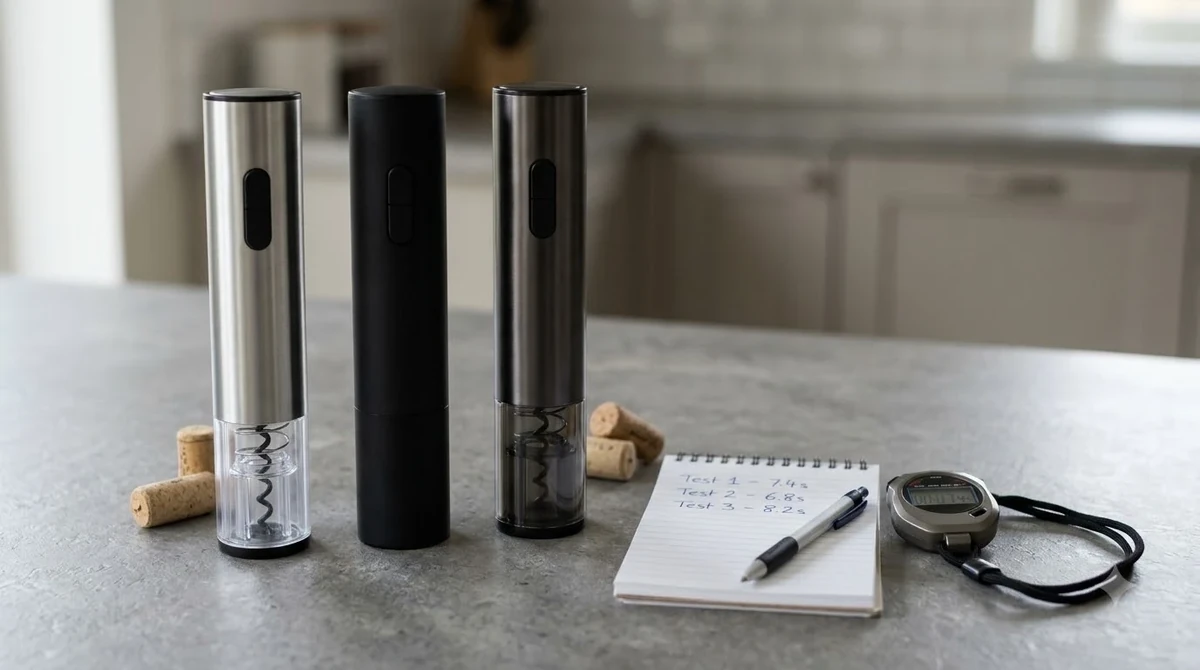
Rabbit’s current product description identifies a solid metal lever, a TPE comfort grip, a nonstick spiral, and an integrated foil cutter with four steel blades. The product also includes an additional spiral, which matters because a damaged or worn spiral can cause extraction problems even when the main lever mechanism remains functional. Rabbit lists a 10-year warranty for this manual corkscrew.
It is important to distinguish the original manual lever Rabbit from the brand’s electric openers and other similarly named products. The troubleshooting instructions for a mechanical lever opener do not automatically apply to a rechargeable electric model. The manufacturer also warns that competing products may be sold in Rabbit-style packaging. Its official identification guidance says an Original Rabbit carries the Rabbit Wines name and logo on top of the lever handle.
| Feature | Manufacturer information | Why it matters |
|---|---|---|
| Operating mechanism | Manual lever | Depends on complete handle movements and secure positioning. |
| Lever construction | Solid metal | Provides mechanical leverage during extraction. |
| Grip | TPE comfort grip | Helps maintain control during operation. |
| Foil cutter | Integrated, four steel blades | Allows foil removal before opening. |
| Spiral | Nonstick coating | Reduces friction as the spiral enters and exits the cork. |
| Replacement spiral | One additional spiral included | Provides a replacement when the original becomes worn. |
| Expected spiral life | Approximately 800-1,000 cork removals | Provides a useful wear reference, not a guaranteed lifespan. |
| Manual opener warranty | 10 years | Provides a manufacturer support option for qualifying defects. |
These specifications describe the current Rabbit lever product and the manufacturer’s general guidance for its corkscrew spiral. Individual older models may have different handle designs, foil cutters, and replacement-part arrangements. For a closer look at the available product range, the best Rabbit corkscrew comparison can help distinguish the different designs before deciding whether to repair or replace an opener.
What Owners Like About the Rabbit Corkscrew
The Rabbit’s main attraction is its lever-based operation, which reduces the amount of manual twisting required to extract a cork. Its integrated foil cutter, replaceable spiral, and mechanical construction make it a practical option for people who regularly open traditionally cork-sealed wine bottles.
One useful feature is the way the mechanism separates insertion and extraction into two distinct handle movements. The spiral enters the cork during one movement and pulls the cork out during the next. This makes the process easier to repeat once the correct positioning and grip become familiar. It also explains why a Rabbit may appear to malfunction when the user stops halfway through the operating sequence.
The replacement spiral is another practical advantage. Rabbit states that its spiral is designed for approximately 800-1,000 cork removals under normal conditions. A replacement component means that deterioration of the nonstick coating does not necessarily make the entire opener unusable. This is particularly relevant for households that open wine frequently.
Owner feedback on Rabbit’s current product page is mixed rather than uniformly positive. Some purchasers describe easy cork extraction and comfortable operation, while others report problems with stiffness, cork ejection, and mechanical components. These comments are useful for identifying potential weak points, but they do not establish that every Rabbit opener has the same problems.
The design also has an advantage over smaller corkscrews when opening several bottles for a dinner or gathering. A lever provides mechanical assistance, while a compact waiter-style opener requires more direct hand movement. However, the Rabbit is larger and has moving parts that need occasional maintenance.
People who appreciate a dedicated wine-opening tool may also prefer keeping a small backup opener available. A wine bottle opener keychain is not a replacement for the Rabbit’s lever mechanism, but it can provide an alternative when the main opener develops a mechanical problem.
Common Complaints and Why the Rabbit Stops Working
The most useful way to diagnose a malfunction is to identify exactly what the opener does incorrectly. A cork that remains in the bottle points toward a different problem from a lever that refuses to move or a cork that stays attached to the spiral after extraction.

The spiral enters but does not pull the cork
This problem often comes from an insecure grip around the bottle neck. The Rabbit and Houdini instruction manual specifically warns that loose gripping handles can allow the corkscrew to move in and out of the cork without actually extracting it. The solution is to center the opener and squeeze the gripping handles firmly around the neck throughout the extraction movement.
Another possibility is incomplete spiral engagement. If the spiral has not entered the cork correctly, it may fail to establish enough purchase to pull the cork upward. Position the opener directly over the center of the cork and complete the insertion movement before attempting extraction.
The cork becomes stuck on the spiral
A cork that comes out of the bottle but remains attached to the Rabbit is a cork-release problem, not necessarily an extraction failure. Older Rabbit and Houdini instructions describe a specific automatic release sequence. The user must operate the handle again rather than pulling the cork off the spiral by hand.
If the cork still does not release, inspect the spiral for pieces of cork or damaged coating. Rabbit identifies worn nonstick coating as a possible reason the mechanism becomes harder to operate, particularly during automatic cork removal. A replacement spiral may resolve the issue if the main mechanical assembly remains intact.
The handle is difficult to move
A stiff lever can indicate dried wine residue, accumulated cork fragments, insufficient lubrication, or a worn mechanical component. Rabbit specifically recommends cleaning the opener with a damp cloth and keeping its gears lubricated. The manufacturer’s FAQ identifies WD-40 as a lubricant for the gears.
Persistent resistance should not be confused with the normal firm movement required to extract a cork. If the lever suddenly becomes much harder to operate, stop rather than forcing it through the resistance. A bent component or damaged gear may worsen if additional pressure is applied.
The cork is pushed into the bottle
This is a particularly frustrating failure because it can make the wine difficult to pour cleanly. The Rabbit and Houdini manual identifies incorrect operation or manually removing the cork from the spiral as possible causes. Its suggested reset procedure is to swing the top handle fully backward and forward without a bottle, then restart the normal operating sequence.
If the cork has already fallen into the bottle, avoid repeatedly forcing the opener against the same damaged cork. A separate cork retrieval tool or careful straining during pouring may be more appropriate, depending on the cork’s condition.
The spiral appears damaged
Rabbit identifies visible flaking and silver metal showing through the black nonstick coating as signs that the spiral may need replacement. The manufacturer also warns that drilling through foil or wax can damage the coating. These problems are especially important because the spiral is the component that physically engages the cork.
Tip: Before replacing the entire Rabbit, examine the spiral under good lighting. If the black coating is flaking or silver metal is visible, replacing the spiral may solve the problem without requiring a new corkscrew.
Who Should Buy and Who Should Skip the Rabbit
The Rabbit lever corkscrew is best suited to people who prefer mechanical assistance and want a reusable wine-opening tool with replaceable components. It is less appealing to buyers who want a very compact opener, a completely maintenance-free device, or an uncomplicated electric mechanism.
Regular wine drinkers may appreciate the lever design because it reduces the amount of twisting needed to extract a cork. The included replacement spiral also gives the product a maintenance advantage over openers that require complete replacement when the screw becomes worn. For someone who opens several bottles during family meals or entertaining, those features can be useful.
However, the design requires a particular operating sequence. A user must position the opener correctly, maintain a firm grip around the bottle neck, move the handle through its full range, and operate the release mechanism correctly. Someone who prefers a small tool with fewer moving parts may find a traditional waiter’s corkscrew easier to store and maintain.
Buyers should also consider the condition of the bottle corks they usually encounter. Old, dry, or fragile corks can break during extraction regardless of the opener. A lever mechanism cannot guarantee that a deteriorated cork will remain intact. For older bottles, a two-prong Ah-So opener may be a more appropriate alternative because it works around the cork rather than drilling through its center.
Another consideration is whether the problem is actually a product defect. A worn spiral, dried residue, or incorrect grip does not automatically mean the opener needs replacing. If cleaning, lubrication, and a replacement spiral do not correct the malfunction, a mechanical defect becomes more plausible.
How It Compares to Alternative Wine Openers
A Rabbit lever corkscrew occupies a middle ground between compact manual corkscrews and powered electric openers. Its leverage makes it convenient for repeated bottle opening, but its mechanical parts require more attention than a basic screw-and-handle design.
A traditional waiter’s corkscrew is smaller and usually easier to carry in a kitchen drawer, picnic bag, or restaurant apron. It requires more direct manual effort, but there are fewer mechanical parts to inspect. A good waiter’s corkscrew can also be inexpensive to replace if the hinge or lever becomes damaged.
An electric Rabbit opener offers a different operating experience. Instead of moving a lever manually, the user positions the device over the bottle and operates its controls. However, battery condition, charging, and motor performance introduce additional potential failure points. Rabbit’s electric opener troubleshooting instructions are separate from the maintenance recommendations for its manual lever models.
An Ah-So opener is another useful alternative for older bottles. Its two prongs slide between the cork and the inside of the bottle neck, allowing the user to remove fragile corks without drilling into them. It requires some technique, but it can be particularly useful when a traditional corkscrew might break an aged cork.
For shoppers comparing manual models, Rabbit corkscrew reviews provide another starting point for understanding differences between Rabbit designs. The wider Accessory Brands category can also help identify other wine-opening tools and accessories.
The choice depends on the main priority. A Rabbit lever opener makes sense for people who value leverage and a repeatable operating process. A waiter’s corkscrew suits people who prioritize portability, while an Ah-So opener is more appropriate when fragile corks are the main concern.
How to Troubleshoot and Maintain a Rabbit Wine Opener
A systematic inspection is more effective than repeatedly squeezing the handle or applying additional force. Work through the operating sequence first, then examine the spiral and moving parts before deciding that the opener is defective.
- Remove the bottle foil and wax. Use the foil cutter or another suitable foil-removal tool before positioning the Rabbit. Remove wax seals completely because wax can adhere to the spiral and damage its coating.
- Inspect the spiral. Look for cork fragments, visible flaking, bends, and silver metal showing through the black nonstick coating. Replace a damaged spiral instead of continuing to operate it.
- Position the opener centrally. Place the corkscrew directly over the middle of the cork. Keep the bottle upright on a stable surface so the opener does not tilt during operation.
- Secure the gripping handles. Squeeze the handles firmly around the bottle neck. Maintain that grip while the cork is being extracted.
- Complete the insertion movement. Follow the handle sequence described in the manual. The top handle moves up and back to insert the spiral into the cork.
- Complete the extraction movement. Bring the top handle forward and down in a controlled motion. Avoid stopping halfway through or twisting the opener sideways.
- Release the cork correctly. Operate the handle through the release sequence instead of manually pulling the cork from the spiral. This is particularly important for older Rabbit models with automatic cork-release mechanisms.
- Clean and inspect after use. Wipe away wine residue and cork fragments with a damp cloth or sponge. Dry the opener before storing it.
Rabbit recommends occasional cleaning and lubrication because dried liquid residue can make the mechanism stick. Apply lubricant carefully to the appropriate moving gear areas, following the manufacturer’s guidance for the particular model. Keep lubricant away from the spiral’s cork-contacting surface, the bottle opening, and any area that could contact wine.
Do not immerse the entire corkscrew in water. The older Rabbit and Houdini instruction manual specifically warns against submerging the opener because doing so can damage the mechanism. A damp cloth is the more appropriate routine cleaning method.
When to replace the spiral
Rabbit’s estimated 800-1,000 cork-removal lifespan is a useful reference, but the actual lifespan depends on use and maintenance. A spiral used to drill through foil or wax can deteriorate sooner. Visible coating damage is more useful than relying exclusively on a bottle count.
Rabbit provides replacement spirals through its official website. Check that the replacement is compatible with the exact opener model before ordering. Older and newer lever designs may not use identical components, so visual similarity alone is not enough to establish compatibility.
When to contact manufacturer support
If the lever remains stiff after cleaning and appropriate lubrication, the mechanism may need professional attention. The same applies if a handle becomes loose, a spring or gear appears displaced, or the opener cannot complete its operating sequence despite correct positioning.
Rabbit asks customers to contact Consumer Service before mailing in a defective corkscrew. Its FAQ explains that a photograph and description of the problem can help a specialist provide instructions without unnecessary shipping. The manufacturer also requests proof of purchase for warranty returns and advises customers to send only the defective corkscrew when instructed to mail it.
The non-electronic Rabbit corkscrew carries a 10-year warranty according to the manufacturer’s FAQ. Electric Rabbit and Houdini openers have a separate one-year warranty. These distinctions matter because a manual lever opener and an electric model should not be assumed to have identical support coverage.
For manufacturer troubleshooting and replacement-part information, consult the official Rabbit Wine FAQ and customer support guidance. It provides the brand’s instructions for spiral wear, maintenance, identification, and warranty service.
Frequently Asked Questions
Can a Rabbit wine opener work with synthetic corks?
Rabbit describes its current lever corkscrew as compatible with all cork types. However, synthetic closures can vary in firmness and friction, so extraction resistance may differ between bottles. A correctly centered spiral and firm bottle-neck grip remain important.
Can a Rabbit corkscrew be used on sparkling wine bottles?
A lever corkscrew is intended for conventional cork extraction, not for opening pressurized sparkling wine bottles. Champagne and other sparkling wines have corks held in place by internal pressure, so their closures should be removed using the appropriate hand technique rather than a mechanical corkscrew.
Why does my Rabbit opener leave cork particles in the wine?
Cork particles can enter the wine when a natural cork is brittle, damaged, or drilled off-center. Very old corks are particularly vulnerable to breaking during extraction. A fine wine strainer can remove loose cork fragments when pouring, although it will not repair the damaged closure.
Can a Rabbit opener damage a wine bottle?
Incorrect positioning or excessive sideways pressure can create unnecessary stress around the bottle neck. Glass bottles should remain upright and stable during extraction. Stop using the opener if the bottle develops a visible crack or chipped rim, and do not attempt to force the cork out of damaged glass.
Does the Rabbit 10-year warranty cover normal spiral wear?
Rabbit identifies spiral wear as a maintenance issue and offers replacement spirals separately. Its 10-year warranty applies to non-electronic Rabbit corkscrews, but warranty eligibility depends on the nature of the problem and the manufacturer’s terms. Contact Rabbit Consumer Service to determine whether a particular failure qualifies for warranty assistance.
A Rabbit wine opener that stops working does not necessarily need to be replaced. Check the bottle-neck grip, handle sequence, spiral coating, and mechanical cleanliness before deciding that the main assembly has failed. If a compatible replacement spiral or routine maintenance does not solve the problem, Rabbit’s 10-year warranty and customer support are the sensible next steps.
More in Wine Accessories
 Vinglace Wine Tumbler Review: A Glass-Lined Choice for Better SippingUpdated Nov 20, 2026
 ZWILLING Electric Wine Opener Review: Features and DrawbacksUpdated Nov 20, 2026
 Vinturi Electric Wine Opener Review for Easy UncorkingUpdated Nov 20, 2026
 Vinabon Wine Aerator Review for Easier, Cleaner Wine ServingUpdated Nov 20, 2026
 Vacu Vin Electric Wine Opener Review: Easy Cork Removal for Home Wine LoversUpdated Nov 20, 2026
 Rabbit Wine Accessories for Easier Home Wine ServiceUpdated Nov 20, 2026