

We may earn a commission when you buy through links on this page, at no extra cost to you. Learn more.
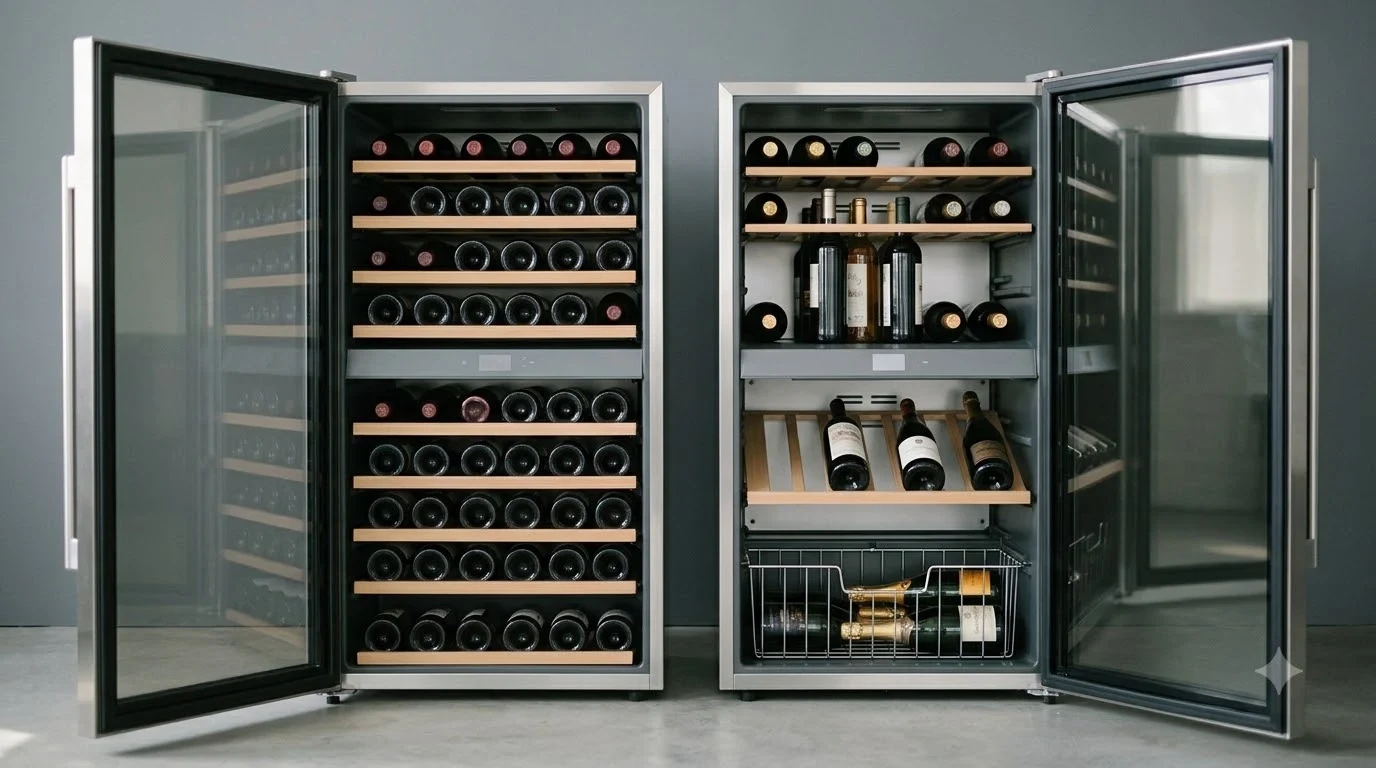
The ca lefort dual zone wine fridge is a 24-inch, compressor-cooled cabinet designed to keep red and white wines in separate temperature zones, with front ventilation for built-in or freestanding placement. It has useful features for a mixed home collection, including wooden shelves, UV-filtering glass, and three interior light colors. The buying caveat is important: the manufacturer’s current page and downloadable manual do not agree on bottle capacity, so confirm the exact model version before ordering or planning a cabinet opening.
This review focuses on the Ca’Lefort 24-inch dual-zone wine fridge commonly identified as CLF-WD24, while distinguishing it from the Home Depot listing CLF-WD24-HD. The model has a plausible feature set for everyday wine storage, but the capacity discrepancy, zone relationship, installation details, and mixed owner feedback deserve more attention than the polished product photography.
Specs and Key Features
The CLF-WD24 is a front-vented compressor wine fridge with a 40°F to 65°F operating range, stainless-steel exterior, and two temperature zones. It is designed to separate cooler-serving wines from warmer reds, but capacity and some dimensions need confirmation.
Start with bottle count. Ca’Lefort’s page heading says 46 bottles, but its specification list allocates 18 to the upper zone and 34 to the lower, totaling 52; its FAQ also says 52 Bordeaux-size bottles. Home Depot advertises 52 for SKU CLF-WD24-HD. The downloadable CLF-WD24 manual, however, says 46 standard 750 ml bottles and illustrates eight bottles per shelf plus six at the bottom. Treat this as a real version or documentation conflict. Wider Burgundy and Pinot Noir bottles, Champagne, and other broad formats can lower capacity below either headline figure.
| Specification | Published detail | What buyers should know |
|---|---|---|
| Model identity | CLF-WD24; Home Depot lists CLF-WD24-HD | Confirm the full model code on the carton and rating plate. |
| Bottle capacity | 46 bottles in the manual; 52 advertised on the current product page and retailer listing | Plan around the lower manual figure unless the seller confirms the exact version. |
| Temperature range | 40°F–65°F (5°C–18°C) | The manual says both zones use this range, with the lower zone set at or above the upper zone. |
| Dimensions | 33.8 in. high; width and depth listed as 23.4 and 23.8 in., with orientation reversed between page and manual | Verify the drawing for the exact SKU before cutting a cabinet opening. |
| Cooling and ventilation | Compressor cooling; front vent; 41 dB listed by Ca’Lefort | Front venting supports under-counter use when the required opening and clearances are followed. |
| Electrical and warranty | 115 V / 60 Hz, 0.9 A in the CLF-WD24 manual; 1-year unit, 2-year parts, 3-year compressor warranty on the product page | Keep the invoice and confirm how warranty service is handled in your area. |
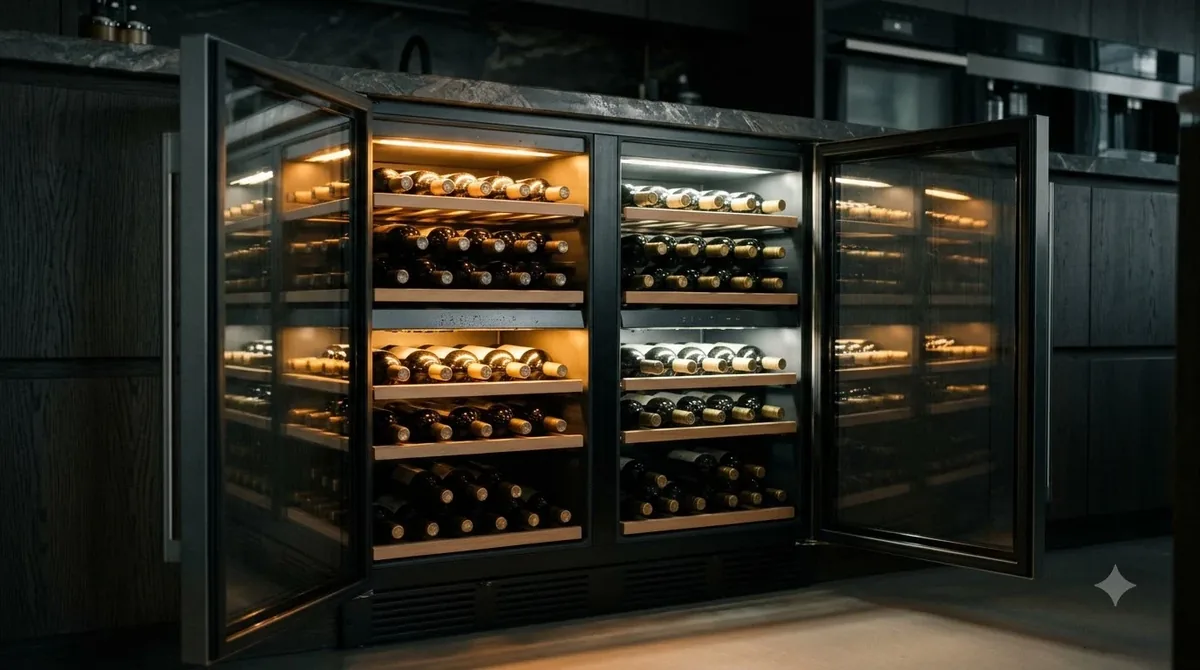
Other listed features include frost-free compressor cooling, front ventilation, a charcoal filter, adjustable feet, and a dual-pane tempered-glass door with UV protection. A stainless frame, carbonized wooden shelves, concealed hinges, and gray glass give it a more furniture-like finish than a basic beverage cooler. Interior LEDs cycle through white, blue, and amber. “Dual zone” does not mean the compartments can be arranged in any order. The manual says both zones accept 40°F to 65°F settings, but the lower zone must match or exceed the upper zone, with at least a 4°C difference recommended. Ca’Lefort says a fan moves cold air from the upper compartment downward. The intended arrangement is cooler whites or sparkling wine above warmer reds, not the reverse.
The cabinet is in the 24-inch class, but use the exact installation drawing rather than its category name. The manual lists a 33.8-inch height and a 23.4-by-23.8-inch footprint; the current product page reverses the width and depth. It calls for a minimum opening of 24 inches wide, 24 inches deep, and 34.5 inches high, with the front exhaust unobstructed. It also specifies a ¼-inch gap at each side and top for built-in installation; freestanding placement calls for 5 inches behind and at the sides.
Tip: Before ordering a replacement cabinet or countertop, ask the seller for the installation drawing tied to the complete model number. The CLF-WD24 manual and product page differ on bottle count and swap the width and depth labels, so a quick written confirmation can prevent an expensive fit problem.
What Owners Like
Positive owner comments focus on appearance, quiet operation, and straightforward temperature setting rather than advanced cellar controls. The stainless frame, glass door, and three LED colors—white, blue, and amber—are designed for a kitchen, dining room, or bar.
Some Home Depot purchasers call the cabinet attractive and quieter than expected; others praise its packaging, setup, and ability to hold a selected temperature. Ca’Lefort’s own page includes comments from owners who like matching wine and beverage units and describe the fridge as quiet in a bar. These are anecdotes, not a promise about every room: compressor cycles, fan operation, floor level, and cabinet placement affect perceived noise.
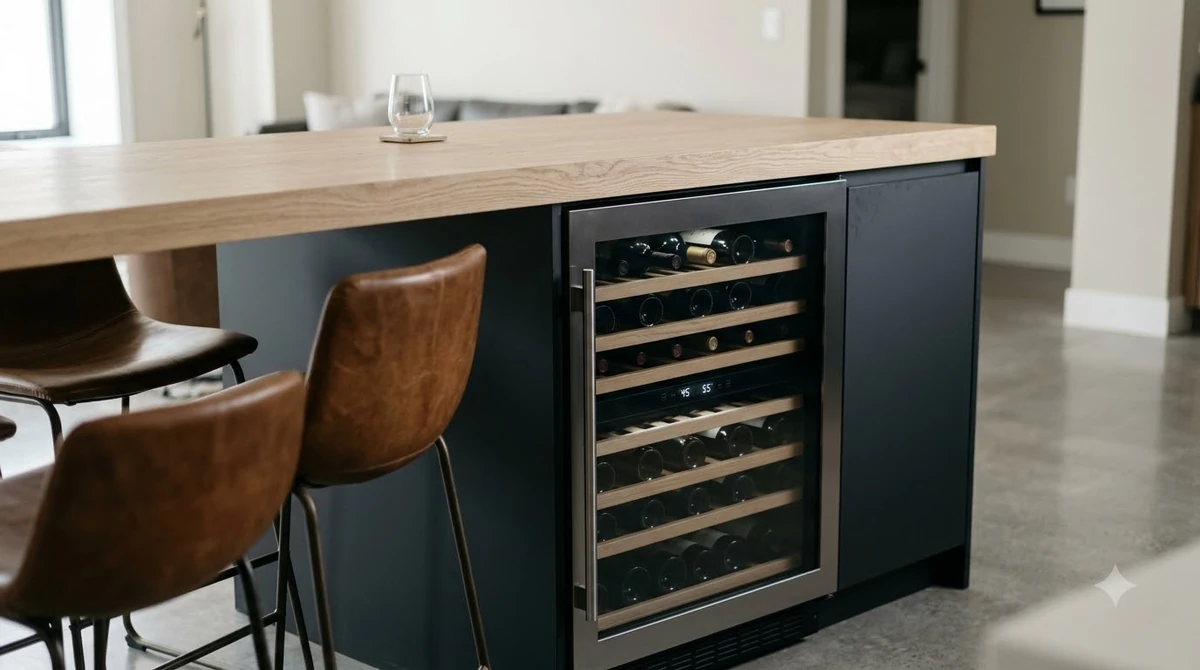
Front ventilation supports either built-in or freestanding placement, which is useful when replacing an under-counter cabinet or setting up a dining-room bar. It does not eliminate clearance rules: the front grille must remain open, and the cabinet opening must match the model-specific drawing.
Removable wooden shelves help accommodate a changing mix of Bordeaux, Syrah, Burgundy, and Champagne bottles. The product page says the shelves suit different bottle types, but the maximum count assumes standard shapes. The real advantage is flexibility when a wider bottle needs extra room, not a promise that every slot remains usable. The two-zone layout suits a household that buys both white and red wine for near-term service. Sauvignon Blanc or Riesling can sit in the cooler upper zone, with Merlot or Cabernet Sauvignon in the warmer lower compartment. For dinner, a bottle paired with chicken Marsala can be ready to pour without using the cabinet for groceries or leftovers.
Common Complaints
The largest caution is that published specifications are inconsistent, and owner feedback raises questions about long-term reliability and support. The mismatch between a 46-bottle manual and a 52-bottle current listing is more than a small copy error if the fridge is being purchased to fit a specific collection or a kitchen opening.
Dimensions are also inconsistent: the current product page lists 23.8 inches wide by 23.4 inches deep, while the manual reverses those figures; both give a 33.8-inch height. That half-inch swap matters in a tight cabinet once the handle, door swing, leveling feet, and vent path are considered. A generic “24-inch” label is not an installation measurement.
Negative retailer comments include reports of units that stopped cooling, a cabinet that began freezing wine after several months, and a control fault with an error message. Other owners report normal operation and stable temperatures, so these comments do not establish a failure rate. They do make warranty handling and access to a repair technician important buying questions. Support reports are mixed: one Home Depot reviewer described unanswered follow-up messages after reporting a cooling fault, while another praised a responsive manufacturer contact. Ca’Lefort’s FAQ lists a China address. U.S. buyers should ask who processes warranty claims, whether parts ship domestically, and whether a local technician will service the unit. A three-year compressor warranty has limited practical value if repairs are difficult to arrange. Door swing also needs confirmation. The manual mentions reversible hidden hinges, but a Home Depot reviewer said changing the swing required different hinges and a different vent grille. That may be specific to the retailer SKU. Anyone needing a left-hinged door should confirm the supplied hardware for the exact model.
One retailer reviewer expected the top compartment to be warmer than the bottom and was disappointed by the temperature relationship. The manual and FAQ say the upper zone is the cooler side and the lower zone must match it or run warmer. Two displays do not mean the compartments can be configured in reverse.
Who Should Buy and Who Should Skip
This cabinet best suits a household with a permanent 24-inch-class space, a moderate collection of standard bottles, and a preference for separate cooler and warmer areas. White wine at roughly 45°F to 50°F and red wine near 50°F to 65°F fit the intended upper-cooler/lower-warmer arrangement.
It can suit a home bar where appearance matters: stainless trim, dark glass, wood shelves, and three light colors look more finished than a plain utility cooler. Still, compressor placement and vent clearance matter more than decorative lighting. For under-counter use, prioritize the cutout; for freestanding use, level the floor and leave room for heat to escape. Large-collection buyers should not rely on the 52-bottle claim without confirmation. The manual says about 46 Bordeaux 750 ml bottles, while the product and retailer pages advertise 52. Champagne and wide Burgundy formats reduce usable space, so count bottle shapes rather than labels.
Skip it if you need the upper zone warmer than the lower, truly independent temperature priorities, or easy access to a documented U.S. repair network. Owner feedback includes both praise and serious cooling or support complaints. A buyer who cannot tolerate downtime may prefer a brand with clearer local service arrangements. It is not designed for groceries, open mixers, or cans; the manual says the appliance is for wine, not perishable food. Serve an Aperol spritz recipe or Hugo spritzes with ingredients held in a separate beverage refrigerator.
Other model reviews can help compare front-vented cabinets and zone layouts. The deciding factors are temperature range, airflow, service coverage, and measured fit—not the number of displays on the door.
How It Compares to Alternatives
Compare the Ca’Lefort with a single-zone cellar, a fully independent dual-zone cabinet, and a wine-and-beverage refrigerator. Each serves a different need; a stable cellar target near 55°F and the manual’s recommended 4°C gap between zones are useful reference points.
A single-zone cellar is simpler for a collection intended to sit at one stable temperature near 55°F. Although both CLF-WD24 zones accept 40°F to 65°F settings, the manual recommends keeping the lower compartment at least 4°C warmer than the upper. That makes this layout more useful for serving reds and whites at different temperatures than for holding every bottle at one identical cellar setting. A fully independent dual-zone model may suit buyers who want a different red-and-white arrangement. Do not compare labels alone: ask whether each compartment can use the full temperature range, whether airflow is shared, and whether the setpoints can be reversed. Confirm those details in the other model’s manual.
Ca’Lefort’s separate CLF-WF24 is a 24-inch dual-zone wine-and-beverage fridge with a bottle compartment and a can compartment. It suits households that want wine and soft drinks in one appliance, but it is not the same product as the dedicated CLF-WD24. Compare bottle capacity separately from the can count. For under-counter use, compare depth, height, door swing, and ventilation before finishes. The manual calls for a 24-by-24-by-34.5-inch opening and a clear front exhaust. Rear-vented competitors need a different cavity design; front-vented models still need the grille unobstructed. Include handles, trim, and nearby drawers in the measurement.
Service coverage may matter more than trim for a long-term purchase. Ca’Lefort advertises a 1-year unit, 2-year parts, and 3-year compressor warranty, but ask whether compressor coverage includes labor, how claims are opened, and who arranges parts or technician visits. A local repair network may be worth choosing over extra lighting. For a final specification check, compare the Ca’Lefort 24-inch dual-zone product page with the manual for the exact unit. The web page combines a 46-bottle heading with a 52-bottle specification breakdown, while the CLF-WD24 manual says 46; model suffixes matter. Treat owner reports as signals, not reliability data. The Home Depot owner review page mixes praise for looks, quiet operation, and temperature holding with reports of cooling faults, support delays, and confusion about door reversal or zone setup. Ask the seller about service before ordering.
Frequently Asked Questions
Common questions cover setup, electrical requirements, lighting, and upkeep beyond the cabinet’s 40°F to 65°F range. The manual includes several operating details that can be missed during a 24-inch installation.
How long should the Ca’Lefort wine fridge stand before it is plugged in?
The CLF-WD24 manual recommends leaving the appliance upright for approximately 24 to 36 hours before connecting it to power. This settling period is intended to reduce the chance of a cooling-system problem after transportation. Follow the instructions supplied with the exact unit, especially if the carrier transported it at an angle.
Does the wine fridge need a special electrical outlet?
The CLF-WD24 manual specifies a 115-volt, 60-hertz supply and a grounded three-prong outlet. It warns against removing the grounding prong or using an extension cord, and recommends a separate circuit for the appliance. Have an electrician check the outlet if the installation location is not already properly grounded.
Do the interior lights turn on when the door opens?
No. Ca’Lefort’s FAQ says the lights do not switch on and off automatically with the door; the user presses the light control instead. The available colors are white, blue, and amber, so the lighting is a manual display feature rather than an automatic door sensor.
How often should the charcoal filter be replaced?
The CLF-WD24 manual says to replace the charcoal filter every 12 months. It locates the filter at the bottom of the rear interior panel and describes turning it about 45 degrees counterclockwise to remove it. Check filter availability before purchase if you plan to keep the fridge for several years.
How soon can the fridge be restarted after a power interruption?
The manual instructs users to wait 3 to 5 minutes after unplugging the unit, losing power, or switching it off before restarting. Restarting sooner may prevent the cellar from starting correctly. A short delay is also a useful reminder not to repeatedly toggle the power while troubleshooting a temperature issue.
The Ca’Lefort dual-zone fridge offers a useful mix of front-vented installation, two temperature areas, wood shelving, and a finished stainless-and-glass look. It is a more convincing choice for a modest collection organized around cooler whites and warmer reds than for a buyer who needs verified high-capacity storage, independent zones, or easy local repairs. Confirm the exact SKU, bottle count, dimensions, door hardware, and warranty procedure in writing before committing to the cabinet.
More in Model Reviews
 Magic Chef 44 Bottle Wine Cooler Review for Flexible StorageUpdated Nov 21, 2026
 Whynter 164 Bottle Wine Cooler Review: Capacity, Features, and FitUpdated Nov 21, 2026
 Insignia NS WC16BK6 Review: Compact 16-Bottle Wine StorageUpdated Nov 21, 2026
 Wine Enthusiast Electric Blue Omega Review: Opening, Pouring, and Preserving Made EasierUpdated Nov 21, 2026
 Koolatron 20 Bottle Wine Cooler Review: Features, Fit, and PerformanceUpdated Nov 21, 2026
 NewAir AWC 330E Review for Home Wine StorageUpdated Nov 21, 2026