

We may earn a commission when you buy through links on this page, at no extra cost to you. Learn more.
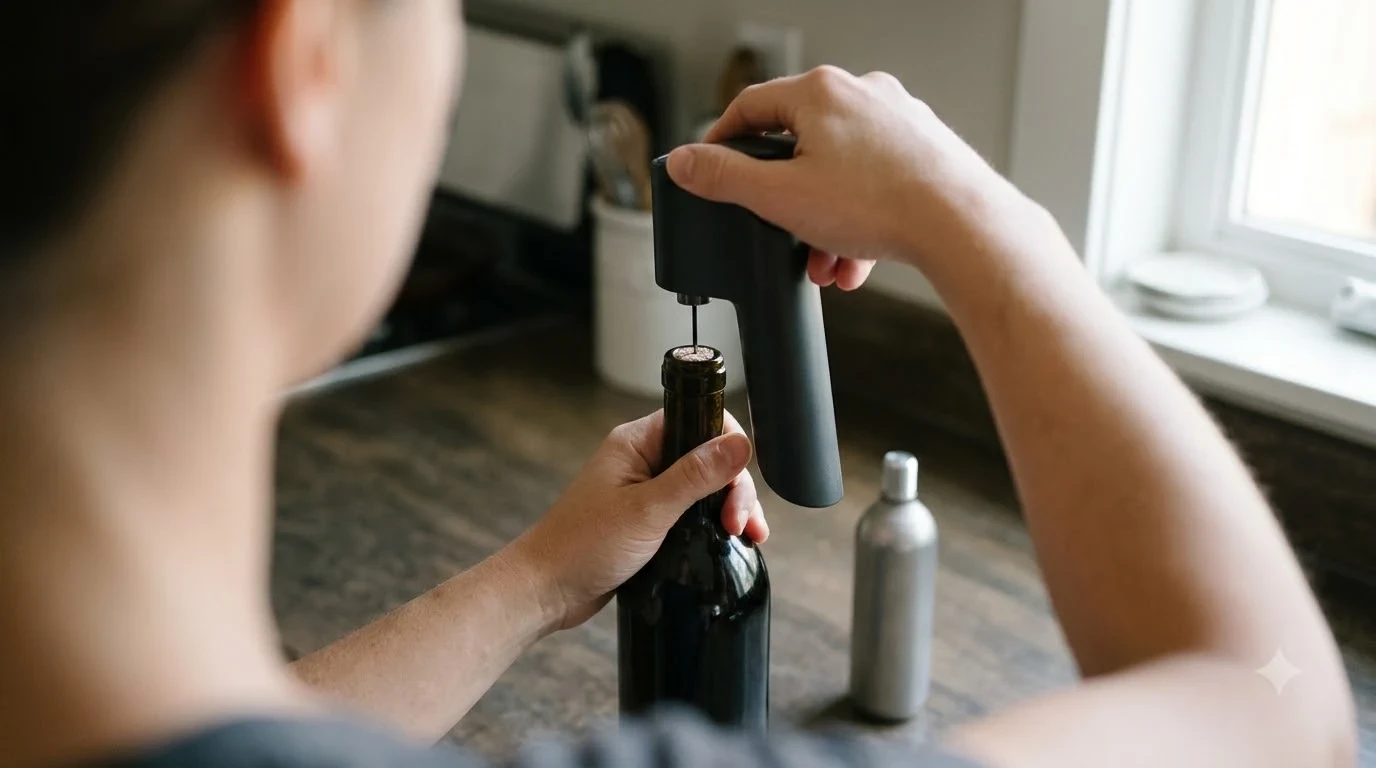
The vacu vin wine preserver is a practical manual vacuum pump that helps keep opened bottles of still wine fresher for longer by removing excess air and sealing the bottle with a reusable stopper. Its built-in click indicator makes operation straightforward, while its compact design and reusable components make it useful for everyday wine drinkers. However, it is not designed for sparkling wine, and its preservation results depend on proper sealing and storage.
Finishing an entire bottle in one evening is not always practical, particularly when you enjoy different wines throughout the week. A wine preservation accessory can help reduce oxidation and make the remaining wine more enjoyable when you return to it. The Vacu Vin Original Wine Saver takes a simple approach: insert a stopper, pump out excess air, listen for the click and store the bottle upright. This review examines its design, operation, strengths, limitations and suitability for different wine-drinking habits.
Specs and Key Features
The Vacu Vin Original Wine Saver is a reusable manual preservation system built around two essential components: a handheld vacuum pump and a rubber bottle stopper. Its main advantage is the audible vacuum indicator, which tells users when the recommended vacuum level has been reached instead of leaving them to guess how many times to operate the pump.
The Original Wine Saver is a straightforward accessory rather than an electronic appliance. It does not require batteries, charging cables or replacement gas cartridges. Its compact construction also makes it relatively easy to keep in a kitchen drawer, bar cabinet or wine-accessory storage area.
| Specification | Vacu Vin Original Wine Saver |
|---|---|
| Product type | Manual wine vacuum pump |
| Primary purpose | Slow oxidation in opened still wine |
| Included stopper | 1 reusable stopper in the listed black version |
| Dimensions | 76 × 171 × 39 mm |
| Product weight | 96 g |
| Vacuum indicator | Audible click |
| Power source | Manual operation; no batteries |
| Stopper cleaning | Dishwasher-safe |
| Intended wine type | Still wine |
| Recommended bottle position | Upright |
| Product origin | The Netherlands |
The dimensions and weight above come from Vacu Vin’s Original Wine Saver product specifications. The single-stopper configuration is important when comparing packages because other versions include additional stoppers or different finishes. Buyers should distinguish the basic pump from bundled sets rather than assuming every package contains identical accessories.
Manual vacuum operation
The pump removes some of the air from the bottle after a reusable stopper has created a seal. Reducing the amount of oxygen in the bottle’s headspace slows oxidation, which can otherwise gradually diminish fresh fruit aromas, alter flavor and make an opened wine less appealing.
The system is designed to be reusable. Unlike disposable closures, the stopper can be removed, cleaned and used again. The pump also works without an electrical connection, making it convenient for a dining table, kitchen counter or vacation rental.
The click indicator
The click is one of the most useful design features. According to Vacu Vin, the sound indicates that the required vacuum level has been reached. This gives the user a recognizable stopping point instead of relying on a fixed number of pump strokes.
The newer Loop version uses a different feedback approach: users continue pumping until they feel resistance. This distinction matters when choosing between the Original and Loop designs. Someone who prefers an audible signal may find the traditional Original pump more intuitive.
Compatibility and available configurations
Vacu Vin offers the Original Wine Saver in different colors and package configurations. Some sets include additional stoppers, while other versions combine the pump with serving accessories. The manufacturer also confirms compatibility between traditional gray stoppers and newer Loop stoppers and pumps.
For households that regularly open several bottles, additional stoppers can be useful. One stopper per bottle makes it possible to preserve multiple unfinished wines without repeatedly transferring closures. The pump itself can be shared between compatible bottles.
For more information about the manufacturer’s design and specifications, see the Vacu Vin Original Wine Saver product description.
What Owners Like
The strongest reasons to consider the Vacu Vin Wine Saver are its simple operation, reusable components and compact manual design. It addresses a common household problem without introducing a complicated preservation routine or requiring specialized equipment.
Simple operation after opening a bottle
Convenience is a significant advantage for people who regularly drink one or two glasses rather than finishing an entire bottle. The pump and stopper can be used immediately after pouring, without waiting for an electronic device to charge or preparing a replacement cartridge.
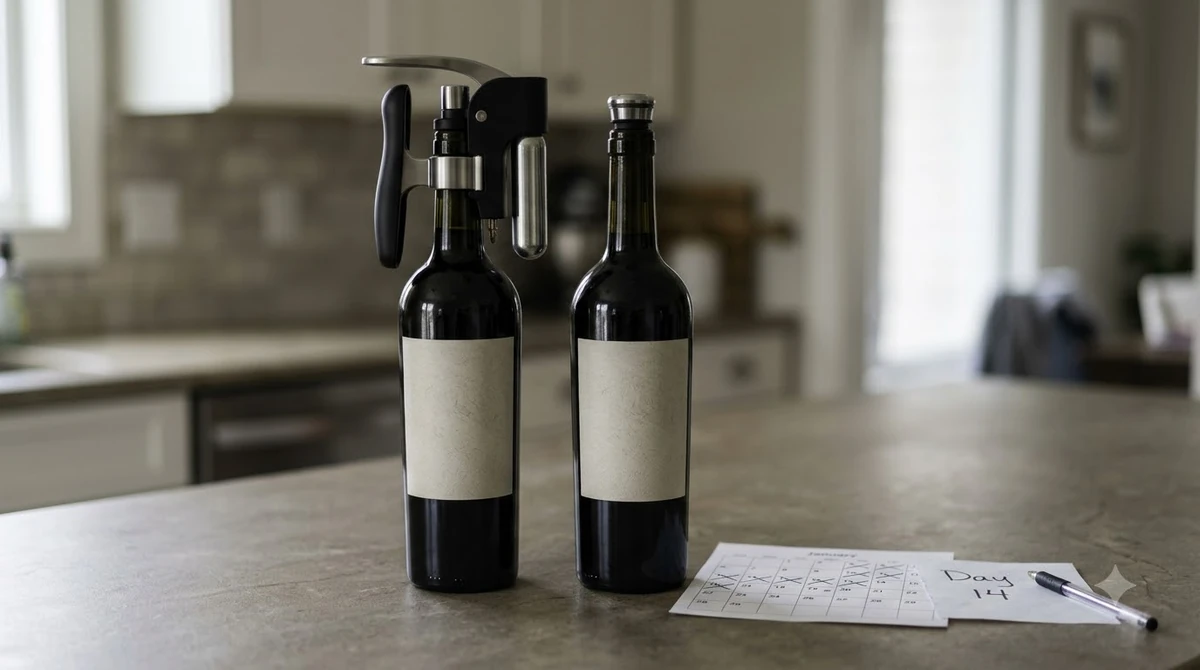
The process is also easy to understand for someone unfamiliar with wine-preservation equipment. Insert the stopper, position the pump, operate the handle and stop when the click sounds. This straightforward routine makes the accessory accessible to casual wine drinkers as well as people who maintain a larger collection of everyday bottles.
It can be especially useful during dinner parties. A host may open a Cabernet Sauvignon for a main course and a Sauvignon Blanc for guests who prefer white wine. If either bottle remains unfinished, the pump offers a convenient way to seal it before returning it to storage.
Reusable stoppers reduce disposable accessories
The reusable stopper is another practical feature. Instead of replacing a single-use closure every time a bottle is opened, owners can wash and reuse the supplied stopper. The manufacturer identifies the traditional wine stoppers as dishwasher-safe, which simplifies routine cleaning.
Additional compatible stoppers are useful for people who regularly have several open bottles. For example, a household might have a Pinot Noir, Chardonnay and rosé open during a weekend gathering. Separate stoppers allow each bottle to remain sealed while the same pump handles the vacuum operation.
Vacu Vin also confirms that its traditional gray stoppers and Loop stoppers can be used with the corresponding Original and Loop pumps. This compatibility provides flexibility when replacing accessories or adding stoppers to an existing collection.
No electricity or complicated setup
The manual design avoids several inconveniences associated with powered kitchen equipment. There is no battery to recharge, no power adapter to locate and no electronic control system to maintain. The pump can be stored alongside a corkscrew and used whenever a bottle needs resealing.
This simplicity also makes the Original model a reasonable option for people who do not want another appliance occupying their kitchen counter. Its stated weight of 96 grams and dimensions of 76 × 171 × 39 mm make it a relatively compact piece of equipment.
Useful for different still-wine styles
The Original Wine Saver is intended for still wine, including red, white and rosé varieties. This versatility is more useful than a product dedicated to one particular grape or wine region.
A bottle of Pinot Noir can be resealed after a single glass, while a remaining portion of Pinot Grigio can be preserved after dinner. The same basic operation applies to both, even though their flavor profiles and serving temperatures differ.
For people who enjoy exploring different bottles, the system can also complement a broader wine-accessory collection. A wine opener and preserver set is another practical option for households that want opening and storage tools together.
Common Complaints
The Vacu Vin Wine Saver has several limitations that buyers should understand before purchasing. Its biggest restrictions concern sparkling wine, upright storage and pump maintenance, while its vacuum-based approach cannot prevent every form of wine deterioration.
Not suitable for sparkling wine
The most important limitation is that the Original Wine Saver is not designed for Champagne, Prosecco, Cava or other sparkling wines. These wines depend on dissolved carbon dioxide to maintain their bubbles. Applying a vacuum is inappropriate because it can encourage carbonation to escape rather than preserve the sparkling character.
This means the Original Wine Saver is not a universal solution for every bottle in a wine collection. People who regularly open sparkling wine should consider a dedicated sparkling-wine stopper designed to retain carbonation.
For example, a Champagne stopper is designed around maintaining pressure inside the bottle. It performs a different job from a vacuum pump intended for still wine. Choosing the right closure for the wine style is more important than trying to use one accessory for every situation.
Bottles must remain upright
Another inconvenience is the recommended storage position. Vacu Vin advises storing sealed bottles upright rather than horizontally. If a bottle lies on its side, wine can enter the stopper and interfere with the vacuum seal.
Liquid entering the pump mechanism can also make its operation sticky. This is particularly inconvenient for people who normally store bottles horizontally in a traditional wine rack or a wine refrigerator designed around side-facing bottle storage.
Owners may need to rearrange their storage space to accommodate an upright bottle. A kitchen refrigerator door or a wine cooler with an appropriate vertical shelf can be more practical than a tightly packed horizontal rack.
The pump requires careful cleaning
Although the stopper can go in the dishwasher, the pump cannot. Vacu Vin specifically warns against submerging the pump in water or placing it in a dishwasher. Its internal mechanism requires more careful maintenance than the reusable stopper.
If wine gets inside the mechanism, the pump may become sticky. The manufacturer recommends cleaning the affected area with a damp cloth and dishwashing soap, allowing it to dry and applying a small amount of suitable grease, such as Vaseline, to the inside of the pump.
This is not a particularly difficult maintenance routine, but it is worth understanding before buying. People who expect every component of a wine accessory to be dishwasher-safe may find this limitation inconvenient.
Vacuum preservation is not a guarantee of perfect wine
Removing excess air slows oxidation, but it does not reverse the chemical changes that have already occurred. Wine that was exposed to warm temperatures for several hours before sealing may not retain its original freshness simply because a vacuum pump is applied afterward.
The amount of wine remaining also matters. A bottle containing a small glass has much more empty space than a bottle that is nearly full. The pump can remove some of the air, but the remaining wine still has a different storage situation than a newly opened bottle.
Wine style also influences how noticeable deterioration becomes. Fresh aromatic whites can lose their lively fruit character, while some structured reds may retain a more recognizable flavor profile for longer. Neither should be assumed to remain unchanged indefinitely.
Tip: Seal the bottle immediately after pouring, keep it upright and refrigerate it. Even red wine benefits from cooler storage after opening; allow it to warm toward its preferred serving temperature before pouring the next glass.
Who Should Buy and Who Should Skip
The Vacu Vin Original Wine Saver makes the most sense for people who frequently leave part of a still-wine bottle unfinished. It is less suitable for sparkling-wine drinkers, households without upright storage space or anyone who wants a completely automatic preservation system.
Who should consider buying it?
Occasional wine drinkers: People who open a bottle on a weekday and drink one or two glasses may find a vacuum pump especially useful. Instead of feeling obligated to finish the bottle, they can seal the remainder and return to it later.
Couples with different wine preferences: Two people do not always want the same wine. One might prefer Cabernet Sauvignon while the other chooses Chardonnay. A reusable preservation system makes it easier to keep both bottles available across multiple meals.
People who enjoy trying different varieties: Wine enthusiasts sometimes open several bottles to compare grape varieties, regions or producers. The Original Wine Saver can help manage unfinished still wines without requiring a dedicated preservation appliance for each bottle.
Hosts and entertainers: Dinner parties often involve several open bottles. The pump and additional compatible stoppers can help keep remaining red, white and rosé wines organized after guests leave.
People who prefer simple accessories: Anyone who dislikes rechargeable appliances may appreciate the straightforward manual design. There are fewer electronic components to manage, and operation does not depend on battery availability.
Who should skip it?
Frequent sparkling-wine drinkers: People whose preferred bottles are Champagne, Prosecco or Cava should choose a dedicated sparkling-wine preservation stopper instead. The Original Wine Saver is specifically unsuitable for these wines.
Owners of horizontal-only wine storage: If every available storage space requires bottles to lie on their sides, the upright-storage recommendation can become a significant inconvenience.
People who want automatic operation: The manual pump requires repeated physical movement. Anyone who would rather press one button and let a device complete the vacuum process may prefer Vacu Vin’s Electric Wine Saver.
People expecting long-term preservation: A vacuum pump is intended for extending the enjoyment of an opened bottle, not for storing unfinished wine indefinitely. It is not a substitute for a professional wine-preservation system designed for more demanding storage requirements.
For shoppers comparing other wine accessories, the Accessory Brands section provides a useful starting point for exploring equipment beyond bottle preservation.
How It Compares to Alternatives
The Vacu Vin Original Wine Saver competes with several approaches to opened-wine preservation. Manual vacuum pumps, electric pumps, gas-based systems and simple bottle stoppers all address oxygen exposure differently, so the best choice depends on the type of wine and the user’s routine.
Manual vacuum pumps
The Original Wine Saver belongs to the manual vacuum-pump category. Its main advantage is simplicity: it uses a reusable stopper and a handheld pump to remove excess air. The audible click provides feedback, making the operation more predictable than a basic stopper without a vacuum indicator.
Its main compromise is physical operation. The user must position the pump and work the handle until the indicator activates. For most occasional wine drinkers, this is a small inconvenience, but it may be less appealing to someone who opens bottles several times each evening.
Electric wine pumps
Vacu Vin’s Electric Wine Saver uses the same general preservation principle but automates the pumping process. According to the manufacturer, the electric model stops automatically when the required vacuum has been created.
The electric version includes two stoppers and a rechargeable battery. Vacu Vin states that a full charge can seal up to 40 bottles. This is a useful alternative for people who want less manual effort or expect to preserve several bottles regularly.
The trade-off is that the electric version introduces a battery and charging requirement. The Original manual pump remains the simpler choice for people who value basic operation and do not mind using their hands.
Gas-based preservation systems
Gas-based preservation systems take a different approach. Instead of removing air through a vacuum pump, these products introduce protective gases into the bottle’s headspace. Common gases include argon and nitrogen.
According to Consumer Reports, gas-based systems replace oxygen in the remaining space with gases that help limit oxidation. This can be appealing for people who want to preserve higher-value wines or are particularly concerned about minimizing changes after opening.
However, gas systems may require replacement cartridges or canisters, depending on the product. That creates an ongoing supply requirement that the reusable Vacu Vin pump does not have.
Simple wine stoppers
A standard wine stopper provides a closure but does not actively remove excess air. It is the most basic option for someone who simply wants to cover an opened bottle before placing it in the refrigerator.
The Vacu Vin system adds an additional step by extracting some of the air before storage. For people who regularly leave a substantial amount of wine in the bottle, this extra step can be worthwhile.
Choosing the right preservation approach
The comparison comes down to convenience, bottle type and storage habits. A manual vacuum pump is a practical middle ground for still wine, an electric pump reduces physical effort, a gas system uses a different preservation method and a simple stopper offers basic closure without active air removal.
For a household that primarily drinks still wine and wants a reusable accessory, the Original Wine Saver is a sensible starting point. For sparkling wine, a dedicated champagne stopper is the more appropriate choice. For higher-value bottles that need a different preservation approach, a gas-based system may deserve consideration.
Frequently Asked Questions
These answers cover practical questions about compatibility, storage and everyday use that can affect the experience of owning a Vacu Vin Wine Saver.
Can the Vacu Vin Wine Saver be used with screw-cap bottles?
Yes. The vacuum stopper is designed to fit a compatible bottle opening rather than requiring a corked bottle. A screw-cap bottle can therefore be resealed with the system if its neck accepts the stopper securely. The original screw cap is not needed once the reusable stopper is fitted.
Can the Vacu Vin pump be used with more than one bottle?
Yes. The pump can be shared between compatible reusable stoppers. This is useful when preserving several still wines during a dinner party, although each bottle needs its own stopper to remain sealed simultaneously.
Does the Vacu Vin Wine Saver work with older Vacu Vin stoppers?
Vacu Vin confirms that its older traditional stoppers and newer stoppers can be used with compatible Original and Loop pumps. The manufacturer identifies the Wine Saver & Server as an exception because that combination requires its own dedicated server stoppers.
Can the Vacu Vin Wine Saver be used for homemade wine?
The system is intended for still wine in compatible bottles, so properly bottled homemade still wine can use the same basic stopper-and-pump arrangement. Bottle-neck compatibility and a secure seal remain important. The pump is not a substitute for appropriate bottling and cellar-storage practices.
Does the Vacu Vin Wine Saver require replacement batteries?
No. The Original Wine Saver is a manual pump and does not need batteries or electrical power. Battery charging applies to the separate Electric Wine Saver, which is a different product in the Vacu Vin range.
The Vacu Vin Original Wine Saver is a useful, uncomplicated accessory for anyone who regularly has unfinished bottles of still wine. Its reusable stopper, manual operation and audible click indicator make it easy to incorporate into a normal wine routine, provided bottles can be stored upright and the pump is maintained correctly. It is not a universal solution for sparkling wine or long-term preservation, but for everyday red, white and rosé bottles, it offers a practical way to slow oxidation and enjoy more than one glass across several occasions.
Wine lovers who want to build a more complete home setup can also explore Le Nez du Vin for wine-aroma education and tasting accessories that complement a practical preservation routine.
More in Wine Accessories
 Vinglace Wine Tumbler Review: A Glass-Lined Choice for Better SippingUpdated Nov 20, 2026
 ZWILLING Electric Wine Opener Review: Features and DrawbacksUpdated Nov 20, 2026
 Vinturi Electric Wine Opener Review for Easy UncorkingUpdated Nov 20, 2026
 Vinabon Wine Aerator Review for Easier, Cleaner Wine ServingUpdated Nov 20, 2026
 Vacu Vin Electric Wine Opener Review: Easy Cork Removal for Home Wine LoversUpdated Nov 20, 2026
 Rabbit Wine Accessories for Easier Home Wine ServiceUpdated Nov 20, 2026