

We may earn a commission when you buy through links on this page, at no extra cost to you. Learn more.
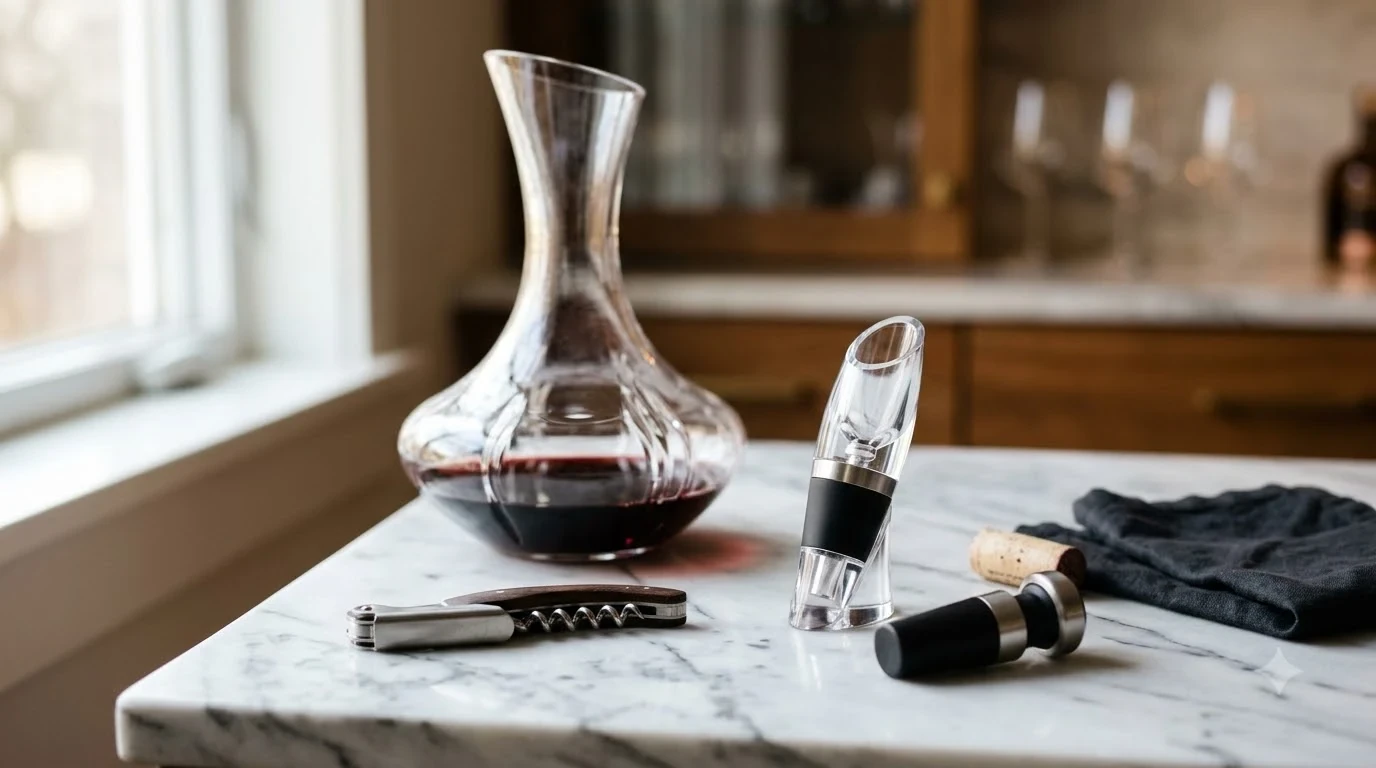
The iittala decanter is a worthwhile choice for wine enthusiasts who want a beautifully designed, mouth-blown glass vessel with generous capacity and practical pouring characteristics. Designed by Antonio Citterio and Toan Nguyen, this Finnish-made decanter holds 1.9 liters and features a distinctive long neck with a gently opening top. Its main advantages are its minimalist appearance, substantial capacity, and versatility for serving different wines, although handwashing and careful cleaning are important considerations.
A good wine decanter should do more than look attractive on a dining table. It should provide enough room for wine to interact with air, make pouring manageable, and suit the way people entertain. Iittala approaches these requirements through restrained Scandinavian design rather than decorative details. The result is a recognizable glass centerpiece that can serve both a practical purpose and a decorative one. This review examines its construction, capacity, everyday usability, customer feedback, and suitability for different wine-drinking habits.
Specs and Key Features: What Makes the Iittala Decanter Distinctive
The Iittala Decanter combines mouth-blown Finnish glass craftsmanship with a deliberately simple silhouette. Its 1.9-liter capacity, approximately 20 cm width, and 20.4 cm manufacturer-listed height make it a substantial serving vessel without an excessively complicated shape.
Designed in 2004 by architect Antonio Citterio and industrial designer Toan Nguyen, the decanter reflects a functional approach to tableware. Instead of adding ornamental handles, elaborate patterns, or a separate decorative stopper, its designers concentrated on the proportions of the glass body and neck. The transparent material keeps attention on the wine itself, while the long neck creates a distinctive profile that stands out among conventional serving vessels.
The manufacturer identifies the product as mouth-blown in Finland and lists glass as its material. This construction is an important part of its appeal. Mouth-blown glass gives the piece a connection to traditional glassmaking, making it attractive to buyers who appreciate crafted tableware rather than purely utilitarian kitchen accessories. However, the mouth-blown designation should not be interpreted as a promise that every individual piece has identical dimensions or visual characteristics.
The slightly opening neck is another important design feature. According to Iittala, the shape allows an appropriate amount of air to enter so that wine can release its aromatic bouquet. The transparent glass also allows light to pass through, making the color of red wine particularly visible when the decanter is placed on a dining table.
The manufacturer’s official Iittala Decanter product specifications confirm the Finnish origin, 190 cl capacity, designer information, dimensions, and handwashing requirements.
| Specification | Manufacturer or retailer listing |
|---|---|
| Product name | Iittala Decanter 190cl |
| Designers | Antonio Citterio and Toan Nguyen |
| Design introduction | 2004 |
| Material | Glass |
| Manufacturing method | Mouth-blown |
| Country of origin | Finland |
| Capacity | 1,900 ml / 64.25 US fl oz |
| Width | 19.85 cm |
| Height | 20.4 cm |
| Weight | 0.791 kg |
| Care | Hand wash only |
| Product number | 1007181 |
The dimensions are worth considering before purchasing. At approximately 20 cm wide, this is not a particularly narrow decanter, so it needs a reasonable amount of space on a dining table or kitchen counter. Its 20.4 cm height is comparatively manageable, making it easier to accommodate than some taller, more elaborate wine vessels. Finnish Design Shop lists slightly rounded measurements of 20 cm wide, 20 cm deep, and 21 cm high, reflecting its retailer measurement presentation.
Capacity is one of the strongest practical features. A standard wine bottle contains 750 ml, meaning the 1,900 ml vessel has enough nominal capacity for approximately two and a half standard bottles. That provides flexibility for entertaining, although filling it completely would leave little room for comfortable swirling or handling. For most occasions, transferring one or two bottles is a more sensible approach.
The overall design also makes it compatible with different wine glass styles. Iittala specifically identifies its Essence Collection as a complementary option, but the decanter is not limited to matching glassware. Buyers who already own conventional stemmed wine glasses can incorporate it into an existing table setting without replacing their collection.
For additional guidance on matching serving accessories, see our recommendations for wine glasses and their different bowl shapes.
What Owners Like: Appearance, Pouring and Everyday Presentation
Customer feedback highlights three recurring strengths: the decanter’s elegant appearance, its practical pouring shape, and its ability to make wine service feel more considered. These characteristics explain why the product appeals to people who enjoy both wine and well-designed tableware.
The minimalist appearance is arguably its most recognizable quality. The broad glass body transitions into a long neck, creating a balanced outline without excessive visual decoration. This allows the decanter to complement different dining environments, including modern Scandinavian interiors, traditional wooden dining tables, and more formal dinner settings.
Unlike an opaque serving container, the clear glass displays the wine’s color. This is particularly appealing with Cabernet Sauvignon, Merlot, Pinot Noir, and other red varieties whose shades range from deep ruby to lighter garnet. A decanter can become part of the visual presentation rather than simply disappearing into the background.
Customer comments collected by Joss & Main also mention the product’s attractive appearance and its usefulness when transferring wine from a bottle. One customer specifically describes the pouring shape as convenient for avoiding spills. Other comments praise its appearance on a dining table and its suitability for serving wines that benefit from aeration.
The shape is important because decanting involves more than transferring liquid between containers. A poorly designed opening can make the process awkward, especially when pouring a full 750 ml bottle into a relatively narrow neck. The Iittala design attempts to balance a long neck with a body that can accommodate a substantial volume of wine.
Its 1.9-liter capacity also provides flexibility for hosting. Someone serving four guests can transfer a bottle and have enough room for the wine to move around the vessel. For larger dinners, two bottles can be transferred together, reducing the need to refill a smaller decanter during the meal.
Another advantage is its compatibility with different wines. A young Cabernet Sauvignon may benefit from exposure to oxygen before serving, while a mature red may need decanting primarily to separate sediment. The vessel can accommodate both situations, provided the pouring and aeration approach is appropriate for the wine.
It also works as a serving piece for white wines, although temperature management becomes important. Chilled Chardonnay or Riesling can be transferred into a clean decanter, but the wine will gradually warm toward room temperature. For this reason, smaller serving quantities and prompt pouring are preferable when serving chilled wines.
The design’s flexibility makes it useful beyond occasional formal entertaining. Someone who enjoys opening a bottle at the weekend can use it as a regular serving accessory, while someone who hosts dinner parties can leave it on the table throughout the meal. Its visual simplicity also means it does not need to be reserved for a particular style of dinnerware.
For households that already use Iittala glassware, the coordinated appearance is another attraction. The manufacturer’s recommendation to pair the decanter with the Essence Collection offers an easy starting point for building a consistent table setting. Other glassware styles can work equally well, especially if the goal is to create a less formal arrangement.
These strengths are primarily about presentation, capacity, and practical serving. Buyers should not assume that the decanter will improve every wine simply because it exposes the liquid to oxygen. Aeration depends on the wine’s age, structure, condition, and style, rather than the prestige of the glassware.
Common Complaints: Cleaning, Handling and Practical Limitations
The biggest practical drawback is maintenance. The Iittala Decanter is designed for handwashing, and its broad body combined with a narrower neck can make reaching every interior surface difficult without suitable cleaning equipment.
Customer feedback collected by Joss & Main identifies cleaning as a recurring concern. Some owners find that residue becomes harder to remove if the vessel is left standing after use. One customer specifically recommends rinsing it immediately after emptying, while another notes that careful handwashing is necessary.
This is a common issue with decorative wine decanters. Red wine can leave visible marks if it dries inside clear glass, particularly around the bottom and shoulders where liquid may collect. White wine can also leave mineral or wine residue, especially if the vessel is not rinsed thoroughly.
The best approach is to rinse the decanter with lukewarm water soon after serving. Swirl the water gently around the interior, empty it, and repeat if necessary. Avoid leaving leftover wine inside overnight, since dried residue generally requires more effort to remove.
Because Iittala specifies handwashing only, dishwasher cleaning should not be treated as an acceptable routine shortcut. Dishwashers can expose glassware to high temperatures, detergent, mechanical movement, and contact with other objects. Even if a glass vessel appears sturdy, those conditions introduce unnecessary risks.
A narrow-neck cleaning brush designed for wine decanters can help reach areas that fingers and ordinary sponges cannot. Decanter cleaning beads are another option for removing residue from the bottom, although users should select products intended for glassware and follow the cleaning accessory’s instructions carefully.
Drying requires similar attention. Leaving water trapped inside can create spotting, while wiping the interior with an ordinary kitchen towel may be difficult because of the neck opening. A dedicated drying stand designed for decanters can help air circulate through the vessel. It should be placed on a stable surface where accidental knocks are unlikely.
Handling is another consideration. The manufacturer lists a product weight of 0.791 kg before adding wine. Once filled with 1,500 ml of wine, the combined weight approaches 2.3 kg, making it a substantial serving vessel. People who prefer lightweight glassware may find it less convenient to lift and pour when full.
Its broad body also occupies more storage space than a narrow carafe. A crowded kitchen cabinet may not provide a suitable location, particularly if other stemware and serving accessories are stored nearby. Owners should measure their intended storage area before purchasing.
There is also a difference between visual durability and actual resistance to damage. Some customer comments describe the glass as substantial, but that does not make it unbreakable. Mouth-blown glass still needs careful handling, especially around sinks, countertops, and crowded dining tables.
Another limitation concerns the type of aeration a wine needs. The vessel’s generous body and opening neck can expose wine to air, but they do not provide a controlled aeration system. Some delicate older wines may lose their aromatic appeal if left exposed for too long. A broad decanter is not automatically the right choice for every bottle.
Tip: Rinse the Iittala Decanter immediately after pouring the last glass. For red wine, this simple habit helps prevent dried residue from collecting inside the broad base and makes subsequent handwashing considerably easier.
Overall, the maintenance requirements are manageable for someone willing to wash glassware by hand. They are less attractive for households that prioritize dishwasher convenience or prefer serving accessories that can be cleaned quickly with minimal attention.
Who Should Buy and Who Should Skip the Iittala Decanter
The Iittala Decanter is best suited to wine drinkers who appreciate minimalist design, regularly serve wine to guests, and are comfortable maintaining delicate glassware. Its 1.9-liter capacity and recognizable silhouette make it particularly appealing as a combination of functional serving equipment and decorative tableware.
Frequent hosts are among the strongest potential buyers. The generous capacity can accommodate more than one standard wine bottle, which is useful when serving several guests. Rather than keeping individual bottles on the table, a host can transfer the wine into the decanter and create a cleaner serving arrangement.
Red wine enthusiasts may also find it particularly useful. Young, structured wines such as Cabernet Sauvignon and Syrah can benefit from controlled aeration before serving. The broad body offers substantial contact between wine and air, while the long neck gives the vessel a distinctive appearance during dinner.
For young full-bodied red wines, a starting decanting period of approximately 30 to 60 minutes can be appropriate. The actual duration depends on the wine’s structure and condition. A powerful young Cabernet Sauvignon may benefit from more time than a delicate Pinot Noir, while an older bottle may require careful handling and immediate service after sediment separation.
The decanter can also appeal to collectors who enjoy presenting mature bottles. With older red wines, the primary reason for decanting may be sediment removal rather than extended aeration. In this situation, careful transfer from the bottle is more important than leaving the wine exposed for a prolonged period.
Design-conscious homeowners are another natural audience. The restrained silhouette can work with contemporary furniture, simple white dinnerware, and other glass serving accessories. It also makes an attractive gift for people who appreciate Finnish design and handcrafted glass objects.
However, not every wine drinker needs a decanter of this size. Someone who typically opens a single bottle for one or two people may prefer a smaller vessel that occupies less storage space. The Iittala’s 1.9-liter capacity is generous, but that generosity may be unnecessary for casual individual servings.
People who dislike handwashing should also consider alternatives. A vessel that requires careful cleaning can become an inconvenience if it is used frequently but rarely maintained properly. The same applies to households with limited cabinet space or dining areas where a broad glass object is difficult to accommodate safely.
Buyers who primarily drink delicate older wines should think carefully about their decanting habits. The Iittala Decanter can be used for sediment separation, but a simpler, narrower vessel may be easier to manage when the goal is gentle transfer rather than extensive aeration.
It is also important to consider the type of wine normally served. Sauvignon Blanc and Riesling are high-acidity whites that are usually enjoyed chilled, so a large room-temperature decanter is not necessarily the most convenient serving solution. Chardonnay, on the other hand, is often served slightly warmer, making it easier to accommodate in a glass serving vessel for shorter periods.
People looking for dedicated sparkling wine presentation may also prefer specialized glassware. A decanter is not a replacement for champagne flutes, particularly when maintaining visible bubbles and serving temperature is a priority. For those occasions, our recommendations for champagne flutes offer a more appropriate starting point.
Ultimately, the strongest reason to purchase the Iittala is the combination of thoughtful proportions, generous capacity, and Finnish glass craftsmanship. Someone who wants a simple, inexpensive container for occasional wine service may find its design-focused character unnecessary. Someone who appreciates well-made tableware and will use it regularly is more likely to appreciate the investment.
How It Compares to Alternatives: Decanter Versus Everyday Wine Carafe
The most useful comparison is between the Iittala Decanter and a conventional everyday wine carafe. Both can hold and serve wine, but their priorities differ in capacity, presentation, aeration, and cleaning convenience.
A traditional wine carafe is often designed primarily for transferring and serving beverages. Depending on its shape, it may have a narrower body, a more straightforward opening, and a simpler profile. Some are intended for water as well as wine, making them versatile additions to a kitchen or dining table.
The Iittala Decanter is more specifically presented as a wine-serving object. Its broad body and elongated neck reflect the manufacturer’s emphasis on allowing wine to breathe while showcasing its color. The mouth-blown construction also gives it a more craft-oriented identity than an ordinary mass-produced serving jug.
Capacity is one of the clearest differences to evaluate. At 1,900 ml, the Iittala can accommodate more than two standard 750 ml bottles. A smaller carafe may be more manageable for someone who typically serves just one bottle, especially if storage space is limited.
The larger vessel can be useful for dinner parties, but capacity should not be confused with ideal aeration. Filling a decanter close to its maximum leaves less room for swirling, which is one reason to avoid automatically using all available capacity. A practical fill level depends on the wine quantity and intended serving arrangement.
Shape also affects how wine interacts with air. A broad-bodied decanter generally offers a larger exposed surface than a narrow-necked bottle, although the exact effect depends on the liquid volume and geometry. The Iittala’s long neck and broad body provide a visual distinction, but they do not guarantee a specific aeration time or tasting result.
Cleaning is another area where simpler carafes can have an advantage. A wide opening makes it easier to reach the interior with a sponge or cleaning brush. The Iittala’s design is visually appealing, but its proportions mean owners must pay closer attention to rinsing, drying, and storage.
For buyers comparing different types of wine-serving glassware, the distinction between a carafe and a decanter is important. A carafe may be more appropriate for everyday water and beverage service, while a wine decanter is generally selected for its ability to accommodate wine transfer, presentation, and aeration.
Wine glass selection should also be considered separately. A decanter does not replace properly shaped drinking glasses. Cabernet Sauvignon and Syrah are generally suited to larger bowls that accommodate their structure and aromas, while Pinot Noir benefits from a different bowl profile. Our guide to red wine glasses explains the practical differences between these options.
Iittala’s own recommendation to combine its Decanter with the Essence Collection is a useful starting point for a coordinated table setting. Nevertheless, matching brands is not a requirement for good wine service. Glass shape, appropriate serving temperature, and the wine itself matter more than whether every accessory comes from the same collection.
There is also a difference between purchasing a functional decanter and collecting designer glassware. Someone who values the object as part of an interior or table setting may appreciate its restrained Finnish design even when a simpler vessel could perform the basic task of transferring wine. Someone focused exclusively on convenience may place more importance on a wide opening, dishwasher compatibility, and compact storage.
The Iittala is therefore best understood as a design-led wine decanter with practical serving capability, rather than a specialist aeration instrument or an all-purpose beverage pitcher. Its strengths are clearest when presentation and wine service are equally important.
For another retailer’s product specifications and customer feedback, the Joss & Main Iittala Decanter listing provides additional information about its capacity, dimensions, pouring experience, and cleaning considerations.
Frequently Asked Questions
Does the Iittala Decanter have a separate stopper?
The manufacturer’s listed Decanter 190cl configuration does not specify a separate stopper as part of its product features. It is designed around an open neck rather than a sealed storage system. For preserving leftover wine, transfer the remaining wine into an appropriately sealed wine bottle or storage container instead of relying on the decanter.
Can the Iittala Decanter be used for spirits?
Its glass construction and generous capacity make it physically suitable for serving certain spirits, although Iittala presents this particular model primarily as a wine decanter. Its open-neck design does not provide the sealed storage conditions normally preferred for long-term spirit storage. For whisky or brandy that will be stored between servings, a dedicated bottle with a fitted stopper is a more practical choice.
Does the Iittala Decanter have a product identification number?
Yes. Iittala identifies the Decanter 190cl with product article number 1007181 and EAN 6411920046056. These identifiers can help distinguish the current product listing from other Iittala glassware and older decanter designs. They are particularly useful when checking product information with a retailer.
Is the Iittala Decanter suitable for serving water?
Yes, the glass vessel can physically hold and serve water, although its design is specifically promoted for wine. Its 1.9-liter capacity makes it large enough for a substantial quantity of table water. However, its open neck means it should be handled and stored like an ordinary uncovered serving vessel rather than a sealed water container.
Does the Iittala Decanter require special wine accessories?
No dedicated wine accessory is required for ordinary use. A clean bottle, a stable serving surface, and suitable drinking glasses are sufficient for transferring and serving wine. A decanter cleaning brush or drying stand can make maintenance easier, but neither is specified by Iittala as a required component of the product.
The Iittala Decanter combines Finnish mouth-blown glass craftsmanship, a generous 1.9-liter capacity, and a distinctive minimalist design that works well for wine service and entertaining. Its handwashing requirement and substantial footprint are genuine considerations, but they are reasonable trade-offs for buyers who value presentation as much as functionality. For wine enthusiasts seeking an attractive serving centerpiece that can accommodate different bottles and occasions, it is a compelling design-led option.
More in Wine Glasses
 Zwiesel Glas Champagne Flutes for Durable Everyday Sparkling WineUpdated Nov 20, 2026
 Vera Wang Crystal Wine Glasses: Design, Quality and Buying AdviceUpdated Nov 20, 2026
 West Elm White Wine Glasses: Compare Designs for Better Everyday Wine ServiceUpdated Nov 20, 2026
 Zalto Stemless Wine Glasses: Discover Their Distinctive DesignsUpdated Nov 20, 2026
 Viski Champagne Glasses That Match Your Style and Sparkling WineUpdated Nov 20, 2026
 Vista Alegre Decanter Review: Crystal Style and Wine ServiceUpdated Nov 20, 2026