

We may earn a commission when you buy through links on this page, at no extra cost to you. Learn more.
The best pairings for pinot grigio with cheese focus on fresh, tangy, salty, or mildly creamy varieties such as chèvre, feta, fresh mozzarella, burrata, and young Gruyère. Because standard Italian Pinot Grigio is a light-bodied, dry white wine with brisk acidity and orchard fruit notes, it refreshes the palate without clashing with delicate dairy flavors. Richer, fuller-bodied expressions—including skin-contact Ramato styles and Alsace Pinot Gris—can handle slightly firmer, nuttier, or washed-rind cheeses.
Putting together a reliable cheese plate around a crisp white wine starts with matching weight and acidity rather than reaching for the sharpest wedges in the deli case. While bold red wines rely on tannins to bind with heavy fats and aged proteins, dry white wines use bright, mouthwatering acidity to slice through creamy textures and balance salt. Understanding how different regional styles of this grape behave in the glass makes choosing the right wedges effortless.
Why Pinot Grigio Works So Well With Cheese
Pinot Grigio succeeds as a cheese companion because its naturally high acidity and clean mineral finish act as a palate cleanser between rich or salty bites. Rather than competing with delicate milk flavors, a dry, unoaked pour lifts the bright notes of fresh dairy and resets your taste buds after every taste.
According to Wine Folly’s Pinot Gris guide, the grape is actually a pinkish-gray skin mutation of Pinot Noir that produces remarkably versatile white wines across different winemaking traditions. In its classic northern Italian form—commonly grown in Veneto, Trentino-Alto Adige, and Friuli-Venezia Giulia—winemakers harvest the fruit relatively early to preserve zesty citrus, green apple, and pear flavors alongside brisk acidity. That lean structure is precisely what makes it so effective alongside soft, high-moisture cheeses that would otherwise coat your tongue.
Food pairing principles rely on two primary mechanisms: contrast and congruence. With salty or brined cheeses, Pinot Grigio provides sharp contrast, much like squeezing fresh lemon juice over a savory dish to brighten the flavors and soften the perception of salt. With tangy, lactic cheeses, the wine works through congruence, mirroring the bright tartness of the curds while highlighting subtle floral or almond undertones on the finish.
Because Pinot Grigio rarely sees heavy new oak aging, it avoids the vanilla, toast, and butter flavors that can clash with fresh, unaged dairy. Instead, stainless-steel fermentation keeps the profile pure, crisp, and adaptable across a wide range of casual appetizers, warm baked dishes, and mixed grazing boards.
Best Cheeses to Pair With Pinot Grigio
The top cheeses for classic Italian Pinot Grigio share three core traits: high moisture, bright tanginess, or clean salinity that complements crisp orchard fruit without overwhelming the wine’s light body. Fresh goat cheese, feta, mozzarella, burrata, and young Alpine-style cheeses consistently deliver the cleanest, most balanced results.
Fresh goat cheese, or chèvre, is widely considered the benchmark match. Its creamy yet slightly crumbly paste carries a lively, grassy tang derived from natural fatty acids in goat’s milk, which locks directly into the citrus and green apple notes of a chilled Italian bottle. Whether spread plain on crusty bread, rolled in fresh herbs, or served warm over bitter greens, chèvre keeps the pairing energetic and refreshing.
Salty, brined feta offers an equally compelling contrast. Made from sheep’s milk or a blend of sheep’s and goat’s milk, crumbly feta delivers a sharp burst of brine that makes Pinot Grigio’s subtle pear and stone-fruit notes taste noticeably juicier. Sommeliers at Wine Enthusiast highlight dishes like spinach and feta pie as natural partners because the wine’s minerality cuts right through the rich pastry and salty curds.
Fresh mozzarella and burrata bring a gentler, milky sweetness to the table. Because unaged cow’s or water buffalo’s milk mozzarella is mild and delicate, it leaves plenty of room for a light-bodied white wine to show its subtle floral aromatics. When you slice into burrata, its rich stracciatella cream center coats the palate, and a cold sip of Pinot Grigio slices cleanly through that richness without turning the experience heavy.
| Cheese | Texture & Milk Type | Key Flavor Notes | Why It Pairs With Pinot Grigio |
|---|---|---|---|
| Fresh Chèvre | Soft, creamy (Goat) | Tart, grassy, citrusy | Mirrors the wine’s bright acidity and citrus zest |
| Feta | Crumbly, moist (Sheep/Goat) | Salty, tangy, briny | Salt amplifies the wine’s green apple and pear notes |
| Fresh Mozzarella | Semi-soft, elastic (Cow/Buffalo) | Milky, mild, lightly sweet | Gentle flavor lets a light-bodied white shine |
| Burrata | Cream-filled pouch (Cow) | Rich, buttery, fresh cream | Crisp acidity cuts through the lush interior fat |
| Young Gruyère | Semi-firm, smooth (Cow) | Mildly nutty, savory, sweet | Adds gentle depth without burying delicate fruit |
| Provolone Dolce | Semi-hard, smooth (Cow) | Mild, tangy, milky | Clean finish complements regional Italian roots |
Matching Cheese to Different Styles of Pinot Grigio
Not every bottle labeled Pinot Grigio or Pinot Gris tastes the same, and matching your cheese selection to the wine’s regional weight prevents one from overpowering the other. While crisp northern Italian bottles favor fresh dairy, fuller-bodied expressions from Alsace, Oregon, or copper-hued Ramato winemaking can support richer, nuttier, and even washed-rind cheeses.
Because Pinot Grigio grapes have a dusty pinkish-purple skin—which you can read more about in our guide to pinot grigio color—winemakers can dramatically alter the wine’s body depending on skin contact and harvest timing. Standard stainless-steel Italian Pinot Grigio is pale straw in color, light on its feet, and built for high-acid freshness, making it strictly a partner for unaged or lightly aged cheeses.
When producers allow the juice to macerate briefly on the grape skins, the resulting wine takes on a coppery-pink hue known in northeastern Italy as Ramato. That extra skin contact imparts subtle phenolics, a touch of grip, and deeper notes of dried peach and blood orange, giving the wine enough structure to stand beside semi-firm aged Gouda, fontina, or a slice of mild prosciutto-wrapped provolone.
If your bottle is labeled Pinot Gris from Alsace in France or the Willamette Valley in Oregon, expect a noticeably rounder texture, riper stone-fruit flavors, and occasionally a whisper of off-dry richness. These fuller-bodied styles pair wonderfully with nutty Comté, young Gruyère, or earthy, washed-rind Munster, where a lean Italian bottle would feel too thin.
Cheeses to Avoid With Standard Pinot Grigio
Intensely pungent, heavily smoked, or aggressively aged cheeses generally clash with classic Pinot Grigio by flattening its delicate fruit and making the acidity taste sharp or metallic. Steering clear of blue cheeses, extra-sharp aged cheddars, and smoky varieties keeps both the food and the wine tasting balanced.
Pungent blue cheeses like Roquefort, Stilton, and aged Gorgonzola Piccante pack high levels of salt, peppery spice, and savory funk that completely steamroll a dry, light-bodied white wine. Without residual sugar or bold tannins to cushion the impact, Pinot Grigio can taste thin and bitter next to blue-veined pastes, which are far better served alongside sweet dessert wines or fortified styles.
Similarly, heavily smoked cheeses—such as smoked Gouda or smoked provolone—introduce campfire phenols that overpower Pinot Grigio’s subtle floral and orchard-fruit aromatics. Very old, crystalline cheddars and aged Parmigiano-Reggiano also create friction; their intense umami concentration and dry, granular textures demand either sparkling wine’s effervescence or the structured fruit of a medium-bodied red wine.
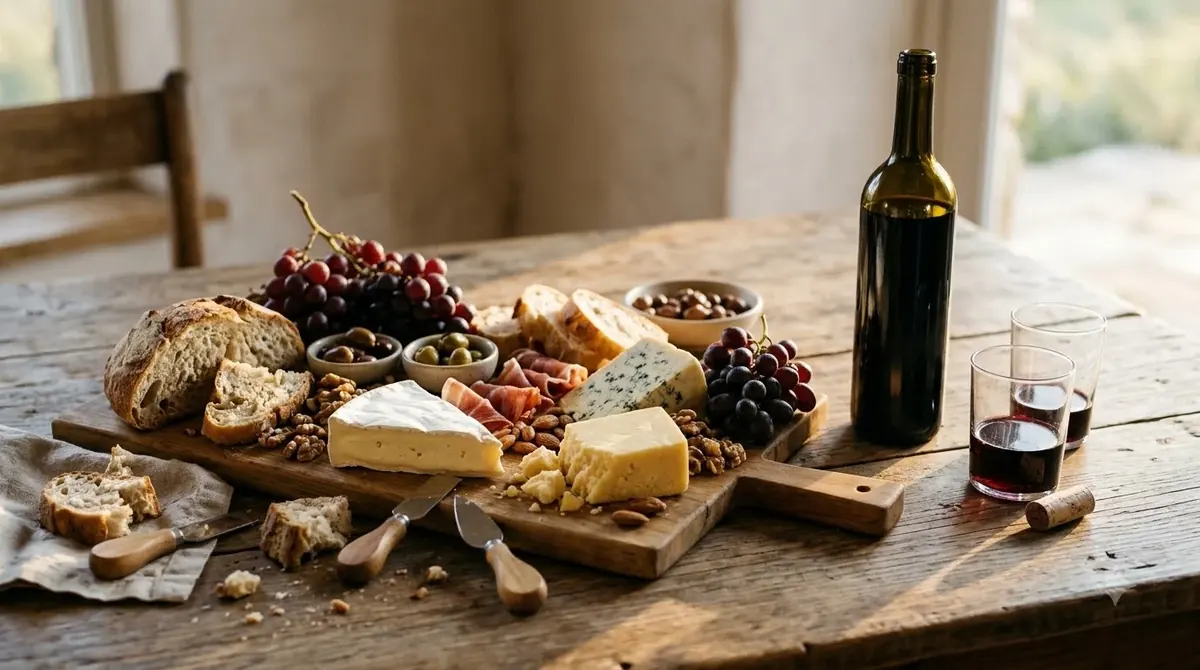
Tip: When building a cheese board for Pinot Grigio, surround fresh chèvre and burrata with salty Marcona almonds, green apple slices, and mild Castelvetrano olives rather than spicy mustards or dark chocolate.
How to Serve Pinot Grigio and Cheese Together
Serving both the wine and the cheese at their proper temperatures brings out aromatic nuance in the glass and creamy texture on the plate. Pouring the wine well chilled while letting the cheese warm slightly on the counter ensures neither tastes muted or overly sharp.
Most dry Pinot Grigio is best poured cold, between 45°F and 50°F, in a standard white wine glass that preserves its crisp acidity while allowing pear and citrus aromas to open up. Serving a bottle straight from an ice bucket near freezing will lock away its aromatics, whereas letting it sit too warm on a patio can make the alcohol feel heavy. For full chilling timelines and glassware advice, check our breakdown on how to serve pinot grigio.
Cheese requires the opposite approach: pull your wedges out of the refrigerator 30 to 45 minutes before guests arrive. Cold temperatures tighten milk fats and dull subtle lactic flavors, so giving fresh mozzarella, goat cheese, or young Gruyère time to approach room temperature makes the textures noticeably softer and more expressive.
If you are planning a party ahead of time, you can buy your bottles well in advance without worrying about short-term freshness, though checking how long does pinot grigio last unopened helps ensure every bottle is stored properly away from heat and direct sunlight until serving day.
Frequently Asked Questions
Is Pinot Grigio good on a mixed cheese board?
Yes, Pinot Grigio works well on a mixed cheese board as long as the selection leans toward fresh, mild, and semi-firm cheeses rather than pungent blues or heavily smoked wedges. Combining tangy goat cheese, creamy burrata, and young Gruyère gives guests varied textures that all harmonize with the wine’s crisp acidity.
Does Pinot Grigio pair better with brie or goat cheese?
Fresh goat cheese is the stronger match because its bright, citrusy tang mirrors Pinot Grigio’s lively acidity and keeps the finish clean. While a young, mild brie can work reasonably well, ripe bloomy-rind cheeses develop earthy, mushroomy flavors that generally pair better with sparkling wine or light reds.
Can you drink Pinot Grigio with warm baked cheese dishes?
Yes, warm dishes like baked chèvre over salad, spinach and feta spanakopita, or a classic Margherita pizza with melted mozzarella pair naturally with Pinot Grigio. The wine’s cold temperature and brisk acidity cut straight through melted dairy fats and refresh the palate between warm bites.
How does Pinot Grigio compare to Sauvignon Blanc with cheese?
Both wines are crisp, high-acid whites that excel with fresh goat cheese and feta, though they bring different flavor profiles to the plate. Sauvignon Blanc adds pronounced herbal, grassy, and grapefruit notes, whereas Italian Pinot Grigio offers a gentler, more neutral backdrop of green apple, pear, and lemon zest.
Whether you are setting out a quick bowl of marinated mozzarella or assembling an afternoon grazing board, pairing pinot grigio with cheese comes down to keeping flavors bright, fresh, and uncomplicated. Stick with tangy, salty, or mildly creamy wedges served slightly below room temperature alongside a properly chilled bottle, and explore additional grape profiles in our Wine by Type hub whenever you want to expand your pairing repertoire.
More in Wine Types & Grapes
 What Does Mourvèdre Taste Like? Flavor Profile, Regions, and PairingsUpdated Nov 20, 2026
 What Does Marsanne Taste Like? Flavors, Styles, and Food PairingsUpdated Nov 20, 2026
 What Does Malvasia Taste Like? Styles, Flavors, and Food PairingsUpdated Nov 20, 2026
 What Does Grenache Blanc Taste Like? Flavor Profile, Styles, and PairingsUpdated Nov 20, 2026
 What Does Garnacha Taste Like? Key Flavors, Styles, and Pairing TipsUpdated Nov 20, 2026
 What Does Fruit Wine Taste Like? A Complete Flavor and Style BreakdownUpdated Nov 20, 2026