

We may earn a commission when you buy through links on this page, at no extra cost to you. Learn more.
The best wine box reviews point to different winners for different purposes: rigid presentation boxes for elegant gifts, wooden crates for reusable storage and display, and fitted corrugated cartons for shipping bottles safely. The right choice depends on bottle count, dimensions, construction, interior support, and whether the box will be carried in person or sent through a delivery network. Comparing these features before buying helps prevent poor-fitting packaging, damaged bottles, and unnecessary decorative features.
A wine box can be a gift presentation, a practical storage container, a collectible keepsake, or an important part of a shipping system. Although these products may look similar in photographs, their construction and protective capabilities can be very different. A beautiful wooden box is not automatically a safe shipping carton, and a strong corrugated shipper may not provide the appearance expected from a special-occasion gift. This roundup compares five useful wine box categories, explains their strengths and limitations, and identifies what to inspect before choosing one.
Quick Comparison of Wine Box Types
The best wine box depends primarily on its intended job. Presentation boxes prioritize appearance, wooden crates emphasize character and reusability, and shipping cartons focus on keeping glass bottles separated and restrained.
| Wine box type | Typical capacity | Main strength | Best application | Main limitation |
|---|---|---|---|---|
| Rigid presentation box | 1–2 bottles | Structured appearance | Special gifts | Not automatically shipping-safe |
| Folding gift box | 1–3 bottles | Compact storage | Occasional gifting | Less substantial construction |
| Wooden wine crate | 1–12 bottles | Reusable construction | Storage and display | Variable dimensions and protection |
| Corrugated mailing box | 1–2 bottles | Purpose-built transport | Individual bottle shipments | Plain appearance |
| Multi-bottle shipping carton | 6–12 bottles | Divided bottle storage | Case transportation | Requires appropriate inserts |
These capacities describe common packaging configurations rather than universal specifications. A rigid presentation box may accommodate a single standard bottle, while another version may include space for two bottles and accessories. Wooden crate dimensions also vary between producers and wineries. For example, a typical flat six-bottle wooden crate measures approximately 20 × 13 × 4 inches, while a tall six-bottle crate measures approximately 13.5 × 11 × 7 inches, according to Big Hammer Wines.
One important distinction is that presentation and transportation are separate packaging requirements. A box designed to look attractive on a dining table may not restrain its contents during a delivery journey. Buyers who need both functions should look for a presentation box that fits inside a separate protective shipping carton.
Best for Single-Bottle Gifts: Rigid Presentation Wine Boxes
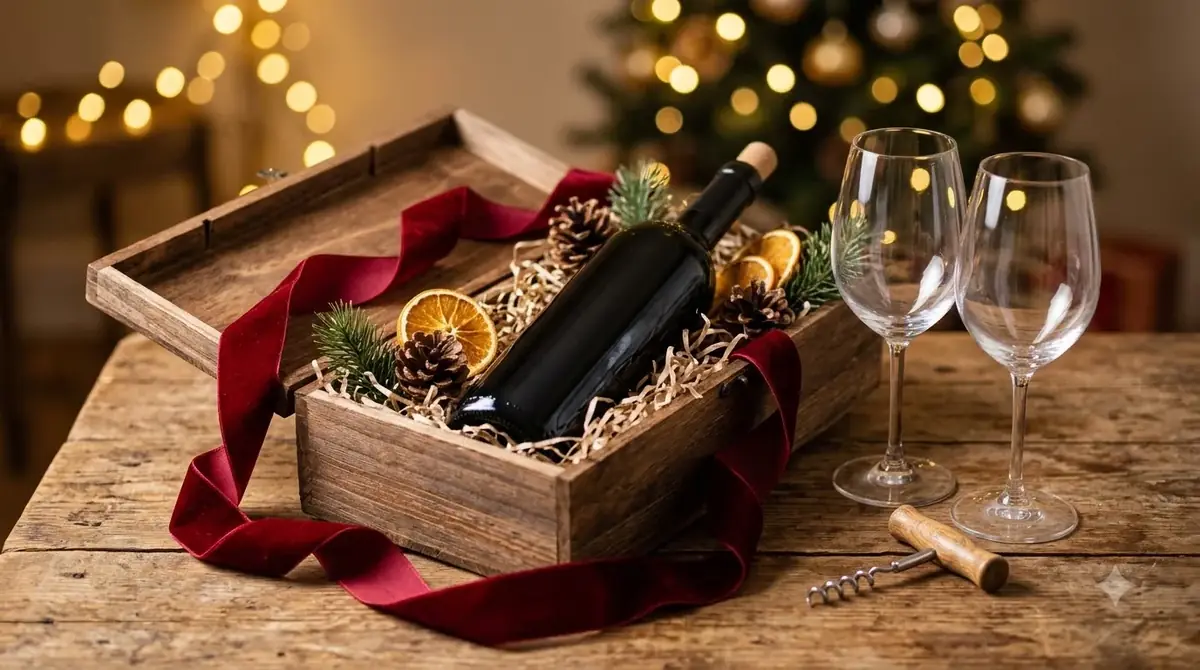
Rigid presentation wine boxes are the strongest choice for buyers who want one bottle to look polished and appropriately packaged. Their structured walls, decorative exterior finishes, and fitted interiors create a more formal presentation than a basic paper carrier.
These boxes commonly use a separate lid and base or a magnetic closure. Some designs feature fabric-covered interiors, shaped inserts, ribbon ties, or windows that reveal the bottle label. A rigid box is especially suitable for a birthday, wedding, anniversary, retirement celebration, or business gift where the packaging contributes to the presentation.
Vorex Packaging describes several wine box formats, including folding cartons, rigid two-piece boxes, magnetic boxes, and window boxes. Its product information also identifies different closure styles, such as lift-off lids, magnetic flaps, drawers, and book-style openings. This variety illustrates why buyers should compare the complete structure rather than choosing solely by exterior appearance.
What makes a good rigid wine box?
Interior fit should come first. The bottle should sit securely without leaning against the sides or moving excessively when the box is gently repositioned. A shaped insert is useful because it can support the bottle’s base and body while reducing contact with the exterior walls.
Next, consider the bottle itself. A standard Bordeaux-style bottle may have a different profile from a wider Burgundy bottle or sparkling wine bottle. Champagne-style glass is often wider around the body, and the neck and shoulder proportions may also differ. A box that fits one standard bottle is not necessarily suitable for every 750 ml wine bottle.
Vorex gives an approximate standard 750 ml Bordeaux bottle measurement of 11.8 inches tall and 2.95 inches wide. This is a useful starting point, but the actual bottle should be measured before ordering. The manufacturer’s wine box styles and sizing information also distinguishes Bordeaux, Burgundy, sparkling, and magnum formats.
Consider the complete gift arrangement as well. A wine gift containing a bottle and two glasses needs a wider or specially divided interior. Adding a corkscrew, stopper, handwritten note, or other small accessory requires additional space without putting pressure on the glass.
Advantages and limitations
The main advantage is presentation. Rigid construction creates a defined shape, helps the packaging maintain its appearance, and gives the recipient a box that may be reused for keepsakes or other small items.
The limitation is that decorative construction does not guarantee impact protection. A rigid presentation box should not automatically be treated as a parcel shipper. If the gift is being mailed, place it inside suitable outer packaging with appropriate bottle restraints and cushioning.
Buyers planning a complete gift arrangement can also compare a dedicated wine gift box with ordinary presentation packaging. The important difference is whether the selected design accommodates the entire gift rather than just the bottle.
Tip: Before ordering a rigid wine box, measure the bottle’s height and widest body diameter. Include extra interior space for the insert, closure, and any accessories, rather than relying on the bottle’s stated 750 ml capacity alone.
Best for Multi-Bottle Gifts: Folding and Two-Bottle Wine Boxes
Folding and multi-bottle presentation boxes are useful when a gift includes two complementary wines or a small collection. Their main advantage is the ability to present several bottles together while keeping the packaging manageable and easy to store.
A two-bottle box is particularly useful for a red-and-white pairing, a comparison between two wine regions, or a sparkling and still wine combination. It can also make a thoughtful host gift when the recipient enjoys choosing between different styles at dinner.
Wine packaging manufacturers offer configurations for individual bottles and multi-bottle arrangements. The important consideration is whether the box has enough interior width and properly arranged compartments. A two-bottle configuration needs to accommodate the combined bottle dimensions and the thickness of its divider.
Folding construction versus rigid construction
Folding boxes are practical for buyers who need to store packaging before an occasion. They can arrive flat and be assembled when needed, reducing the amount of storage space occupied by unused packaging.
Rigid two-bottle boxes are generally more appropriate for premium presentation. Their defined walls and structured lids can create a more substantial gift, especially when both bottles are held in fitted compartments. However, they take up more storage space before use and may be less convenient for buyers who only package wine occasionally.
Neither construction should be selected without checking the divider. Two bottles should not knock against one another when the box is lifted or repositioned. The compartments need to accommodate the widest portions of the bottles, not simply provide enough room for their necks.
When a multi-bottle gift box makes sense
A two-bottle presentation is especially useful when the wines have a clear relationship. For example, a gift pairing of Cabernet Sauvignon and Merlot can offer two different red-wine experiences. A Sauvignon Blanc and Chardonnay combination can serve a similar purpose for someone who prefers white wine.
For larger arrangements, look for a box that has separate spaces for bottles and accessories. A gift containing two wines and a pair of glasses should have a dedicated compartment for the glasses rather than leaving them loose between the bottles.
Pay attention to how the gift will be handed over. A compact two-bottle box with a practical carrying arrangement is useful for dinner invitations, while a larger rigid case is better suited to a formal presentation. If the package needs to travel by parcel carrier, use an additional protective outer carton rather than assuming the presentation box provides sufficient cushioning.
Best for Shipping One or Two Bottles: Corrugated Mailing Boxes
Corrugated wine mailing boxes are the most practical choice for buyers who need to send one or two bottles through a delivery service. Their purpose is transportation rather than decoration, so their construction should focus on keeping the bottle secure and limiting movement during handling.
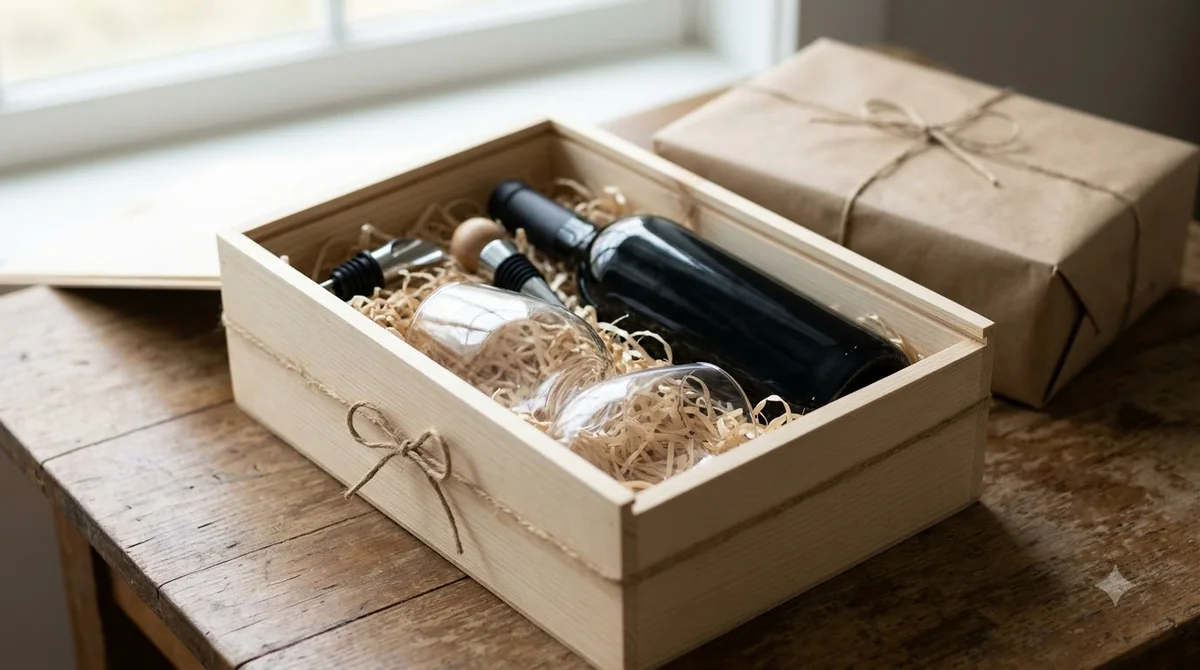
Unlike a standard decorative gift box, a proper mailing box is designed around the shape and weight of its contents. Some one-piece corrugated formats arrive flat and use self-locking construction, making them convenient to assemble when an order is ready for dispatch.
A shipping carton should include a suitable insert that holds the bottle in position. The bottle needs protection from both the outer walls and other objects inside the package. This is especially important for glass packaging because repeated movement can create impact between bottles or against the carton.
Features to inspect before purchasing
First, examine the bottle insert. A suitable insert should restrain the bottle and support it in a consistent position. The neck and base need particular attention because a bottle that moves freely inside the package can experience repeated impacts during transport.
Second, consider the corrugated construction. The board must be appropriate for the combined weight of the bottle and packaging. A heavier glass bottle, a sparkling wine bottle, or a package containing additional accessories may need a different construction from a standard lightweight still-wine bottle.
Third, inspect the closure and assembly method. A self-locking design can reduce assembly time, but all folds and locking points must engage correctly. Tape should reinforce the carton where necessary, especially around seams and edges that experience handling stress.
What these boxes cannot guarantee
No packaging choice should be treated as an automatic guarantee against breakage. Packaging quality depends on the bottle fit, insert design, carton strength, packing process, and the conditions of the delivery journey.
For this reason, buyers who send wine regularly should evaluate the complete packed package rather than the empty carton. Check whether the bottle can move, whether the closure stays secure, and whether there are gaps that allow the bottle to shift.
Another consideration is carrier acceptance. Alcohol shipping restrictions vary by carrier and destination. A suitable cardboard wine shipper does not replace the necessary shipping permissions or compliance checks. Businesses and individual senders should confirm the applicable rules before arranging delivery.
For shoppers comparing dedicated wine shipping box options, the most important specification is not the exterior artwork. It is whether the complete package is designed to restrain and protect the particular bottle being shipped.
Best for Six or Twelve Bottles: Multi-Bottle Wine Shipping Cartons
Multi-bottle shipping cartons are the practical option for transporting wine collections, case orders, and larger quantities. Their main advantage is organized capacity, particularly when they include properly fitted dividers or inserts that keep the bottles separated.
Six-bottle and twelve-bottle cartons are common formats in wine distribution. They provide a more organized alternative to placing several individual bottles together in a general-purpose cardboard box. However, capacity alone does not determine whether a carton is suitable for shipping.
Six-bottle versus twelve-bottle cartons
A six-bottle carton is useful for smaller wine orders and manageable collections. It can also make a practical storage arrangement for someone who regularly purchases several bottles at a time. The smaller capacity can make handling easier than moving a larger case, although the completed package still needs to be treated as a heavy glass shipment.
A twelve-bottle carton is more appropriate for full-case orders and buyers who want to move larger quantities together. It can reduce the number of individual packages required, but the total loaded weight increases the importance of suitable corrugated board, secure seams, and properly designed internal dividers.
Packaging guidance from Canada Post illustrates corrugated cardboard and molded pulp options for two-bottle shipments, as well as corrugated and foam packaging options for twelve-bottle shipments. These examples demonstrate that different bottle counts can require different internal protection arrangements.
Why dividers matter
Individual compartments help prevent bottles from touching one another. Without adequate separation, movement inside the carton can allow glass surfaces to collide during handling. Dividers also help organize the case and maintain a more consistent arrangement.
The insert must match the bottle orientation and dimensions. A divider designed around one bottle shape may not fit another, especially when mixing wide-bodied Burgundy bottles, sparkling bottles, and narrower Bordeaux bottles in the same shipment.
For mixed cases, inspect the internal arrangement carefully. Each bottle needs enough room to sit securely without pressing against neighboring bottles. Empty spaces should not become channels through which bottles can move.
Loading and sealing a case
Start by placing the insert into the carton according to its intended assembly. Load each bottle into its individual compartment, checking that the neck and base remain supported. Add any required protective material without forcing bottles tightly against the carton walls.
Close the carton and inspect the top before sealing it. The flaps should meet properly, and the carton should not bulge because of an oversized insert or improperly positioned bottles. Use suitable packing tape across the seams and edges.
For business shipments, standardizing on one or two established carton formats can make packing more consistent. It also makes it easier to identify the correct inserts, assess storage requirements, and review packaging performance across different orders.
Best for Rustic Storage and Display: Wooden Wine Boxes
Wooden wine boxes are the strongest choice for buyers who value reusable storage, decorative character, and wine-related keepsakes. They can serve as both functional containers and display pieces long after the original bottles have been removed.
One important distinction is the difference between an original wooden case and a newly manufactured decorative crate. An original wooden case, commonly called an OWC, is associated with the winery’s original bottle packaging. It may carry estate branding, vintage information, classifications, or shipping marks that make it attractive to collectors.
Big Hammer Wines describes several common formats, including one-bottle, three-bottle, six-bottle, and twelve-bottle wooden crates. It also notes that actual dimensions vary between wineries, so capacity should not be treated as a guarantee of a particular external size.
Common wooden wine box dimensions
| Wooden box format | Capacity | Approximate dimensions | Typical use |
|---|---|---|---|
| Single-bottle | 1 bottle | About 14 inches long | Individual gifts and keepsakes |
| Three-bottle | 3 bottles | 14 × 11 × 5 inches | Gift sets and small storage |
| Tall six-bottle | 6 bottles | 13.5 × 11 × 7 inches | Shelves and storage |
| Flat six-bottle | 6 bottles | 20 × 13 × 4 inches | Display and decorative trays |
| Twelve-bottle | 12 bottles | 20 × 13 × 7 inches | Storage and furniture |
These are approximate dimensions published in Big Hammer Wines’ wooden wine crate guide. Individual estate cases may differ, particularly when the original design includes a special lid, internal dividers, or a different bottle orientation.
Original estate crates versus decorative wooden boxes
An original estate crate can have additional collectible appeal because its markings identify a winery or wine region. Some carry the estate crest, vintage year, classification, or the French phrase “Mis en bouteille au château,” meaning bottled at the château.
However, the presence of an attractive winery name does not automatically establish the condition, authenticity, or provenance of a used crate. Buyers interested in genuine original cases should examine the markings, construction, condition, and seller’s description rather than assuming every branded wooden box is an original winery shipment.
New decorative wooden boxes offer a more consistent appearance. They may be easier to coordinate with a particular room or gift presentation, while original crates provide more variation and visible signs of previous use.
Storage and display possibilities
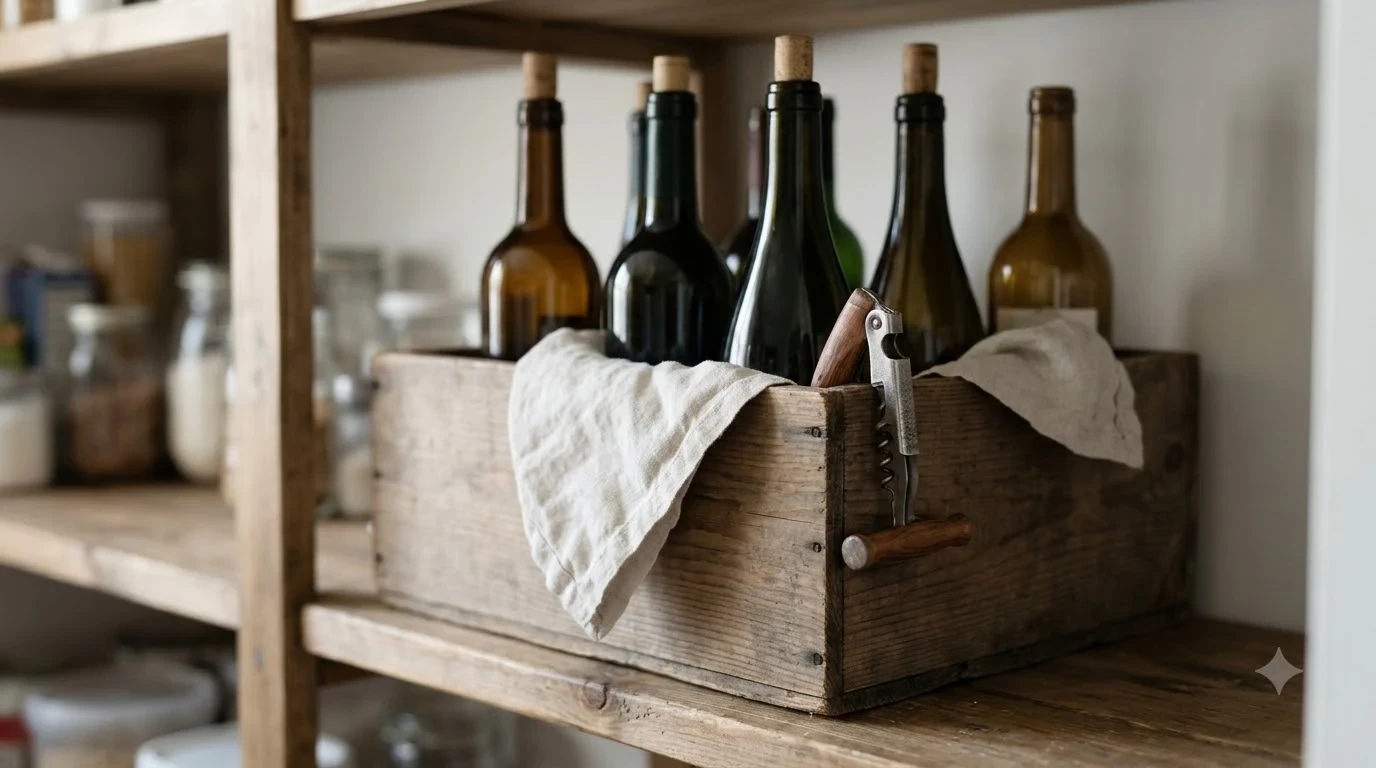
Wooden wine crates can be reused as pantry organizers, shelves, bookcases, and decorative storage. A three-bottle crate can hold small household items, while a twelve-bottle crate can become part of a larger shelving arrangement.
For a wine-themed interior, a flat six-bottle crate can work as a centerpiece or display riser. A taller crate can fit into an existing shelving arrangement, provided its external dimensions and construction suit the intended location.
Wine collectors should distinguish decorative storage from proper cellar storage. An ordinary wooden box does not control temperature, humidity, or light. Wine intended for longer storage still benefits from a cool, dark, stable environment, rather than relying on the crate itself to preserve the contents.
Buyers who collect corks and other wine memorabilia may also prefer a wine cork shadow box for displaying keepsakes separately from bottle storage.
How to Choose the Right Wine Box
Choosing a wine box becomes easier when the intended use is established before comparing materials and finishes. Bottle dimensions, capacity, internal support, construction, and delivery requirements are the most useful factors to evaluate.
Step 1: Identify the purpose
Decide whether the box is intended for gifting, storage, carrying, or shipping. These applications have different requirements, even when the same bottle is involved.
For an in-person gift, appearance and ease of opening may be the main priorities. For parcel delivery, restraint and protective construction matter more. For a collection, reusable materials and convenient storage dimensions may carry greater importance.
Step 2: Count the bottles
Choose a box that matches the actual number of bottles being packed. Single-bottle boxes are suitable for individual gifts, while two-bottle formats work well for paired wines. Six-bottle and twelve-bottle cartons are more appropriate for case quantities.
A larger box is not necessarily better. Excess internal space can allow bottles to shift, while a box that is too small may put pressure on the glass or prevent its closure from fitting correctly.
Step 3: Measure the bottle
Measure the bottle’s total height and widest diameter. Pay attention to its shoulder, neck, base, and any unusual shape. If the packaging includes a fitted insert, measure the available internal space rather than relying exclusively on the exterior box dimensions.
This is especially important for sparkling wines and unusually shaped bottles. A standard still-wine bottle and a wider sparkling bottle can have the same stated volume but require different packaging.
Step 4: Compare construction and inserts
Choose between folding cardboard, rigid presentation construction, wooden boxes, and corrugated shipping cartons. Each has a different balance of appearance, storage convenience, and protective function.
Inspect the interior before buying. Dividers, shaped inserts, and protective supports should fit the intended bottle configuration. For multi-bottle cartons, verify that every bottle has its own compartment and cannot collide with another bottle.
Step 5: Consider reuse and storage
If the box will be reused, consider how easily it can be opened, cleaned, stored, and repurposed. Folding boxes are convenient when empty packaging needs to be stored flat. Wooden boxes are more appropriate for decorative reuse, provided their dimensions suit the available space.
Also consider whether the lid is removable, sliding, or attached with a hinge. Some original wooden cases have loose lids, and not all designs include one. This can make a difference if the box will be used for storage rather than display.
Step 6: Check delivery requirements
If the box will travel through a parcel network, verify that it is designed for shipping rather than simply for presentation. Use a suitable outer carton when the decorative package is not a shipping container.
Consider leak containment, internal movement, carton strength, and sealing. Confirm the carrier’s alcohol shipping requirements separately, since packaging does not replace shipping authorization or destination-specific rules.
For additional wine-related accessories and packaging ideas, the Accessories Library provides another place to explore useful equipment and complementary items.
These six steps help narrow the selection without getting distracted by decorative features that do not serve the intended purpose. The best choice is the box that fits the bottle, performs its required job, and remains practical after the purchase.
Frequently Asked Questions
What is the difference between an OWC and a regular wooden wine box?
OWC means original wooden case and refers to the wooden packaging associated with a winery’s original bottle shipment. A regular decorative wooden wine box may imitate this appearance without having the same provenance. Collectors often examine estate markings, vintage information, construction details, and seller documentation when evaluating an original case.
Can a wine box hold a magnum bottle?
Yes, but it needs to be designed for the larger format. A standard magnum contains 1.5 liters, twice the volume of a conventional 750 ml bottle, and may have different height and diameter measurements. A standard single-bottle presentation box should not be assumed to accommodate it.
Should wine bottles be stored horizontally inside a wooden crate?
That depends on the crate’s internal design and the storage purpose. Some original wooden cases are designed for bottles lying down, while tall six-bottle crates accommodate upright bottles. The crate’s shape and dividers determine the appropriate orientation rather than a universal rule for all wooden boxes.
Can a wine gift box be personalized after purchase?
Many plain wooden and rigid presentation boxes can be personalized with a removable label, decorative ribbon, or engraved plaque, depending on the surface material. Check the manufacturer’s recommendations before applying adhesive or engraving, especially on coated, fabric-covered, or laminated surfaces. A removable personalization method is useful when the recipient may want to reuse the box.
Are wine boxes recyclable?
Uncoated cardboard and many corrugated cartons can enter appropriate paper recycling streams, provided they are clean and accepted by the local recycling program. Mixed-material boxes with magnets, plastic windows, foam, fabric, or laminated finishes may require component separation or different disposal arrangements. Wooden boxes can often be reused instead of discarded.
The best wine box is the one designed around its actual purpose, whether that means presenting a single bottle beautifully, organizing a multi-bottle gift, protecting a parcel, or displaying a wine collection. Compare dimensions, inserts, construction, and reuse potential before choosing, and give shipping requirements priority whenever bottles need to travel. A well-matched box makes wine gifting and storage more practical without confusing decorative appeal with genuine protection.
More in Wine Accessories
 Vinglace Wine Tumbler Review: A Glass-Lined Choice for Better SippingUpdated Nov 20, 2026
 ZWILLING Electric Wine Opener Review: Features and DrawbacksUpdated Nov 20, 2026
 Vinturi Electric Wine Opener Review for Easy UncorkingUpdated Nov 20, 2026
 Vinabon Wine Aerator Review for Easier, Cleaner Wine ServingUpdated Nov 20, 2026
 Vacu Vin Electric Wine Opener Review: Easy Cork Removal for Home Wine LoversUpdated Nov 20, 2026
 Rabbit Wine Accessories for Easier Home Wine ServiceUpdated Nov 20, 2026