

We may earn a commission when you buy through links on this page, at no extra cost to you. Learn more.
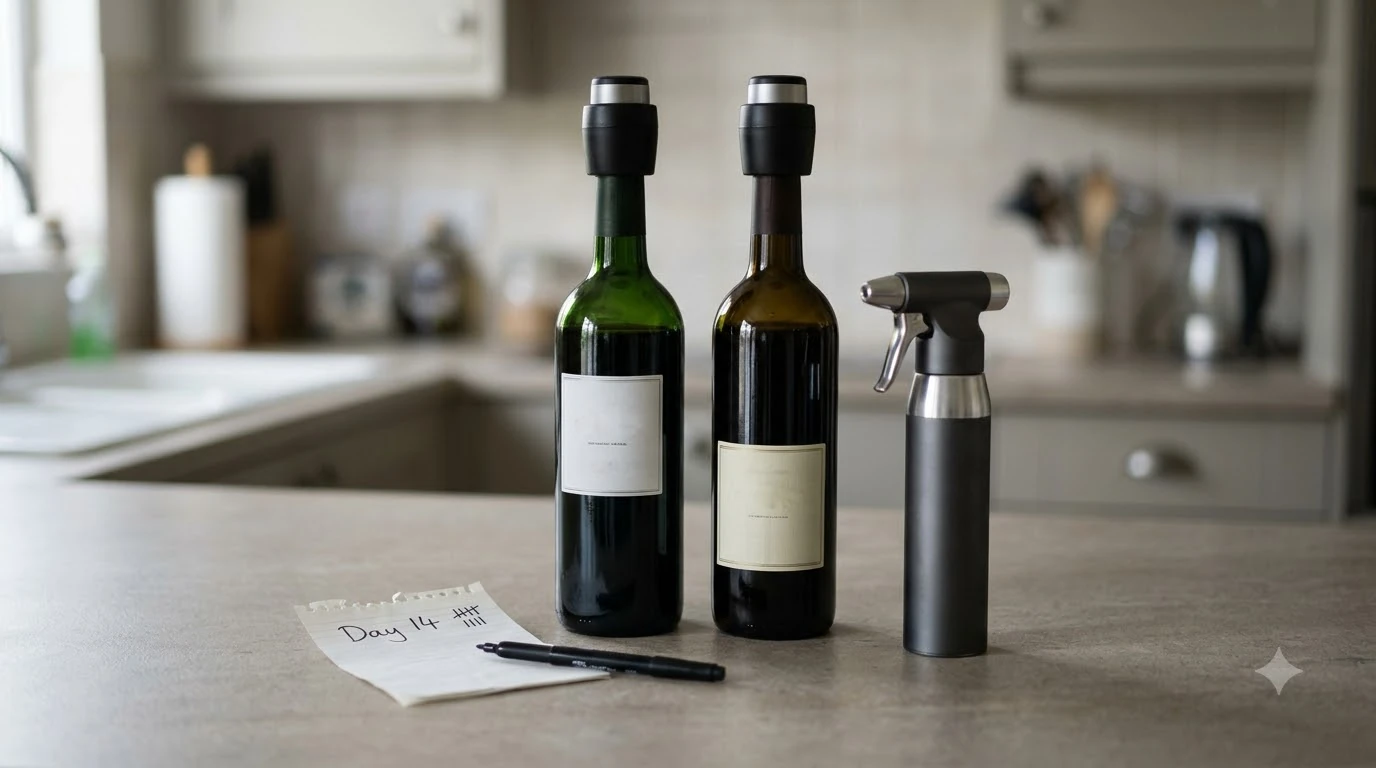
The savino wine preserver is a reusable wine-saving carafe that helps keep opened red and white wine fresh by using a floating insert to limit oxygen contact. Its straightforward three-piece design avoids vacuum pumps, gas cartridges, and complicated controls. It is a practical option for people who regularly save unfinished bottles, although its results depend on proper handling, refrigeration, and the wine itself. Its biggest trade-off is that preserving wine requires transferring it out of the original bottle.
Opening a bottle does not always mean finishing it. A quiet evening with a glass of Cabernet Sauvignon, a weekday dinner with Chardonnay, or a small tasting with friends can leave several glasses waiting for another occasion. The challenge is keeping those leftovers enjoyable rather than allowing their fruit, aroma, and freshness to fade. Savino takes a different approach from conventional bottle stoppers by giving the remaining wine a separate storage vessel with a floating oxygen barrier. Understanding how the system works, what independent reviews have found, and where its limitations lie makes it easier to decide whether it deserves a place in a home wine collection.
Specs and Key Features
The Savino is a three-piece preservation system built around a carafe, a floating insert, and a sealing lid. Its main selling point is the floating barrier, which follows the wine’s surface as the amount of liquid changes instead of leaving a large air pocket above the remaining wine.
| Specification | Details |
|---|---|
| Product category | Wine preservation carafe |
| Main components | 3 pieces: carafe, floating insert, lid |
| Standard bottle capacity | 750 ml |
| Preservation mechanism | Floating physical oxygen barrier |
| Float material | Eastman Tritan copolyester and food-grade silicone |
| Original carafe material | High-grade flint glass |
| Preservation claim | Up to 7 days |
| Electricity required | No |
| Vacuum pump required | No |
| Gas cartridges required | No |
| Primary wine applications | Still red and white wines |
| Refrigeration | Recommended for opened wine storage |
The material specifications are particularly interesting. According to Eastman Enhance Magazine, the floating component uses Tritan copolyester and food-grade silicone. Eastman describes Tritan as a clear, BPA-free material selected for its durability, resistance to impact, and ability to avoid transferring unwanted flavors to wine. The original glass configuration uses high-grade flint glass for its carafe and sealing top. The material choices and design are discussed in Eastman’s overview of the Savino wine preservation system.
The 750 ml capacity corresponds to a standard wine bottle. That makes the system convenient for ordinary household use: an unfinished bottle can be transferred into one container without measuring portions or finding a collection of smaller storage bottles. However, capacity alone does not guarantee preservation. The floating insert must sit properly on the liquid surface, and the lid must be secured to limit exposure to outside air.
Another important feature is the absence of powered components. There is no charging port, motor, battery, or gas cartridge to replace. That simplicity reduces the number of parts involved in regular use and makes the system accessible to someone who wants to preserve a bottle without learning a complicated process.
The advertised preservation period is up to seven days, but this should be understood as a performance claim rather than a guarantee that every wine will taste unchanged for a full week. Wine condition, temperature, handling, and initial freshness all influence the result.
What Owners and Independent Reviewers Like
The main attraction of Savino is its uncomplicated operation combined with a more thoughtful approach to oxygen exposure than a basic stopper. Independent coverage has identified several practical advantages, particularly for people who drink one or two glasses at a time and prefer not to finish an entire bottle in one sitting.
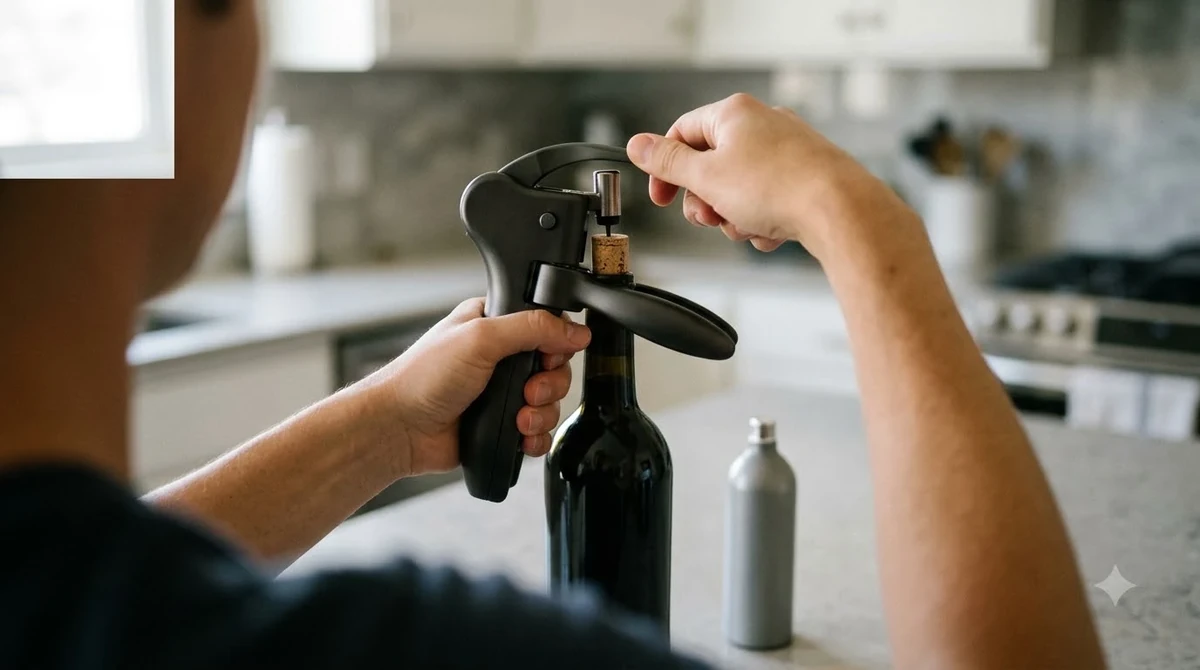
One useful assessment comes from Epicurious. Its reviewer compared wine stored in Savino with wine from the same bottle that had simply been recorked. The comparison used a tannic red wine, and after four days, the recorked portion had become noticeably flatter. The Savino portion retained its tannic character and pronounced cherry notes. This is a meaningful observation because the comparison focused on the actual wine rather than relying only on the manufacturer’s preservation claim. The full comparison appears in Epicurious’s review of the Savino wine saver carafe.
The floating mechanism is another appealing feature. Traditional bottle stoppers seal the neck, but the air space inside the bottle grows as wine is poured. Savino instead transfers the wine into a carafe and uses an insert that follows the changing liquid level. The design aims to reduce the amount of oxygen directly contacting the remaining wine.
For everyday drinkers, this creates a simple routine. Pour the wine, position the float, secure the lid, and put the carafe away. There is no need to pump repeatedly, monitor a pressure indicator, or purchase replacement cartridges. Someone who opens a bottle of Merlot on Friday and wants another glass on Saturday can follow the same procedure without special training.
Its presentation is also more attractive than many preservation accessories. A clear carafe looks appropriate on a dining table, kitchen counter, or serving station. It can function as a serving vessel as well as a storage container, which means it does not necessarily need to be hidden in a cupboard between uses.
The reusable construction is another advantage. Unlike systems that depend on disposable gas capsules, Savino has no regular cartridge replacement requirement. Once the carafe and its components have been purchased, the ordinary operating routine involves cleaning and storing the pieces correctly.
There is also a practical benefit for households with different drinking preferences. One person might prefer Pinot Noir while another enjoys Sauvignon Blanc. A preservation carafe makes it easier to keep the remainder of a bottle available without expecting everyone to drink the same wine at the same time.
However, positive reviews should not be interpreted as proof of identical results in every household. Epicurious reported favorable results in its particular comparison, but other reviewers have been more skeptical. Savino’s strongest selling point is its practical design, not a promise that oxidation can be eliminated completely.
Common Complaints and Performance Limitations
The most important limitation is that Savino cannot prevent every aspect of wine deterioration. Its floating barrier reduces direct oxygen exposure, but it does not reverse oxidation that has already happened or guarantee that a bottle will remain unchanged for seven days.
The San Francisco Chronicle published a substantially less favorable assessment. Its wine critic compared Savino with wine stored in the original bottle after replacing the cork. Over six days, the wine in Savino became less bright and more advanced than the wine kept in the original bottle. The reviewer also raised concerns about the potential effect of light exposure through clear glass.
This disagreement with Epicurious is important. Epicurious found that its Savino-preserved wine retained more character after four days than its recorked comparison. The Chronicle, on the other hand, preferred the recorked bottle in its six-day comparison. These different findings demonstrate why preservation claims should not be treated as universal results. Different wines, storage conditions, handling routines, and evaluation methods can produce different outcomes.
Another drawback is the transfer process. Savino does not preserve the remaining wine inside the original bottle. The wine must be poured into the carafe, which means an additional container needs to be cleaned and stored. People who prefer to keep the original label and bottle together may find this inconvenient, especially when saving several different wines.
Capacity is also a consideration. A standard 750 ml bottle fits the intended storage format, but the carafe is not designed to preserve multiple bottles simultaneously. Anyone who regularly opens three or four bottles for a dinner party will need additional storage arrangements.
The transparent construction creates another practical concern. Wine can be affected by prolonged exposure to light, so a clear vessel should not be treated as a decorative bottle that can remain in direct sunlight. A refrigerator or shaded storage location is a more sensible choice.
Cleaning is a further consideration. The floating insert and lid come into contact with wine, so they need attention after use. Red wines can leave visible residue, particularly around silicone components and areas where wine has dried. A quick rinse may not be sufficient after longer storage.
Finally, Savino is not a universal wine-preservation solution. It is designed around still wine and does not maintain the carbonation of Champagne, Prosecco, or sparkling rosé. A dedicated sparkling-wine stopper is a better choice for those bottles.
Tip: Refrigerate leftover red wine as well as white wine. Cooler storage slows the chemical reactions responsible for deterioration. When serving a refrigerated red, allow it to warm toward its preferred serving temperature rather than leaving the entire carafe on a warm counter for hours.
Who Should Buy and Who Should Skip the Savino
Savino makes the most sense for people who regularly leave wine unfinished and want a reusable, attractive storage solution. It is particularly suitable for households that open a bottle over several evenings rather than consuming the whole bottle at once.
Consider someone who opens a Cabernet Sauvignon with dinner on Monday. They pour a glass, transfer the remaining wine into Savino, and refrigerate it. On Tuesday, they can pour another serving without having to operate a pump or prepare a replacement gas cartridge. The same basic process works with Merlot, Chardonnay, and other still wines.
It is also useful for casual wine enthusiasts who enjoy exploring different grapes. A household might open Sauvignon Blanc with seafood on one evening and a softer Pinot Noir with roasted chicken on another. Having a dedicated preservation carafe can make those small tasting experiences more practical.
People who entertain occasionally may appreciate its presentation. Instead of putting an opened bottle with a mismatched stopper on the table, the remaining wine can be served from a dedicated carafe. This is especially useful for informal dinners where guests may want a second pour later.
However, Savino is less attractive for people who finish every bottle immediately. If an entire 750 ml bottle is usually consumed at one gathering, the additional transfer and cleaning steps offer little practical value.
It is also not the ideal choice for collectors who regularly preserve expensive wines over extended periods. A floating barrier is not equivalent to a system designed to extract wine while keeping the original bottle sealed. For occasional pours from a valuable bottle, a different preservation technology may be more appropriate.
People who mainly drink sparkling wines should also skip it as their primary preservation purchase. Champagne and Prosecco require a stopper that helps retain carbonation. A standard floating insert cannot replace that function.
Finally, households with limited refrigerator space should consider the carafe’s physical dimensions before purchasing. The system requires upright storage, and a tall vessel can be inconvenient when refrigerator shelves are already crowded with food containers and other drinks.
How It Compares to Alternative Wine Preservation Methods
Savino occupies a middle ground between basic bottle stoppers and more specialized wine-preservation equipment. It provides a dedicated storage container and floating barrier without the mechanical complexity of vacuum pumps or gas-based systems.
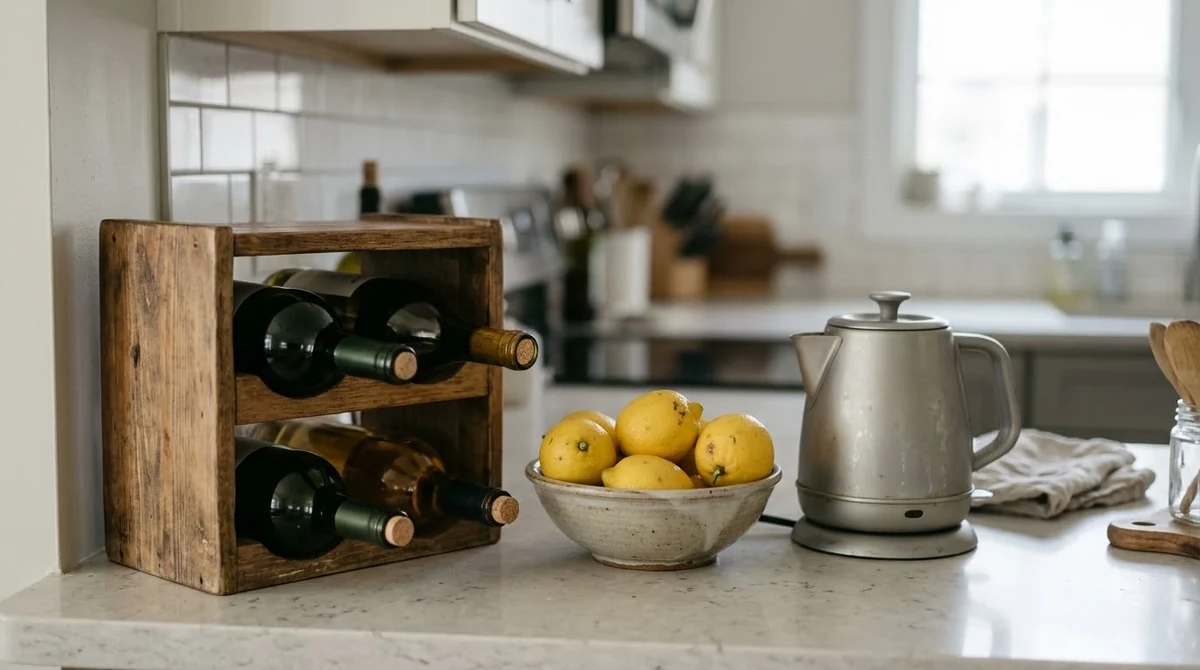
A conventional wine stopper is the simplest alternative. It closes the bottle opening and helps limit additional air exchange, but it does not reduce the air space already present inside the bottle. As wine is consumed, that space increases. For someone saving a small amount of wine overnight, however, replacing the cork and refrigerating the bottle may be perfectly adequate.
Vacuum wine pumps take a different approach. They remove some air from the bottle before sealing it with a specialized stopper. This avoids transferring wine to another vessel, although it requires a pumping step and a compatible stopper. People who already own a vacuum preservation set may find that buying another type of storage carafe is unnecessary.
Gas-based preservation systems use an inert gas to reduce the amount of oxygen surrounding the remaining wine. Some systems allow wine to be poured from the original bottle without removing the cork. These options can be more suitable for expensive bottles or collectors who want to sample a wine over a longer period, but they introduce additional equipment and consumable requirements.
Epicurious specifically contrasts Savino with Coravin, describing the latter as a more specialized preservation solution that uses a needle and argon to dispense wine without removing the cork. That approach serves a different purpose. Savino is intended for people who are comfortable transferring the remaining wine into another container.
For someone assembling a basic home wine setup, a wine opener and preserver set may be a more practical starting point. It combines everyday bottle-opening equipment with a straightforward preservation accessory, while Savino provides a separate carafe-based storage method.
The following comparison summarizes the main differences between the approaches.
| Preservation method | How it works | Extra equipment | Best application |
|---|---|---|---|
| Savino | Floating barrier in a separate carafe | 3-piece carafe system | Regularly saving unfinished still wine |
| Original cork | Closes the original bottle | Existing cork | Simple short-term storage |
| Vacuum stopper | Removes some air from the bottle | Hand pump and stopper | Convenient everyday bottle storage |
| Inert-gas system | Uses protective gas to limit oxygen exposure | Gas supply and dispensing equipment | More specialized bottle preservation |
| Sparkling-wine stopper | Seals the bottle opening to retain carbonation | Dedicated sparkling stopper | Champagne and Prosecco |
There is no single winner for every wine drinker. The original cork is convenient and inexpensive, a vacuum stopper is compact, and gas-based equipment serves people who want to preserve wine inside the original bottle. Savino’s advantage is the combination of a reusable carafe and an automatically adjusting floating insert.
Its suitability also depends on the way a person organizes a home bar. Someone with a dedicated bar cart might appreciate having a purpose-built wine-serving vessel available alongside glasses, corkscrews, and other accessories. However, the carafe should be stored appropriately rather than left exposed to sunlight simply because it looks attractive.
Frequently Asked Questions
Does the Savino Wine Preserver work with screw-cap wine bottles?
Yes. Savino does not depend on the shape or closure of the original bottle because the wine is transferred into its own carafe. Whether the original wine bottle has a natural cork, synthetic cork, or screw cap makes no difference to the floating preservation mechanism.
Can the Savino carafe be used to serve wine directly at the table?
Yes. The carafe can serve as a pouring vessel, allowing wine to be transferred directly into glasses. The floating insert remains inside the carafe during normal pouring, so it can continue following the changing wine level.
Does Savino improve wine that already tastes oxidized?
No. The floating barrier is intended to limit additional oxygen contact, not reverse existing chemical changes. Wine that has already developed stale, bruised-fruit, or vinegar-like characteristics will not regain its original flavor simply by being transferred into the carafe.
Can the Savino system be used for homemade wine?
The underlying floating-barrier concept is applicable to still wine regardless of whether it was commercially bottled or made at home. However, homemade wines can differ considerably in filtration, residual sugar, and stability, so the preservation performance may not match the results reported for commercially produced wines.
Does Savino protect wine from temperature fluctuations during transportation?
No. The carafe is a preservation vessel rather than an insulated wine cooler. For transportation, keep it upright, protect it from impact, and use an insulated carrier if maintaining a cool temperature is important.
The Savino Wine Preserver is a straightforward choice for people who regularly save unfinished bottles and prefer a reusable carafe over pumps or gas cartridges. Its floating insert offers a thoughtful way to limit oxygen contact, although independent results show that preservation performance can vary. For everyday still wine, it is a useful accessory to consider, provided its transfer process, storage requirements, and limitations fit your routine.
More in Wine Accessories
 Vinglace Wine Tumbler Review: A Glass-Lined Choice for Better SippingUpdated Nov 20, 2026
 ZWILLING Electric Wine Opener Review: Features and DrawbacksUpdated Nov 20, 2026
 Vinturi Electric Wine Opener Review for Easy UncorkingUpdated Nov 20, 2026
 Vinabon Wine Aerator Review for Easier, Cleaner Wine ServingUpdated Nov 20, 2026
 Vacu Vin Electric Wine Opener Review: Easy Cork Removal for Home Wine LoversUpdated Nov 20, 2026
 Rabbit Wine Accessories for Easier Home Wine ServiceUpdated Nov 20, 2026