


We may earn a commission when you buy through links on this page, at no extra cost to you. Learn more.
The circle joy wine opener is an electric corkscrew designed to make opening wine bottles easier with rechargeable power, simple controls, and convenient automatic cork removal. Circle Joy sells several versions, ranging from compact rechargeable openers to larger gift sets with foil cutters, aerators, and vacuum stoppers. Its one-touch operation is appealing for everyday wine drinkers and hosts, although differences between models and reported cork-alignment problems deserve attention before purchasing.
Electric wine openers can make a familiar part of serving wine considerably simpler. Instead of twisting a traditional corkscrew and pulling against the bottle neck, an electric model uses a motorized spiral to extract the cork. Circle Joy offers several designs within this category, so the right purchase depends on whether the priority is portability, countertop convenience, or a complete collection of wine-serving accessories. This review examines the features, practical benefits, limitations, and important buying considerations without treating every Circle Joy product as the same machine.
Circle Joy Wine Opener Overview and First Impressions
Circle Joy’s wine opener range focuses on convenient electric operation, contemporary styling, and accessories for serving and preserving wine. The brand offers more than one electric opener, making it important to distinguish the basic rechargeable models from the larger bundled sets.
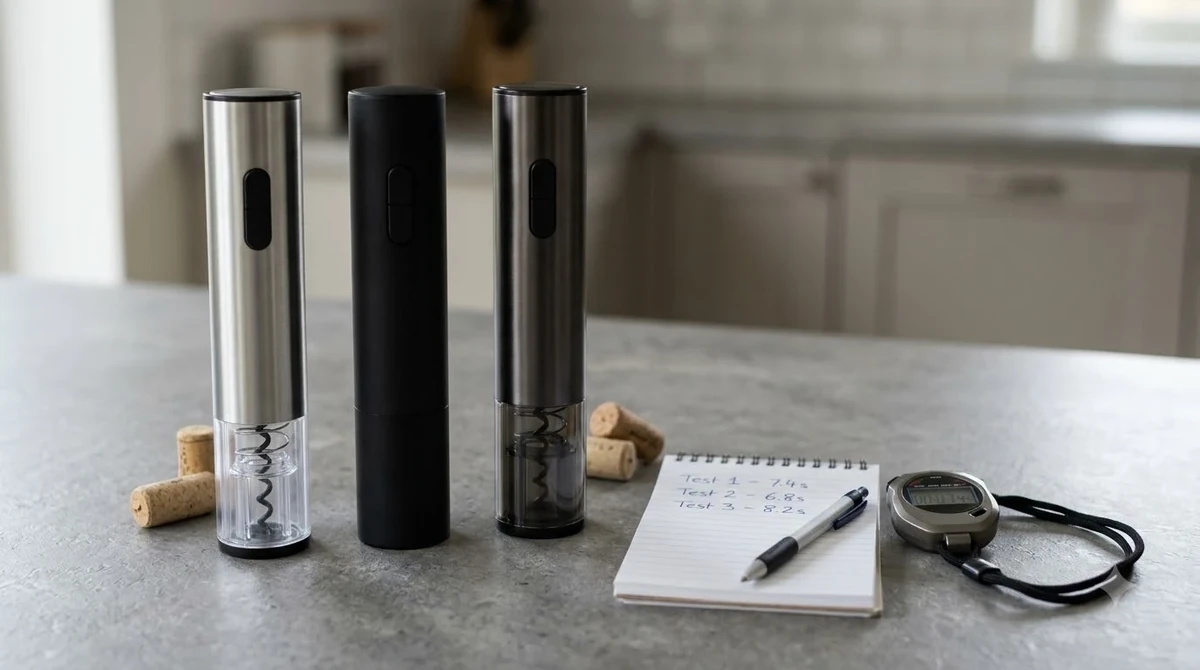
The One-Touch Automatic Electric Wine Opener is among the more straightforward options. According to the manufacturer, it uses a rechargeable lithium battery, a Type-C charging connection, and automatic extraction and ejection functions. Its semitransparent plastic shell allows users to see the opening mechanism operating, while internal LED lighting provides a visual indication of the current operation. Blue illumination accompanies uncorking, and red illumination appears during cork ejection.
The Mini Rechargeable Electric Wine Opener takes a different approach. Its compact construction, comfortable water-drop-shaped button, semitransparent housing, and LED power indicator are intended to make it easy to hold and transport. Unlike the One-Touch model, the manufacturer’s Mini version uses micro-USB charging. That distinction matters because buyers should not assume that every Circle Joy electric opener has identical charging hardware.
There is also a more comprehensive option in the form of the KP-1127 rechargeable wine opener set. An independent review describes this product as a 7-in-1 configuration with an electric corkscrew, charging base, foil cutter, aerator/pourer, vacuum pump, and two stoppers. Other configurations are listed as 5-in-1 and 6-in-1 packages. The included equipment therefore depends on the specific bundle rather than the Circle Joy name alone.
For an everyday wine drinker, the central attraction is the reduction in physical effort. The motor performs the extraction, and the user does not need to develop the leverage technique required by a traditional waiter’s corkscrew. However, an electric mechanism still needs correct positioning. A convenient motor cannot compensate for an opener that is placed at an angle over the cork.
The manufacturer’s One-Touch Automatic Electric Wine Opener specifications are useful when identifying the features of that particular model. They should not be treated as a universal specification sheet for every Circle Joy opener.
Overall, Circle Joy offers an interesting selection for people who prefer electric cork removal and coordinated wine accessories. The main buying challenge is selecting the correct model and confirming that its physical features match the intended use.
Specs and Key Features of the Circle Joy KP-1127
The KP-1127 is a useful example of Circle Joy’s more complete electric wine opener packages. Its combination of rechargeable operation and serving accessories provides a clearer picture of what buyers can expect from a bundled configuration, although specifications should remain tied to this particular model.
| Specification | KP-1127 details |
|---|---|
| Product type | Rechargeable electric wine opener set |
| Model number | KP-1127 |
| Power source | Rechargeable battery |
| Charging connection | USB-C |
| Charging base | Included in the reviewed configuration |
| Listed item weight | 360 grams |
| Claimed opening capacity | Up to 60 bottles per full charge |
| Opener material listed | Plastic |
| Accessories | Foil cutter, aerator/pourer, vacuum pump, two stoppers |
| Bundle variations | 5-in-1, 6-in-1, and 7-in-1 configurations |
The listed weight of 360 grams makes the KP-1127 a relatively manageable countertop accessory. It is not quite the same proposition as a miniature travel opener, but it is intended to be comfortable to hold during normal bottle opening. Its rechargeable design also removes the need to keep a supply of disposable batteries specifically for the corkscrew.
The claimed capacity of up to 60 bottles per charge is particularly interesting for households that entertain regularly. It suggests that the opener is intended to handle multiple bottles between charging sessions. However, this figure is a product-listing claim, not a guarantee that every battery will deliver exactly the same number of openings. Battery age, charging habits, cork resistance, and operating conditions can influence practical performance.
The charging base is another useful feature. Rather than placing a loose electric opener in a kitchen drawer, users can keep it in a designated countertop location. This arrangement also makes the set feel more organized, especially when the foil cutter and other accessories are stored nearby.
One important limitation is that the KP-1127 specifications should not be transferred to the Mini or One-Touch models. Those products have separate manufacturer descriptions and different charging arrangements. Before ordering, identify the exact model number and verify the package contents, charging connection, and included components.
What Owners Like About Everyday Operation
Owner feedback summarized in an independent review points to convenience, appearance, and reduced opening effort as the main attractions of the KP-1127. These benefits make the design particularly appealing for routine dinners, casual gatherings, and kitchens where an electric opener can remain within easy reach.

One-touch cork removal: The most frequently appreciated feature is the motorized opening process. Instead of manually turning a spiral into the cork, the user positions the device and activates its control. Owners cited in the KP-1127 review describe the process as straightforward, with some also praising its relatively quiet operation. This can make a noticeable difference during a dinner party when several bottles need to be opened.
Reduced physical effort: A traditional corkscrew requires a combination of grip strength, wrist movement, and controlled pulling. An electric opener reduces those demands because the motor handles the main extraction. This is especially useful for people who find conventional corkscrews uncomfortable or difficult to operate. The button still requires positioning and handling, but the opening process involves less manual leverage.
Countertop presentation: Owners also appreciate the polished appearance of the KP-1127 and the convenience of its charging base. A coordinated opener and accessory set can look more organized than several unrelated wine tools scattered across a kitchen counter. This makes the larger configurations attractive for people who regularly entertain guests.
Useful accessories: The foil cutter removes the capsule covering the cork, while an aerator/pourer provides an alternative way to serve wine. The vacuum equipment is designed to help close an opened bottle for later use. These additions can make a bundle more practical than buying an electric opener alone, particularly for someone building a small home wine station.
The usefulness of those accessories depends on individual drinking habits. A household that regularly finishes bottles at dinner may rarely use vacuum stoppers. Someone who opens different wines throughout the week may find them considerably more valuable. Similarly, an aerator is most useful when the drinker wants to incorporate additional air during pouring rather than simply transfer wine into a glass.
Owners also mention that the opener can work smoothly when the corkscrew enters the cork correctly. This is an important qualification: the positive experience is closely connected to correct alignment. The electric motor provides convenience, but users still need to position the opener carefully over the bottle.
For a person who wants a straightforward electric accessory rather than a traditional corkscrew, the convenience is the strongest argument for choosing Circle Joy. The additional equipment is a secondary advantage that depends on which package is purchased.
Common Complaints and Potential Limitations
The biggest concern raised in the available KP-1127 owner-feedback summary is inconsistent cork alignment. Some owners report that the corkscrew enters at an angle, damages the cork, or makes extraction more difficult, which is particularly relevant when opening older bottles.
A motorized corkscrew must travel into the cork in a reasonably straight line. If the opener is tilted or positioned off-center, the spiral may track sideways rather than penetrating cleanly. This can cause a cork to crumble, break, or become difficult to remove. The issue is more than a cosmetic inconvenience because fragments can fall into the wine and complicate serving.
The problem deserves extra consideration for collectors and drinkers who regularly open mature bottles. Natural cork can become fragile with age, and a damaged cork is already difficult to manage with a conventional opener. An electric mechanism that has difficulty maintaining alignment may add another complication.
There are also differences in materials and construction between the products. The independent KP-1127 review identifies plastic as the material specified in its listing. That does not establish that every Circle Joy opener uses the same material, nor does a polished exterior establish independent certification of food-contact materials. Buyers who prioritize detailed material documentation should seek specific manufacturer information before purchasing.
Charging compatibility is another potential source of confusion. The One-Touch Automatic model uses Type-C charging, while the Mini model’s official description specifies micro-USB. The KP-1127 listing also identifies USB-C. These are not interchangeable assumptions, so buyers should match their charging expectations to the exact model.
Bundle descriptions can create similar confusion. A 5-in-1 configuration may contain fewer accessories than a 7-in-1 package. A photograph showing several tools does not automatically establish that all of them are included in the selected configuration. Confirm the contents before completing an order, especially when purchasing a gift.
Finally, the available owner-feedback summary does not establish a universal warranty period for the KP-1127. Some buyers reportedly received replacements after contacting customer support, but individual replacement experiences should not be confused with a guaranteed support policy. Keep the purchase documentation and confirm the seller’s return arrangements.
Tip: Always position an electric wine opener vertically and centrally over the cork before activating it. If the corkscrew starts tracking sideways, stop rather than forcing the mechanism. This simple precaution is particularly important when opening older bottles with fragile natural corks.
Who Should Buy the Circle Joy Wine Opener and Who Should Skip It
Circle Joy makes the most sense for people who value automatic cork extraction and appreciate the convenience of a rechargeable countertop accessory. Its larger bundles can also appeal to hosts who want several complementary wine tools in one purchase.
Who should consider buying it?
Everyday wine drinkers: Someone who opens a bottle several times a week may appreciate having a rechargeable opener ready for dinner. The one-button operation reduces the work involved in removing corks, while a charging base helps keep the tool accessible. The KP-1127’s claimed capacity of up to 60 openings per charge is also attractive for households that prefer not to recharge frequently.
People who entertain regularly: Hosts may appreciate the combination of a corkscrew, foil cutter, and serving accessories. A larger package can provide several tools for opening and presenting wine without requiring separate purchases. A coordinated collection also fits naturally into a dedicated serving area or bar cart.
People who dislike manual corkscrews: The motorized extraction mechanism is the principal advantage for anyone who finds twisting and pulling uncomfortable. It reduces the amount of manual work required and offers a more consistent operating routine when the opener is correctly aligned.
Gift shoppers: A multi-piece wine set can be a practical gift for someone who enjoys hosting dinners or keeping wine accessories organized. However, the selected configuration should match the recipient’s needs. A simple opener may be more useful than a large bundle of accessories that will remain unused.
Who should be cautious?
Collectors of older wines: People who regularly open bottles with fragile natural corks should consider the reported alignment problems carefully. A traditional two-pronged opener or a well-controlled manual corkscrew may offer better control for delicate cork removal.
Buyers who want a completely manual tool: Electric openers depend on a working battery and charging equipment. Anyone who prefers a simple accessory without electronic components may be happier with a waiter’s corkscrew or lever-style opener.
Buyers who require extensive documented specifications: If material certifications, precise battery information, or a clearly documented warranty are essential, confirm those details for the specific model. General brand descriptions do not establish that every configuration offers the same specifications.
Travelers who prioritize minimum size: The larger charging-base sets are intended primarily for convenient home storage. A compact manual corkscrew or the Mini Rechargeable model may be more suitable when portability matters more than having several accessories.
How It Compares to Alternative Wine Openers
Circle Joy’s main advantage is the combination of electric operation and optional accessories. However, an electric opener is not automatically the best solution for every bottle or every household. Comparing it with other common corkscrew styles helps clarify where its convenience is most valuable.
Electric openers versus waiter’s corkscrews
A waiter’s corkscrew is a compact manual tool with a folding spiral, lever, and often a small foil-cutting blade. It requires more physical effort than an electric opener, but it is inexpensive to store, does not require charging, and gives the user direct control over the extraction process.
For restaurant-style service and travel, the manual design has considerable advantages. It also allows a skilled user to control the amount of pressure applied when removing a cork. People who frequently open older wines may prefer this degree of control, especially when the cork is already fragile.
Circle Joy is more appealing for home users who value convenience over the traditional opening process. Its motorized operation is particularly useful when several bottles are being served or when manual twisting is uncomfortable.
Electric openers versus lever corkscrews
A lever corkscrew uses a mechanical handle to create leverage during cork removal. The design reduces some of the physical effort associated with a basic manual spiral and can be straightforward once the user understands its operating sequence.
Unlike an electric opener, it does not need a rechargeable battery. However, many lever designs occupy more storage space and require the user to operate a mechanical handle. Circle Joy’s electric options provide a more compact alternative for buyers who prefer button-operated extraction.
Electric openers versus compact rechargeable models
Not every electric wine opener needs a charging dock or a collection of accessories. Circle Joy’s own Mini Rechargeable model demonstrates that the brand also offers a smaller format with a semitransparent shell and LED power indicator.
The choice between a mini opener and a full accessory package is primarily about intended use. A smaller model may suit a limited kitchen or occasional bottle opening, while a larger set provides more equipment for serving and preserving wine. Charging connection is another consideration because the Mini uses micro-USB while the One-Touch model specifies Type-C.
For additional options, shoppers can explore the wider Accessory Brands category and compare the practical features of different wine-opening tools rather than choosing by appearance alone.
How to Choose the Right Circle Joy Model
The most reliable way to choose a Circle Joy opener is to start with the intended use and then compare the actual model specifications. The brand offers enough variation that a buyer should not assume the smallest opener, the One-Touch model, and a multi-piece set deliver identical functionality.
- Decide between a standalone opener and a set. If the only requirement is removing corks, a basic electric model may be sufficient. If the household also needs a foil cutter, aerator, or vacuum stoppers, a bundled configuration may provide more useful equipment.
- Identify the exact model. Distinguish the Mini Rechargeable, One-Touch Automatic, and KP-1127 products. Use the model-specific product description rather than relying on a general Circle Joy product photograph.
- Check the charging connection. Confirm whether the selected opener uses Type-C or micro-USB. Also determine whether a charging base and cable are included, rather than assuming that accessories from another configuration are compatible.
- Verify the package contents. Compare the listed number of accessories with the actual package description. A 5-in-1, 6-in-1, and 7-in-1 package should not be treated as identical simply because the electric opener looks similar.
- Consider the corks you normally open. If most bottles have fresh, firm corks, an electric opener may be a convenient everyday option. If older wines with delicate corks are common, consider whether a manual alternative would offer more control.
- Review the return and support arrangements. Keep the receipt and understand the seller’s replacement policy. This is particularly sensible for rechargeable products with moving mechanical components.
It is also useful to think about storage. A charging-base configuration requires a convenient countertop or cabinet location with access to a suitable charging connection. A smaller opener may be easier to store in a kitchen drawer, although it still needs an appropriate place for its charging cable.
Accessory requirements can influence the decision just as much as the corkscrew itself. A wine opener and preserver set may be more practical for someone who frequently leaves unfinished bottles, while a simple electric opener makes more sense for a household that normally finishes wine soon after opening.
For the best comparison, prioritize model identity, charging hardware, package contents, and the practical return policy. Decorative lighting and polished finishes are attractive extras, but they should not replace basic functional requirements.
Frequently Asked Questions
Does the Circle Joy wine opener work with synthetic corks?
Circle Joy’s general product descriptions do not establish universal compatibility with every synthetic cork design. Synthetic corks vary in density, diameter, and friction, which can affect extraction. Buyers should consult the instructions for their specific model if they regularly open bottles sealed with synthetic closures.
Can a Circle Joy electric opener be used with sparkling wine bottles?
Traditional sparkling wine closures are not intended to be removed with a motorized corkscrew. Sparkling bottles use a mushroom-shaped cork secured by a wire cage, and opening them requires controlled manual handling. An electric wine opener should be reserved for compatible still-wine bottles.
Does Circle Joy offer wine accessories separately?
Yes. The manufacturer’s wine accessories catalog lists individual products such as vacuum stoppers, wine pourers, aerators, and separate electric openers. Availability and compatibility can vary, so confirm that an accessory is suitable for the particular opener or bottle-preservation system.
What should be done if a cork breaks during opening?
Stop operating the motor if the cork begins crumbling or the mechanism loses its alignment. Avoid forcing the spiral farther into a damaged cork. If fragments enter the wine, carefully remove them before serving, using an appropriate strainer if necessary.
Can the Circle Joy opener be stored in a kitchen drawer?
A standalone opener can generally be stored in a suitable dry drawer when it is not charging, provided its operating instructions permit that storage arrangement. Charging-base configurations are designed to keep the device organized in its dock. The charging connection and any detachable accessories should be protected from moisture and accidental damage.
The Circle Joy wine opener range offers a convenient alternative to manual corkscrews, particularly for households that appreciate rechargeable operation and coordinated wine accessories. The One-Touch and Mini models serve different needs, while the KP-1127 demonstrates the additional equipment available in larger packages. Choose by exact model, charging requirements, and included accessories, and give particular attention to cork alignment if fragile or older bottles are part of your collection.
More in Wine Accessories
 Vinglace Wine Tumbler Review: A Glass-Lined Choice for Better SippingUpdated Nov 20, 2026
 ZWILLING Electric Wine Opener Review: Features and DrawbacksUpdated Nov 20, 2026
 Vinturi Electric Wine Opener Review for Easy UncorkingUpdated Nov 20, 2026
 Vinabon Wine Aerator Review for Easier, Cleaner Wine ServingUpdated Nov 20, 2026
 Vacu Vin Electric Wine Opener Review: Easy Cork Removal for Home Wine LoversUpdated Nov 20, 2026
 Rabbit Wine Accessories for Easier Home Wine ServiceUpdated Nov 20, 2026