


We may earn a commission when you buy through links on this page, at no extra cost to you. Learn more.
The prisoner wine price for a standard 750 ml bottle of The Prisoner Red Blend generally falls between $30 and $48 at US retailers, depending on vintage and seller. The winery’s own release pricing can differ from third-party retail listings, and specialty bottlings may cost considerably more. Comparing bottle size, vintage, wine style, and retailer pricing helps determine whether a particular bottle fits your budget.
The Prisoner has become a recognizable name among California red wine drinkers, particularly those who enjoy generous dark-fruit flavors, smooth textures, and full-bodied blends. However, the name covers more than one wine, and prices can vary substantially across the broader portfolio. This guide explains what to expect when shopping for The Prisoner, how vintage affects the price, and which details deserve attention before purchasing.
Who This Price Guide Is For
This guide is intended for shoppers comparing The Prisoner Red Blend with other California wines, buyers choosing a bottle for dinner, and collectors checking whether an older vintage is reasonably priced. Understanding the difference between the standard red blend and the producer’s other bottlings is particularly important because the name alone does not identify one consistent price category.
The standard Prisoner wine is the most useful starting point for a typical retail comparison. It is a California red blend combining Zinfandel, Petite Sirah, Syrah, Cabernet Sauvignon, Merlot, and Malbec. The combination creates a generous style with dark fruit, sweet spice, and a rounded impression rather than the narrowly defined character of a single-grape Cabernet Sauvignon.
According to The Prisoner Wine Company’s product description, the 2024 Red Blend has 15.5% alcohol by volume and features cranberry, blackberry, dried plum, caramelized vanilla, nutmeg, and toasted coconut aromas. Its full-bodied profile makes it especially relevant to shoppers who enjoy concentrated fruit and a smooth finish.
Different shoppers should approach the purchase differently:
- First-time buyers: Start with the standard 750 ml Red Blend rather than an expensive reserve or limited-production bottling.
- Regular wine drinkers: Compare the current release with earlier vintages and consider whether the flavor profile justifies the asking price.
- Dinner hosts: Consider the food menu, guest preferences, and bottle format before choosing.
- Wine enthusiasts: Compare the standard blend with the Cabernet Sauvignon, Pinot Noir, and other wines in the producer’s portfolio.
- Gift buyers: Consider presentation, vintage, bottle size, and whether the recipient already enjoys full-bodied California reds.
The guide also helps shoppers avoid a common mistake: assuming every wine carrying The Prisoner name costs approximately the same amount. A standard red blend, a Cabernet Sauvignon, and a limited-production Napa Valley bottling can occupy very different price categories.
Key Factors That Determine Prisoner Wine Price
The most important factors are the specific bottling, vintage, bottle size, retailer, and availability. A standard 750 ml bottle provides the clearest comparison, while older vintages and specialty wines require more careful evaluation.
Vintage is one of the easiest differences to overlook. Caveau’s US retail tracking reports a typical figure of about $48 for the 2023 Red Blend, compared with approximately $35 for the 2022 vintage and $30 for the 2021 vintage. These are retail estimates for specific vintages, not guaranteed winery release prices, and individual listings can fall outside the typical figures.
The producer’s own online store provides another useful reference point. Its listed 2024 Red Blend release price is $45 for a 750 ml bottle. This figure is a winery listing rather than a promise that every retailer will charge the same amount. Shipping, taxes, local distribution, and retailer inventory can change the final purchase cost.
For additional context, Caveau’s Prisoner Red Blend price comparison distinguishes typical retail figures from the wider range of observed offers. Its method uses the middle of current retail listings for the exact wine and vintage, which is more useful than comparing unrelated bottles or auction prices.
Typical retail price ranges by vintage
The following figures provide a practical starting point for standard 750 ml bottles. Caveau reports the typical figures and observed retail ranges shown below for its tracked vintages. These are market estimates, not fixed prices.
| Vintage | Typical retail figure | Observed range | Pricing context |
|---|---|---|---|
| 2023 | About $48 | $32–$60 | Caveau retail listings |
| 2022 | About $35 | $30–$40 | Caveau retail listings |
| 2021 | About $30 | $22–$40 | Caveau retail listings |
| 2018 | About $35 | One observed listing | Limited comparison data |
Prices vary by state and retailer, and the figures above should not be interpreted as guaranteed checkout totals. The 2018 figure is particularly difficult to generalize because Caveau reports only one observed listing for that vintage. A single listing cannot establish a dependable market range.
Retailer location also matters. Wine distribution rules, state taxes, local inventory, and shipping restrictions can all affect what a shopper pays. A bottle advertised at one retailer may not be available for delivery to another state, while a local store may carry a different vintage from the one shown online.
Why bottle size changes the comparison
The standard 750 ml bottle is the most straightforward format for comparing retail listings. Other sizes can offer different per-serving economics, but a larger bottle should not automatically be considered a better purchase.
The producer’s shopping categories include half bottles and magnums. Total Wine’s catalog also lists The Prisoner Red Blend in 375 ml, 750 ml, 1 L, and 1.5 L formats. Availability varies, so shoppers should distinguish an actual listing from a bottle size that merely appears in a broader catalog.
A 375 ml half bottle is useful for a smaller dinner or a limited tasting. A 1.5 L magnum contains twice the wine of a standard 750 ml bottle, making it more appropriate for a gathering. When comparing formats, calculate the price per 750 ml equivalent rather than comparing the shelf prices alone.
Step-by-Step: How to Compare Prices Before Buying
A reliable comparison starts with identifying the exact wine and vintage, then checking equivalent bottle sizes and retailer listings. Following a consistent process helps prevent confusion between different wines in the same portfolio.

- Identify the exact bottling. Begin with the standard Prisoner Red Blend if that is the wine you intend to purchase. Do not confuse it with The Prisoner Cabernet Sauvignon, Pinot Noir, Thorn Merlot, or another wine carrying the producer’s name.
- Confirm the vintage. A 2021 bottle and a 2024 release are not interchangeable listings. Record the vintage shown in the product description or on the bottle so that comparisons involve the same wine year.
- Standardize the bottle size. Use 750 ml as your reference. If one retailer lists 375 ml and another lists 750 ml, compare the equivalent volume rather than the displayed totals.
- Check the winery listing. The official product page gives a useful reference for the current release. For example, the 2024 standard Red Blend is listed at $45 for 750 ml by the producer. Treat this as a release-price reference, not a universal retail price.
- Compare independent retailers. Look for the same vintage and bottle size across multiple sellers. A comparison involving a 2022 bottle at one shop and a 2024 bottle at another can produce a misleading conclusion.
- Account for additional costs. Consider state taxes, shipping charges, local pickup availability, and delivery restrictions. These costs can change the final amount substantially.
- Evaluate the wine’s intended use. Decide whether you need a bottle for an ordinary weeknight meal, a celebration, or a gift. The most expensive listing is not automatically the most appropriate choice.
This process is especially helpful when an online retailer advertises a particularly attractive figure. Confirming the vintage and volume prevents an apparent price difference from being caused by a smaller bottle or a different release.
Use a consistent comparison checklist
Before making a decision, keep the following information together:
- Producer and exact wine name.
- Vintage or non-vintage designation.
- Bottle volume in milliliters.
- Retailer’s listed price.
- Shipping and applicable taxes.
- Whether the bottle is available for local pickup or delivery.
For example, comparing two 750 ml bottles of the 2023 Red Blend is a more useful exercise than comparing a 375 ml bottle of the 2022 blend with a 750 ml bottle of the 2024 release. The first comparison isolates retailer pricing more effectively, while the second combines several variables.
Tip: Keep the wine name, vintage, and bottle volume identical when comparing retailers. If one listing does not identify the vintage clearly, treat it as an incomplete comparison rather than assuming it is the same release.
Types and Styles Explained Across The Prisoner Portfolio
The Prisoner Wine Company offers more than its familiar red blend, and the wider portfolio includes several distinct wine styles and related brands. Understanding these categories helps explain why two bottles carrying a connection to The Prisoner can have very different retail positioning.
The standard Prisoner Red Blend is the natural reference wine. Its six-grape combination includes Zinfandel, Petite Sirah, Syrah, Cabernet Sauvignon, Merlot, and Malbec. The producer describes the style as full-bodied, with concentrated red and black fruit, sweet spice, and a smooth finish.
Standard Red Blend
This is the main bottling to consider when someone asks about the typical Prisoner wine price. It is a California blend rather than a single-varietal wine, and the combination of grapes creates a broad flavor profile.
Zinfandel contributes ripe fruit character, while Petite Sirah and Syrah can provide depth and structure. Cabernet Sauvignon adds another layer of dark-fruit character, and Merlot and Malbec contribute to the blend’s overall composition. The final wine is designed around a generous, approachable style.
Cabernet Sauvignon
The Prisoner Cabernet Sauvignon is a separate bottling and should not be confused with the Cabernet Sauvignon component of the Red Blend. Its grape identity and positioning make it a different purchase for shoppers who prefer a Cabernet-led wine.
Cabernet Sauvignon generally has high tannin, which gives the wine a firmer structure than a softer red blend may provide. It can be a better choice for someone who enjoys structured reds alongside steak, lamb, or other rich dishes.
Pinot Noir and Merlot
The portfolio also includes The Prisoner Pinot Noir and Thorn Merlot. These wines provide alternatives for shoppers who prefer a different grape variety instead of the standard blend.
Pinot Noir typically has lower to medium tannin and higher acidity than Cabernet Sauvignon. Merlot generally has medium tannin and a softer texture. These distinctions can influence food pairing, serving preferences, and the type of wine a buyer wants to keep at home.
Related brands and additional wines
The producer’s wider portfolio includes SALDO, Unshackled, and Blindfold alongside The Prisoner. These brands cover additional red, white, rosé, and sparkling categories. Their presence is another reason to identify the precise wine before comparing prices.
For example, SALDO offers wines such as Zinfandel and other red bottlings, while Blindfold is represented in the white and sparkling categories. Unshackled offers a separate range of wines. These are not simply alternative names for the standard Prisoner Red Blend.
The following table summarizes the principal styles shoppers may encounter. It describes the wine categories rather than assigning unsupported prices to individual products.
| Wine or category | Main style | What to compare | Suitable preference |
|---|---|---|---|
| The Prisoner Red Blend | Full-bodied California red blend | Vintage and bottle size | Ripe fruit and smooth texture |
| The Prisoner Cabernet Sauvignon | Cabernet-led red | Vintage and appellation | Structured, tannic reds |
| The Prisoner Pinot Noir | Pinot Noir red | Vintage and origin | Lighter tannin and higher acidity |
| Thorn Merlot | Merlot red | Vintage and bottling | Softer red wine character |
| SALDO wines | Separate red wine range | Grape and specific label | Alternative California red styles |
| Blindfold wines | White and sparkling selections | Wine type and vintage | White or sparkling wine preferences |
| Unshackled wines | Separate wine range | Variety and bottle format | Alternative portfolio selections |
For a broader overview of producers and wine labels, the site’s Wine Brands section provides a useful starting point for comparing different wineries and styles. The important distinction here is that a shared company portfolio does not mean all bottles belong to the same price category.
Common Mistakes When Shopping for The Prisoner
Most pricing mistakes happen because shoppers compare different wines, vintages, or bottle sizes without accounting for the differences. A few basic checks can make a substantial difference to the quality of the purchase decision.
Assuming every bottle is the standard Red Blend
The name The Prisoner appears across several wine categories. Cabernet Sauvignon, Pinot Noir, and Thorn Merlot are separate products, not variations of the standard six-grape blend.
Look at the full wine name before comparing listings. A higher-priced Cabernet Sauvignon does not necessarily mean that the standard Red Blend has become more expensive. They are different wines with different compositions and positioning.
Comparing different vintages as though they were identical
A 2021 bottle and a 2023 bottle may have different retail values. Caveau’s tracked figures illustrate this difference, with the typical 2021 retail figure around $30 and the 2023 figure around $48 for the same standard wine in 750 ml format.
These figures do not prove that a newer vintage is automatically better. They describe the prices observed in the listings tracked by Caveau. Vintage quality, availability, distribution, and retail positioning all need separate consideration.
Assuming older bottles are always more valuable
Wine age does not automatically create higher market value. Some older bottles sell for less than newer releases, particularly when supply, demand, and consumer preferences favor current releases.
Older bottles also introduce storage and condition considerations. A bottle that has been exposed to heat or poor storage conditions may be less desirable than a properly stored bottle of a newer vintage. Condition matters more than age alone when evaluating a bottle for drinking.
Using a retailer’s advertised price without checking the volume
A half bottle may appear considerably less expensive than a standard bottle, but the lower total does not necessarily represent a lower cost per milliliter. Compare equivalent quantities before deciding which format offers the better value.
For example, 375 ml contains half the volume of a standard 750 ml bottle. A comparison should therefore account for that difference rather than treating both listed totals as equivalent.
Confusing winery pricing with retail market pricing
The producer’s own store and independent retailers can have different pricing structures. The winery may list a current release at one figure, while a retailer may carry another vintage or apply different distribution and inventory costs.
Neither figure automatically represents the price available everywhere in the United States. State distribution rules, local taxes, and shipping restrictions make national comparisons imperfect.
Another mistake is treating a single online listing as proof of a wine’s normal value. A more dependable estimate comes from multiple comparable listings for the same vintage and bottle format.
Serving, Food Pairing, and Storage Tips
The Prisoner Red Blend is a full-bodied California wine, so serving temperature and food selection can influence how its fruit, alcohol, and structure come across. Good storage practices also help protect the bottle’s quality after purchase.
Serve at the right temperature
Full-bodied red wines are generally best served around 60–65 degrees Fahrenheit. Serving the Prisoner Red Blend within this range helps preserve its fruit character while keeping the alcohol from becoming too prominent.
Serving it excessively warm can make the alcohol seem more noticeable and the wine feel heavier. If the bottle has been kept in a warm room, a short period of cooling before serving can help. Avoid serving it directly from a very cold refrigerator for an extended period.
Choose food that complements the wine
The blend’s dark fruit and generous body make it a natural partner for substantial dishes. Grilled beef, barbecued short ribs, roasted lamb, and richly seasoned burgers are useful pairings.
Salt and fat can soften the perception of tannin, making richer dishes particularly suitable for fuller-bodied red wines. The fruit character can also work with barbecue sauces that have a sweet or smoky element, provided the sauce is not sweeter than the wine.
Other good options include:
- Grilled ribeye with roasted potatoes.
- Slow-cooked beef short ribs.
- Roasted lamb with rosemary.
- Smoked brisket with a moderately sweet barbecue sauce.
- Mature hard cheeses such as aged cheddar.
- Grilled mushrooms with herbs and olive oil.
Spicy dishes require more care. High alcohol and tannin can amplify chili heat, so heavily spiced food may make the wine feel hotter and less balanced. For spicy meals, milder seasoning or a less alcoholic, lower-tannin wine may be more comfortable.
Decanting and pouring
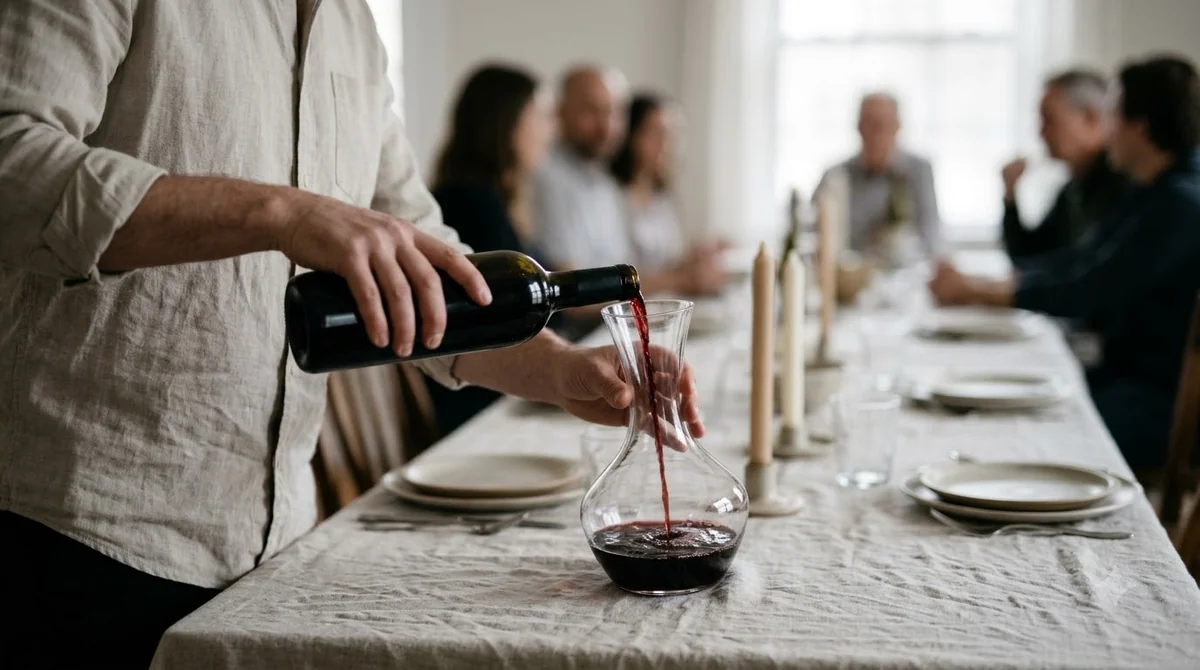
A young, full-bodied red wine can benefit from approximately 30–60 minutes of decanting. This allows the wine to aerate and can soften its initial impression. Decanting is optional rather than a requirement, and the ideal time depends on the bottle and the drinker’s preference.
A standard serving is approximately 5 ounces. A 750 ml bottle therefore provides about five standard glasses, making it suitable for a small dinner with several guests. Pouring smaller tasting portions is useful when serving multiple wines during a meal.
Store unopened bottles correctly
For longer storage, keep bottles on their sides in a cool, dark location near 55 degrees Fahrenheit. Stable temperature is more important than repeatedly moving bottles between warm and cold environments.
Avoid direct sunlight, kitchen heat, and locations near appliances that produce temperature fluctuations. These conditions can negatively affect wine over time.
Keep opened wine fresh
After opening, reseal the bottle and store it in the refrigerator. Most opened still wines are best consumed within approximately three to five days, although the exact period depends on the wine, oxygen exposure, and storage conditions.
Before serving again, allow the red wine to warm slightly toward its preferred serving temperature. Refrigeration slows oxidation, while a secure closure reduces additional exposure to air.
These practices are particularly useful when opening a bottle for two people rather than serving a full group. They also help avoid wasting wine simply because a bottle was opened before the occasion required it.
Frequently Asked Questions
Is The Prisoner Red Blend a Napa Valley wine?
The standard 2024 Red Blend is identified by the producer as California wine rather than being labeled exclusively as Napa Valley. The producer’s wider portfolio includes other wines specifically associated with Napa Valley appellations. Always distinguish the appellation of the particular bottling from the location associated with the winery or broader brand.
How much alcohol does The Prisoner Red Blend contain?
The producer lists the 2024 Red Blend at 15.5% ABV. Alcohol content can differ between wines and releases, so the figure should not automatically be applied to every product carrying The Prisoner name. This relatively full-bodied style is one reason serving temperature and food selection matter.
Does The Prisoner Red Blend contain Cabernet Sauvignon?
Yes. Cabernet Sauvignon is one of the six grapes identified in the producer’s 2024 Red Blend composition. The wine is nevertheless classified as a red blend, not as a Cabernet Sauvignon bottling. The other listed varieties are Zinfandel, Petite Sirah, Syrah, Merlot, and Malbec.
How many servings are in a standard Prisoner bottle?
A standard 750 ml bottle contains approximately 25.4 US fluid ounces. At a conventional 5-ounce pour, that works out to about five servings, with a small amount left over depending on pouring accuracy. Smaller tasting pours can stretch a bottle across more guests.
Is The Prisoner Red Blend suitable for cellaring?
The standard Red Blend is commonly approached as a fruit-forward wine for drinking rather than as a bottle that must be aged for many years. Long-term cellaring should depend on the particular vintage, storage conditions, and personal preference. Keep bottles away from light and temperature fluctuations, ideally in a stable environment near 55 degrees Fahrenheit.
The Prisoner Red Blend is a distinctive California wine for drinkers who enjoy generous fruit, full body, and a smooth finish. A sensible purchase begins with comparing the same vintage and bottle size across retailers rather than relying on the brand name alone. By understanding the differences between the standard blend and the wider portfolio, shoppers can make a more informed decision and choose a bottle that suits both the occasion and their budget.
More in Wine Brands
 Underwood Wine Price: Compare Bottles, Cans, and Pack SizesUpdated Nov 21, 2026
 Zenato Wine Price: Compare Styles and Choose the Right BottleUpdated Nov 21, 2026
 Zuccardi Wine Price: Compare Bottles and Find the Right RangeUpdated Nov 21, 2026
 Yellow Tail Moscato Review: Taste, Sweetness and Serving TipsUpdated Nov 21, 2026
 Wolf Blass Yellow Label Review: Choose Your Best StyleUpdated Nov 21, 2026
 Wolffer Estate Rose Review: Choose the Right Bottle for Your TableUpdated Nov 21, 2026