

We may earn a commission when you buy through links on this page, at no extra cost to you. Learn more.
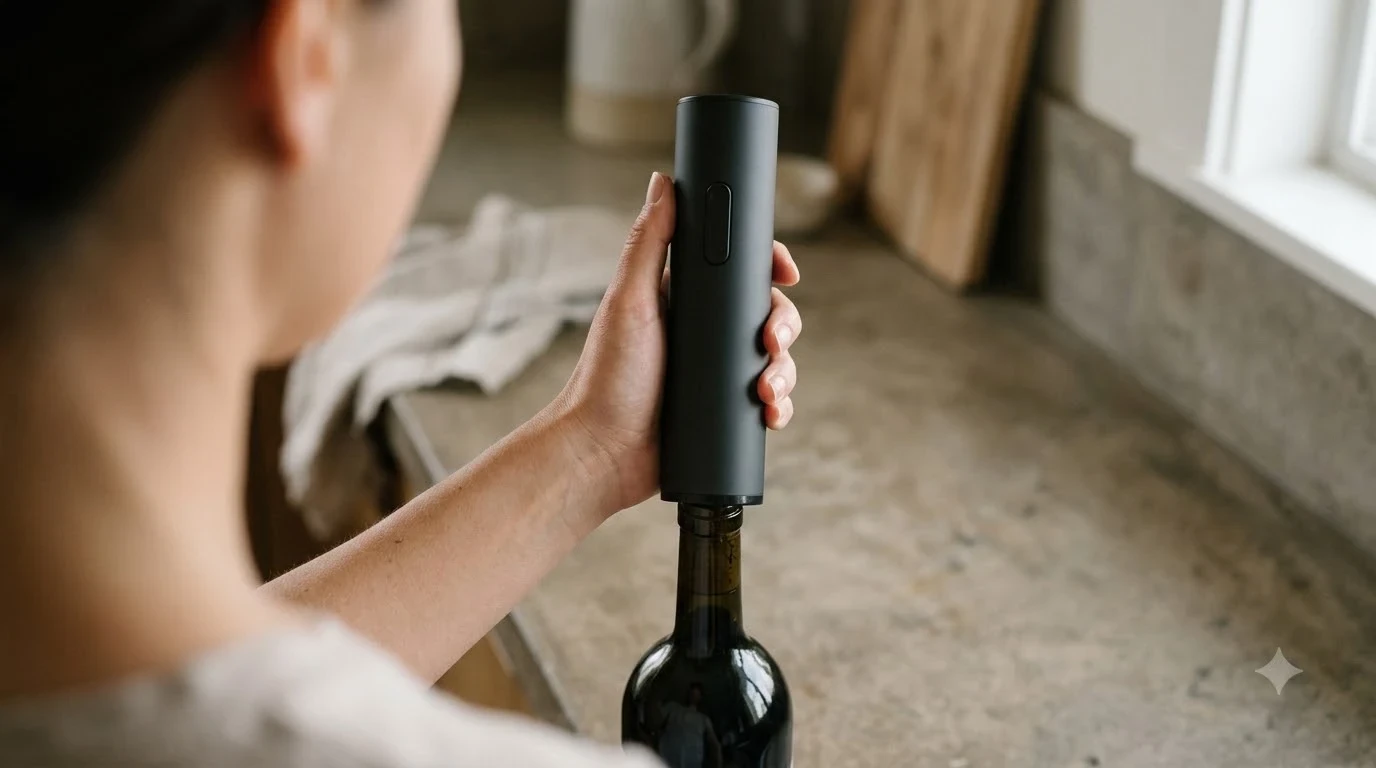
The waring wine opener is a rechargeable electric corkscrew designed to remove natural and synthetic corks with minimal manual effort, and the Waring WWO120 is particularly suited to frequent bottle opening at home or in commercial settings. Its stainless steel housing, charging base, included foil cutter, and claimed capacity of up to 120 corks per charge make it a practical alternative to a traditional corkscrew. However, its relatively large footprint, dependence on a charging station, and mixed owner feedback deserve consideration before buying.
The Waring WWO120 takes a straightforward approach to electric wine opening. Rather than relying on disposable batteries or a compact handheld mechanism, it uses a rechargeable battery pack and a dedicated base that doubles as a storage stand. The design emphasizes repeated use, convenient operation, and a commercial-style construction. This review examines its specifications, owner experiences, potential weaknesses, and the situations in which this particular opener makes sense.
Specs and Key Features
The Waring WWO120 is a rechargeable electric opener with stainless steel construction, forward and reverse motor operation, and accessories intended to simplify routine wine service. Its headline specification is the manufacturer’s claim that one full charge can remove up to 120 corks.
That capacity makes the model interesting for households that regularly entertain, as well as restaurants, catering operations, and wine-service stations. The opener is designed for natural and synthetic corks, so it is not limited to one common closure material. Waring also includes a replacement auger, an important detail for buyers who expect to use the mechanism frequently.
The charging base is an important part of the package rather than an optional accessory. It stores the opener upright, provides a designated charging position, and includes a foil cutter. Keeping the opener in one location makes it easier to find before dinner parties or busy service periods. However, it also means that buyers need enough counter or storage space for both the opener and its base.
| Specification | Waring WWO120 |
|---|---|
| Product type | Rechargeable electric wine opener |
| Model | WWO120 |
| Housing | Stainless steel |
| Battery | Rechargeable NiMH pack |
| Claimed capacity | Up to 120 corks per full charge |
| Cork compatibility | Natural and synthetic |
| Operation | Forward and reverse motor |
| Width | 5.5 inches |
| Height | 12 inches |
| Depth | 4 inches |
| Electrical specification | 120 volts |
| Included accessories | Charging base, foil cutter, replacement auger |
| Warranty | Limited one year |
These specifications come from Waring’s product information and documentation. The 120-cork figure is a manufacturer performance claim, not a guarantee that every individual battery will maintain identical capacity throughout its working life. Battery condition, charging habits, and the condition of the corkscrew mechanism can affect practical performance.
The dimensions also deserve attention. At 12 inches tall, the opener is noticeably larger than a small manual corkscrew. The 5.5-inch-wide and 4-inch-deep measurements make the base relatively easy to accommodate on a counter, but buyers should account for its full upright height when choosing a cabinet or shelf.
For shoppers comparing different wine accessories, the Accessory Brands category provides a useful starting point for understanding the wider range of tools available for wine service.
For the manufacturer’s product specifications and package details, consult the official Waring WWO120 product page. This is the most direct source for confirming the model’s stated capacity, construction, dimensions, and included components.
What Owners Like
Owner feedback highlights the convenience of electric cork removal, the rechargeable design, and the ability to keep the opener stored on its charging base. These advantages are particularly relevant for people who open bottles regularly and prefer not to operate a manual corkscrew repeatedly.
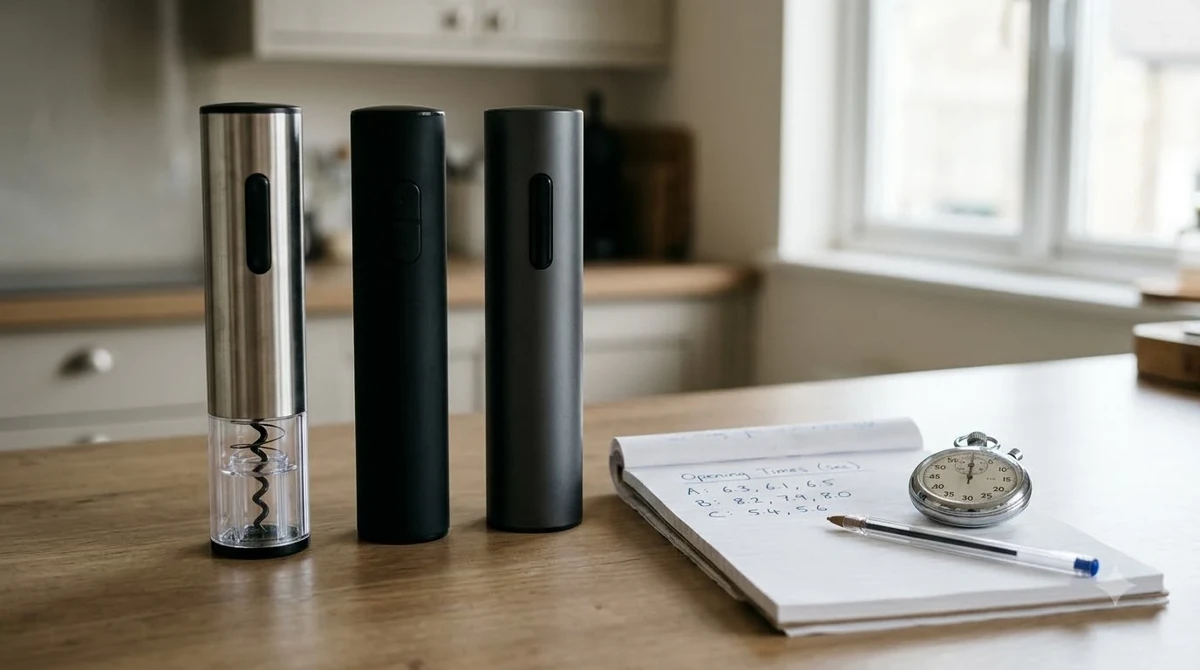
One recurring benefit in customer comments is reduced physical effort. A traditional corkscrew requires the user to position a worm, apply downward pressure, and pull the cork free. The WWO120 automates much of that process through its motorized auger. This can be useful when opening several bottles for a gathering or serving wine throughout an event.
Reviews published by WebstaurantStore describe the product as convenient and easy to operate. Some owners specifically appreciate that it can remain on its charging base rather than requiring separate disposable batteries. The included foil cutter also means that users do not need to purchase a separate cutting accessory for ordinary bottle preparation.
Another positive point is its stainless steel appearance. The housing has a more professional look than many inexpensive plastic electric openers. For a dedicated wine station or a countertop used for entertaining, that finish can fit comfortably alongside other stainless steel bar equipment.
KaTom’s customer feedback is more mixed, but it includes a positive report about the opener’s operation. A separate owner comment describes the product as competitively priced at the time of purchase. These comments suggest that the basic concept appeals to buyers who want an electric tool without relying on a complicated collection of accessories.
The included replacement auger is another practical advantage. The auger is the working corkscrew mechanism, so having a spare provides a replacement option if the original becomes worn or damaged. This is more useful for frequent users than for someone who opens only one bottle every few weeks.
Convenience During Entertaining
For a dinner with six guests, the electric mechanism can simplify repeated bottle opening without requiring the host to switch between manual tools. The same benefit applies to larger gatherings where bottles are opened throughout the evening rather than all at once.
The charging base also provides a consistent storage location. Instead of searching through kitchen drawers for a corkscrew, users can keep the WWO120 in one designated place. This small organizational benefit can matter in a busy kitchen or behind a bar.
Still, positive owner comments should be interpreted as individual experiences rather than proof that every unit performs identically. Battery-powered equipment can vary with age, charging condition, and mechanical wear. Buyers should pay attention to the seller’s return arrangements and warranty terms, particularly when purchasing equipment intended for regular service.
Common Complaints and Potential Drawbacks
The biggest concerns are its size, reliance on a dedicated charging base, and inconsistent owner experiences. The WWO120 offers several useful features, but its commercial-style design will not suit every kitchen or every wine drinker.
The most important caution comes from KaTom’s owner feedback. One customer reported that the particular unit received struggled to open even a single bottle. The reviewer acknowledged that the example could have been defective, so this should not be treated as evidence that every WWO120 has the same problem. Nevertheless, it is a useful reminder that the manufacturer’s performance claims do not eliminate the possibility of an individual faulty unit.
Another consideration is the electrical arrangement. The WWO120 uses a rechargeable NiMH battery and a dedicated charging base. This is convenient when the opener is stored in a regular location, but less attractive for people who want a compact device they can put in a travel bag or carry between different serving areas.
The base also occupies counter space. A manual corkscrew can fit in a kitchen drawer, whereas the WWO120 is designed to stand upright. Its 12-inch height means that it may not fit beneath every low cabinet, particularly when stored in the base.
Battery and Charging Expectations
The 120-cork claim is impressive on paper, but shoppers should distinguish between a stated maximum capacity and long-term battery reliability. Rechargeable batteries gradually age, and their performance can change after repeated charging cycles. A unit that has spent a long period in storage may not deliver the same practical experience as a properly maintained opener.
There is also a difference between charging convenience and battery replacement. The manual explains that the battery is removable and provides instructions for replacing it if charging problems develop. That is useful, but it does not mean that replacement batteries will always be immediately available from every retailer.
Finally, this is a relatively specialized accessory. Someone who opens a bottle occasionally may find that a simple waiter’s corkscrew is easier to store and maintain. The WWO120 makes more sense when its powered operation and repeated-use design will be used regularly.
Tip: Before relying on the opener for a large dinner or catered event, verify that it is fully charged and operate it on a single bottle first. This provides an opportunity to identify a charging or mechanical problem before service becomes busy.
Who Should Buy and Who Should Skip
The Waring WWO120 is best suited to buyers who value motorized cork removal, a rechargeable storage system, and equipment designed for repeated use. It is less compelling for people who prioritize compact storage, occasional use, or a completely manual opening process.
Frequent entertainers are a natural audience. If several bottles are opened during a weekend gathering, a motorized opener can reduce the repetitive work involved in removing corks. Its ability to handle both natural and synthetic closures also makes it a flexible option for households that purchase different wine styles and producers.
Restaurants and catering operations may also appreciate the design. Waring specifically positions the WWO120 for banquets, catering events, restaurant waitstaff, and behind-the-bar use. The claimed 120-cork capacity is particularly relevant in settings where multiple bottles may be opened during a shift.
Buy It If Convenience Matters More Than Compactness
The model is a reasonable candidate if you want an electric opener that remains in a designated location and is ready for repeated use. The stainless steel housing, included foil cutter, and replacement auger give the package practical appeal. It also makes sense for someone who prefers a powered mechanism over a manual corkscrew.
It may also suit buyers who already have an organized bar station. A dedicated counter area makes it easier to accommodate the charging base and keep the opener upright between uses. A home bar or larger kitchen counter is generally more suitable than a crowded drawer or small apartment kitchenette.
Skip It If You Want a Simple, Portable Manual Tool
For occasional wine drinkers, the added charging system may be unnecessary. A traditional waiter’s corkscrew is inexpensive to maintain, requires no charging, and can be stored almost anywhere. A compact wine bottle opener keychain is also a more practical choice for people who want an emergency bottle-opening tool for travel or outdoor occasions.
Buyers who want a coordinated opening and wine-preservation arrangement may prefer a wine opener and preserver set. That type of package addresses both opening and storing unfinished wine, whereas the WWO120 is primarily an opening tool.
There is also little reason to choose the Waring model simply because it advertises a high cork count. If you normally open one bottle every couple of weeks, a 120-cork capacity is unlikely to be a decisive advantage. A simpler device may provide better value in terms of storage, maintenance, and everyday practicality.
How It Compares to Alternatives
The WWO120 occupies a different position from a conventional manual corkscrew because it emphasizes rechargeable electric operation and a dedicated storage base. The most useful comparison is therefore between its operating style and the alternatives available for different wine-serving routines.
A waiter’s corkscrew is the classic alternative. It usually combines a small folding handle, a spiral worm, a foil-cutting blade, and a lever. Its major strengths are portability, straightforward construction, and independence from electrical charging. It also provides direct control over how the cork is extracted.
A compact electric wine opener is another alternative. Smaller models can be easier to store and transport, although their battery arrangements and included accessories differ by manufacturer. Buyers should compare battery type, charging method, closure compatibility, and available replacement parts rather than assuming all electric openers perform identically.
For wine service that also involves preserving unfinished bottles, a separate vacuum stopper or preservation system can complement either opening method. The WWO120 does not replace a wine-preservation accessory. It removes corks, while preservation equipment addresses storage after a bottle has been opened.
| Comparison Point | Waring WWO120 | Waiter’s Corkscrew | Compact Electric Opener |
|---|---|---|---|
| Operation | Motorized | Manual | Motorized |
| Power | Rechargeable NiMH | None | Varies |
| Storage | Charging base | Drawer or pocket | Varies |
| Natural corks | Yes | Yes | Model dependent |
| Synthetic corks | Yes | Yes | Model dependent |
| Best use | Repeated opening | General use | Convenient home use |
The table describes general tool categories rather than claiming that every competing electric model has identical features. The Waring’s advantage is its clearly specified charging base, included accessories, and stated 120-cork capacity. The manual corkscrew wins on simplicity and portability, while smaller electric models may suit buyers who do not want a larger countertop setup.
Building a Practical Wine Station
The WWO120 can form part of a larger serving arrangement. A dedicated bar cart offers space for glassware, bottle storage, napkins, and opening accessories. Keeping the opener upright on its base makes it easy to locate, while other tools can remain organized nearby.
For households that serve both still and sparkling wines, a manual corkscrew and a suitable sparkling-wine opener may also be useful additions. Sparkling bottles require careful handling because their closures are under pressure. An electric corkscrew intended for standard corked bottles should not be treated as a universal opener for every closure type.
Ultimately, the right alternative depends on how often bottles are opened and how much storage space is available. The Waring is designed around convenience and repeated use rather than minimum size. Buyers should choose according to their normal routine instead of relying on one performance figure alone.
Frequently Asked Questions
Can the Waring WWO120 be used outside the United States?
The manufacturer’s listed electrical specification is 120 volts, and the manual identifies a supplied power adapter. Buyers in countries using different electrical systems should verify voltage compatibility and the correct adapter before connecting the charging base. A simple plug-shape converter does not necessarily provide voltage conversion.
Does the Waring WWO120 have a removable battery?
Yes. The instruction manual describes a removable battery compartment and explains how to replace the battery if charging problems occur. Waring advises against removing it unnecessarily. Battery handling and disposal should follow the manufacturer’s safety instructions.
Is the Waring WWO120 dishwasher safe?
No. The instruction manual specifically prohibits submerging the motor housing or placing the opener in a dishwasher. Its charging base, battery, and power adapter must also be kept away from water. Cleaning is limited to wiping the housing with a clean, damp cloth.
Does the Waring WWO120 include a replacement corkscrew mechanism?
Yes. The package documentation identifies a replacement auger and an auger replacement tool. The spare is useful if the original mechanism needs replacement. The manual also cautions that the auger is sharp and should be handled carefully.
Can the Waring WWO120 open screw-cap wine bottles?
No. The WWO120 is designed to remove cork closures rather than twist off screw caps. Screw-cap bottles should be opened by turning the cap manually. Using a motorized corkscrew on a closure it was not designed for is unnecessary and may damage the packaging or mechanism.
The Waring WWO120 is a practical electric wine opener for buyers who regularly open bottles and have room for a dedicated charging base. Its stainless steel construction, rechargeable battery, replacement auger, and compatibility with natural and synthetic corks make it an interesting option for home entertaining and commercial wine service. The main reasons to hesitate are its countertop footprint, electrical dependence, and the mixed individual owner experiences. For frequent use, it deserves consideration; for occasional opening, a simpler manual corkscrew may be the more sensible choice.
More in Wine Accessories
 Vinglace Wine Tumbler Review: A Glass-Lined Choice for Better SippingUpdated Nov 20, 2026
 ZWILLING Electric Wine Opener Review: Features and DrawbacksUpdated Nov 20, 2026
 Vinturi Electric Wine Opener Review for Easy UncorkingUpdated Nov 20, 2026
 Vinabon Wine Aerator Review for Easier, Cleaner Wine ServingUpdated Nov 20, 2026
 Vacu Vin Electric Wine Opener Review: Easy Cork Removal for Home Wine LoversUpdated Nov 20, 2026
 Rabbit Wine Accessories for Easier Home Wine ServiceUpdated Nov 20, 2026