

We may earn a commission when you buy through links on this page, at no extra cost to you. Learn more.
A Tylza wine fridge is a worthwhile option for buyers seeking modern single-zone and dual-zone wine storage, flexible installation, and capacities ranging from compact 30-bottle cabinets to large 189-bottle refrigerators. The brand offers several configurations for home bars, kitchens, and growing wine collections. However, buyers should compare temperature performance, installation requirements, customer feedback, and warranty conditions before choosing a model.
Tylza has developed a recognizable selection of wine refrigerators and beverage coolers, with an emphasis on stainless-steel finishes, glass doors, adjustable temperature controls, and undercounter installation. Its range covers several different storage needs rather than relying on one standard refrigerator design. Understanding the differences between its models makes it easier to identify which features are useful and which specifications deserve closer inspection.
Brand Overview: Tylza’s Background and Position in Wine Storage
Tylza is an appliance brand focused on refrigeration equipment, including wine coolers and beverage refrigerators. Its product range combines contemporary styling with practical storage configurations, making it relevant to homeowners furnishing kitchens, entertainment areas, and dedicated wine spaces.
According to the company’s official website, its refrigeration research and development team was formed in 2007 with 10 engineers. The company says it registered TYLZA as its first brand in the United States in 2020. It subsequently developed additional brands, including NIPUS and TITTLA, to serve different appliance markets.
That background provides some useful context for evaluating the brand. Tylza presents itself as a refrigeration-focused business rather than simply a seller of decorative wine cabinets. Its product categories include wine coolers, beverage refrigerators, ice makers, and range hoods. Refrigeration is therefore a central part of its published product offering.
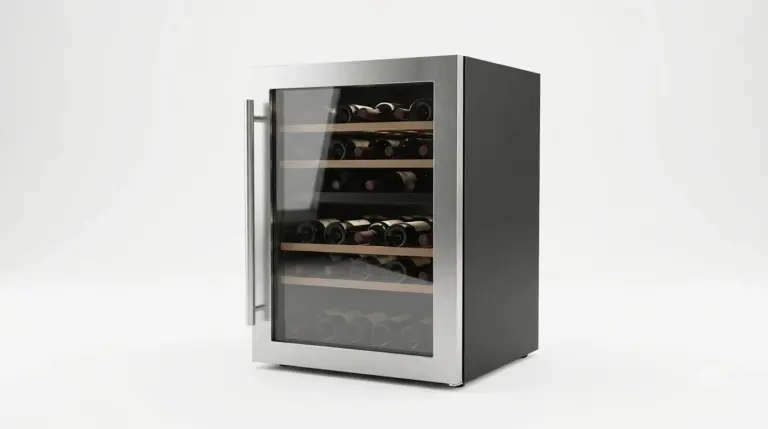
The brand’s wine refrigerators emphasize features that are common in the modern home-appliance category. Depending on the model, these include compressor cooling, separate temperature zones, wooden shelving, tempered-glass doors, stainless-steel components, interior lighting, and security locks.
One important distinction is that the brand’s advertised features do not establish identical performance across its entire catalog. A compact 30-bottle cooler and a large 154-bottle refrigerator have different cooling demands, physical dimensions, and practical installation requirements. Each model should be evaluated individually.
Tylza also maintains a product manual directory that identifies models across its TYLZA, NIPUS, and TITTLA brands. This is useful when checking an appliance’s specifications, locating installation instructions, or identifying the correct replacement documentation.
Is Tylza a good brand? It has a substantial range of purpose-built refrigeration products and publishes useful product and support information. Those are positive signs, but the available independent review evidence and reported customer complaints mean buyers should not treat the brand’s marketing claims as a substitute for checking actual ownership experiences.
For shoppers comparing several appliance manufacturers, our guides to whether Black and Decker is a good brand and whether Galanz is a good brand provide additional context about competing appliance brands.
Product Lines Explained: Single-Zone, Dual-Zone, and Large-Capacity Models
Tylza organizes its wine refrigerator range around storage capacity, cabinet dimensions, and temperature-zone configuration. The most important decision is whether a single temperature compartment or two independently controlled compartments better suit the collection.

The company’s manual directory identifies several distinct Tylza models, including compact 15-inch cabinets and larger 24-inch refrigerators. The following table summarizes representative models and their published capacities.
| Model | Width | Temperature zones | Listed capacity | Best suited to |
|---|---|---|---|---|
| TYWC1002 | 15 inches | 2 | 30 bottles | Compact mixed collections |
| TYWC1005 | 15 inches | 1 | 30 bottles | Smaller single-temperature collections |
| TYWC1001 | 24 inches | 2 | 46 bottles | Undercounter mixed collections |
| TYWC1003 | 24 inches | 2 | 154 bottles | Larger mixed collections |
| TYWC408S | 24 inches | 1 | 154 bottles | Large single-temperature collections |
| TYWC1006 | 24 inches | 1 | 51 bottles | Medium single-temperature collections |
| TYWC1008 | 24 inches | 1 | 110 bottles | Growing collections |
| TYWC1009 | 24 inches | 1 | 189 bottles | High-capacity storage |
These capacities come from Tylza’s official manual directory. They describe the manufacturer’s listed bottle capacities, not guaranteed real-world storage for every bottle shape. Larger Champagne bottles, Burgundy bottles, and other oversized formats may reduce the number of bottles that fit comfortably.
Compact 15-inch wine refrigerators
The 15-inch models are designed for buyers who want dedicated wine storage without giving up a large section of kitchen cabinetry. The TYWC1002 is a dual-zone refrigerator with a listed capacity of 30 bottles, while the TYWC1005 is a single-zone alternative with the same published capacity.
This distinction matters more than the relatively small difference in exterior dimensions. A household storing both red and white wines may benefit from two separate temperature settings. Someone who mainly collects one category of wine may prefer the simpler single-zone arrangement.
Compact dimensions can also make installation more practical in smaller kitchens, but a buyer should verify the complete cabinet opening, ventilation clearance, door swing, electrical outlet location, and depth before purchasing.
24-inch undercounter models
The 24-inch models provide a broader range of capacities and configurations. The TYWC1001 is particularly interesting for buyers who want a dual-zone refrigerator without dedicating space to a full-height cabinet. Its published capacity is 46 bottles.
The larger TYWC1003 increases that listed capacity to 154 bottles while retaining dual-zone cooling. It is a different type of investment in terms of floor space and collection size, so it makes more sense for households that already maintain a substantial wine inventory.
Large single-zone refrigerators
Buyers who prioritize capacity over separate temperature compartments can consider the TYWC408S, TYWC1008, and TYWC1009. Their listed capacities are 154, 110, and 189 bottles, respectively.
A single-zone cabinet is not automatically an inferior choice. If the collection consists mostly of one wine category or the refrigerator is intended for relatively consistent storage conditions, a single compartment can be perfectly practical. The deciding factor is whether the available temperature range and usable shelf arrangement fit the intended collection.
For the complete model list and available documentation, consult Tylza’s official product manual directory.
One additional point deserves attention: Tylza also sells beverage refrigerators and combination wine-and-beverage appliances. These should not be confused with dedicated wine cabinets. A beverage refrigerator designed around cans may have different shelving, capacity assumptions, and temperature configurations from a wine-specific model.
What Tylza Does Well: Design, Temperature Zones, and Installation Flexibility
Tylza’s strongest selling points are its broad selection of cabinet sizes, dual-zone configurations, and contemporary appliance styling. Several models offer features that address practical concerns such as installation flexibility, interior visibility, and separate wine-serving temperatures.
The TYWC1001 provides a useful example of the brand’s approach. Its manufacturer lists a 46-bottle capacity, a 5.3-cubic-foot interior, and two temperature zones. The upper compartment operates from 40°F to 55°F, while the lower compartment operates from 55°F to 65°F.
Those separate settings are useful for households storing red and white wines together. White wines are commonly served cooler than reds, so two compartments can reduce the need to repeatedly change one shared temperature setting.
The model’s published dimensions are 34.25 inches high, 23.43 inches wide, and 22.64 inches deep. Its listed weight is 110.2 pounds. These measurements make it especially important to plan the installation before delivery rather than assuming that every standard kitchen opening will accommodate it.
Built-in and freestanding flexibility
Some Tylza wine refrigerators are marketed for both built-in and freestanding installation. The TYWC1001 is one example. This gives homeowners more flexibility when designing a kitchen, bar, or entertainment area.
However, installation flexibility depends on the specific ventilation design. A refrigerator intended for undercounter installation needs an appropriate front-venting arrangement. A freestanding-only refrigerator should not be enclosed in cabinetry simply because its exterior dimensions appear suitable.
Always distinguish between a manufacturer’s explicit built-in designation and the assumption that a refrigerator can fit inside a cabinet. Incorrect installation can interfere with heat removal and cooling performance.
Glass doors and interior presentation
Tylza emphasizes glass doors and stainless-steel styling across several wine cooler designs. These features make the appliances visually appropriate for contemporary kitchens, home bars, and dining areas.
Glass doors also make it easier to identify bottles without opening the cabinet. Depending on the model, interior lighting provides additional visibility when selecting a bottle in a dimly lit room.
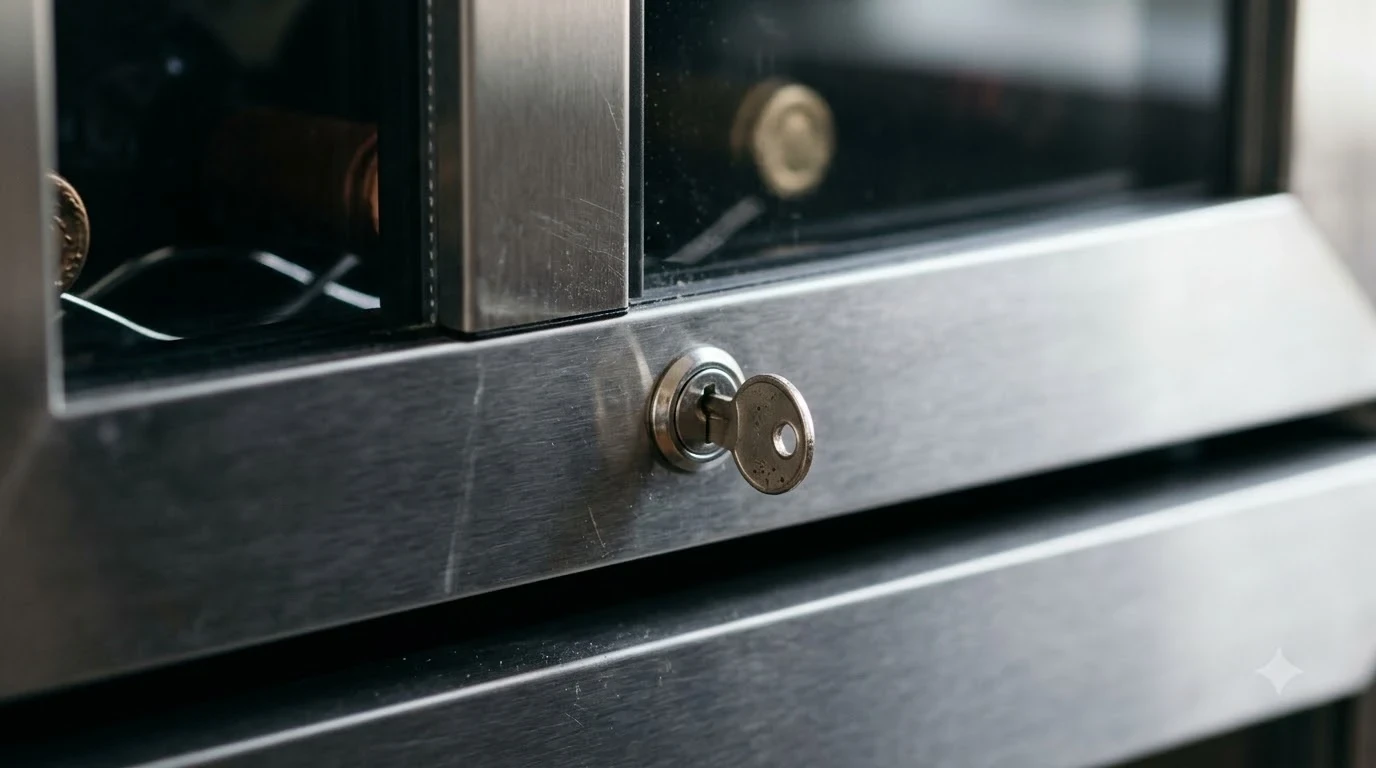
Some models also include door locks, an appealing feature for households with children or for wine cabinets installed in shared entertainment spaces.
Temperature settings for different wine styles
Dual-zone refrigerators have a practical advantage when the collection contains several wine styles. A buyer can use one compartment for lighter whites and another for reds that benefit from warmer serving temperatures.
For reference, sparkling wine is commonly served at 40°F to 50°F, light whites and rosé at 45°F to 50°F, fuller-bodied whites at 50°F to 55°F, light reds at 55°F to 60°F, and fuller reds at 60°F to 65°F.
These are serving-temperature guidelines rather than a requirement that every wine be stored at its final drinking temperature. For longer-term storage, consistent conditions matter more than constantly adjusting a refrigerator to match the temperature of individual bottles.
The TYWC1001’s published upper and lower ranges cover several common serving requirements, although the most suitable setting depends on the wine and the intended storage period.
Common Complaints and What Tylza Wine Fridge Reviews Reveal
Tylza wine cooler reviews present a mixed picture rather than establishing that every refrigerator performs consistently. Buyers should pay particular attention to temperature stability, compressor reliability, delivery condition, and the quality of customer support.
Positive owner feedback frequently highlights the appearance of the appliances, convenient controls, useful storage layouts, and relatively quiet operation. Compact models can also appeal to homeowners who want dedicated wine storage in a limited space.
For example, customer feedback published on Tylza’s product pages includes comments praising the appearance and ease of use of smaller wine refrigerators. Other feedback mentions inconsistent temperature control and compressor problems. These differences show why an overall impression of a brand should not replace model-specific research.
Temperature consistency deserves attention
A refrigerator’s displayed temperature is not necessarily identical to the temperature experienced by every bottle. The actual environment can vary between shelves, compartments, and areas close to the cooling system.
BestViewsReviews analyzed 82 reviews for a Tylza 24-inch dual-zone wine-and-beverage refrigerator. Its analysis identified possible temperature-range variation as a drawback, despite highlighting the appliance’s double-paned tempered-glass door and temperature-sensing features.
That observation does not establish that every Tylza wine refrigerator has a temperature problem. It does, however, make temperature verification a sensible part of ownership, especially for collectors storing bottles for extended periods.
Compressor and cooling complaints
Some negative feedback on Tylza’s own product pages describes cooling failures and compressor-related concerns. Individual complaints cannot establish the failure rate of a model, but they should not be dismissed when evaluating an expensive appliance.
A wine refrigerator is a compressor-based appliance that may operate regularly throughout the day. A failure can affect the entire stored collection, making reliability and access to repair support important considerations.
Buyers should examine feedback for the exact model number rather than relying exclusively on general searches for Tylza wine cooler reviews. A complaint about a compact single-zone model may not describe the performance of a larger dual-zone cabinet.
Customer service and replacement parts
Customer support deserves the same attention as cooling specifications. A refrigerator may have an attractive design and suitable capacity, but the ownership experience can become frustrating if replacement components are difficult to obtain.
Before purchasing, identify the seller responsible for the transaction, the appropriate warranty contact, and the process for reporting a malfunction. Ask whether replacement parts are available and whether service is handled through the manufacturer or the retailer.
For a more balanced view of independent feedback, read the BestViewsReviews analysis of a Tylza dual-zone refrigerator. Its findings concern one product listing and should not be interpreted as a comprehensive reliability assessment of every model.
How to Choose a Tylza Wine Cooler for Your Collection
The best Tylza wine refrigerator depends on the number of bottles you own, the types of wine you store, and the available installation space. Comparing capacity, temperature zones, and cabinet dimensions in that order helps narrow the selection.
1. Estimate your actual bottle requirements
Start with the number of bottles you currently own and the number you expect to add. A refrigerator advertised for 30 bottles may be sufficient for an occasional wine drinker, while someone maintaining a collection of 80 bottles needs a substantially larger cabinet.
Do not assume that the published capacity will always be achievable. Manufacturer capacities generally use standard bottle dimensions. Champagne bottles, wide-shouldered Burgundy bottles, and other oversized formats can occupy more shelf space.
For example, a 46-bottle cabinet may be a reasonable choice for a collection that includes several bottle shapes, provided its shelving arrangement accommodates them. A collector with mostly standard Bordeaux bottles may use the available space more efficiently.
2. Choose between single-zone and dual-zone cooling
Choose single-zone cooling if most of the collection consists of wines that can share one temperature setting. This configuration is simpler and may provide more straightforward storage management.
Choose dual-zone cooling if the cabinet will regularly hold both red and white wines that require different serving temperatures. The TYWC1002 and TYWC1001 are examples of Tylza dual-zone models, with listed capacities of 30 and 46 bottles.
Remember that two zones do not automatically mean twice the storage flexibility. Each compartment has a specified temperature range, and those limits should match the wines you plan to keep.
3. Measure the installation location
Measure the height, width, and depth of the intended space before choosing a refrigerator. Include the cabinet opening, surrounding panels, countertop overhang, door clearance, and access to the power outlet.
For an undercounter installation, ventilation is particularly important. Confirm that the specific model is approved for built-in use and that the installation instructions provide adequate clearance.
Also consider the delivery route. A large 154-bottle or 189-bottle refrigerator can be difficult to move through narrow doorways, staircases, and tight kitchen entrances.
4. Compare the temperature range with your wine collection
Review both the minimum and maximum temperatures rather than relying on a general description such as precise cooling. A cabinet must be capable of maintaining a suitable temperature for the wine styles you intend to store.
For a mixed collection, consider the separation between the upper and lower compartments. For a collection of primarily sparkling wine, white wine, or red wine, a single-zone model may be adequate if its operating range is appropriate.
5. Examine the shelves and door construction
Wooden shelves can provide an attractive presentation and help organize standard wine bottles. Removable or adjustable shelving is useful when the collection contains larger formats.
Inspect the number of shelves, their spacing, and how far they slide out. A large bottle count is less useful if the shelves cannot accommodate the bottle shapes you actually own.
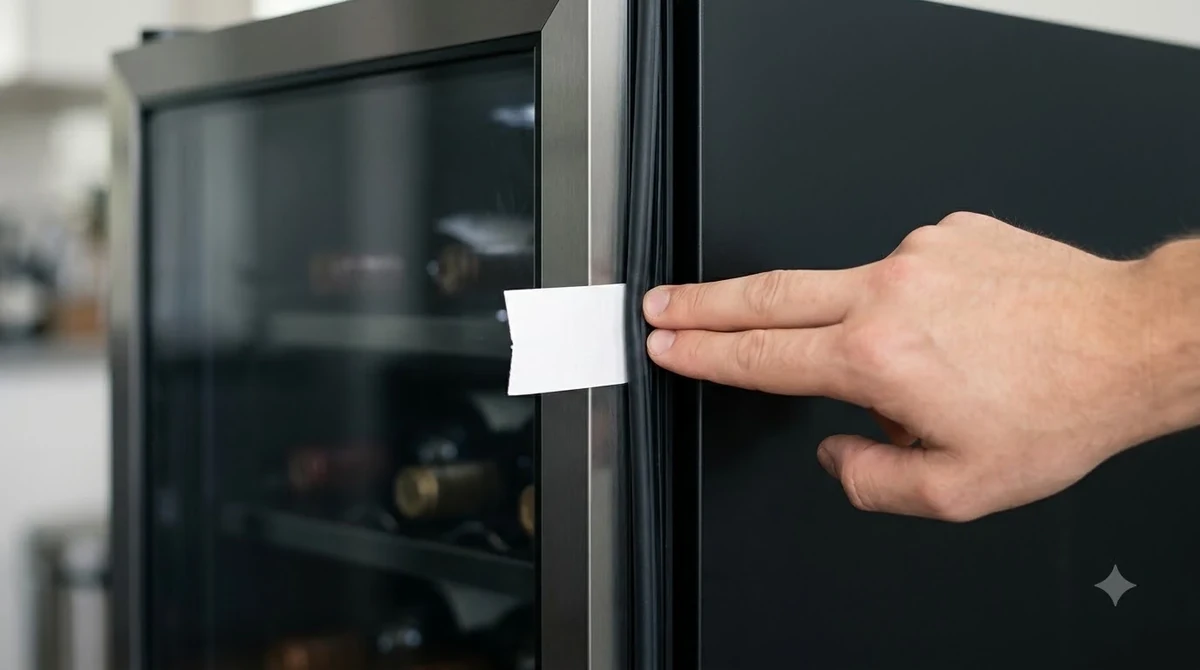
Glass construction, door seals, hinges, and locking mechanisms also deserve attention. These details affect everyday usability and can influence how conveniently the refrigerator fits into a kitchen or bar.
6. Review the support arrangements before ordering
Identify whether the purchase is being made directly from Tylza or through another retailer. Warranty conditions can differ depending on the seller and the applicable purchase policy.
Save the product listing, order confirmation, serial number, and installation documentation. These records can help if the refrigerator arrives damaged, develops a cooling problem, or needs warranty service.
Tip: Before buying a Tylza wine refrigerator, compare the advertised bottle capacity with your actual bottle shapes, measure the complete installation opening, and confirm the applicable warranty in writing. A properly sized 46-bottle cabinet can be more practical than a 154-bottle model that does not fit your kitchen or collection.
For additional brand comparisons, our guide to whether Rovsun is a good brand offers another useful reference when researching appliances in a similar shopping category.
Warranty and Support: What Buyers Should Know
Tylza advertises a three-year manufacturer’s limited warranty on its official website for qualifying purchases made directly through its website. The policy includes certain material, workmanship, and component failures, but important exclusions and transportation conditions apply.
According to the published warranty policy, eligible failures within three years of the original purchase may receive free replacement parts or a complete product at the manufacturer’s discretion. Covered components include the printed circuit board, temperature controller, fans, evaporator coils, condenser coils, and compressor.
The warranty also addresses qualifying compressor damage caused by non-human refrigerant leakage. This is particularly relevant for wine refrigerator buyers because the cooling system is essential to the appliance’s primary purpose.
Important warranty limitations
The three-year coverage is not an unconditional promise that every problem will be repaired without expense. The published policy states that the purchaser is responsible for transportation costs associated with the warranty process.
It also excludes damage associated with unstable electrical supplies, including low voltage, high voltage, and household wiring problems. Unauthorized modifications, abnormal working conditions, external damage, and certain other causes are excluded.
Another important limitation concerns commercial and industrial use. Buyers intending to install a wine refrigerator in a restaurant, commercial tasting room, or other business should not assume that the standard warranty covers that application.
The policy also states that coverage applies to the original end-user purchaser and is not transferable. Keeping the original packaging is recommended because suitable packaging may be required when returning an appliance.
Purchases through other retailers
Tylza explicitly distinguishes purchases made through its own website from purchases made through outside platforms. Customers buying through retailers such as Home Depot, Wayfair, or Amazon are directed to the applicable platform warranty policy and purchasing channel for details.
This distinction makes the seller an important part of the buying decision. A product listing may display the same model number, but the applicable warranty process can depend on who actually sold the appliance.
Before ordering, confirm the warranty period, the party responsible for service, shipping responsibilities, and whether replacement parts or complete-unit replacements are available. These questions are particularly important for larger refrigerators that may be difficult and expensive to transport.
Finding manuals and contacting support
Tylza provides a manual directory that separates its documentation into TYLZA, NIPUS, and TITTLA product categories. The directory includes several wine refrigerator models and offers a contact route for customers who cannot locate their particular manual.
The company publishes its US contact details as 3900 Hamner Avenue, Eastvale, California 91752, with support available through [email protected] and the telephone number (650) 620-1310.
Having the exact model number ready can make support requests more productive. It also helps prevent confusion between similarly sized single-zone and dual-zone refrigerators.
Frequently Asked Questions
Is Tylza a good brand for wine refrigerators?
Tylza offers a range of wine refrigerators with different capacities and installation configurations, and its official website publishes product documentation and warranty information. However, customer feedback includes both positive experiences and reports of cooling or reliability problems. Its suitability depends on the individual model, seller, warranty arrangements, and the buyer’s tolerance for potential service issues.
Where are Tylza wine refrigerators made?
Tylza’s website describes its brand development and refrigeration research history but does not establish the manufacturing country of every individual wine refrigerator. Buyers who require country-of-origin information should request confirmation for the exact model and production unit rather than assuming that the brand’s US registration identifies its manufacturing location.
Are Tylza wine refrigerators energy efficient?
Energy consumption varies by model, capacity, ambient conditions, and usage. For example, Tylza lists the TYWC1001 at 100 watts, but that figure is a power specification rather than a complete annual electricity-consumption measurement. Buyers comparing operating costs should request the model’s annual energy consumption in kilowatt-hours.
Can a Tylza wine cooler store Champagne bottles?
Some Tylza refrigerators are described as accommodating larger bottle formats, but the actual fit depends on shelf spacing and cabinet configuration. Champagne bottles are generally wider than standard Bordeaux bottles and may reduce usable capacity. Check the interior dimensions and removable-shelf arrangement before planning to store a large Champagne collection.
How long should a Tylza wine fridge run before loading bottles?
Allow the refrigerator to complete its initial cooling cycle and reach its intended temperature before loading the collection. The appropriate waiting period depends on the specific model and its installation instructions. If the appliance has been transported on its side or at an unusual angle, follow the manufacturer’s specified upright-resting period before connecting it to electricity.
Tylza is a brand worth considering for buyers who want a choice of compact, undercounter, dual-zone, and high-capacity wine refrigerators. Its product range offers useful flexibility, but careful attention to model-specific reviews, temperature performance, installation requirements, and warranty coverage is essential. Compare the available models against your actual collection and storage needs before making a final decision.
More in Brand Hubs
 Icyglee Wine Fridge: Compare Capacities, Features and ModelsUpdated Nov 20, 2026
 Fomup Wine Fridge: Explore Models, Features, and Buying TipsUpdated Nov 20, 2026
 Aaobosi Wine Fridge: Compare Models and Choose the Right CoolerUpdated Nov 20, 2026
 Orymuse Wine Fridge Reviews: Compare Capacities, Features and WarrantyUpdated Nov 20, 2026
 Vintec Wine Fridge: Features, Warranty, and Buying AdviceUpdated Nov 20, 2026
 Phiestina Wine Cooler Options for Better Wine StorageUpdated Nov 20, 2026