

We may earn a commission when you buy through links on this page, at no extra cost to you. Learn more.
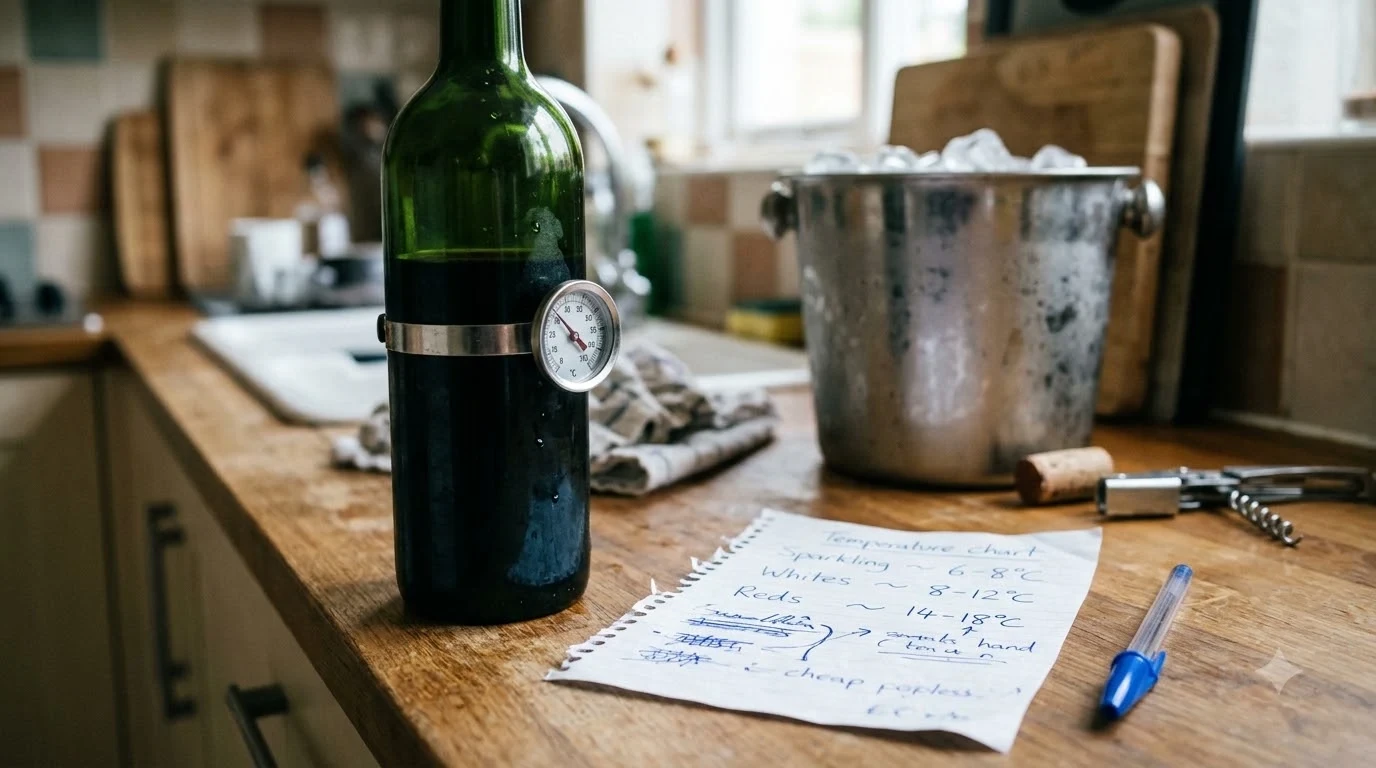
A wine thermometer helps you measure the actual serving temperature of wine so you can serve each bottle at its ideal temperature. For the most useful reading, choose a thermometer that measures the wine directly rather than relying entirely on the temperature of the bottle’s exterior. Probe, digital, floating, and wrap-around models each offer different levels of convenience and precision. The right choice depends on how frequently you serve wine, whether bottles are already open, and how closely you want to control serving temperature.
Serving temperature affects how wine smells, tastes, and feels. A chilled Sauvignon Blanc can retain its refreshing acidity, while a Cabernet Sauvignon served too warm may emphasize alcohol and lose some of its balance. Even a difference of a few degrees can change the experience. A wine thermometer provides a practical way to check temperatures instead of relying entirely on refrigerator timing, room temperature, or touch.
Who This Is For
A wine thermometer is particularly useful for people who regularly serve different wine styles and want more consistency from bottle to bottle. It is also helpful for hosts, wine enthusiasts, and anyone learning how serving temperature affects aroma, acidity, tannin, and texture.

Casual wine drinkers who usually open one bottle of white wine straight from the refrigerator may not need a dedicated thermometer. However, people who alternate between sparkling wine, chilled whites, rosé, Pinot Noir, and full-bodied reds can benefit from having a reliable way to check the temperature before pouring.
Consider a wine thermometer if you frequently encounter situations such as these:
- You serve different wine styles: A refrigerator temperature that works for sparkling wine may be too cold for a fuller Chardonnay or a light-bodied red.
- You keep red wine at room temperature: A heated living room can be warmer than the recommended range for most reds. A thermometer helps identify when a short chill is needed.
- You entertain guests: Checking the temperature of several bottles helps you serve each wine appropriately rather than using one general temperature for everything.
- You are learning about wine: Comparing the same wine at 10°F intervals is not necessary to appreciate the difference. Even a small temperature adjustment can help demonstrate how aroma and perceived alcohol change.
- You own a wine refrigerator: Measuring the wine before serving helps distinguish the temperature inside the storage appliance from the temperature at which the wine tastes best.
For someone who opens wine occasionally, a simple bottle thermometer can be sufficient. A dedicated probe is more appropriate for someone who wants a closer measurement of the liquid itself. There is no need to purchase an expensive instrument simply because it has a digital display or additional functions.
The thermometer should support the way you serve wine rather than introduce unnecessary steps. A straightforward, readable instrument with a suitable measurement range is generally more useful than a complicated model that rarely leaves the kitchen drawer.
Key Factors to Compare
The most important buying considerations are measurement accuracy, thermometer design, readability, temperature range, and ease of cleaning. A thermometer that measures the liquid directly offers a different level of information from one that estimates temperature through the bottle.
| Factor | What to Look For | Why It Matters |
|---|---|---|
| Measurement method | Direct probe or bottle-surface reading | Determines whether you measure the wine or estimate it from the glass |
| Temperature range | Approximately 32–104°F for general wine use | Covers common serving temperatures and ordinary room conditions |
| Display | Clear digital screen or readable analog scale | Makes checking the temperature easier |
| Response | Stable readings within a few seconds for an instant-read probe | Reduces waiting during wine service |
| Probe length | Long enough to immerse the sensor in the liquid | Helps obtain a useful measurement without touching the glass |
| Cleaning | Washable food-contact probe or suitable wipe-clean exterior | Prevents residue and odors from affecting subsequent pours |
| Usability | Simple controls and easy-to-read markings | Makes the thermometer practical for regular use |
Measurement accuracy and sensor placement
Start by considering where the thermometer takes its measurement. A probe thermometer measures the temperature of the liquid surrounding its sensor. A wrap-around model estimates temperature through the bottle wall, which means its reading can differ from the wine inside, particularly immediately after chilling.
The distinction matters because a bottle and a poured glass do not necessarily have identical temperatures. A full bottle retains its temperature differently from a small serving exposed to warm air. For the closest measurement of what you are about to drink, a clean probe inserted into a freshly poured glass is the more useful option.
Readability and temperature units
American wine drinkers will generally find Fahrenheit markings convenient. However, some European analog wine thermometers use Celsius scales. A model displaying both units can be useful if you regularly consult international wine-serving recommendations.
Check that the scale has enough detail to distinguish meaningful differences. A display that only indicates broad categories such as cold, cool, and warm can be convenient, but it is less useful for someone comparing a light red at 58°F with a fuller red at 63°F.
Construction and cleaning
Look for a sturdy probe, a readable scale, and materials suitable for repeated contact with beverages. Analog glass thermometers can be attractive but need careful handling. Stainless-steel probes are generally more practical for frequent use because they are easier to wash and less fragile.
Also consider how the thermometer will be stored. A slim probe that fits in a kitchen utensil drawer may be more convenient than a large instrument requiring dedicated storage space. For a wrap-around model, flexibility and a secure fit around standard wine bottles are important considerations.
Step-by-Step: How to Use a Wine Thermometer
Using a wine thermometer is straightforward: clean the sensor, select the correct measurement method, obtain a stable reading, and compare it with the recommended serving range. The important detail is making sure the thermometer measures the wine rather than an unrelated surface.
-
Identify the wine style.
Determine whether you are serving sparkling wine, a light white, a full-bodied white, rosé, a light red, or a full-bodied red. Each style has a different temperature target. A chilled Riesling, for example, generally needs a lower serving temperature than an oak-influenced Chardonnay. -
Choose the measurement location.
For an open bottle, a probe can be inserted into the liquid. For the closest indication of the wine you are drinking, pour a small sample into a glass and measure that sample directly. For an unopened bottle, use a compatible wrap-around thermometer as an estimate. -
Clean the sensor.
Wash a reusable probe with water and a small amount of dish soap before its first use. Rinse away detergent and dry the exterior. A thermometer previously used for cooking should be especially clean so that food odors do not transfer to the wine. -
Position the thermometer correctly.
Insert the probe far enough into the wine to cover its sensing section. Avoid letting the sensor rest against the glass bottom or side. For an analog instrument, follow the manufacturer’s immersion marking. -
Wait for the reading to stabilize.
A digital instant-read thermometer may settle within a few seconds, while a traditional analog instrument may require longer. For an analog model, wait until the indicator stops moving. -
Compare the result with the target.
Use the wine’s style and body as your starting point. A light Pinot Noir may benefit from approximately 55–60°F, while a fuller Cabernet Sauvignon is generally served around 60–65°F. -
Adjust gradually.
If the wine is too warm, use a refrigerator or an ice-water bath. If it is too cold, let it rest briefly at room temperature. Avoid aggressive heating or leaving a bottle forgotten in the freezer. -
Recheck before serving.
Pour another small sample if necessary and confirm the temperature. Remember that wine warms after pouring, especially in a warm dining room.
The process becomes easier after a few uses. You will start recognizing the difference between a wine that is refrigerator-cold and one that is ready to serve, making temperature adjustments quicker and more predictable.
Tip: Measure a freshly poured glass when possible. This gives you a better indication of the temperature you are actually drinking than measuring the exterior of a recently chilled bottle. Pour smaller servings and refill as needed to help maintain the desired temperature.
For additional context on how serving temperatures affect different styles, Decanter’s red wine serving temperature guide explains why lighter reds benefit from chilling and why fuller reds generally perform better below typical heated-room temperatures.
Types or Styles Explained
Wine thermometers generally fall into several categories based on how they measure temperature. Direct-contact probes provide the most relevant reading of the wine itself, while bottle bands offer convenience when the bottle remains closed.
Digital probe thermometers
A digital probe thermometer uses a metal sensor inserted directly into the liquid. It displays the measured temperature on an electronic screen and is a practical choice for people who want a straightforward numerical reading.
The main advantage is direct measurement. You can insert the probe into an open bottle or a freshly poured glass, wait for the number to stabilize, and compare it with the desired range. The same type of instrument can often be used as a kitchen thermometer, provided it is clean and suitable for food contact.
Its main disadvantage is that it requires access to the liquid. You cannot measure an unopened bottle directly without opening it, which makes this type less convenient for checking a collection of sealed bottles.
Analog wine thermometers
Traditional analog wine thermometers use a physical temperature scale and a liquid-sensitive measuring mechanism. Some models are designed to be immersed in a wine glass or bottle, while others have distinctive shapes intended for serving or presentation.
They appeal to buyers who prefer mechanical simplicity. There are no batteries to replace, and a clearly marked scale can make it easy to identify general temperature ranges.
However, analog thermometers may take longer to settle than digital instant-read instruments. They can also be fragile when constructed with glass bodies, so careful handling and storage are important.
Wrap-around and clip-on thermometers
Wrap-around thermometers attach to the exterior of a wine bottle. Many use a temperature-sensitive display or digital sensor to indicate the bottle’s surface temperature. They are convenient because they do not require opening the wine.
These models are suitable for checking bottles in a refrigerator, wine cabinet, or serving area. However, they do not directly measure the liquid. The glass wall, bottle label, condensation, and recent temperature changes can influence the reading.
For casual serving, this type can provide a useful indication. If a bottle has just emerged from an ice bucket, allow time for the reading to settle before relying on it.
Floating wine thermometers
Floating thermometers are designed to sit in a decanter, carafe, or other wine vessel. Their sensing section remains in contact with the liquid, providing a direct temperature indication without requiring a separate probe to be held in place.
They can be useful during tastings or longer meals where several guests are sharing a decanter. However, they occupy space in the vessel and may be less convenient for formal table service.
Infrared thermometers
An infrared thermometer measures the temperature of a surface without physical contact. Pointing one at a wine bottle produces a reading for the bottle’s exterior rather than the actual temperature of the wine.
This distinction is important. A bottle may have a cold outer surface while the liquid inside is still adjusting after chilling. Condensation and reflective surfaces can introduce further uncertainty. Infrared instruments are therefore better suited to quick comparisons than precise wine-serving decisions.
Which type should you choose?
For someone who wants the closest practical measurement of serving temperature, a digital probe is the strongest general-purpose choice. An analog immersion thermometer is a sensible alternative for buyers who prefer a simple, battery-free instrument.
If you mainly want to check sealed bottles without opening them, a wrap-around model is more convenient. Floating models suit decanter service, while infrared devices are best treated as surface-measuring tools rather than substitutes for direct-contact thermometers.
The best instrument is the one that matches your serving routine. Paying for a more advanced display does not automatically provide a more accurate reading if the sensor is measuring the wrong part of the bottle.
Common Mistakes
Most wine-temperature mistakes come from confusing bottle temperature with serving temperature or assuming that every wine should be served equally cold. A thermometer helps prevent these problems, but correct placement and interpretation are just as important as the instrument itself.
Assuming all red wine belongs at room temperature
The traditional room-temperature recommendation can be misleading in modern homes. A living room maintained at 70–75°F is considerably warmer than the preferred serving range for many red wines.
For example, a light Pinot Noir is generally served at 55–60°F, while a fuller Cabernet Sauvignon is typically served at 60–65°F. Leaving either bottle on a warm dining table for an extended period can make the alcohol feel more prominent and reduce the wine’s freshness.
Serving white wine straight from a very cold refrigerator
Refrigeration is useful for chilling wine, but very low temperatures can suppress aromas and make some wines seem less expressive. A full-bodied Chardonnay generally benefits from a warmer serving temperature than a crisp Sauvignon Blanc.
Allowing a chilled white to warm slightly in the glass can reveal more of its aroma and texture. A thermometer helps identify whether additional warming is needed rather than relying on a fixed waiting period.
Trusting a bottle-band reading immediately
A wrap-around thermometer reads through the bottle wall. After a rapid temperature change, the glass and wine may not have reached the same temperature.
For instance, a bottle removed directly from an ice-water bath may show a colder exterior reading than the liquid inside. Allow the measurement to settle and treat the result as an estimate. A direct probe is preferable if you need a more meaningful serving temperature.
Measuring the wrong part of the glass
Inserting a probe too shallowly can produce an unreliable result if the sensor is not fully immersed. Touching the bottom or side of the glass can also interfere with the reading.
Position the sensing section within the liquid and hold the instrument steady. For analog thermometers, follow the manufacturer’s sensor markings rather than assuming the entire stem must be submerged.
Confusing serving temperature with storage temperature
A wine thermometer is primarily a serving tool. The ideal temperature for enjoying a bottle is not necessarily the temperature at which it should be stored for weeks or months.
Long-term storage calls for a stable, cool environment, generally around 55°F, with bottles protected from direct light and major temperature fluctuations. A wine refrigerator used for storage may therefore operate differently from a refrigerator used to chill bottles before dinner.
Using extreme temperature changes
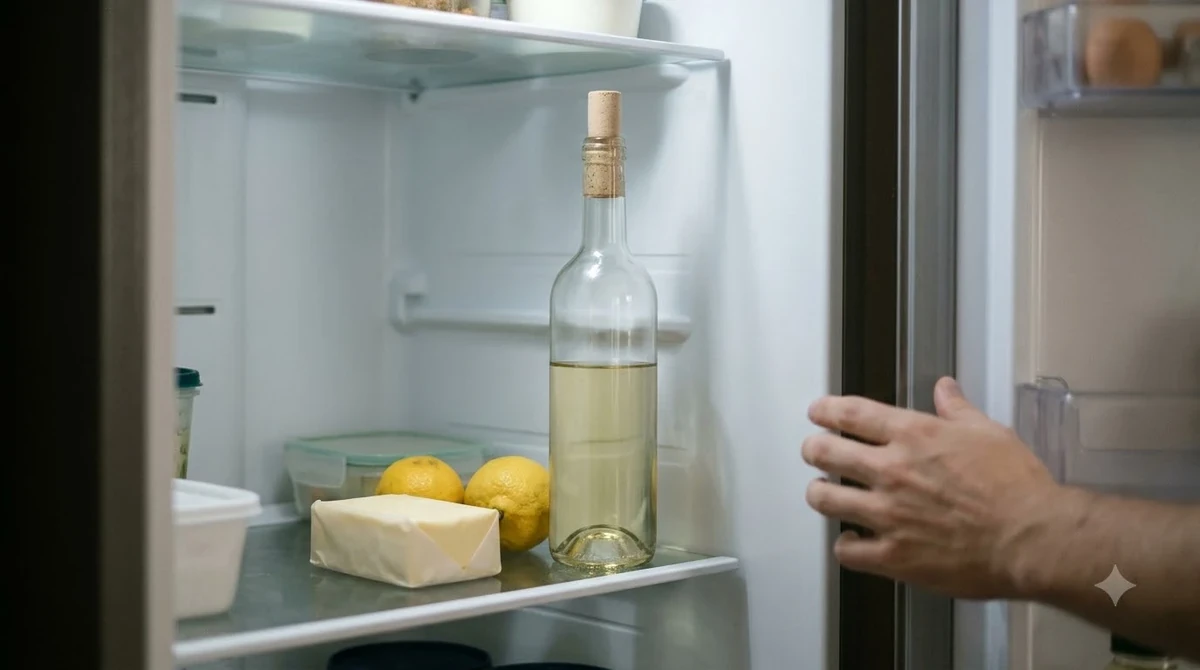
Putting wine in a freezer for an extended period is a poor substitute for controlled chilling. A forgotten bottle can freeze, expand, and potentially push out its cork or damage the container.
For a warm bottle, an ice-water bath is generally a more controlled option. For wine that is too cold, gradual warming on the counter is preferable to placing it beside a radiator or exposing it to hot water.
Care or Storage Tips
A wine thermometer should be cleaned after every use and stored according to its construction. Good maintenance keeps the measuring surface free from residue and helps prevent damage to sensitive components.
Cleaning direct-contact thermometers
Wash a reusable probe with warm water and a small amount of dish soap. Rinse it thoroughly so that detergent residue does not remain on the surface. Dry it with a clean cloth before returning it to storage.
WMF’s operating instructions for its Scala wine thermometer specifically recommend cleaning the instrument with water and detergent before first use and after each use. The same basic approach is appropriate for many reusable immersion thermometers, although individual product instructions should take priority.
Pay attention to the construction of digital models. The metal probe may be washable while the electronic display housing is not waterproof. Do not immerse an electronic unit unless the manufacturer explicitly permits it.
Protecting analog and glass instruments
Traditional glass thermometers require more careful handling. Avoid dropping them into a sink or allowing them to knock against glassware, decanters, or metal utensils.
Store them in a protective sleeve or a separate drawer compartment. If a glass thermometer cracks or breaks, discontinue use rather than attempting to repair it for beverage service.
Maintaining digital models
Digital thermometers need occasional battery checks and proper storage. Remove the batteries if the manufacturer recommends doing so during extended periods without use. Keep the display dry and avoid storing the instrument in an excessively hot or damp location.
Check the reading periodically against another reliable thermometer if you suspect the instrument is producing inconsistent results. A thermometer that displays an unstable temperature, has a damaged probe, or shows obvious signs of malfunction should not be relied upon for accurate service.
Storing wrap-around thermometers
Remove reusable bottle bands when cleaning the bottle or when the instrument is not needed. Keep their sensing surfaces free from dirt and sticky residue. Avoid folding or stretching flexible models beyond their intended design.
For digital bottle thermometers, follow the battery and moisture instructions. Keeping the sensor surface clean is particularly important because residue between the bottle and the thermometer can affect how consistently it makes contact.
Using temperature measurements during wine service
Wine does not remain at a fixed temperature after pouring. A small serving exposed to warm room air can change more quickly than the remaining liquid in a full bottle. Holding the bowl of a glass can also transfer warmth from your hand.
For a longer dinner, keep white wines and sparkling wines in an appropriate chilling vessel between pours. Serve smaller amounts rather than filling every glass to the brim. Lighter reds can benefit from a slight chill, while fuller reds should be served cool rather than warm.
Temperature is only one part of good wine service. The right glass, appropriate pouring size, and a suitable food pairing also influence the experience. For example, a high-tannin dry red wine works particularly well with fatty foods, while a crisp dry white wine can complement lighter dishes and seafood.
Sweetness matters too. A dessert wine should generally be at least as sweet as the dessert served alongside it, and the serving temperature should preserve its aromatic character. If you are exploring different styles, comparing a sweet red wine with a structured dry red wine also demonstrates why one universal temperature recommendation cannot work for every bottle.
For broader purchasing considerations, the wine-buying guide provides a useful starting point for understanding wine styles and making more informed choices.
Frequently Asked Questions
These answers address additional questions about choosing and using wine thermometers, including practical measurement details and situations that are not always covered by basic serving-temperature charts.
Can a wine thermometer be used for champagne and sparkling wine?
Yes. A wine thermometer suitable for beverage contact can measure sparkling wine just as it measures still wine. Use a clean probe and avoid vigorous stirring, which can encourage carbon dioxide to escape. A temperature measurement does not indicate whether a sparkling wine has retained its carbonation or freshness after opening.
Does the shape of a wine bottle affect thermometer readings?
It can affect how an exterior thermometer fits and contacts the bottle. A wide Burgundy bottle, a narrow Riesling bottle, and a sparkling wine bottle have different shapes and wall profiles. Direct-contact probes avoid much of this fitting issue because they measure the liquid rather than relying on a particular bottle circumference.
Can I calibrate a wine thermometer at home?
Some digital probe thermometers support calibration, while others are factory-set and do not provide a user adjustment. An ice-water mixture can provide a useful reference point near 32°F when prepared correctly, with plenty of ice and water mixed together. Follow the manufacturer’s calibration procedure rather than changing an instrument’s settings based on an informal comparison.
Should I leave a wine thermometer inside a decanter?
A floating thermometer designed for beverage use can remain in a decanter if its manufacturer permits continuous immersion. Ordinary digital kitchen probes and glass immersion thermometers are not necessarily designed for prolonged placement in a vessel. Remove them after taking the measurement unless their instructions specifically allow otherwise.
Do wine thermometers work with half bottles and magnums?
Direct-contact thermometers can measure wine in different bottle sizes as long as the sensor can reach the liquid properly. Exterior bands may fit some bottle diameters better than others, so check compatibility before purchasing. A larger bottle also changes how quickly wine responds to chilling or warming because its contents have a different thermal mass.
A good wine thermometer does not need to be complicated or expensive to be useful. Prioritize direct measurement, easy cleaning, a readable display, and a temperature range suitable for the wines you regularly serve. For most households, a reliable digital probe or straightforward analog immersion thermometer offers the most practical balance of accuracy and convenience.
More in Wine Buying Guides
 Cheap Red Blend: How to Find a Flavorful Bottle for LessUpdated Nov 20, 2026
 Pinot Grigio Gift: How to Choose a Bottle They’ll EnjoyUpdated Nov 20, 2026
 Best White Wine at Total Wine for Every MealUpdated Nov 20, 2026
 Wine Fridge Replacement Shelves: Find the Right FitUpdated Nov 20, 2026
 Best Sparkling Wine Under 20: Find Bubbles Worth BuyingUpdated Nov 20, 2026
 Best Wine For Birthday Celebrations With Perfect Party PairingsUpdated Nov 20, 2026