

We may earn a commission when you buy through links on this page, at no extra cost to you. Learn more.
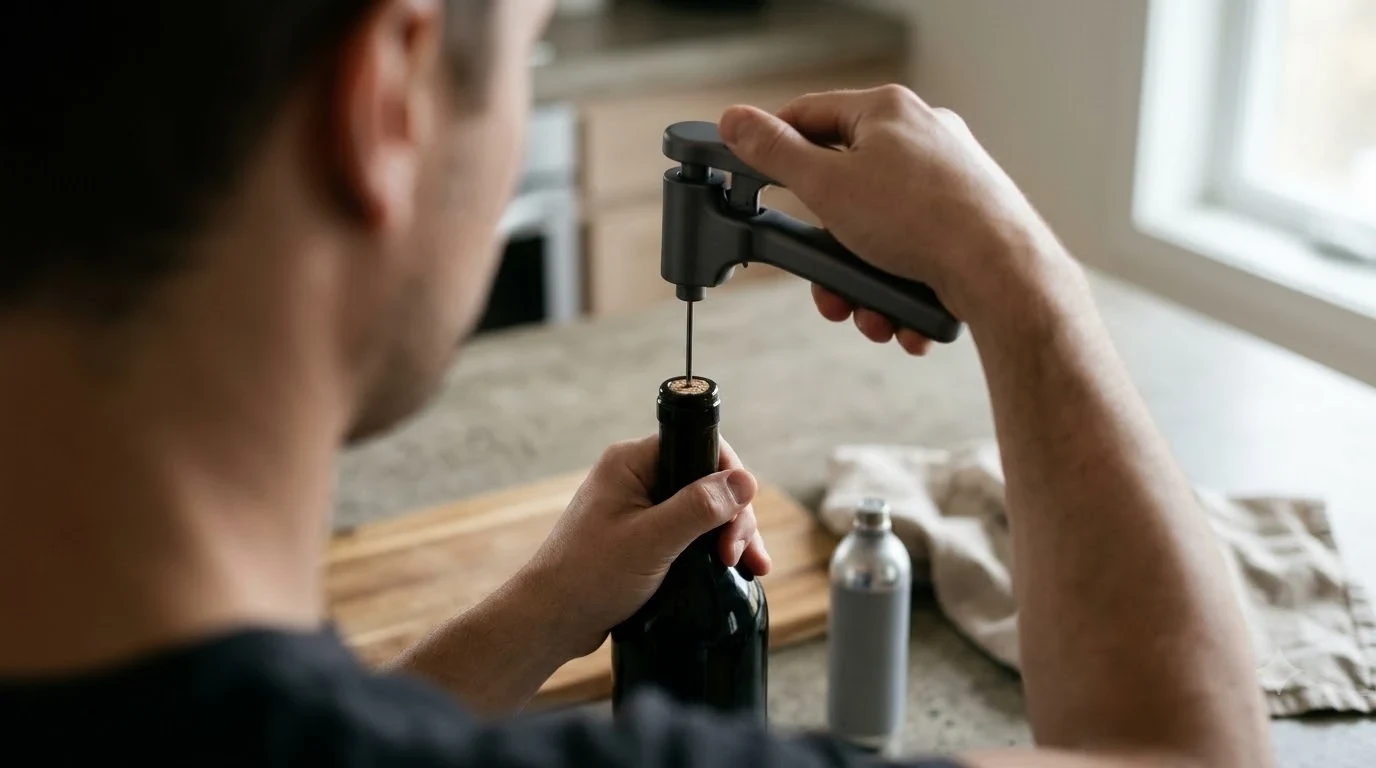
The Houdini Wine Preserver is a budget-friendly manual vacuum pump and stopper set from Rabbit that slows oxidation in opened still wines for two to four days. Its patented Push-Button Stoppers create a leak-resistant seal that allows horizontal storage on a refrigerator shelf or wine rack, and a top release button vents vacuum pressure cleanly before pouring. While independent testing shows it falls short of the manufacturer’s two-week freshness claim and has a compact handle that can feel cramped on nearly empty bottles, it remains a practical everyday tool for finishing a 750 ml bottle over a long weekend.
Originally introduced under the Metrokane brand before joining the Rabbit barware lineup under parent company Lifetime Brands, the Houdini Wine Preserver pairs a handheld air pump with two reusable stoppers designed to fit standard still wine bottles. Rather than injecting inert gas or requiring disposable cartridges, the unit relies on basic mechanical suction to pull oxygen out of the bottle headspace right after a 5 oz glass is poured. For wine drinkers organizing a compact bar cart or kitchen drawer, understanding where this manual pump excels—and where vacuum preservation hits natural limits—makes all the difference before buying.
Specs and Key Features
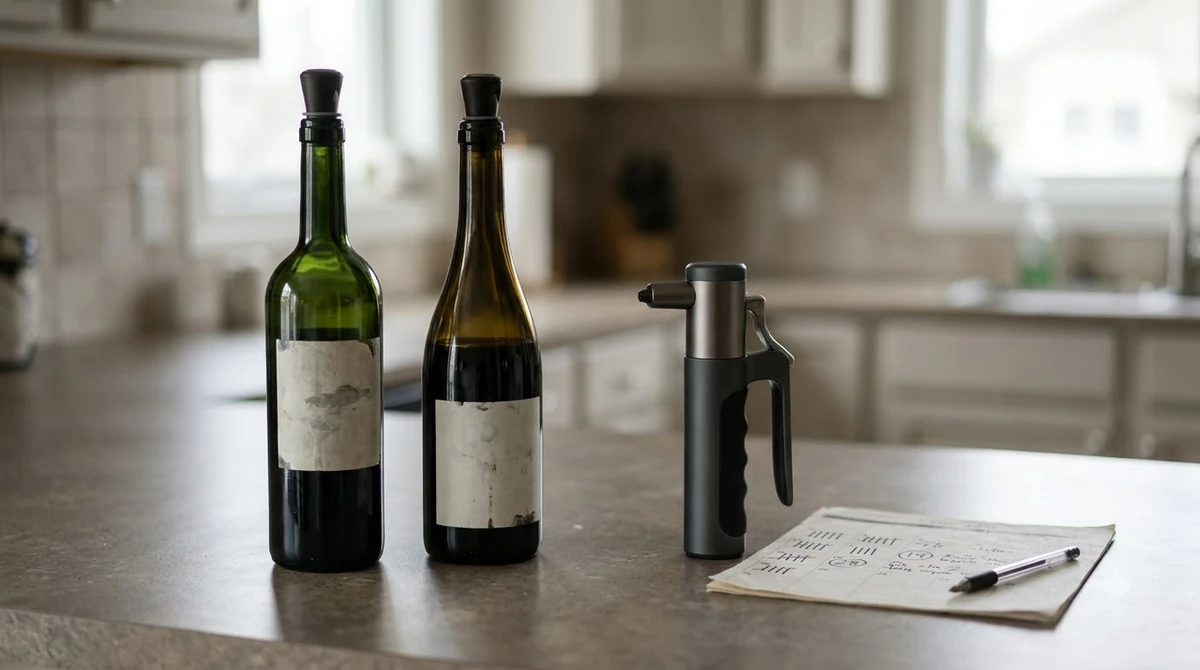
The Houdini Wine Preserver (model H3-013001T) is a three-piece manual vacuum system built from BPA-free plastic and elastomeric seals, weighing only a few ounces and storing easily in a standard kitchen drawer. According to manufacturer specifications from Rabbit Wine, the kit includes one cylindrical black hand pump and two Push-Button Stoppers engineered to fit any standard wine bottle neck.
| Specification | Houdini Wine Preserver (Model H3-013001T) |
|---|---|
| Manufacturer / Brand | Rabbit (Lifetime Brands, Inc.; formerly Metrokane) |
| Preservation Mechanism | Manual hand-operated vacuum pump with check-valve stoppers |
| Included Components | 1 vacuum pump, 2 Push-Button Stoppers |
| Package Dimensions | 6 in. W x 4 in. D x 7 in. H (cylindrical pump housing) |
| Material & Safety | BPA-free plastic housing and elastomeric stopper seals |
| Claimed Preservation Window | Up to 2 weeks (manufacturer rating for still wines) |
| Bottle Orientation | Horizontal (on side) or upright storage supported |
| Cleaning & Care | Stoppers are dishwasher safe; hand-wipe pump body only |
| Manufacturer Warranty | 5-year coverage on Rabbit barware accessories |
Unlike basic friction corks or decorative metal plugs that merely block outside air from entering, a vacuum system actively lowers air pressure inside the bottle. After pouring one or two glasses from a 750 ml bottle, the user presses a Push-Button Stopper firmly into the neck, seats the cylindrical pump over the stopper crown, and pulls the handle up and down repeatedly. Product directions published on Directions for Me note that users should continue pumping until they feel distinct physical resistance on the upstroke, which signals that enough air has been evacuated from the headspace.
The standout mechanical detail in this kit is the patented valve integrated into each stopper. Competing vacuum stoppers often require prying a rubber lip sideways with a fingernail to break the suction, which can splash red wine onto light countertops or strain the silicone ribs over time. On the Houdini stoppers, pressing or sliding the small button on the upper crown opens an internal vent, equalizing pressure with a soft hiss so the stopper lifts straight out of the glass neck.
Tip: The number of pump strokes required depends directly on how much wine remains in the bottle. A bottle missing only one 5 oz pour may reach full pump resistance in 5 to 8 strokes, whereas a bottle with just one glass left at the bottom holds far more air and can take 15 to 20 strokes to evacuate.
What Owners Like
Everyday buyers consistently praise the Houdini Wine Preserver for its straightforward operation, leak-proof horizontal storage capability, and low-profile stopper height inside standard kitchen refrigerators. Across verified owner feedback on Rabbit’s storefront and retail listings, the system earns its highest marks from casual drinkers who open a single bottle on Tuesday or Friday night and want crisp white wine or balanced red wine two or three days later.
Horizontal Storage Without Leaks
Most refrigerator door shelves lack the vertical clearance to hold an opened 750 ml Bordeaux or Burgundy bottle upright once a tall stopper is inserted. Because the Houdini Push-Button Stoppers lock into the inner neck under negative vacuum pressure, retailers such as Winestuff and Wine Library highlight that sealed bottles can be laid flat on a wire rack or deli shelf without dripping. That horizontal stability is especially helpful for households storing chilled Sauvignon Blanc or Pinot Grigio at 45°F to 50°F on crowded refrigerator racks.
Controlled Pressure Release and Low Profile
Owners frequently point out that the top release button prevents the sudden pop and splatter associated with tight silicone plugs. Once seated in the bottle, the stopper adds minimal vertical height above the glass lip, making it easy to slide bottles into standard wine cooler racks set for 55°F storage. Buyers looking to outfit a beginner setup or pair an opener with preservation gear—such as a wine opener and preserver set—also appreciate that the kit requires zero batteries, charging cables, or ongoing gas cylinder replacements.
Common Complaints
Despite strong everyday convenience, the Houdini Wine Preserver draws recurring criticism regarding its optimistic two-week freshness claim, the compact ergonomics of its pump handle, and maintenance inside the stopper valves. Understanding these drawbacks prevents disappointment when storing delicate or expensive bottles.
Shortened Real-World Freshness Window
While Rabbit marketing materials state that the vacuum seal preserves opened wine flavor for up to two weeks, independent equipment evaluations and verified buyer reviews point to a much shorter window. Verified owner feedback on Rabbit’s site notes that the air lock holds reliably for 2 to 3 days, and independent testing summarized by America’s Test Kitchen reported that wines stayed aromatic and flavorful for a day or two before turning flabby and vinegary at the one-week mark. Because manual hand pumps remove only part of the oxygen in the bottle—roughly 60 to 75 percent in typical household vacuum pumps—residual oxygen still reacts slowly with delicate fruit esters over several days.

Compact Handle Ergonomics and Valve Cleaning
Although product packaging promotes an ergonomic grip designed to prevent hand pinching, testers at America’s Test Kitchen found the pump handle somewhat small, leading to hand fatigue when pumping nearly empty bottles that require twenty or more strokes. A verified buyer on Rabbit’s product page similarly reported that one pump unit felt stiff and required noticeable effort to operate. Additionally, while the stoppers are labeled dishwasher safe, reviewers note that the internal check-valve assembly contains small nooks and crevices where red wine residue or tartrate crystals can collect if the stoppers are not rinsed promptly in warm water after use.
Who Should Buy and Who Should Skip
The Houdini Wine Preserver is best suited for casual weekday drinkers who finish an opened bottle of still red or white wine within two to four days and want a reusable, cartridge-free tool. It is less appropriate for collectors trying to stretch an aged Cabernet Sauvignon or Barolo across several weeks, or for households that primarily drink sparkling wine.
Who Should Buy
- Midweek single-bottle drinkers. Anyone pouring one 5 oz glass of Chardonnay, Pinot Noir, or Merlot per evening will notice cleaner fruit aromas and less flatness on days two and three compared to shoving the original natural cork back into the neck.
- Fridge-space savers. Drinkers who need to lay opened white or rosé bottles on their side inside a standard kitchen refrigerator benefit directly from the leak-resistant vacuum lock.
- Budget-conscious shoppers avoiding consumables. Because the manual pump and two stoppers operate purely mechanically, there are no recurring expenses for argon capsules or single-use oxygen-absorbing packets.
Who Should Skip
- Sparkling wine and Champagne fans. Applying a vacuum pump to Prosecco, Cava, or Champagne strips dissolved carbon dioxide out of the liquid, flattening the bubbles faster than leaving the bottle uncorked.
- Multi-week sippers and fine wine collectors. Anyone hoping to taste a high-tannin Napa Cabernet Sauvignon or delicate white Burgundy over two to four weeks needs an inert-gas displacement system rather than a partial vacuum pump.
How It Compares to Alternatives
The Houdini Wine Preserver competes directly with other manual vacuum pumps, inert-gas systems, single-use oxygen absorbers, and non-vacuum silicone stoppers. Compared with the widely tested Vacu Vin Wine Saver Pump, the Houdini offers a convenient push-button pressure release valve and horizontal storage security, while Vacu Vin relies on a thicker rubber stopper lip and an audible click indicator when target vacuum is reached.
In equipment testing conducted by Food & Wine across 11 wine stoppers, the Vacu Vin Wine Saver Pump (measuring 2 by 6 inches and packaged with four stoppers) earned the top overall spot for keeping Pinot Grigio crisp and aromatic through day three. While both the Houdini and Vacu Vin use manual air extraction to protect still wines for two to four days, the Vacu Vin system gives buyers four stoppers in the standard box compared to two Push-Button Stoppers in the Houdini kit, making Vacu Vin slightly more convenient when entertaining or comparing two bottles side by side.
For drinkers seeking preservation beyond four days, inert-gas and oxygen-scavenging tools outperform any manual vacuum pump. Food & Wine testing recognized the Coravin Model Three+ (an argon gas cylinder device measuring 2.44 by 10.28 inches that yields roughly 10 pours per capsule) as the premier preservation system for keeping wines fresh for weeks, months, or years without pulling the cork. For travel or occasional single bottles without hardware, Food & Wine highlighted Repour Wine Saver stoppers—disposable foil-tab plugs engineered to chemically absorb oxygen inside a 750 ml bottle—while naming the metal Le Creuset Champagne Crown Sealer (1.5 by 3 inches) the top pick for locking pressure inside sparkling wine bottles.
Even within Rabbit’s own catalog, non-vacuum alternatives serve different habits. Food & Wine also tested Rabbit’s four-pack of silicone and stainless steel cone stoppers, which add roughly 1 inch of height to a bottle and keep opened wine palatable for up to three days in the refrigerator without pumping, though they are meant for upright storage rather than laying bottles flat. Shoppers browsing different Accessory Brands should weigh whether horizontal fridge storage and push-button venting matter more than extra stoppers or multi-week gas protection.
How to Get the Best Seal and Care for the System
Getting reliable two-to-four-day performance from the Houdini Wine Preserver depends on proper bottle seating, temperature control, and routine valve cleaning. Small habits—such as wiping moisture from the glass rim before inserting the stopper and chilling even red wines slightly after opening—dramatically slow chemical oxidation.
Step-by-Step Sealing Technique
Start by wiping the inside lip of the bottle neck with a clean towel so wine droplets do not lubricate the elastomeric ribs and break friction. Press the Push-Button Stopper straight down into the glass opening until the upper collar rests flush against the rim, then align the black cylinder of the Houdini pump squarely over the top of the stopper. Pump the handle smoothly up and down until strong upward resistance prevents an easy stroke, lift the pump straight off without twisting, and place the bottle in the refrigerator—even full-bodied reds like Syrah or Cabernet Sauvignon oxidize more slowly when chilled in the refrigerator and can warm on the counter before serving at 60°F to 65°F.
Cleaning and Maintenance
Because wine spray can be drawn upward into the stopper’s internal check valve during pumping, rinsing the stoppers promptly after each bottle prevents sticky residue from gumming up the seal. According to Rabbit’s care guidelines, the Push-Button Stoppers are top-rack dishwasher safe, though running warm water directly through the valve while pressing the release button clears red wine tannins even more thoroughly. Avoid submerging the cylindrical hand pump in water or placing it in a dishwasher, as trapped moisture inside the barrel can degrade internal seals; instead, wipe the exterior housing with a damp cloth and store the kit in a dry drawer or alongside seasonal tasting sets such as a wine advent calendar.
Frequently Asked Questions
Will the Houdini Push-Button Stoppers fit screw-cap wine bottles?
Yes, the tapered elastomeric ribs on the Houdini Push-Button Stoppers are designed to seal inside standard 750 ml glass wine necks whether the bottle originally used a natural cork, synthetic cork, or aluminum screw cap. Screw-cap threads sit on the outside of the glass finish, leaving the smooth inner bore open for the stopper to grip under vacuum pressure, though wide-mouth 1.5-liter magnums or narrow 375 ml half-bottles with non-standard bores may not seal consistently.
Does the Houdini Wine Preserver work on fortified wines like Port or Sherry?
A vacuum pump is generally unnecessary for fortified wines such as Ruby Port, Tawny Port, or Madeira because their higher alcohol content (typically 17% to 20% ABV) and oxidative aging styles naturally resist spoilage for several weeks once recorked. Lighter, delicate styles like Fino or Manzanilla Sherry benefit from cold refrigerator storage at 45°F and a tight stopper, where the Houdini can help preserve crispness for up to a week.
Why does the Houdini pump lose suction after a few months of use?
Loss of suction in manual vacuum pumps commonly stems from dried wine residue inside the stopper valve or a worn internal piston O-ring inside the pump barrel. Soaking the Push-Button Stoppers in warm soapy water while cycling the release button clears trapped tartrate crystals, while applying a tiny drop of food-grade silicone grease or mineral oil to the pump’s internal plunger restores smooth airtight compression.
Is it better to use a vacuum pump or transfer leftover wine into a 375 ml half-bottle?
Pouring leftover wine from a half-empty 750 ml bottle into a clean 375 ml half-bottle filled near the top minimizes headspace air without leaving a partial vacuum behind, keeping wine fresh for several days in the fridge. However, the Houdini Wine Preserver is faster, creates zero extra glassware to sanitize, and works immediately after pouring just a single 5 oz glass when half a bottle is still too small.
Does vacuum pumping strip aromatics from delicate wines like Pinot Noir or Sauvignon Blanc?
Lowering air pressure inside a bottle does pull a small fraction of volatile aroma compounds into the headspace along with oxygen, which is why sommeliers rarely use vacuum pumps on fragile aged vintages. For young, everyday Pinot Noir, Sauvignon Blanc, or Chardonnay drunk within two to three days, the protective benefit of removing oxygen far outweighs any minor loss of surface aromatics.
The Houdini Wine Preserver delivers dependable everyday convenience for casual wine drinkers who want a leak-resistant, cartridge-free way to keep opened still bottles fresh across two to four nights. While realistic expectations fall well short of the two-week claim on the box, its push-button pressure release and horizontal fridge storage make it an easy, practical addition to a home wine setup.
More in Wine Accessories
 Vinglace Wine Tumbler Review: A Glass-Lined Choice for Better SippingUpdated Nov 20, 2026
 ZWILLING Electric Wine Opener Review: Features and DrawbacksUpdated Nov 20, 2026
 Vinturi Electric Wine Opener Review for Easy UncorkingUpdated Nov 20, 2026
 Vinabon Wine Aerator Review for Easier, Cleaner Wine ServingUpdated Nov 20, 2026
 Vacu Vin Electric Wine Opener Review: Easy Cork Removal for Home Wine LoversUpdated Nov 20, 2026
 Rabbit Wine Accessories for Easier Home Wine ServiceUpdated Nov 20, 2026