

We may earn a commission when you buy through links on this page, at no extra cost to you. Learn more.
The KitchenAid wine chiller is a strong choice for homeowners who want an attractive, built-in wine storage appliance with two temperature zones, but its advertised bottle capacity and rack compatibility deserve careful consideration. Models such as the 46-bottle KUWR214KSB combine adjustable cooling, wood-front sliding racks, UV-protected glass and integrated lighting. The biggest drawback is that larger Champagne, Pinot Noir and other nonstandard bottles can reduce usable storage space. Buyers should prioritize their actual bottle collection and cabinet dimensions rather than relying on the advertised capacity alone.
A dedicated wine refrigerator can make a substantial difference in a kitchen where bottles need consistent storage temperatures and a convenient place to chill wines before dinner. KitchenAid approaches this category with undercounter appliances that combine kitchen cabinetry aesthetics with separate cooling zones and organized bottle storage. Its wine cellars are considerably different from countertop wine buckets or portable chilling sleeves. This review examines the appliance’s specifications, owner experiences, practical limitations and the types of wine collections that make the most sense for this product category.
Specs and Key Features
The KitchenAid wine chiller is designed primarily as a permanent kitchen appliance rather than a portable accessory. Its 46-bottle configuration, dual temperature zones and sliding wood-front racks make it suitable for households that regularly keep several varieties of wine available.
The KUWR214KSB provides a useful example of the brand’s approach. It has a stainless steel exterior, a glass door, six storage racks and two independently adjustable cooling zones. The upper compartment accommodates temperatures from 42 to 54 degrees Fahrenheit, while the lower compartment ranges from 42 to 64 degrees Fahrenheit. That separation provides flexibility for storing whites, sparkling wines and reds without requiring one temperature setting for every bottle.
The advertised capacity needs some explanation. KitchenAid calculates its 46-bottle figure using five upper racks holding eight Bordeaux-size bottles each and a lower rack holding six Champagne-style bottles. This is a standardized arrangement, not a promise that every combination of wine bottles will fit. Wider Chardonnay bottles, Burgundy-style bottles and sparkling wine formats can take up more room than conventional Bordeaux bottles.
| Specification | KitchenAid KUWR214KSB |
|---|---|
| Appliance type | Undercounter wine cellar |
| Advertised capacity | 46 standard bottles |
| Upper temperature range | 42–54°F |
| Lower temperature range | 42–64°F |
| Storage racks | 6 |
| Height | 34.375 inches |
| Width | 23.875 inches |
| Depth | 23.625 inches |
| Door opening | 115 degrees |
| Lighting | Motion-activated LED |
| Door construction | UV-protected thermal glass |
| Rack construction | Wood-front SatinGlide full-extension racks |
| Installation | Fully flush undercounter installation |
| Defrost system | Automatic defrost |
Several details make the appliance more appealing than a basic wine refrigerator. The full-extension racks slide outward to provide access to bottles toward the back, while the motion-activated lighting illuminates the interior without requiring the door to remain open. The UV-protected glass door is another useful feature because wine benefits from protection against unnecessary light exposure.
KitchenAid also includes temperature monitoring. Its system activates an alarm and indicator light if the internal temperature rises above 70 degrees Fahrenheit for more than four hours. A separate door alarm activates after the door has remained open for five minutes, repeating every two minutes until the door is closed or the controls are touched.
For the full manufacturer specification list, see the KitchenAid KUWR214KSB product specifications. These features establish the appliance’s main appeal: integrated storage, adjustable cooling and a coordinated appearance for a kitchen renovation or entertaining area.
What Owners Like
Owner feedback suggests that KitchenAid’s strongest advantages are its appearance, convenient temperature controls and relatively quiet operation. Those features matter particularly in open-plan kitchens, where an appliance that looks appropriate beside cabinetry and does not create excessive background noise is easier to live with.

The exterior design is one of the most frequently appreciated aspects of the product. Stainless steel, a glass viewing door and wood-front racks give the cellar a more furniture-like appearance than a basic freestanding refrigerator. A built-in installation can also make the appliance appear integrated with surrounding cabinets rather than added as an unrelated piece of equipment.
The dual-zone arrangement is another meaningful benefit. A household that regularly serves Sauvignon Blanc, Chardonnay, Cabernet Sauvignon and Pinot Noir can assign different temperatures to different collections. The upper zone’s 42-to-54-degree range is particularly useful for white wines and sparkling wines. The lower zone’s 42-to-64-degree range provides more flexibility for reds.
Temperature control is important because serving wine excessively cold can mute its aromas and flavors, while serving it too warm can make alcohol seem more prominent. A practical approach is to chill light whites and rosé to approximately 45–50 degrees Fahrenheit, full-bodied whites to 50–55 degrees, light reds to 55–60 degrees and fuller reds to 60–65 degrees. The KitchenAid’s two-zone system offers a convenient starting point for those different preferences.
Owners have also praised the sliding racks. The full-extension design makes it easier to retrieve a bottle from the back of a compartment without removing several bottles first. This is particularly helpful when the cellar contains a mixture of everyday wines and bottles being held for a special occasion.
Feedback collected by Lowe’s includes positive comments about the unit’s quiet operation, attractive styling and ability to maintain different temperatures in separate zones. Some customers also appreciate the motion-activated lighting, which makes it easier to identify bottles during evening entertaining. These advantages help explain why the appliance appeals to homeowners planning a dedicated wine-storage area.
Another practical benefit is that the appliance can become part of a larger kitchen design. Instead of placing a separate wine refrigerator in a dining room or pantry, a homeowner can incorporate it into an existing cabinetry layout. That arrangement can keep bottles close to the serving area while leaving ordinary refrigerator space available for food.
The distinction between a storage appliance and a simple chilling accessory is important here. A wine bucket or sleeve helps prepare a bottle for immediate service, while a wine cellar is intended to maintain an organized collection over longer periods. Buyers who need the latter will find KitchenAid’s general design approach more relevant than a portable countertop product.
Common Complaints
The most significant concern with KitchenAid wine chillers is bottle compatibility. The advertised capacity uses standard Bordeaux-size bottles, and owners report that larger or differently shaped bottles can make the racks difficult to use.
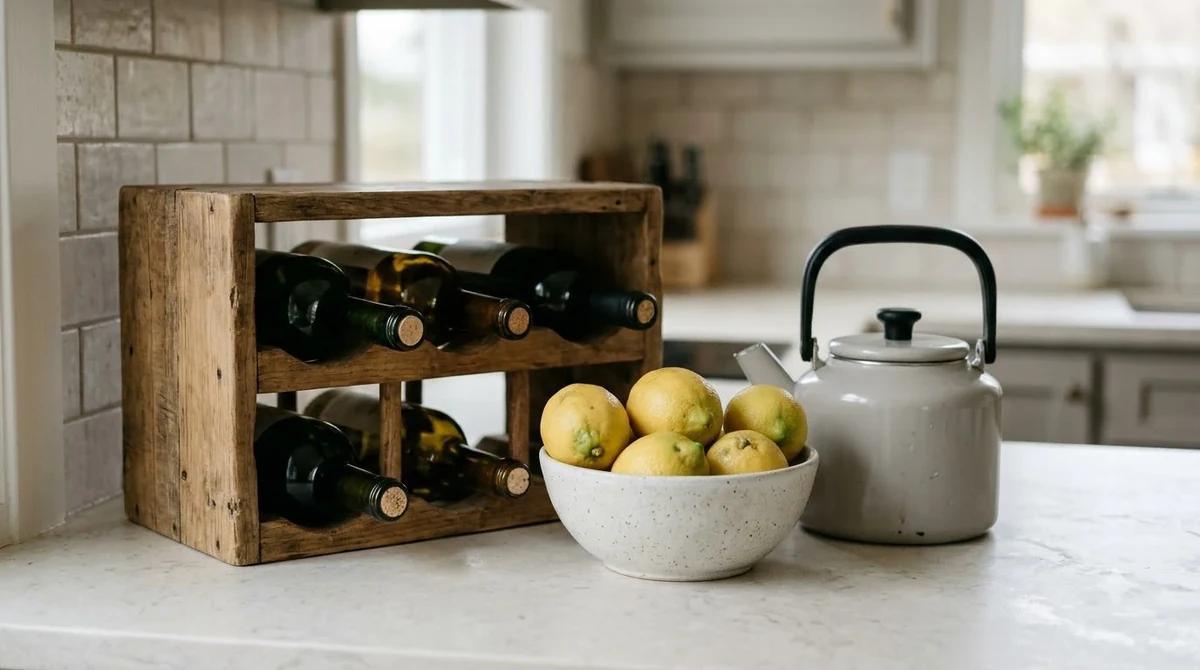
Champagne bottles are a particularly important consideration. Their wider bodies require more clearance than many conventional still-wine bottles. Burgundy-style Pinot Noir bottles and some Syrah bottles can also have different dimensions from the standardized bottles used in capacity calculations. A cellar that appears spacious when empty may become considerably less convenient once a collection includes these formats.
Home Depot customer feedback for the KUWR314KSS identifies Pinot Noir, sparkling wine and Syrah bottles as examples of bottles that can be difficult to accommodate. One owner specifically praised the dual-zone cooling and smooth drawer movement while criticizing the limited space available for larger bottles. Another described the challenge of accommodating Chardonnay and sparkling wine without sacrificing rack capacity.
This is not simply a cosmetic inconvenience. A bottle that does not fit properly can prevent a rack from sliding back into position. Repeated contact with adjacent bottles can also create problems with labels and make routine bottle retrieval frustrating.
The advertised 46-bottle capacity should therefore be treated as a standardized maximum rather than a realistic expectation for every collection. A household with mostly conventional Bordeaux bottles may come closer to that figure than one with a mixture of Champagne, Burgundy-style, Rhône-style and unusually shaped bottles.
Another complaint concerns the fixed arrangement of the racks. Although the full-extension design helps access, it does not necessarily provide the flexibility needed for a collection with many different bottle dimensions. Some owners report having to remove a shelf or rearrange bottles to accommodate wider formats.
Noise feedback is mixed. Many owners describe the appliance as quiet, but individual reviews mention vibration or an unusual sound during operation. Installation conditions, cabinetry contact and the surrounding floor can affect how mechanical vibration is perceived, so proper leveling and clearance are important.
There are also occasional concerns about reliability and door operation. Lowe’s customer feedback includes a report of a unit becoming unrepairable after six years, while Home Depot feedback includes a complaint about a door that did not close properly. These are individual experiences rather than proof that every KitchenAid wine cellar will develop the same problems, but they are reasonable considerations for a major appliance purchase.
The overall picture is therefore mixed. KitchenAid offers useful cooling features and an attractive finish, but the internal rack design deserves more scrutiny than the exterior appearance. Buyers should not assume that a premium-looking appliance will automatically accommodate every bottle in a diverse wine collection.
Who Should Buy and Who Should Skip
The KitchenAid wine chiller makes the most sense for homeowners who want permanent undercounter wine storage, regularly serve different wine styles and appreciate coordinated kitchen appliances. It is less suitable for people who want a small portable cooler or whose collections contain many unusually wide bottles.
Good candidates for a KitchenAid wine cellar
Homeowners remodeling a kitchen are among the strongest potential buyers. The 24-inch cabinet format, flush installation and hidden hinges make the appliance appropriate for a planned cabinetry layout. It can sit alongside other kitchen appliances and provide a dedicated place for wine without occupying a separate floor-standing area.
It also suits households that maintain a relatively predictable collection. For example, someone who usually purchases Bordeaux-style Cabernet Sauvignon, Merlot and Sauvignon Blanc bottles may find the standardized rack arrangement practical. A collection built around conventional bottle dimensions is more likely to make effective use of the advertised capacity.
Frequent entertainers may appreciate the separate temperature zones. Keeping Sauvignon Blanc chilled in one compartment while storing red wines in another is more convenient than repeatedly moving bottles between a kitchen refrigerator and a countertop. The lighting and full-extension racks also help when selecting bottles for a dinner party.
Buyers who should consider alternatives
Collectors who purchase Champagne, sparkling wine and Burgundy-style bottles regularly should examine the shelf arrangement carefully before committing. A collection with many wider formats may occupy substantially more room than the advertised capacity suggests.
People who mainly need to chill one bottle at a time do not necessarily need a full undercounter appliance. A countertop bucket, reusable cooling sleeve or portable electric accessory can serve that purpose with less space and installation work.
Likewise, renters and homeowners without suitable cabinetry may find a freestanding wine refrigerator more practical. KitchenAid’s undercounter format is most attractive when the kitchen layout already supports a dedicated appliance space. Buying one before confirming the available dimensions can create unnecessary installation complications.
Long-term collectors should also distinguish between short-term chilling and wine storage. A refrigerator that maintains different temperatures can help organize a collection, but the ideal purchase depends on the types of wine, the intended storage duration and the available space. People holding expensive bottles for extended aging should assess the full storage environment rather than focusing only on the temperature display.
For a broader look at other wine-related equipment, the Accessory Brands section provides a useful starting point. It helps put a dedicated wine cellar into context alongside smaller accessories designed for opening, serving and storing bottles.
Tip: Before buying, measure the width, height and depth of the cabinet opening, including available door clearance. Then compare the measurements with KitchenAid’s 23.875-inch width, 34.375-inch height and 23.625-inch depth for the KUWR214KSB. Also measure your widest Champagne or Burgundy bottle and confirm that it can fit on the intended rack without preventing the shelf from closing.
How It Compares to Alternatives
A KitchenAid wine chiller competes in a different category from portable wine-chilling accessories. Its main advantage is permanent storage with adjustable cooling, while smaller alternatives focus on cooling a bottle shortly before serving.
The distinction becomes especially important when deciding how much space to dedicate to wine equipment. A full undercounter cellar is a substantial appliance purchase and requires planning, while a marble chiller or reusable cooling accessory can be kept in a cupboard when not needed.
KitchenAid versus a marble wine chiller
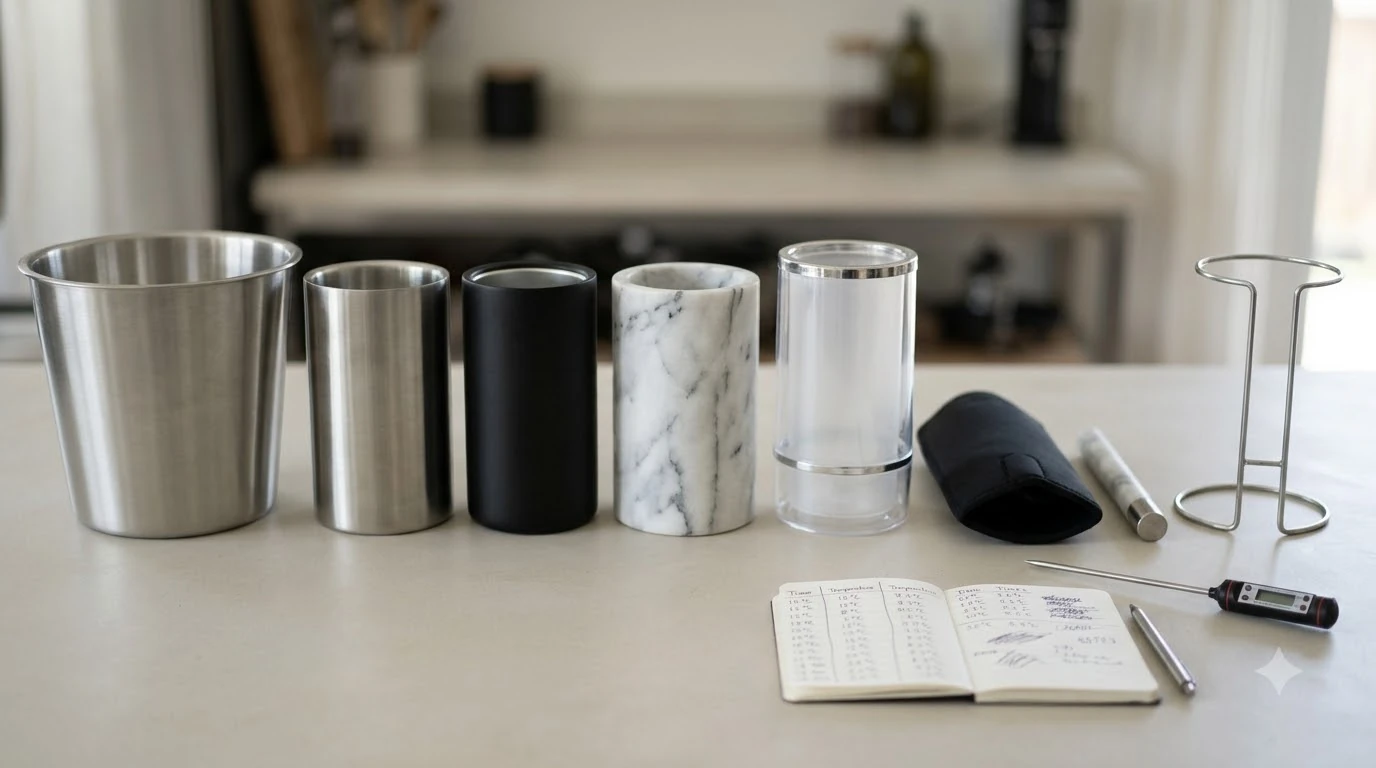
A marble wine chiller is primarily a serving accessory. Its stone construction helps retain coolness and provides an attractive way to present a bottle at the table. It does not provide independently controlled refrigeration or the organized storage capacity of a wine cellar.
For a dinner party, a marble chiller can be a useful complement to a KitchenAid appliance. A bottle can be brought to the desired serving temperature in the refrigerator and then placed in the marble vessel to help maintain its temperature during the meal. This is especially convenient for chilled rosé, Sauvignon Blanc and sparkling wine.
However, a marble vessel is not a substitute for long-term temperature management. It cannot reliably maintain a precise storage temperature across changing room conditions, and it does not provide space for a collection of several dozen bottles.
KitchenAid versus an electric wine chiller
An electric wine chiller is a closer comparison in terms of powered cooling, although the available formats and intended uses can differ considerably. Some electric units are designed for a single bottle or countertop use, while larger wine refrigerators provide storage for multiple bottles.
The KitchenAid advantage is its integration into kitchen cabinetry, separate temperature zones and dedicated bottle racks. A smaller electric chiller may be easier to move or install, but it will not necessarily offer the same storage capacity or built-in appearance.
Buyers should compare the number of bottles they need to store, the range of temperatures available and whether the appliance is designed for permanent installation. A compact electric unit can be perfectly adequate for occasional entertaining, while a dedicated cellar makes more sense for a household that keeps a regular wine collection.
KitchenAid versus an instant wine chiller
An instant wine chiller addresses a different problem: getting a bottle closer to its preferred drinking temperature without dedicating an entire appliance to storage. Depending on its design, this type of accessory may cool a bottle or individual servings more quickly than waiting for a refrigerator.
It is particularly relevant to people who buy wine for immediate consumption rather than maintain a collection. Someone who wants to chill a bottle of Prosecco for an unexpected gathering may find an instant cooling accessory more convenient than keeping a dedicated wine refrigerator running.
KitchenAid, by comparison, is designed around continuous refrigeration and organized storage. It is the stronger category for households that regularly keep whites and reds available, but the instant option is easier to accommodate in a small kitchen.
These products are not necessarily mutually exclusive. A household with a KitchenAid cellar can still use a marble vessel or portable cooling accessory when serving wine. The larger appliance handles storage, while smaller equipment helps manage the temperature of individual bottles during entertaining.
The right choice ultimately depends on the job. A permanent cellar is for maintaining a collection, a countertop electric appliance is for convenient powered cooling, and a passive or instant accessory is for individual bottles. Paying for a large appliance makes little sense if the actual requirement is simply to chill one bottle before dinner.
Frequently Asked Questions
Does a KitchenAid wine chiller need a dedicated electrical outlet?
KitchenAid wine cellars are powered refrigeration appliances, so they require an appropriate electrical connection rather than simply operating as insulated cabinets. The electrical requirements and outlet placement should be confirmed in the installation instructions for the exact model. Planning the outlet location before cabinetry installation helps avoid difficult changes after the appliance is fitted.
Can a KitchenAid wine chiller be used as a beverage refrigerator?
Some owners report using the racks to accommodate cans and other beverages, but a wine cellar is designed around wine bottle storage. The shelf arrangement and cooling configuration may not be ideal for every beverage container. A dedicated beverage center is a more appropriate option if cans, mixers and bottled drinks will make up most of the contents.
Does a KitchenAid wine cellar protect wine from ultraviolet light?
KitchenAid specifies UV-protected thermal glass on the KUWR214KSB. The glass filters ultraviolet rays to help reduce light exposure inside the appliance. This is useful because prolonged exposure to light can negatively affect wine quality, although the feature does not eliminate the importance of appropriate storage conditions.
What happens if the KitchenAid wine chiller door is left open?
The KUWR214KSB has a door alarm that activates after the door remains open for five minutes. It repeats every two minutes until the door is closed or the controls are touched. This feature helps alert household members to an open door that could interfere with maintaining the selected storage temperatures.
Can the KitchenAid wine cellar be installed next to an oven?
Installation beside heat-producing appliances requires careful attention to the manufacturer’s installation requirements and specified clearances. Excessive surrounding heat can make refrigeration work harder and can interfere with temperature stability. The planned cabinet location, ventilation provisions and electrical arrangement should be checked before installation rather than assuming every adjacent-appliance arrangement is acceptable.
The KitchenAid wine chiller is an appealing choice for homeowners who want a permanent wine-storage appliance with separate cooling zones, integrated lighting and a coordinated kitchen appearance. Its most important limitation is the difference between standardized bottle capacity and the amount of space available for a real-world collection. Check the cabinet measurements, examine the rack arrangement and consider the dimensions of your widest bottles before choosing a model. For a household with compatible bottles and a suitable installation space, KitchenAid offers a convenient way to keep wine organized, accessible and ready for serving.
More in Wine Accessories
 Coravin Vs Vacu Vin: Choose the Right Wine Saver for Your BottlesUpdated Nov 21, 2026
 Zwilling Wine Stopper Review: Preserve Open Bottles LongerUpdated Nov 21, 2026
 Wine Enthusiast Wine Preserver Review: Features, Benefits and LimitationsUpdated Nov 21, 2026
 Wine Enthusiast Wine Stopper: An Easier Way to Reseal Open BottlesUpdated Nov 21, 2026
 Vintorio Wine Opener: Two-Step Cork RemovalUpdated Nov 21, 2026
 Zwilling Wine Aerator Review: Aerate, Pour, and Seal With One ToolUpdated Nov 21, 2026